

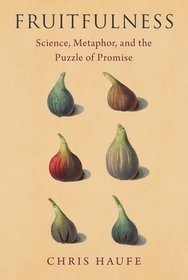
Fruitfulness
Science, Metaphor, and the Puzzle of Promise
Series: Oxford Studies in Philosophy of Science;
- Publisher's listprice GBP 23.99
-
10 831 Ft (10 315 Ft + 5% VAT)
The price is estimated because at the time of ordering we do not know what conversion rates will apply to HUF / product currency when the book arrives. In case HUF is weaker, the price increases slightly, in case HUF is stronger, the price goes lower slightly.
- Discount 10% (cc. 1 083 Ft off)
- Discounted price 9 748 Ft (9 284 Ft + 5% VAT)
Subcribe now and take benefit of a favourable price.
Subscribe
10 831 Ft

Availability
Estimated delivery time: In stock at the publisher, but not at Prospero's office. Delivery time approx. 3-5 weeks.
Not in stock at Prospero.
Why don't you give exact delivery time?
Delivery time is estimated on our previous experiences. We give estimations only, because we order from outside Hungary, and the delivery time mainly depends on how quickly the publisher supplies the book. Faster or slower deliveries both happen, but we do our best to supply as quickly as possible.
Product details:
- Publisher OUP USA
- Date of Publication 29 August 2024
- ISBN 9780197666395
- Binding Hardback
- No. of pages320 pages
- Size 198x135x27 mm
- Weight 454 g
- Language English 516
Categories
Short description:
In this book, Chris Haufe examines the idea of fruitfulness - the generative power that some ideas possess in abundance - in the context of science. He examines questions such as, what makes some ideas especially fruitful? How do practitioners in mathematics and the natural sciences reliably select particularly fruitful conveyances for their investigations? And how does each of these questions bear on the power of rational inquiry?
MoreLong description:
Some ideas seem to possess a disproportionate ability to lead to new insights, new discoveries, new ideas, and even entirely new ways of thinking. Such ideas are said to be fruitful. Looking across the history of science and mathematics, we see creative minds preoccupied with the search for ideas of this kind. More precious than truth, but far less plentiful, fruitful ideas provide those in pursuit of knowledge with a seemingly bottomless well of innovation from which to draw as they attempt to solve new problems and to refine solutions to old ones. Seasoned researchers have a nose for these ideas. They often know in an instant that some way of approaching a problem will eventually result in a solution to it and to a whole host of other problems, all of which suddenly seem related.
In Fruitfulness, Chris Haufe explains how these ideas are detected and developed into large-scale frameworks for research. He argues for a philosophical perspective on scientific knowledge that places the search for fruitfulness at the heart of the scientific enterprise. This perspective demands a fundamental shift in our thinking about scientific theories, conceiving of them as metaphors to facilitate research instead of increasingly correct descriptions of nature.
"Chris Haufe has written a very important book about potential fertility, one of the most significant virtues that a scientific theory can possess. A new theory can merit serious attention, despite having severe problems and few accomplishments, because it shows great promise. But how can its promise reasonably be judged? Drawing on a wealth of historical case-studies, Haufe explains how a new theory can provide open-ended tools and apt metaphors for generating solvable problems. Written in a delightfully wry, irreverent style, Haufe's book will prove enormously fruitful."
Table of Contents:
1. In Pursuit Of The Fruit
2. The Puzzle Of Promise
3. The Perception Of Promise
4. The Emergence Of Exemplars
5. Framing Fruitfulness
6. Fruitful Classification
7. The Aptness Alternative
8. Aptness And The Causal Role Of Epistemic Virtues
Wrap-Up: Close Shave?
References
Index

