

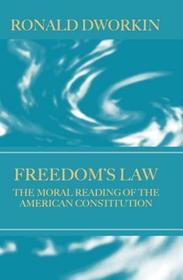
Freedom's Law
The Moral Reading of the American Constitution
- Publisher's listprice GBP 145.00
-
65 467 Ft (62 350 Ft + 5% VAT)
The price is estimated because at the time of ordering we do not know what conversion rates will apply to HUF / product currency when the book arrives. In case HUF is weaker, the price increases slightly, in case HUF is stronger, the price goes lower slightly.
- Discount 10% (cc. 6 547 Ft off)
- Discounted price 58 921 Ft (56 115 Ft + 5% VAT)
Subcribe now and take benefit of a favourable price.
Subscribe
65 467 Ft

Availability
printed on demand
Why don't you give exact delivery time?
Delivery time is estimated on our previous experiences. We give estimations only, because we order from outside Hungary, and the delivery time mainly depends on how quickly the publisher supplies the book. Faster or slower deliveries both happen, but we do our best to supply as quickly as possible.
Product details:
- Publisher OUP Oxford
- Date of Publication 12 December 1996
- ISBN 9780198264705
- Binding Hardback
- No. of pages436 pages
- Size 244x163x30 mm
- Weight 827 g
- Language English 0
Categories
Short description:
"The Constitution is America's moral sail, and we must hold to the courage of the conviction that fills it, a conviction that we can all be equal citizens of a moral republic. That is a noble faith, and only optimism can redeem it." So writes Ronald Dworkin in the introduction to this characteristically robust and provocative new book in which he argues that fidelity to the Constitution and to law demands that Judges make contemporary judgments backed on political morality, and why it encourages, or ought to encourage, an open display of the true grounds of judgment. The book discusses almost all of the great constitutional issues of the last two decades including abortion, affirmative action, pornography, race, homosexuality, euthanasia, and free speech, and in doing so consistently offers a liberal view of the American Constitution.
Dworkin's 'moral reading' proposes that we all - judges, lawyers, citizens - interpret and apply the abstract language of the Constitution on the understanding that it invokes moral principles about political decency and justice. The "moral reading" therefore brings political morality into the heart of constitutional law. The various chapters of this book were first published separately; now drawn together they bear all the hallmarks of Dworkin's legal and philosophical sophistication, his acute understanding of political process and his understanding of history.
Long description:
"The Constitution is America's moral sail, and we must hold to the courage of the conviction that fills it, a conviction that we can all be equal citizens of a moral republic. That is a noble faith, and only optimism can redeem it." So writes Ronald Dworkin in the introduction to this characteristically robust and provocative new book in which Dworkin argues the fidelity to the constitution and to law demands that judges make contemporary judgements backed on political morality, and why it encourages, or ought to encourage, an open display of the true grounds of judgement. The book discusses almost all of the great constitutional issues of the last two decades including abortion, affirmative action, pornography, race, homosexuality, euthanasia and free-speech and in doing so consistently offers a liberal view of the American Constitution. Dworkin's "moral reading" proposes that we all, judges, lawyers, citizens - interpret and apply the abstract language of the Constitution on the understanding that they invoke moral principles about political decency and justice. The "moral reading" therefore brings political morality into the heart of constitutional law. The various chapters of this book were first published seperately; now drawn together they bear all the hallmarks of Dworkin's legal and philosophical sophistication, his acute understanding of political process and his understanding of history. principles
'The essays cover the (mostly American) major legal excitements of the past ten years...They are invariably lucid and elegant.'

