

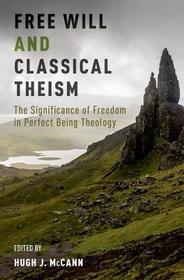
Free Will and Classical Theism
The Significance of Freedom in Perfect Being Theology
- Publisher's listprice GBP 97.00
-
43 795 Ft (41 710 Ft + 5% VAT)
The price is estimated because at the time of ordering we do not know what conversion rates will apply to HUF / product currency when the book arrives. In case HUF is weaker, the price increases slightly, in case HUF is stronger, the price goes lower slightly.
- Discount 10% (cc. 4 379 Ft off)
- Discounted price 39 416 Ft (37 539 Ft + 5% VAT)
Subcribe now and take benefit of a favourable price.
Subscribe
43 795 Ft

Availability
Estimated delivery time: In stock at the publisher, but not at Prospero's office. Delivery time approx. 3-5 weeks.
Not in stock at Prospero.
Why don't you give exact delivery time?
Delivery time is estimated on our previous experiences. We give estimations only, because we order from outside Hungary, and the delivery time mainly depends on how quickly the publisher supplies the book. Faster or slower deliveries both happen, but we do our best to supply as quickly as possible.
Product details:
- Publisher OUP USA
- Date of Publication 5 January 2017
- ISBN 9780190611200
- Binding Hardback
- No. of pages250 pages
- Size 234x160x27 mm
- Weight 499 g
- Language English 0
Categories
Short description:
The articles in the present collection deal with the religious dimension of the problem of free will. Together they provide a historical and contemporary overview of problems in the theology of freedom, along with recent work by some important philosophers in the field aimed at resolving those problems.
MoreLong description:
The articles in the present collection deal with the religious dimension of the problem of free will. All of the papers also have implications for broader philosophical and theological issues, and will thus be of interest to a wide variety of scholars, both religious and secular. Together they provide a historical and contemporary overview of problems in the theology of freedom, together with recent work by some important philosophers in the field aimed at resolving those problems. The chapters are divided into four sections. The first addresses central issues about the nature of free will and how free will relates to theological topics such as theological fatalism and the problem of evil. The second section focuses on historical debates about free will and theism, but with an eye toward how those historical discussions can be brought into discussion with contemporary debates. The third section aims to address and understand divine freedom, while the final section explores implications of the doctrine of divine omnicausality.
MoreTable of Contents:
Contributors
Introduction
Part I. Central Issues
1. The Problem of Fr** W*ll Peter van Inwagen
2. Theological Fatalism as an Aporetic Problem David Hunt
3. Responsibility and Freedom Hugh J. McCann
4. Compatibilism and the Free Will Defense Michael Almeida
Part II. Historical Aspects
5. The Indicative in the Imperative: on Augustinian Oughts and Cans Jesse Couenhoven
6. Anselmian Alternatives and Frankfurt style Counterexamples Katherin Rogers
7. Libertarian Calvinism Oliver D. Crisp
Part III. Divine Freedom
8. The Best Thing in Life Is Free: The Compatibility of God's Freedom and his Essential Moral Perfection Kevin Timpe
9. Two Pictures of Divine Choice Brian Leftow
Part IV. Divine Omnicausality and Responsibility
10. Divine Universal Causality Without Occasionalism (and with Agent causation) W. Matthews Grant
11. Theological Determinism and the Relationship with God Derk Pereboom
Index

