

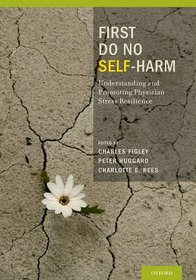
First Do No Self Harm
Understanding and Promoting Physician Stress Resilience
- Publisher's listprice GBP 112.50
-
50 793 Ft (48 375 Ft + 5% VAT)
The price is estimated because at the time of ordering we do not know what conversion rates will apply to HUF / product currency when the book arrives. In case HUF is weaker, the price increases slightly, in case HUF is stronger, the price goes lower slightly.
- Discount 10% (cc. 5 079 Ft off)
- Discounted price 45 714 Ft (43 538 Ft + 5% VAT)
Subcribe now and take benefit of a favourable price.
Subscribe
50 793 Ft

Availability
printed on demand
Why don't you give exact delivery time?
Delivery time is estimated on our previous experiences. We give estimations only, because we order from outside Hungary, and the delivery time mainly depends on how quickly the publisher supplies the book. Faster or slower deliveries both happen, but we do our best to supply as quickly as possible.
Product details:
- Publisher OUP USA
- Date of Publication 5 September 2013
- ISBN 9780195383263
- Binding Hardback
- No. of pages396 pages
- Size 183x254x30 mm
- Weight 870 g
- Language English 0
Categories
Short description:
"First Do No Self Harm" by three medical and mental health educators offers a clarion call for the improved medical and mental health of physicians across their education continuum by posing and answering five fundamental questions about sources of stress and methods of coping among physicians and medical students.
MoreLong description:
Keeping doctors happy and productive requires a thorough understanding of the systemic causes and consequences of physician stress, as well as the role of resilience in maintaining a healthy mental state. The pressure of making life-or-death decisions along with those associated with the day-to-day challenges of doctoring can lead to poor patient care and communication, patient dissatisfaction, absenteeism, reductions in productivity, job dissatisfaction, and lowered retention.
This edited volume will provide a comprehensive tool for understanding and promoting physician stress resilience. Specifically, the book has six interrelated objectives that, collectively, would advance the evidence-based understanding of (1) the extent to which physicians experience and suffer from work-related stress; (2) the various manifestations, syndromes, and reaction patterns directly caused by work-related stress; (3) the degree to which physicians are resilient in that they are successful or not successful in coping with these stressors; (4) the theories and direct evidence that account for the resilience; (5) the programs during and following medical school which help to promote resilience; and (6) the agenda for future theory, research, and intervention efforts for the next generation of physicians.
The final chapter... looks forward to a time when there will be a worldwide debate about physician stress and resilience in order to better understand, prevent and manage the destructive, negative effects of stress that undoubtedly accompanies the delivery of medical services. It is in everyone's interest - doctors and patients alike - that such a debate takes place and this book should be essential reading in working towards that aim.
Table of Contents:
Section One Introduction to the Stress of Being a Medical Student
Chapter 1. Distributed emotional intelligence: A resource to help medical students learn in stressful settings
Chapter 2. First clinical attachments: informal learning and stressors in the clinical environment
Chapter 3. Between two worlds: medical students narrating identity tensions
Chapter 4. Laughter for coping: medical students' narrating professionalism dilemmas
Chapter 5. Bringing complexity thinking to curriculum development: Implications for faculty and medical student stress and resilience
Section Two Introduction to the Stress of Being A Physician
Chapter 6. Maintaining a balance: doctors caring for people who are dying and their families
Chapter 7. Physician Stress: Compassion Satisfaction, Compassion Fatigue and Vicarious Traumatization
Chapter 8. The Medico-Legal Environment, and How Medico-Legal Matters Impact on the Doctor: Research Findings from an Australian Study
Chapter 9: How Doctors Become Patients
Chapter 10. The Impaired Physician
Chapter 11. Healthy Docs = Healthy Patients: arguably the most important reason to care about physician health
Section 3 Introduction to Management of Physician Stress
Chapter 12. Overcopers: Medical Doctor Vulnerability to Compassion Fatigue
Chapter 13. Stress and Coping Generational and Gender Similarities and Differences
Chapter 14. Treatment and Prevention Work: Center for Practitioner Renewal
Chapter 15: Promoting resilience and posttraumatic growth in physicians
Chapter 16. Ethical Decisions: Stress and Distress in Medicine
Section 4 Introduction to Personal Reflections
Chapter 17. Surgery
Chapter 18. The gifts of palliative care: sometimes awkward always wholesome
Chapter 19. Pediatrics: If Only it was Just the Kids
Chapter 20. Psychiatrists in Distress: When Work Becomes A Problem
Chapter 21. Medical Students and Residents
Chapter 22. Family Medicine: I will never fly in a helicopter again
Chapter 23. Anesthesiology: Personal Reflections
Chapter 24. Emergency Medicine
Chapter 25. Conclusions

