

- Publisher's listprice GBP 9.99
-
4 510 Ft (4 295 Ft + 5% VAT)
The price is estimated because at the time of ordering we do not know what conversion rates will apply to HUF / product currency when the book arrives. In case HUF is weaker, the price increases slightly, in case HUF is stronger, the price goes lower slightly.
- Discount 20% (cc. 902 Ft off)
- Discounted price 3 608 Ft (3 436 Ft + 5% VAT)
- Discount is valid until: 30 June 2026
Subcribe now and take benefit of a favourable price.
Subscribe
4 510 Ft

Availability
Estimated delivery time: In stock at the publisher, but not at Prospero's office. Delivery time approx. 3-5 weeks.
Not in stock at Prospero.
Why don't you give exact delivery time?
Delivery time is estimated on our previous experiences. We give estimations only, because we order from outside Hungary, and the delivery time mainly depends on how quickly the publisher supplies the book. Faster or slower deliveries both happen, but we do our best to supply as quickly as possible.
Product details:
- Publisher OUP Oxford
- Date of Publication 25 June 2020
- ISBN 9780198830030
- Binding Paperback
- No. of pages176 pages
- Size 174x113x9 mm
- Weight 134 g
- Language English
- Illustrations 43 black and white images 15
Categories
Short description:
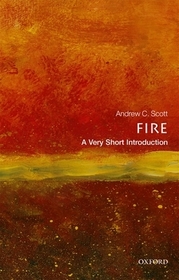
Fire has shaped the Earth's landscape and vegetation for the past 400 million years. This book explores the history of wildfire, and how humans have sought to use and manage it. The need to understand fire has never been greater, as human settlements encroach on flammable landscapes and wildfires increase with climate change.
MoreLong description:
Fire is rarely out of the headlines, from large natural wildfires raging across the Australian or Californian countrysides to the burning of buildings such as the disasters of Grenfell tower and Notre Dame. Fire on these scales can represent a serious risk to human life and property. But the advent of fire made and controlled by humans also represented a crucial point in our evolution, allowing us to cook our food, forge our weapons, and warm our homes.
This Very Short Introduction covers the fundamentals of fire, whether wild or under human control, starting with the basics of ignition, combustion, and fuel. Andrew Scott considers both natural wildfires and the role of humans in making and suppressing fire. Despite frightening reports of wildfire destruction, he also shows how landscape fires have been part of our planet's history for 400 million years, and do not always have to be extinguished. He also considers the problem of fires in urban settings, including new ways to prevent fires. The cost of wildfire can be steep - as well as the burning, post-fire erosion and flooding can have a great impact on both humans and the environment. It can also have a lasting effect in shaping ecosystems and plant life. Scott ends by examining the relationship between fire and the climate, and considering the future of wildfire in a warming world.
ABOUT THE SERIES:
The Very Short Introductions series from Oxford University Press contains hundreds of titles in almost every subject area. These pocket-sized books are the perfect way to get ahead in a new subject quickly. Our expert authors combine facts, analysis, perspective, new ideas, and enthusiasm to make interesting and challenging topics highly readable.
Table of Contents:
Preface and Acknowledgements
List of Illustrations
The elements of fire
The deep history of fire
Fire and humankind
Containing and suppressing fire
New technologies and changing fire policies
Fire and climate change
References
Further reading
Index

