

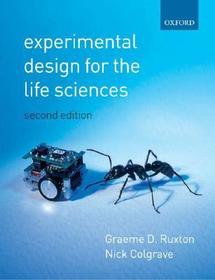
Experimental Design for the Life Sciences
- Publisher's listprice GBP 19.99
-
9 025 Ft (8 595 Ft + 5% VAT)
The price is estimated because at the time of ordering we do not know what conversion rates will apply to HUF / product currency when the book arrives. In case HUF is weaker, the price increases slightly, in case HUF is stronger, the price goes lower slightly.
- Discount 10% (cc. 903 Ft off)
- Discounted price 8 122 Ft (7 736 Ft + 5% VAT)
Subcribe now and take benefit of a favourable price.
Subscribe
9 025 Ft

Availability
Out of print
Why don't you give exact delivery time?
Delivery time is estimated on our previous experiences. We give estimations only, because we order from outside Hungary, and the delivery time mainly depends on how quickly the publisher supplies the book. Faster or slower deliveries both happen, but we do our best to supply as quickly as possible.
Product details:
- Edition number 2
- Publisher Oxford University Press
- Date of Publication 16 February 2006
- ISBN 9780199285112
- Binding Paperback
- No. of pages184 pages
- Size 246x189x10 mm
- Weight 363 g
- Language English
- Illustrations 40 line drawings 0
Categories
Short description:
Experimental Design for the Life Sciences explains how to organise experiments and collect data to make analysis easier, and conclusions more robust. An approachable and articulate style conveys even the most challenging concepts in clear and practical terms, showing how experimental design is about clear thinking and biological understanding, not mathematical or statistical complexity.
MoreLong description:
At the core of good research lies the careful design of experiments. Yet all too often a successful design comes only after a painful trial-and-error process, wasting valuable time and valuable resources.
Experimental Design for the Life Sciences teaches the reader how to effectively design experiments, to ensure that today's students are equipped with the skills they need to be the researchers of tomorrow. With a refreshingly approachable and articulate style, the book explains the essential elements of experimental design in clear, practical terms, so that the reader can grasp and apply even the most challenging concepts, including power analysis and pseudoreplication.
Emphasising throughout the inter-relatedness of experimental design, statistics, and ethical considerations, the book ensures that the reader really understands experimental design in the broader context of biological research, using examples drawn from a range of fields across the biosciences to show to the student how the theory is applied in active research.
Above all, Experimental Design for the Life Sciences shows how good experimental design is about clear thinking and biological understanding, not mathematical or statistical complexity - putting it at the heart of any biosciences student's education.
Online Resource Centre:
The companion web site features:
For lecturers:
? Figures from the book available to download, to facilitate lecture preparation
For students and lecturers:
? Discussion forum, promoting the discussion of experimental design in real research, to stimulate active learning on the part of the student.
At last a text which clearly and comprehensively takes the student through the mechanisms of sound practice and the pitfalls of less sound experimental design in the biological sciences. Although aimed directly at the undergraduate life sciences student it would also be useful to those studying both above and below this level.
Table of Contents:
Preface - How to use this book
Why care about design?
Starting with a well defined question
Between-individual variation, replication and sampling
Different experimental designs
Taking measurements
Final thoughts
Bibliography

