

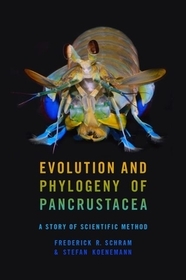
Evolution and Phylogeny of Pancrustacea
A Story of Scientific Method
- Publisher's listprice GBP 137.50
-
62 081 Ft (59 125 Ft + 5% VAT)
The price is estimated because at the time of ordering we do not know what conversion rates will apply to HUF / product currency when the book arrives. In case HUF is weaker, the price increases slightly, in case HUF is stronger, the price goes lower slightly.
- Discount 10% (cc. 6 208 Ft off)
- Discounted price 55 873 Ft (53 213 Ft + 5% VAT)
Subcribe now and take benefit of a favourable price.
Subscribe
62 081 Ft

Availability
printed on demand
Why don't you give exact delivery time?
Delivery time is estimated on our previous experiences. We give estimations only, because we order from outside Hungary, and the delivery time mainly depends on how quickly the publisher supplies the book. Faster or slower deliveries both happen, but we do our best to supply as quickly as possible.
Product details:
- Publisher OUP USA
- Date of Publication 31 March 2022
- ISBN 9780195365764
- Binding Hardback
- No. of pages872 pages
- Size 292x224x43 mm
- Weight 2585 g
- Language English 192
Categories
Short description:
Schram and Koenemann analyze the cladistics character matrices of gross anatomy using data from comparative developmental genetics and molecules sequences. With the help of useful diagrams and images, readers will gain an understanding of the relationships of phyla and their phylogeny.
MoreLong description:
The scientific understanding of arthropod phylogeny and evolution has changed significantly in recent decades. One of the most momentous alterations involved crustaceans, which are not a monophyletc group, but are part of a larger group along with insects: Pancrustacea. The old ideas surrounding crustacean evolution have served scientists well for many years; it is now time to turn toward new research by embracing the results derived from investigations conducted largely within this century. For example, new definitions have arisen from sources across several fields of study, and Frederick R. Schram and Stefan Koenemann have created a book that explores paleobiodiversity and the diversity of modern body plans. Developments within ontogenetic studies continue to generate remarkable insights into crustaceomorph evolution in regard to patterns of embryology and a revolution in the application of development genetics.
Phylogeny techniques of analysis and new sources of data derived from molecular sequencing and genetic studies have forced scientists to consider new hypotheses concerning the interrelationships of all the pancrustaceans, both the crustaceomorphs and Hexapoda. Yet, some fossil groups still remain enigmatic (Thylacocephala). Despite this, research into fossils (even if incompletely understood) fills in gaps of our knowledge of paleobiodiversity, and it's useful for many things, including analyzing the origin and early evolution of Hexapoda.
Evolution and Phylogeny of Pancrustacea demonstrates the use of multiple alternative hypotheses and other techniques through the well-executed presentation of diverse data sources involving Pancrustacea. Readers are left with clues to great mysteries, including the possible pathways of evolution within marine arthropods.
In Evolution and Phylogeny of Pancrustacea: A Scientific Method, Drs. Frederick Schram and Stefan Koenemann introduce us to the wonderful world of crustaceans and insects by discussing body plans, segmentation, development, phylogeny and classification. Many beautifully illustrated figures and drawings allow readers to visualize relatedness, defining characteristics and distributional ranges. This book is truly the most comprehensive review of Pancrustacea to date and should be a staple for all retired, practicing, and aspiring zoologists for decades to come.
Table of Contents:
Preface
Acknowledgments
Section 1
Chapter 1. Body Plans
Chapter 2. Segments and Body Regions
Chapter 3. Development
Chapter 4. Phylogeny and Classification
Chapter 5. Bradoriida and Phosphatocopida
Section 2. Class Oligostraca
Chapter 6. Mystacocarida
Chapter 7. Skaracarida
Chapter 8. Branchiura
Chapter 9. Pentastomida
Chapter 10. Ostracoda
Section 3. Class Multicrustacea: Subclass Hexanauplia
Chapter 11. Copepoda
Chapter 12. Ascothoracida
Chapter 13. Acrothoracica
Chapter 14. Rhizocephala
Chapter 15. Thoracica
Chapter 16. Tantulocarida
Chapter 17. Facetotecta
Chapter 18. Cyclida
Section 4. Class Multicrustacea: Subclass Malacostraca
Chapter 19. Phyllocarida
Chapter 20. Stem Eumalacostracans?
Chapter 21. Stomatopoda
Chapter 22. Aeschronectida
Chapter 23. Bathynellacea
Chapter 24. Anaspidacea
Section 4A. Infraclass Emalacostraca: Superorder Peracarida
Chapter 25. Mysida and Stygiomysida
Chapter 26. Lophogastrida
Chapter 27. Pygocephalomorpha
Chapter 28. Mictacea
Chapter 29. Spelaeogriphacea
Chapter 30. Thermosbaenacea
Chapter 31. Cumacea
Chapter 32. Tanaidacea
Chapter 33. Amphipoda and Ingolfiellida
Chapter 34. Isopoda
Section 4B. Infraclass Eumalacostraca: Superorder Eucarida
Chapter 35. Euphausiacea
Chapter 36. Dendrobranchiata
Chapter 37. Procaridea
Chapter 38. Caridea and Amphionides
Chapter 39. Stenopodea
Chapter 40. Reptantia
Chapter 41. Thylacocephala
Section 5. Class Allotriocarida: Subclass Branchiopoda
Chapter 42. Anostraca
Chapter 43. Lipostraca
Chapter 44. Notostraca and Allies (Calmanostraca)
Chapter 45. Clam Shrimp: Laevicaudata, Spinicaudata, and Cyclestheriida
Chapter 46. Cladocera
Section 6. Class Allotriocarida: Subclass Xenocarida
Chapter 47. Cephalocarida
Chapter 48. Remipedia
Chapter 49. Yicaris, Rehbachiella, and Allies
Chapter 50. "Enantiopods": Miscellaneous, Loose-End Crustaceomorphs
Section 7. Class Allotriocarida: Subclass Hexapoda
Chapter 51. Pancrustacea: Evolution of Hexapoda and Other Arthropods
Epilogue
Appendix
Taxonomic Index
Subject Index

