

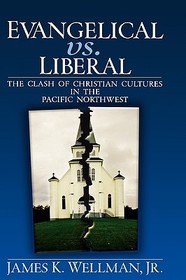
Evangelical vs. Liberal
The Clash of Christian Cultures in the Pacific Northwest
- Publisher's listprice GBP 135.00
-
64 496 Ft (61 425 Ft + 5% VAT)
The price is estimated because at the time of ordering we do not know what conversion rates will apply to HUF / product currency when the book arrives. In case HUF is weaker, the price increases slightly, in case HUF is stronger, the price goes lower slightly.
- Discount 10% (cc. 6 450 Ft off)
- Discounted price 58 047 Ft (55 283 Ft + 5% VAT)
Subcribe now and take benefit of a favourable price.
Subscribe
64 496 Ft

Availability
printed on demand
Why don't you give exact delivery time?
Delivery time is estimated on our previous experiences. We give estimations only, because we order from outside Hungary, and the delivery time mainly depends on how quickly the publisher supplies the book. Faster or slower deliveries both happen, but we do our best to supply as quickly as possible.
Product details:
- Publisher OUP USA
- Date of Publication 10 April 2008
- ISBN 9780195300116
- Binding Hardback
- No. of pages328 pages
- Size 155x236x25 mm
- Weight 584 g
- Language English 0
Categories
Short description:
The cultural conflict that increasingly divides American society is particularly evident within Protestant Christianity. Liberals and evangelicals clash in bitter competition for the future of their respective subcultures. In this book, James Wellman examines this conflict as it is played out in the American Northwest. Drawing on an in-depth study of twenty-four of the areas fastest growing evangelical churches and ten vital liberal Protestant congregations, Wellman captures the leading trends of each group and their interaction with the wider American culture.
MoreLong description:
The cultural conflict that increasingly divides American society is particularly evident within Protestant Christianity. Liberals and evangelicals clash in bitter competition for the future of their respective subcultures. In this book, James Wellman examines this conflict as it is played out in the American Northwest. Drawing on an in-depth study of twenty-four of the areas fastest growing evangelical churches and ten vital liberal Protestant congregations, Wellman captures the leading trends of each group and their interaction with the wider American culture. He finds a remarkable depth of disagreement between the two groups on almost every front. Where evangelicals are willing to draw sharp lines on gay marriage and abortion, liberals complain about evangelical self-righteousness and disregard for personal freedoms. Liberals prefer the moral power of inclusiveness, while evangelicals frame their moral stances as part of a metaphysical struggle between good and evil. The entrepreneurial nature of evangelicalism translates into support of laissez-faire capitalism and democratic political advocacy. Liberals view both policies with varying degrees of apprehension. Such differences are significant on a national scale, with implications for the future of American Protestantism in particular and American culture in general. Both groups act in good faith and with good intentions, and each maintains a moral core that furthers its own identity, ideology, ritual, mission, and politics. In some situations, they share similar attitudes despite having different beliefs. Attending church services and interviewing senior pastors, lay leaders and new members, Wellman is able to provide new insights into the convenient categories of liberal and evangelical, the nature of the conflict, and the myriad ways both groups affect and are affected by American culture.
Evangelical vs. Liberal provides an invaluable view of the rapidly shifting tectonic plates of American Protestantism today.
Table of Contents:
The Shape of American Protestantism
The Origins of American Evangelical Subculture
Complicating the Two-Party Protestant Explanation
Modernity, Religion and Moral Worldviews
Demographics, Culture and Religion of the Pacific Northwest
Method, Data and Demographics
Religion, Identity, and Moral Logics
Religion, Ideology and Belief
Religious Ritual and Organizational Dynamics
Religion, Outreach and Mission
Religion and Politics
Conclusions

