

- Publisher's listprice GBP 145.00
-
69 273 Ft (65 975 Ft + 5% VAT)
The price is estimated because at the time of ordering we do not know what conversion rates will apply to HUF / product currency when the book arrives. In case HUF is weaker, the price increases slightly, in case HUF is stronger, the price goes lower slightly.
- Discount 10% (cc. 6 927 Ft off)
- Discounted price 62 346 Ft (59 378 Ft + 5% VAT)
Subcribe now and take benefit of a favourable price.
Subscribe
69 273 Ft

Availability
printed on demand
Why don't you give exact delivery time?
Delivery time is estimated on our previous experiences. We give estimations only, because we order from outside Hungary, and the delivery time mainly depends on how quickly the publisher supplies the book. Faster or slower deliveries both happen, but we do our best to supply as quickly as possible.
Product details:
- Publisher OUP USA
- Date of Publication 23 June 2016
- ISBN 9780199781874
- Binding Hardback
- No. of pages352 pages
- Size 142x218x22 mm
- Weight 567 g
- Language English
- Illustrations 4 0
Categories
Short description:
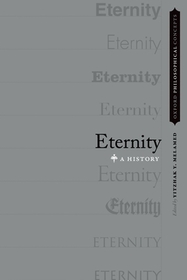
This edited volume aims at providing a history of the philosophical explorations of eternity, alongside a series of short essays, called reflections, on the role of eternity and its representations in literature, religion, language, liturgy, science, and music. In doing so, it reveals philosophy to be a discipline in constant conversation with various other domains of human thought and exploration.
MoreLong description:
Eternity is a unique kind of existence that is supposed to belong to the most real being or beings. It is an existence that is not shaken by the common wear and tear of time. Over the two and half millennia history of Western philosophy we find various conceptions of eternity, yet one sharp distinction between two notions of eternity seems to run throughout this long history: eternity as timeless existence, as opposed to eternity as existence in all times. Both kinds of existence stand in sharp contrast to the coming in and out of existence of ordinary beings, like hippos, humans, and toothbrushes: were these eternally-timeless, for example, a hippo could not eat, a human could not think or laugh, and a toothbrush would be of no use. Were a hippo an eternal-everlasting creature, it would not have to bother itself with nutrition in order to extend its existence. Everlasting human beings might appear similar to us, but their mental life and patterns of behavior would most likely be very different from ours.
The distinction between eternity as timelessness and eternity as everlastingness goes back to ancient philosophy, to the works of Plato and Aristotle, and even to the fragments of Parmenides' philosophical poem. In the twentieth century, it seemed to go out of favor, though one could consider as eternalists those proponents of realism in philosophy of mathematics, and those of timeless propositions in philosophy of language (i.e., propositions that are said to exist independently of the uttered sentences that convey their thought-content). However, recent developments in contemporary physics and its philosophy have provided an impetus to revive notions of eternity due to the view that time and duration might have no place in the most fundamental ontology.
The importance of eternity is not limited to strictly philosophical discussions. It is a notion that also has an important role in traditional Biblical interpretation. The Tetragrammaton, the Hebrew name of God considered to be most sacred, is derived from the Hebrew verb for being, and as a result has been traditionally interpreted as denoting eternal existence (in either one of the two senses of eternity). Hence, Calvin translates the Tetragrammaton as 'l'Eternel', and Mendelssohn as 'das ewige Wesen' or 'der Ewige'. Eternity also plays a central role in contemporary South American fiction, especially in the works of J.L. Borges. The representation of eternity poses a major challenge to both literature and arts (just think about the difficulty of representing eternity in music, a thoroughly temporal art). The current volume aims at providing a history of the philosophy of eternity surrounded by a series of short essays, or reflections, on the role of eternity and its representation in literature, religion, language, liturgy, science, and music. Thus, our aim is to provide a history of philosophy as a discipline that is in constant commerce with various other domains of human inquisition and exploration.
Table of Contents:
Contributors
Series Editor's Forward
Introduction Yitzhak Y. Melamed
1 Eternity in Ancient Philosophy James Wilberding
Reflection: Eternity in the Astrology of Vettius Valens Dorian Gieseler Greenbaum
Reflection: Eternity and World Cycles Godefroid De Callatay
Reflection: The Eternality of Language in India Andrew Ollett
2 Eternity in Medieval Philosophy Peter Adamson
Reflection: The Daharia Hinrich Bisterfeldt
Reflection: Eternity and the Trinity Christophe Erismann
3 Eternity in Early Modern Philosophy Yitzhak Y. Melamed
Reflection: Dante and Eternity Akash Kumar
Reflection: Perpetuum mobile Marius Stan
4 Eternity in Kant and Post-Kantian European Thought Alistair Welchman
Reflection: Eternity in the Fruehromantiker Judith Norman
Reflection: Eternity in Hassidism Ariel Evan Mayse
Reflection:"White Eternity" in the Poetry of Mahmud Darwish Abed Azzam
5 Eternity In Twentieth Century Analytic Philosophy Kris McDaniel
Reflection: Borges on Eternity William Egginton
Reflection: Eternity in music Walter Frisch
Reflection: The Kaddish, Mourning, and Eternity Abraham P. Socher
Glossary
Bibliography
Index of Names
Index of Concepts

