

- Publisher's listprice GBP 24.99
-
11 282 Ft (10 745 Ft + 5% VAT)
The price is estimated because at the time of ordering we do not know what conversion rates will apply to HUF / product currency when the book arrives. In case HUF is weaker, the price increases slightly, in case HUF is stronger, the price goes lower slightly.
- Discount 10% (cc. 1 128 Ft off)
- Discounted price 10 154 Ft (9 671 Ft + 5% VAT)
Subcribe now and take benefit of a favourable price.
Subscribe
11 282 Ft

Availability
Uncertain availability. Please turn to our customer service.
Why don't you give exact delivery time?
Delivery time is estimated on our previous experiences. We give estimations only, because we order from outside Hungary, and the delivery time mainly depends on how quickly the publisher supplies the book. Faster or slower deliveries both happen, but we do our best to supply as quickly as possible.
Product details:
- Publisher OUP Oxford
- Date of Publication 16 November 2006
- ISBN 9780198530145
- Binding Paperback
- No. of pages312 pages
- Size 246x189x15 mm
- Weight 699 g
- Language English
- Illustrations 60 two colour line 0
Categories
Short description:
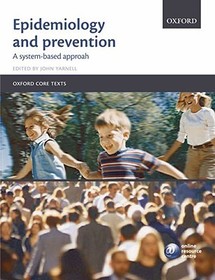
This book takes a unique systems-based approach, allowing students to visualise the overall systemic effects of the disease process in its entirety.
MoreLong description:
Epidemiology involves the study of the occurrence of diseases in global populations, providing a body of knowledge which informs daily clinical evaluations. This book covers all the material considered to be essential for the teaching of epidemiology to medical and dental undergraduates, providing a sound introduction for the early undergraduate years, and also for studying pure epidemiology and related subjects. The underlying thrust of the book is to summarise the natural history
of the major disease groups, to highlight the opportunities for prevention of disease, and to flag up issues of epidemiological and public health importance. The book captures the considerable momentum in current epidemiology and preventative health endeavours, enlivening their relevance for every
student of medicine.
Clinical case scenarios with questions are included at the end of respective chapters encouraging students to link theory with practice. Studying epidemiology often involves epidemiological assignments in which students are required to conduct original web-based searches of referenced material, the references provided on the Online Resource Centre form a springboard to this activity.
Online Resource Centre
The Online Resource Centre hosts the full list of references cited in the book. Many of these are provided as active web links, often directing to an abstract of an original journal article, where available electronically. Subject to individual or institutional subscriptions, readers may then be able to click straight through to the full article. Compiled in this way, the references and active web links provide a gateway to a core collection of landmark epidemiological literature and
sources, to guide onward reading and provide a starting point for literature searches and project work.
This book does a nice job of covering basic principles of epidemiology and preventative medicine geared to a first-year medical, dental, or other health-professional student.
Table of Contents:
Section 1 - Epidemiological Enquiry and Methods
Epidemiology: From Hippocrates to the Human Genome
Basic epidemiological tools
Epidemiological studies
Data Analysis in Epidemiology
Screening for disease
Section 2- Systems-based Epidemiology
Circulatory system
Respiratory system
Nutritional, endocrine and metabolic diseases
Digestive system
Renal system
Nervous system
Mental disorders
Musculoskeletal system
Maternal and child health
Neoplasms
Infectious diseases
Social and behavioural factors in disease
Genetic epidemiology
Oral health
Section 3- Clinical and Public Health Applications
Clinical epidemiology and evidence-based medicine
Epidemiology in public health practice

