

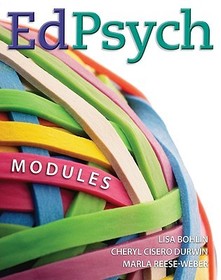
EdPsych: Modules
- Publisher's listprice GBP 118.99
-
53 723 Ft (51 165 Ft + 5% VAT)
The price is estimated because at the time of ordering we do not know what conversion rates will apply to HUF / product currency when the book arrives. In case HUF is weaker, the price increases slightly, in case HUF is stronger, the price goes lower slightly.
- Discount 10% (cc. 5 372 Ft off)
- Discounted price 48 351 Ft (46 049 Ft + 5% VAT)
Subcribe now and take benefit of a favourable price.
Subscribe
53 723 Ft

Availability
Out of print
Why don't you give exact delivery time?
Delivery time is estimated on our previous experiences. We give estimations only, because we order from outside Hungary, and the delivery time mainly depends on how quickly the publisher supplies the book. Faster or slower deliveries both happen, but we do our best to supply as quickly as possible.
Product details:
- Publisher McGraw-Hill
- Date of Publication 1 December 2008
- ISBN 9780073378503
- Binding Paperback
- No. of pages688 pages
- Size 274x215x22 mm
- Weight 1370 g
- Language English 0
Categories
Long description:
Ed Psych Modules? For ALL your students. Ed Psych Modules speaks to all students regardless of their intended age stage specialization. With four case studies - early childhood, elementary, middle school, and secondary -- for each cluster of modules, your students effectively connect theory and practice using these realistic cases. Written to be used in any order, these modules and clusters give you maximum flexibility in organizing your course. The authors have also limited the use of boxes and other sidebars in order to ensure students identify and understand the core concepts of educational psychology.
Ed Psych Modules? For ALL your students. Ed Psych Modules speaks to all students regardless of their intended age stage specialization. With four case studies - early childhood, elementary, middle school, and secondary -- for each cluster of modules, your students effectively connect theory and practice using these realistic cases. Written to be used in any order, these modules and clusters give you maximum flexibility in organizing your course. The authors have also limited the use of boxes and other sidebars in order to ensure students identify and understand the core concepts of educational psychology.
Table of Contents:
CLUSTER 1: PERSONAL DEVELOPMENT
Module 1: Contexts of Development
Module 2: Social Development
Module 3: Emotional Development
Module 4: Moral Development
CLUSTER 2: THE DEVELOPING LEARNER
Module 5: The Brain and Development
Module 6: Cognitive Development
Module 7: Language Development
CLUSTER 3: LEARNING THEORIES
Module 8: Traditional Behavioral Theories
Module 9: Social Cognitive Theory
Module 10: Information Processing
CLUSTER 4: COGNITIVE PROCESSES
Module 11: Metacognition
Module 12: Transfer of Skills and Knowledge
Module 13: Higher Order Thinking
CLUSTER 5: MOTIVATION
Module 14: Behavioral Theory
Module 15: Cognitive Theories
Module 16: Self Theories
CLUSTER 6: CLASSROOM MANAGEMENT AND INSTRUCTION
Module 17: Creating a Productive Learning Environment
Module 18: Understanding and Managing Student Behavior
Module 19: Theories of Instruction
Module 20: Grouping Practices
CLUSTER 7: LEARNER DIFFERENCES
Module 21: Intelligence
Module 22: Intellectual Differences
Module 23: Specific Learning Disabilities
Module 24: Emotional and Behavioral Disabilities
CLUSTER 8: CLASSROOM ASSESSMENT
Module 25: Assessing Student Learning
Module 26: Test Construction and Use
Module 27: Performance Assessment
CLUSTER 9: STANDARDIZED TESTING
Module 28: Standardized Tests and Scores
Module 29: Issues in Standardized Testing

