

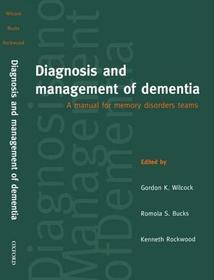
Diagnosis and Management of Dementia
A Manual for Memory Disorders Teams
- Publisher's listprice GBP 88.00
-
39 732 Ft (37 840 Ft + 5% VAT)
The price is estimated because at the time of ordering we do not know what conversion rates will apply to HUF / product currency when the book arrives. In case HUF is weaker, the price increases slightly, in case HUF is stronger, the price goes lower slightly.
- Discount 10% (cc. 3 973 Ft off)
- Discounted price 35 759 Ft (34 056 Ft + 5% VAT)
Subcribe now and take benefit of a favourable price.
Subscribe
39 732 Ft

Availability
printed on demand
Why don't you give exact delivery time?
Delivery time is estimated on our previous experiences. We give estimations only, because we order from outside Hungary, and the delivery time mainly depends on how quickly the publisher supplies the book. Faster or slower deliveries both happen, but we do our best to supply as quickly as possible.
Product details:
- Publisher OUP Oxford
- Date of Publication 14 January 1999
- ISBN 9780192628220
- Binding Paperback
- No. of pages416 pages
- Size 234x157x23 mm
- Weight 714 g
- Language English
- Illustrations 2 halftones, 13 line figures 0
Categories
Short description:
This book is an edited, multi-contributor volume covering all apsects of the diagnosis and management of dementia. Dementia, a generalised impairment of intellect, memory and personality, without impairment of consciousness, is increasing in incidence worldwide because of the demographic shift in population. The editors and authors describe memory disorder clinics and deal with the management of patients both in the hospital and community setting. The book provides a resource for those wishing to set up clinics or teams.
MoreLong description:
Organised services for those with memory disorders are growing. This growth is stimulated by an increase in the number of people with memory problems and by an increased appreciation of the complexity of the needs of such patients. Further growth is likely, especially now that we appear to have crossed the threshold of effective treatment for many patients with dementia. With these advances has come the recognition of the necessity for an interdisciplinary approach to management. Diagnosis and Management of Dementia: A Manual for Memory Disorders Teams is an edited volume covering all aspects of the operation of a memory disorders team. It is aimed at all those working in the dementia or memory disorders team, whether in a clinic or a community setting. The book is divided into three sections. Section one takes the reader through the practical details of setting up and organising a clinic, from timetabling, through managing information, to the assessments needed and the opportunities such a service provides. Section two deals with the diagnostic process; and section three addresses management issues, from carer support, pharmacological and physiological interventions, through managing common problems, to the role of the primary care physician. An Appendix contains the results of a survey to the memory disorder services. This survey provides the reader with examples of other services and demonstrates the wide variation in how these services operate. The Manual is unique in that it combines up to date thinking on diagnosis and management with practical and helpful ideas on how to run a dementia or memory disorders service.
'Very useful for those already running clinics, those anticipating setting up cliics and those involved in rationalizing health care sevices for older individuals with cognotive impairment.'
Table of Contents:
Introduction
Section One
Administrative and organisational aspects
Information management
Medical assessment
Psychiatric assessment
Investigations - laboratory, radiological and neurophysiological
Neuropsychological assessment
Computerised cognitive assessment
The role of the speech and language therapist
Functional assessment
Assessment in the community
Research potential
Section Two
Age-related memory and cognitive decline
Differentiation of common dementias
Other dementias
Section Three
Carer support
Therapeutic intervention
Non-pharmacological approaches to treatment
The management of common problems
The primary care physician's perspective

