

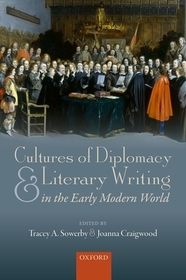
Cultures of Diplomacy and Literary Writing in the Early Modern World
- Publisher's listprice GBP 96.00
-
43 344 Ft (41 280 Ft + 5% VAT)
The price is estimated because at the time of ordering we do not know what conversion rates will apply to HUF / product currency when the book arrives. In case HUF is weaker, the price increases slightly, in case HUF is stronger, the price goes lower slightly.
- Discount 10% (cc. 4 334 Ft off)
- Discounted price 39 010 Ft (37 152 Ft + 5% VAT)
Subcribe now and take benefit of a favourable price.
Subscribe
43 344 Ft

Availability
printed on demand
Why don't you give exact delivery time?
Delivery time is estimated on our previous experiences. We give estimations only, because we order from outside Hungary, and the delivery time mainly depends on how quickly the publisher supplies the book. Faster or slower deliveries both happen, but we do our best to supply as quickly as possible.
Product details:
- Publisher OUP Oxford
- Date of Publication 20 June 2019
- ISBN 9780198835691
- Binding Hardback
- No. of pages300 pages
- Size 241x161x21 mm
- Weight 648 g
- Language English
- Illustrations 9 Illustrations 0
Categories
Short description:
This interdisciplinary edited collection explores the relationship between literature and diplomacy in the early modern world and studies how texts played an integral part in diplomatic practice.
MoreLong description:
This interdisciplinary volume explores core emerging themes in the study of early modern literary-diplomatic relations, developing essential methods of analysis and theoretical approaches that will shape future research in the field. Contributions focus on three intimately related areas: the impact of diplomatic protocol on literary production; the role of texts in diplomatic practice, particularly those that operated as 'textual ambassadors'; and the impact of changes in the literary sphere on diplomatic culture. The literary sphere held such a central place because it gave diplomats the tools to negotiate the pervasive ambiguities of diplomacy; simultaneously literary depictions of diplomacy and international law provided genre-shaped places for cultural reflection on the rapidly changing and expanding diplomatic sphere.
Translations exemplify the potential of literary texts both to provoke competition and to promote cultural convergence between political communities, revealing the existence of diplomatic third spaces in which ritual, symbolic, or written conventions and semantics converged despite particular oppositions and differences. The increasing public consumption of diplomatic material in Europe illuminates diplomatic and literary communities, and exposes the translocal, as well as the transnational, geographies of literary-diplomatic exchanges. Diplomatic texts possessed symbolic capital. They were produced, archived, and even redeployed in creative tension with the social and ceremonial worlds that produced them. Appreciating the generic conventions of specific types of diplomatic texts can radically reshape our interpretation of diplomatic encounters, just as exploring the afterlives of diplomatic records can transform our appreciation of the histories and literatures they inspired.
This collection--the Introduction and the four parts--is scholarship at its best, bringing together politics, literature, history, and other disciplines, and is more than the sum of its parts.
Table of Contents:
Introduction: Literary and Diplomatic Cultures in the Early Modern World
Part I. Literary Engagements
The Place of the Literary in European Diplomacy: Origin Myths in Ambassadorial Handbooks
Distinguished Visitors: Literary Genre and Diplomatic Space in Shakespeare, Calderón, and Proust
Lines of Amity: The Law of Nations: in the Americas
Diplomatic Pathos: Sidney's Brazen Fictions and the Troubled Origins of International Law
Part II. Translation
Translation and Communication: War and Peace by Other Means
The Politics of Translation: the Lusiads and European Diplomacy (1580-1664)
Translation and Cultural Convergence in Late Sixteenth-century Scotland and Huguenot France
Part III. Dissemination
Books as Diplomatic Agents: Milton in Sweden
Diplomatic Knowledge on Display: Foreign Affairs in the Early Modern English Public Sphere
A Diplomatic Narrative in the Archive: The War of Cyprus, Record Keeping Practices and Historical Research in the Early Modern Venetian Chancery
Part IV. Diplomatic Documents
Textual Ambassadors and Ambassadorial Texts: Literary Representation and Diplomatic Practice in George Turberville's and Thomas Randolph's Accounts of Russia (1568-9)
Diplomatic Writing as Aristocratic Self-fashioning: French Ambassadors in Constantinople
Negotiating with the Material Text: Royal Correspondence between England and the Wider World
Ritual Practice and Textual Representations: The Free Imperial Cities in the Society of Princes

