

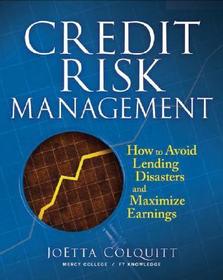
Credit Risk Management
How to Avoid Lending Disasters and Maximize Earnings
- Publisher's listprice GBP 67.99
-
30 697 Ft (29 235 Ft + 5% VAT)
The price is estimated because at the time of ordering we do not know what conversion rates will apply to HUF / product currency when the book arrives. In case HUF is weaker, the price increases slightly, in case HUF is stronger, the price goes lower slightly.
- Discount 10% (cc. 3 070 Ft off)
- Discounted price 27 627 Ft (26 312 Ft + 5% VAT)
Subcribe now and take benefit of a favourable price.
Subscribe
30 697 Ft

Availability
Estimated delivery time: In stock at the publisher, but not at Prospero's office. Delivery time approx. 3-5 weeks.
Not in stock at Prospero.
Why don't you give exact delivery time?
Delivery time is estimated on our previous experiences. We give estimations only, because we order from outside Hungary, and the delivery time mainly depends on how quickly the publisher supplies the book. Faster or slower deliveries both happen, but we do our best to supply as quickly as possible.
Product details:
- Edition number 3rd ed.
- Publisher McGraw Hill
- Date of Publication 16 July 2007
- ISBN 9780071446600
- Binding Hardback
- No. of pages372 pages
- Size 254x188x30 mm
- Weight 880 g
- Language English 0
Categories
Short description:
[Colquitt: Credit Risk Management, 0-07-144660-5]
[Back Cover Copy]
Learn the Latest Techniques for Managing Credit Risk
to Minimize Losses on Loans and Increase Company Profits
Credit Risk Management is a complete guide to the total integrated process of managing credit risk_ranging from the principles of credit risk analysis to advanced analytical techniques for improving the effectiveness of balance sheet management in financial institutions.
This introductory textbook explains how to manage credit risks under competitive and realistic conditions, offering detailed coverage of the credit process, lending objectives, funding strategies, risk evaluation, credit risk measurement, credit portfolio management, credit rating systems, and the economics of credit.
Comprehensive and authoritative, Credit Risk Management offers a clear, hands-on account of all the major concepts and applications of modern credit risk management and features:
- Learning objectives at the beginning of each chapter to provide a focus
for learning and a frame of reference for the material - Quick-check questions at the end of each section within a chapter that
ensure understanding of the preceding concepts - Chapter summary at the end of each chapter for reviewing the material
and pinpointing areas of necessary further study - Self-study questions at the end of each chapter, with 10 open-ended
questions for testing knowledge of the chapter's subject matter - Case studies, group discussions, exercises, and bibliographies to
deepen understanding of credit risk management[Flap Copy
Credit Risk Management is a comprehensive textbook that looks at the total integrated process for managing credit risk, ranging from the risk assessment of a single obligor to the risk measurement of an entire portfolio.
This expert learning tool introduces the principle concepts of credit risk analysis?explains the techniques used for improving the effectiveness of balance sheet management in financial institutions?and shows how to manage credit risks under competitive and realistic conditions. Credit Risk Management presents step-by-step coverage of:
- The Credit Process_discussing the operational practices and structural
processes to implement and create a sound credit environment - The Lending Objectives_explaining the credit selection process that is
used to evaluate new business, and describing how transaction risk
exposure becomes incorporated into portfolio selection risk - Company Funding Strategies_presenting an overview of the funding
strategies on some of the more commonly used financial products in the
extension of business credit - Company Specific Risk Evaluation_outlining some fundamental credit
analysis applications that can be used to assess transactions through the
framework of a risk evaluation guide - Qualitative Specific Risk Evaluation_offering additional approaches to
risk evaluate a borrower's industry and management - Credit Risk Measurement_defining the role of credit risk measurement,
presenting a basic framework to measure credit risk, and discussing some
of the standard measurement applications to quantify the economic loss
on a transaction's credit exposure - Credit Portfolio Management_exploring the basic concepts behind
credit portfolio management, and highlighting the distinctive factors that
drive the management of a portfolio of credit assets compared to a single
asset - Credit Rating Systems_analyzing the pivotal role that credit rating
systems have come to play in managing credit risk for lenders - The Economics of Credit_showing how the modern credit risk approach
has changed the economics of credit in order to achieve more profitable
earnings and maintain global stability in the financial markets
Filled with a wide range of study aids, Credit Risk Management is today's best guide to the concepts and practices of modern credit risk management, offering practitioners a detailed roadmap for avoiding lending mishaps and maximizing profits.
About the Author
JoEtta Colquitt is a professor at Mercy College and FT Knowledge and a professional trainer who has worked in higher education, training firms, and Fortune 500 companies. A specialist in financial credit risk training, she has over 20 years of experience in analyzing international transactions, companies, and risk exposure.
More - The Credit Process_discussing the operational practices and structural
Long description:
Credit Risk Management is a comprehensive textbook that looks at the total integrated process for managing credit risk, ranging from the risk assessment of a single obligor to the risk measurement of an entire portfolio.
This expert learning tool introduces the principle concepts of credit risk analysis?explains the techniques used for improving the effectiveness of balance sheet management in financial institutions?and shows how to manage credit risks under competitive and realistic conditions. Credit Risk Management presents step-by-step coverage of:
- The Credit Process_discussing the operational practices and structural processes to implement and create a sound credit environment
- The Lending Objectives_explaining the credit selection process that is used to evaluate new business, and describing how transaction risk exposure becomes incorporated into portfolio selection risk
- Company Funding Strategies_presenting an overview of the funding strategies on some of the more commonly used financial products in the extension of business credit
- Company Specific Risk Evaluation_outlining some fundamental credit analysis applications that can be used to assess transactions through the framework of a risk evaluation guide
- Qualitative Specific Risk Evaluation_offering additional approaches to risk evaluate a borrower's industry and management
- Credit Risk Measurement_defining the role of credit risk measurement, presenting a basic framework to measure credit risk, and discussing some of the standard measurement applications to quantify the economic loss on a transaction's credit exposure
- Credit Portfolio Management_exploring the basic concepts behind credit portfolio management, and highlighting the distinctive factors that drive the management of a portfolio of credit assets compared to a single asset
- Credit Rating Systems_analyzing the pivotal role that credit rating systems have come to play in managing credit risk for lenders
- The Economics of Credit_showing how the modern credit risk approach has changed the economics of credit in order to achieve more profitable earnings and maintain global stability in the financial markets
Filled with a wide range of study aids, Credit Risk Management is today's best guide to the concepts and practices of modern credit risk management, offering practitioners a detailed roadmap for avoiding lending mishaps and maximizing profits.
Credit Risk Management is a comprehensive textbook that looks at the total integrated process for managing credit risk, ranging from the risk assessment of a single obligor to the risk measurement of an entire portfolio.
This expert learning tool introduces the principle concepts of credit risk analysis?explains the techniques used for improving the effectiveness of balance sheet management in financial institutions?and shows how to manage credit risks under competitive and realistic conditions. Credit Risk Management presents step-by-step coverage of:
- The Credit Process_discussing the operational practices and structural processes to implement and create a sound credit environment
- The Lending Objectives_explaining the credit selection process that is used to evaluate new business, and describing how transaction risk exposure becomes incorporated into portfolio selection risk
- Company Funding Strategies_presenting an overview of the funding strategies on some of the more commonly used financial products in the extension of business credit
- Company Specific Risk Evaluation_outlining some fundamental credit analysis applications that can be used to assess transactions through the framework of a risk evaluation guide
- Qualitative Specific Risk Evaluation_offering additional approaches to risk evaluate a borrower's industry and management
- Credit Risk Measurement_defining the role of credit risk measurement, presenting a basic framework to measure credit risk, and discussing some of the standard measurement applications to quantify the economic loss on a transaction's credit exposure
- Credit Portfolio Management_exploring the basic concepts behind credit portfolio management, and highlighting the distinctive factors that drive the management of a portfolio of credit assets compared to a single asset
- Credit Rating Systems_analyzing the pivotal role that credit rating systems have come to play in managing credit risk for lenders
- The Economics of Credit_showing how the modern credit risk approach has changed the economics of credit in order to achieve more profitable earnings and maintain global stability in the financial markets
Filled with a wide range of study aids, Credit Risk Management is today's best guide to the concepts and practices of modern credit risk management, offering practitioners a detailed roadmap for avoiding lending mishaps and maximizing profits.
MoreTable of Contents:
1 INTRODUCTION
2 THE CREDIT PROCESS
3 WHAT ARE THE LENDING OBJECTIVES
4 COMPANY FUNDING STRATEGIES
5 COMPANY SPECIFIC RISK EVALUATION
6 QUALATIATIVE SPECIFIC RISK EVALUATION
7 CREDIT RISK MEASUREMENT
8 CREDIT PORTFOLIO MANAGEMENT
9 CREDIT RATING SYSTEMS
10 THE ECONOMICS OF CREDIT
More
