

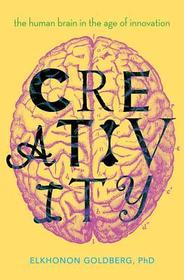
Creativity
The Human Brain in the Age of Innovation
- Publisher's listprice GBP 26.99
-
12 185 Ft (11 605 Ft + 5% VAT)
The price is estimated because at the time of ordering we do not know what conversion rates will apply to HUF / product currency when the book arrives. In case HUF is weaker, the price increases slightly, in case HUF is stronger, the price goes lower slightly.
- Discount 10% (cc. 1 219 Ft off)
- Discounted price 10 967 Ft (10 445 Ft + 5% VAT)
Subcribe now and take benefit of a favourable price.
Subscribe
12 185 Ft

Availability
printed on demand
Why don't you give exact delivery time?
Delivery time is estimated on our previous experiences. We give estimations only, because we order from outside Hungary, and the delivery time mainly depends on how quickly the publisher supplies the book. Faster or slower deliveries both happen, but we do our best to supply as quickly as possible.
Product details:
- Publisher OUP USA
- Date of Publication 31 January 2019
- ISBN 9780190466497
- Binding Hardback
- No. of pages296 pages
- Size 239x155x22 mm
- Weight 544 g
- Language English 0
Categories
Short description:
"Creativity: The Human Brain in the Age of Innovation" is about creativity, one of the most cherished and mysterious manifestations of the human mind, and what it is in the human brain and its interaction with culture, that allows us to expand how we think about things, generate new knowledge, and to explore unchartered territories. Based on a growing body of scientific literature, Elkhonon Goldberg points to several brain structures and processes that are involved in the creative process: the frontal lobes, the right and left hemispheres and their respective contributions, subcortical structures, various biochemical systems, and intricate neural network processes that work in concert for the creative act to happen. To that end, he discusses the brain mechanisms of deciding what is important and what is not; of confronting cognitive novelty; and the marshalling of previously acquired knowledge to generate new insights culminating in a creative product.
MoreLong description:
What is the nature of human creativity? What are the brain processes behind its mystique? What are the evolutionary roots of creativity? How does culture help shape individual creativity? Creativity: The Human Brain in the Age of Innovation by Elkhonon Goldberg is arguably the first ever book to address these and other questions in a way that is both rigorous and engaging, demystifying human creativity for the general public. The synthesis of neuroscience and the humanities is a unique feature of the book, making it of interest to an unusually broad range of readership. Drawing on a number of cutting-edge discoveries from brain research as well as on his own insights as a neuroscientist and neuropsychologist, Goldberg integrates them with a wide-ranging discussion of history, culture, and evolution to arrive at an original, compelling, and at times provocative understanding of the nature of human creativity. To make his argument, Goldberg discusses the origins of language, the nature of several neurological disorders, animal cognition, virtual reality, and even artificial intelligence. In the process, he takes the reader to different times and places, from antiquity to the future, and from Western Europe to South-East Asia. He makes bold predictions about the future directions of creativity and innovation in society, their multiple biological and cultural roots and expressions, about how they will shape society for generations to come, and even how they will change the ways the human brain develops and ages.
well written and wide-ranging ... Throughout the book, Goldberg embraces a strongly first-person presentation, which adds to the interest and memorability of his account.
Table of Contents:
TABLE OF CONTENTS
PREFACE
ACKNOWLEDGEMENTS
CHAPTER 1. THE AGE OF NOVELTY
CHAPTER 2. THE NEUROMYTHOLOGY OF CREATIVITY
From neuroorphans to neurofads
"Bad and useless"
Deconstructing innovation and creativity
Multiple creativities
CHAPTER 3. THE CONSERVATIVE BRAIN
How we know what we know
Mapping the world in the brain
How language found its home
"Isomorphic gradients"
Dementia with a silver lining?
CHAPTER 4. THE MERMAID AND THE LEGO MASTER (AND THE CAVE LION-MAN)
How is a new idea born?
Mechanics behind the metaphor - the macro view
The working memory conundrum
Phantoms in the brain - the micro view
CHAPTER 5. IT IS ALL ABOUT SALIENCE!
The salience circuit
Salient default
Salience, dopamine, and frontal arousal - or lack thereof
Salience diluted
Salience hijacked
CHAPTER 6. THE INNOVATING BRAIN
The novelty challenge
Hemispheres misunderstood
The novel and the routine
Wired for novelty
Driven by novelty
Novelty overdrive
CHAPTER 7. DIRECTED WANDERING AND THE INEFFABLE CREATIVE SPARK
No monkey business
The extreme frontal lobes
Dorsolateral bistability: Inspiration and perspiration
Lego master at work: creative perspiration
Lego master at rest: creative inspiration? Not yet
The brain's small world
Directed mental wondering: The creative spark
Iteration and selection
CHAPTER 8. IS THE BABOON CREATIVE?
Novelty in evolution
Human development and animal creativity
CHAPTER 9. THE CREATIVE MIND
A few worthy feats
Conform or not conform?
The theory of mind's mixed blessing
Creativity and intelligence
A few worthy tests
How bad is mad?
Creating minds
CHAPTER 10. THE CREATIVE BRAIN
A few worthy brains
Connectivity of creativity
Life in a small world
The advantages of having a coat
The advantages of not having a coat
Are "creativity genes" for real?
CHAPTER 11. EPILOGUE: WHAT'S NEXT?
Summing up and looking forward
Consuming innovation
Creating innovation
CHAPTER NOTES
INDEX

