

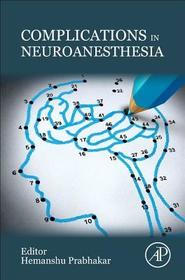
Complications in Neuroanesthesia
- Publisher's listprice EUR 89.95
-
37 306 Ft (35 530 Ft + 5% VAT)
The price is estimated because at the time of ordering we do not know what conversion rates will apply to HUF / product currency when the book arrives. In case HUF is weaker, the price increases slightly, in case HUF is stronger, the price goes lower slightly.
- Discount 10% (cc. 3 731 Ft off)
- Discounted price 33 576 Ft (31 977 Ft + 5% VAT)
Subcribe now and take benefit of a favourable price.
Subscribe
37 306 Ft

Availability
printed on demand
Why don't you give exact delivery time?
Delivery time is estimated on our previous experiences. We give estimations only, because we order from outside Hungary, and the delivery time mainly depends on how quickly the publisher supplies the book. Faster or slower deliveries both happen, but we do our best to supply as quickly as possible.
Product details:
- Publisher Elsevier Science
- Date of Publication 10 February 2016
- ISBN 9780128040751
- Binding Paperback
- No. of pages500 pages
- Size 229x152 mm
- Weight 860 g
- Language English 0
Categories
Long description:
Complications in Neuroanesthesia focuses on complications that may arise related to neuroanesthesia practice and discusses its various causes. Each complication is written as a separate chapter, and the pathophysiology and mechanisms of each complication, as well as measures for diagnosis, treatment and prevention are discussed. Towards the end of the book, several case scenarios are provided to the readers that challenge readers to diagnose the possible complication for each case. Chapters include brain and spinal cord problems, cardiovascular and hematological problems, and nerve and muscle problems.
Written in a standard format, Complications in Neuroanesthesia provides quick and easy access to understanding problems in neuroanesthesia. It provides insight into all possible complications occurring during perioperative management of neurosurgical and neurologic patients. It is useful for trainees, clinicians, and researchers in the fields of neurosurgery, neurocritical care, and neurology by providing an understanding of preventable mishaps that may occur in neurosurgical or neurologic patients.
MoreTable of Contents:
Section I. Complications Related to the Brain
1. Brain herniation
2. Delayed emergence
3. Hydrocephalus
4. Normal Perfusion Pressure Breakthrough
5. Pneumocephalus
6. Seizures
7. Brain swelling and Tense Brain
Section II. Complications Related to Spinal Cord
8. Autonomic disturbances
9. Pneumorrhachis
10. Post-Operative Paraplegia and Quadriplegia
11. Spinal shock
Section III. Complications Related to Cardiovascular System
12. Aneurysm / arteriovascular malformation rupture
13. Vasospasm
14. Electrocardiogram abnormalities
15. Hemodynamic instability
16. Vascular injuries
Section IV. Complications related to coagulations
17. Coagulopathy
18. Postoperative hematoma
19. Thromboembolism
Section V. Complications Related to Respiratory System
20. Hypercarbia
21. Hypoxia
22. Neurogenic pulmonary edema
Section VI. Complications Related to Airway
23. Intraoperative increased airway pressure
24. Difficult airway - Adults
25. Difficult airway - pediatrics
26. Stridor
Section VII. Complications Related to Fluid and Electrolyte Disturbances
27. Osmotic demyelination syndromes
28. Cerebral Salt Wasting
29. Diabetes Insipidus
30. Syndrome of Inappropriate Antidiuretic Hormone Secretion (SIADH)
Section VIII. Postoperative Pain
31. Pain following spine surgery
32. Post-craniotomy pain
Section IX. Miscellaneous
33. Anaphylaxis
34. Hazards of Advanced Neuromonitoring
35. Hypothermia
36. Nausea and vomiting
37. Peripheral nerve injuries
38. Pharmacological complications
39. Position related complications
40. Postoperative vision loss
41. Postoperative cognitive dysfunction
42. Trigeminocardiac reflex
43. Venous air embolism
Section X. Clinical Scenarios
44. Clinical Scenario 1
45. Clinical Scenario 2
46. Clinical Scenario 3
47. Clinical Scenario 4
48. Clinical Scenario 5
49. Clinical Scenario 6
50. Clinical Scenario 7
51. Clinical Scenario 8
52. Clinical Scenario 9
53. Clinical Scenario 10

