

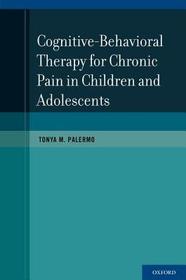
Cognitive-Behavioral Therapy for Chronic Pain in Children and Adolescents
- Publisher's listprice GBP 73.00
-
34 875 Ft (33 215 Ft + 5% VAT)
The price is estimated because at the time of ordering we do not know what conversion rates will apply to HUF / product currency when the book arrives. In case HUF is weaker, the price increases slightly, in case HUF is stronger, the price goes lower slightly.
- Discount 10% (cc. 3 488 Ft off)
- Discounted price 31 388 Ft (29 894 Ft + 5% VAT)
Subcribe now and take benefit of a favourable price.
Subscribe
34 875 Ft

Availability
printed on demand
Why don't you give exact delivery time?
Delivery time is estimated on our previous experiences. We give estimations only, because we order from outside Hungary, and the delivery time mainly depends on how quickly the publisher supplies the book. Faster or slower deliveries both happen, but we do our best to supply as quickly as possible.
Product details:
- Publisher OUP USA
- Date of Publication 24 May 2012
- ISBN 9780199763979
- Binding Paperback
- No. of pages240 pages
- Size 231x152x12 mm
- Weight 340 g
- Language English 0
Categories
Short description:
Cognitive-Behavioral Therapy for Chronic Pain in Children and Adolescents provides instruction on the use of cognitive-behavioral therapy (CBT) for children and their families coping with the consequences of persisting pain.
MoreLong description:
Chronic pain is a significant health problem for many children and adolescents and is often challenging for healthcare professionals to treat. Estimated to affect approximately 15% to 30% of children, chronic and recurrent pain occurs most commonly in the pediatric population without clearly identifiable underlying physical etiology, such as pain associated with irritable bowel syndrome, headaches, musculoskeletal pain, or complex regional pain syndrome. Chronic or recurrent pain may also be associated with ongoing underlying medical conditions, such as arthritis, cancer, Crohn's disease, or sickle cell disease.
Cognitive-Behavioral Therapy for Chronic Pain in Children and Adolescents provides a practical guide for implementing cognitive-behavioral therapy (CBT) for children and their families coping with the consequences of persisting pain. The book is divided into three sections. The first section presents a brief history, theoretical foundations, and background concerning the development of CBT interventions for children with chronic pain conditions and summarizes research results on the efficacy of CBT. Chapters in the second section cover assessment and evaluation approaches, patient education, and how to structure and sequence CBT interventions with children and families. The last section of the book describes in detail each cognitive-behavioral intervention, including relaxation and cognitive skills and interventions directed at parents, sleep problems, physical activity, and school functioning. Extensive suggested dialogue and detailed instructions and handouts are included in the text and accompanying appendices to provide user-friendly therapist training materials for successful application of clinical techniques to children and families. Cognitive-Behavioral Therapy for Chronic Pain in Children and Adolescents is an essential, evidence-based resource for pediatric and child clinical psychologists and other mental health professionals (social workers, child psychiatrists) who work with children in pain.
Table of Contents:
Part I: Introduction to cognitive-behavioral therapy for chronic pain in children and adolescents
1. The problem of chronic pain in children and adolescents
2. A brief history: development of CBT in pediatric pain management
3. The evidence base for cognitive-behavioral therapy for pediatric chronic pain
Part II: Assessment, education, and treatment planning
4. Assessment and evaluation
5. Education and treatment planning
Part III: Interventions
6. Relaxation, imagery, and biofeedback training
7. Parental intervention strategies
8. Cognitive skills training
9. School interventions
10. Sleep interventions
11. Lifestyle and physical activity interventions
12. Conclusions and future directions
Appendices
1. Pain diary
2. Educational resources for parents
3. Basic abdominal breathing instructions.
4. Progressive muscle relaxation script for younger children (under 10 years)
5. Progressive muscle relaxation script for older children (ages 10 and above)
6. Pleasant place imagery
7. Muscle relaxation with imagery script
8. Relaxation practice tips
9. Relaxation practice log and diary
10. Parent management guidelines
11. Point system contract and tracking calendar
12. Privilege system contract
13. Tips for parents to establish an effective reward system
14. Tips for establishing good communication habits
15. Positive coping self statements worksheet
16. Thought record
17. Thought-stopping instructions
18. Thought continuum exercise
19. School letter sample
20. Sleep diary
21. Tips for improving your sleep
22. Stimulus control instructions
23. Instructions for activity pacing
24. Pleasant activities chart
References
Index

