

- Publisher's listprice GBP 9.99
-
4 510 Ft (4 295 Ft + 5% VAT)
The price is estimated because at the time of ordering we do not know what conversion rates will apply to HUF / product currency when the book arrives. In case HUF is weaker, the price increases slightly, in case HUF is stronger, the price goes lower slightly.
- Discount 10% (cc. 451 Ft off)
- Discounted price 4 059 Ft (3 866 Ft + 5% VAT)
Subcribe now and take benefit of a favourable price.
Subscribe
4 510 Ft

Availability
Estimated delivery time: In stock at the publisher, but not at Prospero's office. Delivery time approx. 3-5 weeks.
Not in stock at Prospero.
Why don't you give exact delivery time?
Delivery time is estimated on our previous experiences. We give estimations only, because we order from outside Hungary, and the delivery time mainly depends on how quickly the publisher supplies the book. Faster or slower deliveries both happen, but we do our best to supply as quickly as possible.
Product details:
- Publisher OUP Oxford
- Date of Publication 28 April 2022
- ISBN 9780198755272
- Binding Paperback
- No. of pages176 pages
- Size 175x112x10 mm
- Weight 134 g
- Language English
- Illustrations 30 black and white images 292
Categories
Short description:
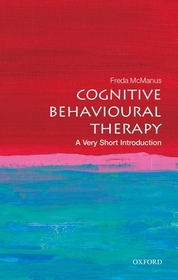
CBT is a form of psychological therapy with a range of approaches that share a common underpinning model of the importance of cognition and behaviour in alleviating psychological distress. This book gives an overview of what CBT is, what it does, when it can be used, and the ways in which the field can adapt to meet future challenges.
MoreLong description:
Very Short Introductions: Brilliant, Sharp, Inspiring
Cognitive behaviour therapy (CBT) is a form of psychological therapy. It is not a unitary approach, but instead has evolved through a range of approaches that share a common underpinning model of cognition (thought) and behaviour being important in understanding and alleviating psychological distress. While the earliest approaches focused on modifying observable behaviour, later versions emphasized cognitive processes. Most recently, the third wave approaches in CBT have moved the focus away from the content of an individual's thoughts to their relationship with their thoughts, and the processes underlying thinking.
This Very Short Introduction gives an overview of what CBT is, where it came from, what it does, and when it can be used. It explores how one of the driving forces behind CBT's success and continued adaptation has been its basis in empiricism, and analyses how it must continue to evolve to meet future challenges. Looking to the future, Freda McManus also discusses how the scale of mental health problems and relative costs of traditional therapy formats have prompted investigations into alternative formats of CBT that have the potential to reach broader audiences, globally. She also considers the challenges of scale in training the workforce required to roll out such interventions, as well as those of determining the best ways of monitoring their competence and effectiveness.
ABOUT THE SERIES: The Very Short Introductions series from Oxford University Press contains hundreds of titles in almost every subject area. These pocket-sized books are the perfect way to get ahead in a new subject quickly. Our expert authors combine facts, analysis, perspective, new ideas, and enthusiasm to make interesting and challenging topics highly readable.
Table of Contents:
The behavioural origins of CBT.
Putting the 'C' into CBT
The theory behind CBT
The style and structure of CBT
CBT methods
Applications of CBT
Future directions and challenges
Further Reading
Index

