

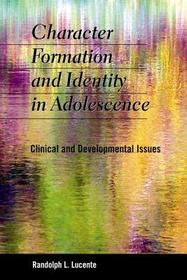
Character Formation and Identity in Adolescence
Clinical and Developmental Issues
- Publisher's listprice GBP 59.00
-
26 638 Ft (25 370 Ft + 5% VAT)
The price is estimated because at the time of ordering we do not know what conversion rates will apply to HUF / product currency when the book arrives. In case HUF is weaker, the price increases slightly, in case HUF is stronger, the price goes lower slightly.
- Discount 10% (cc. 2 664 Ft off)
- Discounted price 23 975 Ft (22 833 Ft + 5% VAT)
Subcribe now and take benefit of a favourable price.
Subscribe
26 638 Ft

Availability
printed on demand
Why don't you give exact delivery time?
Delivery time is estimated on our previous experiences. We give estimations only, because we order from outside Hungary, and the delivery time mainly depends on how quickly the publisher supplies the book. Faster or slower deliveries both happen, but we do our best to supply as quickly as possible.
Product details:
- Publisher OUP USA
- Date of Publication 1 June 2012
- ISBN 9780190616311
- Binding Paperback
- No. of pages176 pages
- Size 152x226x10 mm
- Weight 241 g
- Language English 0
Categories
Long description:
Randolph Lucente examines the development of character in the adolescent stage, the process of a second separation-individuation, and ways to treat the adolescent client. Character Formation and Identity in Adolescence draws on psychodynamic and psychoanalytic theory as well as neuropsychobiology to explain the adolescent transition to an adult sense of self. The clinical material features in-depth case vignettes that include clients on the borderline/narcissistic spectrum with arrests in separation-individuation substages and insecure early attachments. Therapeutic attunements that are affect-regulating, mentalizing, and mindsight-oriented are featured in each of these clinical vignettes and suggest outcomes that potentiate vertical as well as bilateral cerebral hemispheric integrations. The book contains a synthesis of the theories of psychoanalysis, psychodynamics, self psychology, neurobiology, and the concepts of intersubjectivity, attachment-differentiation, narcissism, and affect regulation.
I found the work to be clear and very well written. Moreover, the link between psychoanalytic theory and adolescent development seemed quite enlightening, providing a perspective that few students receive in undergraduate course work. The depth and nature of its content brings a clearer understanding to the many issues that face not only adolescents, but their parents as well." -Joseph F. Imburgia, Moraine Valley Community
Table of Contents:
Acknowledgments
Preface
Chapter 1. Adolescent Development and Clinical Process
Chapter 2. Narcissism, Character Formation, and Separation-Individuation
Chapter 3. Splitting, Differentiation, and Identity
Chapter 4. Affect Regulation and the True Self
Chapter 5. Qualitative Clinical Inquiry
References
Index

