

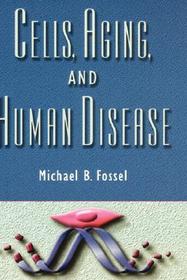
Cells, Aging, and Human Disease
- Publisher's listprice GBP 112.50
-
53 746 Ft (51 187 Ft + 5% VAT)
The price is estimated because at the time of ordering we do not know what conversion rates will apply to HUF / product currency when the book arrives. In case HUF is weaker, the price increases slightly, in case HUF is stronger, the price goes lower slightly.
- Discount 10% (cc. 5 375 Ft off)
- Discounted price 48 372 Ft (46 068 Ft + 5% VAT)
Subcribe now and take benefit of a favourable price.
Subscribe
53 746 Ft

Availability
printed on demand
Why don't you give exact delivery time?
Delivery time is estimated on our previous experiences. We give estimations only, because we order from outside Hungary, and the delivery time mainly depends on how quickly the publisher supplies the book. Faster or slower deliveries both happen, but we do our best to supply as quickly as possible.
Product details:
- Publisher OUP USA
- Date of Publication 24 June 2004
- ISBN 9780195140354
- Binding Hardback
- No. of pages504 pages
- Size 234x156x26 mm
- Weight 875 g
- Language English
- Illustrations numerous halftones 0
Categories
Short description:
This is the first textbook to explain human aging from genes to clinical disease. With over 4,000 references, it explores both the fundamental processes of aging and the resultant tissue-by-tissue clinical pathology, detailing both breaking research and current state-of-the art clinical interventions in aging and age-related disease. It is the only book on the market to emphasize the theory of aging as caused by cell senescence rather than the traditionally held wear-and-tear theory.
MoreLong description:
This is the first textbook to explain human aging from genes to clinical disease. With over 4,000 references, it explores both the fundamental processes of aging and the resultant tissue-by-tissue clinical pathology, detailing both breaking research and current state-of-the art clinical interventions in aging and age-related disease. It is the only book on the market to emphasize the theory of aging as caused by cell senescence rather than the traditionally held wear-and-tear theory.
...this book is an imporatant contribution on aging - especially cell senescene - and it, hopefully, stimulates researchers to have a closer more open-minded look at this vital biological process.

