

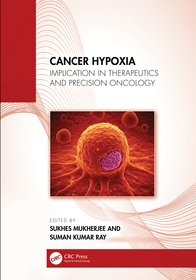
Cancer Hypoxia
Implication in Therapeutics and Precision Oncology
- Publisher's listprice GBP 110.00
-
52 552 Ft (50 050 Ft + 5% VAT)
The price is estimated because at the time of ordering we do not know what conversion rates will apply to HUF / product currency when the book arrives. In case HUF is weaker, the price increases slightly, in case HUF is stronger, the price goes lower slightly.
- Discount 10% (cc. 5 255 Ft off)
- Discounted price 47 297 Ft (45 045 Ft + 5% VAT)
Subcribe now and take benefit of a favourable price.
Subscribe
52 552 Ft

Availability
Not yet published.
Why don't you give exact delivery time?
Delivery time is estimated on our previous experiences. We give estimations only, because we order from outside Hungary, and the delivery time mainly depends on how quickly the publisher supplies the book. Faster or slower deliveries both happen, but we do our best to supply as quickly as possible.
Product details:
- Edition number 1
- Publisher CRC Press
- Date of Publication 12 March 2026
- ISBN 9781032761800
- Binding Hardback
- No. of pages256 pages
- Size 254x178 mm
- Weight 453 g
- Language English
- Illustrations 44 Illustrations, color; 44 Line drawings, color; 19 Tables, black & white 700
Categories
Short description:
This book reviews the crucial role of hypoxia in initiation and progression of cancer. It explores hypoxia-driven signaling pathways, immune microenvironments, and strategies to combat hypoxia-induced immune suppression. This book is useful resource for oncologists and researchers in the field of cancer.
MoreLong description:
This book comprehensively reviews the role of hypoxia in cancer initiation and progression. It explores hypoxia-driven signaling pathways and the immune microenvironment in hypoxic tumors, offering insights into network implications for cancer development and therapy, along with strategies to counter hypoxia-induced immune suppression. Investigating influence of hypoxia on cancer stem cells and cellular stemness, the book highlights its role in maintaining stemness at hypoxic niches and potential therapeutic opportunities. The book, in turn, explores tools and techniques for the detection of hypoxic phenotypes and in vivo models for studying hypoxic cancer, angiogenesis, and vasculature remodeling in hypoxic tumors, discussing innovative drug delivery, and targeting hypoxia-inducible factors. Finally, it outlines clinical applications of hypoxia research in cancer therapy, ranging from advancements in radiation strategies to biomarkers, diagnosis, precision medicine, and future directions in hypoxia-activated prodrug research. This comprehensive resource serves as a valuable reference for researchers, clinicians, and professionals engaged in understanding and combating cancer hypoxia.
Key features
- Offers a thorough review of the role of hypoxia in cancer initiation and progression
- Presents complex hypoxia-driven signaling pathways in tumors and their implications for cancer development and therapy
- Role of hypoxia in maintaining stemness within hypoxic niches and potential therapeutic opportunities
- Discusses ways to enhance drug efficacy in hypoxic tumor microenvironments.
- Explores therapeutic approaches targeting hypoxic tumor vasculature.
Table of Contents:
Hypoxia in the tumor microenvironment and cellular responses. 2. Hypoxia's role in cancer progression and their significance. 3. Unraveling intricate hypoxia signaling networks and implications for cancer development and therapy. 4. Strategies to target hypoxia-induced immune suppression and immune escape mechanisms. 5. Role of hypoxia in cancer stem cell characteristics. 6. Stemness maintenance at hypoxic niches and therapeutic opportunities in targeting hypoxic cancer stem cells. 7. Innovative Tools and techniques for visualization of cancer hypoxia. 8. In vivo models for studying hypoxic cancer. 9. Hypoxia-driven angiogenesis in cancer. 10. Therapeutic approaches targeting hypoxic tumor vasculature. 11. Novel strategies for drug delivery in hypoxic tumors. 12. Enhancing drug efficacy in hypoxic tumor microenvironments. 13. Biomarkers and diagnosis in the context of hypoxic tumors. 14. Precision medicine approaches in hypoxic cancers.
More
