

- Publisher's listprice GBP 84.00
-
37 926 Ft (36 120 Ft + 5% VAT)
The price is estimated because at the time of ordering we do not know what conversion rates will apply to HUF / product currency when the book arrives. In case HUF is weaker, the price increases slightly, in case HUF is stronger, the price goes lower slightly.
- Discount 10% (cc. 3 793 Ft off)
- Discounted price 34 133 Ft (32 508 Ft + 5% VAT)
Subcribe now and take benefit of a favourable price.
Subscribe
37 926 Ft

Availability
printed on demand
Why don't you give exact delivery time?
Delivery time is estimated on our previous experiences. We give estimations only, because we order from outside Hungary, and the delivery time mainly depends on how quickly the publisher supplies the book. Faster or slower deliveries both happen, but we do our best to supply as quickly as possible.
Product details:
- Publisher OUP USA
- Date of Publication 2 February 2022
- ISBN 9780190907631
- Binding Hardback
- No. of pages248 pages
- Size 159x241x18 mm
- Weight 481 g
- Language English 176
Categories
Short description:
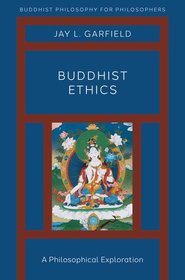
Buddhist Ethics presents an outline of Buddhist ethical thought. It is not a defense of Buddhist approaches to ethics as opposed to any other, nor is it a critique of the Western tradition. Garfield presents a broad overview of a range of Buddhist approaches to the question of moral philosophy. He argues that while there are important points of contact with these Western frameworks, Buddhist ethics is distinctive, and is a kind of moral phenomenology that is concerned with the ways in which we experience ourselves as agents and others as moral fellows.
MoreLong description:
Buddhist Ethics presents an outline of Buddhist ethical thought. It is not a defense of Buddhist approaches to ethics as opposed to any other, nor is it a critique of the Western tradition. Garfield presents a broad overview of a range of Buddhist approaches to the question of moral philosophy. He draws on a variety of thinkers, reflecting the great diversity of this 2500-year-old tradition in philosophy but also the principles that tie them together. In particular, he engages with the literature that argues that Buddhist ethics is best understood as a species of virtue ethics, and with those who argue that it is best understood as consequentialist. Garfield argues that while there are important points of contact with these Western frameworks, Buddhist ethics is distinctive, and is a kind of moral phenomenology that is concerned with the ways in which we experience ourselves as agents and others as moral fellows. With this framework, Garfield explores the connections between Buddhist ethics and recent work in moral particularism, such as that of Jonathan Dancy, as well as the British and Scottish sentimentalist tradition represented by Hume and Smith.
the book fills an important gap among presentations of Buddhist ethics. It presents Buddhist ethics as a live option, inviting readers to consider turning their attention away from the traditional questions of Western ethics and toward Buddhist questions.
Table of Contents:
Preface
Part I: Structure
1. Methodological Introduction
2. The Broad Structure of Buddhist Ethics
3. Buddhist Ethics as Moral Phenomenology
4. Agency and Action Theory
5. Narrative in Buddhist Ethics
Part II: Doctrine
6. The Four Noble Truths
7. Path as a Structure for Buddhist Ethics
8. The Six Perfections and the Bodhisattva Path
9. The Brahmavih?ras and the Achievement of Nonegocentricity
10. The Importance of Vow
Part III: Contemporary Issues
11. Naturalism
12. Engaged Buddhism
13. Coda: What Buddhist Ethics Brings to the Table
References

