

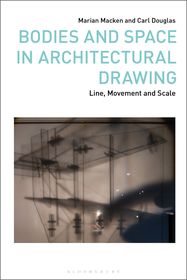
- Publisher's listprice GBP 85.00
-
38 377 Ft (36 550 Ft + 5% VAT)
The price is estimated because at the time of ordering we do not know what conversion rates will apply to HUF / product currency when the book arrives. In case HUF is weaker, the price increases slightly, in case HUF is stronger, the price goes lower slightly.
- Discount 20% (cc. 7 675 Ft off)
- Discounted price 30 702 Ft (29 240 Ft + 5% VAT)
- Discount is valid until: 30 June 2026
Subcribe now and take benefit of a favourable price.
Subscribe
38 377 Ft

Availability
Not yet published.
Why don't you give exact delivery time?
Delivery time is estimated on our previous experiences. We give estimations only, because we order from outside Hungary, and the delivery time mainly depends on how quickly the publisher supplies the book. Faster or slower deliveries both happen, but we do our best to supply as quickly as possible.
Product details:
- Publisher Bloomsbury Publishing (UK)
- Date of Publication 9 July 2026
- ISBN 9781350385580
- Binding Hardback
- No. of pages232 pages
- Size 236x158x20 mm
- Weight 625 g
- Language
- Illustrations 105 colour illus 700
Categories
Short description:
This book explores how architects perceive and shape space through drawing, positioning the body not just as a subject but as an active tool for design.
MoreLong description:
Envisioning architectural drawing as a full-scale, bodily, and spatial practice, Marian Macken and Carl Douglas explore how architects imagine, perceive, and shape space through drawing, positioning the body not just as a subject but as an active medium for design.
Bodies and Space in Architectural Drawing challenges conventional scale relationships and advocates for full-scale, performative drawing methods that expand the boundaries of architectural practice. Drawing is defined as a verb: a matter of time and duration. Drawings are inhabited, present, and embodied-redefining how space is measured, represented, and understood. Through case studies and examples, the authors examine diverse approaches to architectural drawing, including motion-capture and immersive technologies, analogue and digital methods of scanning, and gestural drawing. They highlight how drawing can be inhabited by both the drawer and the viewer, offering a dynamic, immersive experience.
Crucially, this book reinstates drawing as a spatial, temporal, and bodily act. It reframes the role of scaled artefacts-models, maps, and drawings-as intermediaries that mobilise architectural thinking. Rather than treating the body as a static reference point, it explores how moving, thinking bodies generate and reside within drawings. This is essential reading for students, practitioners, and researchers in architecture and spatial design seeking to rethink drawing as a performative and conceptual tool
Table of Contents:
List of Figures
Acknowledgements
Introduction. Architectural Bodies
Chapter 1. Drawing in Space: Expansions of Architectural Drawing
Chapter 2. Drawing Out: Scale and the Displaced Body
Chapter 3. Drawing in Time: Tracking Lines in Motion
Chapter 4. Inhabiting Drawing: Fields of Encounter
Chapter 5. Drawing Room: Embodiment in Studio
Conclusion. Thinking Through Drawing
Notes
References
Index

