

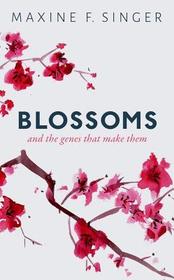
Blossoms
And the genes that make them
- Publisher's listprice GBP 20.99
-
10 027 Ft (9 550 Ft + 5% VAT)
The price is estimated because at the time of ordering we do not know what conversion rates will apply to HUF / product currency when the book arrives. In case HUF is weaker, the price increases slightly, in case HUF is stronger, the price goes lower slightly.
- Discount 10% (cc. 1 003 Ft off)
- Discounted price 9 025 Ft (8 595 Ft + 5% VAT)
Subcribe now and take benefit of a favourable price.
Subscribe
10 027 Ft

Availability
printed on demand
Why don't you give exact delivery time?
Delivery time is estimated on our previous experiences. We give estimations only, because we order from outside Hungary, and the delivery time mainly depends on how quickly the publisher supplies the book. Faster or slower deliveries both happen, but we do our best to supply as quickly as possible.
Product details:
- Publisher OUP Oxford
- Date of Publication 26 April 2018
- ISBN 9780198811138
- Binding Hardback
- No. of pages176 pages
- Size 224x142x19 mm
- Weight 308 g
- Language English
- Illustrations A number of black and white halftones and an 8 page colour plate section 0
Categories
Short description:
Flowers evolved to attract pollinators, so new generations of plant can form. But how do plants know when to bloom, and how do they construct their flowers? This book describes what we have learnt of the astonishing genetic and epigenetic processes behind the dazzling variety of flower shapes, colours, and scents.
MoreLong description:
How do plants, even if still buried underground, know that it's their time to bloom? What signals them to begin the challenging task of making flowers, and how do they make the variety of flower shapes, colours, and scents? What kind of instructions does the plant carry?
Flowers enrich the beauty of meadows and gardens, but of course, they are not there simply to please us. Biologically, blossoms form a critical aspect of the reproductive cycle of many plants. In this book, the distinguished scientist Maxine Singer explains what we have pieced together about the genetics behind flowering. She describes in a clear and accessible account the key genes which, regulated by other genes, modulated by epigenetic effects, and responding to environmental cues, cause plants to flower at a particular time, and define the variety of flowers. The remarkably intricate processes involved in making flowers have evolved in nature alongside the pollinating birds and insects that the flowers must attract if there is to be another generation. The processes involved in flowering have only been unravelled in the past twenty years, and the implications for ensuring production of food, including fruits and seeds, are profound. This is cutting-edge science, and we have much still to learn, but the story being revealed that lies behind the flowers in our gardens, parks, and fields is proving astonishing.
If you've ever been fascinated by watching flowers grow and wondered how plants make them, this fascinating book is for you. I guarantee you will never look at flowers the same way again.
Table of Contents:
Introduction
PART I: What Plants are and What They Can Do
Names
Plants are like animals only different
Sensing the Environment
PART II: How Genes Work
How Genes Work
Switching Genes On and Off
PART III: Time To Flower
Growing Up Green
Warm and Cold
Light and Dark
PART IV: Shaping a Flower
The Construction Site
Special Shapes
PART V: Decorating a Flower
Painting the Petals
The Perfume Factory
A Final Word
Glossary

