

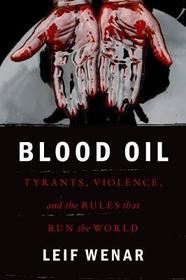
Blood Oil
Tyrants, Violence, and the Rules That Run the World
- Publisher's listprice GBP 22.99
-
10 379 Ft (9 885 Ft + 5% VAT)
The price is estimated because at the time of ordering we do not know what conversion rates will apply to HUF / product currency when the book arrives. In case HUF is weaker, the price increases slightly, in case HUF is stronger, the price goes lower slightly.
- Discount 10% (cc. 1 038 Ft off)
- Discounted price 9 341 Ft (8 897 Ft + 5% VAT)
Subcribe now and take benefit of a favourable price.
Subscribe
10 379 Ft

Availability
Out of print
Why don't you give exact delivery time?
Delivery time is estimated on our previous experiences. We give estimations only, because we order from outside Hungary, and the delivery time mainly depends on how quickly the publisher supplies the book. Faster or slower deliveries both happen, but we do our best to supply as quickly as possible.
Product details:
- Publisher Oxford University Press
- Date of Publication 19 February 2016
- ISBN 9780190262921
- Binding Hardback
- No. of pages552 pages
- Size 237x163x42 mm
- Weight 865 g
- Language English 0
Categories
Short description:
Tyranny, war, corruption and terrorism follow oil and other natural resources-because of the same law that once allowed the slave trade and genocide, conquest and apartheid. Political philosopher Leif Wenar shows how the West can lead the world beyond blood oil and conflict minerals to a more united, enlightened future.
MoreLong description:
Natural resources like oil and minerals are the largest source of unaccountable power in the world. Petrocrats like Putin and the Saudis spend resource money on weapons and oppression; militants in Iraq and in the Congo spend resource money on radicalization and ammunition. Resource-fueled authoritarians and extremists present endless crises to the West - and the source of their resource power is ultimately ordinary consumers, doing their everyday shopping at the gas
station and the mall.
In this sweeping new book, one of today's leading political philosophers, Leif Wenar, goes behind the headlines in search of the hidden global rule that thwarts democracy and development - and that puts shoppers into business with some of today's most dangerous men. Wenar discovers a rule that once licensed the slave trade and apartheid and genocide, a rule whose abolition has marked some of humanity's greatest triumphs-yet a rule that still enflames tyranny and war and terrorism through
today's multi-trillion dollar resource trade.
Blood Oil shows how the West can now lead a peaceful revolution by ending its dependence on authoritarian oil, and by getting consumers out of business with the men of blood. The book describes practical strategies for upgrading world trade: for choosing new rules that will make us more secure at home, more trusted abroad, and better able to solve pressing global problems like climate change. Blood Oil shows citizens, consumers and leaders how we can act together today to
create a more united human future.
Wenars argument is morally very compelling [an] outstanding book.
Table of Contents:
Introduction
Need to Know Basis: The Facts about Resources, the Oil Companies and the Oil Countries
Summary of the Book
Part I. Them v. Them
Chapter 1. Addicted to Money
Chapter 2. Power-What Big Men Want
Chapter 3. Coercion, Corruption
Chapter 4. Then Maybe Blood
Part II. Them v. Us v. Us
Chapter 5. Might Makes Right
Chapter 6. Curses on Us: Petrocrats, Terrorists and Conflict
Chapter 7. How Might Makes Right
Chapter 8. Gripping Dirty Hands
Part III. The People's Rights
Chapter 9. Counter-Power
Chapter 10. The Determination of Peoples
Chapter 11. Popular Resource Sovereignty
Chapter 12. The State of the Law
Chapter 13. Popular Philosophy
Chapter 14. Our Corruption: Why Leaders Must Lie
Part IV. Clean Trade Policy
Chapter 15. Principles for Action
Chapter 16. Clean Trade Policy I - Protecting Property Rights
Chapter 17. Clean Trade Policy II - Empowering the People
Part V. All United
Chapter 18. The Future Together
Epilogue. The Ideal of Unity
Notes
References
Index

