

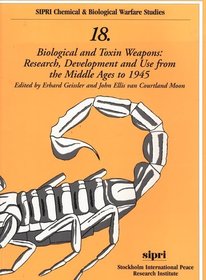
Biological and Toxin Weapons
Research, Development and Use from the Middle Ages to 1945
Series: SIPRI Chemical & Biological Warfare Studies; 18;
- Publisher's listprice GBP 145.00
-
65 467 Ft (62 350 Ft + 5% VAT)
The price is estimated because at the time of ordering we do not know what conversion rates will apply to HUF / product currency when the book arrives. In case HUF is weaker, the price increases slightly, in case HUF is stronger, the price goes lower slightly.
- Discount 10% (cc. 6 547 Ft off)
- Discounted price 58 921 Ft (56 115 Ft + 5% VAT)
Subcribe now and take benefit of a favourable price.
Subscribe
65 467 Ft

Availability
printed on demand
Why don't you give exact delivery time?
Delivery time is estimated on our previous experiences. We give estimations only, because we order from outside Hungary, and the delivery time mainly depends on how quickly the publisher supplies the book. Faster or slower deliveries both happen, but we do our best to supply as quickly as possible.
Product details:
- Publisher OUP Oxford
- Date of Publication 14 October 1999
- ISBN 9780198295792
- Binding Paperback
- No. of pages296 pages
- Size 296x209x18 mm
- Weight 765 g
- Language English 0
Categories
Short description:
This interdisciplinary book analyses the origins of biological warfare planning and preparation up to the end of World War II.
MoreLong description:
This interdisciplinary book analyses the origins of biological warfare planning and preparation up to the end of World War II. In the period between World War I and World War II, growing understanding of the propagation of disease lead to the fear that potential enemies might be developing biological weapons. Ultimately, several counries developed major biological warfare programmes during World War II. The relevance of these programmes to contemporary concerns is addressed. The World War II experiences related to biological weapons reinforce the arguments for adoption of a verification protocol to strengthen the 1972 Biological and Toxin Weapons Convention.
More
