

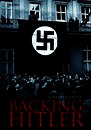
- Publisher's listprice GBP 47.00
-
21 220 Ft (20 210 Ft + 5% VAT)
The price is estimated because at the time of ordering we do not know what conversion rates will apply to HUF / product currency when the book arrives. In case HUF is weaker, the price increases slightly, in case HUF is stronger, the price goes lower slightly.
- Discount 10% (cc. 2 122 Ft off)
- Discounted price 19 098 Ft (18 189 Ft + 5% VAT)
Subcribe now and take benefit of a favourable price.
Subscribe
21 220 Ft

Availability
Out of print
Why don't you give exact delivery time?
Delivery time is estimated on our previous experiences. We give estimations only, because we order from outside Hungary, and the delivery time mainly depends on how quickly the publisher supplies the book. Faster or slower deliveries both happen, but we do our best to supply as quickly as possible.
Product details:
- Publisher Oxford University Press
- Date of Publication 8 March 2001
- ISBN 9780198205609
- Binding Hardback
- No. of pages384 pages
- Size 234x156x27 mm
- Weight 725 g
- Language English
- Illustrations numerous black and white plates 0
Categories
Short description:
Robert Gellately challenges the belief that the German people knew little about the Nazi terror, and the tendency of historians to distance ordinary Germans from its excesses. He reveals for the first time the social consensus behind the regime and the extent to which German men and women were involved in the persecution of social outsiders and 'race enemies'.
MoreLong description:
The Nazis never won a majority in free elections, but soon after Hitler took power most people turned away from democracy and backed the Nazi regime. Hitler won growing support even as he established the secret police (Gestapo) and concentration camps. What has been in dispute for over fifty years is what the Germans knew about these camps, and in what ways were they involved in the persecution of 'race enemies', slave workers, and social outsiders.
To answer these questions, and to explore the public sides of Nazi persecution, Robert Gellately has consulted an array of primary documents. He argues that the Nazis did not cloak their radical approaches to 'law and order' in utter secrecy, but played them up in the press and loudly proclaimed the superiority of their system over all others. They publicized their views by drawing on popular images, cherished German ideals and long held phobias, and were able to win over converts to their
cause. The author traces the story from 1933, and shows how war and especially the prospect of defeat radicalized Nazism. As the country spiralled toward defeat, Germans for the most part held on stubbornly. For anyone who contemplated surrender or resistance, terror became the order of the
day.
As a whole Backing Hitler brings together in a scholarly yet readable way a number of different facets of the German domestic scene.
Table of Contents:
Introduction
Turning away from Weimar
Police Justice
Concentration Camps and Media Reports
Shadows of War
Social Outsiders
Injustice and the Jews
Special "Justice" for Foreign Workers
Enemies in the Ranks
Concentration Camps in Public Spaces
Dictatorship and People at the End of the Third Reich
Conclusion

