

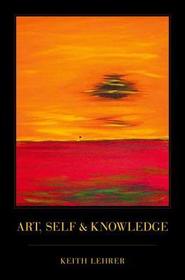
Art, Self and Knowledge
- Publisher's listprice GBP 33.49
-
15 120 Ft (14 400 Ft + 5% VAT)
The price is estimated because at the time of ordering we do not know what conversion rates will apply to HUF / product currency when the book arrives. In case HUF is weaker, the price increases slightly, in case HUF is stronger, the price goes lower slightly.
- Discount 10% (cc. 1 512 Ft off)
- Discounted price 13 608 Ft (12 960 Ft + 5% VAT)
Subcribe now and take benefit of a favourable price.
Subscribe
15 120 Ft

Availability
printed on demand
Why don't you give exact delivery time?
Delivery time is estimated on our previous experiences. We give estimations only, because we order from outside Hungary, and the delivery time mainly depends on how quickly the publisher supplies the book. Faster or slower deliveries both happen, but we do our best to supply as quickly as possible.
Product details:
- Publisher OUP USA
- Date of Publication 15 December 2011
- ISBN 9780195304992
- Binding Paperback
- No. of pages224 pages
- Size 231x155x17 mm
- Weight 318 g
- Language English
- Illustrations 10 halftones 0
Categories
Short description:
This book argues that a special value of art is the way in which it uses conscious experience -- the exemplars of aesthetic experience -- to autonomously reconfigure how we conceive of our world and ourselves, ourselves in our world and our world in ourselves. Exemplar representation ties art and science, mind and body, self and world together in a dynamic loop reconfiguring them all as it reconfigures itself.
MoreLong description:
Art can provide us with a sensory experience that provokes us to reconfigure how we think about our world and ourselves. Theories of art have often sought to find some feature of art that isolates it from the rest of experience. Keith Lehrer argues, in opposition, that art is connected, not isolated, from how we think and feel, represent and react. When art directs our attention to sensory exemplars in aesthetic experience of which we become conscious in a special way, it also shows us our autonomy as we represent ourselves and our world, ourselves in our world, and our world in ourselves. This form of representation, exemplar representation, uses the exemplar as a term of representation and exhibits the nature of the content it represents in terms of itself. It shows us both what our world is like and how we represent the world thereby revealing the nature of intentionality to us. Issues of general interest in philosophy such as knowledge, autonomy, rationality and self-trust enter the book along with more specifically aesthetic issues of formalism, expressionism, representation, artistic creativity and beauty. The author goes on to demonstrate how the connection between art and broader issues of feminism, globalization, collective wisdom, and death show us the connection between art, life, politics and the self.
Drawing from Hume, Reid, Goodman, Danto, Brand, Ismael and Lopes, Lehrer argues here that the artwork is a mentalized physical object engaging us philosophically with the content of exemplar experience. The exemplar representation of experience provoked by art ties art and science, mind and body, self and world, together in a dynamic loop, reconfiguring them all as it reconfigures art itself.
Lehrer is a rare aesthetician; he is both an artist and an epistemologist. Moreover, he brings a feminist perspective to the process of understanding and appreciating art: one that explores and exposes the self as neither disinterested nor dispassionate but rather intimately connected to (and transformed by) the sensory experience of a work of art. We are the creators of our own aesthetic destinies: if only we allow artworks in, to work their magic in our worlds.
Table of Contents:
Forward: Website Information, Summary and Acknowledgements
Introduction
1. Knowing the Content of Art
2. Consciousness, Exemplars and Art
3. Aesthetic Theory, Feminist Art and Autonomy
4. Value, Expression and Globalization
5. Artistic Creation, Freedom, and Self
6. Aesthetics, Death and Beauty
7. Aesthetic Experience, Intentionality and the Form of Representation
8. Theories of Art, and Art as Theory of the World
9. Self-Trust, Disagreement, and Reasonable Acceptance
10. Social Reason, Aggregation and Collective Wisdom
11. Knowledge, Autonomy and Art in Loop Theory

