

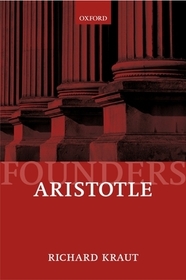
- Publisher's listprice GBP 49.99
-
22 570 Ft (21 495 Ft + 5% VAT)
The price is estimated because at the time of ordering we do not know what conversion rates will apply to HUF / product currency when the book arrives. In case HUF is weaker, the price increases slightly, in case HUF is stronger, the price goes lower slightly.
- Discount 10% (cc. 2 257 Ft off)
- Discounted price 20 313 Ft (19 346 Ft + 5% VAT)
Subcribe now and take benefit of a favourable price.
Subscribe
22 570 Ft

Availability
printed on demand
Why don't you give exact delivery time?
Delivery time is estimated on our previous experiences. We give estimations only, because we order from outside Hungary, and the delivery time mainly depends on how quickly the publisher supplies the book. Faster or slower deliveries both happen, but we do our best to supply as quickly as possible.
Product details:
- Publisher OUP Oxford
- Date of Publication 17 January 2002
- ISBN 9780198782001
- Binding Paperback
- No. of pages536 pages
- Size 233x156x26 mm
- Weight 828 g
- Language English 0
Categories
Short description:
This book offers a systematic overview of Aristotle's conception of well-being, virtue and justice in the Nicomachean Ethics, and then explores the major themes of Politics: civic-mindedness, slavery, family, property, the common good, class conflict, the limited wisdom of the multitude, and the radically egalitarian institutions of the ideal society.
MoreLong description:
This book presents a wide-ranging overview of Aristotle's political thought that makes him come alive as a philosopher who can speak to our own times. Beginning with a critique of subjectivist accounts of well-being, Kraut goes on to assess Aristotle's objective and universalistic account of eudaimonia and excellent activity. He offers a detailed interpretation of Aristotle's conception of justice in the Nicomachean Ethics, and then turns to the major themes of the Politics: the political nature of human beings, the city's priority over the individual, the justification of slavery, the defence of the family and property, the pluralistic nature of cities and the need for their unification, the distinction between good citizenship and full virtue, the value and limits of popular control over elites, the corrosive effects of poverty and wealth, the critique of democratic conceptions of freedom and equality, and the radically egalitarian institutions of the ideal society. Aristotle's political philosophy, as Kraut reads it, provides a model of the way in which a rich understanding of human well-being can guide the amelioration of a world in which agreement about the human good is rarely, if ever, achieved.
Richard Kraut's book...is an excellent addition to the burgeoning scholarly literature on Aristotle's political philosophy ... He is exceptional ... His book is a major contribution which must be consulted by all serious students of Aristotle's political theory.
Table of Contents:
Aristotle's Political World and Writings
Prolegomenon to Aristotle's Ethics: Against Subjectivism
Well-Being and Virtue
Justice in the Nicomachean Ethics
Part II
Introduction to the Politics
Politics VII-VIII: The Ideal Polis
Politics I: Nature, Political Animals, and Civic Priority
Politics I: Slavery
Politics II: Family, Property, and Civic Unity
Politics III: Citizenship, Stability, and Obedience
Politics III: Correct Constitutions and the Common Good
Politics IV-VI: Non-Ideal Constitutions
Final Thoughts
References , Index of Passages, General Index

