

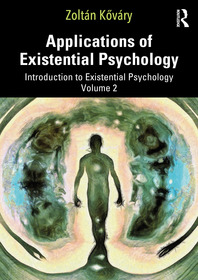
Applications of Existential Psychology
Introduction to Existential Psychology Volume 2
-
GET 10% OFF
- Publisher's listprice GBP 55.99
-
25 279 Ft (24 075 Ft + 5% VAT)
The price is estimated because at the time of ordering we do not know what conversion rates will apply to HUF / product currency when the book arrives. In case HUF is weaker, the price increases slightly, in case HUF is stronger, the price goes lower slightly.
- Discount 10% (cc. 2 528 Ft off)
- Discounted price 22 751 Ft (21 668 Ft + 5% VAT)
22 751 Ft

Availability
printed on demand
Why don't you give exact delivery time?
Delivery time is estimated on our previous experiences. We give estimations only, because we order from outside Hungary, and the delivery time mainly depends on how quickly the publisher supplies the book. Faster or slower deliveries both happen, but we do our best to supply as quickly as possible.
Product details:
- Edition number 1
- Publisher Taylor & Francis
- Date of Publication 30 December 2024
- ISBN 9781032701790
- Binding Paperback
- No. of pages354 pages
- Size 246x174 mm
- Weight 680 g
- Language English
- Illustrations 8 Illustrations, black & white 1330
Categories
Short description:
The second in a two-part set, this volume offers a detailed examination of the application of existential psychology. This book begins by looking at the ‘conditio humana’ – the most important topics of existential psychology, including anxiety, freedom, choices, authenticity, suffering and meaning, creativity, togetherness, time, and death.
MoreLong description:
"
The second in a two-part set, this volume offers a detailed examination of the application of existential psychology.
This book begins by looking at the ""conditio humana"" – the most important topics of existential psychology, including anxiety, freedom, choices, authenticity, suffering and meaning, creativity, togetherness, time and death. It then moves through the practical application of existential psychology in the context of dreams, research, pathology and therapy. Examining key theories, models and research, the volume offers a fascinating overview of how the disciplines of art, philosophy, literature, science and theology contribute to a deeper understanding of personal self-knowledge and a person’s sense of purpose. This unique transdisciplinary approach demonstrates how readers can apply philosophical, historical and artistic aspects of existential psychology to their lives. The book concludes by considering the role of existential psychology in the present.
Going beyond the questions of therapy and counselling that typically make up the study of existential psychology, the book offers the ultimate introduction for students and scholars of this fascinating and deeply rooted discipline. It may also interest professionals working in related fields.
" MoreTable of Contents:
Part 1. Conditio Humana: The Main Themes of Existential Psychology
1. Characteristics and Modes of Being-in-the-World
2. The Enigma of Anxiety
3. Freedom and Responsibility
4. Boundary Situations and Crises
5. “To Thine Own Self Be True.”: Choices, Authentic Self and Destiny
6. I and Thou: The Existential of Being-with and the Question of Love
7. Homo Patiens: Suffering and Searching for Meaning
8. “Time Swallows up Your Life.” Time, Finitude and Being-Towards-Death
9. Homo Creativus
10. The Unconscious God and Überwelt
Part 2. Applications of Existential Approach in Psychology
11. Dreams and Existence
12. Pathic Existence and the Questions of Psychopathology
13. Existential Psychology and Scientific Research
14. Existential Psychotherapy and Counselling: General Introduction and Daseinsanalysis
15. Logotherapy and Existential Analysis
16. Existential-Humanistic and Existential Integrative Psychotherapy and Counseling
17. Existential-Phenomenological Psychotherapy and Counseling
18. Further Applications of Existential Psychology in this field, Existential Family and Group Therapies
Part 3. Existentialism and Psychology in the 21st Century
19. The Return of Existential View at the Turn of the Millennium and the Beginning of the 21st Century
20. New Developments and Challenges
More
