

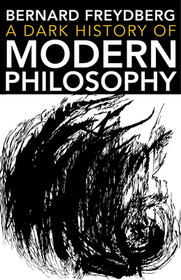
A Dark History of Modern Philosophy
Series: Studies in Continental Thought;
- Publisher's listprice GBP 56.00
-
25 284 Ft (24 080 Ft + 5% VAT)
The price is estimated because at the time of ordering we do not know what conversion rates will apply to HUF / product currency when the book arrives. In case HUF is weaker, the price increases slightly, in case HUF is stronger, the price goes lower slightly.
- Discount 20% (cc. 5 057 Ft off)
- Discounted price 20 227 Ft (19 264 Ft + 5% VAT)
- Discount is valid until: 30 June 2026
Subcribe now and take benefit of a favourable price.
Subscribe
25 284 Ft

Availability
Estimated delivery time: In stock at the publisher, but not at Prospero's office. Delivery time approx. 3-5 weeks.
Not in stock at Prospero.
Why don't you give exact delivery time?
Delivery time is estimated on our previous experiences. We give estimations only, because we order from outside Hungary, and the delivery time mainly depends on how quickly the publisher supplies the book. Faster or slower deliveries both happen, but we do our best to supply as quickly as possible.
Product details:
- Publisher Indiana University Press
- Date of Publication 14 August 2017
- Number of Volumes Print PDF
- ISBN 9780253029355
- Binding Hardback
- No. of pages154 pages
- Size 216x140 mm
- Weight 354 g
- Language English 0
Categories
Long description:
Delving beneath the principal discourses of philosophy from Descartes through Kant, Bernard Freydberg plumbs the previously concealed dark forces that ignite the inner power of modern thought. He contends that reason itself issues from an implicit and unconscious suppression of the nonrational. Even the modern philosophical concerns of nature and limits are undergirded by a dark side that dwells in them and makes them possible. Freydberg traces these dark sources to the poetry of Hesiod, the fragments of Heraclitus and Parmenides, and the Platonic dialogues and claims that they rear their heads again in the work of Spinoza, Schelling, and Nietzsche. Freydberg does not set forth a critique of modern philosophy but explores its intrinsic continuity with its ancient roots.
MoreTable of Contents:
Acknowledgments
Preliminary Matters
1. Fissures in the History of Modern Philosophy
Prelude: On Anteriority
2. Spinoza's Abysmal Rationalism
Intermezzo: On the Putative History of German Idealism
3. Unruly Greek Schelling
Coda: Nietzsche as Crux
Index

