

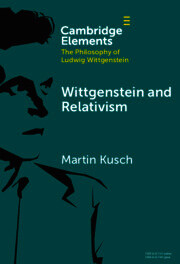
- Publisher's listprice GBP 55.00
-
24 832 Ft (23 650 Ft + 5% VAT)
The price is estimated because at the time of ordering we do not know what conversion rates will apply to HUF / product currency when the book arrives. In case HUF is weaker, the price increases slightly, in case HUF is stronger, the price goes lower slightly.
- Discount % (cc. 0 Ft off)
- Discounted price 0 Ft (0 Ft + 5% VAT)
Subcribe now and take benefit of a favourable price.
Subscribe
24 832 Ft

Availability
Estimated delivery time: In stock at the publisher, but not at Prospero's office. Delivery time approx. 3-5 weeks.
Not in stock at Prospero.
Why don't you give exact delivery time?
Delivery time is estimated on our previous experiences. We give estimations only, because we order from outside Hungary, and the delivery time mainly depends on how quickly the publisher supplies the book. Faster or slower deliveries both happen, but we do our best to supply as quickly as possible.
Product details:
- Publisher Cambridge University Press
- Date of Publication 14 May 2026
- ISBN 9781009554527
- Binding Hardback
- No. of pages88 pages
- Weight 265 g
- Language English 0
Categories
Short description:
This book situates Wittgenstein's philosophy in the relationship between psychology and logic, over epistemology, and cultural relativism.
MoreLong description:
When scholars discuss the question whether Wittgenstein was a relativist, they invariably draw their criteria from recent definitions of relativism. This study tries a different route: it identifies conceptions of relativism that were influential in the early twentieth century, and uses them as foils for interpreting Wittgenstein's philosophy. Section 1 investigates what Wittgenstein meant in speaking of his 'ethnological perspective,' and how this perspective relates to 'cultural relativism' in anthropology around 1900. Section 2 focuses on Wittgenstein's reflections on logic and mathematics as 'ethnological phenomena.' In this context, the ethnological perspective brought Wittgenstein close to positions that many of his contemporaries denounced as 'psychologism' and 'sociologism.' Section 3 highlights the role of the ethnological perspective in Wittgenstein's remarks on 'certainties.' Many of these remarks would have been counted as relativistic by leading members of the 'Vienna Circle.'
MoreTable of Contents:
Introduction; Section 1. Cultural Relativism, Historicism, and the Ethnological Approach; Section 2. Psychologism, Sociologism, Ethnology; Section 3. Relativism, Pseudorationalism, and the Ethnological Approach to Certainty; Conclusion; References.
More
