

- Publisher's listprice GBP 71.00
-
32 056 Ft (30 530 Ft + 5% VAT)
The price is estimated because at the time of ordering we do not know what conversion rates will apply to HUF / product currency when the book arrives. In case HUF is weaker, the price increases slightly, in case HUF is stronger, the price goes lower slightly.
- Discount 10% (cc. 3 206 Ft off)
- Discounted price 28 851 Ft (27 477 Ft + 5% VAT)
Subcribe now and take benefit of a favourable price.
Subscribe
32 056 Ft

Availability
printed on demand
Why don't you give exact delivery time?
Delivery time is estimated on our previous experiences. We give estimations only, because we order from outside Hungary, and the delivery time mainly depends on how quickly the publisher supplies the book. Faster or slower deliveries both happen, but we do our best to supply as quickly as possible.
Product details:
- Publisher OUP USA
- Date of Publication 7 June 2017
- ISBN 9780190218133
- Binding Hardback
- No. of pages176 pages
- Size 155x236x22 mm
- Weight 399 g
- Language English 0
Categories
Short description:
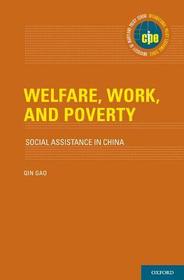
Welfare, Work, and Poverty provides the first systematic and comprehensive evaluation of the impacts and effectiveness of China's primary social assistance program -- Minimum Livelihood Guarantee, or Dibao -- the world's largest welfare program. The text offers new empirical evidence and draws policy lessons that are timely and useful for both China and beyond. It is essential reading for those interested in learning about and understanding contemporary China.
MoreLong description:
Welfare, Work, and Poverty provides the first systematic and comprehensive evaluation of the impacts and effectiveness of China's primary social assistance program -- Minimum Livelihood Guarantee, or Dibao -- 20 years after its inception. Dibao serves the dual function of (a) providing a basic safety net for the poor and (b) maintaining social and political stability. Despite currently being the world's largest welfare program in terms of population coverage, evidence on Dibao's performance has been lacking. This book offers important new empirical evidence and draws policy lessons that are timely and useful for both China and beyond. Specifically, author Qin Gao addresses the following questions:
· How effective has Dibao been in targeting the poor and alleviating poverty?
· Have the Dibao recipients been dependent on welfare or able to move from welfare to work?
· How has Dibao affected their consumption patterns and subjective well-being?
· Do they use the Dibao subsidy to meet survival needs (such as food, clothing, and shelter) or invest in human capital (such as health and education)?
· Are they distressed by the stigma associated with receiving Dibao or do they become more optimistic about future and enjoy greater life satisfaction because of the Dibao support?
· And finally, what policy lessons can we learn from the existing evidence in order to strengthen and improve Dibao in the future?
Answers to these questions not only help us gain an in-depth understanding of Dibao's performance, but also add the Chinese case to the growing international literature on comparative welfare studies. Welfare, Work, and Poverty is essential reading for political scientists, economists, sociologists, public policy researchers, and social workers interested in learning about and understanding contemporary China.
Qin Gao, a leading scholar of Chinese social welfare and public policy, asks and answers systematically all the basic and important questions about the development of this social welfare program from the ashes of the socialist planned economy: from program development, implementation, to its performance, as judged by its anti-poverty and welfare-to-work effects, and to the receptions of program participants. With references to experiences in other parts of the world, Gao also makes a series of insightful policy and research recommendations in the concluding chapter of the book.
Table of Contents:
Table of Contents
List of Tables and Figures
1. Introduction
2. Background, Inception, and Development
3. Thresholds, Financing, and Beneficiaries
4. Targeting Performance
5. Anti-Poverty Effectiveness
6. From Welfare to Work
7. Family Expenditures and Human Capital Investment
8. Social Participation and Subjective Well-being
9. What Next? Policy Solutions and Research Directions
References
Acknowledgements

