

- Publisher's listprice GBP 100.00
-
45 150 Ft (43 000 Ft + 5% VAT)
The price is estimated because at the time of ordering we do not know what conversion rates will apply to HUF / product currency when the book arrives. In case HUF is weaker, the price increases slightly, in case HUF is stronger, the price goes lower slightly.
- Discount 20% (cc. 9 030 Ft off)
- Discounted price 36 120 Ft (34 400 Ft + 5% VAT)
- Discount is valid until: 30 June 2026
Subcribe now and take benefit of a favourable price.
Subscribe
45 150 Ft

Availability
Estimated delivery time: In stock at the publisher, but not at Prospero's office. Delivery time approx. 3-5 weeks.
Not in stock at Prospero.
Why don't you give exact delivery time?
Delivery time is estimated on our previous experiences. We give estimations only, because we order from outside Hungary, and the delivery time mainly depends on how quickly the publisher supplies the book. Faster or slower deliveries both happen, but we do our best to supply as quickly as possible.
Product details:
- Edition number 1
- Publisher University of Illinois Press
- Date of Publication 11 June 2024
- Number of Volumes Hardback
- ISBN 9780252045912
- Binding Hardback
- No. of pages316 pages
- Size 229x152 mm
- Weight 454 g
- Language English
- Illustrations 68 black & white photographs 511
Categories
Long description:
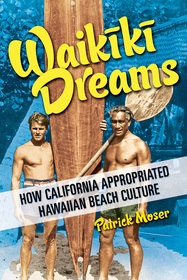
Despite a genuine admiration for Native Hawaiian culture, white Californians of the 1930s ignored authentic relationships with Native Hawaiians. Surfing became a central part of what emerged instead: a beach culture of dressing, dancing, and acting like an Indigenous people whites idealized.
Patrick Moser uses surfing to open a door on the cultural appropriation practiced by Depression-era Californians against a backdrop of settler colonialism and white nationalism. Recreating the imagined leisure and romance of life in Waikīkī attracted people buffeted by economic crisis and dislocation. California-manufactured objects like surfboards became a physical manifestation of a dream that, for all its charms, emerged from a white impulse to both remove and replace Indigenous peoples. Moser traces the rise of beach culture through the lives of trendsetters Tom Blake, John “Doc” Ball, Preston “Pete” Peterson, Mary Ann Hawkins, and Lorrin “Whitey” Harrison while also delving into California’s control over images of Native Hawaiians via movies, tourism, and the surfboard industry.
Compelling and innovative, Waikīkī Dreams opens up the origins of a defining California subculture.
MoreTable of Contents:
Acknowledgements
A Note on Hawaiian Language
Introduction
Prologue: California Beach Culture in the 1920s--The Decade of Duke
Part I. The Builders
- The Dreamer
- The Photographer
- The Waterman
- The Waterwoman
- The Traveler
- Palos Verdes
- San Onofre
- Malibu
- Hawaiian Surfboard and the Writing of Surf History
Notes
Bibliography
Index
More
