

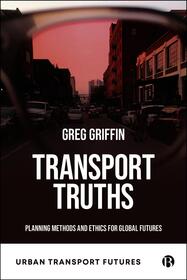
- Publisher's listprice GBP 26.99
-
12 185 Ft (11 605 Ft + 5% VAT)
The price is estimated because at the time of ordering we do not know what conversion rates will apply to HUF / product currency when the book arrives. In case HUF is weaker, the price increases slightly, in case HUF is stronger, the price goes lower slightly.
- Discount 10% (cc. 1 218 Ft off)
- Discounted price 10 967 Ft (10 445 Ft + 5% VAT)
Subcribe now and take benefit of a favourable price.
Subscribe
12 185 Ft

Availability
Not yet published.
Why don't you give exact delivery time?
Delivery time is estimated on our previous experiences. We give estimations only, because we order from outside Hungary, and the delivery time mainly depends on how quickly the publisher supplies the book. Faster or slower deliveries both happen, but we do our best to supply as quickly as possible.
Product details:
- Edition number 1
- Publisher Bristol University Press
- Date of Publication 1 December 2026
- ISBN 9781529227468
- Binding Paperback
- No. of pages164 pages
- Size 234x156 mm
- Weight 666 g
- Language English
- Illustrations 13 700
Categories
Long description:
Ideal for researchers and practitioners looking for fresh approaches to transport problems, this book combines cutting-edge qualitative and quantitative knowledge to inform transport futures. It uses engaging case studies of the Banjul Airport Expansion in The Gambia, and the Interstate 35 development project in Austin, US to show how and why a transdisciplinary approach can result in better planning decisions.
As cities grow, shrink, and re-organize, with access provided by transport infrastructure, this book demonstrates the value of critical realism to create lasting, positive impacts on society and the environment.
MoreTable of Contents:
1. Introduction: Methods and Ethics for Transport Analysis
2. A Biased History of Transport Futures
3. Seeing Trees Through Random Forests
4. Why and How Matter Now
5. Confronting Wicked Problems in Austin, Texas
6. Development and Capital at the Banjul Airport in The Gambia
7. Triangulating Transport Knowledge
8. Conclusion: Speaking Truths to Power
More
