

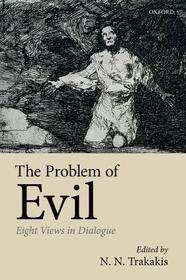
The Problem of Evil
Eight Views in Dialogue
- Publisher's listprice GBP 78.00
-
35 217 Ft (33 540 Ft + 5% VAT)
The price is estimated because at the time of ordering we do not know what conversion rates will apply to HUF / product currency when the book arrives. In case HUF is weaker, the price increases slightly, in case HUF is stronger, the price goes lower slightly.
- Discount 10% (cc. 3 522 Ft off)
- Discounted price 31 695 Ft (30 186 Ft + 5% VAT)
Subcribe now and take benefit of a favourable price.
Subscribe
35 217 Ft

Availability
printed on demand
Why don't you give exact delivery time?
Delivery time is estimated on our previous experiences. We give estimations only, because we order from outside Hungary, and the delivery time mainly depends on how quickly the publisher supplies the book. Faster or slower deliveries both happen, but we do our best to supply as quickly as possible.
Product details:
- Publisher OUP Oxford
- Date of Publication 12 July 2018
- ISBN 9780198821625
- Binding Hardback
- No. of pages244 pages
- Size 242x163x20 mm
- Weight 544 g
- Language English 0
Categories
Short description:
Eight leading philosophers of religion debate 'the problem of evil' - the problem of reconciling the existence of a perfectly good and loving God with the existence of sin and suffering in the world. Their dialogues explore a range of imaginative and innovative approaches to the nature of divinity and its relationship to evil.
MoreLong description:
One of those rare questions in philosophy that is not only technically recalcitrant but also engages the hearts and minds of the broad community is the so-called 'problem of evil': How can the existence of an absolutely perfect God be reconciled with the existence of suffering and evil? This collection of dialogues between eight philosophers of religion explores new ways of thinking about this longstanding problem, in the process reorienting and reinvigorating the philosophical debate around the relationship between God, goodness and evil: How exactly are these three notions connected, if at all? Is God the cause, or author, of evil and suffering? How is the goodness of God to be understood, and how is divine goodness related to human morality? Does God's perfect goodness entail that God must have reasons for permitting or bringing about suffering, and if so what could his reasons be?
These questions are of momentous existential and theoretical interest, and they have exercised the finest intellects across the centuries. The time is ripe for a wholesale reconsideration of the problem of evil. To make progress towards this goal, eight distinct perspectives are placed in mutual dialogue, giving voice to both traditional and relatively unorthodox approaches. What emerges from these critical but friendly exchanges is a diversity of fruitful and innovative ways of thinking about the nature of divinity and its relationship to evil.
Table of Contents:
Introduction
The Problem of Suffering: A Thomistic Approach
Responses by Bishop, Oppy, and Trakakis
Replies by Stump
On Identifying the Problem of Evil and the Possibility of Its Theist Solution
Responses by Stump, Oppy, and Trakakis
Replies by Bishop
Problems of Evil
Responses by Stump, Bishop, and Trakakis
Reply by Oppy
Anti-Theodicy
Responses by Stump, Bishop, and Oppy
Replies by Trakakis
Evil, Feminism and a Philosophy of Transformation
Responses by Nagasawa, Tilley, and Gleeson
Replies by Clack
The Problem of Evil for Atheists
Responses by Clack, Tilley, and Gleeson
Replies by Nagasawa
A Trajectory of Positions
Responses by Clack, Nagasawa, and Gleeson
Replies by Tilley
God and Evil Without Theodicy
Responses by Clack, Nagasawa, and Tilley
Replies by Gleeson

