

- Publisher's listprice GBP 110.00
-
49 665 Ft (47 300 Ft + 5% VAT)
The price is estimated because at the time of ordering we do not know what conversion rates will apply to HUF / product currency when the book arrives. In case HUF is weaker, the price increases slightly, in case HUF is stronger, the price goes lower slightly.
- Discount 10% (cc. 4 967 Ft off)
- Discounted price 44 699 Ft (42 570 Ft + 5% VAT)
Subcribe now and take benefit of a favourable price.
Subscribe
49 665 Ft

Availability
printed on demand
Why don't you give exact delivery time?
Delivery time is estimated on our previous experiences. We give estimations only, because we order from outside Hungary, and the delivery time mainly depends on how quickly the publisher supplies the book. Faster or slower deliveries both happen, but we do our best to supply as quickly as possible.
Product details:
- Publisher OUP Oxford
- Date of Publication 26 November 2015
- ISBN 9780198748984
- Binding Hardback
- No. of pages224 pages
- Size 236x162x17 mm
- Weight 472 g
- Language English 0
Categories
Short description:
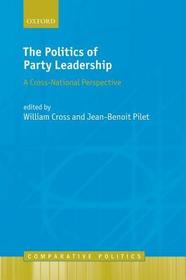
This book examines the ways in which political parties choose their leaders and the implications of the different choices they make.
MoreLong description:
Making use of a unique data set that includes more than 1000 leadership elections from over 100 parties in 14 countries over an almost 50 year period, this volume provides the first comprehensive, comparative examination of how parties choose their leaders and the impact of the different decisions they make in this regard. Among the issues examined are how leaders are chosen, the factors that result in parties changing their selection rules, how the rules affect the competitiveness of leadership elections, the types of leaders chosen, the impact of leadership transition on electoral outcomes, the factors affecting the length of leadership tenures, and how leadership tenures come to an end.
This volume is situated in the literature on intra-party decision making and party organizational reform and makes unique and important contributions to our understanding of these areas. The analysis includes parties in Australia, Austria, Belgium, Canada, Denmark, Germany, Hungary, Israel, Italy, Portugal, Romania, Spain, Norway, and the United Kingdom.
Comparative Politics is a series for students, teachers, and researchers of political science that deals with contemporary government and politics. Global in scope, books in the series are characterised by a stress on comparative analysis and strong methodological rigour. The series is published in association with the European Consortium for Political Research. For more information visit: www.ecprnet.eu.
Table of Contents:
Uncovering the Politics of Party Leadership: A Cross-National Perspective
Leadership Selection Methods and Party Types
Explaining Change in Party Leadership Selection Rules
Competitiveness of Party Leadership Selection Processes
Electing Women as Party Leaders: Does the Selectorate Matter?
Understanding Leadership Profile Renewal
Why Some Leaders Die Hard (and Others Don't): Party Goals, Party Institutions and How They Interact
The End of the Affair: A Comparative Study of How Party Leadership Terms End
Do Leadership Changes Improve Electoral Performance?
Parties, Leadership Selection and Intra-Party Democracy

