

- Publisher's listprice GBP 53.00
-
23 929 Ft (22 790 Ft + 5% VAT)
The price is estimated because at the time of ordering we do not know what conversion rates will apply to HUF / product currency when the book arrives. In case HUF is weaker, the price increases slightly, in case HUF is stronger, the price goes lower slightly.
- Discount 10% (cc. 2 392 Ft off)
- Discounted price 21 537 Ft (20 511 Ft + 5% VAT)
Subcribe now and take benefit of a favourable price.
Subscribe
23 929 Ft

Availability
printed on demand
Why don't you give exact delivery time?
Delivery time is estimated on our previous experiences. We give estimations only, because we order from outside Hungary, and the delivery time mainly depends on how quickly the publisher supplies the book. Faster or slower deliveries both happen, but we do our best to supply as quickly as possible.
Product details:
- Publisher OUP USA
- Date of Publication 15 March 2018
- ISBN 9780190222055
- Binding Paperback
- No. of pages168 pages
- Size 137x211x12 mm
- Weight 277 g
- Language English 0
Categories
Short description:
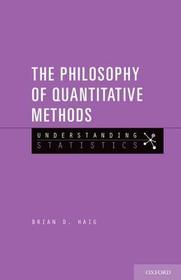
The Philosophy of Quantitative Methods undertakes a philosophical examination of a number of important quantitative research methods within the behavioral sciences in order to overcome the non-critical approaches typically provided by textbooks. These research methods are exploratory data analysis, statistical significance testing, Bayesian confirmation theory and statistics, meta-analysis, and exploratory factor analysis. Further readings are provided to extend the reader's overall understanding of these methods.
MoreLong description:
The Philosophy of Quantitative Methods focuses on the conceptual foundations of research methods within the behavioral sciences. In particular, it undertakes a close philosophical examination of a variety of quantitative research methods that are prominent in (or relevant for) the conduct of research in these fields. By doing so, the deep structure of these methods is examined in order to overcome the non-critical approaches typically found in the existing literature today.
In this book, Brian D. Haig focuses on the more well-known research methods such as exploratory data analysis, statistical significant testing, Bayesian confirmation theory and statistics, meta-analysis, and exploratory factor analysis. These methods are then examined with a philosophy consistent of scientific realism. In addition, each chapter provides a helpful Further Reading section in order to better assist the reader in extending their own thinking and research methods specific to their needs.
Table of Contents:
Chapter 1: Introduction
Chapter 2: Exploratory Data Analysis
Chapter 3: Tests of Statistical Significance
Chapter 4: Bayesianism
Chapter 5: Meta-Analysis
Chapter 6: Exploratory Factor Analysis
Chapter 7: Conclusions

