

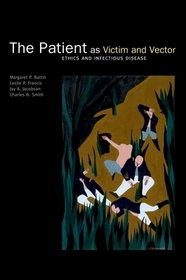
The Patient as Victim and Vector
Ethics and Infectious Disease
- Publisher's listprice GBP 35.99
-
17 194 Ft (16 375 Ft + 5% VAT)
The price is estimated because at the time of ordering we do not know what conversion rates will apply to HUF / product currency when the book arrives. In case HUF is weaker, the price increases slightly, in case HUF is stronger, the price goes lower slightly.
- Discount 10% (cc. 1 719 Ft off)
- Discounted price 15 474 Ft (14 738 Ft + 5% VAT)
Subcribe now and take benefit of a favourable price.
Subscribe
17 194 Ft

Availability
Out of print
Why don't you give exact delivery time?
Delivery time is estimated on our previous experiences. We give estimations only, because we order from outside Hungary, and the delivery time mainly depends on how quickly the publisher supplies the book. Faster or slower deliveries both happen, but we do our best to supply as quickly as possible.
Product details:
- Publisher OUP USA
- Date of Publication 6 November 2008
- ISBN 9780195335835
- Binding Paperback
- No. of pages576 pages
- Size 235x156x30 mm
- Weight 801 g
- Language English 0
Categories
Long description:
Bioethics emerged at a time when infectious diseases were not a major concern. Thus bioethics never had to develop a normative framework sensitive to situations of disease transmission. The Patient as Victim and Vector explores how traditional and new issues in clinical medicine, research, public health, and health policy might look different in infectious disease were treated as central. The authors argue that both practice and policy must recognize that
a patient with a communicable infectious disease is not only a victim of that disease, but also a potential vector- someone who may transmit an illness that will sicken or kill others. Bioethics has failed to see one part of this duality, they document, and public health the other: that the patient is both
victim and vector at one and the same time.
The Patient as Victim and Vector is jointly written by four authors at the University of Utah with expertise in bioethics, health law, and both clinical practice and public health policy concerning infectious disease. Part I shows how the patient-centered ethic that was developed by bioethics- especially the concept of autonomy- needs to change in the context of public health, and Part II develops a normative theory for doing so. Part III examines traditional and new issues involving
infectious disease: the ethics of quarantine and isolation, research, disease screening, rapid testing, antibiotic use, and immunization, in contexts like multi-drug-resistant tuberculosis, syphilis, hepatitis, HIV/AIDS, and HPV. Part IV, beginning with a controversial thought experiment, considers
constraint in the control of infectious disease, include pandemics, and Part V 'thinks big' about the global scope of infectious disease and efforts to prevent, treat, or eradicate it.
This volume should have a major impact in the fields of bioethics and public health ethics. It will also interest philosophers, lawyers, health law experts, physicians, and policy makers, as well as those concerned with global health.
Table of Contents:
Preface
Part I: Seeing Infectious Disease as Central
Seeing Infectious Disease as Central
The Biological Basics of Infectious Disease
Characteristics of Infectious Disease that Raise Distinctive Challenges for Bioethics
How Infectious Disease Got Left Out of Bioethics
Closing the Book on Infectious Disease: The Mischievous Consequences for Public Health
Part II: Theoretical Considerations
Embedded Autonomy and the "Way-Station Self"
Thinking about Infectious Disease: The Multiple Perspectives of the PVV View
Part III: Dilemmas Old and New: Health Care Dilemmas Through the Lens of Infectious Disease
Old Wine in New Bottles: Traditional Issues in Bioethics from the Victim/Vector Perspective
From the Magic Mountain to a Dying Homeless Man and His Dog: Imposing Isolation and Treatment in Tuberculosis Care
The Ethics of Research in Infectious Disease: Experimenting on This Patient, Risking Harm to That One
Vertically-Transmitted Infection: Are the Medical and Public Health Responses Consistent?
Should Rapid Tests for HIV Infection Now Be "Mandatory" During Pregnancy or in Labor?
Antimicrobial Resistance
Immunization and the HPV Vaccine
Part IV: Constraints and the Question of What We Owe Each Other As Victims and Vectors
A Thought Experiment: Rapid Testing for Infectious Disease in Airports and Places of Public Contact
Constraints in the Control of Infectious Disease
Pandemic Planning: What is Ethically Justified?
Compensation and the Victims of Constraint
Pandemic Planning and the Justice of Health Care Distribution
Part V: Making Use of the PVV View
Thinking Bi: Emerging Global Efforts for the Control of Infectious Disease
"The Patient as Victim and Vector" Approach as a Critical and Diagnostic Tool for Philosophical Ethics and Public Policy
References

