

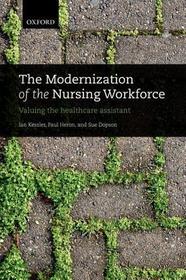
The Modernization of the Nursing Workforce
Valuing the healthcare assistant
- Publisher's listprice GBP 75.00
-
35 831 Ft (34 125 Ft + 5% VAT)
The price is estimated because at the time of ordering we do not know what conversion rates will apply to HUF / product currency when the book arrives. In case HUF is weaker, the price increases slightly, in case HUF is stronger, the price goes lower slightly.
- Discount 10% (cc. 3 583 Ft off)
- Discounted price 32 248 Ft (30 713 Ft + 5% VAT)
Subcribe now and take benefit of a favourable price.
Subscribe
35 831 Ft

Availability
printed on demand
Why don't you give exact delivery time?
Delivery time is estimated on our previous experiences. We give estimations only, because we order from outside Hungary, and the delivery time mainly depends on how quickly the publisher supplies the book. Faster or slower deliveries both happen, but we do our best to supply as quickly as possible.
Product details:
- Publisher OUP Oxford
- Date of Publication 2 August 2012
- ISBN 9780199694136
- Binding Paperback
- No. of pages262 pages
- Size 234x158x14 mm
- Weight 404 g
- Language English
- Illustrations 22 black and white line drawings 0
Categories
Short description:
Positioned within a public policy and public management context, The Modernization of the Nursing Workforce explores how change in public policy on the reform of the health service feeds through to impact upon the management and structure of the healthcare workforce.
MoreLong description:
The Modernization of the Nursing Workforce: Valuing the healthcare assistant is based on recently completed research exploring the role of healthcare assistants (HCA) in acute hospitals. Whilst a support role working alongside registered nurses has been a longstanding feature of the NHS, the contemporary HCA role has become increasingly central to the process of health service modernization. The role is now assuming even greater importance as the ramifications of financial constraints, restructuring and other pressures on the NHS play out. The issue is becoming increasingly relevant as the government has commissioned an independent review into the role of healthcare assistants, the Cavendish Review, which uses this book extensively.
The HCA role is unregulated and low paid, but by taking-on direct care tasks from registered nurses, the role has become politically sensitive. The HCA remains a cheap and flexible source of labour, but the unregulated role encourages dilemmas and public scrutiny over risk and patient safety. The book explores how public policy reform of the health service feeds through to impact upon the management and structure of the healthcare workforce. More specifically, the book provides a timely evidence base for the extended and growing use of the HCA role.
The book draws upon a multi-method research design from four geographically located hospital trusts in England, which during a three year period saw over 270 staff interviewed, focus groups and interviews with over 100 patients, some 275 hours of ward-based observation, and detailed survey responses from over 3,000 members of staff and hospital patients.
The unusual richness of the data allows a definitive examination of who undertakes the HCA role, its shape, nature and diversity, along with the consequences for those with a stake in the role - hospital managers, the assistants themselves, the patients they care for and the nurses they work alongside, making The Modernization of the Nursing Workforce: Valuing the healthcare assistant essential reading for health care studies and public management communities, and those charged with training and education policy.
This would be a really useful text for all registered nurses and students to gain an enriched understanding of the role delivered by HCAs. Additionally, senior managers seeking to review their workforce would benefit from the strategic insight, and anyone engaged in delivering education for this group of staff.
Table of Contents:
Foreword
Glossary and abbreviations
Introduction
Understanding the healthcare assistant role
Healthcare assistants: policy objectives and evidence base
Research focus, design and methods
Healthcare assistants as a strategic resource
Backgrounds of healthcare assistants
The shape and nature of the healthcare assistant role
Consequences for healthcare assistants
Consequences for nurses
Consequences for patients
Summary and conclusions
References
Appendix

