

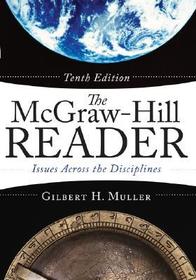
The McGraw-Hill Reader: Issues Across the Disciplines
- Publisher's listprice GBP 80.99
-
36 566 Ft (34 825 Ft + 5% VAT)
The price is estimated because at the time of ordering we do not know what conversion rates will apply to HUF / product currency when the book arrives. In case HUF is weaker, the price increases slightly, in case HUF is stronger, the price goes lower slightly.
- Discount 10% (cc. 3 657 Ft off)
- Discounted price 32 910 Ft (31 343 Ft + 5% VAT)
Subcribe now and take benefit of a favourable price.
Subscribe
36 566 Ft

Availability
Uncertain availability. Please turn to our customer service.
Why don't you give exact delivery time?
Delivery time is estimated on our previous experiences. We give estimations only, because we order from outside Hungary, and the delivery time mainly depends on how quickly the publisher supplies the book. Faster or slower deliveries both happen, but we do our best to supply as quickly as possible.
Product details:
- Edition number 10
- Publisher McGraw-Hill Education
- Date of Publication 1 December 2007
- ISBN 9780073533131
- Binding Paperback
- No. of pages984 pages
- Size 231x162x33 mm
- Weight 1270 g
- Language English 0
Categories
Long description:
The McGraw-Hill Reader addresses the liberal arts tradition, cross-curricular ideas, and diverse viewpoints through more than one hundred quality prose works from prominent writers and thinkers. A range of readings from both classic and contemporary sources and from across the disciplines—from education, the social sciences, business and economics, the humanities, and the sciences—provoke critical thought and effective writing.
The McGraw-Hill Reader addresses the liberal arts tradition, cross-curricular ideas, and diverse viewpoints through more than one hundred quality prose works from prominent writers and thinkers. A range of readings from both classic and contemporary sources and from across the disciplines—from education, the social sciences, business and economics, the humanities, and the sciences—provoke critical thought and effective writing.
Table of Contents:
PART 1 AN OVERVIEW OF COLLEGE WRITINGChapter 1Critical Thinking, Reading, and WritingSteps to Reading Critically and ActivelyPreparing to ReadCritical ReadingAnnotatingNote TakingQuestioning the TextBeyond Content: Focusing on ProcessParaphrasing, Summarizing, QuotingParaphrasingSummarizingQuotingAvoiding Plagiarism Synthesis: Drawing Connections from TextsCase Study for Synthesis: How Do Writers Influence Each Other? VIRGINIA WOOLF, The Death of the Moth ANNIE DILLARD, Death of a MothReading and Analyzing Visual TextsClassic and Contemporary Images: How Do We Communicate?JOE ROSENTHAL, Marines Raising the Flag at Iwo JimaTHOMAS E. FRANKLIN, Firefighters Raising the Flag at Ground ZeroThe Writing ProcessPrewritingDraftingStudent Essay: JAMIE TAYLOR, Cultist Behavior or Doltish Behavior?RevisingResponding to Editorial CommentsA Portfolio on Writing and CommunicationMORTIMER J. ADLER, How to Mark a BookAMY TAN, Mother TonguePETER ELBOW, FreewritingDONALD M. MURRAY, The Maker’s Eye: Revising Your Own ManuscriptsJOHN HOCKENBERRY, The Blogs of WarDEBORAH TANNEN, Sex, Lies, and Conversation: Why Is It So Hard for Men and Women to Talk to Each Other?GEORGE ORWELL, Politics and the English LanguageChapter 2Reading and Writing Effective ArgumentsThe Language of ArgumentThe Test of JustificationReading and Analyzing ArgumentUnderstanding Claims and WarrantsReasoning from EvidenceThinking Critically about ArgumentsThe Purpose of ArgumentationAppeals to Reason, Emotion, and EthicsABRAHAM LINCOLN, The Gettysburg AddressWriting Powerful ArgumentsIdentify an IssueTake a Stand and Clarify Your ClaimAnalyze Your AudienceEstablish Your ToneDevelop and Organize the Grounds for Your ClaimGather and Evaluate Your EvidenceConsider Your WarrantsDeal with Opposing ViewpointsArgumentative SynthesisCritiqueGuidelines for Argumentative SynthesisCase Study: MySpace: Friend or Foe? WADE ROUSH, Fakesters ELLEN LEE, Social Sites Are Becoming Too Much of a Good Thing GREG PIVARNIK, MySpace Is Not Responsible for Your KidsA Portfolio on ArgumentationClassic and Contemporary Images: What Is an Argument?FRANCISCO DE GOYA, The Third of May, 1808EDDIE ADAMS, Police Chief Brigadier General Classic and Contemporary Essays: How Do We Argue?H. L. MENCKEN, The Penalty of DeathCORETTA SCOTT KING, The Death Penalty Is a Step BackDEBATE: ANIMAL RESEARCH: IS IT ETHICAL?HELOISA SABIN, Animal Research Saves Human LivesJANE GOODALL, A Question of EthicsDEBATE: THE PATRIOT ACT: SHOULD WE SACRIFICE CIVIL LIBERTIES FOR SECURITY?RICHARD A. POSNER, Security versus Civil LibertiesELAINE SCARRY, Acts of ResistancePAUL ROSENZWEIG, Face Facts: Patriot Act Aids Security, Not AbuseISHMAEL REED, The Patriot Act of the 18th CenturyChapter 3Writing a Research PaperResearch Writing: Preconceptions and PracticeThe Research ProcessPhase 1: Defining Your ObjectivePhase 2: Locating Your SourcesPhase 3: Gathering and Organizing DataPhase 4: Writing and Submitting the PaperDocumenting SourcesSample Student Paper (MLA Style)A Portolio of Professional Research PapersHumanities: LAURA JOHNSON DAHLKE, Plath’s “Lady Lazarus”Social Sciences: JON B. GOULD, Playing with Fire: The Civil Liberties Implications of September 11thScience and Medicine: CARA B. EBBELING, et. al, Compensation for Energy Intake from Fast Food among Overweight and Lean AdolescentsPART 2 ISSUES ACROSS THE DISCIPLINESChapter 4Education and Society: How, What, and Why Do We Learn?Classic and Contemporary Images: Does Education Change Over Time?Zoology Lab, Oberlin College, 1890sTOM STEWART, Food Science Lab, University of Maine, 1990sClassic and Contemporary Essays: What Is the Value of Education?FREDERICK DOUGLASS, Learning to Read and WriteRICHARD RODRIGUEZ, The Lonely, Good Company of BooksTIMOTHY EGAN, Little Asia on the HillANNA QUINDLEN, Sex EdDAVID GELERNTER, Unplugged: The Myth of Computers in the ClassroomSUSAN JACOBY, When Bright Girls Decide that Math Is “A Waste of Time”CLAYBORNE CARSON, Two Cheers for Brown v. Board of EducationSynthesis: Connections for Critical ThinkingChapter 5Family Roles and Gender Roles: How Do We Become Who We Are?Classic and Contemporary Images: How Do We Respond to Marriage?PIETER BRUEGHEL THE YOUNGER, Rustic WeddingELISE AMENDOLA, Gay MarriageClassic and Contemporary Essays: How Much Do Families Matter?E. B. WHITE, Once More to the LakeBARBARA KINGSOLVER, Stone SoupANNIE DILLARD, An American ChildhoodDAVID BROOKS, Love, Internet StyleRICHARD RODRIGUEZ, Family ValuesJULIA ALVAREZ, Third Time's the CharmFATEMA MERNISSI, Digital Scheherazades in the Arab World Synthesis: Connections for Critical ThinkingChapter 6 History, Culture, and Civilization: Are We Citizens of the World?Classic and Contemporary Images: How Do We Become Americans?PUBLIC HEALTH SERVICE HISTORIAN, Medical Exam of Male Immigrants, 1907ASSOCIATED PRESS, Illegal Immigrants Crossing the Border between Guatemala and Mexico, 1999Classic and Contemporary Essays: Are We Heading toward a World Culture?OLIVER GOLDSMITH, National PrejudicesISHMAEL REED, America: The Multinational SocietyJUDITH ORTIZ COFER, The Myth of the Latin Woman: I Just Met a Girl Named MariaLESLIE MARMON SILKO, Yellow Woman and a Beauty of the SpiritAMARTYA SEN, A World Not Neatly DividedEDWARD SAID, Andalusia's JourneyEDWARD T. HALL, The Arab WorldRONALD TAKAKI, Strangers from a Distant ShoreSynthesis: Connections for Critical ThinkingChapter 7 Government, Politics, and Social Justice: How Do We Decide What Is Fair?Classic and Contemporary Images: Have We Made Progress in Civil Rights?Advertisement, Slaves for Sale, 1835Photograph, Martin Luther King, Jr. and Admirer, 1966Classic and Contemporary Essays: What Is the American Dream?THOMAS JEFFERSON, The Declaration of IndependenceMARTIN LUTHER KING, JR., I Have a DreamMOLLY IVINS, Is Texas America?ESTHER DYSON, Cyberspace: If You Don’t Love It, Leave ItNICCOLO MACHIAVELLI, The Circle of GovernmentsBRUCE CATTON, Grant and Lee: A Study in ContrastsBHARATI MUKHERJEE, American DreamerJAMES BALDWIN, Stranger in the VillageALEXIS DE TOCQUEVILLE, Some Reflections on American MannersSynthesis: Connections for Critical ThinkingChapter 8Business and Economics: How Do We Earn Our Keep?Classic and Contemporary Images: Will Workers Be Displaced by Machines?DIEGO RIVERA, Portion of a Mural from the Detroit Institute of ArtsGEORGE HALING, Chrysler Assembly LineClassic and Contemporary Essays: Does Equal Opportunity Exist?VIRGINIA WOOLF, Professions for WomenHENRY LOUIS GATES, JR., Delusions of GrandeurLIZA FEATHERSTONE, Manna from HellP.J. O'ROURKE, Mapping InnovationTHOMAS L. FRIEDMAN, Globalization: The Super-StoryBARBARA EHRENREICH, Nickel and DimedROBERT REICH, Why the Rich Are Getting Richer, and the Poor, PoorerJONATHAN SWIFT, A Modest ProposalSynthesis: Connections for Critical Thinking Chapter 9 Media and Popular Culture: What Is the Message?Classic and Contemporary Images: What Do Gangster Films Reveal about Us?Edward G. Robinson in Little Caesar, 1930James Gandolfini in The Sopranos, 2000Classic and Contemporary Essays: Why Are We Fascinated by Gangsters?ROBERT WARSHOW, The Gangster as Tragic HeroELLEN WILLIS, Our Mobsters, Ourselves: Why The Sopranos Is Therapeutic TVRITA DOVE, Loose EndsHENRY LOUIS GATES, JR, 2 Live Crew, DecodedSTEPHEN KING, My Creature from the Black LagoonDAVE BARRY, Red, White, and BeerGLORIA STEINEM, Wonder WomanTODD GITLIN, Supersaturation, or, The Media Torrent and Disposable FeelingDEBORAH ROSS, Escape from Wonderland: Disney and the Female ImaginationSynthesis: Connections for Critical ThinkingChapter 10Literature and the Arts: Why Do They Matter?(4-COLOR INSERT)Classic and Contemporary Essays: How Do We Know It’s Good?E. M. FORSTER, Not Looking at PicturesFRANCINE PROSE, The Universal in ParticularLINDA HOGAN, Hearing VoicesMARGARET ATWOOD, Orwell and MeSUSAN SONTAG, Regarding the Torture of OthersLANCE MORROW, Imprisoning Time in a RectangleALICE WALKER, Saving the Life That Is Your Own: The Importance of Models in the Artist’s LifeNED ROREM, The BeatlesSynthesis: Connections for Critical ThinkingChapter 11Philosophy, Ethics, and Religion: What Do We Believe?Classic and Contemporary Images: Do We Believe in Good and Evil?Angel and Mortal, Islamic Art from IndiaJACOB EPSTEIN, St. Michael and the DevilClassic and Contemporary Essays: Is Superstition a Form of Belief?MARGARET MEAD, New Superstitions for OldLETTY COTTIN POGREBIN, Superstitious MindsROBERT COLES, I Listen to My Parents and I Wonder What They BelieveLANGSTON HUGHES, SalvationKAREN ARMSTRONG, What's God Got to Do with It?VACLAV HAVEL, The Divine RevolutionPLATO, The Allegory of the CaveSALMAN RUSHDIE, November 2001: Not about Islam?C. S. LEWIS, The Rival Conceptions of GodSTEPHEN L. CARTER, The Culture of DisbeliefSynthesis: Connections for Critical ThinkingChapter 12Health and Medicine: What Are the Challenges?Classic and Contemporary Images: What Does Medical Research Teach Us?REMBRANDT, The Anatomy Lesson of Professor Nicolaes TulpASSOCIATED PRESS, Conjoined TwinsClas
sic and Contemporary Essays: Can We Avoid Epidemics?BARBARA TUCHMAN, “This Is the End of the World”: The Black DeathRONALD J. GLASSER, We Are Not ImmuneELLEN GOODMAN, I Worked Hard for That Furrowed BrowMARTHA MENDOZA, Between a Woman and Her DoctorSTEPHEN J. GOULD, The Terrifying Normalcy of AIDSATUL GAWANDE, The Man Who Couldn't Stop EatingRICHARD SELZER, SarcophagusSUSAN BORDO, The Globalization of Eating DisordersSynthesis: Connections for Critical ThinkingChapter 13 Nature and the Environment: How Do We Relate to the Natural World?Classic and Contemporary Images: Are We Destroying Our Natural World?JOHN FREDERICK KENSETT, Along the HudsonDAMIAN DOVARGANES, Los Angeles, 2004Classic and Contemporary Essays: Do We Own Nature?CHIEF SEATTLE, Letter to President Pierce, 1855BARRY LOPEZ, The Stone HorseRICK BASS, Why I HuntN. SCOTT MOMADAY, The Way to Rainy MountainBILL McKIBBEN, The Environmental Issue from HellRACHEL CARSON, The Obligation to EndureALICE WALKER, Am I Blue?NOEL PERRIN, The Greenest Campuses: An Idiosyncratic GuideJARED DIAMOND, The Last Americans: Environmental Collapse and the End of CivilizationSynthesis: Connections for Critical ThinkingChapter 14 Science and Technology: What Can Science Teach Us?Classic and Contemporary Images: Where Is Science Taking Us?Flemish School, The Movements of the Sun and Moon, Fifteenth CenturyJ. HESTER and P. SCOWEN, Photograph of Gaseous Pillars Taken From the Hubble Space Telescope, 1995Classic and Contemporary Essays: How Has Nature Evolved?CHARLES DARWIN, Natural SelectionNATALIE ANGIER, Of Altruism, Heroism and Nature’s Gifts in the Face of TerrorDAVID SEDARIS, Nutcracker.comSHERRY TURKLE, How Computers Change the Way We ThinkCARL SAGAN, Can We Know the Universe? Reflections on a Grain of SaltDINESH D’SOUZA, Staying HumanOLIVER SACKS, Anbody Out There?TERRY TEMPEST WILLIAMS, The Clan of One-Breasted WomenSynthesis: Connections for Critical ThinkingGlossary of TermsAcknowledgmentsIndex
Steps to Reading Critically and ActivelyPreparing to ReadCritical ReadingAnnotatingNote TakingQuestioning the TextBeyond Content: Focusing on ProcessParaphrasing, Summarizing, QuotingParaphrasingSummarizingQuotingAvoiding Plagiarism Synthesis: Drawing Connections from TextsCase Study for Synthesis: How Do Writers Influence Each Other? VIRGINIA WOOLF, The Death of the Moth ANNIE DILLARD, Death of a MothReading and Analyzing Visual TextsClassic and Contemporary Images: How Do We Communicate?JOE ROSENTHAL, Marines Raising the Flag at Iwo JimaTHOMAS E. FRANKLIN, Firefighters Raising the Flag at Ground ZeroThe Writing ProcessPrewritingDraftingStudent Essay: JAMIE TAYLOR, Cultist Behavior or Doltish Behavior?RevisingResponding to Editorial CommentsA Portfolio on Writing and CommunicationMORTIMER J. ADLER, How to Mark a BookAMY TAN, Mother TonguePETER ELBOW, FreewritingDONALD M. MURRAY, The Maker’s Eye: Revising Your Own ManuscriptsJOHN HOCKENBERRY, The Blogs of WarDEBORAH TANNEN, Sex, Lies, and Conversation: Why Is It So Hard for Men and Women to Talk to Each Other?GEORGE ORWELL, Politics and the English LanguageChapter 2Reading and Writing Effective ArgumentsThe Language of ArgumentThe Test of JustificationReading and Analyzing ArgumentUnderstanding Claims and WarrantsReasoning from EvidenceThinking Critically about ArgumentsThe Purpose of ArgumentationAppeals to Reason, Emotion, and EthicsABRAHAM LINCOLN, The Gettysburg AddressWriting Powerful ArgumentsIdentify an IssueTake a Stand and Clarify Your ClaimAnalyze Your AudienceEstablish Your ToneDevelop and Organize the Grounds for Your ClaimGather and Evaluate Your EvidenceConsider Your WarrantsDeal with Opposing ViewpointsArgumentative SynthesisCritiqueGuidelines for Argumentative SynthesisCase Study: MySpace: Friend or Foe? WADE ROUSH, Fakesters ELLEN LEE, Social Sites Are Becoming Too Much of a Good Thing GREG PIVARNIK, MySpace Is Not Responsible for Your KidsA Portfolio on ArgumentationClassic and Contemporary Images: What Is an Argument?FRANCISCO DE GOYA, The Third of May, 1808EDDIE ADAMS, Police Chief Brigadier General Classic and Contemporary Essays: How Do We Argue?H. L. MENCKEN, The Penalty of DeathCORETTA SCOTT KING, The Death Penalty Is a Step BackDEBATE: ANIMAL RESEARCH: IS IT ETHICAL?HELOISA SABIN, Animal Research Saves Human LivesJANE GOODALL, A Question of EthicsDEBATE: THE PATRIOT ACT: SHOULD WE SACRIFICE CIVIL LIBERTIES FOR SECURITY?RICHARD A. POSNER, Security versus Civil LibertiesELAINE SCARRY, Acts of ResistancePAUL ROSENZWEIG, Face Facts: Patriot Act Aids Security, Not AbuseISHMAEL REED, The Patriot Act of the 18th CenturyChapter 3Writing a Research PaperResearch Writing: Preconceptions and PracticeThe Research ProcessPhase 1: Defining Your ObjectivePhase 2: Locating Your SourcesPhase 3: Gathering and Organizing DataPhase 4: Writing and Submitting the PaperDocumenting SourcesSample Student Paper (MLA Style)A Portolio of Professional Research PapersHumanities: LAURA JOHNSON DAHLKE, Plath’s “Lady Lazarus”Social Sciences: JON B. GOULD, Playing with Fire: The Civil Liberties Implications of September 11thScience and Medicine: CARA B. EBBELING, et. al, Compensation for Energy Intake from Fast Food among Overweight and Lean AdolescentsPART 2 ISSUES ACROSS THE DISCIPLINESChapter 4Education and Society: How, What, and Why Do We Learn?Classic and Contemporary Images: Does Education Change Over Time?Zoology Lab, Oberlin College, 1890sTOM STEWART, Food Science Lab, University of Maine, 1990sClassic and Contemporary Essays: What Is the Value of Education?FREDERICK DOUGLASS, Learning to Read and WriteRICHARD RODRIGUEZ, The Lonely, Good Company of BooksTIMOTHY EGAN, Little Asia on the HillANNA QUINDLEN, Sex EdDAVID GELERNTER, Unplugged: The Myth of Computers in the ClassroomSUSAN JACOBY, When Bright Girls Decide that Math Is “A Waste of Time”CLAYBORNE CARSON, Two Cheers for Brown v. Board of EducationSynthesis: Connections for Critical ThinkingChapter 5Family Roles and Gender Roles: How Do We Become Who We Are?Classic and Contemporary Images: How Do We Respond to Marriage?PIETER BRUEGHEL THE YOUNGER, Rustic WeddingELISE AMENDOLA, Gay MarriageClassic and Contemporary Essays: How Much Do Families Matter?E. B. WHITE, Once More to the LakeBARBARA KINGSOLVER, Stone SoupANNIE DILLARD, An American ChildhoodDAVID BROOKS, Love, Internet StyleRICHARD RODRIGUEZ, Family ValuesJULIA ALVAREZ, Third Time's the CharmFATEMA MERNISSI, Digital Scheherazades in the Arab World Synthesis: Connections for Critical ThinkingChapter 6 History, Culture, and Civilization: Are We Citizens of the World?Classic and Contemporary Images: How Do We Become Americans?PUBLIC HEALTH SERVICE HISTORIAN, Medical Exam of Male Immigrants, 1907ASSOCIATED PRESS, Illegal Immigrants Crossing the Border between Guatemala and Mexico, 1999Classic and Contemporary Essays: Are We Heading toward a World Culture?OLIVER GOLDSMITH, National PrejudicesISHMAEL REED, America: The Multinational SocietyJUDITH ORTIZ COFER, The Myth of the Latin Woman: I Just Met a Girl Named MariaLESLIE MARMON SILKO, Yellow Woman and a Beauty of the SpiritAMARTYA SEN, A World Not Neatly DividedEDWARD SAID, Andalusia's JourneyEDWARD T. HALL, The Arab WorldRONALD TAKAKI, Strangers from a Distant ShoreSynthesis: Connections for Critical ThinkingChapter 7 Government, Politics, and Social Justice: How Do We Decide What Is Fair?Classic and Contemporary Images: Have We Made Progress in Civil Rights?Advertisement, Slaves for Sale, 1835Photograph, Martin Luther King, Jr. and Admirer, 1966Classic and Contemporary Essays: What Is the American Dream?THOMAS JEFFERSON, The Declaration of IndependenceMARTIN LUTHER KING, JR., I Have a DreamMOLLY IVINS, Is Texas America?ESTHER DYSON, Cyberspace: If You Don’t Love It, Leave ItNICCOLO MACHIAVELLI, The Circle of GovernmentsBRUCE CATTON, Grant and Lee: A Study in ContrastsBHARATI MUKHERJEE, American DreamerJAMES BALDWIN, Stranger in the VillageALEXIS DE TOCQUEVILLE, Some Reflections on American MannersSynthesis: Connections for Critical ThinkingChapter 8Business and Economics: How Do We Earn Our Keep?Classic and Contemporary Images: Will Workers Be Displaced by Machines?DIEGO RIVERA, Portion of a Mural from the Detroit Institute of ArtsGEORGE HALING, Chrysler Assembly LineClassic and Contemporary Essays: Does Equal Opportunity Exist?VIRGINIA WOOLF, Professions for WomenHENRY LOUIS GATES, JR., Delusions of GrandeurLIZA FEATHERSTONE, Manna from HellP.J. O'ROURKE, Mapping InnovationTHOMAS L. FRIEDMAN, Globalization: The Super-StoryBARBARA EHRENREICH, Nickel and DimedROBERT REICH, Why the Rich Are Getting Richer, and the Poor, PoorerJONATHAN SWIFT, A Modest ProposalSynthesis: Connections for Critical Thinking Chapter 9 Media and Popular Culture: What Is the Message?Classic and Contemporary Images: What Do Gangster Films Reveal about Us?Edward G. Robinson in Little Caesar, 1930James Gandolfini in The Sopranos, 2000Classic and Contemporary Essays: Why Are We Fascinated by Gangsters?ROBERT WARSHOW, The Gangster as Tragic HeroELLEN WILLIS, Our Mobsters, Ourselves: Why The Sopranos Is Therapeutic TVRITA DOVE, Loose EndsHENRY LOUIS GATES, JR, 2 Live Crew, DecodedSTEPHEN KING, My Creature from the Black LagoonDAVE BARRY, Red, White, and BeerGLORIA STEINEM, Wonder WomanTODD GITLIN, Supersaturation, or, The Media Torrent and Disposable FeelingDEBORAH ROSS, Escape from Wonderland: Disney and the Female ImaginationSynthesis: Connections for Critical ThinkingChapter 10Literature and the Arts: Why Do They Matter?(4-COLOR INSERT)Classic and Contemporary Essays: How Do We Know It’s Good?E. M. FORSTER, Not Looking at PicturesFRANCINE PROSE, The Universal in ParticularLINDA HOGAN, Hearing VoicesMARGARET ATWOOD, Orwell and MeSUSAN SONTAG, Regarding the Torture of OthersLANCE MORROW, Imprisoning Time in a RectangleALICE WALKER, Saving the Life That Is Your Own: The Importance of Models in the Artist’s LifeNED ROREM, The BeatlesSynthesis: Connections for Critical ThinkingChapter 11Philosophy, Ethics, and Religion: What Do We Believe?Classic and Contemporary Images: Do We Believe in Good and Evil?Angel and Mortal, Islamic Art from IndiaJACOB EPSTEIN, St. Michael and the DevilClassic and Contemporary Essays: Is Superstition a Form of Belief?MARGARET MEAD, New Superstitions for OldLETTY COTTIN POGREBIN, Superstitious MindsROBERT COLES, I Listen to My Parents and I Wonder What They BelieveLANGSTON HUGHES, SalvationKAREN ARMSTRONG, What's God Got to Do with It?VACLAV HAVEL, The Divine RevolutionPLATO, The Allegory of the CaveSALMAN RUSHDIE, November 2001: Not about Islam?C. S. LEWIS, The Rival Conceptions of GodSTEPHEN L. CARTER, The Culture of DisbeliefSynthesis: Connections for Critical ThinkingChapter 12Health and Medicine: What Are the Challenges?Classic and Contemporary Images: What Does Medical Research Teach Us?REMBRANDT, The Anatomy Lesson of Professor Nicolaes TulpASSOCIATED PRESS, Conjoined TwinsClas
sic and Contemporary Essays: Can We Avoid Epidemics?BARBARA TUCHMAN, “This Is the End of the World”: The Black DeathRONALD J. GLASSER, We Are Not ImmuneELLEN GOODMAN, I Worked Hard for That Furrowed BrowMARTHA MENDOZA, Between a Woman and Her DoctorSTEPHEN J. GOULD, The Terrifying Normalcy of AIDSATUL GAWANDE, The Man Who Couldn't Stop EatingRICHARD SELZER, SarcophagusSUSAN BORDO, The Globalization of Eating DisordersSynthesis: Connections for Critical ThinkingChapter 13 Nature and the Environment: How Do We Relate to the Natural World?Classic and Contemporary Images: Are We Destroying Our Natural World?JOHN FREDERICK KENSETT, Along the HudsonDAMIAN DOVARGANES, Los Angeles, 2004Classic and Contemporary Essays: Do We Own Nature?CHIEF SEATTLE, Letter to President Pierce, 1855BARRY LOPEZ, The Stone HorseRICK BASS, Why I HuntN. SCOTT MOMADAY, The Way to Rainy MountainBILL McKIBBEN, The Environmental Issue from HellRACHEL CARSON, The Obligation to EndureALICE WALKER, Am I Blue?NOEL PERRIN, The Greenest Campuses: An Idiosyncratic GuideJARED DIAMOND, The Last Americans: Environmental Collapse and the End of CivilizationSynthesis: Connections for Critical ThinkingChapter 14 Science and Technology: What Can Science Teach Us?Classic and Contemporary Images: Where Is Science Taking Us?Flemish School, The Movements of the Sun and Moon, Fifteenth CenturyJ. HESTER and P. SCOWEN, Photograph of Gaseous Pillars Taken From the Hubble Space Telescope, 1995Classic and Contemporary Essays: How Has Nature Evolved?CHARLES DARWIN, Natural SelectionNATALIE ANGIER, Of Altruism, Heroism and Nature’s Gifts in the Face of TerrorDAVID SEDARIS, Nutcracker.comSHERRY TURKLE, How Computers Change the Way We ThinkCARL SAGAN, Can We Know the Universe? Reflections on a Grain of SaltDINESH D’SOUZA, Staying HumanOLIVER SACKS, Anbody Out There?TERRY TEMPEST WILLIAMS, The Clan of One-Breasted WomenSynthesis: Connections for Critical ThinkingGlossary of TermsAcknowledgmentsIndex
Critical ReadingAnnotatingNote TakingQuestioning the TextBeyond Content: Focusing on ProcessParaphrasing, Summarizing, QuotingParaphrasingSummarizingQuotingAvoiding Plagiarism Synthesis: Drawing Connections from TextsCase Study for Synthesis: How Do Writers Influence Each Other? VIRGINIA WOOLF, The Death of the Moth ANNIE DILLARD, Death of a MothReading and Analyzing Visual TextsClassic and Contemporary Images: How Do We Communicate?JOE ROSENTHAL, Marines Raising the Flag at Iwo JimaTHOMAS E. FRANKLIN, Firefighters Raising the Flag at Ground ZeroThe Writing ProcessPrewritingDraftingStudent Essay: JAMIE TAYLOR, Cultist Behavior or Doltish Behavior?RevisingResponding to Editorial CommentsA Portfolio on Writing and CommunicationMORTIMER J. ADLER, How to Mark a BookAMY TAN, Mother TonguePETER ELBOW, FreewritingDONALD M. MURRAY, The Maker’s Eye: Revising Your Own ManuscriptsJOHN HOCKENBERRY, The Blogs of WarDEBORAH TANNEN, Sex, Lies, and Conversation: Why Is It So Hard for Men and Women to Talk to Each Other?GEORGE ORWELL, Politics and the English LanguageChapter 2Reading and Writing Effective ArgumentsThe Language of ArgumentThe Test of JustificationReading and Analyzing ArgumentUnderstanding Claims and WarrantsReasoning from EvidenceThinking Critically about ArgumentsThe Purpose of ArgumentationAppeals to Reason, Emotion, and EthicsABRAHAM LINCOLN, The Gettysburg AddressWriting Powerful ArgumentsIdentify an IssueTake a Stand and Clarify Your ClaimAnalyze Your AudienceEstablish Your ToneDevelop and Organize the Grounds for Your ClaimGather and Evaluate Your EvidenceConsider Your WarrantsDeal with Opposing ViewpointsArgumentative SynthesisCritiqueGuidelines for Argumentative SynthesisCase Study: MySpace: Friend or Foe? WADE ROUSH, Fakesters ELLEN LEE, Social Sites Are Becoming Too Much of a Good Thing GREG PIVARNIK, MySpace Is Not Responsible for Your KidsA Portfolio on ArgumentationClassic and Contemporary Images: What Is an Argument?FRANCISCO DE GOYA, The Third of May, 1808EDDIE ADAMS, Police Chief Brigadier General Classic and Contemporary Essays: How Do We Argue?H. L. MENCKEN, The Penalty of DeathCORETTA SCOTT KING, The Death Penalty Is a Step BackDEBATE: ANIMAL RESEARCH: IS IT ETHICAL?HELOISA SABIN, Animal Research Saves Human LivesJANE GOODALL, A Question of EthicsDEBATE: THE PATRIOT ACT: SHOULD WE SACRIFICE CIVIL LIBERTIES FOR SECURITY?RICHARD A. POSNER, Security versus Civil LibertiesELAINE SCARRY, Acts of ResistancePAUL ROSENZWEIG, Face Facts: Patriot Act Aids Security, Not AbuseISHMAEL REED, The Patriot Act of the 18th CenturyChapter 3Writing a Research PaperResearch Writing: Preconceptions and PracticeThe Research ProcessPhase 1: Defining Your ObjectivePhase 2: Locating Your SourcesPhase 3: Gathering and Organizing DataPhase 4: Writing and Submitting the PaperDocumenting SourcesSample Student Paper (MLA Style)A Portolio of Professional Research PapersHumanities: LAURA JOHNSON DAHLKE, Plath’s “Lady Lazarus”Social Sciences: JON B. GOULD, Playing with Fire: The Civil Liberties Implications of September 11thScience and Medicine: CARA B. EBBELING, et. al, Compensation for Energy Intake from Fast Food among Overweight and Lean AdolescentsPART 2 ISSUES ACROSS THE DISCIPLINESChapter 4Education and Society: How, What, and Why Do We Learn?Classic and Contemporary Images: Does Education Change Over Time?Zoology Lab, Oberlin College, 1890sTOM STEWART, Food Science Lab, University of Maine, 1990sClassic and Contemporary Essays: What Is the Value of Education?FREDERICK DOUGLASS, Learning to Read and WriteRICHARD RODRIGUEZ, The Lonely, Good Company of BooksTIMOTHY EGAN, Little Asia on the HillANNA QUINDLEN, Sex EdDAVID GELERNTER, Unplugged: The Myth of Computers in the ClassroomSUSAN JACOBY, When Bright Girls Decide that Math Is “A Waste of Time”CLAYBORNE CARSON, Two Cheers for Brown v. Board of EducationSynthesis: Connections for Critical ThinkingChapter 5Family Roles and Gender Roles: How Do We Become Who We Are?Classic and Contemporary Images: How Do We Respond to Marriage?PIETER BRUEGHEL THE YOUNGER, Rustic WeddingELISE AMENDOLA, Gay MarriageClassic and Contemporary Essays: How Much Do Families Matter?E. B. WHITE, Once More to the LakeBARBARA KINGSOLVER, Stone SoupANNIE DILLARD, An American ChildhoodDAVID BROOKS, Love, Internet StyleRICHARD RODRIGUEZ, Family ValuesJULIA ALVAREZ, Third Time's the CharmFATEMA MERNISSI, Digital Scheherazades in the Arab World Synthesis: Connections for Critical ThinkingChapter 6 History, Culture, and Civilization: Are We Citizens of the World?Classic and Contemporary Images: How Do We Become Americans?PUBLIC HEALTH SERVICE HISTORIAN, Medical Exam of Male Immigrants, 1907ASSOCIATED PRESS, Illegal Immigrants Crossing the Border between Guatemala and Mexico, 1999Classic and Contemporary Essays: Are We Heading toward a World Culture?OLIVER GOLDSMITH, National PrejudicesISHMAEL REED, America: The Multinational SocietyJUDITH ORTIZ COFER, The Myth of the Latin Woman: I Just Met a Girl Named MariaLESLIE MARMON SILKO, Yellow Woman and a Beauty of the SpiritAMARTYA SEN, A World Not Neatly DividedEDWARD SAID, Andalusia's JourneyEDWARD T. HALL, The Arab WorldRONALD TAKAKI, Strangers from a Distant ShoreSynthesis: Connections for Critical ThinkingChapter 7 Government, Politics, and Social Justice: How Do We Decide What Is Fair?Classic and Contemporary Images: Have We Made Progress in Civil Rights?Advertisement, Slaves for Sale, 1835Photograph, Martin Luther King, Jr. and Admirer, 1966Classic and Contemporary Essays: What Is the American Dream?THOMAS JEFFERSON, The Declaration of IndependenceMARTIN LUTHER KING, JR., I Have a DreamMOLLY IVINS, Is Texas America?ESTHER DYSON, Cyberspace: If You Don’t Love It, Leave ItNICCOLO MACHIAVELLI, The Circle of GovernmentsBRUCE CATTON, Grant and Lee: A Study in ContrastsBHARATI MUKHERJEE, American DreamerJAMES BALDWIN, Stranger in the VillageALEXIS DE TOCQUEVILLE, Some Reflections on American MannersSynthesis: Connections for Critical ThinkingChapter 8Business and Economics: How Do We Earn Our Keep?Classic and Contemporary Images: Will Workers Be Displaced by Machines?DIEGO RIVERA, Portion of a Mural from the Detroit Institute of ArtsGEORGE HALING, Chrysler Assembly LineClassic and Contemporary Essays: Does Equal Opportunity Exist?VIRGINIA WOOLF, Professions for WomenHENRY LOUIS GATES, JR., Delusions of GrandeurLIZA FEATHERSTONE, Manna from HellP.J. O'ROURKE, Mapping InnovationTHOMAS L. FRIEDMAN, Globalization: The Super-StoryBARBARA EHRENREICH, Nickel and DimedROBERT REICH, Why the Rich Are Getting Richer, and the Poor, PoorerJONATHAN SWIFT, A Modest ProposalSynthesis: Connections for Critical Thinking Chapter 9 Media and Popular Culture: What Is the Message?Classic and Contemporary Images: What Do Gangster Films Reveal about Us?Edward G. Robinson in Little Caesar, 1930James Gandolfini in The Sopranos, 2000Classic and Contemporary Essays: Why Are We Fascinated by Gangsters?ROBERT WARSHOW, The Gangster as Tragic HeroELLEN WILLIS, Our Mobsters, Ourselves: Why The Sopranos Is Therapeutic TVRITA DOVE, Loose EndsHENRY LOUIS GATES, JR, 2 Live Crew, DecodedSTEPHEN KING, My Creature from the Black LagoonDAVE BARRY, Red, White, and BeerGLORIA STEINEM, Wonder WomanTODD GITLIN, Supersaturation, or, The Media Torrent and Disposable FeelingDEBORAH ROSS, Escape from Wonderland: Disney and the Female ImaginationSynthesis: Connections for Critical ThinkingChapter 10Literature and the Arts: Why Do They Matter?(4-COLOR INSERT)Classic and Contemporary Essays: How Do We Know It’s Good?E. M. FORSTER, Not Looking at PicturesFRANCINE PROSE, The Universal in ParticularLINDA HOGAN, Hearing VoicesMARGARET ATWOOD, Orwell and MeSUSAN SONTAG, Regarding the Torture of OthersLANCE MORROW, Imprisoning Time in a RectangleALICE WALKER, Saving the Life That Is Your Own: The Importance of Models in the Artist’s LifeNED ROREM, The BeatlesSynthesis: Connections for Critical ThinkingChapter 11Philosophy, Ethics, and Religion: What Do We Believe?Classic and Contemporary Images: Do We Believe in Good and Evil?Angel and Mortal, Islamic Art from IndiaJACOB EPSTEIN, St. Michael and the DevilClassic and Contemporary Essays: Is Superstition a Form of Belief?MARGARET MEAD, New Superstitions for OldLETTY COTTIN POGREBIN, Superstitious MindsROBERT COLES, I Listen to My Parents and I Wonder What They BelieveLANGSTON HUGHES, SalvationKAREN ARMSTRONG, What's God Got to Do with It?VACLAV HAVEL, The Divine RevolutionPLATO, The Allegory of the CaveSALMAN RUSHDIE, November 2001: Not about Islam?C. S. LEWIS, The Rival Conceptions of GodSTEPHEN L. CARTER, The Culture of DisbeliefSynthesis: Connections for Critical ThinkingChapter 12Health and Medicine: What Are the Challenges?Classic and Contemporary Images: What Does Medical Research Teach Us?REMBRANDT, The Anatomy Lesson of Professor Nicolaes TulpASSOCIATED PRESS, Conjoined TwinsClas
sic and Contemporary Essays: Can We Avoid Epidemics?BARBARA TUCHMAN, “This Is the End of the World”: The Black DeathRONALD J. GLASSER, We Are Not ImmuneELLEN GOODMAN, I Worked Hard for That Furrowed BrowMARTHA MENDOZA, Between a Woman and Her DoctorSTEPHEN J. GOULD, The Terrifying Normalcy of AIDSATUL GAWANDE, The Man Who Couldn't Stop EatingRICHARD SELZER, SarcophagusSUSAN BORDO, The Globalization of Eating DisordersSynthesis: Connections for Critical ThinkingChapter 13 Nature and the Environment: How Do We Relate to the Natural World?Classic and Contemporary Images: Are We Destroying Our Natural World?JOHN FREDERICK KENSETT, Along the HudsonDAMIAN DOVARGANES, Los Angeles, 2004Classic and Contemporary Essays: Do We Own Nature?CHIEF SEATTLE, Letter to President Pierce, 1855BARRY LOPEZ, The Stone HorseRICK BASS, Why I HuntN. SCOTT MOMADAY, The Way to Rainy MountainBILL McKIBBEN, The Environmental Issue from HellRACHEL CARSON, The Obligation to EndureALICE WALKER, Am I Blue?NOEL PERRIN, The Greenest Campuses: An Idiosyncratic GuideJARED DIAMOND, The Last Americans: Environmental Collapse and the End of CivilizationSynthesis: Connections for Critical ThinkingChapter 14 Science and Technology: What Can Science Teach Us?Classic and Contemporary Images: Where Is Science Taking Us?Flemish School, The Movements of the Sun and Moon, Fifteenth CenturyJ. HESTER and P. SCOWEN, Photograph of Gaseous Pillars Taken From the Hubble Space Telescope, 1995Classic and Contemporary Essays: How Has Nature Evolved?CHARLES DARWIN, Natural SelectionNATALIE ANGIER, Of Altruism, Heroism and Nature’s Gifts in the Face of TerrorDAVID SEDARIS, Nutcracker.comSHERRY TURKLE, How Computers Change the Way We ThinkCARL SAGAN, Can We Know the Universe? Reflections on a Grain of SaltDINESH D’SOUZA, Staying HumanOLIVER SACKS, Anbody Out There?TERRY TEMPEST WILLIAMS, The Clan of One-Breasted WomenSynthesis: Connections for Critical ThinkingGlossary of TermsAcknowledgmentsIndex
Note TakingQuestioning the TextBeyond Content: Focusing on ProcessParaphrasing, Summarizing, QuotingParaphrasingSummarizingQuotingAvoiding Plagiarism Synthesis: Drawing Connections from TextsCase Study for Synthesis: How Do Writers Influence Each Other? VIRGINIA WOOLF, The Death of the Moth ANNIE DILLARD, Death of a MothReading and Analyzing Visual TextsClassic and Contemporary Images: How Do We Communicate?JOE ROSENTHAL, Marines Raising the Flag at Iwo JimaTHOMAS E. FRANKLIN, Firefighters Raising the Flag at Ground ZeroThe Writing ProcessPrewritingDraftingStudent Essay: JAMIE TAYLOR, Cultist Behavior or Doltish Behavior?RevisingResponding to Editorial CommentsA Portfolio on Writing and CommunicationMORTIMER J. ADLER, How to Mark a BookAMY TAN, Mother TonguePETER ELBOW, FreewritingDONALD M. MURRAY, The Maker’s Eye: Revising Your Own ManuscriptsJOHN HOCKENBERRY, The Blogs of WarDEBORAH TANNEN, Sex, Lies, and Conversation: Why Is It So Hard for Men and Women to Talk to Each Other?GEORGE ORWELL, Politics and the English LanguageChapter 2Reading and Writing Effective ArgumentsThe Language of ArgumentThe Test of JustificationReading and Analyzing ArgumentUnderstanding Claims and WarrantsReasoning from EvidenceThinking Critically about ArgumentsThe Purpose of ArgumentationAppeals to Reason, Emotion, and EthicsABRAHAM LINCOLN, The Gettysburg AddressWriting Powerful ArgumentsIdentify an IssueTake a Stand and Clarify Your ClaimAnalyze Your AudienceEstablish Your ToneDevelop and Organize the Grounds for Your ClaimGather and Evaluate Your EvidenceConsider Your WarrantsDeal with Opposing ViewpointsArgumentative SynthesisCritiqueGuidelines for Argumentative SynthesisCase Study: MySpace: Friend or Foe? WADE ROUSH, Fakesters ELLEN LEE, Social Sites Are Becoming Too Much of a Good Thing GREG PIVARNIK, MySpace Is Not Responsible for Your KidsA Portfolio on ArgumentationClassic and Contemporary Images: What Is an Argument?FRANCISCO DE GOYA, The Third of May, 1808EDDIE ADAMS, Police Chief Brigadier General Classic and Contemporary Essays: How Do We Argue?H. L. MENCKEN, The Penalty of DeathCORETTA SCOTT KING, The Death Penalty Is a Step BackDEBATE: ANIMAL RESEARCH: IS IT ETHICAL?HELOISA SABIN, Animal Research Saves Human LivesJANE GOODALL, A Question of EthicsDEBATE: THE PATRIOT ACT: SHOULD WE SACRIFICE CIVIL LIBERTIES FOR SECURITY?RICHARD A. POSNER, Security versus Civil LibertiesELAINE SCARRY, Acts of ResistancePAUL ROSENZWEIG, Face Facts: Patriot Act Aids Security, Not AbuseISHMAEL REED, The Patriot Act of the 18th CenturyChapter 3Writing a Research PaperResearch Writing: Preconceptions and PracticeThe Research ProcessPhase 1: Defining Your ObjectivePhase 2: Locating Your SourcesPhase 3: Gathering and Organizing DataPhase 4: Writing and Submitting the PaperDocumenting SourcesSample Student Paper (MLA Style)A Portolio of Professional Research PapersHumanities: LAURA JOHNSON DAHLKE, Plath’s “Lady Lazarus”Social Sciences: JON B. GOULD, Playing with Fire: The Civil Liberties Implications of September 11thScience and Medicine: CARA B. EBBELING, et. al, Compensation for Energy Intake from Fast Food among Overweight and Lean AdolescentsPART 2 ISSUES ACROSS THE DISCIPLINESChapter 4Education and Society: How, What, and Why Do We Learn?Classic and Contemporary Images: Does Education Change Over Time?Zoology Lab, Oberlin College, 1890sTOM STEWART, Food Science Lab, University of Maine, 1990sClassic and Contemporary Essays: What Is the Value of Education?FREDERICK DOUGLASS, Learning to Read and WriteRICHARD RODRIGUEZ, The Lonely, Good Company of BooksTIMOTHY EGAN, Little Asia on the HillANNA QUINDLEN, Sex EdDAVID GELERNTER, Unplugged: The Myth of Computers in the ClassroomSUSAN JACOBY, When Bright Girls Decide that Math Is “A Waste of Time”CLAYBORNE CARSON, Two Cheers for Brown v. Board of EducationSynthesis: Connections for Critical ThinkingChapter 5Family Roles and Gender Roles: How Do We Become Who We Are?Classic and Contemporary Images: How Do We Respond to Marriage?PIETER BRUEGHEL THE YOUNGER, Rustic WeddingELISE AMENDOLA, Gay MarriageClassic and Contemporary Essays: How Much Do Families Matter?E. B. WHITE, Once More to the LakeBARBARA KINGSOLVER, Stone SoupANNIE DILLARD, An American ChildhoodDAVID BROOKS, Love, Internet StyleRICHARD RODRIGUEZ, Family ValuesJULIA ALVAREZ, Third Time's the CharmFATEMA MERNISSI, Digital Scheherazades in the Arab World Synthesis: Connections for Critical ThinkingChapter 6 History, Culture, and Civilization: Are We Citizens of the World?Classic and Contemporary Images: How Do We Become Americans?PUBLIC HEALTH SERVICE HISTORIAN, Medical Exam of Male Immigrants, 1907ASSOCIATED PRESS, Illegal Immigrants Crossing the Border between Guatemala and Mexico, 1999Classic and Contemporary Essays: Are We Heading toward a World Culture?OLIVER GOLDSMITH, National PrejudicesISHMAEL REED, America: The Multinational SocietyJUDITH ORTIZ COFER, The Myth of the Latin Woman: I Just Met a Girl Named MariaLESLIE MARMON SILKO, Yellow Woman and a Beauty of the SpiritAMARTYA SEN, A World Not Neatly DividedEDWARD SAID, Andalusia's JourneyEDWARD T. HALL, The Arab WorldRONALD TAKAKI, Strangers from a Distant ShoreSynthesis: Connections for Critical ThinkingChapter 7 Government, Politics, and Social Justice: How Do We Decide What Is Fair?Classic and Contemporary Images: Have We Made Progress in Civil Rights?Advertisement, Slaves for Sale, 1835Photograph, Martin Luther King, Jr. and Admirer, 1966Classic and Contemporary Essays: What Is the American Dream?THOMAS JEFFERSON, The Declaration of IndependenceMARTIN LUTHER KING, JR., I Have a DreamMOLLY IVINS, Is Texas America?ESTHER DYSON, Cyberspace: If You Don’t Love It, Leave ItNICCOLO MACHIAVELLI, The Circle of GovernmentsBRUCE CATTON, Grant and Lee: A Study in ContrastsBHARATI MUKHERJEE, American DreamerJAMES BALDWIN, Stranger in the VillageALEXIS DE TOCQUEVILLE, Some Reflections on American MannersSynthesis: Connections for Critical ThinkingChapter 8Business and Economics: How Do We Earn Our Keep?Classic and Contemporary Images: Will Workers Be Displaced by Machines?DIEGO RIVERA, Portion of a Mural from the Detroit Institute of ArtsGEORGE HALING, Chrysler Assembly LineClassic and Contemporary Essays: Does Equal Opportunity Exist?VIRGINIA WOOLF, Professions for WomenHENRY LOUIS GATES, JR., Delusions of GrandeurLIZA FEATHERSTONE, Manna from HellP.J. O'ROURKE, Mapping InnovationTHOMAS L. FRIEDMAN, Globalization: The Super-StoryBARBARA EHRENREICH, Nickel and DimedROBERT REICH, Why the Rich Are Getting Richer, and the Poor, PoorerJONATHAN SWIFT, A Modest ProposalSynthesis: Connections for Critical Thinking Chapter 9 Media and Popular Culture: What Is the Message?Classic and Contemporary Images: What Do Gangster Films Reveal about Us?Edward G. Robinson in Little Caesar, 1930James Gandolfini in The Sopranos, 2000Classic and Contemporary Essays: Why Are We Fascinated by Gangsters?ROBERT WARSHOW, The Gangster as Tragic HeroELLEN WILLIS, Our Mobsters, Ourselves: Why The Sopranos Is Therapeutic TVRITA DOVE, Loose EndsHENRY LOUIS GATES, JR, 2 Live Crew, DecodedSTEPHEN KING, My Creature from the Black LagoonDAVE BARRY, Red, White, and BeerGLORIA STEINEM, Wonder WomanTODD GITLIN, Supersaturation, or, The Media Torrent and Disposable FeelingDEBORAH ROSS, Escape from Wonderland: Disney and the Female ImaginationSynthesis: Connections for Critical ThinkingChapter 10Literature and the Arts: Why Do They Matter?(4-COLOR INSERT)Classic and Contemporary Essays: How Do We Know It’s Good?E. M. FORSTER, Not Looking at PicturesFRANCINE PROSE, The Universal in ParticularLINDA HOGAN, Hearing VoicesMARGARET ATWOOD, Orwell and MeSUSAN SONTAG, Regarding the Torture of OthersLANCE MORROW, Imprisoning Time in a RectangleALICE WALKER, Saving the Life That Is Your Own: The Importance of Models in the Artist’s LifeNED ROREM, The BeatlesSynthesis: Connections for Critical ThinkingChapter 11Philosophy, Ethics, and Religion: What Do We Believe?Classic and Contemporary Images: Do We Believe in Good and Evil?Angel and Mortal, Islamic Art from IndiaJACOB EPSTEIN, St. Michael and the DevilClassic and Contemporary Essays: Is Superstition a Form of Belief?MARGARET MEAD, New Superstitions for OldLETTY COTTIN POGREBIN, Superstitious MindsROBERT COLES, I Listen to My Parents and I Wonder What They BelieveLANGSTON HUGHES, SalvationKAREN ARMSTRONG, What's God Got to Do with It?VACLAV HAVEL, The Divine RevolutionPLATO, The Allegory of the CaveSALMAN RUSHDIE, November 2001: Not about Islam?C. S. LEWIS, The Rival Conceptions of GodSTEPHEN L. CARTER, The Culture of DisbeliefSynthesis: Connections for Critical ThinkingChapter 12Health and Medicine: What Are the Challenges?Classic and Contemporary Images: What Does Medical Research Teach Us?REMBRANDT, The Anatomy Lesson of Professor Nicolaes TulpASSOCIATED PRESS, Conjoined TwinsClas
sic and Contemporary Essays: Can We Avoid Epidemics?BARBARA TUCHMAN, “This Is the End of the World”: The Black DeathRONALD J. GLASSER, We Are Not ImmuneELLEN GOODMAN, I Worked Hard for That Furrowed BrowMARTHA MENDOZA, Between a Woman and Her DoctorSTEPHEN J. GOULD, The Terrifying Normalcy of AIDSATUL GAWANDE, The Man Who Couldn't Stop EatingRICHARD SELZER, SarcophagusSUSAN BORDO, The Globalization of Eating DisordersSynthesis: Connections for Critical ThinkingChapter 13 Nature and the Environment: How Do We Relate to the Natural World?Classic and Contemporary Images: Are We Destroying Our Natural World?JOHN FREDERICK KENSETT, Along the HudsonDAMIAN DOVARGANES, Los Angeles, 2004Classic and Contemporary Essays: Do We Own Nature?CHIEF SEATTLE, Letter to President Pierce, 1855BARRY LOPEZ, The Stone HorseRICK BASS, Why I HuntN. SCOTT MOMADAY, The Way to Rainy MountainBILL McKIBBEN, The Environmental Issue from HellRACHEL CARSON, The Obligation to EndureALICE WALKER, Am I Blue?NOEL PERRIN, The Greenest Campuses: An Idiosyncratic GuideJARED DIAMOND, The Last Americans: Environmental Collapse and the End of CivilizationSynthesis: Connections for Critical ThinkingChapter 14 Science and Technology: What Can Science Teach Us?Classic and Contemporary Images: Where Is Science Taking Us?Flemish School, The Movements of the Sun and Moon, Fifteenth CenturyJ. HESTER and P. SCOWEN, Photograph of Gaseous Pillars Taken From the Hubble Space Telescope, 1995Classic and Contemporary Essays: How Has Nature Evolved?CHARLES DARWIN, Natural SelectionNATALIE ANGIER, Of Altruism, Heroism and Nature’s Gifts in the Face of TerrorDAVID SEDARIS, Nutcracker.comSHERRY TURKLE, How Computers Change the Way We ThinkCARL SAGAN, Can We Know the Universe? Reflections on a Grain of SaltDINESH D’SOUZA, Staying HumanOLIVER SACKS, Anbody Out There?TERRY TEMPEST WILLIAMS, The Clan of One-Breasted WomenSynthesis: Connections for Critical ThinkingGlossary of TermsAcknowledgmentsIndex
Beyond Content: Focusing on ProcessParaphrasing, Summarizing, QuotingParaphrasingSummarizingQuotingAvoiding Plagiarism Synthesis: Drawing Connections from TextsCase Study for Synthesis: How Do Writers Influence Each Other? VIRGINIA WOOLF, The Death of the Moth ANNIE DILLARD, Death of a MothReading and Analyzing Visual TextsClassic and Contemporary Images: How Do We Communicate?JOE ROSENTHAL, Marines Raising the Flag at Iwo JimaTHOMAS E. FRANKLIN, Firefighters Raising the Flag at Ground ZeroThe Writing ProcessPrewritingDraftingStudent Essay: JAMIE TAYLOR, Cultist Behavior or Doltish Behavior?RevisingResponding to Editorial CommentsA Portfolio on Writing and CommunicationMORTIMER J. ADLER, How to Mark a BookAMY TAN, Mother TonguePETER ELBOW, FreewritingDONALD M. MURRAY, The Maker’s Eye: Revising Your Own ManuscriptsJOHN HOCKENBERRY, The Blogs of WarDEBORAH TANNEN, Sex, Lies, and Conversation: Why Is It So Hard for Men and Women to Talk to Each Other?GEORGE ORWELL, Politics and the English LanguageChapter 2Reading and Writing Effective ArgumentsThe Language of ArgumentThe Test of JustificationReading and Analyzing ArgumentUnderstanding Claims and WarrantsReasoning from EvidenceThinking Critically about ArgumentsThe Purpose of ArgumentationAppeals to Reason, Emotion, and EthicsABRAHAM LINCOLN, The Gettysburg AddressWriting Powerful ArgumentsIdentify an IssueTake a Stand and Clarify Your ClaimAnalyze Your AudienceEstablish Your ToneDevelop and Organize the Grounds for Your ClaimGather and Evaluate Your EvidenceConsider Your WarrantsDeal with Opposing ViewpointsArgumentative SynthesisCritiqueGuidelines for Argumentative SynthesisCase Study: MySpace: Friend or Foe? WADE ROUSH, Fakesters ELLEN LEE, Social Sites Are Becoming Too Much of a Good Thing GREG PIVARNIK, MySpace Is Not Responsible for Your KidsA Portfolio on ArgumentationClassic and Contemporary Images: What Is an Argument?FRANCISCO DE GOYA, The Third of May, 1808EDDIE ADAMS, Police Chief Brigadier General Classic and Contemporary Essays: How Do We Argue?H. L. MENCKEN, The Penalty of DeathCORETTA SCOTT KING, The Death Penalty Is a Step BackDEBATE: ANIMAL RESEARCH: IS IT ETHICAL?HELOISA SABIN, Animal Research Saves Human LivesJANE GOODALL, A Question of EthicsDEBATE: THE PATRIOT ACT: SHOULD WE SACRIFICE CIVIL LIBERTIES FOR SECURITY?RICHARD A. POSNER, Security versus Civil LibertiesELAINE SCARRY, Acts of ResistancePAUL ROSENZWEIG, Face Facts: Patriot Act Aids Security, Not AbuseISHMAEL REED, The Patriot Act of the 18th CenturyChapter 3Writing a Research PaperResearch Writing: Preconceptions and PracticeThe Research ProcessPhase 1: Defining Your ObjectivePhase 2: Locating Your SourcesPhase 3: Gathering and Organizing DataPhase 4: Writing and Submitting the PaperDocumenting SourcesSample Student Paper (MLA Style)A Portolio of Professional Research PapersHumanities: LAURA JOHNSON DAHLKE, Plath’s “Lady Lazarus”Social Sciences: JON B. GOULD, Playing with Fire: The Civil Liberties Implications of September 11thScience and Medicine: CARA B. EBBELING, et. al, Compensation for Energy Intake from Fast Food among Overweight and Lean AdolescentsPART 2 ISSUES ACROSS THE DISCIPLINESChapter 4Education and Society: How, What, and Why Do We Learn?Classic and Contemporary Images: Does Education Change Over Time?Zoology Lab, Oberlin College, 1890sTOM STEWART, Food Science Lab, University of Maine, 1990sClassic and Contemporary Essays: What Is the Value of Education?FREDERICK DOUGLASS, Learning to Read and WriteRICHARD RODRIGUEZ, The Lonely, Good Company of BooksTIMOTHY EGAN, Little Asia on the HillANNA QUINDLEN, Sex EdDAVID GELERNTER, Unplugged: The Myth of Computers in the ClassroomSUSAN JACOBY, When Bright Girls Decide that Math Is “A Waste of Time”CLAYBORNE CARSON, Two Cheers for Brown v. Board of EducationSynthesis: Connections for Critical ThinkingChapter 5Family Roles and Gender Roles: How Do We Become Who We Are?Classic and Contemporary Images: How Do We Respond to Marriage?PIETER BRUEGHEL THE YOUNGER, Rustic WeddingELISE AMENDOLA, Gay MarriageClassic and Contemporary Essays: How Much Do Families Matter?E. B. WHITE, Once More to the LakeBARBARA KINGSOLVER, Stone SoupANNIE DILLARD, An American ChildhoodDAVID BROOKS, Love, Internet StyleRICHARD RODRIGUEZ, Family ValuesJULIA ALVAREZ, Third Time's the CharmFATEMA MERNISSI, Digital Scheherazades in the Arab World Synthesis: Connections for Critical ThinkingChapter 6 History, Culture, and Civilization: Are We Citizens of the World?Classic and Contemporary Images: How Do We Become Americans?PUBLIC HEALTH SERVICE HISTORIAN, Medical Exam of Male Immigrants, 1907ASSOCIATED PRESS, Illegal Immigrants Crossing the Border between Guatemala and Mexico, 1999Classic and Contemporary Essays: Are We Heading toward a World Culture?OLIVER GOLDSMITH, National PrejudicesISHMAEL REED, America: The Multinational SocietyJUDITH ORTIZ COFER, The Myth of the Latin Woman: I Just Met a Girl Named MariaLESLIE MARMON SILKO, Yellow Woman and a Beauty of the SpiritAMARTYA SEN, A World Not Neatly DividedEDWARD SAID, Andalusia's JourneyEDWARD T. HALL, The Arab WorldRONALD TAKAKI, Strangers from a Distant ShoreSynthesis: Connections for Critical ThinkingChapter 7 Government, Politics, and Social Justice: How Do We Decide What Is Fair?Classic and Contemporary Images: Have We Made Progress in Civil Rights?Advertisement, Slaves for Sale, 1835Photograph, Martin Luther King, Jr. and Admirer, 1966Classic and Contemporary Essays: What Is the American Dream?THOMAS JEFFERSON, The Declaration of IndependenceMARTIN LUTHER KING, JR., I Have a DreamMOLLY IVINS, Is Texas America?ESTHER DYSON, Cyberspace: If You Don’t Love It, Leave ItNICCOLO MACHIAVELLI, The Circle of GovernmentsBRUCE CATTON, Grant and Lee: A Study in ContrastsBHARATI MUKHERJEE, American DreamerJAMES BALDWIN, Stranger in the VillageALEXIS DE TOCQUEVILLE, Some Reflections on American MannersSynthesis: Connections for Critical ThinkingChapter 8Business and Economics: How Do We Earn Our Keep?Classic and Contemporary Images: Will Workers Be Displaced by Machines?DIEGO RIVERA, Portion of a Mural from the Detroit Institute of ArtsGEORGE HALING, Chrysler Assembly LineClassic and Contemporary Essays: Does Equal Opportunity Exist?VIRGINIA WOOLF, Professions for WomenHENRY LOUIS GATES, JR., Delusions of GrandeurLIZA FEATHERSTONE, Manna from HellP.J. O'ROURKE, Mapping InnovationTHOMAS L. FRIEDMAN, Globalization: The Super-StoryBARBARA EHRENREICH, Nickel and DimedROBERT REICH, Why the Rich Are Getting Richer, and the Poor, PoorerJONATHAN SWIFT, A Modest ProposalSynthesis: Connections for Critical Thinking Chapter 9 Media and Popular Culture: What Is the Message?Classic and Contemporary Images: What Do Gangster Films Reveal about Us?Edward G. Robinson in Little Caesar, 1930James Gandolfini in The Sopranos, 2000Classic and Contemporary Essays: Why Are We Fascinated by Gangsters?ROBERT WARSHOW, The Gangster as Tragic HeroELLEN WILLIS, Our Mobsters, Ourselves: Why The Sopranos Is Therapeutic TVRITA DOVE, Loose EndsHENRY LOUIS GATES, JR, 2 Live Crew, DecodedSTEPHEN KING, My Creature from the Black LagoonDAVE BARRY, Red, White, and BeerGLORIA STEINEM, Wonder WomanTODD GITLIN, Supersaturation, or, The Media Torrent and Disposable FeelingDEBORAH ROSS, Escape from Wonderland: Disney and the Female ImaginationSynthesis: Connections for Critical ThinkingChapter 10Literature and the Arts: Why Do They Matter?(4-COLOR INSERT)Classic and Contemporary Essays: How Do We Know It’s Good?E. M. FORSTER, Not Looking at PicturesFRANCINE PROSE, The Universal in ParticularLINDA HOGAN, Hearing VoicesMARGARET ATWOOD, Orwell and MeSUSAN SONTAG, Regarding the Torture of OthersLANCE MORROW, Imprisoning Time in a RectangleALICE WALKER, Saving the Life That Is Your Own: The Importance of Models in the Artist’s LifeNED ROREM, The BeatlesSynthesis: Connections for Critical ThinkingChapter 11Philosophy, Ethics, and Religion: What Do We Believe?Classic and Contemporary Images: Do We Believe in Good and Evil?Angel and Mortal, Islamic Art from IndiaJACOB EPSTEIN, St. Michael and the DevilClassic and Contemporary Essays: Is Superstition a Form of Belief?MARGARET MEAD, New Superstitions for OldLETTY COTTIN POGREBIN, Superstitious MindsROBERT COLES, I Listen to My Parents and I Wonder What They BelieveLANGSTON HUGHES, SalvationKAREN ARMSTRONG, What's God Got to Do with It?VACLAV HAVEL, The Divine RevolutionPLATO, The Allegory of the CaveSALMAN RUSHDIE, November 2001: Not about Islam?C. S. LEWIS, The Rival Conceptions of GodSTEPHEN L. CARTER, The Culture of DisbeliefSynthesis: Connections for Critical ThinkingChapter 12Health and Medicine: What Are the Challenges?Classic and Contemporary Images: What Does Medical Research Teach Us?REMBRANDT, The Anatomy Lesson of Professor Nicolaes TulpASSOCIATED PRESS, Conjoined TwinsClas
sic and Contemporary Essays: Can We Avoid Epidemics?BARBARA TUCHMAN, “This Is the End of the World”: The Black DeathRONALD J. GLASSER, We Are Not ImmuneELLEN GOODMAN, I Worked Hard for That Furrowed BrowMARTHA MENDOZA, Between a Woman and Her DoctorSTEPHEN J. GOULD, The Terrifying Normalcy of AIDSATUL GAWANDE, The Man Who Couldn't Stop EatingRICHARD SELZER, SarcophagusSUSAN BORDO, The Globalization of Eating DisordersSynthesis: Connections for Critical ThinkingChapter 13 Nature and the Environment: How Do We Relate to the Natural World?Classic and Contemporary Images: Are We Destroying Our Natural World?JOHN FREDERICK KENSETT, Along the HudsonDAMIAN DOVARGANES, Los Angeles, 2004Classic and Contemporary Essays: Do We Own Nature?CHIEF SEATTLE, Letter to President Pierce, 1855BARRY LOPEZ, The Stone HorseRICK BASS, Why I HuntN. SCOTT MOMADAY, The Way to Rainy MountainBILL McKIBBEN, The Environmental Issue from HellRACHEL CARSON, The Obligation to EndureALICE WALKER, Am I Blue?NOEL PERRIN, The Greenest Campuses: An Idiosyncratic GuideJARED DIAMOND, The Last Americans: Environmental Collapse and the End of CivilizationSynthesis: Connections for Critical ThinkingChapter 14 Science and Technology: What Can Science Teach Us?Classic and Contemporary Images: Where Is Science Taking Us?Flemish School, The Movements of the Sun and Moon, Fifteenth CenturyJ. HESTER and P. SCOWEN, Photograph of Gaseous Pillars Taken From the Hubble Space Telescope, 1995Classic and Contemporary Essays: How Has Nature Evolved?CHARLES DARWIN, Natural SelectionNATALIE ANGIER, Of Altruism, Heroism and Nature’s Gifts in the Face of TerrorDAVID SEDARIS, Nutcracker.comSHERRY TURKLE, How Computers Change the Way We ThinkCARL SAGAN, Can We Know the Universe? Reflections on a Grain of SaltDINESH D’SOUZA, Staying HumanOLIVER SACKS, Anbody Out There?TERRY TEMPEST WILLIAMS, The Clan of One-Breasted WomenSynthesis: Connections for Critical ThinkingGlossary of TermsAcknowledgmentsIndex
ParaphrasingSummarizingQuotingAvoiding Plagiarism Synthesis: Drawing Connections from TextsCase Study for Synthesis: How Do Writers Influence Each Other? VIRGINIA WOOLF, The Death of the Moth ANNIE DILLARD, Death of a MothReading and Analyzing Visual TextsClassic and Contemporary Images: How Do We Communicate?JOE ROSENTHAL, Marines Raising the Flag at Iwo JimaTHOMAS E. FRANKLIN, Firefighters Raising the Flag at Ground ZeroThe Writing ProcessPrewritingDraftingStudent Essay: JAMIE TAYLOR, Cultist Behavior or Doltish Behavior?RevisingResponding to Editorial CommentsA Portfolio on Writing and CommunicationMORTIMER J. ADLER, How to Mark a BookAMY TAN, Mother TonguePETER ELBOW, FreewritingDONALD M. MURRAY, The Maker’s Eye: Revising Your Own ManuscriptsJOHN HOCKENBERRY, The Blogs of WarDEBORAH TANNEN, Sex, Lies, and Conversation: Why Is It So Hard for Men and Women to Talk to Each Other?GEORGE ORWELL, Politics and the English LanguageChapter 2Reading and Writing Effective ArgumentsThe Language of ArgumentThe Test of JustificationReading and Analyzing ArgumentUnderstanding Claims and WarrantsReasoning from EvidenceThinking Critically about ArgumentsThe Purpose of ArgumentationAppeals to Reason, Emotion, and EthicsABRAHAM LINCOLN, The Gettysburg AddressWriting Powerful ArgumentsIdentify an IssueTake a Stand and Clarify Your ClaimAnalyze Your AudienceEstablish Your ToneDevelop and Organize the Grounds for Your ClaimGather and Evaluate Your EvidenceConsider Your WarrantsDeal with Opposing ViewpointsArgumentative SynthesisCritiqueGuidelines for Argumentative SynthesisCase Study: MySpace: Friend or Foe? WADE ROUSH, Fakesters ELLEN LEE, Social Sites Are Becoming Too Much of a Good Thing GREG PIVARNIK, MySpace Is Not Responsible for Your KidsA Portfolio on ArgumentationClassic and Contemporary Images: What Is an Argument?FRANCISCO DE GOYA, The Third of May, 1808EDDIE ADAMS, Police Chief Brigadier General Classic and Contemporary Essays: How Do We Argue?H. L. MENCKEN, The Penalty of DeathCORETTA SCOTT KING, The Death Penalty Is a Step BackDEBATE: ANIMAL RESEARCH: IS IT ETHICAL?HELOISA SABIN, Animal Research Saves Human LivesJANE GOODALL, A Question of EthicsDEBATE: THE PATRIOT ACT: SHOULD WE SACRIFICE CIVIL LIBERTIES FOR SECURITY?RICHARD A. POSNER, Security versus Civil LibertiesELAINE SCARRY, Acts of ResistancePAUL ROSENZWEIG, Face Facts: Patriot Act Aids Security, Not AbuseISHMAEL REED, The Patriot Act of the 18th CenturyChapter 3Writing a Research PaperResearch Writing: Preconceptions and PracticeThe Research ProcessPhase 1: Defining Your ObjectivePhase 2: Locating Your SourcesPhase 3: Gathering and Organizing DataPhase 4: Writing and Submitting the PaperDocumenting SourcesSample Student Paper (MLA Style)A Portolio of Professional Research PapersHumanities: LAURA JOHNSON DAHLKE, Plath’s “Lady Lazarus”Social Sciences: JON B. GOULD, Playing with Fire: The Civil Liberties Implications of September 11thScience and Medicine: CARA B. EBBELING, et. al, Compensation for Energy Intake from Fast Food among Overweight and Lean AdolescentsPART 2 ISSUES ACROSS THE DISCIPLINESChapter 4Education and Society: How, What, and Why Do We Learn?Classic and Contemporary Images: Does Education Change Over Time?Zoology Lab, Oberlin College, 1890sTOM STEWART, Food Science Lab, University of Maine, 1990sClassic and Contemporary Essays: What Is the Value of Education?FREDERICK DOUGLASS, Learning to Read and WriteRICHARD RODRIGUEZ, The Lonely, Good Company of BooksTIMOTHY EGAN, Little Asia on the HillANNA QUINDLEN, Sex EdDAVID GELERNTER, Unplugged: The Myth of Computers in the ClassroomSUSAN JACOBY, When Bright Girls Decide that Math Is “A Waste of Time”CLAYBORNE CARSON, Two Cheers for Brown v. Board of EducationSynthesis: Connections for Critical ThinkingChapter 5Family Roles and Gender Roles: How Do We Become Who We Are?Classic and Contemporary Images: How Do We Respond to Marriage?PIETER BRUEGHEL THE YOUNGER, Rustic WeddingELISE AMENDOLA, Gay MarriageClassic and Contemporary Essays: How Much Do Families Matter?E. B. WHITE, Once More to the LakeBARBARA KINGSOLVER, Stone SoupANNIE DILLARD, An American ChildhoodDAVID BROOKS, Love, Internet StyleRICHARD RODRIGUEZ, Family ValuesJULIA ALVAREZ, Third Time's the CharmFATEMA MERNISSI, Digital Scheherazades in the Arab World Synthesis: Connections for Critical ThinkingChapter 6 History, Culture, and Civilization: Are We Citizens of the World?Classic and Contemporary Images: How Do We Become Americans?PUBLIC HEALTH SERVICE HISTORIAN, Medical Exam of Male Immigrants, 1907ASSOCIATED PRESS, Illegal Immigrants Crossing the Border between Guatemala and Mexico, 1999Classic and Contemporary Essays: Are We Heading toward a World Culture?OLIVER GOLDSMITH, National PrejudicesISHMAEL REED, America: The Multinational SocietyJUDITH ORTIZ COFER, The Myth of the Latin Woman: I Just Met a Girl Named MariaLESLIE MARMON SILKO, Yellow Woman and a Beauty of the SpiritAMARTYA SEN, A World Not Neatly DividedEDWARD SAID, Andalusia's JourneyEDWARD T. HALL, The Arab WorldRONALD TAKAKI, Strangers from a Distant ShoreSynthesis: Connections for Critical ThinkingChapter 7 Government, Politics, and Social Justice: How Do We Decide What Is Fair?Classic and Contemporary Images: Have We Made Progress in Civil Rights?Advertisement, Slaves for Sale, 1835Photograph, Martin Luther King, Jr. and Admirer, 1966Classic and Contemporary Essays: What Is the American Dream?THOMAS JEFFERSON, The Declaration of IndependenceMARTIN LUTHER KING, JR., I Have a DreamMOLLY IVINS, Is Texas America?ESTHER DYSON, Cyberspace: If You Don’t Love It, Leave ItNICCOLO MACHIAVELLI, The Circle of GovernmentsBRUCE CATTON, Grant and Lee: A Study in ContrastsBHARATI MUKHERJEE, American DreamerJAMES BALDWIN, Stranger in the VillageALEXIS DE TOCQUEVILLE, Some Reflections on American MannersSynthesis: Connections for Critical ThinkingChapter 8Business and Economics: How Do We Earn Our Keep?Classic and Contemporary Images: Will Workers Be Displaced by Machines?DIEGO RIVERA, Portion of a Mural from the Detroit Institute of ArtsGEORGE HALING, Chrysler Assembly LineClassic and Contemporary Essays: Does Equal Opportunity Exist?VIRGINIA WOOLF, Professions for WomenHENRY LOUIS GATES, JR., Delusions of GrandeurLIZA FEATHERSTONE, Manna from HellP.J. O'ROURKE, Mapping InnovationTHOMAS L. FRIEDMAN, Globalization: The Super-StoryBARBARA EHRENREICH, Nickel and DimedROBERT REICH, Why the Rich Are Getting Richer, and the Poor, PoorerJONATHAN SWIFT, A Modest ProposalSynthesis: Connections for Critical Thinking Chapter 9 Media and Popular Culture: What Is the Message?Classic and Contemporary Images: What Do Gangster Films Reveal about Us?Edward G. Robinson in Little Caesar, 1930James Gandolfini in The Sopranos, 2000Classic and Contemporary Essays: Why Are We Fascinated by Gangsters?ROBERT WARSHOW, The Gangster as Tragic HeroELLEN WILLIS, Our Mobsters, Ourselves: Why The Sopranos Is Therapeutic TVRITA DOVE, Loose EndsHENRY LOUIS GATES, JR, 2 Live Crew, DecodedSTEPHEN KING, My Creature from the Black LagoonDAVE BARRY, Red, White, and BeerGLORIA STEINEM, Wonder WomanTODD GITLIN, Supersaturation, or, The Media Torrent and Disposable FeelingDEBORAH ROSS, Escape from Wonderland: Disney and the Female ImaginationSynthesis: Connections for Critical ThinkingChapter 10Literature and the Arts: Why Do They Matter?(4-COLOR INSERT)Classic and Contemporary Essays: How Do We Know It’s Good?E. M. FORSTER, Not Looking at PicturesFRANCINE PROSE, The Universal in ParticularLINDA HOGAN, Hearing VoicesMARGARET ATWOOD, Orwell and MeSUSAN SONTAG, Regarding the Torture of OthersLANCE MORROW, Imprisoning Time in a RectangleALICE WALKER, Saving the Life That Is Your Own: The Importance of Models in the Artist’s LifeNED ROREM, The BeatlesSynthesis: Connections for Critical ThinkingChapter 11Philosophy, Ethics, and Religion: What Do We Believe?Classic and Contemporary Images: Do We Believe in Good and Evil?Angel and Mortal, Islamic Art from IndiaJACOB EPSTEIN, St. Michael and the DevilClassic and Contemporary Essays: Is Superstition a Form of Belief?MARGARET MEAD, New Superstitions for OldLETTY COTTIN POGREBIN, Superstitious MindsROBERT COLES, I Listen to My Parents and I Wonder What They BelieveLANGSTON HUGHES, SalvationKAREN ARMSTRONG, What's God Got to Do with It?VACLAV HAVEL, The Divine RevolutionPLATO, The Allegory of the CaveSALMAN RUSHDIE, November 2001: Not about Islam?C. S. LEWIS, The Rival Conceptions of GodSTEPHEN L. CARTER, The Culture of DisbeliefSynthesis: Connections for Critical ThinkingChapter 12Health and Medicine: What Are the Challenges?Classic and Contemporary Images: What Does Medical Research Teach Us?REMBRANDT, The Anatomy Lesson of Professor Nicolaes TulpASSOCIATED PRESS, Conjoined TwinsClas
sic and Contemporary Essays: Can We Avoid Epidemics?BARBARA TUCHMAN, “This Is the End of the World”: The Black DeathRONALD J. GLASSER, We Are Not ImmuneELLEN GOODMAN, I Worked Hard for That Furrowed BrowMARTHA MENDOZA, Between a Woman and Her DoctorSTEPHEN J. GOULD, The Terrifying Normalcy of AIDSATUL GAWANDE, The Man Who Couldn't Stop EatingRICHARD SELZER, SarcophagusSUSAN BORDO, The Globalization of Eating DisordersSynthesis: Connections for Critical ThinkingChapter 13 Nature and the Environment: How Do We Relate to the Natural World?Classic and Contemporary Images: Are We Destroying Our Natural World?JOHN FREDERICK KENSETT, Along the HudsonDAMIAN DOVARGANES, Los Angeles, 2004Classic and Contemporary Essays: Do We Own Nature?CHIEF SEATTLE, Letter to President Pierce, 1855BARRY LOPEZ, The Stone HorseRICK BASS, Why I HuntN. SCOTT MOMADAY, The Way to Rainy MountainBILL McKIBBEN, The Environmental Issue from HellRACHEL CARSON, The Obligation to EndureALICE WALKER, Am I Blue?NOEL PERRIN, The Greenest Campuses: An Idiosyncratic GuideJARED DIAMOND, The Last Americans: Environmental Collapse and the End of CivilizationSynthesis: Connections for Critical ThinkingChapter 14 Science and Technology: What Can Science Teach Us?Classic and Contemporary Images: Where Is Science Taking Us?Flemish School, The Movements of the Sun and Moon, Fifteenth CenturyJ. HESTER and P. SCOWEN, Photograph of Gaseous Pillars Taken From the Hubble Space Telescope, 1995Classic and Contemporary Essays: How Has Nature Evolved?CHARLES DARWIN, Natural SelectionNATALIE ANGIER, Of Altruism, Heroism and Nature’s Gifts in the Face of TerrorDAVID SEDARIS, Nutcracker.comSHERRY TURKLE, How Computers Change the Way We ThinkCARL SAGAN, Can We Know the Universe? Reflections on a Grain of SaltDINESH D’SOUZA, Staying HumanOLIVER SACKS, Anbody Out There?TERRY TEMPEST WILLIAMS, The Clan of One-Breasted WomenSynthesis: Connections for Critical ThinkingGlossary of TermsAcknowledgmentsIndex
QuotingAvoiding Plagiarism Synthesis: Drawing Connections from TextsCase Study for Synthesis: How Do Writers Influence Each Other? VIRGINIA WOOLF, The Death of the Moth ANNIE DILLARD, Death of a MothReading and Analyzing Visual TextsClassic and Contemporary Images: How Do We Communicate?JOE ROSENTHAL, Marines Raising the Flag at Iwo JimaTHOMAS E. FRANKLIN, Firefighters Raising the Flag at Ground ZeroThe Writing ProcessPrewritingDraftingStudent Essay: JAMIE TAYLOR, Cultist Behavior or Doltish Behavior?RevisingResponding to Editorial CommentsA Portfolio on Writing and CommunicationMORTIMER J. ADLER, How to Mark a BookAMY TAN, Mother TonguePETER ELBOW, FreewritingDONALD M. MURRAY, The Maker’s Eye: Revising Your Own ManuscriptsJOHN HOCKENBERRY, The Blogs of WarDEBORAH TANNEN, Sex, Lies, and Conversation: Why Is It So Hard for Men and Women to Talk to Each Other?GEORGE ORWELL, Politics and the English LanguageChapter 2Reading and Writing Effective ArgumentsThe Language of ArgumentThe Test of JustificationReading and Analyzing ArgumentUnderstanding Claims and WarrantsReasoning from EvidenceThinking Critically about ArgumentsThe Purpose of ArgumentationAppeals to Reason, Emotion, and EthicsABRAHAM LINCOLN, The Gettysburg AddressWriting Powerful ArgumentsIdentify an IssueTake a Stand and Clarify Your ClaimAnalyze Your AudienceEstablish Your ToneDevelop and Organize the Grounds for Your ClaimGather and Evaluate Your EvidenceConsider Your WarrantsDeal with Opposing ViewpointsArgumentative SynthesisCritiqueGuidelines for Argumentative SynthesisCase Study: MySpace: Friend or Foe? WADE ROUSH, Fakesters ELLEN LEE, Social Sites Are Becoming Too Much of a Good Thing GREG PIVARNIK, MySpace Is Not Responsible for Your KidsA Portfolio on ArgumentationClassic and Contemporary Images: What Is an Argument?FRANCISCO DE GOYA, The Third of May, 1808EDDIE ADAMS, Police Chief Brigadier General Classic and Contemporary Essays: How Do We Argue?H. L. MENCKEN, The Penalty of DeathCORETTA SCOTT KING, The Death Penalty Is a Step BackDEBATE: ANIMAL RESEARCH: IS IT ETHICAL?HELOISA SABIN, Animal Research Saves Human LivesJANE GOODALL, A Question of EthicsDEBATE: THE PATRIOT ACT: SHOULD WE SACRIFICE CIVIL LIBERTIES FOR SECURITY?RICHARD A. POSNER, Security versus Civil LibertiesELAINE SCARRY, Acts of ResistancePAUL ROSENZWEIG, Face Facts: Patriot Act Aids Security, Not AbuseISHMAEL REED, The Patriot Act of the 18th CenturyChapter 3Writing a Research PaperResearch Writing: Preconceptions and PracticeThe Research ProcessPhase 1: Defining Your ObjectivePhase 2: Locating Your SourcesPhase 3: Gathering and Organizing DataPhase 4: Writing and Submitting the PaperDocumenting SourcesSample Student Paper (MLA Style)A Portolio of Professional Research PapersHumanities: LAURA JOHNSON DAHLKE, Plath’s “Lady Lazarus”Social Sciences: JON B. GOULD, Playing with Fire: The Civil Liberties Implications of September 11thScience and Medicine: CARA B. EBBELING, et. al, Compensation for Energy Intake from Fast Food among Overweight and Lean AdolescentsPART 2 ISSUES ACROSS THE DISCIPLINESChapter 4Education and Society: How, What, and Why Do We Learn?Classic and Contemporary Images: Does Education Change Over Time?Zoology Lab, Oberlin College, 1890sTOM STEWART, Food Science Lab, University of Maine, 1990sClassic and Contemporary Essays: What Is the Value of Education?FREDERICK DOUGLASS, Learning to Read and WriteRICHARD RODRIGUEZ, The Lonely, Good Company of BooksTIMOTHY EGAN, Little Asia on the HillANNA QUINDLEN, Sex EdDAVID GELERNTER, Unplugged: The Myth of Computers in the ClassroomSUSAN JACOBY, When Bright Girls Decide that Math Is “A Waste of Time”CLAYBORNE CARSON, Two Cheers for Brown v. Board of EducationSynthesis: Connections for Critical ThinkingChapter 5Family Roles and Gender Roles: How Do We Become Who We Are?Classic and Contemporary Images: How Do We Respond to Marriage?PIETER BRUEGHEL THE YOUNGER, Rustic WeddingELISE AMENDOLA, Gay MarriageClassic and Contemporary Essays: How Much Do Families Matter?E. B. WHITE, Once More to the LakeBARBARA KINGSOLVER, Stone SoupANNIE DILLARD, An American ChildhoodDAVID BROOKS, Love, Internet StyleRICHARD RODRIGUEZ, Family ValuesJULIA ALVAREZ, Third Time's the CharmFATEMA MERNISSI, Digital Scheherazades in the Arab World Synthesis: Connections for Critical ThinkingChapter 6 History, Culture, and Civilization: Are We Citizens of the World?Classic and Contemporary Images: How Do We Become Americans?PUBLIC HEALTH SERVICE HISTORIAN, Medical Exam of Male Immigrants, 1907ASSOCIATED PRESS, Illegal Immigrants Crossing the Border between Guatemala and Mexico, 1999Classic and Contemporary Essays: Are We Heading toward a World Culture?OLIVER GOLDSMITH, National PrejudicesISHMAEL REED, America: The Multinational SocietyJUDITH ORTIZ COFER, The Myth of the Latin Woman: I Just Met a Girl Named MariaLESLIE MARMON SILKO, Yellow Woman and a Beauty of the SpiritAMARTYA SEN, A World Not Neatly DividedEDWARD SAID, Andalusia's JourneyEDWARD T. HALL, The Arab WorldRONALD TAKAKI, Strangers from a Distant ShoreSynthesis: Connections for Critical ThinkingChapter 7 Government, Politics, and Social Justice: How Do We Decide What Is Fair?Classic and Contemporary Images: Have We Made Progress in Civil Rights?Advertisement, Slaves for Sale, 1835Photograph, Martin Luther King, Jr. and Admirer, 1966Classic and Contemporary Essays: What Is the American Dream?THOMAS JEFFERSON, The Declaration of IndependenceMARTIN LUTHER KING, JR., I Have a DreamMOLLY IVINS, Is Texas America?ESTHER DYSON, Cyberspace: If You Don’t Love It, Leave ItNICCOLO MACHIAVELLI, The Circle of GovernmentsBRUCE CATTON, Grant and Lee: A Study in ContrastsBHARATI MUKHERJEE, American DreamerJAMES BALDWIN, Stranger in the VillageALEXIS DE TOCQUEVILLE, Some Reflections on American MannersSynthesis: Connections for Critical ThinkingChapter 8Business and Economics: How Do We Earn Our Keep?Classic and Contemporary Images: Will Workers Be Displaced by Machines?DIEGO RIVERA, Portion of a Mural from the Detroit Institute of ArtsGEORGE HALING, Chrysler Assembly LineClassic and Contemporary Essays: Does Equal Opportunity Exist?VIRGINIA WOOLF, Professions for WomenHENRY LOUIS GATES, JR., Delusions of GrandeurLIZA FEATHERSTONE, Manna from HellP.J. O'ROURKE, Mapping InnovationTHOMAS L. FRIEDMAN, Globalization: The Super-StoryBARBARA EHRENREICH, Nickel and DimedROBERT REICH, Why the Rich Are Getting Richer, and the Poor, PoorerJONATHAN SWIFT, A Modest ProposalSynthesis: Connections for Critical Thinking Chapter 9 Media and Popular Culture: What Is the Message?Classic and Contemporary Images: What Do Gangster Films Reveal about Us?Edward G. Robinson in Little Caesar, 1930James Gandolfini in The Sopranos, 2000Classic and Contemporary Essays: Why Are We Fascinated by Gangsters?ROBERT WARSHOW, The Gangster as Tragic HeroELLEN WILLIS, Our Mobsters, Ourselves: Why The Sopranos Is Therapeutic TVRITA DOVE, Loose EndsHENRY LOUIS GATES, JR, 2 Live Crew, DecodedSTEPHEN KING, My Creature from the Black LagoonDAVE BARRY, Red, White, and BeerGLORIA STEINEM, Wonder WomanTODD GITLIN, Supersaturation, or, The Media Torrent and Disposable FeelingDEBORAH ROSS, Escape from Wonderland: Disney and the Female ImaginationSynthesis: Connections for Critical ThinkingChapter 10Literature and the Arts: Why Do They Matter?(4-COLOR INSERT)Classic and Contemporary Essays: How Do We Know It’s Good?E. M. FORSTER, Not Looking at PicturesFRANCINE PROSE, The Universal in ParticularLINDA HOGAN, Hearing VoicesMARGARET ATWOOD, Orwell and MeSUSAN SONTAG, Regarding the Torture of OthersLANCE MORROW, Imprisoning Time in a RectangleALICE WALKER, Saving the Life That Is Your Own: The Importance of Models in the Artist’s LifeNED ROREM, The BeatlesSynthesis: Connections for Critical ThinkingChapter 11Philosophy, Ethics, and Religion: What Do We Believe?Classic and Contemporary Images: Do We Believe in Good and Evil?Angel and Mortal, Islamic Art from IndiaJACOB EPSTEIN, St. Michael and the DevilClassic and Contemporary Essays: Is Superstition a Form of Belief?MARGARET MEAD, New Superstitions for OldLETTY COTTIN POGREBIN, Superstitious MindsROBERT COLES, I Listen to My Parents and I Wonder What They BelieveLANGSTON HUGHES, SalvationKAREN ARMSTRONG, What's God Got to Do with It?VACLAV HAVEL, The Divine RevolutionPLATO, The Allegory of the CaveSALMAN RUSHDIE, November 2001: Not about Islam?C. S. LEWIS, The Rival Conceptions of GodSTEPHEN L. CARTER, The Culture of DisbeliefSynthesis: Connections for Critical ThinkingChapter 12Health and Medicine: What Are the Challenges?Classic and Contemporary Images: What Does Medical Research Teach Us?REMBRANDT, The Anatomy Lesson of Professor Nicolaes TulpASSOCIATED PRESS, Conjoined TwinsClas
sic and Contemporary Essays: Can We Avoid Epidemics?BARBARA TUCHMAN, “This Is the End of the World”: The Black DeathRONALD J. GLASSER, We Are Not ImmuneELLEN GOODMAN, I Worked Hard for That Furrowed BrowMARTHA MENDOZA, Between a Woman and Her DoctorSTEPHEN J. GOULD, The Terrifying Normalcy of AIDSATUL GAWANDE, The Man Who Couldn't Stop EatingRICHARD SELZER, SarcophagusSUSAN BORDO, The Globalization of Eating DisordersSynthesis: Connections for Critical ThinkingChapter 13 Nature and the Environment: How Do We Relate to the Natural World?Classic and Contemporary Images: Are We Destroying Our Natural World?JOHN FREDERICK KENSETT, Along the HudsonDAMIAN DOVARGANES, Los Angeles, 2004Classic and Contemporary Essays: Do We Own Nature?CHIEF SEATTLE, Letter to President Pierce, 1855BARRY LOPEZ, The Stone HorseRICK BASS, Why I HuntN. SCOTT MOMADAY, The Way to Rainy MountainBILL McKIBBEN, The Environmental Issue from HellRACHEL CARSON, The Obligation to EndureALICE WALKER, Am I Blue?NOEL PERRIN, The Greenest Campuses: An Idiosyncratic GuideJARED DIAMOND, The Last Americans: Environmental Collapse and the End of CivilizationSynthesis: Connections for Critical ThinkingChapter 14 Science and Technology: What Can Science Teach Us?Classic and Contemporary Images: Where Is Science Taking Us?Flemish School, The Movements of the Sun and Moon, Fifteenth CenturyJ. HESTER and P. SCOWEN, Photograph of Gaseous Pillars Taken From the Hubble Space Telescope, 1995Classic and Contemporary Essays: How Has Nature Evolved?CHARLES DARWIN, Natural SelectionNATALIE ANGIER, Of Altruism, Heroism and Nature’s Gifts in the Face of TerrorDAVID SEDARIS, Nutcracker.comSHERRY TURKLE, How Computers Change the Way We ThinkCARL SAGAN, Can We Know the Universe? Reflections on a Grain of SaltDINESH D’SOUZA, Staying HumanOLIVER SACKS, Anbody Out There?TERRY TEMPEST WILLIAMS, The Clan of One-Breasted WomenSynthesis: Connections for Critical ThinkingGlossary of TermsAcknowledgmentsIndex
Synthesis: Drawing Connections from TextsCase Study for Synthesis: How Do Writers Influence Each Other? VIRGINIA WOOLF, The Death of the Moth ANNIE DILLARD, Death of a MothReading and Analyzing Visual TextsClassic and Contemporary Images: How Do We Communicate?JOE ROSENTHAL, Marines Raising the Flag at Iwo JimaTHOMAS E. FRANKLIN, Firefighters Raising the Flag at Ground ZeroThe Writing ProcessPrewritingDraftingStudent Essay: JAMIE TAYLOR, Cultist Behavior or Doltish Behavior?RevisingResponding to Editorial CommentsA Portfolio on Writing and CommunicationMORTIMER J. ADLER, How to Mark a BookAMY TAN, Mother TonguePETER ELBOW, FreewritingDONALD M. MURRAY, The Maker’s Eye: Revising Your Own ManuscriptsJOHN HOCKENBERRY, The Blogs of WarDEBORAH TANNEN, Sex, Lies, and Conversation: Why Is It So Hard for Men and Women to Talk to Each Other?GEORGE ORWELL, Politics and the English LanguageChapter 2Reading and Writing Effective ArgumentsThe Language of ArgumentThe Test of JustificationReading and Analyzing ArgumentUnderstanding Claims and WarrantsReasoning from EvidenceThinking Critically about ArgumentsThe Purpose of ArgumentationAppeals to Reason, Emotion, and EthicsABRAHAM LINCOLN, The Gettysburg AddressWriting Powerful ArgumentsIdentify an IssueTake a Stand and Clarify Your ClaimAnalyze Your AudienceEstablish Your ToneDevelop and Organize the Grounds for Your ClaimGather and Evaluate Your EvidenceConsider Your WarrantsDeal with Opposing ViewpointsArgumentative SynthesisCritiqueGuidelines for Argumentative SynthesisCase Study: MySpace: Friend or Foe? WADE ROUSH, Fakesters ELLEN LEE, Social Sites Are Becoming Too Much of a Good Thing GREG PIVARNIK, MySpace Is Not Responsible for Your KidsA Portfolio on ArgumentationClassic and Contemporary Images: What Is an Argument?FRANCISCO DE GOYA, The Third of May, 1808EDDIE ADAMS, Police Chief Brigadier General Classic and Contemporary Essays: How Do We Argue?H. L. MENCKEN, The Penalty of DeathCORETTA SCOTT KING, The Death Penalty Is a Step BackDEBATE: ANIMAL RESEARCH: IS IT ETHICAL?HELOISA SABIN, Animal Research Saves Human LivesJANE GOODALL, A Question of EthicsDEBATE: THE PATRIOT ACT: SHOULD WE SACRIFICE CIVIL LIBERTIES FOR SECURITY?RICHARD A. POSNER, Security versus Civil LibertiesELAINE SCARRY, Acts of ResistancePAUL ROSENZWEIG, Face Facts: Patriot Act Aids Security, Not AbuseISHMAEL REED, The Patriot Act of the 18th CenturyChapter 3Writing a Research PaperResearch Writing: Preconceptions and PracticeThe Research ProcessPhase 1: Defining Your ObjectivePhase 2: Locating Your SourcesPhase 3: Gathering and Organizing DataPhase 4: Writing and Submitting the PaperDocumenting SourcesSample Student Paper (MLA Style)A Portolio of Professional Research PapersHumanities: LAURA JOHNSON DAHLKE, Plath’s “Lady Lazarus”Social Sciences: JON B. GOULD, Playing with Fire: The Civil Liberties Implications of September 11thScience and Medicine: CARA B. EBBELING, et. al, Compensation for Energy Intake from Fast Food among Overweight and Lean AdolescentsPART 2 ISSUES ACROSS THE DISCIPLINESChapter 4Education and Society: How, What, and Why Do We Learn?Classic and Contemporary Images: Does Education Change Over Time?Zoology Lab, Oberlin College, 1890sTOM STEWART, Food Science Lab, University of Maine, 1990sClassic and Contemporary Essays: What Is the Value of Education?FREDERICK DOUGLASS, Learning to Read and WriteRICHARD RODRIGUEZ, The Lonely, Good Company of BooksTIMOTHY EGAN, Little Asia on the HillANNA QUINDLEN, Sex EdDAVID GELERNTER, Unplugged: The Myth of Computers in the ClassroomSUSAN JACOBY, When Bright Girls Decide that Math Is “A Waste of Time”CLAYBORNE CARSON, Two Cheers for Brown v. Board of EducationSynthesis: Connections for Critical ThinkingChapter 5Family Roles and Gender Roles: How Do We Become Who We Are?Classic and Contemporary Images: How Do We Respond to Marriage?PIETER BRUEGHEL THE YOUNGER, Rustic WeddingELISE AMENDOLA, Gay MarriageClassic and Contemporary Essays: How Much Do Families Matter?E. B. WHITE, Once More to the LakeBARBARA KINGSOLVER, Stone SoupANNIE DILLARD, An American ChildhoodDAVID BROOKS, Love, Internet StyleRICHARD RODRIGUEZ, Family ValuesJULIA ALVAREZ, Third Time's the CharmFATEMA MERNISSI, Digital Scheherazades in the Arab World Synthesis: Connections for Critical ThinkingChapter 6 History, Culture, and Civilization: Are We Citizens of the World?Classic and Contemporary Images: How Do We Become Americans?PUBLIC HEALTH SERVICE HISTORIAN, Medical Exam of Male Immigrants, 1907ASSOCIATED PRESS, Illegal Immigrants Crossing the Border between Guatemala and Mexico, 1999Classic and Contemporary Essays: Are We Heading toward a World Culture?OLIVER GOLDSMITH, National PrejudicesISHMAEL REED, America: The Multinational SocietyJUDITH ORTIZ COFER, The Myth of the Latin Woman: I Just Met a Girl Named MariaLESLIE MARMON SILKO, Yellow Woman and a Beauty of the SpiritAMARTYA SEN, A World Not Neatly DividedEDWARD SAID, Andalusia's JourneyEDWARD T. HALL, The Arab WorldRONALD TAKAKI, Strangers from a Distant ShoreSynthesis: Connections for Critical ThinkingChapter 7 Government, Politics, and Social Justice: How Do We Decide What Is Fair?Classic and Contemporary Images: Have We Made Progress in Civil Rights?Advertisement, Slaves for Sale, 1835Photograph, Martin Luther King, Jr. and Admirer, 1966Classic and Contemporary Essays: What Is the American Dream?THOMAS JEFFERSON, The Declaration of IndependenceMARTIN LUTHER KING, JR., I Have a DreamMOLLY IVINS, Is Texas America?ESTHER DYSON, Cyberspace: If You Don’t Love It, Leave ItNICCOLO MACHIAVELLI, The Circle of GovernmentsBRUCE CATTON, Grant and Lee: A Study in ContrastsBHARATI MUKHERJEE, American DreamerJAMES BALDWIN, Stranger in the VillageALEXIS DE TOCQUEVILLE, Some Reflections on American MannersSynthesis: Connections for Critical ThinkingChapter 8Business and Economics: How Do We Earn Our Keep?Classic and Contemporary Images: Will Workers Be Displaced by Machines?DIEGO RIVERA, Portion of a Mural from the Detroit Institute of ArtsGEORGE HALING, Chrysler Assembly LineClassic and Contemporary Essays: Does Equal Opportunity Exist?VIRGINIA WOOLF, Professions for WomenHENRY LOUIS GATES, JR., Delusions of GrandeurLIZA FEATHERSTONE, Manna from HellP.J. O'ROURKE, Mapping InnovationTHOMAS L. FRIEDMAN, Globalization: The Super-StoryBARBARA EHRENREICH, Nickel and DimedROBERT REICH, Why the Rich Are Getting Richer, and the Poor, PoorerJONATHAN SWIFT, A Modest ProposalSynthesis: Connections for Critical Thinking Chapter 9 Media and Popular Culture: What Is the Message?Classic and Contemporary Images: What Do Gangster Films Reveal about Us?Edward G. Robinson in Little Caesar, 1930James Gandolfini in The Sopranos, 2000Classic and Contemporary Essays: Why Are We Fascinated by Gangsters?ROBERT WARSHOW, The Gangster as Tragic HeroELLEN WILLIS, Our Mobsters, Ourselves: Why The Sopranos Is Therapeutic TVRITA DOVE, Loose EndsHENRY LOUIS GATES, JR, 2 Live Crew, DecodedSTEPHEN KING, My Creature from the Black LagoonDAVE BARRY, Red, White, and BeerGLORIA STEINEM, Wonder WomanTODD GITLIN, Supersaturation, or, The Media Torrent and Disposable FeelingDEBORAH ROSS, Escape from Wonderland: Disney and the Female ImaginationSynthesis: Connections for Critical ThinkingChapter 10Literature and the Arts: Why Do They Matter?(4-COLOR INSERT)Classic and Contemporary Essays: How Do We Know It’s Good?E. M. FORSTER, Not Looking at PicturesFRANCINE PROSE, The Universal in ParticularLINDA HOGAN, Hearing VoicesMARGARET ATWOOD, Orwell and MeSUSAN SONTAG, Regarding the Torture of OthersLANCE MORROW, Imprisoning Time in a RectangleALICE WALKER, Saving the Life That Is Your Own: The Importance of Models in the Artist’s LifeNED ROREM, The BeatlesSynthesis: Connections for Critical ThinkingChapter 11Philosophy, Ethics, and Religion: What Do We Believe?Classic and Contemporary Images: Do We Believe in Good and Evil?Angel and Mortal, Islamic Art from IndiaJACOB EPSTEIN, St. Michael and the DevilClassic and Contemporary Essays: Is Superstition a Form of Belief?MARGARET MEAD, New Superstitions for OldLETTY COTTIN POGREBIN, Superstitious MindsROBERT COLES, I Listen to My Parents and I Wonder What They BelieveLANGSTON HUGHES, SalvationKAREN ARMSTRONG, What's God Got to Do with It?VACLAV HAVEL, The Divine RevolutionPLATO, The Allegory of the CaveSALMAN RUSHDIE, November 2001: Not about Islam?C. S. LEWIS, The Rival Conceptions of GodSTEPHEN L. CARTER, The Culture of DisbeliefSynthesis: Connections for Critical ThinkingChapter 12Health and Medicine: What Are the Challenges?Classic and Contemporary Images: What Does Medical Research Teach Us?REMBRANDT, The Anatomy Lesson of Professor Nicolaes TulpASSOCIATED PRESS, Conjoined TwinsClas
sic and Contemporary Essays: Can We Avoid Epidemics?BARBARA TUCHMAN, “This Is the End of the World”: The Black DeathRONALD J. GLASSER, We Are Not ImmuneELLEN GOODMAN, I Worked Hard for That Furrowed BrowMARTHA MENDOZA, Between a Woman and Her DoctorSTEPHEN J. GOULD, The Terrifying Normalcy of AIDSATUL GAWANDE, The Man Who Couldn't Stop EatingRICHARD SELZER, SarcophagusSUSAN BORDO, The Globalization of Eating DisordersSynthesis: Connections for Critical ThinkingChapter 13 Nature and the Environment: How Do We Relate to the Natural World?Classic and Contemporary Images: Are We Destroying Our Natural World?JOHN FREDERICK KENSETT, Along the HudsonDAMIAN DOVARGANES, Los Angeles, 2004Classic and Contemporary Essays: Do We Own Nature?CHIEF SEATTLE, Letter to President Pierce, 1855BARRY LOPEZ, The Stone HorseRICK BASS, Why I HuntN. SCOTT MOMADAY, The Way to Rainy MountainBILL McKIBBEN, The Environmental Issue from HellRACHEL CARSON, The Obligation to EndureALICE WALKER, Am I Blue?NOEL PERRIN, The Greenest Campuses: An Idiosyncratic GuideJARED DIAMOND, The Last Americans: Environmental Collapse and the End of CivilizationSynthesis: Connections for Critical ThinkingChapter 14 Science and Technology: What Can Science Teach Us?Classic and Contemporary Images: Where Is Science Taking Us?Flemish School, The Movements of the Sun and Moon, Fifteenth CenturyJ. HESTER and P. SCOWEN, Photograph of Gaseous Pillars Taken From the Hubble Space Telescope, 1995Classic and Contemporary Essays: How Has Nature Evolved?CHARLES DARWIN, Natural SelectionNATALIE ANGIER, Of Altruism, Heroism and Nature’s Gifts in the Face of TerrorDAVID SEDARIS, Nutcracker.comSHERRY TURKLE, How Computers Change the Way We ThinkCARL SAGAN, Can We Know the Universe? Reflections on a Grain of SaltDINESH D’SOUZA, Staying HumanOLIVER SACKS, Anbody Out There?TERRY TEMPEST WILLIAMS, The Clan of One-Breasted WomenSynthesis: Connections for Critical ThinkingGlossary of TermsAcknowledgmentsIndex
VIRGINIA WOOLF, The Death of the Moth ANNIE DILLARD, Death of a MothReading and Analyzing Visual TextsClassic and Contemporary Images: How Do We Communicate?JOE ROSENTHAL, Marines Raising the Flag at Iwo JimaTHOMAS E. FRANKLIN, Firefighters Raising the Flag at Ground ZeroThe Writing ProcessPrewritingDraftingStudent Essay: JAMIE TAYLOR, Cultist Behavior or Doltish Behavior?RevisingResponding to Editorial CommentsA Portfolio on Writing and CommunicationMORTIMER J. ADLER, How to Mark a BookAMY TAN, Mother TonguePETER ELBOW, FreewritingDONALD M. MURRAY, The Maker’s Eye: Revising Your Own ManuscriptsJOHN HOCKENBERRY, The Blogs of WarDEBORAH TANNEN, Sex, Lies, and Conversation: Why Is It So Hard for Men and Women to Talk to Each Other?GEORGE ORWELL, Politics and the English LanguageChapter 2Reading and Writing Effective ArgumentsThe Language of ArgumentThe Test of JustificationReading and Analyzing ArgumentUnderstanding Claims and WarrantsReasoning from EvidenceThinking Critically about ArgumentsThe Purpose of ArgumentationAppeals to Reason, Emotion, and EthicsABRAHAM LINCOLN, The Gettysburg AddressWriting Powerful ArgumentsIdentify an IssueTake a Stand and Clarify Your ClaimAnalyze Your AudienceEstablish Your ToneDevelop and Organize the Grounds for Your ClaimGather and Evaluate Your EvidenceConsider Your WarrantsDeal with Opposing ViewpointsArgumentative SynthesisCritiqueGuidelines for Argumentative SynthesisCase Study: MySpace: Friend or Foe? WADE ROUSH, Fakesters ELLEN LEE, Social Sites Are Becoming Too Much of a Good Thing GREG PIVARNIK, MySpace Is Not Responsible for Your KidsA Portfolio on ArgumentationClassic and Contemporary Images: What Is an Argument?FRANCISCO DE GOYA, The Third of May, 1808EDDIE ADAMS, Police Chief Brigadier General Classic and Contemporary Essays: How Do We Argue?H. L. MENCKEN, The Penalty of DeathCORETTA SCOTT KING, The Death Penalty Is a Step BackDEBATE: ANIMAL RESEARCH: IS IT ETHICAL?HELOISA SABIN, Animal Research Saves Human LivesJANE GOODALL, A Question of EthicsDEBATE: THE PATRIOT ACT: SHOULD WE SACRIFICE CIVIL LIBERTIES FOR SECURITY?RICHARD A. POSNER, Security versus Civil LibertiesELAINE SCARRY, Acts of ResistancePAUL ROSENZWEIG, Face Facts: Patriot Act Aids Security, Not AbuseISHMAEL REED, The Patriot Act of the 18th CenturyChapter 3Writing a Research PaperResearch Writing: Preconceptions and PracticeThe Research ProcessPhase 1: Defining Your ObjectivePhase 2: Locating Your SourcesPhase 3: Gathering and Organizing DataPhase 4: Writing and Submitting the PaperDocumenting SourcesSample Student Paper (MLA Style)A Portolio of Professional Research PapersHumanities: LAURA JOHNSON DAHLKE, Plath’s “Lady Lazarus”Social Sciences: JON B. GOULD, Playing with Fire: The Civil Liberties Implications of September 11thScience and Medicine: CARA B. EBBELING, et. al, Compensation for Energy Intake from Fast Food among Overweight and Lean AdolescentsPART 2 ISSUES ACROSS THE DISCIPLINESChapter 4Education and Society: How, What, and Why Do We Learn?Classic and Contemporary Images: Does Education Change Over Time?Zoology Lab, Oberlin College, 1890sTOM STEWART, Food Science Lab, University of Maine, 1990sClassic and Contemporary Essays: What Is the Value of Education?FREDERICK DOUGLASS, Learning to Read and WriteRICHARD RODRIGUEZ, The Lonely, Good Company of BooksTIMOTHY EGAN, Little Asia on the HillANNA QUINDLEN, Sex EdDAVID GELERNTER, Unplugged: The Myth of Computers in the ClassroomSUSAN JACOBY, When Bright Girls Decide that Math Is “A Waste of Time”CLAYBORNE CARSON, Two Cheers for Brown v. Board of EducationSynthesis: Connections for Critical ThinkingChapter 5Family Roles and Gender Roles: How Do We Become Who We Are?Classic and Contemporary Images: How Do We Respond to Marriage?PIETER BRUEGHEL THE YOUNGER, Rustic WeddingELISE AMENDOLA, Gay MarriageClassic and Contemporary Essays: How Much Do Families Matter?E. B. WHITE, Once More to the LakeBARBARA KINGSOLVER, Stone SoupANNIE DILLARD, An American ChildhoodDAVID BROOKS, Love, Internet StyleRICHARD RODRIGUEZ, Family ValuesJULIA ALVAREZ, Third Time's the CharmFATEMA MERNISSI, Digital Scheherazades in the Arab World Synthesis: Connections for Critical ThinkingChapter 6 History, Culture, and Civilization: Are We Citizens of the World?Classic and Contemporary Images: How Do We Become Americans?PUBLIC HEALTH SERVICE HISTORIAN, Medical Exam of Male Immigrants, 1907ASSOCIATED PRESS, Illegal Immigrants Crossing the Border between Guatemala and Mexico, 1999Classic and Contemporary Essays: Are We Heading toward a World Culture?OLIVER GOLDSMITH, National PrejudicesISHMAEL REED, America: The Multinational SocietyJUDITH ORTIZ COFER, The Myth of the Latin Woman: I Just Met a Girl Named MariaLESLIE MARMON SILKO, Yellow Woman and a Beauty of the SpiritAMARTYA SEN, A World Not Neatly DividedEDWARD SAID, Andalusia's JourneyEDWARD T. HALL, The Arab WorldRONALD TAKAKI, Strangers from a Distant ShoreSynthesis: Connections for Critical ThinkingChapter 7 Government, Politics, and Social Justice: How Do We Decide What Is Fair?Classic and Contemporary Images: Have We Made Progress in Civil Rights?Advertisement, Slaves for Sale, 1835Photograph, Martin Luther King, Jr. and Admirer, 1966Classic and Contemporary Essays: What Is the American Dream?THOMAS JEFFERSON, The Declaration of IndependenceMARTIN LUTHER KING, JR., I Have a DreamMOLLY IVINS, Is Texas America?ESTHER DYSON, Cyberspace: If You Don’t Love It, Leave ItNICCOLO MACHIAVELLI, The Circle of GovernmentsBRUCE CATTON, Grant and Lee: A Study in ContrastsBHARATI MUKHERJEE, American DreamerJAMES BALDWIN, Stranger in the VillageALEXIS DE TOCQUEVILLE, Some Reflections on American MannersSynthesis: Connections for Critical ThinkingChapter 8Business and Economics: How Do We Earn Our Keep?Classic and Contemporary Images: Will Workers Be Displaced by Machines?DIEGO RIVERA, Portion of a Mural from the Detroit Institute of ArtsGEORGE HALING, Chrysler Assembly LineClassic and Contemporary Essays: Does Equal Opportunity Exist?VIRGINIA WOOLF, Professions for WomenHENRY LOUIS GATES, JR., Delusions of GrandeurLIZA FEATHERSTONE, Manna from HellP.J. O'ROURKE, Mapping InnovationTHOMAS L. FRIEDMAN, Globalization: The Super-StoryBARBARA EHRENREICH, Nickel and DimedROBERT REICH, Why the Rich Are Getting Richer, and the Poor, PoorerJONATHAN SWIFT, A Modest ProposalSynthesis: Connections for Critical Thinking Chapter 9 Media and Popular Culture: What Is the Message?Classic and Contemporary Images: What Do Gangster Films Reveal about Us?Edward G. Robinson in Little Caesar, 1930James Gandolfini in The Sopranos, 2000Classic and Contemporary Essays: Why Are We Fascinated by Gangsters?ROBERT WARSHOW, The Gangster as Tragic HeroELLEN WILLIS, Our Mobsters, Ourselves: Why The Sopranos Is Therapeutic TVRITA DOVE, Loose EndsHENRY LOUIS GATES, JR, 2 Live Crew, DecodedSTEPHEN KING, My Creature from the Black LagoonDAVE BARRY, Red, White, and BeerGLORIA STEINEM, Wonder WomanTODD GITLIN, Supersaturation, or, The Media Torrent and Disposable FeelingDEBORAH ROSS, Escape from Wonderland: Disney and the Female ImaginationSynthesis: Connections for Critical ThinkingChapter 10Literature and the Arts: Why Do They Matter?(4-COLOR INSERT)Classic and Contemporary Essays: How Do We Know It’s Good?E. M. FORSTER, Not Looking at PicturesFRANCINE PROSE, The Universal in ParticularLINDA HOGAN, Hearing VoicesMARGARET ATWOOD, Orwell and MeSUSAN SONTAG, Regarding the Torture of OthersLANCE MORROW, Imprisoning Time in a RectangleALICE WALKER, Saving the Life That Is Your Own: The Importance of Models in the Artist’s LifeNED ROREM, The BeatlesSynthesis: Connections for Critical ThinkingChapter 11Philosophy, Ethics, and Religion: What Do We Believe?Classic and Contemporary Images: Do We Believe in Good and Evil?Angel and Mortal, Islamic Art from IndiaJACOB EPSTEIN, St. Michael and the DevilClassic and Contemporary Essays: Is Superstition a Form of Belief?MARGARET MEAD, New Superstitions for OldLETTY COTTIN POGREBIN, Superstitious MindsROBERT COLES, I Listen to My Parents and I Wonder What They BelieveLANGSTON HUGHES, SalvationKAREN ARMSTRONG, What's God Got to Do with It?VACLAV HAVEL, The Divine RevolutionPLATO, The Allegory of the CaveSALMAN RUSHDIE, November 2001: Not about Islam?C. S. LEWIS, The Rival Conceptions of GodSTEPHEN L. CARTER, The Culture of DisbeliefSynthesis: Connections for Critical ThinkingChapter 12Health and Medicine: What Are the Challenges?Classic and Contemporary Images: What Does Medical Research Teach Us?REMBRANDT, The Anatomy Lesson of Professor Nicolaes TulpASSOCIATED PRESS, Conjoined TwinsClas
sic and Contemporary Essays: Can We Avoid Epidemics?BARBARA TUCHMAN, “This Is the End of the World”: The Black DeathRONALD J. GLASSER, We Are Not ImmuneELLEN GOODMAN, I Worked Hard for That Furrowed BrowMARTHA MENDOZA, Between a Woman and Her DoctorSTEPHEN J. GOULD, The Terrifying Normalcy of AIDSATUL GAWANDE, The Man Who Couldn't Stop EatingRICHARD SELZER, SarcophagusSUSAN BORDO, The Globalization of Eating DisordersSynthesis: Connections for Critical ThinkingChapter 13 Nature and the Environment: How Do We Relate to the Natural World?Classic and Contemporary Images: Are We Destroying Our Natural World?JOHN FREDERICK KENSETT, Along the HudsonDAMIAN DOVARGANES, Los Angeles, 2004Classic and Contemporary Essays: Do We Own Nature?CHIEF SEATTLE, Letter to President Pierce, 1855BARRY LOPEZ, The Stone HorseRICK BASS, Why I HuntN. SCOTT MOMADAY, The Way to Rainy MountainBILL McKIBBEN, The Environmental Issue from HellRACHEL CARSON, The Obligation to EndureALICE WALKER, Am I Blue?NOEL PERRIN, The Greenest Campuses: An Idiosyncratic GuideJARED DIAMOND, The Last Americans: Environmental Collapse and the End of CivilizationSynthesis: Connections for Critical ThinkingChapter 14 Science and Technology: What Can Science Teach Us?Classic and Contemporary Images: Where Is Science Taking Us?Flemish School, The Movements of the Sun and Moon, Fifteenth CenturyJ. HESTER and P. SCOWEN, Photograph of Gaseous Pillars Taken From the Hubble Space Telescope, 1995Classic and Contemporary Essays: How Has Nature Evolved?CHARLES DARWIN, Natural SelectionNATALIE ANGIER, Of Altruism, Heroism and Nature’s Gifts in the Face of TerrorDAVID SEDARIS, Nutcracker.comSHERRY TURKLE, How Computers Change the Way We ThinkCARL SAGAN, Can We Know the Universe? Reflections on a Grain of SaltDINESH D’SOUZA, Staying HumanOLIVER SACKS, Anbody Out There?TERRY TEMPEST WILLIAMS, The Clan of One-Breasted WomenSynthesis: Connections for Critical ThinkingGlossary of TermsAcknowledgmentsIndex
Reading and Analyzing Visual TextsClassic and Contemporary Images: How Do We Communicate?JOE ROSENTHAL, Marines Raising the Flag at Iwo JimaTHOMAS E. FRANKLIN, Firefighters Raising the Flag at Ground ZeroThe Writing ProcessPrewritingDraftingStudent Essay: JAMIE TAYLOR, Cultist Behavior or Doltish Behavior?RevisingResponding to Editorial CommentsA Portfolio on Writing and CommunicationMORTIMER J. ADLER, How to Mark a BookAMY TAN, Mother TonguePETER ELBOW, FreewritingDONALD M. MURRAY, The Maker’s Eye: Revising Your Own ManuscriptsJOHN HOCKENBERRY, The Blogs of WarDEBORAH TANNEN, Sex, Lies, and Conversation: Why Is It So Hard for Men and Women to Talk to Each Other?GEORGE ORWELL, Politics and the English LanguageChapter 2Reading and Writing Effective ArgumentsThe Language of ArgumentThe Test of JustificationReading and Analyzing ArgumentUnderstanding Claims and WarrantsReasoning from EvidenceThinking Critically about ArgumentsThe Purpose of ArgumentationAppeals to Reason, Emotion, and EthicsABRAHAM LINCOLN, The Gettysburg AddressWriting Powerful ArgumentsIdentify an IssueTake a Stand and Clarify Your ClaimAnalyze Your AudienceEstablish Your ToneDevelop and Organize the Grounds for Your ClaimGather and Evaluate Your EvidenceConsider Your WarrantsDeal with Opposing ViewpointsArgumentative SynthesisCritiqueGuidelines for Argumentative SynthesisCase Study: MySpace: Friend or Foe? WADE ROUSH, Fakesters ELLEN LEE, Social Sites Are Becoming Too Much of a Good Thing GREG PIVARNIK, MySpace Is Not Responsible for Your KidsA Portfolio on ArgumentationClassic and Contemporary Images: What Is an Argument?FRANCISCO DE GOYA, The Third of May, 1808EDDIE ADAMS, Police Chief Brigadier General Classic and Contemporary Essays: How Do We Argue?H. L. MENCKEN, The Penalty of DeathCORETTA SCOTT KING, The Death Penalty Is a Step BackDEBATE: ANIMAL RESEARCH: IS IT ETHICAL?HELOISA SABIN, Animal Research Saves Human LivesJANE GOODALL, A Question of EthicsDEBATE: THE PATRIOT ACT: SHOULD WE SACRIFICE CIVIL LIBERTIES FOR SECURITY?RICHARD A. POSNER, Security versus Civil LibertiesELAINE SCARRY, Acts of ResistancePAUL ROSENZWEIG, Face Facts: Patriot Act Aids Security, Not AbuseISHMAEL REED, The Patriot Act of the 18th CenturyChapter 3Writing a Research PaperResearch Writing: Preconceptions and PracticeThe Research ProcessPhase 1: Defining Your ObjectivePhase 2: Locating Your SourcesPhase 3: Gathering and Organizing DataPhase 4: Writing and Submitting the PaperDocumenting SourcesSample Student Paper (MLA Style)A Portolio of Professional Research PapersHumanities: LAURA JOHNSON DAHLKE, Plath’s “Lady Lazarus”Social Sciences: JON B. GOULD, Playing with Fire: The Civil Liberties Implications of September 11thScience and Medicine: CARA B. EBBELING, et. al, Compensation for Energy Intake from Fast Food among Overweight and Lean AdolescentsPART 2 ISSUES ACROSS THE DISCIPLINESChapter 4Education and Society: How, What, and Why Do We Learn?Classic and Contemporary Images: Does Education Change Over Time?Zoology Lab, Oberlin College, 1890sTOM STEWART, Food Science Lab, University of Maine, 1990sClassic and Contemporary Essays: What Is the Value of Education?FREDERICK DOUGLASS, Learning to Read and WriteRICHARD RODRIGUEZ, The Lonely, Good Company of BooksTIMOTHY EGAN, Little Asia on the HillANNA QUINDLEN, Sex EdDAVID GELERNTER, Unplugged: The Myth of Computers in the ClassroomSUSAN JACOBY, When Bright Girls Decide that Math Is “A Waste of Time”CLAYBORNE CARSON, Two Cheers for Brown v. Board of EducationSynthesis: Connections for Critical ThinkingChapter 5Family Roles and Gender Roles: How Do We Become Who We Are?Classic and Contemporary Images: How Do We Respond to Marriage?PIETER BRUEGHEL THE YOUNGER, Rustic WeddingELISE AMENDOLA, Gay MarriageClassic and Contemporary Essays: How Much Do Families Matter?E. B. WHITE, Once More to the LakeBARBARA KINGSOLVER, Stone SoupANNIE DILLARD, An American ChildhoodDAVID BROOKS, Love, Internet StyleRICHARD RODRIGUEZ, Family ValuesJULIA ALVAREZ, Third Time's the CharmFATEMA MERNISSI, Digital Scheherazades in the Arab World Synthesis: Connections for Critical ThinkingChapter 6 History, Culture, and Civilization: Are We Citizens of the World?Classic and Contemporary Images: How Do We Become Americans?PUBLIC HEALTH SERVICE HISTORIAN, Medical Exam of Male Immigrants, 1907ASSOCIATED PRESS, Illegal Immigrants Crossing the Border between Guatemala and Mexico, 1999Classic and Contemporary Essays: Are We Heading toward a World Culture?OLIVER GOLDSMITH, National PrejudicesISHMAEL REED, America: The Multinational SocietyJUDITH ORTIZ COFER, The Myth of the Latin Woman: I Just Met a Girl Named MariaLESLIE MARMON SILKO, Yellow Woman and a Beauty of the SpiritAMARTYA SEN, A World Not Neatly DividedEDWARD SAID, Andalusia's JourneyEDWARD T. HALL, The Arab WorldRONALD TAKAKI, Strangers from a Distant ShoreSynthesis: Connections for Critical ThinkingChapter 7 Government, Politics, and Social Justice: How Do We Decide What Is Fair?Classic and Contemporary Images: Have We Made Progress in Civil Rights?Advertisement, Slaves for Sale, 1835Photograph, Martin Luther King, Jr. and Admirer, 1966Classic and Contemporary Essays: What Is the American Dream?THOMAS JEFFERSON, The Declaration of IndependenceMARTIN LUTHER KING, JR., I Have a DreamMOLLY IVINS, Is Texas America?ESTHER DYSON, Cyberspace: If You Don’t Love It, Leave ItNICCOLO MACHIAVELLI, The Circle of GovernmentsBRUCE CATTON, Grant and Lee: A Study in ContrastsBHARATI MUKHERJEE, American DreamerJAMES BALDWIN, Stranger in the VillageALEXIS DE TOCQUEVILLE, Some Reflections on American MannersSynthesis: Connections for Critical ThinkingChapter 8Business and Economics: How Do We Earn Our Keep?Classic and Contemporary Images: Will Workers Be Displaced by Machines?DIEGO RIVERA, Portion of a Mural from the Detroit Institute of ArtsGEORGE HALING, Chrysler Assembly LineClassic and Contemporary Essays: Does Equal Opportunity Exist?VIRGINIA WOOLF, Professions for WomenHENRY LOUIS GATES, JR., Delusions of GrandeurLIZA FEATHERSTONE, Manna from HellP.J. O'ROURKE, Mapping InnovationTHOMAS L. FRIEDMAN, Globalization: The Super-StoryBARBARA EHRENREICH, Nickel and DimedROBERT REICH, Why the Rich Are Getting Richer, and the Poor, PoorerJONATHAN SWIFT, A Modest ProposalSynthesis: Connections for Critical Thinking Chapter 9 Media and Popular Culture: What Is the Message?Classic and Contemporary Images: What Do Gangster Films Reveal about Us?Edward G. Robinson in Little Caesar, 1930James Gandolfini in The Sopranos, 2000Classic and Contemporary Essays: Why Are We Fascinated by Gangsters?ROBERT WARSHOW, The Gangster as Tragic HeroELLEN WILLIS, Our Mobsters, Ourselves: Why The Sopranos Is Therapeutic TVRITA DOVE, Loose EndsHENRY LOUIS GATES, JR, 2 Live Crew, DecodedSTEPHEN KING, My Creature from the Black LagoonDAVE BARRY, Red, White, and BeerGLORIA STEINEM, Wonder WomanTODD GITLIN, Supersaturation, or, The Media Torrent and Disposable FeelingDEBORAH ROSS, Escape from Wonderland: Disney and the Female ImaginationSynthesis: Connections for Critical ThinkingChapter 10Literature and the Arts: Why Do They Matter?(4-COLOR INSERT)Classic and Contemporary Essays: How Do We Know It’s Good?E. M. FORSTER, Not Looking at PicturesFRANCINE PROSE, The Universal in ParticularLINDA HOGAN, Hearing VoicesMARGARET ATWOOD, Orwell and MeSUSAN SONTAG, Regarding the Torture of OthersLANCE MORROW, Imprisoning Time in a RectangleALICE WALKER, Saving the Life That Is Your Own: The Importance of Models in the Artist’s LifeNED ROREM, The BeatlesSynthesis: Connections for Critical ThinkingChapter 11Philosophy, Ethics, and Religion: What Do We Believe?Classic and Contemporary Images: Do We Believe in Good and Evil?Angel and Mortal, Islamic Art from IndiaJACOB EPSTEIN, St. Michael and the DevilClassic and Contemporary Essays: Is Superstition a Form of Belief?MARGARET MEAD, New Superstitions for OldLETTY COTTIN POGREBIN, Superstitious MindsROBERT COLES, I Listen to My Parents and I Wonder What They BelieveLANGSTON HUGHES, SalvationKAREN ARMSTRONG, What's God Got to Do with It?VACLAV HAVEL, The Divine RevolutionPLATO, The Allegory of the CaveSALMAN RUSHDIE, November 2001: Not about Islam?C. S. LEWIS, The Rival Conceptions of GodSTEPHEN L. CARTER, The Culture of DisbeliefSynthesis: Connections for Critical ThinkingChapter 12Health and Medicine: What Are the Challenges?Classic and Contemporary Images: What Does Medical Research Teach Us?REMBRANDT, The Anatomy Lesson of Professor Nicolaes TulpASSOCIATED PRESS, Conjoined TwinsClas
sic and Contemporary Essays: Can We Avoid Epidemics?BARBARA TUCHMAN, “This Is the End of the World”: The Black DeathRONALD J. GLASSER, We Are Not ImmuneELLEN GOODMAN, I Worked Hard for That Furrowed BrowMARTHA MENDOZA, Between a Woman and Her DoctorSTEPHEN J. GOULD, The Terrifying Normalcy of AIDSATUL GAWANDE, The Man Who Couldn't Stop EatingRICHARD SELZER, SarcophagusSUSAN BORDO, The Globalization of Eating DisordersSynthesis: Connections for Critical ThinkingChapter 13 Nature and the Environment: How Do We Relate to the Natural World?Classic and Contemporary Images: Are We Destroying Our Natural World?JOHN FREDERICK KENSETT, Along the HudsonDAMIAN DOVARGANES, Los Angeles, 2004Classic and Contemporary Essays: Do We Own Nature?CHIEF SEATTLE, Letter to President Pierce, 1855BARRY LOPEZ, The Stone HorseRICK BASS, Why I HuntN. SCOTT MOMADAY, The Way to Rainy MountainBILL McKIBBEN, The Environmental Issue from HellRACHEL CARSON, The Obligation to EndureALICE WALKER, Am I Blue?NOEL PERRIN, The Greenest Campuses: An Idiosyncratic GuideJARED DIAMOND, The Last Americans: Environmental Collapse and the End of CivilizationSynthesis: Connections for Critical ThinkingChapter 14 Science and Technology: What Can Science Teach Us?Classic and Contemporary Images: Where Is Science Taking Us?Flemish School, The Movements of the Sun and Moon, Fifteenth CenturyJ. HESTER and P. SCOWEN, Photograph of Gaseous Pillars Taken From the Hubble Space Telescope, 1995Classic and Contemporary Essays: How Has Nature Evolved?CHARLES DARWIN, Natural SelectionNATALIE ANGIER, Of Altruism, Heroism and Nature’s Gifts in the Face of TerrorDAVID SEDARIS, Nutcracker.comSHERRY TURKLE, How Computers Change the Way We ThinkCARL SAGAN, Can We Know the Universe? Reflections on a Grain of SaltDINESH D’SOUZA, Staying HumanOLIVER SACKS, Anbody Out There?TERRY TEMPEST WILLIAMS, The Clan of One-Breasted WomenSynthesis: Connections for Critical ThinkingGlossary of TermsAcknowledgmentsIndex
JOE ROSENTHAL, Marines Raising the Flag at Iwo JimaTHOMAS E. FRANKLIN, Firefighters Raising the Flag at Ground ZeroThe Writing ProcessPrewritingDraftingStudent Essay: JAMIE TAYLOR, Cultist Behavior or Doltish Behavior?RevisingResponding to Editorial CommentsA Portfolio on Writing and CommunicationMORTIMER J. ADLER, How to Mark a BookAMY TAN, Mother TonguePETER ELBOW, FreewritingDONALD M. MURRAY, The Maker’s Eye: Revising Your Own ManuscriptsJOHN HOCKENBERRY, The Blogs of WarDEBORAH TANNEN, Sex, Lies, and Conversation: Why Is It So Hard for Men and Women to Talk to Each Other?GEORGE ORWELL, Politics and the English LanguageChapter 2Reading and Writing Effective ArgumentsThe Language of ArgumentThe Test of JustificationReading and Analyzing ArgumentUnderstanding Claims and WarrantsReasoning from EvidenceThinking Critically about ArgumentsThe Purpose of ArgumentationAppeals to Reason, Emotion, and EthicsABRAHAM LINCOLN, The Gettysburg AddressWriting Powerful ArgumentsIdentify an IssueTake a Stand and Clarify Your ClaimAnalyze Your AudienceEstablish Your ToneDevelop and Organize the Grounds for Your ClaimGather and Evaluate Your EvidenceConsider Your WarrantsDeal with Opposing ViewpointsArgumentative SynthesisCritiqueGuidelines for Argumentative SynthesisCase Study: MySpace: Friend or Foe? WADE ROUSH, Fakesters ELLEN LEE, Social Sites Are Becoming Too Much of a Good Thing GREG PIVARNIK, MySpace Is Not Responsible for Your KidsA Portfolio on ArgumentationClassic and Contemporary Images: What Is an Argument?FRANCISCO DE GOYA, The Third of May, 1808EDDIE ADAMS, Police Chief Brigadier General Classic and Contemporary Essays: How Do We Argue?H. L. MENCKEN, The Penalty of DeathCORETTA SCOTT KING, The Death Penalty Is a Step BackDEBATE: ANIMAL RESEARCH: IS IT ETHICAL?HELOISA SABIN, Animal Research Saves Human LivesJANE GOODALL, A Question of EthicsDEBATE: THE PATRIOT ACT: SHOULD WE SACRIFICE CIVIL LIBERTIES FOR SECURITY?RICHARD A. POSNER, Security versus Civil LibertiesELAINE SCARRY, Acts of ResistancePAUL ROSENZWEIG, Face Facts: Patriot Act Aids Security, Not AbuseISHMAEL REED, The Patriot Act of the 18th CenturyChapter 3Writing a Research PaperResearch Writing: Preconceptions and PracticeThe Research ProcessPhase 1: Defining Your ObjectivePhase 2: Locating Your SourcesPhase 3: Gathering and Organizing DataPhase 4: Writing and Submitting the PaperDocumenting SourcesSample Student Paper (MLA Style)A Portolio of Professional Research PapersHumanities: LAURA JOHNSON DAHLKE, Plath’s “Lady Lazarus”Social Sciences: JON B. GOULD, Playing with Fire: The Civil Liberties Implications of September 11thScience and Medicine: CARA B. EBBELING, et. al, Compensation for Energy Intake from Fast Food among Overweight and Lean AdolescentsPART 2 ISSUES ACROSS THE DISCIPLINESChapter 4Education and Society: How, What, and Why Do We Learn?Classic and Contemporary Images: Does Education Change Over Time?Zoology Lab, Oberlin College, 1890sTOM STEWART, Food Science Lab, University of Maine, 1990sClassic and Contemporary Essays: What Is the Value of Education?FREDERICK DOUGLASS, Learning to Read and WriteRICHARD RODRIGUEZ, The Lonely, Good Company of BooksTIMOTHY EGAN, Little Asia on the HillANNA QUINDLEN, Sex EdDAVID GELERNTER, Unplugged: The Myth of Computers in the ClassroomSUSAN JACOBY, When Bright Girls Decide that Math Is “A Waste of Time”CLAYBORNE CARSON, Two Cheers for Brown v. Board of EducationSynthesis: Connections for Critical ThinkingChapter 5Family Roles and Gender Roles: How Do We Become Who We Are?Classic and Contemporary Images: How Do We Respond to Marriage?PIETER BRUEGHEL THE YOUNGER, Rustic WeddingELISE AMENDOLA, Gay MarriageClassic and Contemporary Essays: How Much Do Families Matter?E. B. WHITE, Once More to the LakeBARBARA KINGSOLVER, Stone SoupANNIE DILLARD, An American ChildhoodDAVID BROOKS, Love, Internet StyleRICHARD RODRIGUEZ, Family ValuesJULIA ALVAREZ, Third Time's the CharmFATEMA MERNISSI, Digital Scheherazades in the Arab World Synthesis: Connections for Critical ThinkingChapter 6 History, Culture, and Civilization: Are We Citizens of the World?Classic and Contemporary Images: How Do We Become Americans?PUBLIC HEALTH SERVICE HISTORIAN, Medical Exam of Male Immigrants, 1907ASSOCIATED PRESS, Illegal Immigrants Crossing the Border between Guatemala and Mexico, 1999Classic and Contemporary Essays: Are We Heading toward a World Culture?OLIVER GOLDSMITH, National PrejudicesISHMAEL REED, America: The Multinational SocietyJUDITH ORTIZ COFER, The Myth of the Latin Woman: I Just Met a Girl Named MariaLESLIE MARMON SILKO, Yellow Woman and a Beauty of the SpiritAMARTYA SEN, A World Not Neatly DividedEDWARD SAID, Andalusia's JourneyEDWARD T. HALL, The Arab WorldRONALD TAKAKI, Strangers from a Distant ShoreSynthesis: Connections for Critical ThinkingChapter 7 Government, Politics, and Social Justice: How Do We Decide What Is Fair?Classic and Contemporary Images: Have We Made Progress in Civil Rights?Advertisement, Slaves for Sale, 1835Photograph, Martin Luther King, Jr. and Admirer, 1966Classic and Contemporary Essays: What Is the American Dream?THOMAS JEFFERSON, The Declaration of IndependenceMARTIN LUTHER KING, JR., I Have a DreamMOLLY IVINS, Is Texas America?ESTHER DYSON, Cyberspace: If You Don’t Love It, Leave ItNICCOLO MACHIAVELLI, The Circle of GovernmentsBRUCE CATTON, Grant and Lee: A Study in ContrastsBHARATI MUKHERJEE, American DreamerJAMES BALDWIN, Stranger in the VillageALEXIS DE TOCQUEVILLE, Some Reflections on American MannersSynthesis: Connections for Critical ThinkingChapter 8Business and Economics: How Do We Earn Our Keep?Classic and Contemporary Images: Will Workers Be Displaced by Machines?DIEGO RIVERA, Portion of a Mural from the Detroit Institute of ArtsGEORGE HALING, Chrysler Assembly LineClassic and Contemporary Essays: Does Equal Opportunity Exist?VIRGINIA WOOLF, Professions for WomenHENRY LOUIS GATES, JR., Delusions of GrandeurLIZA FEATHERSTONE, Manna from HellP.J. O'ROURKE, Mapping InnovationTHOMAS L. FRIEDMAN, Globalization: The Super-StoryBARBARA EHRENREICH, Nickel and DimedROBERT REICH, Why the Rich Are Getting Richer, and the Poor, PoorerJONATHAN SWIFT, A Modest ProposalSynthesis: Connections for Critical Thinking Chapter 9 Media and Popular Culture: What Is the Message?Classic and Contemporary Images: What Do Gangster Films Reveal about Us?Edward G. Robinson in Little Caesar, 1930James Gandolfini in The Sopranos, 2000Classic and Contemporary Essays: Why Are We Fascinated by Gangsters?ROBERT WARSHOW, The Gangster as Tragic HeroELLEN WILLIS, Our Mobsters, Ourselves: Why The Sopranos Is Therapeutic TVRITA DOVE, Loose EndsHENRY LOUIS GATES, JR, 2 Live Crew, DecodedSTEPHEN KING, My Creature from the Black LagoonDAVE BARRY, Red, White, and BeerGLORIA STEINEM, Wonder WomanTODD GITLIN, Supersaturation, or, The Media Torrent and Disposable FeelingDEBORAH ROSS, Escape from Wonderland: Disney and the Female ImaginationSynthesis: Connections for Critical ThinkingChapter 10Literature and the Arts: Why Do They Matter?(4-COLOR INSERT)Classic and Contemporary Essays: How Do We Know It’s Good?E. M. FORSTER, Not Looking at PicturesFRANCINE PROSE, The Universal in ParticularLINDA HOGAN, Hearing VoicesMARGARET ATWOOD, Orwell and MeSUSAN SONTAG, Regarding the Torture of OthersLANCE MORROW, Imprisoning Time in a RectangleALICE WALKER, Saving the Life That Is Your Own: The Importance of Models in the Artist’s LifeNED ROREM, The BeatlesSynthesis: Connections for Critical ThinkingChapter 11Philosophy, Ethics, and Religion: What Do We Believe?Classic and Contemporary Images: Do We Believe in Good and Evil?Angel and Mortal, Islamic Art from IndiaJACOB EPSTEIN, St. Michael and the DevilClassic and Contemporary Essays: Is Superstition a Form of Belief?MARGARET MEAD, New Superstitions for OldLETTY COTTIN POGREBIN, Superstitious MindsROBERT COLES, I Listen to My Parents and I Wonder What They BelieveLANGSTON HUGHES, SalvationKAREN ARMSTRONG, What's God Got to Do with It?VACLAV HAVEL, The Divine RevolutionPLATO, The Allegory of the CaveSALMAN RUSHDIE, November 2001: Not about Islam?C. S. LEWIS, The Rival Conceptions of GodSTEPHEN L. CARTER, The Culture of DisbeliefSynthesis: Connections for Critical ThinkingChapter 12Health and Medicine: What Are the Challenges?Classic and Contemporary Images: What Does Medical Research Teach Us?REMBRANDT, The Anatomy Lesson of Professor Nicolaes TulpASSOCIATED PRESS, Conjoined TwinsClas
sic and Contemporary Essays: Can We Avoid Epidemics?BARBARA TUCHMAN, “This Is the End of the World”: The Black DeathRONALD J. GLASSER, We Are Not ImmuneELLEN GOODMAN, I Worked Hard for That Furrowed BrowMARTHA MENDOZA, Between a Woman and Her DoctorSTEPHEN J. GOULD, The Terrifying Normalcy of AIDSATUL GAWANDE, The Man Who Couldn't Stop EatingRICHARD SELZER, SarcophagusSUSAN BORDO, The Globalization of Eating DisordersSynthesis: Connections for Critical ThinkingChapter 13 Nature and the Environment: How Do We Relate to the Natural World?Classic and Contemporary Images: Are We Destroying Our Natural World?JOHN FREDERICK KENSETT, Along the HudsonDAMIAN DOVARGANES, Los Angeles, 2004Classic and Contemporary Essays: Do We Own Nature?CHIEF SEATTLE, Letter to President Pierce, 1855BARRY LOPEZ, The Stone HorseRICK BASS, Why I HuntN. SCOTT MOMADAY, The Way to Rainy MountainBILL McKIBBEN, The Environmental Issue from HellRACHEL CARSON, The Obligation to EndureALICE WALKER, Am I Blue?NOEL PERRIN, The Greenest Campuses: An Idiosyncratic GuideJARED DIAMOND, The Last Americans: Environmental Collapse and the End of CivilizationSynthesis: Connections for Critical ThinkingChapter 14 Science and Technology: What Can Science Teach Us?Classic and Contemporary Images: Where Is Science Taking Us?Flemish School, The Movements of the Sun and Moon, Fifteenth CenturyJ. HESTER and P. SCOWEN, Photograph of Gaseous Pillars Taken From the Hubble Space Telescope, 1995Classic and Contemporary Essays: How Has Nature Evolved?CHARLES DARWIN, Natural SelectionNATALIE ANGIER, Of Altruism, Heroism and Nature’s Gifts in the Face of TerrorDAVID SEDARIS, Nutcracker.comSHERRY TURKLE, How Computers Change the Way We ThinkCARL SAGAN, Can We Know the Universe? Reflections on a Grain of SaltDINESH D’SOUZA, Staying HumanOLIVER SACKS, Anbody Out There?TERRY TEMPEST WILLIAMS, The Clan of One-Breasted WomenSynthesis: Connections for Critical ThinkingGlossary of TermsAcknowledgmentsIndex
The Writing ProcessPrewritingDraftingStudent Essay: JAMIE TAYLOR, Cultist Behavior or Doltish Behavior?RevisingResponding to Editorial CommentsA Portfolio on Writing and CommunicationMORTIMER J. ADLER, How to Mark a BookAMY TAN, Mother TonguePETER ELBOW, FreewritingDONALD M. MURRAY, The Maker’s Eye: Revising Your Own ManuscriptsJOHN HOCKENBERRY, The Blogs of WarDEBORAH TANNEN, Sex, Lies, and Conversation: Why Is It So Hard for Men and Women to Talk to Each Other?GEORGE ORWELL, Politics and the English LanguageChapter 2Reading and Writing Effective ArgumentsThe Language of ArgumentThe Test of JustificationReading and Analyzing ArgumentUnderstanding Claims and WarrantsReasoning from EvidenceThinking Critically about ArgumentsThe Purpose of ArgumentationAppeals to Reason, Emotion, and EthicsABRAHAM LINCOLN, The Gettysburg AddressWriting Powerful ArgumentsIdentify an IssueTake a Stand and Clarify Your ClaimAnalyze Your AudienceEstablish Your ToneDevelop and Organize the Grounds for Your ClaimGather and Evaluate Your EvidenceConsider Your WarrantsDeal with Opposing ViewpointsArgumentative SynthesisCritiqueGuidelines for Argumentative SynthesisCase Study: MySpace: Friend or Foe? WADE ROUSH, Fakesters ELLEN LEE, Social Sites Are Becoming Too Much of a Good Thing GREG PIVARNIK, MySpace Is Not Responsible for Your KidsA Portfolio on ArgumentationClassic and Contemporary Images: What Is an Argument?FRANCISCO DE GOYA, The Third of May, 1808EDDIE ADAMS, Police Chief Brigadier General Classic and Contemporary Essays: How Do We Argue?H. L. MENCKEN, The Penalty of DeathCORETTA SCOTT KING, The Death Penalty Is a Step BackDEBATE: ANIMAL RESEARCH: IS IT ETHICAL?HELOISA SABIN, Animal Research Saves Human LivesJANE GOODALL, A Question of EthicsDEBATE: THE PATRIOT ACT: SHOULD WE SACRIFICE CIVIL LIBERTIES FOR SECURITY?RICHARD A. POSNER, Security versus Civil LibertiesELAINE SCARRY, Acts of ResistancePAUL ROSENZWEIG, Face Facts: Patriot Act Aids Security, Not AbuseISHMAEL REED, The Patriot Act of the 18th CenturyChapter 3Writing a Research PaperResearch Writing: Preconceptions and PracticeThe Research ProcessPhase 1: Defining Your ObjectivePhase 2: Locating Your SourcesPhase 3: Gathering and Organizing DataPhase 4: Writing and Submitting the PaperDocumenting SourcesSample Student Paper (MLA Style)A Portolio of Professional Research PapersHumanities: LAURA JOHNSON DAHLKE, Plath’s “Lady Lazarus”Social Sciences: JON B. GOULD, Playing with Fire: The Civil Liberties Implications of September 11thScience and Medicine: CARA B. EBBELING, et. al, Compensation for Energy Intake from Fast Food among Overweight and Lean AdolescentsPART 2 ISSUES ACROSS THE DISCIPLINESChapter 4Education and Society: How, What, and Why Do We Learn?Classic and Contemporary Images: Does Education Change Over Time?Zoology Lab, Oberlin College, 1890sTOM STEWART, Food Science Lab, University of Maine, 1990sClassic and Contemporary Essays: What Is the Value of Education?FREDERICK DOUGLASS, Learning to Read and WriteRICHARD RODRIGUEZ, The Lonely, Good Company of BooksTIMOTHY EGAN, Little Asia on the HillANNA QUINDLEN, Sex EdDAVID GELERNTER, Unplugged: The Myth of Computers in the ClassroomSUSAN JACOBY, When Bright Girls Decide that Math Is “A Waste of Time”CLAYBORNE CARSON, Two Cheers for Brown v. Board of EducationSynthesis: Connections for Critical ThinkingChapter 5Family Roles and Gender Roles: How Do We Become Who We Are?Classic and Contemporary Images: How Do We Respond to Marriage?PIETER BRUEGHEL THE YOUNGER, Rustic WeddingELISE AMENDOLA, Gay MarriageClassic and Contemporary Essays: How Much Do Families Matter?E. B. WHITE, Once More to the LakeBARBARA KINGSOLVER, Stone SoupANNIE DILLARD, An American ChildhoodDAVID BROOKS, Love, Internet StyleRICHARD RODRIGUEZ, Family ValuesJULIA ALVAREZ, Third Time's the CharmFATEMA MERNISSI, Digital Scheherazades in the Arab World Synthesis: Connections for Critical ThinkingChapter 6 History, Culture, and Civilization: Are We Citizens of the World?Classic and Contemporary Images: How Do We Become Americans?PUBLIC HEALTH SERVICE HISTORIAN, Medical Exam of Male Immigrants, 1907ASSOCIATED PRESS, Illegal Immigrants Crossing the Border between Guatemala and Mexico, 1999Classic and Contemporary Essays: Are We Heading toward a World Culture?OLIVER GOLDSMITH, National PrejudicesISHMAEL REED, America: The Multinational SocietyJUDITH ORTIZ COFER, The Myth of the Latin Woman: I Just Met a Girl Named MariaLESLIE MARMON SILKO, Yellow Woman and a Beauty of the SpiritAMARTYA SEN, A World Not Neatly DividedEDWARD SAID, Andalusia's JourneyEDWARD T. HALL, The Arab WorldRONALD TAKAKI, Strangers from a Distant ShoreSynthesis: Connections for Critical ThinkingChapter 7 Government, Politics, and Social Justice: How Do We Decide What Is Fair?Classic and Contemporary Images: Have We Made Progress in Civil Rights?Advertisement, Slaves for Sale, 1835Photograph, Martin Luther King, Jr. and Admirer, 1966Classic and Contemporary Essays: What Is the American Dream?THOMAS JEFFERSON, The Declaration of IndependenceMARTIN LUTHER KING, JR., I Have a DreamMOLLY IVINS, Is Texas America?ESTHER DYSON, Cyberspace: If You Don’t Love It, Leave ItNICCOLO MACHIAVELLI, The Circle of GovernmentsBRUCE CATTON, Grant and Lee: A Study in ContrastsBHARATI MUKHERJEE, American DreamerJAMES BALDWIN, Stranger in the VillageALEXIS DE TOCQUEVILLE, Some Reflections on American MannersSynthesis: Connections for Critical ThinkingChapter 8Business and Economics: How Do We Earn Our Keep?Classic and Contemporary Images: Will Workers Be Displaced by Machines?DIEGO RIVERA, Portion of a Mural from the Detroit Institute of ArtsGEORGE HALING, Chrysler Assembly LineClassic and Contemporary Essays: Does Equal Opportunity Exist?VIRGINIA WOOLF, Professions for WomenHENRY LOUIS GATES, JR., Delusions of GrandeurLIZA FEATHERSTONE, Manna from HellP.J. O'ROURKE, Mapping InnovationTHOMAS L. FRIEDMAN, Globalization: The Super-StoryBARBARA EHRENREICH, Nickel and DimedROBERT REICH, Why the Rich Are Getting Richer, and the Poor, PoorerJONATHAN SWIFT, A Modest ProposalSynthesis: Connections for Critical Thinking Chapter 9 Media and Popular Culture: What Is the Message?Classic and Contemporary Images: What Do Gangster Films Reveal about Us?Edward G. Robinson in Little Caesar, 1930James Gandolfini in The Sopranos, 2000Classic and Contemporary Essays: Why Are We Fascinated by Gangsters?ROBERT WARSHOW, The Gangster as Tragic HeroELLEN WILLIS, Our Mobsters, Ourselves: Why The Sopranos Is Therapeutic TVRITA DOVE, Loose EndsHENRY LOUIS GATES, JR, 2 Live Crew, DecodedSTEPHEN KING, My Creature from the Black LagoonDAVE BARRY, Red, White, and BeerGLORIA STEINEM, Wonder WomanTODD GITLIN, Supersaturation, or, The Media Torrent and Disposable FeelingDEBORAH ROSS, Escape from Wonderland: Disney and the Female ImaginationSynthesis: Connections for Critical ThinkingChapter 10Literature and the Arts: Why Do They Matter?(4-COLOR INSERT)Classic and Contemporary Essays: How Do We Know It’s Good?E. M. FORSTER, Not Looking at PicturesFRANCINE PROSE, The Universal in ParticularLINDA HOGAN, Hearing VoicesMARGARET ATWOOD, Orwell and MeSUSAN SONTAG, Regarding the Torture of OthersLANCE MORROW, Imprisoning Time in a RectangleALICE WALKER, Saving the Life That Is Your Own: The Importance of Models in the Artist’s LifeNED ROREM, The BeatlesSynthesis: Connections for Critical ThinkingChapter 11Philosophy, Ethics, and Religion: What Do We Believe?Classic and Contemporary Images: Do We Believe in Good and Evil?Angel and Mortal, Islamic Art from IndiaJACOB EPSTEIN, St. Michael and the DevilClassic and Contemporary Essays: Is Superstition a Form of Belief?MARGARET MEAD, New Superstitions for OldLETTY COTTIN POGREBIN, Superstitious MindsROBERT COLES, I Listen to My Parents and I Wonder What They BelieveLANGSTON HUGHES, SalvationKAREN ARMSTRONG, What's God Got to Do with It?VACLAV HAVEL, The Divine RevolutionPLATO, The Allegory of the CaveSALMAN RUSHDIE, November 2001: Not about Islam?C. S. LEWIS, The Rival Conceptions of GodSTEPHEN L. CARTER, The Culture of DisbeliefSynthesis: Connections for Critical ThinkingChapter 12Health and Medicine: What Are the Challenges?Classic and Contemporary Images: What Does Medical Research Teach Us?REMBRANDT, The Anatomy Lesson of Professor Nicolaes TulpASSOCIATED PRESS, Conjoined TwinsClas
sic and Contemporary Essays: Can We Avoid Epidemics?BARBARA TUCHMAN, “This Is the End of the World”: The Black DeathRONALD J. GLASSER, We Are Not ImmuneELLEN GOODMAN, I Worked Hard for That Furrowed BrowMARTHA MENDOZA, Between a Woman and Her DoctorSTEPHEN J. GOULD, The Terrifying Normalcy of AIDSATUL GAWANDE, The Man Who Couldn't Stop EatingRICHARD SELZER, SarcophagusSUSAN BORDO, The Globalization of Eating DisordersSynthesis: Connections for Critical ThinkingChapter 13 Nature and the Environment: How Do We Relate to the Natural World?Classic and Contemporary Images: Are We Destroying Our Natural World?JOHN FREDERICK KENSETT, Along the HudsonDAMIAN DOVARGANES, Los Angeles, 2004Classic and Contemporary Essays: Do We Own Nature?CHIEF SEATTLE, Letter to President Pierce, 1855BARRY LOPEZ, The Stone HorseRICK BASS, Why I HuntN. SCOTT MOMADAY, The Way to Rainy MountainBILL McKIBBEN, The Environmental Issue from HellRACHEL CARSON, The Obligation to EndureALICE WALKER, Am I Blue?NOEL PERRIN, The Greenest Campuses: An Idiosyncratic GuideJARED DIAMOND, The Last Americans: Environmental Collapse and the End of CivilizationSynthesis: Connections for Critical ThinkingChapter 14 Science and Technology: What Can Science Teach Us?Classic and Contemporary Images: Where Is Science Taking Us?Flemish School, The Movements of the Sun and Moon, Fifteenth CenturyJ. HESTER and P. SCOWEN, Photograph of Gaseous Pillars Taken From the Hubble Space Telescope, 1995Classic and Contemporary Essays: How Has Nature Evolved?CHARLES DARWIN, Natural SelectionNATALIE ANGIER, Of Altruism, Heroism and Nature’s Gifts in the Face of TerrorDAVID SEDARIS, Nutcracker.comSHERRY TURKLE, How Computers Change the Way We ThinkCARL SAGAN, Can We Know the Universe? Reflections on a Grain of SaltDINESH D’SOUZA, Staying HumanOLIVER SACKS, Anbody Out There?TERRY TEMPEST WILLIAMS, The Clan of One-Breasted WomenSynthesis: Connections for Critical ThinkingGlossary of TermsAcknowledgmentsIndex
DraftingStudent Essay: JAMIE TAYLOR, Cultist Behavior or Doltish Behavior?RevisingResponding to Editorial CommentsA Portfolio on Writing and CommunicationMORTIMER J. ADLER, How to Mark a BookAMY TAN, Mother TonguePETER ELBOW, FreewritingDONALD M. MURRAY, The Maker’s Eye: Revising Your Own ManuscriptsJOHN HOCKENBERRY, The Blogs of WarDEBORAH TANNEN, Sex, Lies, and Conversation: Why Is It So Hard for Men and Women to Talk to Each Other?GEORGE ORWELL, Politics and the English LanguageChapter 2Reading and Writing Effective ArgumentsThe Language of ArgumentThe Test of JustificationReading and Analyzing ArgumentUnderstanding Claims and WarrantsReasoning from EvidenceThinking Critically about ArgumentsThe Purpose of ArgumentationAppeals to Reason, Emotion, and EthicsABRAHAM LINCOLN, The Gettysburg AddressWriting Powerful ArgumentsIdentify an IssueTake a Stand and Clarify Your ClaimAnalyze Your AudienceEstablish Your ToneDevelop and Organize the Grounds for Your ClaimGather and Evaluate Your EvidenceConsider Your WarrantsDeal with Opposing ViewpointsArgumentative SynthesisCritiqueGuidelines for Argumentative SynthesisCase Study: MySpace: Friend or Foe? WADE ROUSH, Fakesters ELLEN LEE, Social Sites Are Becoming Too Much of a Good Thing GREG PIVARNIK, MySpace Is Not Responsible for Your KidsA Portfolio on ArgumentationClassic and Contemporary Images: What Is an Argument?FRANCISCO DE GOYA, The Third of May, 1808EDDIE ADAMS, Police Chief Brigadier General Classic and Contemporary Essays: How Do We Argue?H. L. MENCKEN, The Penalty of DeathCORETTA SCOTT KING, The Death Penalty Is a Step BackDEBATE: ANIMAL RESEARCH: IS IT ETHICAL?HELOISA SABIN, Animal Research Saves Human LivesJANE GOODALL, A Question of EthicsDEBATE: THE PATRIOT ACT: SHOULD WE SACRIFICE CIVIL LIBERTIES FOR SECURITY?RICHARD A. POSNER, Security versus Civil LibertiesELAINE SCARRY, Acts of ResistancePAUL ROSENZWEIG, Face Facts: Patriot Act Aids Security, Not AbuseISHMAEL REED, The Patriot Act of the 18th CenturyChapter 3Writing a Research PaperResearch Writing: Preconceptions and PracticeThe Research ProcessPhase 1: Defining Your ObjectivePhase 2: Locating Your SourcesPhase 3: Gathering and Organizing DataPhase 4: Writing and Submitting the PaperDocumenting SourcesSample Student Paper (MLA Style)A Portolio of Professional Research PapersHumanities: LAURA JOHNSON DAHLKE, Plath’s “Lady Lazarus”Social Sciences: JON B. GOULD, Playing with Fire: The Civil Liberties Implications of September 11thScience and Medicine: CARA B. EBBELING, et. al, Compensation for Energy Intake from Fast Food among Overweight and Lean AdolescentsPART 2 ISSUES ACROSS THE DISCIPLINESChapter 4Education and Society: How, What, and Why Do We Learn?Classic and Contemporary Images: Does Education Change Over Time?Zoology Lab, Oberlin College, 1890sTOM STEWART, Food Science Lab, University of Maine, 1990sClassic and Contemporary Essays: What Is the Value of Education?FREDERICK DOUGLASS, Learning to Read and WriteRICHARD RODRIGUEZ, The Lonely, Good Company of BooksTIMOTHY EGAN, Little Asia on the HillANNA QUINDLEN, Sex EdDAVID GELERNTER, Unplugged: The Myth of Computers in the ClassroomSUSAN JACOBY, When Bright Girls Decide that Math Is “A Waste of Time”CLAYBORNE CARSON, Two Cheers for Brown v. Board of EducationSynthesis: Connections for Critical ThinkingChapter 5Family Roles and Gender Roles: How Do We Become Who We Are?Classic and Contemporary Images: How Do We Respond to Marriage?PIETER BRUEGHEL THE YOUNGER, Rustic WeddingELISE AMENDOLA, Gay MarriageClassic and Contemporary Essays: How Much Do Families Matter?E. B. WHITE, Once More to the LakeBARBARA KINGSOLVER, Stone SoupANNIE DILLARD, An American ChildhoodDAVID BROOKS, Love, Internet StyleRICHARD RODRIGUEZ, Family ValuesJULIA ALVAREZ, Third Time's the CharmFATEMA MERNISSI, Digital Scheherazades in the Arab World Synthesis: Connections for Critical ThinkingChapter 6 History, Culture, and Civilization: Are We Citizens of the World?Classic and Contemporary Images: How Do We Become Americans?PUBLIC HEALTH SERVICE HISTORIAN, Medical Exam of Male Immigrants, 1907ASSOCIATED PRESS, Illegal Immigrants Crossing the Border between Guatemala and Mexico, 1999Classic and Contemporary Essays: Are We Heading toward a World Culture?OLIVER GOLDSMITH, National PrejudicesISHMAEL REED, America: The Multinational SocietyJUDITH ORTIZ COFER, The Myth of the Latin Woman: I Just Met a Girl Named MariaLESLIE MARMON SILKO, Yellow Woman and a Beauty of the SpiritAMARTYA SEN, A World Not Neatly DividedEDWARD SAID, Andalusia's JourneyEDWARD T. HALL, The Arab WorldRONALD TAKAKI, Strangers from a Distant ShoreSynthesis: Connections for Critical ThinkingChapter 7 Government, Politics, and Social Justice: How Do We Decide What Is Fair?Classic and Contemporary Images: Have We Made Progress in Civil Rights?Advertisement, Slaves for Sale, 1835Photograph, Martin Luther King, Jr. and Admirer, 1966Classic and Contemporary Essays: What Is the American Dream?THOMAS JEFFERSON, The Declaration of IndependenceMARTIN LUTHER KING, JR., I Have a DreamMOLLY IVINS, Is Texas America?ESTHER DYSON, Cyberspace: If You Don’t Love It, Leave ItNICCOLO MACHIAVELLI, The Circle of GovernmentsBRUCE CATTON, Grant and Lee: A Study in ContrastsBHARATI MUKHERJEE, American DreamerJAMES BALDWIN, Stranger in the VillageALEXIS DE TOCQUEVILLE, Some Reflections on American MannersSynthesis: Connections for Critical ThinkingChapter 8Business and Economics: How Do We Earn Our Keep?Classic and Contemporary Images: Will Workers Be Displaced by Machines?DIEGO RIVERA, Portion of a Mural from the Detroit Institute of ArtsGEORGE HALING, Chrysler Assembly LineClassic and Contemporary Essays: Does Equal Opportunity Exist?VIRGINIA WOOLF, Professions for WomenHENRY LOUIS GATES, JR., Delusions of GrandeurLIZA FEATHERSTONE, Manna from HellP.J. O'ROURKE, Mapping InnovationTHOMAS L. FRIEDMAN, Globalization: The Super-StoryBARBARA EHRENREICH, Nickel and DimedROBERT REICH, Why the Rich Are Getting Richer, and the Poor, PoorerJONATHAN SWIFT, A Modest ProposalSynthesis: Connections for Critical Thinking Chapter 9 Media and Popular Culture: What Is the Message?Classic and Contemporary Images: What Do Gangster Films Reveal about Us?Edward G. Robinson in Little Caesar, 1930James Gandolfini in The Sopranos, 2000Classic and Contemporary Essays: Why Are We Fascinated by Gangsters?ROBERT WARSHOW, The Gangster as Tragic HeroELLEN WILLIS, Our Mobsters, Ourselves: Why The Sopranos Is Therapeutic TVRITA DOVE, Loose EndsHENRY LOUIS GATES, JR, 2 Live Crew, DecodedSTEPHEN KING, My Creature from the Black LagoonDAVE BARRY, Red, White, and BeerGLORIA STEINEM, Wonder WomanTODD GITLIN, Supersaturation, or, The Media Torrent and Disposable FeelingDEBORAH ROSS, Escape from Wonderland: Disney and the Female ImaginationSynthesis: Connections for Critical ThinkingChapter 10Literature and the Arts: Why Do They Matter?(4-COLOR INSERT)Classic and Contemporary Essays: How Do We Know It’s Good?E. M. FORSTER, Not Looking at PicturesFRANCINE PROSE, The Universal in ParticularLINDA HOGAN, Hearing VoicesMARGARET ATWOOD, Orwell and MeSUSAN SONTAG, Regarding the Torture of OthersLANCE MORROW, Imprisoning Time in a RectangleALICE WALKER, Saving the Life That Is Your Own: The Importance of Models in the Artist’s LifeNED ROREM, The BeatlesSynthesis: Connections for Critical ThinkingChapter 11Philosophy, Ethics, and Religion: What Do We Believe?Classic and Contemporary Images: Do We Believe in Good and Evil?Angel and Mortal, Islamic Art from IndiaJACOB EPSTEIN, St. Michael and the DevilClassic and Contemporary Essays: Is Superstition a Form of Belief?MARGARET MEAD, New Superstitions for OldLETTY COTTIN POGREBIN, Superstitious MindsROBERT COLES, I Listen to My Parents and I Wonder What They BelieveLANGSTON HUGHES, SalvationKAREN ARMSTRONG, What's God Got to Do with It?VACLAV HAVEL, The Divine RevolutionPLATO, The Allegory of the CaveSALMAN RUSHDIE, November 2001: Not about Islam?C. S. LEWIS, The Rival Conceptions of GodSTEPHEN L. CARTER, The Culture of DisbeliefSynthesis: Connections for Critical ThinkingChapter 12Health and Medicine: What Are the Challenges?Classic and Contemporary Images: What Does Medical Research Teach Us?REMBRANDT, The Anatomy Lesson of Professor Nicolaes TulpASSOCIATED PRESS, Conjoined TwinsClas
sic and Contemporary Essays: Can We Avoid Epidemics?BARBARA TUCHMAN, “This Is the End of the World”: The Black DeathRONALD J. GLASSER, We Are Not ImmuneELLEN GOODMAN, I Worked Hard for That Furrowed BrowMARTHA MENDOZA, Between a Woman and Her DoctorSTEPHEN J. GOULD, The Terrifying Normalcy of AIDSATUL GAWANDE, The Man Who Couldn't Stop EatingRICHARD SELZER, SarcophagusSUSAN BORDO, The Globalization of Eating DisordersSynthesis: Connections for Critical ThinkingChapter 13 Nature and the Environment: How Do We Relate to the Natural World?Classic and Contemporary Images: Are We Destroying Our Natural World?JOHN FREDERICK KENSETT, Along the HudsonDAMIAN DOVARGANES, Los Angeles, 2004Classic and Contemporary Essays: Do We Own Nature?CHIEF SEATTLE, Letter to President Pierce, 1855BARRY LOPEZ, The Stone HorseRICK BASS, Why I HuntN. SCOTT MOMADAY, The Way to Rainy MountainBILL McKIBBEN, The Environmental Issue from HellRACHEL CARSON, The Obligation to EndureALICE WALKER, Am I Blue?NOEL PERRIN, The Greenest Campuses: An Idiosyncratic GuideJARED DIAMOND, The Last Americans: Environmental Collapse and the End of CivilizationSynthesis: Connections for Critical ThinkingChapter 14 Science and Technology: What Can Science Teach Us?Classic and Contemporary Images: Where Is Science Taking Us?Flemish School, The Movements of the Sun and Moon, Fifteenth CenturyJ. HESTER and P. SCOWEN, Photograph of Gaseous Pillars Taken From the Hubble Space Telescope, 1995Classic and Contemporary Essays: How Has Nature Evolved?CHARLES DARWIN, Natural SelectionNATALIE ANGIER, Of Altruism, Heroism and Nature’s Gifts in the Face of TerrorDAVID SEDARIS, Nutcracker.comSHERRY TURKLE, How Computers Change the Way We ThinkCARL SAGAN, Can We Know the Universe? Reflections on a Grain of SaltDINESH D’SOUZA, Staying HumanOLIVER SACKS, Anbody Out There?TERRY TEMPEST WILLIAMS, The Clan of One-Breasted WomenSynthesis: Connections for Critical ThinkingGlossary of TermsAcknowledgmentsIndex
RevisingResponding to Editorial CommentsA Portfolio on Writing and CommunicationMORTIMER J. ADLER, How to Mark a BookAMY TAN, Mother TonguePETER ELBOW, FreewritingDONALD M. MURRAY, The Maker’s Eye: Revising Your Own ManuscriptsJOHN HOCKENBERRY, The Blogs of WarDEBORAH TANNEN, Sex, Lies, and Conversation: Why Is It So Hard for Men and Women to Talk to Each Other?GEORGE ORWELL, Politics and the English LanguageChapter 2Reading and Writing Effective ArgumentsThe Language of ArgumentThe Test of JustificationReading and Analyzing ArgumentUnderstanding Claims and WarrantsReasoning from EvidenceThinking Critically about ArgumentsThe Purpose of ArgumentationAppeals to Reason, Emotion, and EthicsABRAHAM LINCOLN, The Gettysburg AddressWriting Powerful ArgumentsIdentify an IssueTake a Stand and Clarify Your ClaimAnalyze Your AudienceEstablish Your ToneDevelop and Organize the Grounds for Your ClaimGather and Evaluate Your EvidenceConsider Your WarrantsDeal with Opposing ViewpointsArgumentative SynthesisCritiqueGuidelines for Argumentative SynthesisCase Study: MySpace: Friend or Foe? WADE ROUSH, Fakesters ELLEN LEE, Social Sites Are Becoming Too Much of a Good Thing GREG PIVARNIK, MySpace Is Not Responsible for Your KidsA Portfolio on ArgumentationClassic and Contemporary Images: What Is an Argument?FRANCISCO DE GOYA, The Third of May, 1808EDDIE ADAMS, Police Chief Brigadier General Classic and Contemporary Essays: How Do We Argue?H. L. MENCKEN, The Penalty of DeathCORETTA SCOTT KING, The Death Penalty Is a Step BackDEBATE: ANIMAL RESEARCH: IS IT ETHICAL?HELOISA SABIN, Animal Research Saves Human LivesJANE GOODALL, A Question of EthicsDEBATE: THE PATRIOT ACT: SHOULD WE SACRIFICE CIVIL LIBERTIES FOR SECURITY?RICHARD A. POSNER, Security versus Civil LibertiesELAINE SCARRY, Acts of ResistancePAUL ROSENZWEIG, Face Facts: Patriot Act Aids Security, Not AbuseISHMAEL REED, The Patriot Act of the 18th CenturyChapter 3Writing a Research PaperResearch Writing: Preconceptions and PracticeThe Research ProcessPhase 1: Defining Your ObjectivePhase 2: Locating Your SourcesPhase 3: Gathering and Organizing DataPhase 4: Writing and Submitting the PaperDocumenting SourcesSample Student Paper (MLA Style)A Portolio of Professional Research PapersHumanities: LAURA JOHNSON DAHLKE, Plath’s “Lady Lazarus”Social Sciences: JON B. GOULD, Playing with Fire: The Civil Liberties Implications of September 11thScience and Medicine: CARA B. EBBELING, et. al, Compensation for Energy Intake from Fast Food among Overweight and Lean AdolescentsPART 2 ISSUES ACROSS THE DISCIPLINESChapter 4Education and Society: How, What, and Why Do We Learn?Classic and Contemporary Images: Does Education Change Over Time?Zoology Lab, Oberlin College, 1890sTOM STEWART, Food Science Lab, University of Maine, 1990sClassic and Contemporary Essays: What Is the Value of Education?FREDERICK DOUGLASS, Learning to Read and WriteRICHARD RODRIGUEZ, The Lonely, Good Company of BooksTIMOTHY EGAN, Little Asia on the HillANNA QUINDLEN, Sex EdDAVID GELERNTER, Unplugged: The Myth of Computers in the ClassroomSUSAN JACOBY, When Bright Girls Decide that Math Is “A Waste of Time”CLAYBORNE CARSON, Two Cheers for Brown v. Board of EducationSynthesis: Connections for Critical ThinkingChapter 5Family Roles and Gender Roles: How Do We Become Who We Are?Classic and Contemporary Images: How Do We Respond to Marriage?PIETER BRUEGHEL THE YOUNGER, Rustic WeddingELISE AMENDOLA, Gay MarriageClassic and Contemporary Essays: How Much Do Families Matter?E. B. WHITE, Once More to the LakeBARBARA KINGSOLVER, Stone SoupANNIE DILLARD, An American ChildhoodDAVID BROOKS, Love, Internet StyleRICHARD RODRIGUEZ, Family ValuesJULIA ALVAREZ, Third Time's the CharmFATEMA MERNISSI, Digital Scheherazades in the Arab World Synthesis: Connections for Critical ThinkingChapter 6 History, Culture, and Civilization: Are We Citizens of the World?Classic and Contemporary Images: How Do We Become Americans?PUBLIC HEALTH SERVICE HISTORIAN, Medical Exam of Male Immigrants, 1907ASSOCIATED PRESS, Illegal Immigrants Crossing the Border between Guatemala and Mexico, 1999Classic and Contemporary Essays: Are We Heading toward a World Culture?OLIVER GOLDSMITH, National PrejudicesISHMAEL REED, America: The Multinational SocietyJUDITH ORTIZ COFER, The Myth of the Latin Woman: I Just Met a Girl Named MariaLESLIE MARMON SILKO, Yellow Woman and a Beauty of the SpiritAMARTYA SEN, A World Not Neatly DividedEDWARD SAID, Andalusia's JourneyEDWARD T. HALL, The Arab WorldRONALD TAKAKI, Strangers from a Distant ShoreSynthesis: Connections for Critical ThinkingChapter 7 Government, Politics, and Social Justice: How Do We Decide What Is Fair?Classic and Contemporary Images: Have We Made Progress in Civil Rights?Advertisement, Slaves for Sale, 1835Photograph, Martin Luther King, Jr. and Admirer, 1966Classic and Contemporary Essays: What Is the American Dream?THOMAS JEFFERSON, The Declaration of IndependenceMARTIN LUTHER KING, JR., I Have a DreamMOLLY IVINS, Is Texas America?ESTHER DYSON, Cyberspace: If You Don’t Love It, Leave ItNICCOLO MACHIAVELLI, The Circle of GovernmentsBRUCE CATTON, Grant and Lee: A Study in ContrastsBHARATI MUKHERJEE, American DreamerJAMES BALDWIN, Stranger in the VillageALEXIS DE TOCQUEVILLE, Some Reflections on American MannersSynthesis: Connections for Critical ThinkingChapter 8Business and Economics: How Do We Earn Our Keep?Classic and Contemporary Images: Will Workers Be Displaced by Machines?DIEGO RIVERA, Portion of a Mural from the Detroit Institute of ArtsGEORGE HALING, Chrysler Assembly LineClassic and Contemporary Essays: Does Equal Opportunity Exist?VIRGINIA WOOLF, Professions for WomenHENRY LOUIS GATES, JR., Delusions of GrandeurLIZA FEATHERSTONE, Manna from HellP.J. O'ROURKE, Mapping InnovationTHOMAS L. FRIEDMAN, Globalization: The Super-StoryBARBARA EHRENREICH, Nickel and DimedROBERT REICH, Why the Rich Are Getting Richer, and the Poor, PoorerJONATHAN SWIFT, A Modest ProposalSynthesis: Connections for Critical Thinking Chapter 9 Media and Popular Culture: What Is the Message?Classic and Contemporary Images: What Do Gangster Films Reveal about Us?Edward G. Robinson in Little Caesar, 1930James Gandolfini in The Sopranos, 2000Classic and Contemporary Essays: Why Are We Fascinated by Gangsters?ROBERT WARSHOW, The Gangster as Tragic HeroELLEN WILLIS, Our Mobsters, Ourselves: Why The Sopranos Is Therapeutic TVRITA DOVE, Loose EndsHENRY LOUIS GATES, JR, 2 Live Crew, DecodedSTEPHEN KING, My Creature from the Black LagoonDAVE BARRY, Red, White, and BeerGLORIA STEINEM, Wonder WomanTODD GITLIN, Supersaturation, or, The Media Torrent and Disposable FeelingDEBORAH ROSS, Escape from Wonderland: Disney and the Female ImaginationSynthesis: Connections for Critical ThinkingChapter 10Literature and the Arts: Why Do They Matter?(4-COLOR INSERT)Classic and Contemporary Essays: How Do We Know It’s Good?E. M. FORSTER, Not Looking at PicturesFRANCINE PROSE, The Universal in ParticularLINDA HOGAN, Hearing VoicesMARGARET ATWOOD, Orwell and MeSUSAN SONTAG, Regarding the Torture of OthersLANCE MORROW, Imprisoning Time in a RectangleALICE WALKER, Saving the Life That Is Your Own: The Importance of Models in the Artist’s LifeNED ROREM, The BeatlesSynthesis: Connections for Critical ThinkingChapter 11Philosophy, Ethics, and Religion: What Do We Believe?Classic and Contemporary Images: Do We Believe in Good and Evil?Angel and Mortal, Islamic Art from IndiaJACOB EPSTEIN, St. Michael and the DevilClassic and Contemporary Essays: Is Superstition a Form of Belief?MARGARET MEAD, New Superstitions for OldLETTY COTTIN POGREBIN, Superstitious MindsROBERT COLES, I Listen to My Parents and I Wonder What They BelieveLANGSTON HUGHES, SalvationKAREN ARMSTRONG, What's God Got to Do with It?VACLAV HAVEL, The Divine RevolutionPLATO, The Allegory of the CaveSALMAN RUSHDIE, November 2001: Not about Islam?C. S. LEWIS, The Rival Conceptions of GodSTEPHEN L. CARTER, The Culture of DisbeliefSynthesis: Connections for Critical ThinkingChapter 12Health and Medicine: What Are the Challenges?Classic and Contemporary Images: What Does Medical Research Teach Us?REMBRANDT, The Anatomy Lesson of Professor Nicolaes TulpASSOCIATED PRESS, Conjoined TwinsClas
sic and Contemporary Essays: Can We Avoid Epidemics?BARBARA TUCHMAN, “This Is the End of the World”: The Black DeathRONALD J. GLASSER, We Are Not ImmuneELLEN GOODMAN, I Worked Hard for That Furrowed BrowMARTHA MENDOZA, Between a Woman and Her DoctorSTEPHEN J. GOULD, The Terrifying Normalcy of AIDSATUL GAWANDE, The Man Who Couldn't Stop EatingRICHARD SELZER, SarcophagusSUSAN BORDO, The Globalization of Eating DisordersSynthesis: Connections for Critical ThinkingChapter 13 Nature and the Environment: How Do We Relate to the Natural World?Classic and Contemporary Images: Are We Destroying Our Natural World?JOHN FREDERICK KENSETT, Along the HudsonDAMIAN DOVARGANES, Los Angeles, 2004Classic and Contemporary Essays: Do We Own Nature?CHIEF SEATTLE, Letter to President Pierce, 1855BARRY LOPEZ, The Stone HorseRICK BASS, Why I HuntN. SCOTT MOMADAY, The Way to Rainy MountainBILL McKIBBEN, The Environmental Issue from HellRACHEL CARSON, The Obligation to EndureALICE WALKER, Am I Blue?NOEL PERRIN, The Greenest Campuses: An Idiosyncratic GuideJARED DIAMOND, The Last Americans: Environmental Collapse and the End of CivilizationSynthesis: Connections for Critical ThinkingChapter 14 Science and Technology: What Can Science Teach Us?Classic and Contemporary Images: Where Is Science Taking Us?Flemish School, The Movements of the Sun and Moon, Fifteenth CenturyJ. HESTER and P. SCOWEN, Photograph of Gaseous Pillars Taken From the Hubble Space Telescope, 1995Classic and Contemporary Essays: How Has Nature Evolved?CHARLES DARWIN, Natural SelectionNATALIE ANGIER, Of Altruism, Heroism and Nature’s Gifts in the Face of TerrorDAVID SEDARIS, Nutcracker.comSHERRY TURKLE, How Computers Change the Way We ThinkCARL SAGAN, Can We Know the Universe? Reflections on a Grain of SaltDINESH D’SOUZA, Staying HumanOLIVER SACKS, Anbody Out There?TERRY TEMPEST WILLIAMS, The Clan of One-Breasted WomenSynthesis: Connections for Critical ThinkingGlossary of TermsAcknowledgmentsIndex
A Portfolio on Writing and CommunicationMORTIMER J. ADLER, How to Mark a BookAMY TAN, Mother TonguePETER ELBOW, FreewritingDONALD M. MURRAY, The Maker’s Eye: Revising Your Own ManuscriptsJOHN HOCKENBERRY, The Blogs of WarDEBORAH TANNEN, Sex, Lies, and Conversation: Why Is It So Hard for Men and Women to Talk to Each Other?GEORGE ORWELL, Politics and the English LanguageChapter 2Reading and Writing Effective ArgumentsThe Language of ArgumentThe Test of JustificationReading and Analyzing ArgumentUnderstanding Claims and WarrantsReasoning from EvidenceThinking Critically about ArgumentsThe Purpose of ArgumentationAppeals to Reason, Emotion, and EthicsABRAHAM LINCOLN, The Gettysburg AddressWriting Powerful ArgumentsIdentify an IssueTake a Stand and Clarify Your ClaimAnalyze Your AudienceEstablish Your ToneDevelop and Organize the Grounds for Your ClaimGather and Evaluate Your EvidenceConsider Your WarrantsDeal with Opposing ViewpointsArgumentative SynthesisCritiqueGuidelines for Argumentative SynthesisCase Study: MySpace: Friend or Foe? WADE ROUSH, Fakesters ELLEN LEE, Social Sites Are Becoming Too Much of a Good Thing GREG PIVARNIK, MySpace Is Not Responsible for Your KidsA Portfolio on ArgumentationClassic and Contemporary Images: What Is an Argument?FRANCISCO DE GOYA, The Third of May, 1808EDDIE ADAMS, Police Chief Brigadier General Classic and Contemporary Essays: How Do We Argue?H. L. MENCKEN, The Penalty of DeathCORETTA SCOTT KING, The Death Penalty Is a Step BackDEBATE: ANIMAL RESEARCH: IS IT ETHICAL?HELOISA SABIN, Animal Research Saves Human LivesJANE GOODALL, A Question of EthicsDEBATE: THE PATRIOT ACT: SHOULD WE SACRIFICE CIVIL LIBERTIES FOR SECURITY?RICHARD A. POSNER, Security versus Civil LibertiesELAINE SCARRY, Acts of ResistancePAUL ROSENZWEIG, Face Facts: Patriot Act Aids Security, Not AbuseISHMAEL REED, The Patriot Act of the 18th CenturyChapter 3Writing a Research PaperResearch Writing: Preconceptions and PracticeThe Research ProcessPhase 1: Defining Your ObjectivePhase 2: Locating Your SourcesPhase 3: Gathering and Organizing DataPhase 4: Writing and Submitting the PaperDocumenting SourcesSample Student Paper (MLA Style)A Portolio of Professional Research PapersHumanities: LAURA JOHNSON DAHLKE, Plath’s “Lady Lazarus”Social Sciences: JON B. GOULD, Playing with Fire: The Civil Liberties Implications of September 11thScience and Medicine: CARA B. EBBELING, et. al, Compensation for Energy Intake from Fast Food among Overweight and Lean AdolescentsPART 2 ISSUES ACROSS THE DISCIPLINESChapter 4Education and Society: How, What, and Why Do We Learn?Classic and Contemporary Images: Does Education Change Over Time?Zoology Lab, Oberlin College, 1890sTOM STEWART, Food Science Lab, University of Maine, 1990sClassic and Contemporary Essays: What Is the Value of Education?FREDERICK DOUGLASS, Learning to Read and WriteRICHARD RODRIGUEZ, The Lonely, Good Company of BooksTIMOTHY EGAN, Little Asia on the HillANNA QUINDLEN, Sex EdDAVID GELERNTER, Unplugged: The Myth of Computers in the ClassroomSUSAN JACOBY, When Bright Girls Decide that Math Is “A Waste of Time”CLAYBORNE CARSON, Two Cheers for Brown v. Board of EducationSynthesis: Connections for Critical ThinkingChapter 5Family Roles and Gender Roles: How Do We Become Who We Are?Classic and Contemporary Images: How Do We Respond to Marriage?PIETER BRUEGHEL THE YOUNGER, Rustic WeddingELISE AMENDOLA, Gay MarriageClassic and Contemporary Essays: How Much Do Families Matter?E. B. WHITE, Once More to the LakeBARBARA KINGSOLVER, Stone SoupANNIE DILLARD, An American ChildhoodDAVID BROOKS, Love, Internet StyleRICHARD RODRIGUEZ, Family ValuesJULIA ALVAREZ, Third Time's the CharmFATEMA MERNISSI, Digital Scheherazades in the Arab World Synthesis: Connections for Critical ThinkingChapter 6 History, Culture, and Civilization: Are We Citizens of the World?Classic and Contemporary Images: How Do We Become Americans?PUBLIC HEALTH SERVICE HISTORIAN, Medical Exam of Male Immigrants, 1907ASSOCIATED PRESS, Illegal Immigrants Crossing the Border between Guatemala and Mexico, 1999Classic and Contemporary Essays: Are We Heading toward a World Culture?OLIVER GOLDSMITH, National PrejudicesISHMAEL REED, America: The Multinational SocietyJUDITH ORTIZ COFER, The Myth of the Latin Woman: I Just Met a Girl Named MariaLESLIE MARMON SILKO, Yellow Woman and a Beauty of the SpiritAMARTYA SEN, A World Not Neatly DividedEDWARD SAID, Andalusia's JourneyEDWARD T. HALL, The Arab WorldRONALD TAKAKI, Strangers from a Distant ShoreSynthesis: Connections for Critical ThinkingChapter 7 Government, Politics, and Social Justice: How Do We Decide What Is Fair?Classic and Contemporary Images: Have We Made Progress in Civil Rights?Advertisement, Slaves for Sale, 1835Photograph, Martin Luther King, Jr. and Admirer, 1966Classic and Contemporary Essays: What Is the American Dream?THOMAS JEFFERSON, The Declaration of IndependenceMARTIN LUTHER KING, JR., I Have a DreamMOLLY IVINS, Is Texas America?ESTHER DYSON, Cyberspace: If You Don’t Love It, Leave ItNICCOLO MACHIAVELLI, The Circle of GovernmentsBRUCE CATTON, Grant and Lee: A Study in ContrastsBHARATI MUKHERJEE, American DreamerJAMES BALDWIN, Stranger in the VillageALEXIS DE TOCQUEVILLE, Some Reflections on American MannersSynthesis: Connections for Critical ThinkingChapter 8Business and Economics: How Do We Earn Our Keep?Classic and Contemporary Images: Will Workers Be Displaced by Machines?DIEGO RIVERA, Portion of a Mural from the Detroit Institute of ArtsGEORGE HALING, Chrysler Assembly LineClassic and Contemporary Essays: Does Equal Opportunity Exist?VIRGINIA WOOLF, Professions for WomenHENRY LOUIS GATES, JR., Delusions of GrandeurLIZA FEATHERSTONE, Manna from HellP.J. O'ROURKE, Mapping InnovationTHOMAS L. FRIEDMAN, Globalization: The Super-StoryBARBARA EHRENREICH, Nickel and DimedROBERT REICH, Why the Rich Are Getting Richer, and the Poor, PoorerJONATHAN SWIFT, A Modest ProposalSynthesis: Connections for Critical Thinking Chapter 9 Media and Popular Culture: What Is the Message?Classic and Contemporary Images: What Do Gangster Films Reveal about Us?Edward G. Robinson in Little Caesar, 1930James Gandolfini in The Sopranos, 2000Classic and Contemporary Essays: Why Are We Fascinated by Gangsters?ROBERT WARSHOW, The Gangster as Tragic HeroELLEN WILLIS, Our Mobsters, Ourselves: Why The Sopranos Is Therapeutic TVRITA DOVE, Loose EndsHENRY LOUIS GATES, JR, 2 Live Crew, DecodedSTEPHEN KING, My Creature from the Black LagoonDAVE BARRY, Red, White, and BeerGLORIA STEINEM, Wonder WomanTODD GITLIN, Supersaturation, or, The Media Torrent and Disposable FeelingDEBORAH ROSS, Escape from Wonderland: Disney and the Female ImaginationSynthesis: Connections for Critical ThinkingChapter 10Literature and the Arts: Why Do They Matter?(4-COLOR INSERT)Classic and Contemporary Essays: How Do We Know It’s Good?E. M. FORSTER, Not Looking at PicturesFRANCINE PROSE, The Universal in ParticularLINDA HOGAN, Hearing VoicesMARGARET ATWOOD, Orwell and MeSUSAN SONTAG, Regarding the Torture of OthersLANCE MORROW, Imprisoning Time in a RectangleALICE WALKER, Saving the Life That Is Your Own: The Importance of Models in the Artist’s LifeNED ROREM, The BeatlesSynthesis: Connections for Critical ThinkingChapter 11Philosophy, Ethics, and Religion: What Do We Believe?Classic and Contemporary Images: Do We Believe in Good and Evil?Angel and Mortal, Islamic Art from IndiaJACOB EPSTEIN, St. Michael and the DevilClassic and Contemporary Essays: Is Superstition a Form of Belief?MARGARET MEAD, New Superstitions for OldLETTY COTTIN POGREBIN, Superstitious MindsROBERT COLES, I Listen to My Parents and I Wonder What They BelieveLANGSTON HUGHES, SalvationKAREN ARMSTRONG, What's God Got to Do with It?VACLAV HAVEL, The Divine RevolutionPLATO, The Allegory of the CaveSALMAN RUSHDIE, November 2001: Not about Islam?C. S. LEWIS, The Rival Conceptions of GodSTEPHEN L. CARTER, The Culture of DisbeliefSynthesis: Connections for Critical ThinkingChapter 12Health and Medicine: What Are the Challenges?Classic and Contemporary Images: What Does Medical Research Teach Us?REMBRANDT, The Anatomy Lesson of Professor Nicolaes TulpASSOCIATED PRESS, Conjoined TwinsClas
sic and Contemporary Essays: Can We Avoid Epidemics?BARBARA TUCHMAN, “This Is the End of the World”: The Black DeathRONALD J. GLASSER, We Are Not ImmuneELLEN GOODMAN, I Worked Hard for That Furrowed BrowMARTHA MENDOZA, Between a Woman and Her DoctorSTEPHEN J. GOULD, The Terrifying Normalcy of AIDSATUL GAWANDE, The Man Who Couldn't Stop EatingRICHARD SELZER, SarcophagusSUSAN BORDO, The Globalization of Eating DisordersSynthesis: Connections for Critical ThinkingChapter 13 Nature and the Environment: How Do We Relate to the Natural World?Classic and Contemporary Images: Are We Destroying Our Natural World?JOHN FREDERICK KENSETT, Along the HudsonDAMIAN DOVARGANES, Los Angeles, 2004Classic and Contemporary Essays: Do We Own Nature?CHIEF SEATTLE, Letter to President Pierce, 1855BARRY LOPEZ, The Stone HorseRICK BASS, Why I HuntN. SCOTT MOMADAY, The Way to Rainy MountainBILL McKIBBEN, The Environmental Issue from HellRACHEL CARSON, The Obligation to EndureALICE WALKER, Am I Blue?NOEL PERRIN, The Greenest Campuses: An Idiosyncratic GuideJARED DIAMOND, The Last Americans: Environmental Collapse and the End of CivilizationSynthesis: Connections for Critical ThinkingChapter 14 Science and Technology: What Can Science Teach Us?Classic and Contemporary Images: Where Is Science Taking Us?Flemish School, The Movements of the Sun and Moon, Fifteenth CenturyJ. HESTER and P. SCOWEN, Photograph of Gaseous Pillars Taken From the Hubble Space Telescope, 1995Classic and Contemporary Essays: How Has Nature Evolved?CHARLES DARWIN, Natural SelectionNATALIE ANGIER, Of Altruism, Heroism and Nature’s Gifts in the Face of TerrorDAVID SEDARIS, Nutcracker.comSHERRY TURKLE, How Computers Change the Way We ThinkCARL SAGAN, Can We Know the Universe? Reflections on a Grain of SaltDINESH D’SOUZA, Staying HumanOLIVER SACKS, Anbody Out There?TERRY TEMPEST WILLIAMS, The Clan of One-Breasted WomenSynthesis: Connections for Critical ThinkingGlossary of TermsAcknowledgmentsIndex
AMY TAN, Mother TonguePETER ELBOW, FreewritingDONALD M. MURRAY, The Maker’s Eye: Revising Your Own ManuscriptsJOHN HOCKENBERRY, The Blogs of WarDEBORAH TANNEN, Sex, Lies, and Conversation: Why Is It So Hard for Men and Women to Talk to Each Other?GEORGE ORWELL, Politics and the English LanguageChapter 2Reading and Writing Effective ArgumentsThe Language of ArgumentThe Test of JustificationReading and Analyzing ArgumentUnderstanding Claims and WarrantsReasoning from EvidenceThinking Critically about ArgumentsThe Purpose of ArgumentationAppeals to Reason, Emotion, and EthicsABRAHAM LINCOLN, The Gettysburg AddressWriting Powerful ArgumentsIdentify an IssueTake a Stand and Clarify Your ClaimAnalyze Your AudienceEstablish Your ToneDevelop and Organize the Grounds for Your ClaimGather and Evaluate Your EvidenceConsider Your WarrantsDeal with Opposing ViewpointsArgumentative SynthesisCritiqueGuidelines for Argumentative SynthesisCase Study: MySpace: Friend or Foe? WADE ROUSH, Fakesters ELLEN LEE, Social Sites Are Becoming Too Much of a Good Thing GREG PIVARNIK, MySpace Is Not Responsible for Your KidsA Portfolio on ArgumentationClassic and Contemporary Images: What Is an Argument?FRANCISCO DE GOYA, The Third of May, 1808EDDIE ADAMS, Police Chief Brigadier General Classic and Contemporary Essays: How Do We Argue?H. L. MENCKEN, The Penalty of DeathCORETTA SCOTT KING, The Death Penalty Is a Step BackDEBATE: ANIMAL RESEARCH: IS IT ETHICAL?HELOISA SABIN, Animal Research Saves Human LivesJANE GOODALL, A Question of EthicsDEBATE: THE PATRIOT ACT: SHOULD WE SACRIFICE CIVIL LIBERTIES FOR SECURITY?RICHARD A. POSNER, Security versus Civil LibertiesELAINE SCARRY, Acts of ResistancePAUL ROSENZWEIG, Face Facts: Patriot Act Aids Security, Not AbuseISHMAEL REED, The Patriot Act of the 18th CenturyChapter 3Writing a Research PaperResearch Writing: Preconceptions and PracticeThe Research ProcessPhase 1: Defining Your ObjectivePhase 2: Locating Your SourcesPhase 3: Gathering and Organizing DataPhase 4: Writing and Submitting the PaperDocumenting SourcesSample Student Paper (MLA Style)A Portolio of Professional Research PapersHumanities: LAURA JOHNSON DAHLKE, Plath’s “Lady Lazarus”Social Sciences: JON B. GOULD, Playing with Fire: The Civil Liberties Implications of September 11thScience and Medicine: CARA B. EBBELING, et. al, Compensation for Energy Intake from Fast Food among Overweight and Lean AdolescentsPART 2 ISSUES ACROSS THE DISCIPLINESChapter 4Education and Society: How, What, and Why Do We Learn?Classic and Contemporary Images: Does Education Change Over Time?Zoology Lab, Oberlin College, 1890sTOM STEWART, Food Science Lab, University of Maine, 1990sClassic and Contemporary Essays: What Is the Value of Education?FREDERICK DOUGLASS, Learning to Read and WriteRICHARD RODRIGUEZ, The Lonely, Good Company of BooksTIMOTHY EGAN, Little Asia on the HillANNA QUINDLEN, Sex EdDAVID GELERNTER, Unplugged: The Myth of Computers in the ClassroomSUSAN JACOBY, When Bright Girls Decide that Math Is “A Waste of Time”CLAYBORNE CARSON, Two Cheers for Brown v. Board of EducationSynthesis: Connections for Critical ThinkingChapter 5Family Roles and Gender Roles: How Do We Become Who We Are?Classic and Contemporary Images: How Do We Respond to Marriage?PIETER BRUEGHEL THE YOUNGER, Rustic WeddingELISE AMENDOLA, Gay MarriageClassic and Contemporary Essays: How Much Do Families Matter?E. B. WHITE, Once More to the LakeBARBARA KINGSOLVER, Stone SoupANNIE DILLARD, An American ChildhoodDAVID BROOKS, Love, Internet StyleRICHARD RODRIGUEZ, Family ValuesJULIA ALVAREZ, Third Time's the CharmFATEMA MERNISSI, Digital Scheherazades in the Arab World Synthesis: Connections for Critical ThinkingChapter 6 History, Culture, and Civilization: Are We Citizens of the World?Classic and Contemporary Images: How Do We Become Americans?PUBLIC HEALTH SERVICE HISTORIAN, Medical Exam of Male Immigrants, 1907ASSOCIATED PRESS, Illegal Immigrants Crossing the Border between Guatemala and Mexico, 1999Classic and Contemporary Essays: Are We Heading toward a World Culture?OLIVER GOLDSMITH, National PrejudicesISHMAEL REED, America: The Multinational SocietyJUDITH ORTIZ COFER, The Myth of the Latin Woman: I Just Met a Girl Named MariaLESLIE MARMON SILKO, Yellow Woman and a Beauty of the SpiritAMARTYA SEN, A World Not Neatly DividedEDWARD SAID, Andalusia's JourneyEDWARD T. HALL, The Arab WorldRONALD TAKAKI, Strangers from a Distant ShoreSynthesis: Connections for Critical ThinkingChapter 7 Government, Politics, and Social Justice: How Do We Decide What Is Fair?Classic and Contemporary Images: Have We Made Progress in Civil Rights?Advertisement, Slaves for Sale, 1835Photograph, Martin Luther King, Jr. and Admirer, 1966Classic and Contemporary Essays: What Is the American Dream?THOMAS JEFFERSON, The Declaration of IndependenceMARTIN LUTHER KING, JR., I Have a DreamMOLLY IVINS, Is Texas America?ESTHER DYSON, Cyberspace: If You Don’t Love It, Leave ItNICCOLO MACHIAVELLI, The Circle of GovernmentsBRUCE CATTON, Grant and Lee: A Study in ContrastsBHARATI MUKHERJEE, American DreamerJAMES BALDWIN, Stranger in the VillageALEXIS DE TOCQUEVILLE, Some Reflections on American MannersSynthesis: Connections for Critical ThinkingChapter 8Business and Economics: How Do We Earn Our Keep?Classic and Contemporary Images: Will Workers Be Displaced by Machines?DIEGO RIVERA, Portion of a Mural from the Detroit Institute of ArtsGEORGE HALING, Chrysler Assembly LineClassic and Contemporary Essays: Does Equal Opportunity Exist?VIRGINIA WOOLF, Professions for WomenHENRY LOUIS GATES, JR., Delusions of GrandeurLIZA FEATHERSTONE, Manna from HellP.J. O'ROURKE, Mapping InnovationTHOMAS L. FRIEDMAN, Globalization: The Super-StoryBARBARA EHRENREICH, Nickel and DimedROBERT REICH, Why the Rich Are Getting Richer, and the Poor, PoorerJONATHAN SWIFT, A Modest ProposalSynthesis: Connections for Critical Thinking Chapter 9 Media and Popular Culture: What Is the Message?Classic and Contemporary Images: What Do Gangster Films Reveal about Us?Edward G. Robinson in Little Caesar, 1930James Gandolfini in The Sopranos, 2000Classic and Contemporary Essays: Why Are We Fascinated by Gangsters?ROBERT WARSHOW, The Gangster as Tragic HeroELLEN WILLIS, Our Mobsters, Ourselves: Why The Sopranos Is Therapeutic TVRITA DOVE, Loose EndsHENRY LOUIS GATES, JR, 2 Live Crew, DecodedSTEPHEN KING, My Creature from the Black LagoonDAVE BARRY, Red, White, and BeerGLORIA STEINEM, Wonder WomanTODD GITLIN, Supersaturation, or, The Media Torrent and Disposable FeelingDEBORAH ROSS, Escape from Wonderland: Disney and the Female ImaginationSynthesis: Connections for Critical ThinkingChapter 10Literature and the Arts: Why Do They Matter?(4-COLOR INSERT)Classic and Contemporary Essays: How Do We Know It’s Good?E. M. FORSTER, Not Looking at PicturesFRANCINE PROSE, The Universal in ParticularLINDA HOGAN, Hearing VoicesMARGARET ATWOOD, Orwell and MeSUSAN SONTAG, Regarding the Torture of OthersLANCE MORROW, Imprisoning Time in a RectangleALICE WALKER, Saving the Life That Is Your Own: The Importance of Models in the Artist’s LifeNED ROREM, The BeatlesSynthesis: Connections for Critical ThinkingChapter 11Philosophy, Ethics, and Religion: What Do We Believe?Classic and Contemporary Images: Do We Believe in Good and Evil?Angel and Mortal, Islamic Art from IndiaJACOB EPSTEIN, St. Michael and the DevilClassic and Contemporary Essays: Is Superstition a Form of Belief?MARGARET MEAD, New Superstitions for OldLETTY COTTIN POGREBIN, Superstitious MindsROBERT COLES, I Listen to My Parents and I Wonder What They BelieveLANGSTON HUGHES, SalvationKAREN ARMSTRONG, What's God Got to Do with It?VACLAV HAVEL, The Divine RevolutionPLATO, The Allegory of the CaveSALMAN RUSHDIE, November 2001: Not about Islam?C. S. LEWIS, The Rival Conceptions of GodSTEPHEN L. CARTER, The Culture of DisbeliefSynthesis: Connections for Critical ThinkingChapter 12Health and Medicine: What Are the Challenges?Classic and Contemporary Images: What Does Medical Research Teach Us?REMBRANDT, The Anatomy Lesson of Professor Nicolaes TulpASSOCIATED PRESS, Conjoined TwinsClas
sic and Contemporary Essays: Can We Avoid Epidemics?BARBARA TUCHMAN, “This Is the End of the World”: The Black DeathRONALD J. GLASSER, We Are Not ImmuneELLEN GOODMAN, I Worked Hard for That Furrowed BrowMARTHA MENDOZA, Between a Woman and Her DoctorSTEPHEN J. GOULD, The Terrifying Normalcy of AIDSATUL GAWANDE, The Man Who Couldn't Stop EatingRICHARD SELZER, SarcophagusSUSAN BORDO, The Globalization of Eating DisordersSynthesis: Connections for Critical ThinkingChapter 13 Nature and the Environment: How Do We Relate to the Natural World?Classic and Contemporary Images: Are We Destroying Our Natural World?JOHN FREDERICK KENSETT, Along the HudsonDAMIAN DOVARGANES, Los Angeles, 2004Classic and Contemporary Essays: Do We Own Nature?CHIEF SEATTLE, Letter to President Pierce, 1855BARRY LOPEZ, The Stone HorseRICK BASS, Why I HuntN. SCOTT MOMADAY, The Way to Rainy MountainBILL McKIBBEN, The Environmental Issue from HellRACHEL CARSON, The Obligation to EndureALICE WALKER, Am I Blue?NOEL PERRIN, The Greenest Campuses: An Idiosyncratic GuideJARED DIAMOND, The Last Americans: Environmental Collapse and the End of CivilizationSynthesis: Connections for Critical ThinkingChapter 14 Science and Technology: What Can Science Teach Us?Classic and Contemporary Images: Where Is Science Taking Us?Flemish School, The Movements of the Sun and Moon, Fifteenth CenturyJ. HESTER and P. SCOWEN, Photograph of Gaseous Pillars Taken From the Hubble Space Telescope, 1995Classic and Contemporary Essays: How Has Nature Evolved?CHARLES DARWIN, Natural SelectionNATALIE ANGIER, Of Altruism, Heroism and Nature’s Gifts in the Face of TerrorDAVID SEDARIS, Nutcracker.comSHERRY TURKLE, How Computers Change the Way We ThinkCARL SAGAN, Can We Know the Universe? Reflections on a Grain of SaltDINESH D’SOUZA, Staying HumanOLIVER SACKS, Anbody Out There?TERRY TEMPEST WILLIAMS, The Clan of One-Breasted WomenSynthesis: Connections for Critical ThinkingGlossary of TermsAcknowledgmentsIndex
DONALD M. MURRAY, The Maker’s Eye: Revising Your Own ManuscriptsJOHN HOCKENBERRY, The Blogs of WarDEBORAH TANNEN, Sex, Lies, and Conversation: Why Is It So Hard for Men and Women to Talk to Each Other?GEORGE ORWELL, Politics and the English LanguageChapter 2Reading and Writing Effective ArgumentsThe Language of ArgumentThe Test of JustificationReading and Analyzing ArgumentUnderstanding Claims and WarrantsReasoning from EvidenceThinking Critically about ArgumentsThe Purpose of ArgumentationAppeals to Reason, Emotion, and EthicsABRAHAM LINCOLN, The Gettysburg AddressWriting Powerful ArgumentsIdentify an IssueTake a Stand and Clarify Your ClaimAnalyze Your AudienceEstablish Your ToneDevelop and Organize the Grounds for Your ClaimGather and Evaluate Your EvidenceConsider Your WarrantsDeal with Opposing ViewpointsArgumentative SynthesisCritiqueGuidelines for Argumentative SynthesisCase Study: MySpace: Friend or Foe? WADE ROUSH, Fakesters ELLEN LEE, Social Sites Are Becoming Too Much of a Good Thing GREG PIVARNIK, MySpace Is Not Responsible for Your KidsA Portfolio on ArgumentationClassic and Contemporary Images: What Is an Argument?FRANCISCO DE GOYA, The Third of May, 1808EDDIE ADAMS, Police Chief Brigadier General Classic and Contemporary Essays: How Do We Argue?H. L. MENCKEN, The Penalty of DeathCORETTA SCOTT KING, The Death Penalty Is a Step BackDEBATE: ANIMAL RESEARCH: IS IT ETHICAL?HELOISA SABIN, Animal Research Saves Human LivesJANE GOODALL, A Question of EthicsDEBATE: THE PATRIOT ACT: SHOULD WE SACRIFICE CIVIL LIBERTIES FOR SECURITY?RICHARD A. POSNER, Security versus Civil LibertiesELAINE SCARRY, Acts of ResistancePAUL ROSENZWEIG, Face Facts: Patriot Act Aids Security, Not AbuseISHMAEL REED, The Patriot Act of the 18th CenturyChapter 3Writing a Research PaperResearch Writing: Preconceptions and PracticeThe Research ProcessPhase 1: Defining Your ObjectivePhase 2: Locating Your SourcesPhase 3: Gathering and Organizing DataPhase 4: Writing and Submitting the PaperDocumenting SourcesSample Student Paper (MLA Style)A Portolio of Professional Research PapersHumanities: LAURA JOHNSON DAHLKE, Plath’s “Lady Lazarus”Social Sciences: JON B. GOULD, Playing with Fire: The Civil Liberties Implications of September 11thScience and Medicine: CARA B. EBBELING, et. al, Compensation for Energy Intake from Fast Food among Overweight and Lean AdolescentsPART 2 ISSUES ACROSS THE DISCIPLINESChapter 4Education and Society: How, What, and Why Do We Learn?Classic and Contemporary Images: Does Education Change Over Time?Zoology Lab, Oberlin College, 1890sTOM STEWART, Food Science Lab, University of Maine, 1990sClassic and Contemporary Essays: What Is the Value of Education?FREDERICK DOUGLASS, Learning to Read and WriteRICHARD RODRIGUEZ, The Lonely, Good Company of BooksTIMOTHY EGAN, Little Asia on the HillANNA QUINDLEN, Sex EdDAVID GELERNTER, Unplugged: The Myth of Computers in the ClassroomSUSAN JACOBY, When Bright Girls Decide that Math Is “A Waste of Time”CLAYBORNE CARSON, Two Cheers for Brown v. Board of EducationSynthesis: Connections for Critical ThinkingChapter 5Family Roles and Gender Roles: How Do We Become Who We Are?Classic and Contemporary Images: How Do We Respond to Marriage?PIETER BRUEGHEL THE YOUNGER, Rustic WeddingELISE AMENDOLA, Gay MarriageClassic and Contemporary Essays: How Much Do Families Matter?E. B. WHITE, Once More to the LakeBARBARA KINGSOLVER, Stone SoupANNIE DILLARD, An American ChildhoodDAVID BROOKS, Love, Internet StyleRICHARD RODRIGUEZ, Family ValuesJULIA ALVAREZ, Third Time's the CharmFATEMA MERNISSI, Digital Scheherazades in the Arab World Synthesis: Connections for Critical ThinkingChapter 6 History, Culture, and Civilization: Are We Citizens of the World?Classic and Contemporary Images: How Do We Become Americans?PUBLIC HEALTH SERVICE HISTORIAN, Medical Exam of Male Immigrants, 1907ASSOCIATED PRESS, Illegal Immigrants Crossing the Border between Guatemala and Mexico, 1999Classic and Contemporary Essays: Are We Heading toward a World Culture?OLIVER GOLDSMITH, National PrejudicesISHMAEL REED, America: The Multinational SocietyJUDITH ORTIZ COFER, The Myth of the Latin Woman: I Just Met a Girl Named MariaLESLIE MARMON SILKO, Yellow Woman and a Beauty of the SpiritAMARTYA SEN, A World Not Neatly DividedEDWARD SAID, Andalusia's JourneyEDWARD T. HALL, The Arab WorldRONALD TAKAKI, Strangers from a Distant ShoreSynthesis: Connections for Critical ThinkingChapter 7 Government, Politics, and Social Justice: How Do We Decide What Is Fair?Classic and Contemporary Images: Have We Made Progress in Civil Rights?Advertisement, Slaves for Sale, 1835Photograph, Martin Luther King, Jr. and Admirer, 1966Classic and Contemporary Essays: What Is the American Dream?THOMAS JEFFERSON, The Declaration of IndependenceMARTIN LUTHER KING, JR., I Have a DreamMOLLY IVINS, Is Texas America?ESTHER DYSON, Cyberspace: If You Don’t Love It, Leave ItNICCOLO MACHIAVELLI, The Circle of GovernmentsBRUCE CATTON, Grant and Lee: A Study in ContrastsBHARATI MUKHERJEE, American DreamerJAMES BALDWIN, Stranger in the VillageALEXIS DE TOCQUEVILLE, Some Reflections on American MannersSynthesis: Connections for Critical ThinkingChapter 8Business and Economics: How Do We Earn Our Keep?Classic and Contemporary Images: Will Workers Be Displaced by Machines?DIEGO RIVERA, Portion of a Mural from the Detroit Institute of ArtsGEORGE HALING, Chrysler Assembly LineClassic and Contemporary Essays: Does Equal Opportunity Exist?VIRGINIA WOOLF, Professions for WomenHENRY LOUIS GATES, JR., Delusions of GrandeurLIZA FEATHERSTONE, Manna from HellP.J. O'ROURKE, Mapping InnovationTHOMAS L. FRIEDMAN, Globalization: The Super-StoryBARBARA EHRENREICH, Nickel and DimedROBERT REICH, Why the Rich Are Getting Richer, and the Poor, PoorerJONATHAN SWIFT, A Modest ProposalSynthesis: Connections for Critical Thinking Chapter 9 Media and Popular Culture: What Is the Message?Classic and Contemporary Images: What Do Gangster Films Reveal about Us?Edward G. Robinson in Little Caesar, 1930James Gandolfini in The Sopranos, 2000Classic and Contemporary Essays: Why Are We Fascinated by Gangsters?ROBERT WARSHOW, The Gangster as Tragic HeroELLEN WILLIS, Our Mobsters, Ourselves: Why The Sopranos Is Therapeutic TVRITA DOVE, Loose EndsHENRY LOUIS GATES, JR, 2 Live Crew, DecodedSTEPHEN KING, My Creature from the Black LagoonDAVE BARRY, Red, White, and BeerGLORIA STEINEM, Wonder WomanTODD GITLIN, Supersaturation, or, The Media Torrent and Disposable FeelingDEBORAH ROSS, Escape from Wonderland: Disney and the Female ImaginationSynthesis: Connections for Critical ThinkingChapter 10Literature and the Arts: Why Do They Matter?(4-COLOR INSERT)Classic and Contemporary Essays: How Do We Know It’s Good?E. M. FORSTER, Not Looking at PicturesFRANCINE PROSE, The Universal in ParticularLINDA HOGAN, Hearing VoicesMARGARET ATWOOD, Orwell and MeSUSAN SONTAG, Regarding the Torture of OthersLANCE MORROW, Imprisoning Time in a RectangleALICE WALKER, Saving the Life That Is Your Own: The Importance of Models in the Artist’s LifeNED ROREM, The BeatlesSynthesis: Connections for Critical ThinkingChapter 11Philosophy, Ethics, and Religion: What Do We Believe?Classic and Contemporary Images: Do We Believe in Good and Evil?Angel and Mortal, Islamic Art from IndiaJACOB EPSTEIN, St. Michael and the DevilClassic and Contemporary Essays: Is Superstition a Form of Belief?MARGARET MEAD, New Superstitions for OldLETTY COTTIN POGREBIN, Superstitious MindsROBERT COLES, I Listen to My Parents and I Wonder What They BelieveLANGSTON HUGHES, SalvationKAREN ARMSTRONG, What's God Got to Do with It?VACLAV HAVEL, The Divine RevolutionPLATO, The Allegory of the CaveSALMAN RUSHDIE, November 2001: Not about Islam?C. S. LEWIS, The Rival Conceptions of GodSTEPHEN L. CARTER, The Culture of DisbeliefSynthesis: Connections for Critical ThinkingChapter 12Health and Medicine: What Are the Challenges?Classic and Contemporary Images: What Does Medical Research Teach Us?REMBRANDT, The Anatomy Lesson of Professor Nicolaes TulpASSOCIATED PRESS, Conjoined TwinsClas
sic and Contemporary Essays: Can We Avoid Epidemics?BARBARA TUCHMAN, “This Is the End of the World”: The Black DeathRONALD J. GLASSER, We Are Not ImmuneELLEN GOODMAN, I Worked Hard for That Furrowed BrowMARTHA MENDOZA, Between a Woman and Her DoctorSTEPHEN J. GOULD, The Terrifying Normalcy of AIDSATUL GAWANDE, The Man Who Couldn't Stop EatingRICHARD SELZER, SarcophagusSUSAN BORDO, The Globalization of Eating DisordersSynthesis: Connections for Critical ThinkingChapter 13 Nature and the Environment: How Do We Relate to the Natural World?Classic and Contemporary Images: Are We Destroying Our Natural World?JOHN FREDERICK KENSETT, Along the HudsonDAMIAN DOVARGANES, Los Angeles, 2004Classic and Contemporary Essays: Do We Own Nature?CHIEF SEATTLE, Letter to President Pierce, 1855BARRY LOPEZ, The Stone HorseRICK BASS, Why I HuntN. SCOTT MOMADAY, The Way to Rainy MountainBILL McKIBBEN, The Environmental Issue from HellRACHEL CARSON, The Obligation to EndureALICE WALKER, Am I Blue?NOEL PERRIN, The Greenest Campuses: An Idiosyncratic GuideJARED DIAMOND, The Last Americans: Environmental Collapse and the End of CivilizationSynthesis: Connections for Critical ThinkingChapter 14 Science and Technology: What Can Science Teach Us?Classic and Contemporary Images: Where Is Science Taking Us?Flemish School, The Movements of the Sun and Moon, Fifteenth CenturyJ. HESTER and P. SCOWEN, Photograph of Gaseous Pillars Taken From the Hubble Space Telescope, 1995Classic and Contemporary Essays: How Has Nature Evolved?CHARLES DARWIN, Natural SelectionNATALIE ANGIER, Of Altruism, Heroism and Nature’s Gifts in the Face of TerrorDAVID SEDARIS, Nutcracker.comSHERRY TURKLE, How Computers Change the Way We ThinkCARL SAGAN, Can We Know the Universe? Reflections on a Grain of SaltDINESH D’SOUZA, Staying HumanOLIVER SACKS, Anbody Out There?TERRY TEMPEST WILLIAMS, The Clan of One-Breasted WomenSynthesis: Connections for Critical ThinkingGlossary of TermsAcknowledgmentsIndex
DEBORAH TANNEN, Sex, Lies, and Conversation: Why Is It So Hard for Men and Women to Talk to Each Other?GEORGE ORWELL, Politics and the English LanguageChapter 2Reading and Writing Effective ArgumentsThe Language of ArgumentThe Test of JustificationReading and Analyzing ArgumentUnderstanding Claims and WarrantsReasoning from EvidenceThinking Critically about ArgumentsThe Purpose of ArgumentationAppeals to Reason, Emotion, and EthicsABRAHAM LINCOLN, The Gettysburg AddressWriting Powerful ArgumentsIdentify an IssueTake a Stand and Clarify Your ClaimAnalyze Your AudienceEstablish Your ToneDevelop and Organize the Grounds for Your ClaimGather and Evaluate Your EvidenceConsider Your WarrantsDeal with Opposing ViewpointsArgumentative SynthesisCritiqueGuidelines for Argumentative SynthesisCase Study: MySpace: Friend or Foe? WADE ROUSH, Fakesters ELLEN LEE, Social Sites Are Becoming Too Much of a Good Thing GREG PIVARNIK, MySpace Is Not Responsible for Your KidsA Portfolio on ArgumentationClassic and Contemporary Images: What Is an Argument?FRANCISCO DE GOYA, The Third of May, 1808EDDIE ADAMS, Police Chief Brigadier General Classic and Contemporary Essays: How Do We Argue?H. L. MENCKEN, The Penalty of DeathCORETTA SCOTT KING, The Death Penalty Is a Step BackDEBATE: ANIMAL RESEARCH: IS IT ETHICAL?HELOISA SABIN, Animal Research Saves Human LivesJANE GOODALL, A Question of EthicsDEBATE: THE PATRIOT ACT: SHOULD WE SACRIFICE CIVIL LIBERTIES FOR SECURITY?RICHARD A. POSNER, Security versus Civil LibertiesELAINE SCARRY, Acts of ResistancePAUL ROSENZWEIG, Face Facts: Patriot Act Aids Security, Not AbuseISHMAEL REED, The Patriot Act of the 18th CenturyChapter 3Writing a Research PaperResearch Writing: Preconceptions and PracticeThe Research ProcessPhase 1: Defining Your ObjectivePhase 2: Locating Your SourcesPhase 3: Gathering and Organizing DataPhase 4: Writing and Submitting the PaperDocumenting SourcesSample Student Paper (MLA Style)A Portolio of Professional Research PapersHumanities: LAURA JOHNSON DAHLKE, Plath’s “Lady Lazarus”Social Sciences: JON B. GOULD, Playing with Fire: The Civil Liberties Implications of September 11thScience and Medicine: CARA B. EBBELING, et. al, Compensation for Energy Intake from Fast Food among Overweight and Lean AdolescentsPART 2 ISSUES ACROSS THE DISCIPLINESChapter 4Education and Society: How, What, and Why Do We Learn?Classic and Contemporary Images: Does Education Change Over Time?Zoology Lab, Oberlin College, 1890sTOM STEWART, Food Science Lab, University of Maine, 1990sClassic and Contemporary Essays: What Is the Value of Education?FREDERICK DOUGLASS, Learning to Read and WriteRICHARD RODRIGUEZ, The Lonely, Good Company of BooksTIMOTHY EGAN, Little Asia on the HillANNA QUINDLEN, Sex EdDAVID GELERNTER, Unplugged: The Myth of Computers in the ClassroomSUSAN JACOBY, When Bright Girls Decide that Math Is “A Waste of Time”CLAYBORNE CARSON, Two Cheers for Brown v. Board of EducationSynthesis: Connections for Critical ThinkingChapter 5Family Roles and Gender Roles: How Do We Become Who We Are?Classic and Contemporary Images: How Do We Respond to Marriage?PIETER BRUEGHEL THE YOUNGER, Rustic WeddingELISE AMENDOLA, Gay MarriageClassic and Contemporary Essays: How Much Do Families Matter?E. B. WHITE, Once More to the LakeBARBARA KINGSOLVER, Stone SoupANNIE DILLARD, An American ChildhoodDAVID BROOKS, Love, Internet StyleRICHARD RODRIGUEZ, Family ValuesJULIA ALVAREZ, Third Time's the CharmFATEMA MERNISSI, Digital Scheherazades in the Arab World Synthesis: Connections for Critical ThinkingChapter 6 History, Culture, and Civilization: Are We Citizens of the World?Classic and Contemporary Images: How Do We Become Americans?PUBLIC HEALTH SERVICE HISTORIAN, Medical Exam of Male Immigrants, 1907ASSOCIATED PRESS, Illegal Immigrants Crossing the Border between Guatemala and Mexico, 1999Classic and Contemporary Essays: Are We Heading toward a World Culture?OLIVER GOLDSMITH, National PrejudicesISHMAEL REED, America: The Multinational SocietyJUDITH ORTIZ COFER, The Myth of the Latin Woman: I Just Met a Girl Named MariaLESLIE MARMON SILKO, Yellow Woman and a Beauty of the SpiritAMARTYA SEN, A World Not Neatly DividedEDWARD SAID, Andalusia's JourneyEDWARD T. HALL, The Arab WorldRONALD TAKAKI, Strangers from a Distant ShoreSynthesis: Connections for Critical ThinkingChapter 7 Government, Politics, and Social Justice: How Do We Decide What Is Fair?Classic and Contemporary Images: Have We Made Progress in Civil Rights?Advertisement, Slaves for Sale, 1835Photograph, Martin Luther King, Jr. and Admirer, 1966Classic and Contemporary Essays: What Is the American Dream?THOMAS JEFFERSON, The Declaration of IndependenceMARTIN LUTHER KING, JR., I Have a DreamMOLLY IVINS, Is Texas America?ESTHER DYSON, Cyberspace: If You Don’t Love It, Leave ItNICCOLO MACHIAVELLI, The Circle of GovernmentsBRUCE CATTON, Grant and Lee: A Study in ContrastsBHARATI MUKHERJEE, American DreamerJAMES BALDWIN, Stranger in the VillageALEXIS DE TOCQUEVILLE, Some Reflections on American MannersSynthesis: Connections for Critical ThinkingChapter 8Business and Economics: How Do We Earn Our Keep?Classic and Contemporary Images: Will Workers Be Displaced by Machines?DIEGO RIVERA, Portion of a Mural from the Detroit Institute of ArtsGEORGE HALING, Chrysler Assembly LineClassic and Contemporary Essays: Does Equal Opportunity Exist?VIRGINIA WOOLF, Professions for WomenHENRY LOUIS GATES, JR., Delusions of GrandeurLIZA FEATHERSTONE, Manna from HellP.J. O'ROURKE, Mapping InnovationTHOMAS L. FRIEDMAN, Globalization: The Super-StoryBARBARA EHRENREICH, Nickel and DimedROBERT REICH, Why the Rich Are Getting Richer, and the Poor, PoorerJONATHAN SWIFT, A Modest ProposalSynthesis: Connections for Critical Thinking Chapter 9 Media and Popular Culture: What Is the Message?Classic and Contemporary Images: What Do Gangster Films Reveal about Us?Edward G. Robinson in Little Caesar, 1930James Gandolfini in The Sopranos, 2000Classic and Contemporary Essays: Why Are We Fascinated by Gangsters?ROBERT WARSHOW, The Gangster as Tragic HeroELLEN WILLIS, Our Mobsters, Ourselves: Why The Sopranos Is Therapeutic TVRITA DOVE, Loose EndsHENRY LOUIS GATES, JR, 2 Live Crew, DecodedSTEPHEN KING, My Creature from the Black LagoonDAVE BARRY, Red, White, and BeerGLORIA STEINEM, Wonder WomanTODD GITLIN, Supersaturation, or, The Media Torrent and Disposable FeelingDEBORAH ROSS, Escape from Wonderland: Disney and the Female ImaginationSynthesis: Connections for Critical ThinkingChapter 10Literature and the Arts: Why Do They Matter?(4-COLOR INSERT)Classic and Contemporary Essays: How Do We Know It’s Good?E. M. FORSTER, Not Looking at PicturesFRANCINE PROSE, The Universal in ParticularLINDA HOGAN, Hearing VoicesMARGARET ATWOOD, Orwell and MeSUSAN SONTAG, Regarding the Torture of OthersLANCE MORROW, Imprisoning Time in a RectangleALICE WALKER, Saving the Life That Is Your Own: The Importance of Models in the Artist’s LifeNED ROREM, The BeatlesSynthesis: Connections for Critical ThinkingChapter 11Philosophy, Ethics, and Religion: What Do We Believe?Classic and Contemporary Images: Do We Believe in Good and Evil?Angel and Mortal, Islamic Art from IndiaJACOB EPSTEIN, St. Michael and the DevilClassic and Contemporary Essays: Is Superstition a Form of Belief?MARGARET MEAD, New Superstitions for OldLETTY COTTIN POGREBIN, Superstitious MindsROBERT COLES, I Listen to My Parents and I Wonder What They BelieveLANGSTON HUGHES, SalvationKAREN ARMSTRONG, What's God Got to Do with It?VACLAV HAVEL, The Divine RevolutionPLATO, The Allegory of the CaveSALMAN RUSHDIE, November 2001: Not about Islam?C. S. LEWIS, The Rival Conceptions of GodSTEPHEN L. CARTER, The Culture of DisbeliefSynthesis: Connections for Critical ThinkingChapter 12Health and Medicine: What Are the Challenges?Classic and Contemporary Images: What Does Medical Research Teach Us?REMBRANDT, The Anatomy Lesson of Professor Nicolaes TulpASSOCIATED PRESS, Conjoined TwinsClas
sic and Contemporary Essays: Can We Avoid Epidemics?BARBARA TUCHMAN, “This Is the End of the World”: The Black DeathRONALD J. GLASSER, We Are Not ImmuneELLEN GOODMAN, I Worked Hard for That Furrowed BrowMARTHA MENDOZA, Between a Woman and Her DoctorSTEPHEN J. GOULD, The Terrifying Normalcy of AIDSATUL GAWANDE, The Man Who Couldn't Stop EatingRICHARD SELZER, SarcophagusSUSAN BORDO, The Globalization of Eating DisordersSynthesis: Connections for Critical ThinkingChapter 13 Nature and the Environment: How Do We Relate to the Natural World?Classic and Contemporary Images: Are We Destroying Our Natural World?JOHN FREDERICK KENSETT, Along the HudsonDAMIAN DOVARGANES, Los Angeles, 2004Classic and Contemporary Essays: Do We Own Nature?CHIEF SEATTLE, Letter to President Pierce, 1855BARRY LOPEZ, The Stone HorseRICK BASS, Why I HuntN. SCOTT MOMADAY, The Way to Rainy MountainBILL McKIBBEN, The Environmental Issue from HellRACHEL CARSON, The Obligation to EndureALICE WALKER, Am I Blue?NOEL PERRIN, The Greenest Campuses: An Idiosyncratic GuideJARED DIAMOND, The Last Americans: Environmental Collapse and the End of CivilizationSynthesis: Connections for Critical ThinkingChapter 14 Science and Technology: What Can Science Teach Us?Classic and Contemporary Images: Where Is Science Taking Us?Flemish School, The Movements of the Sun and Moon, Fifteenth CenturyJ. HESTER and P. SCOWEN, Photograph of Gaseous Pillars Taken From the Hubble Space Telescope, 1995Classic and Contemporary Essays: How Has Nature Evolved?CHARLES DARWIN, Natural SelectionNATALIE ANGIER, Of Altruism, Heroism and Nature’s Gifts in the Face of TerrorDAVID SEDARIS, Nutcracker.comSHERRY TURKLE, How Computers Change the Way We ThinkCARL SAGAN, Can We Know the Universe? Reflections on a Grain of SaltDINESH D’SOUZA, Staying HumanOLIVER SACKS, Anbody Out There?TERRY TEMPEST WILLIAMS, The Clan of One-Breasted WomenSynthesis: Connections for Critical ThinkingGlossary of TermsAcknowledgmentsIndex
Chapter 2Reading and Writing Effective ArgumentsThe Language of ArgumentThe Test of JustificationReading and Analyzing ArgumentUnderstanding Claims and WarrantsReasoning from EvidenceThinking Critically about ArgumentsThe Purpose of ArgumentationAppeals to Reason, Emotion, and EthicsABRAHAM LINCOLN, The Gettysburg AddressWriting Powerful ArgumentsIdentify an IssueTake a Stand and Clarify Your ClaimAnalyze Your AudienceEstablish Your ToneDevelop and Organize the Grounds for Your ClaimGather and Evaluate Your EvidenceConsider Your WarrantsDeal with Opposing ViewpointsArgumentative SynthesisCritiqueGuidelines for Argumentative SynthesisCase Study: MySpace: Friend or Foe? WADE ROUSH, Fakesters ELLEN LEE, Social Sites Are Becoming Too Much of a Good Thing GREG PIVARNIK, MySpace Is Not Responsible for Your KidsA Portfolio on ArgumentationClassic and Contemporary Images: What Is an Argument?FRANCISCO DE GOYA, The Third of May, 1808EDDIE ADAMS, Police Chief Brigadier General Classic and Contemporary Essays: How Do We Argue?H. L. MENCKEN, The Penalty of DeathCORETTA SCOTT KING, The Death Penalty Is a Step BackDEBATE: ANIMAL RESEARCH: IS IT ETHICAL?HELOISA SABIN, Animal Research Saves Human LivesJANE GOODALL, A Question of EthicsDEBATE: THE PATRIOT ACT: SHOULD WE SACRIFICE CIVIL LIBERTIES FOR SECURITY?RICHARD A. POSNER, Security versus Civil LibertiesELAINE SCARRY, Acts of ResistancePAUL ROSENZWEIG, Face Facts: Patriot Act Aids Security, Not AbuseISHMAEL REED, The Patriot Act of the 18th CenturyChapter 3Writing a Research PaperResearch Writing: Preconceptions and PracticeThe Research ProcessPhase 1: Defining Your ObjectivePhase 2: Locating Your SourcesPhase 3: Gathering and Organizing DataPhase 4: Writing and Submitting the PaperDocumenting SourcesSample Student Paper (MLA Style)A Portolio of Professional Research PapersHumanities: LAURA JOHNSON DAHLKE, Plath’s “Lady Lazarus”Social Sciences: JON B. GOULD, Playing with Fire: The Civil Liberties Implications of September 11thScience and Medicine: CARA B. EBBELING, et. al, Compensation for Energy Intake from Fast Food among Overweight and Lean AdolescentsPART 2 ISSUES ACROSS THE DISCIPLINESChapter 4Education and Society: How, What, and Why Do We Learn?Classic and Contemporary Images: Does Education Change Over Time?Zoology Lab, Oberlin College, 1890sTOM STEWART, Food Science Lab, University of Maine, 1990sClassic and Contemporary Essays: What Is the Value of Education?FREDERICK DOUGLASS, Learning to Read and WriteRICHARD RODRIGUEZ, The Lonely, Good Company of BooksTIMOTHY EGAN, Little Asia on the HillANNA QUINDLEN, Sex EdDAVID GELERNTER, Unplugged: The Myth of Computers in the ClassroomSUSAN JACOBY, When Bright Girls Decide that Math Is “A Waste of Time”CLAYBORNE CARSON, Two Cheers for Brown v. Board of EducationSynthesis: Connections for Critical ThinkingChapter 5Family Roles and Gender Roles: How Do We Become Who We Are?Classic and Contemporary Images: How Do We Respond to Marriage?PIETER BRUEGHEL THE YOUNGER, Rustic WeddingELISE AMENDOLA, Gay MarriageClassic and Contemporary Essays: How Much Do Families Matter?E. B. WHITE, Once More to the LakeBARBARA KINGSOLVER, Stone SoupANNIE DILLARD, An American ChildhoodDAVID BROOKS, Love, Internet StyleRICHARD RODRIGUEZ, Family ValuesJULIA ALVAREZ, Third Time's the CharmFATEMA MERNISSI, Digital Scheherazades in the Arab World Synthesis: Connections for Critical ThinkingChapter 6 History, Culture, and Civilization: Are We Citizens of the World?Classic and Contemporary Images: How Do We Become Americans?PUBLIC HEALTH SERVICE HISTORIAN, Medical Exam of Male Immigrants, 1907ASSOCIATED PRESS, Illegal Immigrants Crossing the Border between Guatemala and Mexico, 1999Classic and Contemporary Essays: Are We Heading toward a World Culture?OLIVER GOLDSMITH, National PrejudicesISHMAEL REED, America: The Multinational SocietyJUDITH ORTIZ COFER, The Myth of the Latin Woman: I Just Met a Girl Named MariaLESLIE MARMON SILKO, Yellow Woman and a Beauty of the SpiritAMARTYA SEN, A World Not Neatly DividedEDWARD SAID, Andalusia's JourneyEDWARD T. HALL, The Arab WorldRONALD TAKAKI, Strangers from a Distant ShoreSynthesis: Connections for Critical ThinkingChapter 7 Government, Politics, and Social Justice: How Do We Decide What Is Fair?Classic and Contemporary Images: Have We Made Progress in Civil Rights?Advertisement, Slaves for Sale, 1835Photograph, Martin Luther King, Jr. and Admirer, 1966Classic and Contemporary Essays: What Is the American Dream?THOMAS JEFFERSON, The Declaration of IndependenceMARTIN LUTHER KING, JR., I Have a DreamMOLLY IVINS, Is Texas America?ESTHER DYSON, Cyberspace: If You Don’t Love It, Leave ItNICCOLO MACHIAVELLI, The Circle of GovernmentsBRUCE CATTON, Grant and Lee: A Study in ContrastsBHARATI MUKHERJEE, American DreamerJAMES BALDWIN, Stranger in the VillageALEXIS DE TOCQUEVILLE, Some Reflections on American MannersSynthesis: Connections for Critical ThinkingChapter 8Business and Economics: How Do We Earn Our Keep?Classic and Contemporary Images: Will Workers Be Displaced by Machines?DIEGO RIVERA, Portion of a Mural from the Detroit Institute of ArtsGEORGE HALING, Chrysler Assembly LineClassic and Contemporary Essays: Does Equal Opportunity Exist?VIRGINIA WOOLF, Professions for WomenHENRY LOUIS GATES, JR., Delusions of GrandeurLIZA FEATHERSTONE, Manna from HellP.J. O'ROURKE, Mapping InnovationTHOMAS L. FRIEDMAN, Globalization: The Super-StoryBARBARA EHRENREICH, Nickel and DimedROBERT REICH, Why the Rich Are Getting Richer, and the Poor, PoorerJONATHAN SWIFT, A Modest ProposalSynthesis: Connections for Critical Thinking Chapter 9 Media and Popular Culture: What Is the Message?Classic and Contemporary Images: What Do Gangster Films Reveal about Us?Edward G. Robinson in Little Caesar, 1930James Gandolfini in The Sopranos, 2000Classic and Contemporary Essays: Why Are We Fascinated by Gangsters?ROBERT WARSHOW, The Gangster as Tragic HeroELLEN WILLIS, Our Mobsters, Ourselves: Why The Sopranos Is Therapeutic TVRITA DOVE, Loose EndsHENRY LOUIS GATES, JR, 2 Live Crew, DecodedSTEPHEN KING, My Creature from the Black LagoonDAVE BARRY, Red, White, and BeerGLORIA STEINEM, Wonder WomanTODD GITLIN, Supersaturation, or, The Media Torrent and Disposable FeelingDEBORAH ROSS, Escape from Wonderland: Disney and the Female ImaginationSynthesis: Connections for Critical ThinkingChapter 10Literature and the Arts: Why Do They Matter?(4-COLOR INSERT)Classic and Contemporary Essays: How Do We Know It’s Good?E. M. FORSTER, Not Looking at PicturesFRANCINE PROSE, The Universal in ParticularLINDA HOGAN, Hearing VoicesMARGARET ATWOOD, Orwell and MeSUSAN SONTAG, Regarding the Torture of OthersLANCE MORROW, Imprisoning Time in a RectangleALICE WALKER, Saving the Life That Is Your Own: The Importance of Models in the Artist’s LifeNED ROREM, The BeatlesSynthesis: Connections for Critical ThinkingChapter 11Philosophy, Ethics, and Religion: What Do We Believe?Classic and Contemporary Images: Do We Believe in Good and Evil?Angel and Mortal, Islamic Art from IndiaJACOB EPSTEIN, St. Michael and the DevilClassic and Contemporary Essays: Is Superstition a Form of Belief?MARGARET MEAD, New Superstitions for OldLETTY COTTIN POGREBIN, Superstitious MindsROBERT COLES, I Listen to My Parents and I Wonder What They BelieveLANGSTON HUGHES, SalvationKAREN ARMSTRONG, What's God Got to Do with It?VACLAV HAVEL, The Divine RevolutionPLATO, The Allegory of the CaveSALMAN RUSHDIE, November 2001: Not about Islam?C. S. LEWIS, The Rival Conceptions of GodSTEPHEN L. CARTER, The Culture of DisbeliefSynthesis: Connections for Critical ThinkingChapter 12Health and Medicine: What Are the Challenges?Classic and Contemporary Images: What Does Medical Research Teach Us?REMBRANDT, The Anatomy Lesson of Professor Nicolaes TulpASSOCIATED PRESS, Conjoined TwinsClas
sic and Contemporary Essays: Can We Avoid Epidemics?BARBARA TUCHMAN, “This Is the End of the World”: The Black DeathRONALD J. GLASSER, We Are Not ImmuneELLEN GOODMAN, I Worked Hard for That Furrowed BrowMARTHA MENDOZA, Between a Woman and Her DoctorSTEPHEN J. GOULD, The Terrifying Normalcy of AIDSATUL GAWANDE, The Man Who Couldn't Stop EatingRICHARD SELZER, SarcophagusSUSAN BORDO, The Globalization of Eating DisordersSynthesis: Connections for Critical ThinkingChapter 13 Nature and the Environment: How Do We Relate to the Natural World?Classic and Contemporary Images: Are We Destroying Our Natural World?JOHN FREDERICK KENSETT, Along the HudsonDAMIAN DOVARGANES, Los Angeles, 2004Classic and Contemporary Essays: Do We Own Nature?CHIEF SEATTLE, Letter to President Pierce, 1855BARRY LOPEZ, The Stone HorseRICK BASS, Why I HuntN. SCOTT MOMADAY, The Way to Rainy MountainBILL McKIBBEN, The Environmental Issue from HellRACHEL CARSON, The Obligation to EndureALICE WALKER, Am I Blue?NOEL PERRIN, The Greenest Campuses: An Idiosyncratic GuideJARED DIAMOND, The Last Americans: Environmental Collapse and the End of CivilizationSynthesis: Connections for Critical ThinkingChapter 14 Science and Technology: What Can Science Teach Us?Classic and Contemporary Images: Where Is Science Taking Us?Flemish School, The Movements of the Sun and Moon, Fifteenth CenturyJ. HESTER and P. SCOWEN, Photograph of Gaseous Pillars Taken From the Hubble Space Telescope, 1995Classic and Contemporary Essays: How Has Nature Evolved?CHARLES DARWIN, Natural SelectionNATALIE ANGIER, Of Altruism, Heroism and Nature’s Gifts in the Face of TerrorDAVID SEDARIS, Nutcracker.comSHERRY TURKLE, How Computers Change the Way We ThinkCARL SAGAN, Can We Know the Universe? Reflections on a Grain of SaltDINESH D’SOUZA, Staying HumanOLIVER SACKS, Anbody Out There?TERRY TEMPEST WILLIAMS, The Clan of One-Breasted WomenSynthesis: Connections for Critical ThinkingGlossary of TermsAcknowledgmentsIndex
The Test of JustificationReading and Analyzing ArgumentUnderstanding Claims and WarrantsReasoning from EvidenceThinking Critically about ArgumentsThe Purpose of ArgumentationAppeals to Reason, Emotion, and EthicsABRAHAM LINCOLN, The Gettysburg AddressWriting Powerful ArgumentsIdentify an IssueTake a Stand and Clarify Your ClaimAnalyze Your AudienceEstablish Your ToneDevelop and Organize the Grounds for Your ClaimGather and Evaluate Your EvidenceConsider Your WarrantsDeal with Opposing ViewpointsArgumentative SynthesisCritiqueGuidelines for Argumentative SynthesisCase Study: MySpace: Friend or Foe? WADE ROUSH, Fakesters ELLEN LEE, Social Sites Are Becoming Too Much of a Good Thing GREG PIVARNIK, MySpace Is Not Responsible for Your KidsA Portfolio on ArgumentationClassic and Contemporary Images: What Is an Argument?FRANCISCO DE GOYA, The Third of May, 1808EDDIE ADAMS, Police Chief Brigadier General Classic and Contemporary Essays: How Do We Argue?H. L. MENCKEN, The Penalty of DeathCORETTA SCOTT KING, The Death Penalty Is a Step BackDEBATE: ANIMAL RESEARCH: IS IT ETHICAL?HELOISA SABIN, Animal Research Saves Human LivesJANE GOODALL, A Question of EthicsDEBATE: THE PATRIOT ACT: SHOULD WE SACRIFICE CIVIL LIBERTIES FOR SECURITY?RICHARD A. POSNER, Security versus Civil LibertiesELAINE SCARRY, Acts of ResistancePAUL ROSENZWEIG, Face Facts: Patriot Act Aids Security, Not AbuseISHMAEL REED, The Patriot Act of the 18th CenturyChapter 3Writing a Research PaperResearch Writing: Preconceptions and PracticeThe Research ProcessPhase 1: Defining Your ObjectivePhase 2: Locating Your SourcesPhase 3: Gathering and Organizing DataPhase 4: Writing and Submitting the PaperDocumenting SourcesSample Student Paper (MLA Style)A Portolio of Professional Research PapersHumanities: LAURA JOHNSON DAHLKE, Plath’s “Lady Lazarus”Social Sciences: JON B. GOULD, Playing with Fire: The Civil Liberties Implications of September 11thScience and Medicine: CARA B. EBBELING, et. al, Compensation for Energy Intake from Fast Food among Overweight and Lean AdolescentsPART 2 ISSUES ACROSS THE DISCIPLINESChapter 4Education and Society: How, What, and Why Do We Learn?Classic and Contemporary Images: Does Education Change Over Time?Zoology Lab, Oberlin College, 1890sTOM STEWART, Food Science Lab, University of Maine, 1990sClassic and Contemporary Essays: What Is the Value of Education?FREDERICK DOUGLASS, Learning to Read and WriteRICHARD RODRIGUEZ, The Lonely, Good Company of BooksTIMOTHY EGAN, Little Asia on the HillANNA QUINDLEN, Sex EdDAVID GELERNTER, Unplugged: The Myth of Computers in the ClassroomSUSAN JACOBY, When Bright Girls Decide that Math Is “A Waste of Time”CLAYBORNE CARSON, Two Cheers for Brown v. Board of EducationSynthesis: Connections for Critical ThinkingChapter 5Family Roles and Gender Roles: How Do We Become Who We Are?Classic and Contemporary Images: How Do We Respond to Marriage?PIETER BRUEGHEL THE YOUNGER, Rustic WeddingELISE AMENDOLA, Gay MarriageClassic and Contemporary Essays: How Much Do Families Matter?E. B. WHITE, Once More to the LakeBARBARA KINGSOLVER, Stone SoupANNIE DILLARD, An American ChildhoodDAVID BROOKS, Love, Internet StyleRICHARD RODRIGUEZ, Family ValuesJULIA ALVAREZ, Third Time's the CharmFATEMA MERNISSI, Digital Scheherazades in the Arab World Synthesis: Connections for Critical ThinkingChapter 6 History, Culture, and Civilization: Are We Citizens of the World?Classic and Contemporary Images: How Do We Become Americans?PUBLIC HEALTH SERVICE HISTORIAN, Medical Exam of Male Immigrants, 1907ASSOCIATED PRESS, Illegal Immigrants Crossing the Border between Guatemala and Mexico, 1999Classic and Contemporary Essays: Are We Heading toward a World Culture?OLIVER GOLDSMITH, National PrejudicesISHMAEL REED, America: The Multinational SocietyJUDITH ORTIZ COFER, The Myth of the Latin Woman: I Just Met a Girl Named MariaLESLIE MARMON SILKO, Yellow Woman and a Beauty of the SpiritAMARTYA SEN, A World Not Neatly DividedEDWARD SAID, Andalusia's JourneyEDWARD T. HALL, The Arab WorldRONALD TAKAKI, Strangers from a Distant ShoreSynthesis: Connections for Critical ThinkingChapter 7 Government, Politics, and Social Justice: How Do We Decide What Is Fair?Classic and Contemporary Images: Have We Made Progress in Civil Rights?Advertisement, Slaves for Sale, 1835Photograph, Martin Luther King, Jr. and Admirer, 1966Classic and Contemporary Essays: What Is the American Dream?THOMAS JEFFERSON, The Declaration of IndependenceMARTIN LUTHER KING, JR., I Have a DreamMOLLY IVINS, Is Texas America?ESTHER DYSON, Cyberspace: If You Don’t Love It, Leave ItNICCOLO MACHIAVELLI, The Circle of GovernmentsBRUCE CATTON, Grant and Lee: A Study in ContrastsBHARATI MUKHERJEE, American DreamerJAMES BALDWIN, Stranger in the VillageALEXIS DE TOCQUEVILLE, Some Reflections on American MannersSynthesis: Connections for Critical ThinkingChapter 8Business and Economics: How Do We Earn Our Keep?Classic and Contemporary Images: Will Workers Be Displaced by Machines?DIEGO RIVERA, Portion of a Mural from the Detroit Institute of ArtsGEORGE HALING, Chrysler Assembly LineClassic and Contemporary Essays: Does Equal Opportunity Exist?VIRGINIA WOOLF, Professions for WomenHENRY LOUIS GATES, JR., Delusions of GrandeurLIZA FEATHERSTONE, Manna from HellP.J. O'ROURKE, Mapping InnovationTHOMAS L. FRIEDMAN, Globalization: The Super-StoryBARBARA EHRENREICH, Nickel and DimedROBERT REICH, Why the Rich Are Getting Richer, and the Poor, PoorerJONATHAN SWIFT, A Modest ProposalSynthesis: Connections for Critical Thinking Chapter 9 Media and Popular Culture: What Is the Message?Classic and Contemporary Images: What Do Gangster Films Reveal about Us?Edward G. Robinson in Little Caesar, 1930James Gandolfini in The Sopranos, 2000Classic and Contemporary Essays: Why Are We Fascinated by Gangsters?ROBERT WARSHOW, The Gangster as Tragic HeroELLEN WILLIS, Our Mobsters, Ourselves: Why The Sopranos Is Therapeutic TVRITA DOVE, Loose EndsHENRY LOUIS GATES, JR, 2 Live Crew, DecodedSTEPHEN KING, My Creature from the Black LagoonDAVE BARRY, Red, White, and BeerGLORIA STEINEM, Wonder WomanTODD GITLIN, Supersaturation, or, The Media Torrent and Disposable FeelingDEBORAH ROSS, Escape from Wonderland: Disney and the Female ImaginationSynthesis: Connections for Critical ThinkingChapter 10Literature and the Arts: Why Do They Matter?(4-COLOR INSERT)Classic and Contemporary Essays: How Do We Know It’s Good?E. M. FORSTER, Not Looking at PicturesFRANCINE PROSE, The Universal in ParticularLINDA HOGAN, Hearing VoicesMARGARET ATWOOD, Orwell and MeSUSAN SONTAG, Regarding the Torture of OthersLANCE MORROW, Imprisoning Time in a RectangleALICE WALKER, Saving the Life That Is Your Own: The Importance of Models in the Artist’s LifeNED ROREM, The BeatlesSynthesis: Connections for Critical ThinkingChapter 11Philosophy, Ethics, and Religion: What Do We Believe?Classic and Contemporary Images: Do We Believe in Good and Evil?Angel and Mortal, Islamic Art from IndiaJACOB EPSTEIN, St. Michael and the DevilClassic and Contemporary Essays: Is Superstition a Form of Belief?MARGARET MEAD, New Superstitions for OldLETTY COTTIN POGREBIN, Superstitious MindsROBERT COLES, I Listen to My Parents and I Wonder What They BelieveLANGSTON HUGHES, SalvationKAREN ARMSTRONG, What's God Got to Do with It?VACLAV HAVEL, The Divine RevolutionPLATO, The Allegory of the CaveSALMAN RUSHDIE, November 2001: Not about Islam?C. S. LEWIS, The Rival Conceptions of GodSTEPHEN L. CARTER, The Culture of DisbeliefSynthesis: Connections for Critical ThinkingChapter 12Health and Medicine: What Are the Challenges?Classic and Contemporary Images: What Does Medical Research Teach Us?REMBRANDT, The Anatomy Lesson of Professor Nicolaes TulpASSOCIATED PRESS, Conjoined TwinsClas
sic and Contemporary Essays: Can We Avoid Epidemics?BARBARA TUCHMAN, “This Is the End of the World”: The Black DeathRONALD J. GLASSER, We Are Not ImmuneELLEN GOODMAN, I Worked Hard for That Furrowed BrowMARTHA MENDOZA, Between a Woman and Her DoctorSTEPHEN J. GOULD, The Terrifying Normalcy of AIDSATUL GAWANDE, The Man Who Couldn't Stop EatingRICHARD SELZER, SarcophagusSUSAN BORDO, The Globalization of Eating DisordersSynthesis: Connections for Critical ThinkingChapter 13 Nature and the Environment: How Do We Relate to the Natural World?Classic and Contemporary Images: Are We Destroying Our Natural World?JOHN FREDERICK KENSETT, Along the HudsonDAMIAN DOVARGANES, Los Angeles, 2004Classic and Contemporary Essays: Do We Own Nature?CHIEF SEATTLE, Letter to President Pierce, 1855BARRY LOPEZ, The Stone HorseRICK BASS, Why I HuntN. SCOTT MOMADAY, The Way to Rainy MountainBILL McKIBBEN, The Environmental Issue from HellRACHEL CARSON, The Obligation to EndureALICE WALKER, Am I Blue?NOEL PERRIN, The Greenest Campuses: An Idiosyncratic GuideJARED DIAMOND, The Last Americans: Environmental Collapse and the End of CivilizationSynthesis: Connections for Critical ThinkingChapter 14 Science and Technology: What Can Science Teach Us?Classic and Contemporary Images: Where Is Science Taking Us?Flemish School, The Movements of the Sun and Moon, Fifteenth CenturyJ. HESTER and P. SCOWEN, Photograph of Gaseous Pillars Taken From the Hubble Space Telescope, 1995Classic and Contemporary Essays: How Has Nature Evolved?CHARLES DARWIN, Natural SelectionNATALIE ANGIER, Of Altruism, Heroism and Nature’s Gifts in the Face of TerrorDAVID SEDARIS, Nutcracker.comSHERRY TURKLE, How Computers Change the Way We ThinkCARL SAGAN, Can We Know the Universe? Reflections on a Grain of SaltDINESH D’SOUZA, Staying HumanOLIVER SACKS, Anbody Out There?TERRY TEMPEST WILLIAMS, The Clan of One-Breasted WomenSynthesis: Connections for Critical ThinkingGlossary of TermsAcknowledgmentsIndex
Understanding Claims and WarrantsReasoning from EvidenceThinking Critically about ArgumentsThe Purpose of ArgumentationAppeals to Reason, Emotion, and EthicsABRAHAM LINCOLN, The Gettysburg AddressWriting Powerful ArgumentsIdentify an IssueTake a Stand and Clarify Your ClaimAnalyze Your AudienceEstablish Your ToneDevelop and Organize the Grounds for Your ClaimGather and Evaluate Your EvidenceConsider Your WarrantsDeal with Opposing ViewpointsArgumentative SynthesisCritiqueGuidelines for Argumentative SynthesisCase Study: MySpace: Friend or Foe? WADE ROUSH, Fakesters ELLEN LEE, Social Sites Are Becoming Too Much of a Good Thing GREG PIVARNIK, MySpace Is Not Responsible for Your KidsA Portfolio on ArgumentationClassic and Contemporary Images: What Is an Argument?FRANCISCO DE GOYA, The Third of May, 1808EDDIE ADAMS, Police Chief Brigadier General Classic and Contemporary Essays: How Do We Argue?H. L. MENCKEN, The Penalty of DeathCORETTA SCOTT KING, The Death Penalty Is a Step BackDEBATE: ANIMAL RESEARCH: IS IT ETHICAL?HELOISA SABIN, Animal Research Saves Human LivesJANE GOODALL, A Question of EthicsDEBATE: THE PATRIOT ACT: SHOULD WE SACRIFICE CIVIL LIBERTIES FOR SECURITY?RICHARD A. POSNER, Security versus Civil LibertiesELAINE SCARRY, Acts of ResistancePAUL ROSENZWEIG, Face Facts: Patriot Act Aids Security, Not AbuseISHMAEL REED, The Patriot Act of the 18th CenturyChapter 3Writing a Research PaperResearch Writing: Preconceptions and PracticeThe Research ProcessPhase 1: Defining Your ObjectivePhase 2: Locating Your SourcesPhase 3: Gathering and Organizing DataPhase 4: Writing and Submitting the PaperDocumenting SourcesSample Student Paper (MLA Style)A Portolio of Professional Research PapersHumanities: LAURA JOHNSON DAHLKE, Plath’s “Lady Lazarus”Social Sciences: JON B. GOULD, Playing with Fire: The Civil Liberties Implications of September 11thScience and Medicine: CARA B. EBBELING, et. al, Compensation for Energy Intake from Fast Food among Overweight and Lean AdolescentsPART 2 ISSUES ACROSS THE DISCIPLINESChapter 4Education and Society: How, What, and Why Do We Learn?Classic and Contemporary Images: Does Education Change Over Time?Zoology Lab, Oberlin College, 1890sTOM STEWART, Food Science Lab, University of Maine, 1990sClassic and Contemporary Essays: What Is the Value of Education?FREDERICK DOUGLASS, Learning to Read and WriteRICHARD RODRIGUEZ, The Lonely, Good Company of BooksTIMOTHY EGAN, Little Asia on the HillANNA QUINDLEN, Sex EdDAVID GELERNTER, Unplugged: The Myth of Computers in the ClassroomSUSAN JACOBY, When Bright Girls Decide that Math Is “A Waste of Time”CLAYBORNE CARSON, Two Cheers for Brown v. Board of EducationSynthesis: Connections for Critical ThinkingChapter 5Family Roles and Gender Roles: How Do We Become Who We Are?Classic and Contemporary Images: How Do We Respond to Marriage?PIETER BRUEGHEL THE YOUNGER, Rustic WeddingELISE AMENDOLA, Gay MarriageClassic and Contemporary Essays: How Much Do Families Matter?E. B. WHITE, Once More to the LakeBARBARA KINGSOLVER, Stone SoupANNIE DILLARD, An American ChildhoodDAVID BROOKS, Love, Internet StyleRICHARD RODRIGUEZ, Family ValuesJULIA ALVAREZ, Third Time's the CharmFATEMA MERNISSI, Digital Scheherazades in the Arab World Synthesis: Connections for Critical ThinkingChapter 6 History, Culture, and Civilization: Are We Citizens of the World?Classic and Contemporary Images: How Do We Become Americans?PUBLIC HEALTH SERVICE HISTORIAN, Medical Exam of Male Immigrants, 1907ASSOCIATED PRESS, Illegal Immigrants Crossing the Border between Guatemala and Mexico, 1999Classic and Contemporary Essays: Are We Heading toward a World Culture?OLIVER GOLDSMITH, National PrejudicesISHMAEL REED, America: The Multinational SocietyJUDITH ORTIZ COFER, The Myth of the Latin Woman: I Just Met a Girl Named MariaLESLIE MARMON SILKO, Yellow Woman and a Beauty of the SpiritAMARTYA SEN, A World Not Neatly DividedEDWARD SAID, Andalusia's JourneyEDWARD T. HALL, The Arab WorldRONALD TAKAKI, Strangers from a Distant ShoreSynthesis: Connections for Critical ThinkingChapter 7 Government, Politics, and Social Justice: How Do We Decide What Is Fair?Classic and Contemporary Images: Have We Made Progress in Civil Rights?Advertisement, Slaves for Sale, 1835Photograph, Martin Luther King, Jr. and Admirer, 1966Classic and Contemporary Essays: What Is the American Dream?THOMAS JEFFERSON, The Declaration of IndependenceMARTIN LUTHER KING, JR., I Have a DreamMOLLY IVINS, Is Texas America?ESTHER DYSON, Cyberspace: If You Don’t Love It, Leave ItNICCOLO MACHIAVELLI, The Circle of GovernmentsBRUCE CATTON, Grant and Lee: A Study in ContrastsBHARATI MUKHERJEE, American DreamerJAMES BALDWIN, Stranger in the VillageALEXIS DE TOCQUEVILLE, Some Reflections on American MannersSynthesis: Connections for Critical ThinkingChapter 8Business and Economics: How Do We Earn Our Keep?Classic and Contemporary Images: Will Workers Be Displaced by Machines?DIEGO RIVERA, Portion of a Mural from the Detroit Institute of ArtsGEORGE HALING, Chrysler Assembly LineClassic and Contemporary Essays: Does Equal Opportunity Exist?VIRGINIA WOOLF, Professions for WomenHENRY LOUIS GATES, JR., Delusions of GrandeurLIZA FEATHERSTONE, Manna from HellP.J. O'ROURKE, Mapping InnovationTHOMAS L. FRIEDMAN, Globalization: The Super-StoryBARBARA EHRENREICH, Nickel and DimedROBERT REICH, Why the Rich Are Getting Richer, and the Poor, PoorerJONATHAN SWIFT, A Modest ProposalSynthesis: Connections for Critical Thinking Chapter 9 Media and Popular Culture: What Is the Message?Classic and Contemporary Images: What Do Gangster Films Reveal about Us?Edward G. Robinson in Little Caesar, 1930James Gandolfini in The Sopranos, 2000Classic and Contemporary Essays: Why Are We Fascinated by Gangsters?ROBERT WARSHOW, The Gangster as Tragic HeroELLEN WILLIS, Our Mobsters, Ourselves: Why The Sopranos Is Therapeutic TVRITA DOVE, Loose EndsHENRY LOUIS GATES, JR, 2 Live Crew, DecodedSTEPHEN KING, My Creature from the Black LagoonDAVE BARRY, Red, White, and BeerGLORIA STEINEM, Wonder WomanTODD GITLIN, Supersaturation, or, The Media Torrent and Disposable FeelingDEBORAH ROSS, Escape from Wonderland: Disney and the Female ImaginationSynthesis: Connections for Critical ThinkingChapter 10Literature and the Arts: Why Do They Matter?(4-COLOR INSERT)Classic and Contemporary Essays: How Do We Know It’s Good?E. M. FORSTER, Not Looking at PicturesFRANCINE PROSE, The Universal in ParticularLINDA HOGAN, Hearing VoicesMARGARET ATWOOD, Orwell and MeSUSAN SONTAG, Regarding the Torture of OthersLANCE MORROW, Imprisoning Time in a RectangleALICE WALKER, Saving the Life That Is Your Own: The Importance of Models in the Artist’s LifeNED ROREM, The BeatlesSynthesis: Connections for Critical ThinkingChapter 11Philosophy, Ethics, and Religion: What Do We Believe?Classic and Contemporary Images: Do We Believe in Good and Evil?Angel and Mortal, Islamic Art from IndiaJACOB EPSTEIN, St. Michael and the DevilClassic and Contemporary Essays: Is Superstition a Form of Belief?MARGARET MEAD, New Superstitions for OldLETTY COTTIN POGREBIN, Superstitious MindsROBERT COLES, I Listen to My Parents and I Wonder What They BelieveLANGSTON HUGHES, SalvationKAREN ARMSTRONG, What's God Got to Do with It?VACLAV HAVEL, The Divine RevolutionPLATO, The Allegory of the CaveSALMAN RUSHDIE, November 2001: Not about Islam?C. S. LEWIS, The Rival Conceptions of GodSTEPHEN L. CARTER, The Culture of DisbeliefSynthesis: Connections for Critical ThinkingChapter 12Health and Medicine: What Are the Challenges?Classic and Contemporary Images: What Does Medical Research Teach Us?REMBRANDT, The Anatomy Lesson of Professor Nicolaes TulpASSOCIATED PRESS, Conjoined TwinsClas
sic and Contemporary Essays: Can We Avoid Epidemics?BARBARA TUCHMAN, “This Is the End of the World”: The Black DeathRONALD J. GLASSER, We Are Not ImmuneELLEN GOODMAN, I Worked Hard for That Furrowed BrowMARTHA MENDOZA, Between a Woman and Her DoctorSTEPHEN J. GOULD, The Terrifying Normalcy of AIDSATUL GAWANDE, The Man Who Couldn't Stop EatingRICHARD SELZER, SarcophagusSUSAN BORDO, The Globalization of Eating DisordersSynthesis: Connections for Critical ThinkingChapter 13 Nature and the Environment: How Do We Relate to the Natural World?Classic and Contemporary Images: Are We Destroying Our Natural World?JOHN FREDERICK KENSETT, Along the HudsonDAMIAN DOVARGANES, Los Angeles, 2004Classic and Contemporary Essays: Do We Own Nature?CHIEF SEATTLE, Letter to President Pierce, 1855BARRY LOPEZ, The Stone HorseRICK BASS, Why I HuntN. SCOTT MOMADAY, The Way to Rainy MountainBILL McKIBBEN, The Environmental Issue from HellRACHEL CARSON, The Obligation to EndureALICE WALKER, Am I Blue?NOEL PERRIN, The Greenest Campuses: An Idiosyncratic GuideJARED DIAMOND, The Last Americans: Environmental Collapse and the End of CivilizationSynthesis: Connections for Critical ThinkingChapter 14 Science and Technology: What Can Science Teach Us?Classic and Contemporary Images: Where Is Science Taking Us?Flemish School, The Movements of the Sun and Moon, Fifteenth CenturyJ. HESTER and P. SCOWEN, Photograph of Gaseous Pillars Taken From the Hubble Space Telescope, 1995Classic and Contemporary Essays: How Has Nature Evolved?CHARLES DARWIN, Natural SelectionNATALIE ANGIER, Of Altruism, Heroism and Nature’s Gifts in the Face of TerrorDAVID SEDARIS, Nutcracker.comSHERRY TURKLE, How Computers Change the Way We ThinkCARL SAGAN, Can We Know the Universe? Reflections on a Grain of SaltDINESH D’SOUZA, Staying HumanOLIVER SACKS, Anbody Out There?TERRY TEMPEST WILLIAMS, The Clan of One-Breasted WomenSynthesis: Connections for Critical ThinkingGlossary of TermsAcknowledgmentsIndex
Thinking Critically about ArgumentsThe Purpose of ArgumentationAppeals to Reason, Emotion, and EthicsABRAHAM LINCOLN, The Gettysburg AddressWriting Powerful ArgumentsIdentify an IssueTake a Stand and Clarify Your ClaimAnalyze Your AudienceEstablish Your ToneDevelop and Organize the Grounds for Your ClaimGather and Evaluate Your EvidenceConsider Your WarrantsDeal with Opposing ViewpointsArgumentative SynthesisCritiqueGuidelines for Argumentative SynthesisCase Study: MySpace: Friend or Foe? WADE ROUSH, Fakesters ELLEN LEE, Social Sites Are Becoming Too Much of a Good Thing GREG PIVARNIK, MySpace Is Not Responsible for Your KidsA Portfolio on ArgumentationClassic and Contemporary Images: What Is an Argument?FRANCISCO DE GOYA, The Third of May, 1808EDDIE ADAMS, Police Chief Brigadier General Classic and Contemporary Essays: How Do We Argue?H. L. MENCKEN, The Penalty of DeathCORETTA SCOTT KING, The Death Penalty Is a Step BackDEBATE: ANIMAL RESEARCH: IS IT ETHICAL?HELOISA SABIN, Animal Research Saves Human LivesJANE GOODALL, A Question of EthicsDEBATE: THE PATRIOT ACT: SHOULD WE SACRIFICE CIVIL LIBERTIES FOR SECURITY?RICHARD A. POSNER, Security versus Civil LibertiesELAINE SCARRY, Acts of ResistancePAUL ROSENZWEIG, Face Facts: Patriot Act Aids Security, Not AbuseISHMAEL REED, The Patriot Act of the 18th CenturyChapter 3Writing a Research PaperResearch Writing: Preconceptions and PracticeThe Research ProcessPhase 1: Defining Your ObjectivePhase 2: Locating Your SourcesPhase 3: Gathering and Organizing DataPhase 4: Writing and Submitting the PaperDocumenting SourcesSample Student Paper (MLA Style)A Portolio of Professional Research PapersHumanities: LAURA JOHNSON DAHLKE, Plath’s “Lady Lazarus”Social Sciences: JON B. GOULD, Playing with Fire: The Civil Liberties Implications of September 11thScience and Medicine: CARA B. EBBELING, et. al, Compensation for Energy Intake from Fast Food among Overweight and Lean AdolescentsPART 2 ISSUES ACROSS THE DISCIPLINESChapter 4Education and Society: How, What, and Why Do We Learn?Classic and Contemporary Images: Does Education Change Over Time?Zoology Lab, Oberlin College, 1890sTOM STEWART, Food Science Lab, University of Maine, 1990sClassic and Contemporary Essays: What Is the Value of Education?FREDERICK DOUGLASS, Learning to Read and WriteRICHARD RODRIGUEZ, The Lonely, Good Company of BooksTIMOTHY EGAN, Little Asia on the HillANNA QUINDLEN, Sex EdDAVID GELERNTER, Unplugged: The Myth of Computers in the ClassroomSUSAN JACOBY, When Bright Girls Decide that Math Is “A Waste of Time”CLAYBORNE CARSON, Two Cheers for Brown v. Board of EducationSynthesis: Connections for Critical ThinkingChapter 5Family Roles and Gender Roles: How Do We Become Who We Are?Classic and Contemporary Images: How Do We Respond to Marriage?PIETER BRUEGHEL THE YOUNGER, Rustic WeddingELISE AMENDOLA, Gay MarriageClassic and Contemporary Essays: How Much Do Families Matter?E. B. WHITE, Once More to the LakeBARBARA KINGSOLVER, Stone SoupANNIE DILLARD, An American ChildhoodDAVID BROOKS, Love, Internet StyleRICHARD RODRIGUEZ, Family ValuesJULIA ALVAREZ, Third Time's the CharmFATEMA MERNISSI, Digital Scheherazades in the Arab World Synthesis: Connections for Critical ThinkingChapter 6 History, Culture, and Civilization: Are We Citizens of the World?Classic and Contemporary Images: How Do We Become Americans?PUBLIC HEALTH SERVICE HISTORIAN, Medical Exam of Male Immigrants, 1907ASSOCIATED PRESS, Illegal Immigrants Crossing the Border between Guatemala and Mexico, 1999Classic and Contemporary Essays: Are We Heading toward a World Culture?OLIVER GOLDSMITH, National PrejudicesISHMAEL REED, America: The Multinational SocietyJUDITH ORTIZ COFER, The Myth of the Latin Woman: I Just Met a Girl Named MariaLESLIE MARMON SILKO, Yellow Woman and a Beauty of the SpiritAMARTYA SEN, A World Not Neatly DividedEDWARD SAID, Andalusia's JourneyEDWARD T. HALL, The Arab WorldRONALD TAKAKI, Strangers from a Distant ShoreSynthesis: Connections for Critical ThinkingChapter 7 Government, Politics, and Social Justice: How Do We Decide What Is Fair?Classic and Contemporary Images: Have We Made Progress in Civil Rights?Advertisement, Slaves for Sale, 1835Photograph, Martin Luther King, Jr. and Admirer, 1966Classic and Contemporary Essays: What Is the American Dream?THOMAS JEFFERSON, The Declaration of IndependenceMARTIN LUTHER KING, JR., I Have a DreamMOLLY IVINS, Is Texas America?ESTHER DYSON, Cyberspace: If You Don’t Love It, Leave ItNICCOLO MACHIAVELLI, The Circle of GovernmentsBRUCE CATTON, Grant and Lee: A Study in ContrastsBHARATI MUKHERJEE, American DreamerJAMES BALDWIN, Stranger in the VillageALEXIS DE TOCQUEVILLE, Some Reflections on American MannersSynthesis: Connections for Critical ThinkingChapter 8Business and Economics: How Do We Earn Our Keep?Classic and Contemporary Images: Will Workers Be Displaced by Machines?DIEGO RIVERA, Portion of a Mural from the Detroit Institute of ArtsGEORGE HALING, Chrysler Assembly LineClassic and Contemporary Essays: Does Equal Opportunity Exist?VIRGINIA WOOLF, Professions for WomenHENRY LOUIS GATES, JR., Delusions of GrandeurLIZA FEATHERSTONE, Manna from HellP.J. O'ROURKE, Mapping InnovationTHOMAS L. FRIEDMAN, Globalization: The Super-StoryBARBARA EHRENREICH, Nickel and DimedROBERT REICH, Why the Rich Are Getting Richer, and the Poor, PoorerJONATHAN SWIFT, A Modest ProposalSynthesis: Connections for Critical Thinking Chapter 9 Media and Popular Culture: What Is the Message?Classic and Contemporary Images: What Do Gangster Films Reveal about Us?Edward G. Robinson in Little Caesar, 1930James Gandolfini in The Sopranos, 2000Classic and Contemporary Essays: Why Are We Fascinated by Gangsters?ROBERT WARSHOW, The Gangster as Tragic HeroELLEN WILLIS, Our Mobsters, Ourselves: Why The Sopranos Is Therapeutic TVRITA DOVE, Loose EndsHENRY LOUIS GATES, JR, 2 Live Crew, DecodedSTEPHEN KING, My Creature from the Black LagoonDAVE BARRY, Red, White, and BeerGLORIA STEINEM, Wonder WomanTODD GITLIN, Supersaturation, or, The Media Torrent and Disposable FeelingDEBORAH ROSS, Escape from Wonderland: Disney and the Female ImaginationSynthesis: Connections for Critical ThinkingChapter 10Literature and the Arts: Why Do They Matter?(4-COLOR INSERT)Classic and Contemporary Essays: How Do We Know It’s Good?E. M. FORSTER, Not Looking at PicturesFRANCINE PROSE, The Universal in ParticularLINDA HOGAN, Hearing VoicesMARGARET ATWOOD, Orwell and MeSUSAN SONTAG, Regarding the Torture of OthersLANCE MORROW, Imprisoning Time in a RectangleALICE WALKER, Saving the Life That Is Your Own: The Importance of Models in the Artist’s LifeNED ROREM, The BeatlesSynthesis: Connections for Critical ThinkingChapter 11Philosophy, Ethics, and Religion: What Do We Believe?Classic and Contemporary Images: Do We Believe in Good and Evil?Angel and Mortal, Islamic Art from IndiaJACOB EPSTEIN, St. Michael and the DevilClassic and Contemporary Essays: Is Superstition a Form of Belief?MARGARET MEAD, New Superstitions for OldLETTY COTTIN POGREBIN, Superstitious MindsROBERT COLES, I Listen to My Parents and I Wonder What They BelieveLANGSTON HUGHES, SalvationKAREN ARMSTRONG, What's God Got to Do with It?VACLAV HAVEL, The Divine RevolutionPLATO, The Allegory of the CaveSALMAN RUSHDIE, November 2001: Not about Islam?C. S. LEWIS, The Rival Conceptions of GodSTEPHEN L. CARTER, The Culture of DisbeliefSynthesis: Connections for Critical ThinkingChapter 12Health and Medicine: What Are the Challenges?Classic and Contemporary Images: What Does Medical Research Teach Us?REMBRANDT, The Anatomy Lesson of Professor Nicolaes TulpASSOCIATED PRESS, Conjoined TwinsClas
sic and Contemporary Essays: Can We Avoid Epidemics?BARBARA TUCHMAN, “This Is the End of the World”: The Black DeathRONALD J. GLASSER, We Are Not ImmuneELLEN GOODMAN, I Worked Hard for That Furrowed BrowMARTHA MENDOZA, Between a Woman and Her DoctorSTEPHEN J. GOULD, The Terrifying Normalcy of AIDSATUL GAWANDE, The Man Who Couldn't Stop EatingRICHARD SELZER, SarcophagusSUSAN BORDO, The Globalization of Eating DisordersSynthesis: Connections for Critical ThinkingChapter 13 Nature and the Environment: How Do We Relate to the Natural World?Classic and Contemporary Images: Are We Destroying Our Natural World?JOHN FREDERICK KENSETT, Along the HudsonDAMIAN DOVARGANES, Los Angeles, 2004Classic and Contemporary Essays: Do We Own Nature?CHIEF SEATTLE, Letter to President Pierce, 1855BARRY LOPEZ, The Stone HorseRICK BASS, Why I HuntN. SCOTT MOMADAY, The Way to Rainy MountainBILL McKIBBEN, The Environmental Issue from HellRACHEL CARSON, The Obligation to EndureALICE WALKER, Am I Blue?NOEL PERRIN, The Greenest Campuses: An Idiosyncratic GuideJARED DIAMOND, The Last Americans: Environmental Collapse and the End of CivilizationSynthesis: Connections for Critical ThinkingChapter 14 Science and Technology: What Can Science Teach Us?Classic and Contemporary Images: Where Is Science Taking Us?Flemish School, The Movements of the Sun and Moon, Fifteenth CenturyJ. HESTER and P. SCOWEN, Photograph of Gaseous Pillars Taken From the Hubble Space Telescope, 1995Classic and Contemporary Essays: How Has Nature Evolved?CHARLES DARWIN, Natural SelectionNATALIE ANGIER, Of Altruism, Heroism and Nature’s Gifts in the Face of TerrorDAVID SEDARIS, Nutcracker.comSHERRY TURKLE, How Computers Change the Way We ThinkCARL SAGAN, Can We Know the Universe? Reflections on a Grain of SaltDINESH D’SOUZA, Staying HumanOLIVER SACKS, Anbody Out There?TERRY TEMPEST WILLIAMS, The Clan of One-Breasted WomenSynthesis: Connections for Critical ThinkingGlossary of TermsAcknowledgmentsIndex
Appeals to Reason, Emotion, and EthicsABRAHAM LINCOLN, The Gettysburg AddressWriting Powerful ArgumentsIdentify an IssueTake a Stand and Clarify Your ClaimAnalyze Your AudienceEstablish Your ToneDevelop and Organize the Grounds for Your ClaimGather and Evaluate Your EvidenceConsider Your WarrantsDeal with Opposing ViewpointsArgumentative SynthesisCritiqueGuidelines for Argumentative SynthesisCase Study: MySpace: Friend or Foe? WADE ROUSH, Fakesters ELLEN LEE, Social Sites Are Becoming Too Much of a Good Thing GREG PIVARNIK, MySpace Is Not Responsible for Your KidsA Portfolio on ArgumentationClassic and Contemporary Images: What Is an Argument?FRANCISCO DE GOYA, The Third of May, 1808EDDIE ADAMS, Police Chief Brigadier General Classic and Contemporary Essays: How Do We Argue?H. L. MENCKEN, The Penalty of DeathCORETTA SCOTT KING, The Death Penalty Is a Step BackDEBATE: ANIMAL RESEARCH: IS IT ETHICAL?HELOISA SABIN, Animal Research Saves Human LivesJANE GOODALL, A Question of EthicsDEBATE: THE PATRIOT ACT: SHOULD WE SACRIFICE CIVIL LIBERTIES FOR SECURITY?RICHARD A. POSNER, Security versus Civil LibertiesELAINE SCARRY, Acts of ResistancePAUL ROSENZWEIG, Face Facts: Patriot Act Aids Security, Not AbuseISHMAEL REED, The Patriot Act of the 18th CenturyChapter 3Writing a Research PaperResearch Writing: Preconceptions and PracticeThe Research ProcessPhase 1: Defining Your ObjectivePhase 2: Locating Your SourcesPhase 3: Gathering and Organizing DataPhase 4: Writing and Submitting the PaperDocumenting SourcesSample Student Paper (MLA Style)A Portolio of Professional Research PapersHumanities: LAURA JOHNSON DAHLKE, Plath’s “Lady Lazarus”Social Sciences: JON B. GOULD, Playing with Fire: The Civil Liberties Implications of September 11thScience and Medicine: CARA B. EBBELING, et. al, Compensation for Energy Intake from Fast Food among Overweight and Lean AdolescentsPART 2 ISSUES ACROSS THE DISCIPLINESChapter 4Education and Society: How, What, and Why Do We Learn?Classic and Contemporary Images: Does Education Change Over Time?Zoology Lab, Oberlin College, 1890sTOM STEWART, Food Science Lab, University of Maine, 1990sClassic and Contemporary Essays: What Is the Value of Education?FREDERICK DOUGLASS, Learning to Read and WriteRICHARD RODRIGUEZ, The Lonely, Good Company of BooksTIMOTHY EGAN, Little Asia on the HillANNA QUINDLEN, Sex EdDAVID GELERNTER, Unplugged: The Myth of Computers in the ClassroomSUSAN JACOBY, When Bright Girls Decide that Math Is “A Waste of Time”CLAYBORNE CARSON, Two Cheers for Brown v. Board of EducationSynthesis: Connections for Critical ThinkingChapter 5Family Roles and Gender Roles: How Do We Become Who We Are?Classic and Contemporary Images: How Do We Respond to Marriage?PIETER BRUEGHEL THE YOUNGER, Rustic WeddingELISE AMENDOLA, Gay MarriageClassic and Contemporary Essays: How Much Do Families Matter?E. B. WHITE, Once More to the LakeBARBARA KINGSOLVER, Stone SoupANNIE DILLARD, An American ChildhoodDAVID BROOKS, Love, Internet StyleRICHARD RODRIGUEZ, Family ValuesJULIA ALVAREZ, Third Time's the CharmFATEMA MERNISSI, Digital Scheherazades in the Arab World Synthesis: Connections for Critical ThinkingChapter 6 History, Culture, and Civilization: Are We Citizens of the World?Classic and Contemporary Images: How Do We Become Americans?PUBLIC HEALTH SERVICE HISTORIAN, Medical Exam of Male Immigrants, 1907ASSOCIATED PRESS, Illegal Immigrants Crossing the Border between Guatemala and Mexico, 1999Classic and Contemporary Essays: Are We Heading toward a World Culture?OLIVER GOLDSMITH, National PrejudicesISHMAEL REED, America: The Multinational SocietyJUDITH ORTIZ COFER, The Myth of the Latin Woman: I Just Met a Girl Named MariaLESLIE MARMON SILKO, Yellow Woman and a Beauty of the SpiritAMARTYA SEN, A World Not Neatly DividedEDWARD SAID, Andalusia's JourneyEDWARD T. HALL, The Arab WorldRONALD TAKAKI, Strangers from a Distant ShoreSynthesis: Connections for Critical ThinkingChapter 7 Government, Politics, and Social Justice: How Do We Decide What Is Fair?Classic and Contemporary Images: Have We Made Progress in Civil Rights?Advertisement, Slaves for Sale, 1835Photograph, Martin Luther King, Jr. and Admirer, 1966Classic and Contemporary Essays: What Is the American Dream?THOMAS JEFFERSON, The Declaration of IndependenceMARTIN LUTHER KING, JR., I Have a DreamMOLLY IVINS, Is Texas America?ESTHER DYSON, Cyberspace: If You Don’t Love It, Leave ItNICCOLO MACHIAVELLI, The Circle of GovernmentsBRUCE CATTON, Grant and Lee: A Study in ContrastsBHARATI MUKHERJEE, American DreamerJAMES BALDWIN, Stranger in the VillageALEXIS DE TOCQUEVILLE, Some Reflections on American MannersSynthesis: Connections for Critical ThinkingChapter 8Business and Economics: How Do We Earn Our Keep?Classic and Contemporary Images: Will Workers Be Displaced by Machines?DIEGO RIVERA, Portion of a Mural from the Detroit Institute of ArtsGEORGE HALING, Chrysler Assembly LineClassic and Contemporary Essays: Does Equal Opportunity Exist?VIRGINIA WOOLF, Professions for WomenHENRY LOUIS GATES, JR., Delusions of GrandeurLIZA FEATHERSTONE, Manna from HellP.J. O'ROURKE, Mapping InnovationTHOMAS L. FRIEDMAN, Globalization: The Super-StoryBARBARA EHRENREICH, Nickel and DimedROBERT REICH, Why the Rich Are Getting Richer, and the Poor, PoorerJONATHAN SWIFT, A Modest ProposalSynthesis: Connections for Critical Thinking Chapter 9 Media and Popular Culture: What Is the Message?Classic and Contemporary Images: What Do Gangster Films Reveal about Us?Edward G. Robinson in Little Caesar, 1930James Gandolfini in The Sopranos, 2000Classic and Contemporary Essays: Why Are We Fascinated by Gangsters?ROBERT WARSHOW, The Gangster as Tragic HeroELLEN WILLIS, Our Mobsters, Ourselves: Why The Sopranos Is Therapeutic TVRITA DOVE, Loose EndsHENRY LOUIS GATES, JR, 2 Live Crew, DecodedSTEPHEN KING, My Creature from the Black LagoonDAVE BARRY, Red, White, and BeerGLORIA STEINEM, Wonder WomanTODD GITLIN, Supersaturation, or, The Media Torrent and Disposable FeelingDEBORAH ROSS, Escape from Wonderland: Disney and the Female ImaginationSynthesis: Connections for Critical ThinkingChapter 10Literature and the Arts: Why Do They Matter?(4-COLOR INSERT)Classic and Contemporary Essays: How Do We Know It’s Good?E. M. FORSTER, Not Looking at PicturesFRANCINE PROSE, The Universal in ParticularLINDA HOGAN, Hearing VoicesMARGARET ATWOOD, Orwell and MeSUSAN SONTAG, Regarding the Torture of OthersLANCE MORROW, Imprisoning Time in a RectangleALICE WALKER, Saving the Life That Is Your Own: The Importance of Models in the Artist’s LifeNED ROREM, The BeatlesSynthesis: Connections for Critical ThinkingChapter 11Philosophy, Ethics, and Religion: What Do We Believe?Classic and Contemporary Images: Do We Believe in Good and Evil?Angel and Mortal, Islamic Art from IndiaJACOB EPSTEIN, St. Michael and the DevilClassic and Contemporary Essays: Is Superstition a Form of Belief?MARGARET MEAD, New Superstitions for OldLETTY COTTIN POGREBIN, Superstitious MindsROBERT COLES, I Listen to My Parents and I Wonder What They BelieveLANGSTON HUGHES, SalvationKAREN ARMSTRONG, What's God Got to Do with It?VACLAV HAVEL, The Divine RevolutionPLATO, The Allegory of the CaveSALMAN RUSHDIE, November 2001: Not about Islam?C. S. LEWIS, The Rival Conceptions of GodSTEPHEN L. CARTER, The Culture of DisbeliefSynthesis: Connections for Critical ThinkingChapter 12Health and Medicine: What Are the Challenges?Classic and Contemporary Images: What Does Medical Research Teach Us?REMBRANDT, The Anatomy Lesson of Professor Nicolaes TulpASSOCIATED PRESS, Conjoined TwinsClas
sic and Contemporary Essays: Can We Avoid Epidemics?BARBARA TUCHMAN, “This Is the End of the World”: The Black DeathRONALD J. GLASSER, We Are Not ImmuneELLEN GOODMAN, I Worked Hard for That Furrowed BrowMARTHA MENDOZA, Between a Woman and Her DoctorSTEPHEN J. GOULD, The Terrifying Normalcy of AIDSATUL GAWANDE, The Man Who Couldn't Stop EatingRICHARD SELZER, SarcophagusSUSAN BORDO, The Globalization of Eating DisordersSynthesis: Connections for Critical ThinkingChapter 13 Nature and the Environment: How Do We Relate to the Natural World?Classic and Contemporary Images: Are We Destroying Our Natural World?JOHN FREDERICK KENSETT, Along the HudsonDAMIAN DOVARGANES, Los Angeles, 2004Classic and Contemporary Essays: Do We Own Nature?CHIEF SEATTLE, Letter to President Pierce, 1855BARRY LOPEZ, The Stone HorseRICK BASS, Why I HuntN. SCOTT MOMADAY, The Way to Rainy MountainBILL McKIBBEN, The Environmental Issue from HellRACHEL CARSON, The Obligation to EndureALICE WALKER, Am I Blue?NOEL PERRIN, The Greenest Campuses: An Idiosyncratic GuideJARED DIAMOND, The Last Americans: Environmental Collapse and the End of CivilizationSynthesis: Connections for Critical ThinkingChapter 14 Science and Technology: What Can Science Teach Us?Classic and Contemporary Images: Where Is Science Taking Us?Flemish School, The Movements of the Sun and Moon, Fifteenth CenturyJ. HESTER and P. SCOWEN, Photograph of Gaseous Pillars Taken From the Hubble Space Telescope, 1995Classic and Contemporary Essays: How Has Nature Evolved?CHARLES DARWIN, Natural SelectionNATALIE ANGIER, Of Altruism, Heroism and Nature’s Gifts in the Face of TerrorDAVID SEDARIS, Nutcracker.comSHERRY TURKLE, How Computers Change the Way We ThinkCARL SAGAN, Can We Know the Universe? Reflections on a Grain of SaltDINESH D’SOUZA, Staying HumanOLIVER SACKS, Anbody Out There?TERRY TEMPEST WILLIAMS, The Clan of One-Breasted WomenSynthesis: Connections for Critical ThinkingGlossary of TermsAcknowledgmentsIndex
Writing Powerful ArgumentsIdentify an IssueTake a Stand and Clarify Your ClaimAnalyze Your AudienceEstablish Your ToneDevelop and Organize the Grounds for Your ClaimGather and Evaluate Your EvidenceConsider Your WarrantsDeal with Opposing ViewpointsArgumentative SynthesisCritiqueGuidelines for Argumentative SynthesisCase Study: MySpace: Friend or Foe? WADE ROUSH, Fakesters ELLEN LEE, Social Sites Are Becoming Too Much of a Good Thing GREG PIVARNIK, MySpace Is Not Responsible for Your KidsA Portfolio on ArgumentationClassic and Contemporary Images: What Is an Argument?FRANCISCO DE GOYA, The Third of May, 1808EDDIE ADAMS, Police Chief Brigadier General Classic and Contemporary Essays: How Do We Argue?H. L. MENCKEN, The Penalty of DeathCORETTA SCOTT KING, The Death Penalty Is a Step BackDEBATE: ANIMAL RESEARCH: IS IT ETHICAL?HELOISA SABIN, Animal Research Saves Human LivesJANE GOODALL, A Question of EthicsDEBATE: THE PATRIOT ACT: SHOULD WE SACRIFICE CIVIL LIBERTIES FOR SECURITY?RICHARD A. POSNER, Security versus Civil LibertiesELAINE SCARRY, Acts of ResistancePAUL ROSENZWEIG, Face Facts: Patriot Act Aids Security, Not AbuseISHMAEL REED, The Patriot Act of the 18th CenturyChapter 3Writing a Research PaperResearch Writing: Preconceptions and PracticeThe Research ProcessPhase 1: Defining Your ObjectivePhase 2: Locating Your SourcesPhase 3: Gathering and Organizing DataPhase 4: Writing and Submitting the PaperDocumenting SourcesSample Student Paper (MLA Style)A Portolio of Professional Research PapersHumanities: LAURA JOHNSON DAHLKE, Plath’s “Lady Lazarus”Social Sciences: JON B. GOULD, Playing with Fire: The Civil Liberties Implications of September 11thScience and Medicine: CARA B. EBBELING, et. al, Compensation for Energy Intake from Fast Food among Overweight and Lean AdolescentsPART 2 ISSUES ACROSS THE DISCIPLINESChapter 4Education and Society: How, What, and Why Do We Learn?Classic and Contemporary Images: Does Education Change Over Time?Zoology Lab, Oberlin College, 1890sTOM STEWART, Food Science Lab, University of Maine, 1990sClassic and Contemporary Essays: What Is the Value of Education?FREDERICK DOUGLASS, Learning to Read and WriteRICHARD RODRIGUEZ, The Lonely, Good Company of BooksTIMOTHY EGAN, Little Asia on the HillANNA QUINDLEN, Sex EdDAVID GELERNTER, Unplugged: The Myth of Computers in the ClassroomSUSAN JACOBY, When Bright Girls Decide that Math Is “A Waste of Time”CLAYBORNE CARSON, Two Cheers for Brown v. Board of EducationSynthesis: Connections for Critical ThinkingChapter 5Family Roles and Gender Roles: How Do We Become Who We Are?Classic and Contemporary Images: How Do We Respond to Marriage?PIETER BRUEGHEL THE YOUNGER, Rustic WeddingELISE AMENDOLA, Gay MarriageClassic and Contemporary Essays: How Much Do Families Matter?E. B. WHITE, Once More to the LakeBARBARA KINGSOLVER, Stone SoupANNIE DILLARD, An American ChildhoodDAVID BROOKS, Love, Internet StyleRICHARD RODRIGUEZ, Family ValuesJULIA ALVAREZ, Third Time's the CharmFATEMA MERNISSI, Digital Scheherazades in the Arab World Synthesis: Connections for Critical ThinkingChapter 6 History, Culture, and Civilization: Are We Citizens of the World?Classic and Contemporary Images: How Do We Become Americans?PUBLIC HEALTH SERVICE HISTORIAN, Medical Exam of Male Immigrants, 1907ASSOCIATED PRESS, Illegal Immigrants Crossing the Border between Guatemala and Mexico, 1999Classic and Contemporary Essays: Are We Heading toward a World Culture?OLIVER GOLDSMITH, National PrejudicesISHMAEL REED, America: The Multinational SocietyJUDITH ORTIZ COFER, The Myth of the Latin Woman: I Just Met a Girl Named MariaLESLIE MARMON SILKO, Yellow Woman and a Beauty of the SpiritAMARTYA SEN, A World Not Neatly DividedEDWARD SAID, Andalusia's JourneyEDWARD T. HALL, The Arab WorldRONALD TAKAKI, Strangers from a Distant ShoreSynthesis: Connections for Critical ThinkingChapter 7 Government, Politics, and Social Justice: How Do We Decide What Is Fair?Classic and Contemporary Images: Have We Made Progress in Civil Rights?Advertisement, Slaves for Sale, 1835Photograph, Martin Luther King, Jr. and Admirer, 1966Classic and Contemporary Essays: What Is the American Dream?THOMAS JEFFERSON, The Declaration of IndependenceMARTIN LUTHER KING, JR., I Have a DreamMOLLY IVINS, Is Texas America?ESTHER DYSON, Cyberspace: If You Don’t Love It, Leave ItNICCOLO MACHIAVELLI, The Circle of GovernmentsBRUCE CATTON, Grant and Lee: A Study in ContrastsBHARATI MUKHERJEE, American DreamerJAMES BALDWIN, Stranger in the VillageALEXIS DE TOCQUEVILLE, Some Reflections on American MannersSynthesis: Connections for Critical ThinkingChapter 8Business and Economics: How Do We Earn Our Keep?Classic and Contemporary Images: Will Workers Be Displaced by Machines?DIEGO RIVERA, Portion of a Mural from the Detroit Institute of ArtsGEORGE HALING, Chrysler Assembly LineClassic and Contemporary Essays: Does Equal Opportunity Exist?VIRGINIA WOOLF, Professions for WomenHENRY LOUIS GATES, JR., Delusions of GrandeurLIZA FEATHERSTONE, Manna from HellP.J. O'ROURKE, Mapping InnovationTHOMAS L. FRIEDMAN, Globalization: The Super-StoryBARBARA EHRENREICH, Nickel and DimedROBERT REICH, Why the Rich Are Getting Richer, and the Poor, PoorerJONATHAN SWIFT, A Modest ProposalSynthesis: Connections for Critical Thinking Chapter 9 Media and Popular Culture: What Is the Message?Classic and Contemporary Images: What Do Gangster Films Reveal about Us?Edward G. Robinson in Little Caesar, 1930James Gandolfini in The Sopranos, 2000Classic and Contemporary Essays: Why Are We Fascinated by Gangsters?ROBERT WARSHOW, The Gangster as Tragic HeroELLEN WILLIS, Our Mobsters, Ourselves: Why The Sopranos Is Therapeutic TVRITA DOVE, Loose EndsHENRY LOUIS GATES, JR, 2 Live Crew, DecodedSTEPHEN KING, My Creature from the Black LagoonDAVE BARRY, Red, White, and BeerGLORIA STEINEM, Wonder WomanTODD GITLIN, Supersaturation, or, The Media Torrent and Disposable FeelingDEBORAH ROSS, Escape from Wonderland: Disney and the Female ImaginationSynthesis: Connections for Critical ThinkingChapter 10Literature and the Arts: Why Do They Matter?(4-COLOR INSERT)Classic and Contemporary Essays: How Do We Know It’s Good?E. M. FORSTER, Not Looking at PicturesFRANCINE PROSE, The Universal in ParticularLINDA HOGAN, Hearing VoicesMARGARET ATWOOD, Orwell and MeSUSAN SONTAG, Regarding the Torture of OthersLANCE MORROW, Imprisoning Time in a RectangleALICE WALKER, Saving the Life That Is Your Own: The Importance of Models in the Artist’s LifeNED ROREM, The BeatlesSynthesis: Connections for Critical ThinkingChapter 11Philosophy, Ethics, and Religion: What Do We Believe?Classic and Contemporary Images: Do We Believe in Good and Evil?Angel and Mortal, Islamic Art from IndiaJACOB EPSTEIN, St. Michael and the DevilClassic and Contemporary Essays: Is Superstition a Form of Belief?MARGARET MEAD, New Superstitions for OldLETTY COTTIN POGREBIN, Superstitious MindsROBERT COLES, I Listen to My Parents and I Wonder What They BelieveLANGSTON HUGHES, SalvationKAREN ARMSTRONG, What's God Got to Do with It?VACLAV HAVEL, The Divine RevolutionPLATO, The Allegory of the CaveSALMAN RUSHDIE, November 2001: Not about Islam?C. S. LEWIS, The Rival Conceptions of GodSTEPHEN L. CARTER, The Culture of DisbeliefSynthesis: Connections for Critical ThinkingChapter 12Health and Medicine: What Are the Challenges?Classic and Contemporary Images: What Does Medical Research Teach Us?REMBRANDT, The Anatomy Lesson of Professor Nicolaes TulpASSOCIATED PRESS, Conjoined TwinsClas
sic and Contemporary Essays: Can We Avoid Epidemics?BARBARA TUCHMAN, “This Is the End of the World”: The Black DeathRONALD J. GLASSER, We Are Not ImmuneELLEN GOODMAN, I Worked Hard for That Furrowed BrowMARTHA MENDOZA, Between a Woman and Her DoctorSTEPHEN J. GOULD, The Terrifying Normalcy of AIDSATUL GAWANDE, The Man Who Couldn't Stop EatingRICHARD SELZER, SarcophagusSUSAN BORDO, The Globalization of Eating DisordersSynthesis: Connections for Critical ThinkingChapter 13 Nature and the Environment: How Do We Relate to the Natural World?Classic and Contemporary Images: Are We Destroying Our Natural World?JOHN FREDERICK KENSETT, Along the HudsonDAMIAN DOVARGANES, Los Angeles, 2004Classic and Contemporary Essays: Do We Own Nature?CHIEF SEATTLE, Letter to President Pierce, 1855BARRY LOPEZ, The Stone HorseRICK BASS, Why I HuntN. SCOTT MOMADAY, The Way to Rainy MountainBILL McKIBBEN, The Environmental Issue from HellRACHEL CARSON, The Obligation to EndureALICE WALKER, Am I Blue?NOEL PERRIN, The Greenest Campuses: An Idiosyncratic GuideJARED DIAMOND, The Last Americans: Environmental Collapse and the End of CivilizationSynthesis: Connections for Critical ThinkingChapter 14 Science and Technology: What Can Science Teach Us?Classic and Contemporary Images: Where Is Science Taking Us?Flemish School, The Movements of the Sun and Moon, Fifteenth CenturyJ. HESTER and P. SCOWEN, Photograph of Gaseous Pillars Taken From the Hubble Space Telescope, 1995Classic and Contemporary Essays: How Has Nature Evolved?CHARLES DARWIN, Natural SelectionNATALIE ANGIER, Of Altruism, Heroism and Nature’s Gifts in the Face of TerrorDAVID SEDARIS, Nutcracker.comSHERRY TURKLE, How Computers Change the Way We ThinkCARL SAGAN, Can We Know the Universe? Reflections on a Grain of SaltDINESH D’SOUZA, Staying HumanOLIVER SACKS, Anbody Out There?TERRY TEMPEST WILLIAMS, The Clan of One-Breasted WomenSynthesis: Connections for Critical ThinkingGlossary of TermsAcknowledgmentsIndex
Take a Stand and Clarify Your ClaimAnalyze Your AudienceEstablish Your ToneDevelop and Organize the Grounds for Your ClaimGather and Evaluate Your EvidenceConsider Your WarrantsDeal with Opposing ViewpointsArgumentative SynthesisCritiqueGuidelines for Argumentative SynthesisCase Study: MySpace: Friend or Foe? WADE ROUSH, Fakesters ELLEN LEE, Social Sites Are Becoming Too Much of a Good Thing GREG PIVARNIK, MySpace Is Not Responsible for Your KidsA Portfolio on ArgumentationClassic and Contemporary Images: What Is an Argument?FRANCISCO DE GOYA, The Third of May, 1808EDDIE ADAMS, Police Chief Brigadier General Classic and Contemporary Essays: How Do We Argue?H. L. MENCKEN, The Penalty of DeathCORETTA SCOTT KING, The Death Penalty Is a Step BackDEBATE: ANIMAL RESEARCH: IS IT ETHICAL?HELOISA SABIN, Animal Research Saves Human LivesJANE GOODALL, A Question of EthicsDEBATE: THE PATRIOT ACT: SHOULD WE SACRIFICE CIVIL LIBERTIES FOR SECURITY?RICHARD A. POSNER, Security versus Civil LibertiesELAINE SCARRY, Acts of ResistancePAUL ROSENZWEIG, Face Facts: Patriot Act Aids Security, Not AbuseISHMAEL REED, The Patriot Act of the 18th CenturyChapter 3Writing a Research PaperResearch Writing: Preconceptions and PracticeThe Research ProcessPhase 1: Defining Your ObjectivePhase 2: Locating Your SourcesPhase 3: Gathering and Organizing DataPhase 4: Writing and Submitting the PaperDocumenting SourcesSample Student Paper (MLA Style)A Portolio of Professional Research PapersHumanities: LAURA JOHNSON DAHLKE, Plath’s “Lady Lazarus”Social Sciences: JON B. GOULD, Playing with Fire: The Civil Liberties Implications of September 11thScience and Medicine: CARA B. EBBELING, et. al, Compensation for Energy Intake from Fast Food among Overweight and Lean AdolescentsPART 2 ISSUES ACROSS THE DISCIPLINESChapter 4Education and Society: How, What, and Why Do We Learn?Classic and Contemporary Images: Does Education Change Over Time?Zoology Lab, Oberlin College, 1890sTOM STEWART, Food Science Lab, University of Maine, 1990sClassic and Contemporary Essays: What Is the Value of Education?FREDERICK DOUGLASS, Learning to Read and WriteRICHARD RODRIGUEZ, The Lonely, Good Company of BooksTIMOTHY EGAN, Little Asia on the HillANNA QUINDLEN, Sex EdDAVID GELERNTER, Unplugged: The Myth of Computers in the ClassroomSUSAN JACOBY, When Bright Girls Decide that Math Is “A Waste of Time”CLAYBORNE CARSON, Two Cheers for Brown v. Board of EducationSynthesis: Connections for Critical ThinkingChapter 5Family Roles and Gender Roles: How Do We Become Who We Are?Classic and Contemporary Images: How Do We Respond to Marriage?PIETER BRUEGHEL THE YOUNGER, Rustic WeddingELISE AMENDOLA, Gay MarriageClassic and Contemporary Essays: How Much Do Families Matter?E. B. WHITE, Once More to the LakeBARBARA KINGSOLVER, Stone SoupANNIE DILLARD, An American ChildhoodDAVID BROOKS, Love, Internet StyleRICHARD RODRIGUEZ, Family ValuesJULIA ALVAREZ, Third Time's the CharmFATEMA MERNISSI, Digital Scheherazades in the Arab World Synthesis: Connections for Critical ThinkingChapter 6 History, Culture, and Civilization: Are We Citizens of the World?Classic and Contemporary Images: How Do We Become Americans?PUBLIC HEALTH SERVICE HISTORIAN, Medical Exam of Male Immigrants, 1907ASSOCIATED PRESS, Illegal Immigrants Crossing the Border between Guatemala and Mexico, 1999Classic and Contemporary Essays: Are We Heading toward a World Culture?OLIVER GOLDSMITH, National PrejudicesISHMAEL REED, America: The Multinational SocietyJUDITH ORTIZ COFER, The Myth of the Latin Woman: I Just Met a Girl Named MariaLESLIE MARMON SILKO, Yellow Woman and a Beauty of the SpiritAMARTYA SEN, A World Not Neatly DividedEDWARD SAID, Andalusia's JourneyEDWARD T. HALL, The Arab WorldRONALD TAKAKI, Strangers from a Distant ShoreSynthesis: Connections for Critical ThinkingChapter 7 Government, Politics, and Social Justice: How Do We Decide What Is Fair?Classic and Contemporary Images: Have We Made Progress in Civil Rights?Advertisement, Slaves for Sale, 1835Photograph, Martin Luther King, Jr. and Admirer, 1966Classic and Contemporary Essays: What Is the American Dream?THOMAS JEFFERSON, The Declaration of IndependenceMARTIN LUTHER KING, JR., I Have a DreamMOLLY IVINS, Is Texas America?ESTHER DYSON, Cyberspace: If You Don’t Love It, Leave ItNICCOLO MACHIAVELLI, The Circle of GovernmentsBRUCE CATTON, Grant and Lee: A Study in ContrastsBHARATI MUKHERJEE, American DreamerJAMES BALDWIN, Stranger in the VillageALEXIS DE TOCQUEVILLE, Some Reflections on American MannersSynthesis: Connections for Critical ThinkingChapter 8Business and Economics: How Do We Earn Our Keep?Classic and Contemporary Images: Will Workers Be Displaced by Machines?DIEGO RIVERA, Portion of a Mural from the Detroit Institute of ArtsGEORGE HALING, Chrysler Assembly LineClassic and Contemporary Essays: Does Equal Opportunity Exist?VIRGINIA WOOLF, Professions for WomenHENRY LOUIS GATES, JR., Delusions of GrandeurLIZA FEATHERSTONE, Manna from HellP.J. O'ROURKE, Mapping InnovationTHOMAS L. FRIEDMAN, Globalization: The Super-StoryBARBARA EHRENREICH, Nickel and DimedROBERT REICH, Why the Rich Are Getting Richer, and the Poor, PoorerJONATHAN SWIFT, A Modest ProposalSynthesis: Connections for Critical Thinking Chapter 9 Media and Popular Culture: What Is the Message?Classic and Contemporary Images: What Do Gangster Films Reveal about Us?Edward G. Robinson in Little Caesar, 1930James Gandolfini in The Sopranos, 2000Classic and Contemporary Essays: Why Are We Fascinated by Gangsters?ROBERT WARSHOW, The Gangster as Tragic HeroELLEN WILLIS, Our Mobsters, Ourselves: Why The Sopranos Is Therapeutic TVRITA DOVE, Loose EndsHENRY LOUIS GATES, JR, 2 Live Crew, DecodedSTEPHEN KING, My Creature from the Black LagoonDAVE BARRY, Red, White, and BeerGLORIA STEINEM, Wonder WomanTODD GITLIN, Supersaturation, or, The Media Torrent and Disposable FeelingDEBORAH ROSS, Escape from Wonderland: Disney and the Female ImaginationSynthesis: Connections for Critical ThinkingChapter 10Literature and the Arts: Why Do They Matter?(4-COLOR INSERT)Classic and Contemporary Essays: How Do We Know It’s Good?E. M. FORSTER, Not Looking at PicturesFRANCINE PROSE, The Universal in ParticularLINDA HOGAN, Hearing VoicesMARGARET ATWOOD, Orwell and MeSUSAN SONTAG, Regarding the Torture of OthersLANCE MORROW, Imprisoning Time in a RectangleALICE WALKER, Saving the Life That Is Your Own: The Importance of Models in the Artist’s LifeNED ROREM, The BeatlesSynthesis: Connections for Critical ThinkingChapter 11Philosophy, Ethics, and Religion: What Do We Believe?Classic and Contemporary Images: Do We Believe in Good and Evil?Angel and Mortal, Islamic Art from IndiaJACOB EPSTEIN, St. Michael and the DevilClassic and Contemporary Essays: Is Superstition a Form of Belief?MARGARET MEAD, New Superstitions for OldLETTY COTTIN POGREBIN, Superstitious MindsROBERT COLES, I Listen to My Parents and I Wonder What They BelieveLANGSTON HUGHES, SalvationKAREN ARMSTRONG, What's God Got to Do with It?VACLAV HAVEL, The Divine RevolutionPLATO, The Allegory of the CaveSALMAN RUSHDIE, November 2001: Not about Islam?C. S. LEWIS, The Rival Conceptions of GodSTEPHEN L. CARTER, The Culture of DisbeliefSynthesis: Connections for Critical ThinkingChapter 12Health and Medicine: What Are the Challenges?Classic and Contemporary Images: What Does Medical Research Teach Us?REMBRANDT, The Anatomy Lesson of Professor Nicolaes TulpASSOCIATED PRESS, Conjoined TwinsClas
sic and Contemporary Essays: Can We Avoid Epidemics?BARBARA TUCHMAN, “This Is the End of the World”: The Black DeathRONALD J. GLASSER, We Are Not ImmuneELLEN GOODMAN, I Worked Hard for That Furrowed BrowMARTHA MENDOZA, Between a Woman and Her DoctorSTEPHEN J. GOULD, The Terrifying Normalcy of AIDSATUL GAWANDE, The Man Who Couldn't Stop EatingRICHARD SELZER, SarcophagusSUSAN BORDO, The Globalization of Eating DisordersSynthesis: Connections for Critical ThinkingChapter 13 Nature and the Environment: How Do We Relate to the Natural World?Classic and Contemporary Images: Are We Destroying Our Natural World?JOHN FREDERICK KENSETT, Along the HudsonDAMIAN DOVARGANES, Los Angeles, 2004Classic and Contemporary Essays: Do We Own Nature?CHIEF SEATTLE, Letter to President Pierce, 1855BARRY LOPEZ, The Stone HorseRICK BASS, Why I HuntN. SCOTT MOMADAY, The Way to Rainy MountainBILL McKIBBEN, The Environmental Issue from HellRACHEL CARSON, The Obligation to EndureALICE WALKER, Am I Blue?NOEL PERRIN, The Greenest Campuses: An Idiosyncratic GuideJARED DIAMOND, The Last Americans: Environmental Collapse and the End of CivilizationSynthesis: Connections for Critical ThinkingChapter 14 Science and Technology: What Can Science Teach Us?Classic and Contemporary Images: Where Is Science Taking Us?Flemish School, The Movements of the Sun and Moon, Fifteenth CenturyJ. HESTER and P. SCOWEN, Photograph of Gaseous Pillars Taken From the Hubble Space Telescope, 1995Classic and Contemporary Essays: How Has Nature Evolved?CHARLES DARWIN, Natural SelectionNATALIE ANGIER, Of Altruism, Heroism and Nature’s Gifts in the Face of TerrorDAVID SEDARIS, Nutcracker.comSHERRY TURKLE, How Computers Change the Way We ThinkCARL SAGAN, Can We Know the Universe? Reflections on a Grain of SaltDINESH D’SOUZA, Staying HumanOLIVER SACKS, Anbody Out There?TERRY TEMPEST WILLIAMS, The Clan of One-Breasted WomenSynthesis: Connections for Critical ThinkingGlossary of TermsAcknowledgmentsIndex
Establish Your ToneDevelop and Organize the Grounds for Your ClaimGather and Evaluate Your EvidenceConsider Your WarrantsDeal with Opposing ViewpointsArgumentative SynthesisCritiqueGuidelines for Argumentative SynthesisCase Study: MySpace: Friend or Foe? WADE ROUSH, Fakesters ELLEN LEE, Social Sites Are Becoming Too Much of a Good Thing GREG PIVARNIK, MySpace Is Not Responsible for Your KidsA Portfolio on ArgumentationClassic and Contemporary Images: What Is an Argument?FRANCISCO DE GOYA, The Third of May, 1808EDDIE ADAMS, Police Chief Brigadier General Classic and Contemporary Essays: How Do We Argue?H. L. MENCKEN, The Penalty of DeathCORETTA SCOTT KING, The Death Penalty Is a Step BackDEBATE: ANIMAL RESEARCH: IS IT ETHICAL?HELOISA SABIN, Animal Research Saves Human LivesJANE GOODALL, A Question of EthicsDEBATE: THE PATRIOT ACT: SHOULD WE SACRIFICE CIVIL LIBERTIES FOR SECURITY?RICHARD A. POSNER, Security versus Civil LibertiesELAINE SCARRY, Acts of ResistancePAUL ROSENZWEIG, Face Facts: Patriot Act Aids Security, Not AbuseISHMAEL REED, The Patriot Act of the 18th CenturyChapter 3Writing a Research PaperResearch Writing: Preconceptions and PracticeThe Research ProcessPhase 1: Defining Your ObjectivePhase 2: Locating Your SourcesPhase 3: Gathering and Organizing DataPhase 4: Writing and Submitting the PaperDocumenting SourcesSample Student Paper (MLA Style)A Portolio of Professional Research PapersHumanities: LAURA JOHNSON DAHLKE, Plath’s “Lady Lazarus”Social Sciences: JON B. GOULD, Playing with Fire: The Civil Liberties Implications of September 11thScience and Medicine: CARA B. EBBELING, et. al, Compensation for Energy Intake from Fast Food among Overweight and Lean AdolescentsPART 2 ISSUES ACROSS THE DISCIPLINESChapter 4Education and Society: How, What, and Why Do We Learn?Classic and Contemporary Images: Does Education Change Over Time?Zoology Lab, Oberlin College, 1890sTOM STEWART, Food Science Lab, University of Maine, 1990sClassic and Contemporary Essays: What Is the Value of Education?FREDERICK DOUGLASS, Learning to Read and WriteRICHARD RODRIGUEZ, The Lonely, Good Company of BooksTIMOTHY EGAN, Little Asia on the HillANNA QUINDLEN, Sex EdDAVID GELERNTER, Unplugged: The Myth of Computers in the ClassroomSUSAN JACOBY, When Bright Girls Decide that Math Is “A Waste of Time”CLAYBORNE CARSON, Two Cheers for Brown v. Board of EducationSynthesis: Connections for Critical ThinkingChapter 5Family Roles and Gender Roles: How Do We Become Who We Are?Classic and Contemporary Images: How Do We Respond to Marriage?PIETER BRUEGHEL THE YOUNGER, Rustic WeddingELISE AMENDOLA, Gay MarriageClassic and Contemporary Essays: How Much Do Families Matter?E. B. WHITE, Once More to the LakeBARBARA KINGSOLVER, Stone SoupANNIE DILLARD, An American ChildhoodDAVID BROOKS, Love, Internet StyleRICHARD RODRIGUEZ, Family ValuesJULIA ALVAREZ, Third Time's the CharmFATEMA MERNISSI, Digital Scheherazades in the Arab World Synthesis: Connections for Critical ThinkingChapter 6 History, Culture, and Civilization: Are We Citizens of the World?Classic and Contemporary Images: How Do We Become Americans?PUBLIC HEALTH SERVICE HISTORIAN, Medical Exam of Male Immigrants, 1907ASSOCIATED PRESS, Illegal Immigrants Crossing the Border between Guatemala and Mexico, 1999Classic and Contemporary Essays: Are We Heading toward a World Culture?OLIVER GOLDSMITH, National PrejudicesISHMAEL REED, America: The Multinational SocietyJUDITH ORTIZ COFER, The Myth of the Latin Woman: I Just Met a Girl Named MariaLESLIE MARMON SILKO, Yellow Woman and a Beauty of the SpiritAMARTYA SEN, A World Not Neatly DividedEDWARD SAID, Andalusia's JourneyEDWARD T. HALL, The Arab WorldRONALD TAKAKI, Strangers from a Distant ShoreSynthesis: Connections for Critical ThinkingChapter 7 Government, Politics, and Social Justice: How Do We Decide What Is Fair?Classic and Contemporary Images: Have We Made Progress in Civil Rights?Advertisement, Slaves for Sale, 1835Photograph, Martin Luther King, Jr. and Admirer, 1966Classic and Contemporary Essays: What Is the American Dream?THOMAS JEFFERSON, The Declaration of IndependenceMARTIN LUTHER KING, JR., I Have a DreamMOLLY IVINS, Is Texas America?ESTHER DYSON, Cyberspace: If You Don’t Love It, Leave ItNICCOLO MACHIAVELLI, The Circle of GovernmentsBRUCE CATTON, Grant and Lee: A Study in ContrastsBHARATI MUKHERJEE, American DreamerJAMES BALDWIN, Stranger in the VillageALEXIS DE TOCQUEVILLE, Some Reflections on American MannersSynthesis: Connections for Critical ThinkingChapter 8Business and Economics: How Do We Earn Our Keep?Classic and Contemporary Images: Will Workers Be Displaced by Machines?DIEGO RIVERA, Portion of a Mural from the Detroit Institute of ArtsGEORGE HALING, Chrysler Assembly LineClassic and Contemporary Essays: Does Equal Opportunity Exist?VIRGINIA WOOLF, Professions for WomenHENRY LOUIS GATES, JR., Delusions of GrandeurLIZA FEATHERSTONE, Manna from HellP.J. O'ROURKE, Mapping InnovationTHOMAS L. FRIEDMAN, Globalization: The Super-StoryBARBARA EHRENREICH, Nickel and DimedROBERT REICH, Why the Rich Are Getting Richer, and the Poor, PoorerJONATHAN SWIFT, A Modest ProposalSynthesis: Connections for Critical Thinking Chapter 9 Media and Popular Culture: What Is the Message?Classic and Contemporary Images: What Do Gangster Films Reveal about Us?Edward G. Robinson in Little Caesar, 1930James Gandolfini in The Sopranos, 2000Classic and Contemporary Essays: Why Are We Fascinated by Gangsters?ROBERT WARSHOW, The Gangster as Tragic HeroELLEN WILLIS, Our Mobsters, Ourselves: Why The Sopranos Is Therapeutic TVRITA DOVE, Loose EndsHENRY LOUIS GATES, JR, 2 Live Crew, DecodedSTEPHEN KING, My Creature from the Black LagoonDAVE BARRY, Red, White, and BeerGLORIA STEINEM, Wonder WomanTODD GITLIN, Supersaturation, or, The Media Torrent and Disposable FeelingDEBORAH ROSS, Escape from Wonderland: Disney and the Female ImaginationSynthesis: Connections for Critical ThinkingChapter 10Literature and the Arts: Why Do They Matter?(4-COLOR INSERT)Classic and Contemporary Essays: How Do We Know It’s Good?E. M. FORSTER, Not Looking at PicturesFRANCINE PROSE, The Universal in ParticularLINDA HOGAN, Hearing VoicesMARGARET ATWOOD, Orwell and MeSUSAN SONTAG, Regarding the Torture of OthersLANCE MORROW, Imprisoning Time in a RectangleALICE WALKER, Saving the Life That Is Your Own: The Importance of Models in the Artist’s LifeNED ROREM, The BeatlesSynthesis: Connections for Critical ThinkingChapter 11Philosophy, Ethics, and Religion: What Do We Believe?Classic and Contemporary Images: Do We Believe in Good and Evil?Angel and Mortal, Islamic Art from IndiaJACOB EPSTEIN, St. Michael and the DevilClassic and Contemporary Essays: Is Superstition a Form of Belief?MARGARET MEAD, New Superstitions for OldLETTY COTTIN POGREBIN, Superstitious MindsROBERT COLES, I Listen to My Parents and I Wonder What They BelieveLANGSTON HUGHES, SalvationKAREN ARMSTRONG, What's God Got to Do with It?VACLAV HAVEL, The Divine RevolutionPLATO, The Allegory of the CaveSALMAN RUSHDIE, November 2001: Not about Islam?C. S. LEWIS, The Rival Conceptions of GodSTEPHEN L. CARTER, The Culture of DisbeliefSynthesis: Connections for Critical ThinkingChapter 12Health and Medicine: What Are the Challenges?Classic and Contemporary Images: What Does Medical Research Teach Us?REMBRANDT, The Anatomy Lesson of Professor Nicolaes TulpASSOCIATED PRESS, Conjoined TwinsClas
sic and Contemporary Essays: Can We Avoid Epidemics?BARBARA TUCHMAN, “This Is the End of the World”: The Black DeathRONALD J. GLASSER, We Are Not ImmuneELLEN GOODMAN, I Worked Hard for That Furrowed BrowMARTHA MENDOZA, Between a Woman and Her DoctorSTEPHEN J. GOULD, The Terrifying Normalcy of AIDSATUL GAWANDE, The Man Who Couldn't Stop EatingRICHARD SELZER, SarcophagusSUSAN BORDO, The Globalization of Eating DisordersSynthesis: Connections for Critical ThinkingChapter 13 Nature and the Environment: How Do We Relate to the Natural World?Classic and Contemporary Images: Are We Destroying Our Natural World?JOHN FREDERICK KENSETT, Along the HudsonDAMIAN DOVARGANES, Los Angeles, 2004Classic and Contemporary Essays: Do We Own Nature?CHIEF SEATTLE, Letter to President Pierce, 1855BARRY LOPEZ, The Stone HorseRICK BASS, Why I HuntN. SCOTT MOMADAY, The Way to Rainy MountainBILL McKIBBEN, The Environmental Issue from HellRACHEL CARSON, The Obligation to EndureALICE WALKER, Am I Blue?NOEL PERRIN, The Greenest Campuses: An Idiosyncratic GuideJARED DIAMOND, The Last Americans: Environmental Collapse and the End of CivilizationSynthesis: Connections for Critical ThinkingChapter 14 Science and Technology: What Can Science Teach Us?Classic and Contemporary Images: Where Is Science Taking Us?Flemish School, The Movements of the Sun and Moon, Fifteenth CenturyJ. HESTER and P. SCOWEN, Photograph of Gaseous Pillars Taken From the Hubble Space Telescope, 1995Classic and Contemporary Essays: How Has Nature Evolved?CHARLES DARWIN, Natural SelectionNATALIE ANGIER, Of Altruism, Heroism and Nature’s Gifts in the Face of TerrorDAVID SEDARIS, Nutcracker.comSHERRY TURKLE, How Computers Change the Way We ThinkCARL SAGAN, Can We Know the Universe? Reflections on a Grain of SaltDINESH D’SOUZA, Staying HumanOLIVER SACKS, Anbody Out There?TERRY TEMPEST WILLIAMS, The Clan of One-Breasted WomenSynthesis: Connections for Critical ThinkingGlossary of TermsAcknowledgmentsIndex
Gather and Evaluate Your EvidenceConsider Your WarrantsDeal with Opposing ViewpointsArgumentative SynthesisCritiqueGuidelines for Argumentative SynthesisCase Study: MySpace: Friend or Foe? WADE ROUSH, Fakesters ELLEN LEE, Social Sites Are Becoming Too Much of a Good Thing GREG PIVARNIK, MySpace Is Not Responsible for Your KidsA Portfolio on ArgumentationClassic and Contemporary Images: What Is an Argument?FRANCISCO DE GOYA, The Third of May, 1808EDDIE ADAMS, Police Chief Brigadier General Classic and Contemporary Essays: How Do We Argue?H. L. MENCKEN, The Penalty of DeathCORETTA SCOTT KING, The Death Penalty Is a Step BackDEBATE: ANIMAL RESEARCH: IS IT ETHICAL?HELOISA SABIN, Animal Research Saves Human LivesJANE GOODALL, A Question of EthicsDEBATE: THE PATRIOT ACT: SHOULD WE SACRIFICE CIVIL LIBERTIES FOR SECURITY?RICHARD A. POSNER, Security versus Civil LibertiesELAINE SCARRY, Acts of ResistancePAUL ROSENZWEIG, Face Facts: Patriot Act Aids Security, Not AbuseISHMAEL REED, The Patriot Act of the 18th CenturyChapter 3Writing a Research PaperResearch Writing: Preconceptions and PracticeThe Research ProcessPhase 1: Defining Your ObjectivePhase 2: Locating Your SourcesPhase 3: Gathering and Organizing DataPhase 4: Writing and Submitting the PaperDocumenting SourcesSample Student Paper (MLA Style)A Portolio of Professional Research PapersHumanities: LAURA JOHNSON DAHLKE, Plath’s “Lady Lazarus”Social Sciences: JON B. GOULD, Playing with Fire: The Civil Liberties Implications of September 11thScience and Medicine: CARA B. EBBELING, et. al, Compensation for Energy Intake from Fast Food among Overweight and Lean AdolescentsPART 2 ISSUES ACROSS THE DISCIPLINESChapter 4Education and Society: How, What, and Why Do We Learn?Classic and Contemporary Images: Does Education Change Over Time?Zoology Lab, Oberlin College, 1890sTOM STEWART, Food Science Lab, University of Maine, 1990sClassic and Contemporary Essays: What Is the Value of Education?FREDERICK DOUGLASS, Learning to Read and WriteRICHARD RODRIGUEZ, The Lonely, Good Company of BooksTIMOTHY EGAN, Little Asia on the HillANNA QUINDLEN, Sex EdDAVID GELERNTER, Unplugged: The Myth of Computers in the ClassroomSUSAN JACOBY, When Bright Girls Decide that Math Is “A Waste of Time”CLAYBORNE CARSON, Two Cheers for Brown v. Board of EducationSynthesis: Connections for Critical ThinkingChapter 5Family Roles and Gender Roles: How Do We Become Who We Are?Classic and Contemporary Images: How Do We Respond to Marriage?PIETER BRUEGHEL THE YOUNGER, Rustic WeddingELISE AMENDOLA, Gay MarriageClassic and Contemporary Essays: How Much Do Families Matter?E. B. WHITE, Once More to the LakeBARBARA KINGSOLVER, Stone SoupANNIE DILLARD, An American ChildhoodDAVID BROOKS, Love, Internet StyleRICHARD RODRIGUEZ, Family ValuesJULIA ALVAREZ, Third Time's the CharmFATEMA MERNISSI, Digital Scheherazades in the Arab World Synthesis: Connections for Critical ThinkingChapter 6 History, Culture, and Civilization: Are We Citizens of the World?Classic and Contemporary Images: How Do We Become Americans?PUBLIC HEALTH SERVICE HISTORIAN, Medical Exam of Male Immigrants, 1907ASSOCIATED PRESS, Illegal Immigrants Crossing the Border between Guatemala and Mexico, 1999Classic and Contemporary Essays: Are We Heading toward a World Culture?OLIVER GOLDSMITH, National PrejudicesISHMAEL REED, America: The Multinational SocietyJUDITH ORTIZ COFER, The Myth of the Latin Woman: I Just Met a Girl Named MariaLESLIE MARMON SILKO, Yellow Woman and a Beauty of the SpiritAMARTYA SEN, A World Not Neatly DividedEDWARD SAID, Andalusia's JourneyEDWARD T. HALL, The Arab WorldRONALD TAKAKI, Strangers from a Distant ShoreSynthesis: Connections for Critical ThinkingChapter 7 Government, Politics, and Social Justice: How Do We Decide What Is Fair?Classic and Contemporary Images: Have We Made Progress in Civil Rights?Advertisement, Slaves for Sale, 1835Photograph, Martin Luther King, Jr. and Admirer, 1966Classic and Contemporary Essays: What Is the American Dream?THOMAS JEFFERSON, The Declaration of IndependenceMARTIN LUTHER KING, JR., I Have a DreamMOLLY IVINS, Is Texas America?ESTHER DYSON, Cyberspace: If You Don’t Love It, Leave ItNICCOLO MACHIAVELLI, The Circle of GovernmentsBRUCE CATTON, Grant and Lee: A Study in ContrastsBHARATI MUKHERJEE, American DreamerJAMES BALDWIN, Stranger in the VillageALEXIS DE TOCQUEVILLE, Some Reflections on American MannersSynthesis: Connections for Critical ThinkingChapter 8Business and Economics: How Do We Earn Our Keep?Classic and Contemporary Images: Will Workers Be Displaced by Machines?DIEGO RIVERA, Portion of a Mural from the Detroit Institute of ArtsGEORGE HALING, Chrysler Assembly LineClassic and Contemporary Essays: Does Equal Opportunity Exist?VIRGINIA WOOLF, Professions for WomenHENRY LOUIS GATES, JR., Delusions of GrandeurLIZA FEATHERSTONE, Manna from HellP.J. O'ROURKE, Mapping InnovationTHOMAS L. FRIEDMAN, Globalization: The Super-StoryBARBARA EHRENREICH, Nickel and DimedROBERT REICH, Why the Rich Are Getting Richer, and the Poor, PoorerJONATHAN SWIFT, A Modest ProposalSynthesis: Connections for Critical Thinking Chapter 9 Media and Popular Culture: What Is the Message?Classic and Contemporary Images: What Do Gangster Films Reveal about Us?Edward G. Robinson in Little Caesar, 1930James Gandolfini in The Sopranos, 2000Classic and Contemporary Essays: Why Are We Fascinated by Gangsters?ROBERT WARSHOW, The Gangster as Tragic HeroELLEN WILLIS, Our Mobsters, Ourselves: Why The Sopranos Is Therapeutic TVRITA DOVE, Loose EndsHENRY LOUIS GATES, JR, 2 Live Crew, DecodedSTEPHEN KING, My Creature from the Black LagoonDAVE BARRY, Red, White, and BeerGLORIA STEINEM, Wonder WomanTODD GITLIN, Supersaturation, or, The Media Torrent and Disposable FeelingDEBORAH ROSS, Escape from Wonderland: Disney and the Female ImaginationSynthesis: Connections for Critical ThinkingChapter 10Literature and the Arts: Why Do They Matter?(4-COLOR INSERT)Classic and Contemporary Essays: How Do We Know It’s Good?E. M. FORSTER, Not Looking at PicturesFRANCINE PROSE, The Universal in ParticularLINDA HOGAN, Hearing VoicesMARGARET ATWOOD, Orwell and MeSUSAN SONTAG, Regarding the Torture of OthersLANCE MORROW, Imprisoning Time in a RectangleALICE WALKER, Saving the Life That Is Your Own: The Importance of Models in the Artist’s LifeNED ROREM, The BeatlesSynthesis: Connections for Critical ThinkingChapter 11Philosophy, Ethics, and Religion: What Do We Believe?Classic and Contemporary Images: Do We Believe in Good and Evil?Angel and Mortal, Islamic Art from IndiaJACOB EPSTEIN, St. Michael and the DevilClassic and Contemporary Essays: Is Superstition a Form of Belief?MARGARET MEAD, New Superstitions for OldLETTY COTTIN POGREBIN, Superstitious MindsROBERT COLES, I Listen to My Parents and I Wonder What They BelieveLANGSTON HUGHES, SalvationKAREN ARMSTRONG, What's God Got to Do with It?VACLAV HAVEL, The Divine RevolutionPLATO, The Allegory of the CaveSALMAN RUSHDIE, November 2001: Not about Islam?C. S. LEWIS, The Rival Conceptions of GodSTEPHEN L. CARTER, The Culture of DisbeliefSynthesis: Connections for Critical ThinkingChapter 12Health and Medicine: What Are the Challenges?Classic and Contemporary Images: What Does Medical Research Teach Us?REMBRANDT, The Anatomy Lesson of Professor Nicolaes TulpASSOCIATED PRESS, Conjoined TwinsClas
sic and Contemporary Essays: Can We Avoid Epidemics?BARBARA TUCHMAN, “This Is the End of the World”: The Black DeathRONALD J. GLASSER, We Are Not ImmuneELLEN GOODMAN, I Worked Hard for That Furrowed BrowMARTHA MENDOZA, Between a Woman and Her DoctorSTEPHEN J. GOULD, The Terrifying Normalcy of AIDSATUL GAWANDE, The Man Who Couldn't Stop EatingRICHARD SELZER, SarcophagusSUSAN BORDO, The Globalization of Eating DisordersSynthesis: Connections for Critical ThinkingChapter 13 Nature and the Environment: How Do We Relate to the Natural World?Classic and Contemporary Images: Are We Destroying Our Natural World?JOHN FREDERICK KENSETT, Along the HudsonDAMIAN DOVARGANES, Los Angeles, 2004Classic and Contemporary Essays: Do We Own Nature?CHIEF SEATTLE, Letter to President Pierce, 1855BARRY LOPEZ, The Stone HorseRICK BASS, Why I HuntN. SCOTT MOMADAY, The Way to Rainy MountainBILL McKIBBEN, The Environmental Issue from HellRACHEL CARSON, The Obligation to EndureALICE WALKER, Am I Blue?NOEL PERRIN, The Greenest Campuses: An Idiosyncratic GuideJARED DIAMOND, The Last Americans: Environmental Collapse and the End of CivilizationSynthesis: Connections for Critical ThinkingChapter 14 Science and Technology: What Can Science Teach Us?Classic and Contemporary Images: Where Is Science Taking Us?Flemish School, The Movements of the Sun and Moon, Fifteenth CenturyJ. HESTER and P. SCOWEN, Photograph of Gaseous Pillars Taken From the Hubble Space Telescope, 1995Classic and Contemporary Essays: How Has Nature Evolved?CHARLES DARWIN, Natural SelectionNATALIE ANGIER, Of Altruism, Heroism and Nature’s Gifts in the Face of TerrorDAVID SEDARIS, Nutcracker.comSHERRY TURKLE, How Computers Change the Way We ThinkCARL SAGAN, Can We Know the Universe? Reflections on a Grain of SaltDINESH D’SOUZA, Staying HumanOLIVER SACKS, Anbody Out There?TERRY TEMPEST WILLIAMS, The Clan of One-Breasted WomenSynthesis: Connections for Critical ThinkingGlossary of TermsAcknowledgmentsIndex
Deal with Opposing ViewpointsArgumentative SynthesisCritiqueGuidelines for Argumentative SynthesisCase Study: MySpace: Friend or Foe? WADE ROUSH, Fakesters ELLEN LEE, Social Sites Are Becoming Too Much of a Good Thing GREG PIVARNIK, MySpace Is Not Responsible for Your KidsA Portfolio on ArgumentationClassic and Contemporary Images: What Is an Argument?FRANCISCO DE GOYA, The Third of May, 1808EDDIE ADAMS, Police Chief Brigadier General Classic and Contemporary Essays: How Do We Argue?H. L. MENCKEN, The Penalty of DeathCORETTA SCOTT KING, The Death Penalty Is a Step BackDEBATE: ANIMAL RESEARCH: IS IT ETHICAL?HELOISA SABIN, Animal Research Saves Human LivesJANE GOODALL, A Question of EthicsDEBATE: THE PATRIOT ACT: SHOULD WE SACRIFICE CIVIL LIBERTIES FOR SECURITY?RICHARD A. POSNER, Security versus Civil LibertiesELAINE SCARRY, Acts of ResistancePAUL ROSENZWEIG, Face Facts: Patriot Act Aids Security, Not AbuseISHMAEL REED, The Patriot Act of the 18th CenturyChapter 3Writing a Research PaperResearch Writing: Preconceptions and PracticeThe Research ProcessPhase 1: Defining Your ObjectivePhase 2: Locating Your SourcesPhase 3: Gathering and Organizing DataPhase 4: Writing and Submitting the PaperDocumenting SourcesSample Student Paper (MLA Style)A Portolio of Professional Research PapersHumanities: LAURA JOHNSON DAHLKE, Plath’s “Lady Lazarus”Social Sciences: JON B. GOULD, Playing with Fire: The Civil Liberties Implications of September 11thScience and Medicine: CARA B. EBBELING, et. al, Compensation for Energy Intake from Fast Food among Overweight and Lean AdolescentsPART 2 ISSUES ACROSS THE DISCIPLINESChapter 4Education and Society: How, What, and Why Do We Learn?Classic and Contemporary Images: Does Education Change Over Time?Zoology Lab, Oberlin College, 1890sTOM STEWART, Food Science Lab, University of Maine, 1990sClassic and Contemporary Essays: What Is the Value of Education?FREDERICK DOUGLASS, Learning to Read and WriteRICHARD RODRIGUEZ, The Lonely, Good Company of BooksTIMOTHY EGAN, Little Asia on the HillANNA QUINDLEN, Sex EdDAVID GELERNTER, Unplugged: The Myth of Computers in the ClassroomSUSAN JACOBY, When Bright Girls Decide that Math Is “A Waste of Time”CLAYBORNE CARSON, Two Cheers for Brown v. Board of EducationSynthesis: Connections for Critical ThinkingChapter 5Family Roles and Gender Roles: How Do We Become Who We Are?Classic and Contemporary Images: How Do We Respond to Marriage?PIETER BRUEGHEL THE YOUNGER, Rustic WeddingELISE AMENDOLA, Gay MarriageClassic and Contemporary Essays: How Much Do Families Matter?E. B. WHITE, Once More to the LakeBARBARA KINGSOLVER, Stone SoupANNIE DILLARD, An American ChildhoodDAVID BROOKS, Love, Internet StyleRICHARD RODRIGUEZ, Family ValuesJULIA ALVAREZ, Third Time's the CharmFATEMA MERNISSI, Digital Scheherazades in the Arab World Synthesis: Connections for Critical ThinkingChapter 6 History, Culture, and Civilization: Are We Citizens of the World?Classic and Contemporary Images: How Do We Become Americans?PUBLIC HEALTH SERVICE HISTORIAN, Medical Exam of Male Immigrants, 1907ASSOCIATED PRESS, Illegal Immigrants Crossing the Border between Guatemala and Mexico, 1999Classic and Contemporary Essays: Are We Heading toward a World Culture?OLIVER GOLDSMITH, National PrejudicesISHMAEL REED, America: The Multinational SocietyJUDITH ORTIZ COFER, The Myth of the Latin Woman: I Just Met a Girl Named MariaLESLIE MARMON SILKO, Yellow Woman and a Beauty of the SpiritAMARTYA SEN, A World Not Neatly DividedEDWARD SAID, Andalusia's JourneyEDWARD T. HALL, The Arab WorldRONALD TAKAKI, Strangers from a Distant ShoreSynthesis: Connections for Critical ThinkingChapter 7 Government, Politics, and Social Justice: How Do We Decide What Is Fair?Classic and Contemporary Images: Have We Made Progress in Civil Rights?Advertisement, Slaves for Sale, 1835Photograph, Martin Luther King, Jr. and Admirer, 1966Classic and Contemporary Essays: What Is the American Dream?THOMAS JEFFERSON, The Declaration of IndependenceMARTIN LUTHER KING, JR., I Have a DreamMOLLY IVINS, Is Texas America?ESTHER DYSON, Cyberspace: If You Don’t Love It, Leave ItNICCOLO MACHIAVELLI, The Circle of GovernmentsBRUCE CATTON, Grant and Lee: A Study in ContrastsBHARATI MUKHERJEE, American DreamerJAMES BALDWIN, Stranger in the VillageALEXIS DE TOCQUEVILLE, Some Reflections on American MannersSynthesis: Connections for Critical ThinkingChapter 8Business and Economics: How Do We Earn Our Keep?Classic and Contemporary Images: Will Workers Be Displaced by Machines?DIEGO RIVERA, Portion of a Mural from the Detroit Institute of ArtsGEORGE HALING, Chrysler Assembly LineClassic and Contemporary Essays: Does Equal Opportunity Exist?VIRGINIA WOOLF, Professions for WomenHENRY LOUIS GATES, JR., Delusions of GrandeurLIZA FEATHERSTONE, Manna from HellP.J. O'ROURKE, Mapping InnovationTHOMAS L. FRIEDMAN, Globalization: The Super-StoryBARBARA EHRENREICH, Nickel and DimedROBERT REICH, Why the Rich Are Getting Richer, and the Poor, PoorerJONATHAN SWIFT, A Modest ProposalSynthesis: Connections for Critical Thinking Chapter 9 Media and Popular Culture: What Is the Message?Classic and Contemporary Images: What Do Gangster Films Reveal about Us?Edward G. Robinson in Little Caesar, 1930James Gandolfini in The Sopranos, 2000Classic and Contemporary Essays: Why Are We Fascinated by Gangsters?ROBERT WARSHOW, The Gangster as Tragic HeroELLEN WILLIS, Our Mobsters, Ourselves: Why The Sopranos Is Therapeutic TVRITA DOVE, Loose EndsHENRY LOUIS GATES, JR, 2 Live Crew, DecodedSTEPHEN KING, My Creature from the Black LagoonDAVE BARRY, Red, White, and BeerGLORIA STEINEM, Wonder WomanTODD GITLIN, Supersaturation, or, The Media Torrent and Disposable FeelingDEBORAH ROSS, Escape from Wonderland: Disney and the Female ImaginationSynthesis: Connections for Critical ThinkingChapter 10Literature and the Arts: Why Do They Matter?(4-COLOR INSERT)Classic and Contemporary Essays: How Do We Know It’s Good?E. M. FORSTER, Not Looking at PicturesFRANCINE PROSE, The Universal in ParticularLINDA HOGAN, Hearing VoicesMARGARET ATWOOD, Orwell and MeSUSAN SONTAG, Regarding the Torture of OthersLANCE MORROW, Imprisoning Time in a RectangleALICE WALKER, Saving the Life That Is Your Own: The Importance of Models in the Artist’s LifeNED ROREM, The BeatlesSynthesis: Connections for Critical ThinkingChapter 11Philosophy, Ethics, and Religion: What Do We Believe?Classic and Contemporary Images: Do We Believe in Good and Evil?Angel and Mortal, Islamic Art from IndiaJACOB EPSTEIN, St. Michael and the DevilClassic and Contemporary Essays: Is Superstition a Form of Belief?MARGARET MEAD, New Superstitions for OldLETTY COTTIN POGREBIN, Superstitious MindsROBERT COLES, I Listen to My Parents and I Wonder What They BelieveLANGSTON HUGHES, SalvationKAREN ARMSTRONG, What's God Got to Do with It?VACLAV HAVEL, The Divine RevolutionPLATO, The Allegory of the CaveSALMAN RUSHDIE, November 2001: Not about Islam?C. S. LEWIS, The Rival Conceptions of GodSTEPHEN L. CARTER, The Culture of DisbeliefSynthesis: Connections for Critical ThinkingChapter 12Health and Medicine: What Are the Challenges?Classic and Contemporary Images: What Does Medical Research Teach Us?REMBRANDT, The Anatomy Lesson of Professor Nicolaes TulpASSOCIATED PRESS, Conjoined TwinsClas
sic and Contemporary Essays: Can We Avoid Epidemics?BARBARA TUCHMAN, “This Is the End of the World”: The Black DeathRONALD J. GLASSER, We Are Not ImmuneELLEN GOODMAN, I Worked Hard for That Furrowed BrowMARTHA MENDOZA, Between a Woman and Her DoctorSTEPHEN J. GOULD, The Terrifying Normalcy of AIDSATUL GAWANDE, The Man Who Couldn't Stop EatingRICHARD SELZER, SarcophagusSUSAN BORDO, The Globalization of Eating DisordersSynthesis: Connections for Critical ThinkingChapter 13 Nature and the Environment: How Do We Relate to the Natural World?Classic and Contemporary Images: Are We Destroying Our Natural World?JOHN FREDERICK KENSETT, Along the HudsonDAMIAN DOVARGANES, Los Angeles, 2004Classic and Contemporary Essays: Do We Own Nature?CHIEF SEATTLE, Letter to President Pierce, 1855BARRY LOPEZ, The Stone HorseRICK BASS, Why I HuntN. SCOTT MOMADAY, The Way to Rainy MountainBILL McKIBBEN, The Environmental Issue from HellRACHEL CARSON, The Obligation to EndureALICE WALKER, Am I Blue?NOEL PERRIN, The Greenest Campuses: An Idiosyncratic GuideJARED DIAMOND, The Last Americans: Environmental Collapse and the End of CivilizationSynthesis: Connections for Critical ThinkingChapter 14 Science and Technology: What Can Science Teach Us?Classic and Contemporary Images: Where Is Science Taking Us?Flemish School, The Movements of the Sun and Moon, Fifteenth CenturyJ. HESTER and P. SCOWEN, Photograph of Gaseous Pillars Taken From the Hubble Space Telescope, 1995Classic and Contemporary Essays: How Has Nature Evolved?CHARLES DARWIN, Natural SelectionNATALIE ANGIER, Of Altruism, Heroism and Nature’s Gifts in the Face of TerrorDAVID SEDARIS, Nutcracker.comSHERRY TURKLE, How Computers Change the Way We ThinkCARL SAGAN, Can We Know the Universe? Reflections on a Grain of SaltDINESH D’SOUZA, Staying HumanOLIVER SACKS, Anbody Out There?TERRY TEMPEST WILLIAMS, The Clan of One-Breasted WomenSynthesis: Connections for Critical ThinkingGlossary of TermsAcknowledgmentsIndex
CritiqueGuidelines for Argumentative SynthesisCase Study: MySpace: Friend or Foe? WADE ROUSH, Fakesters ELLEN LEE, Social Sites Are Becoming Too Much of a Good Thing GREG PIVARNIK, MySpace Is Not Responsible for Your KidsA Portfolio on ArgumentationClassic and Contemporary Images: What Is an Argument?FRANCISCO DE GOYA, The Third of May, 1808EDDIE ADAMS, Police Chief Brigadier General Classic and Contemporary Essays: How Do We Argue?H. L. MENCKEN, The Penalty of DeathCORETTA SCOTT KING, The Death Penalty Is a Step BackDEBATE: ANIMAL RESEARCH: IS IT ETHICAL?HELOISA SABIN, Animal Research Saves Human LivesJANE GOODALL, A Question of EthicsDEBATE: THE PATRIOT ACT: SHOULD WE SACRIFICE CIVIL LIBERTIES FOR SECURITY?RICHARD A. POSNER, Security versus Civil LibertiesELAINE SCARRY, Acts of ResistancePAUL ROSENZWEIG, Face Facts: Patriot Act Aids Security, Not AbuseISHMAEL REED, The Patriot Act of the 18th CenturyChapter 3Writing a Research PaperResearch Writing: Preconceptions and PracticeThe Research ProcessPhase 1: Defining Your ObjectivePhase 2: Locating Your SourcesPhase 3: Gathering and Organizing DataPhase 4: Writing and Submitting the PaperDocumenting SourcesSample Student Paper (MLA Style)A Portolio of Professional Research PapersHumanities: LAURA JOHNSON DAHLKE, Plath’s “Lady Lazarus”Social Sciences: JON B. GOULD, Playing with Fire: The Civil Liberties Implications of September 11thScience and Medicine: CARA B. EBBELING, et. al, Compensation for Energy Intake from Fast Food among Overweight and Lean AdolescentsPART 2 ISSUES ACROSS THE DISCIPLINESChapter 4Education and Society: How, What, and Why Do We Learn?Classic and Contemporary Images: Does Education Change Over Time?Zoology Lab, Oberlin College, 1890sTOM STEWART, Food Science Lab, University of Maine, 1990sClassic and Contemporary Essays: What Is the Value of Education?FREDERICK DOUGLASS, Learning to Read and WriteRICHARD RODRIGUEZ, The Lonely, Good Company of BooksTIMOTHY EGAN, Little Asia on the HillANNA QUINDLEN, Sex EdDAVID GELERNTER, Unplugged: The Myth of Computers in the ClassroomSUSAN JACOBY, When Bright Girls Decide that Math Is “A Waste of Time”CLAYBORNE CARSON, Two Cheers for Brown v. Board of EducationSynthesis: Connections for Critical ThinkingChapter 5Family Roles and Gender Roles: How Do We Become Who We Are?Classic and Contemporary Images: How Do We Respond to Marriage?PIETER BRUEGHEL THE YOUNGER, Rustic WeddingELISE AMENDOLA, Gay MarriageClassic and Contemporary Essays: How Much Do Families Matter?E. B. WHITE, Once More to the LakeBARBARA KINGSOLVER, Stone SoupANNIE DILLARD, An American ChildhoodDAVID BROOKS, Love, Internet StyleRICHARD RODRIGUEZ, Family ValuesJULIA ALVAREZ, Third Time's the CharmFATEMA MERNISSI, Digital Scheherazades in the Arab World Synthesis: Connections for Critical ThinkingChapter 6 History, Culture, and Civilization: Are We Citizens of the World?Classic and Contemporary Images: How Do We Become Americans?PUBLIC HEALTH SERVICE HISTORIAN, Medical Exam of Male Immigrants, 1907ASSOCIATED PRESS, Illegal Immigrants Crossing the Border between Guatemala and Mexico, 1999Classic and Contemporary Essays: Are We Heading toward a World Culture?OLIVER GOLDSMITH, National PrejudicesISHMAEL REED, America: The Multinational SocietyJUDITH ORTIZ COFER, The Myth of the Latin Woman: I Just Met a Girl Named MariaLESLIE MARMON SILKO, Yellow Woman and a Beauty of the SpiritAMARTYA SEN, A World Not Neatly DividedEDWARD SAID, Andalusia's JourneyEDWARD T. HALL, The Arab WorldRONALD TAKAKI, Strangers from a Distant ShoreSynthesis: Connections for Critical ThinkingChapter 7 Government, Politics, and Social Justice: How Do We Decide What Is Fair?Classic and Contemporary Images: Have We Made Progress in Civil Rights?Advertisement, Slaves for Sale, 1835Photograph, Martin Luther King, Jr. and Admirer, 1966Classic and Contemporary Essays: What Is the American Dream?THOMAS JEFFERSON, The Declaration of IndependenceMARTIN LUTHER KING, JR., I Have a DreamMOLLY IVINS, Is Texas America?ESTHER DYSON, Cyberspace: If You Don’t Love It, Leave ItNICCOLO MACHIAVELLI, The Circle of GovernmentsBRUCE CATTON, Grant and Lee: A Study in ContrastsBHARATI MUKHERJEE, American DreamerJAMES BALDWIN, Stranger in the VillageALEXIS DE TOCQUEVILLE, Some Reflections on American MannersSynthesis: Connections for Critical ThinkingChapter 8Business and Economics: How Do We Earn Our Keep?Classic and Contemporary Images: Will Workers Be Displaced by Machines?DIEGO RIVERA, Portion of a Mural from the Detroit Institute of ArtsGEORGE HALING, Chrysler Assembly LineClassic and Contemporary Essays: Does Equal Opportunity Exist?VIRGINIA WOOLF, Professions for WomenHENRY LOUIS GATES, JR., Delusions of GrandeurLIZA FEATHERSTONE, Manna from HellP.J. O'ROURKE, Mapping InnovationTHOMAS L. FRIEDMAN, Globalization: The Super-StoryBARBARA EHRENREICH, Nickel and DimedROBERT REICH, Why the Rich Are Getting Richer, and the Poor, PoorerJONATHAN SWIFT, A Modest ProposalSynthesis: Connections for Critical Thinking Chapter 9 Media and Popular Culture: What Is the Message?Classic and Contemporary Images: What Do Gangster Films Reveal about Us?Edward G. Robinson in Little Caesar, 1930James Gandolfini in The Sopranos, 2000Classic and Contemporary Essays: Why Are We Fascinated by Gangsters?ROBERT WARSHOW, The Gangster as Tragic HeroELLEN WILLIS, Our Mobsters, Ourselves: Why The Sopranos Is Therapeutic TVRITA DOVE, Loose EndsHENRY LOUIS GATES, JR, 2 Live Crew, DecodedSTEPHEN KING, My Creature from the Black LagoonDAVE BARRY, Red, White, and BeerGLORIA STEINEM, Wonder WomanTODD GITLIN, Supersaturation, or, The Media Torrent and Disposable FeelingDEBORAH ROSS, Escape from Wonderland: Disney and the Female ImaginationSynthesis: Connections for Critical ThinkingChapter 10Literature and the Arts: Why Do They Matter?(4-COLOR INSERT)Classic and Contemporary Essays: How Do We Know It’s Good?E. M. FORSTER, Not Looking at PicturesFRANCINE PROSE, The Universal in ParticularLINDA HOGAN, Hearing VoicesMARGARET ATWOOD, Orwell and MeSUSAN SONTAG, Regarding the Torture of OthersLANCE MORROW, Imprisoning Time in a RectangleALICE WALKER, Saving the Life That Is Your Own: The Importance of Models in the Artist’s LifeNED ROREM, The BeatlesSynthesis: Connections for Critical ThinkingChapter 11Philosophy, Ethics, and Religion: What Do We Believe?Classic and Contemporary Images: Do We Believe in Good and Evil?Angel and Mortal, Islamic Art from IndiaJACOB EPSTEIN, St. Michael and the DevilClassic and Contemporary Essays: Is Superstition a Form of Belief?MARGARET MEAD, New Superstitions for OldLETTY COTTIN POGREBIN, Superstitious MindsROBERT COLES, I Listen to My Parents and I Wonder What They BelieveLANGSTON HUGHES, SalvationKAREN ARMSTRONG, What's God Got to Do with It?VACLAV HAVEL, The Divine RevolutionPLATO, The Allegory of the CaveSALMAN RUSHDIE, November 2001: Not about Islam?C. S. LEWIS, The Rival Conceptions of GodSTEPHEN L. CARTER, The Culture of DisbeliefSynthesis: Connections for Critical ThinkingChapter 12Health and Medicine: What Are the Challenges?Classic and Contemporary Images: What Does Medical Research Teach Us?REMBRANDT, The Anatomy Lesson of Professor Nicolaes TulpASSOCIATED PRESS, Conjoined TwinsClas
sic and Contemporary Essays: Can We Avoid Epidemics?BARBARA TUCHMAN, “This Is the End of the World”: The Black DeathRONALD J. GLASSER, We Are Not ImmuneELLEN GOODMAN, I Worked Hard for That Furrowed BrowMARTHA MENDOZA, Between a Woman and Her DoctorSTEPHEN J. GOULD, The Terrifying Normalcy of AIDSATUL GAWANDE, The Man Who Couldn't Stop EatingRICHARD SELZER, SarcophagusSUSAN BORDO, The Globalization of Eating DisordersSynthesis: Connections for Critical ThinkingChapter 13 Nature and the Environment: How Do We Relate to the Natural World?Classic and Contemporary Images: Are We Destroying Our Natural World?JOHN FREDERICK KENSETT, Along the HudsonDAMIAN DOVARGANES, Los Angeles, 2004Classic and Contemporary Essays: Do We Own Nature?CHIEF SEATTLE, Letter to President Pierce, 1855BARRY LOPEZ, The Stone HorseRICK BASS, Why I HuntN. SCOTT MOMADAY, The Way to Rainy MountainBILL McKIBBEN, The Environmental Issue from HellRACHEL CARSON, The Obligation to EndureALICE WALKER, Am I Blue?NOEL PERRIN, The Greenest Campuses: An Idiosyncratic GuideJARED DIAMOND, The Last Americans: Environmental Collapse and the End of CivilizationSynthesis: Connections for Critical ThinkingChapter 14 Science and Technology: What Can Science Teach Us?Classic and Contemporary Images: Where Is Science Taking Us?Flemish School, The Movements of the Sun and Moon, Fifteenth CenturyJ. HESTER and P. SCOWEN, Photograph of Gaseous Pillars Taken From the Hubble Space Telescope, 1995Classic and Contemporary Essays: How Has Nature Evolved?CHARLES DARWIN, Natural SelectionNATALIE ANGIER, Of Altruism, Heroism and Nature’s Gifts in the Face of TerrorDAVID SEDARIS, Nutcracker.comSHERRY TURKLE, How Computers Change the Way We ThinkCARL SAGAN, Can We Know the Universe? Reflections on a Grain of SaltDINESH D’SOUZA, Staying HumanOLIVER SACKS, Anbody Out There?TERRY TEMPEST WILLIAMS, The Clan of One-Breasted WomenSynthesis: Connections for Critical ThinkingGlossary of TermsAcknowledgmentsIndex
Case Study: MySpace: Friend or Foe? WADE ROUSH, Fakesters ELLEN LEE, Social Sites Are Becoming Too Much of a Good Thing GREG PIVARNIK, MySpace Is Not Responsible for Your KidsA Portfolio on ArgumentationClassic and Contemporary Images: What Is an Argument?FRANCISCO DE GOYA, The Third of May, 1808EDDIE ADAMS, Police Chief Brigadier General Classic and Contemporary Essays: How Do We Argue?H. L. MENCKEN, The Penalty of DeathCORETTA SCOTT KING, The Death Penalty Is a Step BackDEBATE: ANIMAL RESEARCH: IS IT ETHICAL?HELOISA SABIN, Animal Research Saves Human LivesJANE GOODALL, A Question of EthicsDEBATE: THE PATRIOT ACT: SHOULD WE SACRIFICE CIVIL LIBERTIES FOR SECURITY?RICHARD A. POSNER, Security versus Civil LibertiesELAINE SCARRY, Acts of ResistancePAUL ROSENZWEIG, Face Facts: Patriot Act Aids Security, Not AbuseISHMAEL REED, The Patriot Act of the 18th CenturyChapter 3Writing a Research PaperResearch Writing: Preconceptions and PracticeThe Research ProcessPhase 1: Defining Your ObjectivePhase 2: Locating Your SourcesPhase 3: Gathering and Organizing DataPhase 4: Writing and Submitting the PaperDocumenting SourcesSample Student Paper (MLA Style)A Portolio of Professional Research PapersHumanities: LAURA JOHNSON DAHLKE, Plath’s “Lady Lazarus”Social Sciences: JON B. GOULD, Playing with Fire: The Civil Liberties Implications of September 11thScience and Medicine: CARA B. EBBELING, et. al, Compensation for Energy Intake from Fast Food among Overweight and Lean AdolescentsPART 2 ISSUES ACROSS THE DISCIPLINESChapter 4Education and Society: How, What, and Why Do We Learn?Classic and Contemporary Images: Does Education Change Over Time?Zoology Lab, Oberlin College, 1890sTOM STEWART, Food Science Lab, University of Maine, 1990sClassic and Contemporary Essays: What Is the Value of Education?FREDERICK DOUGLASS, Learning to Read and WriteRICHARD RODRIGUEZ, The Lonely, Good Company of BooksTIMOTHY EGAN, Little Asia on the HillANNA QUINDLEN, Sex EdDAVID GELERNTER, Unplugged: The Myth of Computers in the ClassroomSUSAN JACOBY, When Bright Girls Decide that Math Is “A Waste of Time”CLAYBORNE CARSON, Two Cheers for Brown v. Board of EducationSynthesis: Connections for Critical ThinkingChapter 5Family Roles and Gender Roles: How Do We Become Who We Are?Classic and Contemporary Images: How Do We Respond to Marriage?PIETER BRUEGHEL THE YOUNGER, Rustic WeddingELISE AMENDOLA, Gay MarriageClassic and Contemporary Essays: How Much Do Families Matter?E. B. WHITE, Once More to the LakeBARBARA KINGSOLVER, Stone SoupANNIE DILLARD, An American ChildhoodDAVID BROOKS, Love, Internet StyleRICHARD RODRIGUEZ, Family ValuesJULIA ALVAREZ, Third Time's the CharmFATEMA MERNISSI, Digital Scheherazades in the Arab World Synthesis: Connections for Critical ThinkingChapter 6 History, Culture, and Civilization: Are We Citizens of the World?Classic and Contemporary Images: How Do We Become Americans?PUBLIC HEALTH SERVICE HISTORIAN, Medical Exam of Male Immigrants, 1907ASSOCIATED PRESS, Illegal Immigrants Crossing the Border between Guatemala and Mexico, 1999Classic and Contemporary Essays: Are We Heading toward a World Culture?OLIVER GOLDSMITH, National PrejudicesISHMAEL REED, America: The Multinational SocietyJUDITH ORTIZ COFER, The Myth of the Latin Woman: I Just Met a Girl Named MariaLESLIE MARMON SILKO, Yellow Woman and a Beauty of the SpiritAMARTYA SEN, A World Not Neatly DividedEDWARD SAID, Andalusia's JourneyEDWARD T. HALL, The Arab WorldRONALD TAKAKI, Strangers from a Distant ShoreSynthesis: Connections for Critical ThinkingChapter 7 Government, Politics, and Social Justice: How Do We Decide What Is Fair?Classic and Contemporary Images: Have We Made Progress in Civil Rights?Advertisement, Slaves for Sale, 1835Photograph, Martin Luther King, Jr. and Admirer, 1966Classic and Contemporary Essays: What Is the American Dream?THOMAS JEFFERSON, The Declaration of IndependenceMARTIN LUTHER KING, JR., I Have a DreamMOLLY IVINS, Is Texas America?ESTHER DYSON, Cyberspace: If You Don’t Love It, Leave ItNICCOLO MACHIAVELLI, The Circle of GovernmentsBRUCE CATTON, Grant and Lee: A Study in ContrastsBHARATI MUKHERJEE, American DreamerJAMES BALDWIN, Stranger in the VillageALEXIS DE TOCQUEVILLE, Some Reflections on American MannersSynthesis: Connections for Critical ThinkingChapter 8Business and Economics: How Do We Earn Our Keep?Classic and Contemporary Images: Will Workers Be Displaced by Machines?DIEGO RIVERA, Portion of a Mural from the Detroit Institute of ArtsGEORGE HALING, Chrysler Assembly LineClassic and Contemporary Essays: Does Equal Opportunity Exist?VIRGINIA WOOLF, Professions for WomenHENRY LOUIS GATES, JR., Delusions of GrandeurLIZA FEATHERSTONE, Manna from HellP.J. O'ROURKE, Mapping InnovationTHOMAS L. FRIEDMAN, Globalization: The Super-StoryBARBARA EHRENREICH, Nickel and DimedROBERT REICH, Why the Rich Are Getting Richer, and the Poor, PoorerJONATHAN SWIFT, A Modest ProposalSynthesis: Connections for Critical Thinking Chapter 9 Media and Popular Culture: What Is the Message?Classic and Contemporary Images: What Do Gangster Films Reveal about Us?Edward G. Robinson in Little Caesar, 1930James Gandolfini in The Sopranos, 2000Classic and Contemporary Essays: Why Are We Fascinated by Gangsters?ROBERT WARSHOW, The Gangster as Tragic HeroELLEN WILLIS, Our Mobsters, Ourselves: Why The Sopranos Is Therapeutic TVRITA DOVE, Loose EndsHENRY LOUIS GATES, JR, 2 Live Crew, DecodedSTEPHEN KING, My Creature from the Black LagoonDAVE BARRY, Red, White, and BeerGLORIA STEINEM, Wonder WomanTODD GITLIN, Supersaturation, or, The Media Torrent and Disposable FeelingDEBORAH ROSS, Escape from Wonderland: Disney and the Female ImaginationSynthesis: Connections for Critical ThinkingChapter 10Literature and the Arts: Why Do They Matter?(4-COLOR INSERT)Classic and Contemporary Essays: How Do We Know It’s Good?E. M. FORSTER, Not Looking at PicturesFRANCINE PROSE, The Universal in ParticularLINDA HOGAN, Hearing VoicesMARGARET ATWOOD, Orwell and MeSUSAN SONTAG, Regarding the Torture of OthersLANCE MORROW, Imprisoning Time in a RectangleALICE WALKER, Saving the Life That Is Your Own: The Importance of Models in the Artist’s LifeNED ROREM, The BeatlesSynthesis: Connections for Critical ThinkingChapter 11Philosophy, Ethics, and Religion: What Do We Believe?Classic and Contemporary Images: Do We Believe in Good and Evil?Angel and Mortal, Islamic Art from IndiaJACOB EPSTEIN, St. Michael and the DevilClassic and Contemporary Essays: Is Superstition a Form of Belief?MARGARET MEAD, New Superstitions for OldLETTY COTTIN POGREBIN, Superstitious MindsROBERT COLES, I Listen to My Parents and I Wonder What They BelieveLANGSTON HUGHES, SalvationKAREN ARMSTRONG, What's God Got to Do with It?VACLAV HAVEL, The Divine RevolutionPLATO, The Allegory of the CaveSALMAN RUSHDIE, November 2001: Not about Islam?C. S. LEWIS, The Rival Conceptions of GodSTEPHEN L. CARTER, The Culture of DisbeliefSynthesis: Connections for Critical ThinkingChapter 12Health and Medicine: What Are the Challenges?Classic and Contemporary Images: What Does Medical Research Teach Us?REMBRANDT, The Anatomy Lesson of Professor Nicolaes TulpASSOCIATED PRESS, Conjoined TwinsClas
sic and Contemporary Essays: Can We Avoid Epidemics?BARBARA TUCHMAN, “This Is the End of the World”: The Black DeathRONALD J. GLASSER, We Are Not ImmuneELLEN GOODMAN, I Worked Hard for That Furrowed BrowMARTHA MENDOZA, Between a Woman and Her DoctorSTEPHEN J. GOULD, The Terrifying Normalcy of AIDSATUL GAWANDE, The Man Who Couldn't Stop EatingRICHARD SELZER, SarcophagusSUSAN BORDO, The Globalization of Eating DisordersSynthesis: Connections for Critical ThinkingChapter 13 Nature and the Environment: How Do We Relate to the Natural World?Classic and Contemporary Images: Are We Destroying Our Natural World?JOHN FREDERICK KENSETT, Along the HudsonDAMIAN DOVARGANES, Los Angeles, 2004Classic and Contemporary Essays: Do We Own Nature?CHIEF SEATTLE, Letter to President Pierce, 1855BARRY LOPEZ, The Stone HorseRICK BASS, Why I HuntN. SCOTT MOMADAY, The Way to Rainy MountainBILL McKIBBEN, The Environmental Issue from HellRACHEL CARSON, The Obligation to EndureALICE WALKER, Am I Blue?NOEL PERRIN, The Greenest Campuses: An Idiosyncratic GuideJARED DIAMOND, The Last Americans: Environmental Collapse and the End of CivilizationSynthesis: Connections for Critical ThinkingChapter 14 Science and Technology: What Can Science Teach Us?Classic and Contemporary Images: Where Is Science Taking Us?Flemish School, The Movements of the Sun and Moon, Fifteenth CenturyJ. HESTER and P. SCOWEN, Photograph of Gaseous Pillars Taken From the Hubble Space Telescope, 1995Classic and Contemporary Essays: How Has Nature Evolved?CHARLES DARWIN, Natural SelectionNATALIE ANGIER, Of Altruism, Heroism and Nature’s Gifts in the Face of TerrorDAVID SEDARIS, Nutcracker.comSHERRY TURKLE, How Computers Change the Way We ThinkCARL SAGAN, Can We Know the Universe? Reflections on a Grain of SaltDINESH D’SOUZA, Staying HumanOLIVER SACKS, Anbody Out There?TERRY TEMPEST WILLIAMS, The Clan of One-Breasted WomenSynthesis: Connections for Critical ThinkingGlossary of TermsAcknowledgmentsIndex
ELLEN LEE, Social Sites Are Becoming Too Much of a Good Thing GREG PIVARNIK, MySpace Is Not Responsible for Your KidsA Portfolio on ArgumentationClassic and Contemporary Images: What Is an Argument?FRANCISCO DE GOYA, The Third of May, 1808EDDIE ADAMS, Police Chief Brigadier General Classic and Contemporary Essays: How Do We Argue?H. L. MENCKEN, The Penalty of DeathCORETTA SCOTT KING, The Death Penalty Is a Step BackDEBATE: ANIMAL RESEARCH: IS IT ETHICAL?HELOISA SABIN, Animal Research Saves Human LivesJANE GOODALL, A Question of EthicsDEBATE: THE PATRIOT ACT: SHOULD WE SACRIFICE CIVIL LIBERTIES FOR SECURITY?RICHARD A. POSNER, Security versus Civil LibertiesELAINE SCARRY, Acts of ResistancePAUL ROSENZWEIG, Face Facts: Patriot Act Aids Security, Not AbuseISHMAEL REED, The Patriot Act of the 18th CenturyChapter 3Writing a Research PaperResearch Writing: Preconceptions and PracticeThe Research ProcessPhase 1: Defining Your ObjectivePhase 2: Locating Your SourcesPhase 3: Gathering and Organizing DataPhase 4: Writing and Submitting the PaperDocumenting SourcesSample Student Paper (MLA Style)A Portolio of Professional Research PapersHumanities: LAURA JOHNSON DAHLKE, Plath’s “Lady Lazarus”Social Sciences: JON B. GOULD, Playing with Fire: The Civil Liberties Implications of September 11thScience and Medicine: CARA B. EBBELING, et. al, Compensation for Energy Intake from Fast Food among Overweight and Lean AdolescentsPART 2 ISSUES ACROSS THE DISCIPLINESChapter 4Education and Society: How, What, and Why Do We Learn?Classic and Contemporary Images: Does Education Change Over Time?Zoology Lab, Oberlin College, 1890sTOM STEWART, Food Science Lab, University of Maine, 1990sClassic and Contemporary Essays: What Is the Value of Education?FREDERICK DOUGLASS, Learning to Read and WriteRICHARD RODRIGUEZ, The Lonely, Good Company of BooksTIMOTHY EGAN, Little Asia on the HillANNA QUINDLEN, Sex EdDAVID GELERNTER, Unplugged: The Myth of Computers in the ClassroomSUSAN JACOBY, When Bright Girls Decide that Math Is “A Waste of Time”CLAYBORNE CARSON, Two Cheers for Brown v. Board of EducationSynthesis: Connections for Critical ThinkingChapter 5Family Roles and Gender Roles: How Do We Become Who We Are?Classic and Contemporary Images: How Do We Respond to Marriage?PIETER BRUEGHEL THE YOUNGER, Rustic WeddingELISE AMENDOLA, Gay MarriageClassic and Contemporary Essays: How Much Do Families Matter?E. B. WHITE, Once More to the LakeBARBARA KINGSOLVER, Stone SoupANNIE DILLARD, An American ChildhoodDAVID BROOKS, Love, Internet StyleRICHARD RODRIGUEZ, Family ValuesJULIA ALVAREZ, Third Time's the CharmFATEMA MERNISSI, Digital Scheherazades in the Arab World Synthesis: Connections for Critical ThinkingChapter 6 History, Culture, and Civilization: Are We Citizens of the World?Classic and Contemporary Images: How Do We Become Americans?PUBLIC HEALTH SERVICE HISTORIAN, Medical Exam of Male Immigrants, 1907ASSOCIATED PRESS, Illegal Immigrants Crossing the Border between Guatemala and Mexico, 1999Classic and Contemporary Essays: Are We Heading toward a World Culture?OLIVER GOLDSMITH, National PrejudicesISHMAEL REED, America: The Multinational SocietyJUDITH ORTIZ COFER, The Myth of the Latin Woman: I Just Met a Girl Named MariaLESLIE MARMON SILKO, Yellow Woman and a Beauty of the SpiritAMARTYA SEN, A World Not Neatly DividedEDWARD SAID, Andalusia's JourneyEDWARD T. HALL, The Arab WorldRONALD TAKAKI, Strangers from a Distant ShoreSynthesis: Connections for Critical ThinkingChapter 7 Government, Politics, and Social Justice: How Do We Decide What Is Fair?Classic and Contemporary Images: Have We Made Progress in Civil Rights?Advertisement, Slaves for Sale, 1835Photograph, Martin Luther King, Jr. and Admirer, 1966Classic and Contemporary Essays: What Is the American Dream?THOMAS JEFFERSON, The Declaration of IndependenceMARTIN LUTHER KING, JR., I Have a DreamMOLLY IVINS, Is Texas America?ESTHER DYSON, Cyberspace: If You Don’t Love It, Leave ItNICCOLO MACHIAVELLI, The Circle of GovernmentsBRUCE CATTON, Grant and Lee: A Study in ContrastsBHARATI MUKHERJEE, American DreamerJAMES BALDWIN, Stranger in the VillageALEXIS DE TOCQUEVILLE, Some Reflections on American MannersSynthesis: Connections for Critical ThinkingChapter 8Business and Economics: How Do We Earn Our Keep?Classic and Contemporary Images: Will Workers Be Displaced by Machines?DIEGO RIVERA, Portion of a Mural from the Detroit Institute of ArtsGEORGE HALING, Chrysler Assembly LineClassic and Contemporary Essays: Does Equal Opportunity Exist?VIRGINIA WOOLF, Professions for WomenHENRY LOUIS GATES, JR., Delusions of GrandeurLIZA FEATHERSTONE, Manna from HellP.J. O'ROURKE, Mapping InnovationTHOMAS L. FRIEDMAN, Globalization: The Super-StoryBARBARA EHRENREICH, Nickel and DimedROBERT REICH, Why the Rich Are Getting Richer, and the Poor, PoorerJONATHAN SWIFT, A Modest ProposalSynthesis: Connections for Critical Thinking Chapter 9 Media and Popular Culture: What Is the Message?Classic and Contemporary Images: What Do Gangster Films Reveal about Us?Edward G. Robinson in Little Caesar, 1930James Gandolfini in The Sopranos, 2000Classic and Contemporary Essays: Why Are We Fascinated by Gangsters?ROBERT WARSHOW, The Gangster as Tragic HeroELLEN WILLIS, Our Mobsters, Ourselves: Why The Sopranos Is Therapeutic TVRITA DOVE, Loose EndsHENRY LOUIS GATES, JR, 2 Live Crew, DecodedSTEPHEN KING, My Creature from the Black LagoonDAVE BARRY, Red, White, and BeerGLORIA STEINEM, Wonder WomanTODD GITLIN, Supersaturation, or, The Media Torrent and Disposable FeelingDEBORAH ROSS, Escape from Wonderland: Disney and the Female ImaginationSynthesis: Connections for Critical ThinkingChapter 10Literature and the Arts: Why Do They Matter?(4-COLOR INSERT)Classic and Contemporary Essays: How Do We Know It’s Good?E. M. FORSTER, Not Looking at PicturesFRANCINE PROSE, The Universal in ParticularLINDA HOGAN, Hearing VoicesMARGARET ATWOOD, Orwell and MeSUSAN SONTAG, Regarding the Torture of OthersLANCE MORROW, Imprisoning Time in a RectangleALICE WALKER, Saving the Life That Is Your Own: The Importance of Models in the Artist’s LifeNED ROREM, The BeatlesSynthesis: Connections for Critical ThinkingChapter 11Philosophy, Ethics, and Religion: What Do We Believe?Classic and Contemporary Images: Do We Believe in Good and Evil?Angel and Mortal, Islamic Art from IndiaJACOB EPSTEIN, St. Michael and the DevilClassic and Contemporary Essays: Is Superstition a Form of Belief?MARGARET MEAD, New Superstitions for OldLETTY COTTIN POGREBIN, Superstitious MindsROBERT COLES, I Listen to My Parents and I Wonder What They BelieveLANGSTON HUGHES, SalvationKAREN ARMSTRONG, What's God Got to Do with It?VACLAV HAVEL, The Divine RevolutionPLATO, The Allegory of the CaveSALMAN RUSHDIE, November 2001: Not about Islam?C. S. LEWIS, The Rival Conceptions of GodSTEPHEN L. CARTER, The Culture of DisbeliefSynthesis: Connections for Critical ThinkingChapter 12Health and Medicine: What Are the Challenges?Classic and Contemporary Images: What Does Medical Research Teach Us?REMBRANDT, The Anatomy Lesson of Professor Nicolaes TulpASSOCIATED PRESS, Conjoined TwinsClas
sic and Contemporary Essays: Can We Avoid Epidemics?BARBARA TUCHMAN, “This Is the End of the World”: The Black DeathRONALD J. GLASSER, We Are Not ImmuneELLEN GOODMAN, I Worked Hard for That Furrowed BrowMARTHA MENDOZA, Between a Woman and Her DoctorSTEPHEN J. GOULD, The Terrifying Normalcy of AIDSATUL GAWANDE, The Man Who Couldn't Stop EatingRICHARD SELZER, SarcophagusSUSAN BORDO, The Globalization of Eating DisordersSynthesis: Connections for Critical ThinkingChapter 13 Nature and the Environment: How Do We Relate to the Natural World?Classic and Contemporary Images: Are We Destroying Our Natural World?JOHN FREDERICK KENSETT, Along the HudsonDAMIAN DOVARGANES, Los Angeles, 2004Classic and Contemporary Essays: Do We Own Nature?CHIEF SEATTLE, Letter to President Pierce, 1855BARRY LOPEZ, The Stone HorseRICK BASS, Why I HuntN. SCOTT MOMADAY, The Way to Rainy MountainBILL McKIBBEN, The Environmental Issue from HellRACHEL CARSON, The Obligation to EndureALICE WALKER, Am I Blue?NOEL PERRIN, The Greenest Campuses: An Idiosyncratic GuideJARED DIAMOND, The Last Americans: Environmental Collapse and the End of CivilizationSynthesis: Connections for Critical ThinkingChapter 14 Science and Technology: What Can Science Teach Us?Classic and Contemporary Images: Where Is Science Taking Us?Flemish School, The Movements of the Sun and Moon, Fifteenth CenturyJ. HESTER and P. SCOWEN, Photograph of Gaseous Pillars Taken From the Hubble Space Telescope, 1995Classic and Contemporary Essays: How Has Nature Evolved?CHARLES DARWIN, Natural SelectionNATALIE ANGIER, Of Altruism, Heroism and Nature’s Gifts in the Face of TerrorDAVID SEDARIS, Nutcracker.comSHERRY TURKLE, How Computers Change the Way We ThinkCARL SAGAN, Can We Know the Universe? Reflections on a Grain of SaltDINESH D’SOUZA, Staying HumanOLIVER SACKS, Anbody Out There?TERRY TEMPEST WILLIAMS, The Clan of One-Breasted WomenSynthesis: Connections for Critical ThinkingGlossary of TermsAcknowledgmentsIndex
A Portfolio on ArgumentationClassic and Contemporary Images: What Is an Argument?FRANCISCO DE GOYA, The Third of May, 1808EDDIE ADAMS, Police Chief Brigadier General Classic and Contemporary Essays: How Do We Argue?H. L. MENCKEN, The Penalty of DeathCORETTA SCOTT KING, The Death Penalty Is a Step BackDEBATE: ANIMAL RESEARCH: IS IT ETHICAL?HELOISA SABIN, Animal Research Saves Human LivesJANE GOODALL, A Question of EthicsDEBATE: THE PATRIOT ACT: SHOULD WE SACRIFICE CIVIL LIBERTIES FOR SECURITY?RICHARD A. POSNER, Security versus Civil LibertiesELAINE SCARRY, Acts of ResistancePAUL ROSENZWEIG, Face Facts: Patriot Act Aids Security, Not AbuseISHMAEL REED, The Patriot Act of the 18th CenturyChapter 3Writing a Research PaperResearch Writing: Preconceptions and PracticeThe Research ProcessPhase 1: Defining Your ObjectivePhase 2: Locating Your SourcesPhase 3: Gathering and Organizing DataPhase 4: Writing and Submitting the PaperDocumenting SourcesSample Student Paper (MLA Style)A Portolio of Professional Research PapersHumanities: LAURA JOHNSON DAHLKE, Plath’s “Lady Lazarus”Social Sciences: JON B. GOULD, Playing with Fire: The Civil Liberties Implications of September 11thScience and Medicine: CARA B. EBBELING, et. al, Compensation for Energy Intake from Fast Food among Overweight and Lean AdolescentsPART 2 ISSUES ACROSS THE DISCIPLINESChapter 4Education and Society: How, What, and Why Do We Learn?Classic and Contemporary Images: Does Education Change Over Time?Zoology Lab, Oberlin College, 1890sTOM STEWART, Food Science Lab, University of Maine, 1990sClassic and Contemporary Essays: What Is the Value of Education?FREDERICK DOUGLASS, Learning to Read and WriteRICHARD RODRIGUEZ, The Lonely, Good Company of BooksTIMOTHY EGAN, Little Asia on the HillANNA QUINDLEN, Sex EdDAVID GELERNTER, Unplugged: The Myth of Computers in the ClassroomSUSAN JACOBY, When Bright Girls Decide that Math Is “A Waste of Time”CLAYBORNE CARSON, Two Cheers for Brown v. Board of EducationSynthesis: Connections for Critical ThinkingChapter 5Family Roles and Gender Roles: How Do We Become Who We Are?Classic and Contemporary Images: How Do We Respond to Marriage?PIETER BRUEGHEL THE YOUNGER, Rustic WeddingELISE AMENDOLA, Gay MarriageClassic and Contemporary Essays: How Much Do Families Matter?E. B. WHITE, Once More to the LakeBARBARA KINGSOLVER, Stone SoupANNIE DILLARD, An American ChildhoodDAVID BROOKS, Love, Internet StyleRICHARD RODRIGUEZ, Family ValuesJULIA ALVAREZ, Third Time's the CharmFATEMA MERNISSI, Digital Scheherazades in the Arab World Synthesis: Connections for Critical ThinkingChapter 6 History, Culture, and Civilization: Are We Citizens of the World?Classic and Contemporary Images: How Do We Become Americans?PUBLIC HEALTH SERVICE HISTORIAN, Medical Exam of Male Immigrants, 1907ASSOCIATED PRESS, Illegal Immigrants Crossing the Border between Guatemala and Mexico, 1999Classic and Contemporary Essays: Are We Heading toward a World Culture?OLIVER GOLDSMITH, National PrejudicesISHMAEL REED, America: The Multinational SocietyJUDITH ORTIZ COFER, The Myth of the Latin Woman: I Just Met a Girl Named MariaLESLIE MARMON SILKO, Yellow Woman and a Beauty of the SpiritAMARTYA SEN, A World Not Neatly DividedEDWARD SAID, Andalusia's JourneyEDWARD T. HALL, The Arab WorldRONALD TAKAKI, Strangers from a Distant ShoreSynthesis: Connections for Critical ThinkingChapter 7 Government, Politics, and Social Justice: How Do We Decide What Is Fair?Classic and Contemporary Images: Have We Made Progress in Civil Rights?Advertisement, Slaves for Sale, 1835Photograph, Martin Luther King, Jr. and Admirer, 1966Classic and Contemporary Essays: What Is the American Dream?THOMAS JEFFERSON, The Declaration of IndependenceMARTIN LUTHER KING, JR., I Have a DreamMOLLY IVINS, Is Texas America?ESTHER DYSON, Cyberspace: If You Don’t Love It, Leave ItNICCOLO MACHIAVELLI, The Circle of GovernmentsBRUCE CATTON, Grant and Lee: A Study in ContrastsBHARATI MUKHERJEE, American DreamerJAMES BALDWIN, Stranger in the VillageALEXIS DE TOCQUEVILLE, Some Reflections on American MannersSynthesis: Connections for Critical ThinkingChapter 8Business and Economics: How Do We Earn Our Keep?Classic and Contemporary Images: Will Workers Be Displaced by Machines?DIEGO RIVERA, Portion of a Mural from the Detroit Institute of ArtsGEORGE HALING, Chrysler Assembly LineClassic and Contemporary Essays: Does Equal Opportunity Exist?VIRGINIA WOOLF, Professions for WomenHENRY LOUIS GATES, JR., Delusions of GrandeurLIZA FEATHERSTONE, Manna from HellP.J. O'ROURKE, Mapping InnovationTHOMAS L. FRIEDMAN, Globalization: The Super-StoryBARBARA EHRENREICH, Nickel and DimedROBERT REICH, Why the Rich Are Getting Richer, and the Poor, PoorerJONATHAN SWIFT, A Modest ProposalSynthesis: Connections for Critical Thinking Chapter 9 Media and Popular Culture: What Is the Message?Classic and Contemporary Images: What Do Gangster Films Reveal about Us?Edward G. Robinson in Little Caesar, 1930James Gandolfini in The Sopranos, 2000Classic and Contemporary Essays: Why Are We Fascinated by Gangsters?ROBERT WARSHOW, The Gangster as Tragic HeroELLEN WILLIS, Our Mobsters, Ourselves: Why The Sopranos Is Therapeutic TVRITA DOVE, Loose EndsHENRY LOUIS GATES, JR, 2 Live Crew, DecodedSTEPHEN KING, My Creature from the Black LagoonDAVE BARRY, Red, White, and BeerGLORIA STEINEM, Wonder WomanTODD GITLIN, Supersaturation, or, The Media Torrent and Disposable FeelingDEBORAH ROSS, Escape from Wonderland: Disney and the Female ImaginationSynthesis: Connections for Critical ThinkingChapter 10Literature and the Arts: Why Do They Matter?(4-COLOR INSERT)Classic and Contemporary Essays: How Do We Know It’s Good?E. M. FORSTER, Not Looking at PicturesFRANCINE PROSE, The Universal in ParticularLINDA HOGAN, Hearing VoicesMARGARET ATWOOD, Orwell and MeSUSAN SONTAG, Regarding the Torture of OthersLANCE MORROW, Imprisoning Time in a RectangleALICE WALKER, Saving the Life That Is Your Own: The Importance of Models in the Artist’s LifeNED ROREM, The BeatlesSynthesis: Connections for Critical ThinkingChapter 11Philosophy, Ethics, and Religion: What Do We Believe?Classic and Contemporary Images: Do We Believe in Good and Evil?Angel and Mortal, Islamic Art from IndiaJACOB EPSTEIN, St. Michael and the DevilClassic and Contemporary Essays: Is Superstition a Form of Belief?MARGARET MEAD, New Superstitions for OldLETTY COTTIN POGREBIN, Superstitious MindsROBERT COLES, I Listen to My Parents and I Wonder What They BelieveLANGSTON HUGHES, SalvationKAREN ARMSTRONG, What's God Got to Do with It?VACLAV HAVEL, The Divine RevolutionPLATO, The Allegory of the CaveSALMAN RUSHDIE, November 2001: Not about Islam?C. S. LEWIS, The Rival Conceptions of GodSTEPHEN L. CARTER, The Culture of DisbeliefSynthesis: Connections for Critical ThinkingChapter 12Health and Medicine: What Are the Challenges?Classic and Contemporary Images: What Does Medical Research Teach Us?REMBRANDT, The Anatomy Lesson of Professor Nicolaes TulpASSOCIATED PRESS, Conjoined TwinsClas
sic and Contemporary Essays: Can We Avoid Epidemics?BARBARA TUCHMAN, “This Is the End of the World”: The Black DeathRONALD J. GLASSER, We Are Not ImmuneELLEN GOODMAN, I Worked Hard for That Furrowed BrowMARTHA MENDOZA, Between a Woman and Her DoctorSTEPHEN J. GOULD, The Terrifying Normalcy of AIDSATUL GAWANDE, The Man Who Couldn't Stop EatingRICHARD SELZER, SarcophagusSUSAN BORDO, The Globalization of Eating DisordersSynthesis: Connections for Critical ThinkingChapter 13 Nature and the Environment: How Do We Relate to the Natural World?Classic and Contemporary Images: Are We Destroying Our Natural World?JOHN FREDERICK KENSETT, Along the HudsonDAMIAN DOVARGANES, Los Angeles, 2004Classic and Contemporary Essays: Do We Own Nature?CHIEF SEATTLE, Letter to President Pierce, 1855BARRY LOPEZ, The Stone HorseRICK BASS, Why I HuntN. SCOTT MOMADAY, The Way to Rainy MountainBILL McKIBBEN, The Environmental Issue from HellRACHEL CARSON, The Obligation to EndureALICE WALKER, Am I Blue?NOEL PERRIN, The Greenest Campuses: An Idiosyncratic GuideJARED DIAMOND, The Last Americans: Environmental Collapse and the End of CivilizationSynthesis: Connections for Critical ThinkingChapter 14 Science and Technology: What Can Science Teach Us?Classic and Contemporary Images: Where Is Science Taking Us?Flemish School, The Movements of the Sun and Moon, Fifteenth CenturyJ. HESTER and P. SCOWEN, Photograph of Gaseous Pillars Taken From the Hubble Space Telescope, 1995Classic and Contemporary Essays: How Has Nature Evolved?CHARLES DARWIN, Natural SelectionNATALIE ANGIER, Of Altruism, Heroism and Nature’s Gifts in the Face of TerrorDAVID SEDARIS, Nutcracker.comSHERRY TURKLE, How Computers Change the Way We ThinkCARL SAGAN, Can We Know the Universe? Reflections on a Grain of SaltDINESH D’SOUZA, Staying HumanOLIVER SACKS, Anbody Out There?TERRY TEMPEST WILLIAMS, The Clan of One-Breasted WomenSynthesis: Connections for Critical ThinkingGlossary of TermsAcknowledgmentsIndex
FRANCISCO DE GOYA, The Third of May, 1808EDDIE ADAMS, Police Chief Brigadier General Classic and Contemporary Essays: How Do We Argue?H. L. MENCKEN, The Penalty of DeathCORETTA SCOTT KING, The Death Penalty Is a Step BackDEBATE: ANIMAL RESEARCH: IS IT ETHICAL?HELOISA SABIN, Animal Research Saves Human LivesJANE GOODALL, A Question of EthicsDEBATE: THE PATRIOT ACT: SHOULD WE SACRIFICE CIVIL LIBERTIES FOR SECURITY?RICHARD A. POSNER, Security versus Civil LibertiesELAINE SCARRY, Acts of ResistancePAUL ROSENZWEIG, Face Facts: Patriot Act Aids Security, Not AbuseISHMAEL REED, The Patriot Act of the 18th CenturyChapter 3Writing a Research PaperResearch Writing: Preconceptions and PracticeThe Research ProcessPhase 1: Defining Your ObjectivePhase 2: Locating Your SourcesPhase 3: Gathering and Organizing DataPhase 4: Writing and Submitting the PaperDocumenting SourcesSample Student Paper (MLA Style)A Portolio of Professional Research PapersHumanities: LAURA JOHNSON DAHLKE, Plath’s “Lady Lazarus”Social Sciences: JON B. GOULD, Playing with Fire: The Civil Liberties Implications of September 11thScience and Medicine: CARA B. EBBELING, et. al, Compensation for Energy Intake from Fast Food among Overweight and Lean AdolescentsPART 2 ISSUES ACROSS THE DISCIPLINESChapter 4Education and Society: How, What, and Why Do We Learn?Classic and Contemporary Images: Does Education Change Over Time?Zoology Lab, Oberlin College, 1890sTOM STEWART, Food Science Lab, University of Maine, 1990sClassic and Contemporary Essays: What Is the Value of Education?FREDERICK DOUGLASS, Learning to Read and WriteRICHARD RODRIGUEZ, The Lonely, Good Company of BooksTIMOTHY EGAN, Little Asia on the HillANNA QUINDLEN, Sex EdDAVID GELERNTER, Unplugged: The Myth of Computers in the ClassroomSUSAN JACOBY, When Bright Girls Decide that Math Is “A Waste of Time”CLAYBORNE CARSON, Two Cheers for Brown v. Board of EducationSynthesis: Connections for Critical ThinkingChapter 5Family Roles and Gender Roles: How Do We Become Who We Are?Classic and Contemporary Images: How Do We Respond to Marriage?PIETER BRUEGHEL THE YOUNGER, Rustic WeddingELISE AMENDOLA, Gay MarriageClassic and Contemporary Essays: How Much Do Families Matter?E. B. WHITE, Once More to the LakeBARBARA KINGSOLVER, Stone SoupANNIE DILLARD, An American ChildhoodDAVID BROOKS, Love, Internet StyleRICHARD RODRIGUEZ, Family ValuesJULIA ALVAREZ, Third Time's the CharmFATEMA MERNISSI, Digital Scheherazades in the Arab World Synthesis: Connections for Critical ThinkingChapter 6 History, Culture, and Civilization: Are We Citizens of the World?Classic and Contemporary Images: How Do We Become Americans?PUBLIC HEALTH SERVICE HISTORIAN, Medical Exam of Male Immigrants, 1907ASSOCIATED PRESS, Illegal Immigrants Crossing the Border between Guatemala and Mexico, 1999Classic and Contemporary Essays: Are We Heading toward a World Culture?OLIVER GOLDSMITH, National PrejudicesISHMAEL REED, America: The Multinational SocietyJUDITH ORTIZ COFER, The Myth of the Latin Woman: I Just Met a Girl Named MariaLESLIE MARMON SILKO, Yellow Woman and a Beauty of the SpiritAMARTYA SEN, A World Not Neatly DividedEDWARD SAID, Andalusia's JourneyEDWARD T. HALL, The Arab WorldRONALD TAKAKI, Strangers from a Distant ShoreSynthesis: Connections for Critical ThinkingChapter 7 Government, Politics, and Social Justice: How Do We Decide What Is Fair?Classic and Contemporary Images: Have We Made Progress in Civil Rights?Advertisement, Slaves for Sale, 1835Photograph, Martin Luther King, Jr. and Admirer, 1966Classic and Contemporary Essays: What Is the American Dream?THOMAS JEFFERSON, The Declaration of IndependenceMARTIN LUTHER KING, JR., I Have a DreamMOLLY IVINS, Is Texas America?ESTHER DYSON, Cyberspace: If You Don’t Love It, Leave ItNICCOLO MACHIAVELLI, The Circle of GovernmentsBRUCE CATTON, Grant and Lee: A Study in ContrastsBHARATI MUKHERJEE, American DreamerJAMES BALDWIN, Stranger in the VillageALEXIS DE TOCQUEVILLE, Some Reflections on American MannersSynthesis: Connections for Critical ThinkingChapter 8Business and Economics: How Do We Earn Our Keep?Classic and Contemporary Images: Will Workers Be Displaced by Machines?DIEGO RIVERA, Portion of a Mural from the Detroit Institute of ArtsGEORGE HALING, Chrysler Assembly LineClassic and Contemporary Essays: Does Equal Opportunity Exist?VIRGINIA WOOLF, Professions for WomenHENRY LOUIS GATES, JR., Delusions of GrandeurLIZA FEATHERSTONE, Manna from HellP.J. O'ROURKE, Mapping InnovationTHOMAS L. FRIEDMAN, Globalization: The Super-StoryBARBARA EHRENREICH, Nickel and DimedROBERT REICH, Why the Rich Are Getting Richer, and the Poor, PoorerJONATHAN SWIFT, A Modest ProposalSynthesis: Connections for Critical Thinking Chapter 9 Media and Popular Culture: What Is the Message?Classic and Contemporary Images: What Do Gangster Films Reveal about Us?Edward G. Robinson in Little Caesar, 1930James Gandolfini in The Sopranos, 2000Classic and Contemporary Essays: Why Are We Fascinated by Gangsters?ROBERT WARSHOW, The Gangster as Tragic HeroELLEN WILLIS, Our Mobsters, Ourselves: Why The Sopranos Is Therapeutic TVRITA DOVE, Loose EndsHENRY LOUIS GATES, JR, 2 Live Crew, DecodedSTEPHEN KING, My Creature from the Black LagoonDAVE BARRY, Red, White, and BeerGLORIA STEINEM, Wonder WomanTODD GITLIN, Supersaturation, or, The Media Torrent and Disposable FeelingDEBORAH ROSS, Escape from Wonderland: Disney and the Female ImaginationSynthesis: Connections for Critical ThinkingChapter 10Literature and the Arts: Why Do They Matter?(4-COLOR INSERT)Classic and Contemporary Essays: How Do We Know It’s Good?E. M. FORSTER, Not Looking at PicturesFRANCINE PROSE, The Universal in ParticularLINDA HOGAN, Hearing VoicesMARGARET ATWOOD, Orwell and MeSUSAN SONTAG, Regarding the Torture of OthersLANCE MORROW, Imprisoning Time in a RectangleALICE WALKER, Saving the Life That Is Your Own: The Importance of Models in the Artist’s LifeNED ROREM, The BeatlesSynthesis: Connections for Critical ThinkingChapter 11Philosophy, Ethics, and Religion: What Do We Believe?Classic and Contemporary Images: Do We Believe in Good and Evil?Angel and Mortal, Islamic Art from IndiaJACOB EPSTEIN, St. Michael and the DevilClassic and Contemporary Essays: Is Superstition a Form of Belief?MARGARET MEAD, New Superstitions for OldLETTY COTTIN POGREBIN, Superstitious MindsROBERT COLES, I Listen to My Parents and I Wonder What They BelieveLANGSTON HUGHES, SalvationKAREN ARMSTRONG, What's God Got to Do with It?VACLAV HAVEL, The Divine RevolutionPLATO, The Allegory of the CaveSALMAN RUSHDIE, November 2001: Not about Islam?C. S. LEWIS, The Rival Conceptions of GodSTEPHEN L. CARTER, The Culture of DisbeliefSynthesis: Connections for Critical ThinkingChapter 12Health and Medicine: What Are the Challenges?Classic and Contemporary Images: What Does Medical Research Teach Us?REMBRANDT, The Anatomy Lesson of Professor Nicolaes TulpASSOCIATED PRESS, Conjoined TwinsClas
sic and Contemporary Essays: Can We Avoid Epidemics?BARBARA TUCHMAN, “This Is the End of the World”: The Black DeathRONALD J. GLASSER, We Are Not ImmuneELLEN GOODMAN, I Worked Hard for That Furrowed BrowMARTHA MENDOZA, Between a Woman and Her DoctorSTEPHEN J. GOULD, The Terrifying Normalcy of AIDSATUL GAWANDE, The Man Who Couldn't Stop EatingRICHARD SELZER, SarcophagusSUSAN BORDO, The Globalization of Eating DisordersSynthesis: Connections for Critical ThinkingChapter 13 Nature and the Environment: How Do We Relate to the Natural World?Classic and Contemporary Images: Are We Destroying Our Natural World?JOHN FREDERICK KENSETT, Along the HudsonDAMIAN DOVARGANES, Los Angeles, 2004Classic and Contemporary Essays: Do We Own Nature?CHIEF SEATTLE, Letter to President Pierce, 1855BARRY LOPEZ, The Stone HorseRICK BASS, Why I HuntN. SCOTT MOMADAY, The Way to Rainy MountainBILL McKIBBEN, The Environmental Issue from HellRACHEL CARSON, The Obligation to EndureALICE WALKER, Am I Blue?NOEL PERRIN, The Greenest Campuses: An Idiosyncratic GuideJARED DIAMOND, The Last Americans: Environmental Collapse and the End of CivilizationSynthesis: Connections for Critical ThinkingChapter 14 Science and Technology: What Can Science Teach Us?Classic and Contemporary Images: Where Is Science Taking Us?Flemish School, The Movements of the Sun and Moon, Fifteenth CenturyJ. HESTER and P. SCOWEN, Photograph of Gaseous Pillars Taken From the Hubble Space Telescope, 1995Classic and Contemporary Essays: How Has Nature Evolved?CHARLES DARWIN, Natural SelectionNATALIE ANGIER, Of Altruism, Heroism and Nature’s Gifts in the Face of TerrorDAVID SEDARIS, Nutcracker.comSHERRY TURKLE, How Computers Change the Way We ThinkCARL SAGAN, Can We Know the Universe? Reflections on a Grain of SaltDINESH D’SOUZA, Staying HumanOLIVER SACKS, Anbody Out There?TERRY TEMPEST WILLIAMS, The Clan of One-Breasted WomenSynthesis: Connections for Critical ThinkingGlossary of TermsAcknowledgmentsIndex
Classic and Contemporary Essays: How Do We Argue?H. L. MENCKEN, The Penalty of DeathCORETTA SCOTT KING, The Death Penalty Is a Step BackDEBATE: ANIMAL RESEARCH: IS IT ETHICAL?HELOISA SABIN, Animal Research Saves Human LivesJANE GOODALL, A Question of EthicsDEBATE: THE PATRIOT ACT: SHOULD WE SACRIFICE CIVIL LIBERTIES FOR SECURITY?RICHARD A. POSNER, Security versus Civil LibertiesELAINE SCARRY, Acts of ResistancePAUL ROSENZWEIG, Face Facts: Patriot Act Aids Security, Not AbuseISHMAEL REED, The Patriot Act of the 18th CenturyChapter 3Writing a Research PaperResearch Writing: Preconceptions and PracticeThe Research ProcessPhase 1: Defining Your ObjectivePhase 2: Locating Your SourcesPhase 3: Gathering and Organizing DataPhase 4: Writing and Submitting the PaperDocumenting SourcesSample Student Paper (MLA Style)A Portolio of Professional Research PapersHumanities: LAURA JOHNSON DAHLKE, Plath’s “Lady Lazarus”Social Sciences: JON B. GOULD, Playing with Fire: The Civil Liberties Implications of September 11thScience and Medicine: CARA B. EBBELING, et. al, Compensation for Energy Intake from Fast Food among Overweight and Lean AdolescentsPART 2 ISSUES ACROSS THE DISCIPLINESChapter 4Education and Society: How, What, and Why Do We Learn?Classic and Contemporary Images: Does Education Change Over Time?Zoology Lab, Oberlin College, 1890sTOM STEWART, Food Science Lab, University of Maine, 1990sClassic and Contemporary Essays: What Is the Value of Education?FREDERICK DOUGLASS, Learning to Read and WriteRICHARD RODRIGUEZ, The Lonely, Good Company of BooksTIMOTHY EGAN, Little Asia on the HillANNA QUINDLEN, Sex EdDAVID GELERNTER, Unplugged: The Myth of Computers in the ClassroomSUSAN JACOBY, When Bright Girls Decide that Math Is “A Waste of Time”CLAYBORNE CARSON, Two Cheers for Brown v. Board of EducationSynthesis: Connections for Critical ThinkingChapter 5Family Roles and Gender Roles: How Do We Become Who We Are?Classic and Contemporary Images: How Do We Respond to Marriage?PIETER BRUEGHEL THE YOUNGER, Rustic WeddingELISE AMENDOLA, Gay MarriageClassic and Contemporary Essays: How Much Do Families Matter?E. B. WHITE, Once More to the LakeBARBARA KINGSOLVER, Stone SoupANNIE DILLARD, An American ChildhoodDAVID BROOKS, Love, Internet StyleRICHARD RODRIGUEZ, Family ValuesJULIA ALVAREZ, Third Time's the CharmFATEMA MERNISSI, Digital Scheherazades in the Arab World Synthesis: Connections for Critical ThinkingChapter 6 History, Culture, and Civilization: Are We Citizens of the World?Classic and Contemporary Images: How Do We Become Americans?PUBLIC HEALTH SERVICE HISTORIAN, Medical Exam of Male Immigrants, 1907ASSOCIATED PRESS, Illegal Immigrants Crossing the Border between Guatemala and Mexico, 1999Classic and Contemporary Essays: Are We Heading toward a World Culture?OLIVER GOLDSMITH, National PrejudicesISHMAEL REED, America: The Multinational SocietyJUDITH ORTIZ COFER, The Myth of the Latin Woman: I Just Met a Girl Named MariaLESLIE MARMON SILKO, Yellow Woman and a Beauty of the SpiritAMARTYA SEN, A World Not Neatly DividedEDWARD SAID, Andalusia's JourneyEDWARD T. HALL, The Arab WorldRONALD TAKAKI, Strangers from a Distant ShoreSynthesis: Connections for Critical ThinkingChapter 7 Government, Politics, and Social Justice: How Do We Decide What Is Fair?Classic and Contemporary Images: Have We Made Progress in Civil Rights?Advertisement, Slaves for Sale, 1835Photograph, Martin Luther King, Jr. and Admirer, 1966Classic and Contemporary Essays: What Is the American Dream?THOMAS JEFFERSON, The Declaration of IndependenceMARTIN LUTHER KING, JR., I Have a DreamMOLLY IVINS, Is Texas America?ESTHER DYSON, Cyberspace: If You Don’t Love It, Leave ItNICCOLO MACHIAVELLI, The Circle of GovernmentsBRUCE CATTON, Grant and Lee: A Study in ContrastsBHARATI MUKHERJEE, American DreamerJAMES BALDWIN, Stranger in the VillageALEXIS DE TOCQUEVILLE, Some Reflections on American MannersSynthesis: Connections for Critical ThinkingChapter 8Business and Economics: How Do We Earn Our Keep?Classic and Contemporary Images: Will Workers Be Displaced by Machines?DIEGO RIVERA, Portion of a Mural from the Detroit Institute of ArtsGEORGE HALING, Chrysler Assembly LineClassic and Contemporary Essays: Does Equal Opportunity Exist?VIRGINIA WOOLF, Professions for WomenHENRY LOUIS GATES, JR., Delusions of GrandeurLIZA FEATHERSTONE, Manna from HellP.J. O'ROURKE, Mapping InnovationTHOMAS L. FRIEDMAN, Globalization: The Super-StoryBARBARA EHRENREICH, Nickel and DimedROBERT REICH, Why the Rich Are Getting Richer, and the Poor, PoorerJONATHAN SWIFT, A Modest ProposalSynthesis: Connections for Critical Thinking Chapter 9 Media and Popular Culture: What Is the Message?Classic and Contemporary Images: What Do Gangster Films Reveal about Us?Edward G. Robinson in Little Caesar, 1930James Gandolfini in The Sopranos, 2000Classic and Contemporary Essays: Why Are We Fascinated by Gangsters?ROBERT WARSHOW, The Gangster as Tragic HeroELLEN WILLIS, Our Mobsters, Ourselves: Why The Sopranos Is Therapeutic TVRITA DOVE, Loose EndsHENRY LOUIS GATES, JR, 2 Live Crew, DecodedSTEPHEN KING, My Creature from the Black LagoonDAVE BARRY, Red, White, and BeerGLORIA STEINEM, Wonder WomanTODD GITLIN, Supersaturation, or, The Media Torrent and Disposable FeelingDEBORAH ROSS, Escape from Wonderland: Disney and the Female ImaginationSynthesis: Connections for Critical ThinkingChapter 10Literature and the Arts: Why Do They Matter?(4-COLOR INSERT)Classic and Contemporary Essays: How Do We Know It’s Good?E. M. FORSTER, Not Looking at PicturesFRANCINE PROSE, The Universal in ParticularLINDA HOGAN, Hearing VoicesMARGARET ATWOOD, Orwell and MeSUSAN SONTAG, Regarding the Torture of OthersLANCE MORROW, Imprisoning Time in a RectangleALICE WALKER, Saving the Life That Is Your Own: The Importance of Models in the Artist’s LifeNED ROREM, The BeatlesSynthesis: Connections for Critical ThinkingChapter 11Philosophy, Ethics, and Religion: What Do We Believe?Classic and Contemporary Images: Do We Believe in Good and Evil?Angel and Mortal, Islamic Art from IndiaJACOB EPSTEIN, St. Michael and the DevilClassic and Contemporary Essays: Is Superstition a Form of Belief?MARGARET MEAD, New Superstitions for OldLETTY COTTIN POGREBIN, Superstitious MindsROBERT COLES, I Listen to My Parents and I Wonder What They BelieveLANGSTON HUGHES, SalvationKAREN ARMSTRONG, What's God Got to Do with It?VACLAV HAVEL, The Divine RevolutionPLATO, The Allegory of the CaveSALMAN RUSHDIE, November 2001: Not about Islam?C. S. LEWIS, The Rival Conceptions of GodSTEPHEN L. CARTER, The Culture of DisbeliefSynthesis: Connections for Critical ThinkingChapter 12Health and Medicine: What Are the Challenges?Classic and Contemporary Images: What Does Medical Research Teach Us?REMBRANDT, The Anatomy Lesson of Professor Nicolaes TulpASSOCIATED PRESS, Conjoined TwinsClas
sic and Contemporary Essays: Can We Avoid Epidemics?BARBARA TUCHMAN, “This Is the End of the World”: The Black DeathRONALD J. GLASSER, We Are Not ImmuneELLEN GOODMAN, I Worked Hard for That Furrowed BrowMARTHA MENDOZA, Between a Woman and Her DoctorSTEPHEN J. GOULD, The Terrifying Normalcy of AIDSATUL GAWANDE, The Man Who Couldn't Stop EatingRICHARD SELZER, SarcophagusSUSAN BORDO, The Globalization of Eating DisordersSynthesis: Connections for Critical ThinkingChapter 13 Nature and the Environment: How Do We Relate to the Natural World?Classic and Contemporary Images: Are We Destroying Our Natural World?JOHN FREDERICK KENSETT, Along the HudsonDAMIAN DOVARGANES, Los Angeles, 2004Classic and Contemporary Essays: Do We Own Nature?CHIEF SEATTLE, Letter to President Pierce, 1855BARRY LOPEZ, The Stone HorseRICK BASS, Why I HuntN. SCOTT MOMADAY, The Way to Rainy MountainBILL McKIBBEN, The Environmental Issue from HellRACHEL CARSON, The Obligation to EndureALICE WALKER, Am I Blue?NOEL PERRIN, The Greenest Campuses: An Idiosyncratic GuideJARED DIAMOND, The Last Americans: Environmental Collapse and the End of CivilizationSynthesis: Connections for Critical ThinkingChapter 14 Science and Technology: What Can Science Teach Us?Classic and Contemporary Images: Where Is Science Taking Us?Flemish School, The Movements of the Sun and Moon, Fifteenth CenturyJ. HESTER and P. SCOWEN, Photograph of Gaseous Pillars Taken From the Hubble Space Telescope, 1995Classic and Contemporary Essays: How Has Nature Evolved?CHARLES DARWIN, Natural SelectionNATALIE ANGIER, Of Altruism, Heroism and Nature’s Gifts in the Face of TerrorDAVID SEDARIS, Nutcracker.comSHERRY TURKLE, How Computers Change the Way We ThinkCARL SAGAN, Can We Know the Universe? Reflections on a Grain of SaltDINESH D’SOUZA, Staying HumanOLIVER SACKS, Anbody Out There?TERRY TEMPEST WILLIAMS, The Clan of One-Breasted WomenSynthesis: Connections for Critical ThinkingGlossary of TermsAcknowledgmentsIndex
CORETTA SCOTT KING, The Death Penalty Is a Step BackDEBATE: ANIMAL RESEARCH: IS IT ETHICAL?HELOISA SABIN, Animal Research Saves Human LivesJANE GOODALL, A Question of EthicsDEBATE: THE PATRIOT ACT: SHOULD WE SACRIFICE CIVIL LIBERTIES FOR SECURITY?RICHARD A. POSNER, Security versus Civil LibertiesELAINE SCARRY, Acts of ResistancePAUL ROSENZWEIG, Face Facts: Patriot Act Aids Security, Not AbuseISHMAEL REED, The Patriot Act of the 18th CenturyChapter 3Writing a Research PaperResearch Writing: Preconceptions and PracticeThe Research ProcessPhase 1: Defining Your ObjectivePhase 2: Locating Your SourcesPhase 3: Gathering and Organizing DataPhase 4: Writing and Submitting the PaperDocumenting SourcesSample Student Paper (MLA Style)A Portolio of Professional Research PapersHumanities: LAURA JOHNSON DAHLKE, Plath’s “Lady Lazarus”Social Sciences: JON B. GOULD, Playing with Fire: The Civil Liberties Implications of September 11thScience and Medicine: CARA B. EBBELING, et. al, Compensation for Energy Intake from Fast Food among Overweight and Lean AdolescentsPART 2 ISSUES ACROSS THE DISCIPLINESChapter 4Education and Society: How, What, and Why Do We Learn?Classic and Contemporary Images: Does Education Change Over Time?Zoology Lab, Oberlin College, 1890sTOM STEWART, Food Science Lab, University of Maine, 1990sClassic and Contemporary Essays: What Is the Value of Education?FREDERICK DOUGLASS, Learning to Read and WriteRICHARD RODRIGUEZ, The Lonely, Good Company of BooksTIMOTHY EGAN, Little Asia on the HillANNA QUINDLEN, Sex EdDAVID GELERNTER, Unplugged: The Myth of Computers in the ClassroomSUSAN JACOBY, When Bright Girls Decide that Math Is “A Waste of Time”CLAYBORNE CARSON, Two Cheers for Brown v. Board of EducationSynthesis: Connections for Critical ThinkingChapter 5Family Roles and Gender Roles: How Do We Become Who We Are?Classic and Contemporary Images: How Do We Respond to Marriage?PIETER BRUEGHEL THE YOUNGER, Rustic WeddingELISE AMENDOLA, Gay MarriageClassic and Contemporary Essays: How Much Do Families Matter?E. B. WHITE, Once More to the LakeBARBARA KINGSOLVER, Stone SoupANNIE DILLARD, An American ChildhoodDAVID BROOKS, Love, Internet StyleRICHARD RODRIGUEZ, Family ValuesJULIA ALVAREZ, Third Time's the CharmFATEMA MERNISSI, Digital Scheherazades in the Arab World Synthesis: Connections for Critical ThinkingChapter 6 History, Culture, and Civilization: Are We Citizens of the World?Classic and Contemporary Images: How Do We Become Americans?PUBLIC HEALTH SERVICE HISTORIAN, Medical Exam of Male Immigrants, 1907ASSOCIATED PRESS, Illegal Immigrants Crossing the Border between Guatemala and Mexico, 1999Classic and Contemporary Essays: Are We Heading toward a World Culture?OLIVER GOLDSMITH, National PrejudicesISHMAEL REED, America: The Multinational SocietyJUDITH ORTIZ COFER, The Myth of the Latin Woman: I Just Met a Girl Named MariaLESLIE MARMON SILKO, Yellow Woman and a Beauty of the SpiritAMARTYA SEN, A World Not Neatly DividedEDWARD SAID, Andalusia's JourneyEDWARD T. HALL, The Arab WorldRONALD TAKAKI, Strangers from a Distant ShoreSynthesis: Connections for Critical ThinkingChapter 7 Government, Politics, and Social Justice: How Do We Decide What Is Fair?Classic and Contemporary Images: Have We Made Progress in Civil Rights?Advertisement, Slaves for Sale, 1835Photograph, Martin Luther King, Jr. and Admirer, 1966Classic and Contemporary Essays: What Is the American Dream?THOMAS JEFFERSON, The Declaration of IndependenceMARTIN LUTHER KING, JR., I Have a DreamMOLLY IVINS, Is Texas America?ESTHER DYSON, Cyberspace: If You Don’t Love It, Leave ItNICCOLO MACHIAVELLI, The Circle of GovernmentsBRUCE CATTON, Grant and Lee: A Study in ContrastsBHARATI MUKHERJEE, American DreamerJAMES BALDWIN, Stranger in the VillageALEXIS DE TOCQUEVILLE, Some Reflections on American MannersSynthesis: Connections for Critical ThinkingChapter 8Business and Economics: How Do We Earn Our Keep?Classic and Contemporary Images: Will Workers Be Displaced by Machines?DIEGO RIVERA, Portion of a Mural from the Detroit Institute of ArtsGEORGE HALING, Chrysler Assembly LineClassic and Contemporary Essays: Does Equal Opportunity Exist?VIRGINIA WOOLF, Professions for WomenHENRY LOUIS GATES, JR., Delusions of GrandeurLIZA FEATHERSTONE, Manna from HellP.J. O'ROURKE, Mapping InnovationTHOMAS L. FRIEDMAN, Globalization: The Super-StoryBARBARA EHRENREICH, Nickel and DimedROBERT REICH, Why the Rich Are Getting Richer, and the Poor, PoorerJONATHAN SWIFT, A Modest ProposalSynthesis: Connections for Critical Thinking Chapter 9 Media and Popular Culture: What Is the Message?Classic and Contemporary Images: What Do Gangster Films Reveal about Us?Edward G. Robinson in Little Caesar, 1930James Gandolfini in The Sopranos, 2000Classic and Contemporary Essays: Why Are We Fascinated by Gangsters?ROBERT WARSHOW, The Gangster as Tragic HeroELLEN WILLIS, Our Mobsters, Ourselves: Why The Sopranos Is Therapeutic TVRITA DOVE, Loose EndsHENRY LOUIS GATES, JR, 2 Live Crew, DecodedSTEPHEN KING, My Creature from the Black LagoonDAVE BARRY, Red, White, and BeerGLORIA STEINEM, Wonder WomanTODD GITLIN, Supersaturation, or, The Media Torrent and Disposable FeelingDEBORAH ROSS, Escape from Wonderland: Disney and the Female ImaginationSynthesis: Connections for Critical ThinkingChapter 10Literature and the Arts: Why Do They Matter?(4-COLOR INSERT)Classic and Contemporary Essays: How Do We Know It’s Good?E. M. FORSTER, Not Looking at PicturesFRANCINE PROSE, The Universal in ParticularLINDA HOGAN, Hearing VoicesMARGARET ATWOOD, Orwell and MeSUSAN SONTAG, Regarding the Torture of OthersLANCE MORROW, Imprisoning Time in a RectangleALICE WALKER, Saving the Life That Is Your Own: The Importance of Models in the Artist’s LifeNED ROREM, The BeatlesSynthesis: Connections for Critical ThinkingChapter 11Philosophy, Ethics, and Religion: What Do We Believe?Classic and Contemporary Images: Do We Believe in Good and Evil?Angel and Mortal, Islamic Art from IndiaJACOB EPSTEIN, St. Michael and the DevilClassic and Contemporary Essays: Is Superstition a Form of Belief?MARGARET MEAD, New Superstitions for OldLETTY COTTIN POGREBIN, Superstitious MindsROBERT COLES, I Listen to My Parents and I Wonder What They BelieveLANGSTON HUGHES, SalvationKAREN ARMSTRONG, What's God Got to Do with It?VACLAV HAVEL, The Divine RevolutionPLATO, The Allegory of the CaveSALMAN RUSHDIE, November 2001: Not about Islam?C. S. LEWIS, The Rival Conceptions of GodSTEPHEN L. CARTER, The Culture of DisbeliefSynthesis: Connections for Critical ThinkingChapter 12Health and Medicine: What Are the Challenges?Classic and Contemporary Images: What Does Medical Research Teach Us?REMBRANDT, The Anatomy Lesson of Professor Nicolaes TulpASSOCIATED PRESS, Conjoined TwinsClas
sic and Contemporary Essays: Can We Avoid Epidemics?BARBARA TUCHMAN, “This Is the End of the World”: The Black DeathRONALD J. GLASSER, We Are Not ImmuneELLEN GOODMAN, I Worked Hard for That Furrowed BrowMARTHA MENDOZA, Between a Woman and Her DoctorSTEPHEN J. GOULD, The Terrifying Normalcy of AIDSATUL GAWANDE, The Man Who Couldn't Stop EatingRICHARD SELZER, SarcophagusSUSAN BORDO, The Globalization of Eating DisordersSynthesis: Connections for Critical ThinkingChapter 13 Nature and the Environment: How Do We Relate to the Natural World?Classic and Contemporary Images: Are We Destroying Our Natural World?JOHN FREDERICK KENSETT, Along the HudsonDAMIAN DOVARGANES, Los Angeles, 2004Classic and Contemporary Essays: Do We Own Nature?CHIEF SEATTLE, Letter to President Pierce, 1855BARRY LOPEZ, The Stone HorseRICK BASS, Why I HuntN. SCOTT MOMADAY, The Way to Rainy MountainBILL McKIBBEN, The Environmental Issue from HellRACHEL CARSON, The Obligation to EndureALICE WALKER, Am I Blue?NOEL PERRIN, The Greenest Campuses: An Idiosyncratic GuideJARED DIAMOND, The Last Americans: Environmental Collapse and the End of CivilizationSynthesis: Connections for Critical ThinkingChapter 14 Science and Technology: What Can Science Teach Us?Classic and Contemporary Images: Where Is Science Taking Us?Flemish School, The Movements of the Sun and Moon, Fifteenth CenturyJ. HESTER and P. SCOWEN, Photograph of Gaseous Pillars Taken From the Hubble Space Telescope, 1995Classic and Contemporary Essays: How Has Nature Evolved?CHARLES DARWIN, Natural SelectionNATALIE ANGIER, Of Altruism, Heroism and Nature’s Gifts in the Face of TerrorDAVID SEDARIS, Nutcracker.comSHERRY TURKLE, How Computers Change the Way We ThinkCARL SAGAN, Can We Know the Universe? Reflections on a Grain of SaltDINESH D’SOUZA, Staying HumanOLIVER SACKS, Anbody Out There?TERRY TEMPEST WILLIAMS, The Clan of One-Breasted WomenSynthesis: Connections for Critical ThinkingGlossary of TermsAcknowledgmentsIndex
HELOISA SABIN, Animal Research Saves Human LivesJANE GOODALL, A Question of EthicsDEBATE: THE PATRIOT ACT: SHOULD WE SACRIFICE CIVIL LIBERTIES FOR SECURITY?RICHARD A. POSNER, Security versus Civil LibertiesELAINE SCARRY, Acts of ResistancePAUL ROSENZWEIG, Face Facts: Patriot Act Aids Security, Not AbuseISHMAEL REED, The Patriot Act of the 18th CenturyChapter 3Writing a Research PaperResearch Writing: Preconceptions and PracticeThe Research ProcessPhase 1: Defining Your ObjectivePhase 2: Locating Your SourcesPhase 3: Gathering and Organizing DataPhase 4: Writing and Submitting the PaperDocumenting SourcesSample Student Paper (MLA Style)A Portolio of Professional Research PapersHumanities: LAURA JOHNSON DAHLKE, Plath’s “Lady Lazarus”Social Sciences: JON B. GOULD, Playing with Fire: The Civil Liberties Implications of September 11thScience and Medicine: CARA B. EBBELING, et. al, Compensation for Energy Intake from Fast Food among Overweight and Lean AdolescentsPART 2 ISSUES ACROSS THE DISCIPLINESChapter 4Education and Society: How, What, and Why Do We Learn?Classic and Contemporary Images: Does Education Change Over Time?Zoology Lab, Oberlin College, 1890sTOM STEWART, Food Science Lab, University of Maine, 1990sClassic and Contemporary Essays: What Is the Value of Education?FREDERICK DOUGLASS, Learning to Read and WriteRICHARD RODRIGUEZ, The Lonely, Good Company of BooksTIMOTHY EGAN, Little Asia on the HillANNA QUINDLEN, Sex EdDAVID GELERNTER, Unplugged: The Myth of Computers in the ClassroomSUSAN JACOBY, When Bright Girls Decide that Math Is “A Waste of Time”CLAYBORNE CARSON, Two Cheers for Brown v. Board of EducationSynthesis: Connections for Critical ThinkingChapter 5Family Roles and Gender Roles: How Do We Become Who We Are?Classic and Contemporary Images: How Do We Respond to Marriage?PIETER BRUEGHEL THE YOUNGER, Rustic WeddingELISE AMENDOLA, Gay MarriageClassic and Contemporary Essays: How Much Do Families Matter?E. B. WHITE, Once More to the LakeBARBARA KINGSOLVER, Stone SoupANNIE DILLARD, An American ChildhoodDAVID BROOKS, Love, Internet StyleRICHARD RODRIGUEZ, Family ValuesJULIA ALVAREZ, Third Time's the CharmFATEMA MERNISSI, Digital Scheherazades in the Arab World Synthesis: Connections for Critical ThinkingChapter 6 History, Culture, and Civilization: Are We Citizens of the World?Classic and Contemporary Images: How Do We Become Americans?PUBLIC HEALTH SERVICE HISTORIAN, Medical Exam of Male Immigrants, 1907ASSOCIATED PRESS, Illegal Immigrants Crossing the Border between Guatemala and Mexico, 1999Classic and Contemporary Essays: Are We Heading toward a World Culture?OLIVER GOLDSMITH, National PrejudicesISHMAEL REED, America: The Multinational SocietyJUDITH ORTIZ COFER, The Myth of the Latin Woman: I Just Met a Girl Named MariaLESLIE MARMON SILKO, Yellow Woman and a Beauty of the SpiritAMARTYA SEN, A World Not Neatly DividedEDWARD SAID, Andalusia's JourneyEDWARD T. HALL, The Arab WorldRONALD TAKAKI, Strangers from a Distant ShoreSynthesis: Connections for Critical ThinkingChapter 7 Government, Politics, and Social Justice: How Do We Decide What Is Fair?Classic and Contemporary Images: Have We Made Progress in Civil Rights?Advertisement, Slaves for Sale, 1835Photograph, Martin Luther King, Jr. and Admirer, 1966Classic and Contemporary Essays: What Is the American Dream?THOMAS JEFFERSON, The Declaration of IndependenceMARTIN LUTHER KING, JR., I Have a DreamMOLLY IVINS, Is Texas America?ESTHER DYSON, Cyberspace: If You Don’t Love It, Leave ItNICCOLO MACHIAVELLI, The Circle of GovernmentsBRUCE CATTON, Grant and Lee: A Study in ContrastsBHARATI MUKHERJEE, American DreamerJAMES BALDWIN, Stranger in the VillageALEXIS DE TOCQUEVILLE, Some Reflections on American MannersSynthesis: Connections for Critical ThinkingChapter 8Business and Economics: How Do We Earn Our Keep?Classic and Contemporary Images: Will Workers Be Displaced by Machines?DIEGO RIVERA, Portion of a Mural from the Detroit Institute of ArtsGEORGE HALING, Chrysler Assembly LineClassic and Contemporary Essays: Does Equal Opportunity Exist?VIRGINIA WOOLF, Professions for WomenHENRY LOUIS GATES, JR., Delusions of GrandeurLIZA FEATHERSTONE, Manna from HellP.J. O'ROURKE, Mapping InnovationTHOMAS L. FRIEDMAN, Globalization: The Super-StoryBARBARA EHRENREICH, Nickel and DimedROBERT REICH, Why the Rich Are Getting Richer, and the Poor, PoorerJONATHAN SWIFT, A Modest ProposalSynthesis: Connections for Critical Thinking Chapter 9 Media and Popular Culture: What Is the Message?Classic and Contemporary Images: What Do Gangster Films Reveal about Us?Edward G. Robinson in Little Caesar, 1930James Gandolfini in The Sopranos, 2000Classic and Contemporary Essays: Why Are We Fascinated by Gangsters?ROBERT WARSHOW, The Gangster as Tragic HeroELLEN WILLIS, Our Mobsters, Ourselves: Why The Sopranos Is Therapeutic TVRITA DOVE, Loose EndsHENRY LOUIS GATES, JR, 2 Live Crew, DecodedSTEPHEN KING, My Creature from the Black LagoonDAVE BARRY, Red, White, and BeerGLORIA STEINEM, Wonder WomanTODD GITLIN, Supersaturation, or, The Media Torrent and Disposable FeelingDEBORAH ROSS, Escape from Wonderland: Disney and the Female ImaginationSynthesis: Connections for Critical ThinkingChapter 10Literature and the Arts: Why Do They Matter?(4-COLOR INSERT)Classic and Contemporary Essays: How Do We Know It’s Good?E. M. FORSTER, Not Looking at PicturesFRANCINE PROSE, The Universal in ParticularLINDA HOGAN, Hearing VoicesMARGARET ATWOOD, Orwell and MeSUSAN SONTAG, Regarding the Torture of OthersLANCE MORROW, Imprisoning Time in a RectangleALICE WALKER, Saving the Life That Is Your Own: The Importance of Models in the Artist’s LifeNED ROREM, The BeatlesSynthesis: Connections for Critical ThinkingChapter 11Philosophy, Ethics, and Religion: What Do We Believe?Classic and Contemporary Images: Do We Believe in Good and Evil?Angel and Mortal, Islamic Art from IndiaJACOB EPSTEIN, St. Michael and the DevilClassic and Contemporary Essays: Is Superstition a Form of Belief?MARGARET MEAD, New Superstitions for OldLETTY COTTIN POGREBIN, Superstitious MindsROBERT COLES, I Listen to My Parents and I Wonder What They BelieveLANGSTON HUGHES, SalvationKAREN ARMSTRONG, What's God Got to Do with It?VACLAV HAVEL, The Divine RevolutionPLATO, The Allegory of the CaveSALMAN RUSHDIE, November 2001: Not about Islam?C. S. LEWIS, The Rival Conceptions of GodSTEPHEN L. CARTER, The Culture of DisbeliefSynthesis: Connections for Critical ThinkingChapter 12Health and Medicine: What Are the Challenges?Classic and Contemporary Images: What Does Medical Research Teach Us?REMBRANDT, The Anatomy Lesson of Professor Nicolaes TulpASSOCIATED PRESS, Conjoined TwinsClas
sic and Contemporary Essays: Can We Avoid Epidemics?BARBARA TUCHMAN, “This Is the End of the World”: The Black DeathRONALD J. GLASSER, We Are Not ImmuneELLEN GOODMAN, I Worked Hard for That Furrowed BrowMARTHA MENDOZA, Between a Woman and Her DoctorSTEPHEN J. GOULD, The Terrifying Normalcy of AIDSATUL GAWANDE, The Man Who Couldn't Stop EatingRICHARD SELZER, SarcophagusSUSAN BORDO, The Globalization of Eating DisordersSynthesis: Connections for Critical ThinkingChapter 13 Nature and the Environment: How Do We Relate to the Natural World?Classic and Contemporary Images: Are We Destroying Our Natural World?JOHN FREDERICK KENSETT, Along the HudsonDAMIAN DOVARGANES, Los Angeles, 2004Classic and Contemporary Essays: Do We Own Nature?CHIEF SEATTLE, Letter to President Pierce, 1855BARRY LOPEZ, The Stone HorseRICK BASS, Why I HuntN. SCOTT MOMADAY, The Way to Rainy MountainBILL McKIBBEN, The Environmental Issue from HellRACHEL CARSON, The Obligation to EndureALICE WALKER, Am I Blue?NOEL PERRIN, The Greenest Campuses: An Idiosyncratic GuideJARED DIAMOND, The Last Americans: Environmental Collapse and the End of CivilizationSynthesis: Connections for Critical ThinkingChapter 14 Science and Technology: What Can Science Teach Us?Classic and Contemporary Images: Where Is Science Taking Us?Flemish School, The Movements of the Sun and Moon, Fifteenth CenturyJ. HESTER and P. SCOWEN, Photograph of Gaseous Pillars Taken From the Hubble Space Telescope, 1995Classic and Contemporary Essays: How Has Nature Evolved?CHARLES DARWIN, Natural SelectionNATALIE ANGIER, Of Altruism, Heroism and Nature’s Gifts in the Face of TerrorDAVID SEDARIS, Nutcracker.comSHERRY TURKLE, How Computers Change the Way We ThinkCARL SAGAN, Can We Know the Universe? Reflections on a Grain of SaltDINESH D’SOUZA, Staying HumanOLIVER SACKS, Anbody Out There?TERRY TEMPEST WILLIAMS, The Clan of One-Breasted WomenSynthesis: Connections for Critical ThinkingGlossary of TermsAcknowledgmentsIndex
DEBATE: THE PATRIOT ACT: SHOULD WE SACRIFICE CIVIL LIBERTIES FOR SECURITY?RICHARD A. POSNER, Security versus Civil LibertiesELAINE SCARRY, Acts of ResistancePAUL ROSENZWEIG, Face Facts: Patriot Act Aids Security, Not AbuseISHMAEL REED, The Patriot Act of the 18th CenturyChapter 3Writing a Research PaperResearch Writing: Preconceptions and PracticeThe Research ProcessPhase 1: Defining Your ObjectivePhase 2: Locating Your SourcesPhase 3: Gathering and Organizing DataPhase 4: Writing and Submitting the PaperDocumenting SourcesSample Student Paper (MLA Style)A Portolio of Professional Research PapersHumanities: LAURA JOHNSON DAHLKE, Plath’s “Lady Lazarus”Social Sciences: JON B. GOULD, Playing with Fire: The Civil Liberties Implications of September 11thScience and Medicine: CARA B. EBBELING, et. al, Compensation for Energy Intake from Fast Food among Overweight and Lean AdolescentsPART 2 ISSUES ACROSS THE DISCIPLINESChapter 4Education and Society: How, What, and Why Do We Learn?Classic and Contemporary Images: Does Education Change Over Time?Zoology Lab, Oberlin College, 1890sTOM STEWART, Food Science Lab, University of Maine, 1990sClassic and Contemporary Essays: What Is the Value of Education?FREDERICK DOUGLASS, Learning to Read and WriteRICHARD RODRIGUEZ, The Lonely, Good Company of BooksTIMOTHY EGAN, Little Asia on the HillANNA QUINDLEN, Sex EdDAVID GELERNTER, Unplugged: The Myth of Computers in the ClassroomSUSAN JACOBY, When Bright Girls Decide that Math Is “A Waste of Time”CLAYBORNE CARSON, Two Cheers for Brown v. Board of EducationSynthesis: Connections for Critical ThinkingChapter 5Family Roles and Gender Roles: How Do We Become Who We Are?Classic and Contemporary Images: How Do We Respond to Marriage?PIETER BRUEGHEL THE YOUNGER, Rustic WeddingELISE AMENDOLA, Gay MarriageClassic and Contemporary Essays: How Much Do Families Matter?E. B. WHITE, Once More to the LakeBARBARA KINGSOLVER, Stone SoupANNIE DILLARD, An American ChildhoodDAVID BROOKS, Love, Internet StyleRICHARD RODRIGUEZ, Family ValuesJULIA ALVAREZ, Third Time's the CharmFATEMA MERNISSI, Digital Scheherazades in the Arab World Synthesis: Connections for Critical ThinkingChapter 6 History, Culture, and Civilization: Are We Citizens of the World?Classic and Contemporary Images: How Do We Become Americans?PUBLIC HEALTH SERVICE HISTORIAN, Medical Exam of Male Immigrants, 1907ASSOCIATED PRESS, Illegal Immigrants Crossing the Border between Guatemala and Mexico, 1999Classic and Contemporary Essays: Are We Heading toward a World Culture?OLIVER GOLDSMITH, National PrejudicesISHMAEL REED, America: The Multinational SocietyJUDITH ORTIZ COFER, The Myth of the Latin Woman: I Just Met a Girl Named MariaLESLIE MARMON SILKO, Yellow Woman and a Beauty of the SpiritAMARTYA SEN, A World Not Neatly DividedEDWARD SAID, Andalusia's JourneyEDWARD T. HALL, The Arab WorldRONALD TAKAKI, Strangers from a Distant ShoreSynthesis: Connections for Critical ThinkingChapter 7 Government, Politics, and Social Justice: How Do We Decide What Is Fair?Classic and Contemporary Images: Have We Made Progress in Civil Rights?Advertisement, Slaves for Sale, 1835Photograph, Martin Luther King, Jr. and Admirer, 1966Classic and Contemporary Essays: What Is the American Dream?THOMAS JEFFERSON, The Declaration of IndependenceMARTIN LUTHER KING, JR., I Have a DreamMOLLY IVINS, Is Texas America?ESTHER DYSON, Cyberspace: If You Don’t Love It, Leave ItNICCOLO MACHIAVELLI, The Circle of GovernmentsBRUCE CATTON, Grant and Lee: A Study in ContrastsBHARATI MUKHERJEE, American DreamerJAMES BALDWIN, Stranger in the VillageALEXIS DE TOCQUEVILLE, Some Reflections on American MannersSynthesis: Connections for Critical ThinkingChapter 8Business and Economics: How Do We Earn Our Keep?Classic and Contemporary Images: Will Workers Be Displaced by Machines?DIEGO RIVERA, Portion of a Mural from the Detroit Institute of ArtsGEORGE HALING, Chrysler Assembly LineClassic and Contemporary Essays: Does Equal Opportunity Exist?VIRGINIA WOOLF, Professions for WomenHENRY LOUIS GATES, JR., Delusions of GrandeurLIZA FEATHERSTONE, Manna from HellP.J. O'ROURKE, Mapping InnovationTHOMAS L. FRIEDMAN, Globalization: The Super-StoryBARBARA EHRENREICH, Nickel and DimedROBERT REICH, Why the Rich Are Getting Richer, and the Poor, PoorerJONATHAN SWIFT, A Modest ProposalSynthesis: Connections for Critical Thinking Chapter 9 Media and Popular Culture: What Is the Message?Classic and Contemporary Images: What Do Gangster Films Reveal about Us?Edward G. Robinson in Little Caesar, 1930James Gandolfini in The Sopranos, 2000Classic and Contemporary Essays: Why Are We Fascinated by Gangsters?ROBERT WARSHOW, The Gangster as Tragic HeroELLEN WILLIS, Our Mobsters, Ourselves: Why The Sopranos Is Therapeutic TVRITA DOVE, Loose EndsHENRY LOUIS GATES, JR, 2 Live Crew, DecodedSTEPHEN KING, My Creature from the Black LagoonDAVE BARRY, Red, White, and BeerGLORIA STEINEM, Wonder WomanTODD GITLIN, Supersaturation, or, The Media Torrent and Disposable FeelingDEBORAH ROSS, Escape from Wonderland: Disney and the Female ImaginationSynthesis: Connections for Critical ThinkingChapter 10Literature and the Arts: Why Do They Matter?(4-COLOR INSERT)Classic and Contemporary Essays: How Do We Know It’s Good?E. M. FORSTER, Not Looking at PicturesFRANCINE PROSE, The Universal in ParticularLINDA HOGAN, Hearing VoicesMARGARET ATWOOD, Orwell and MeSUSAN SONTAG, Regarding the Torture of OthersLANCE MORROW, Imprisoning Time in a RectangleALICE WALKER, Saving the Life That Is Your Own: The Importance of Models in the Artist’s LifeNED ROREM, The BeatlesSynthesis: Connections for Critical ThinkingChapter 11Philosophy, Ethics, and Religion: What Do We Believe?Classic and Contemporary Images: Do We Believe in Good and Evil?Angel and Mortal, Islamic Art from IndiaJACOB EPSTEIN, St. Michael and the DevilClassic and Contemporary Essays: Is Superstition a Form of Belief?MARGARET MEAD, New Superstitions for OldLETTY COTTIN POGREBIN, Superstitious MindsROBERT COLES, I Listen to My Parents and I Wonder What They BelieveLANGSTON HUGHES, SalvationKAREN ARMSTRONG, What's God Got to Do with It?VACLAV HAVEL, The Divine RevolutionPLATO, The Allegory of the CaveSALMAN RUSHDIE, November 2001: Not about Islam?C. S. LEWIS, The Rival Conceptions of GodSTEPHEN L. CARTER, The Culture of DisbeliefSynthesis: Connections for Critical ThinkingChapter 12Health and Medicine: What Are the Challenges?Classic and Contemporary Images: What Does Medical Research Teach Us?REMBRANDT, The Anatomy Lesson of Professor Nicolaes TulpASSOCIATED PRESS, Conjoined TwinsClas
sic and Contemporary Essays: Can We Avoid Epidemics?BARBARA TUCHMAN, “This Is the End of the World”: The Black DeathRONALD J. GLASSER, We Are Not ImmuneELLEN GOODMAN, I Worked Hard for That Furrowed BrowMARTHA MENDOZA, Between a Woman and Her DoctorSTEPHEN J. GOULD, The Terrifying Normalcy of AIDSATUL GAWANDE, The Man Who Couldn't Stop EatingRICHARD SELZER, SarcophagusSUSAN BORDO, The Globalization of Eating DisordersSynthesis: Connections for Critical ThinkingChapter 13 Nature and the Environment: How Do We Relate to the Natural World?Classic and Contemporary Images: Are We Destroying Our Natural World?JOHN FREDERICK KENSETT, Along the HudsonDAMIAN DOVARGANES, Los Angeles, 2004Classic and Contemporary Essays: Do We Own Nature?CHIEF SEATTLE, Letter to President Pierce, 1855BARRY LOPEZ, The Stone HorseRICK BASS, Why I HuntN. SCOTT MOMADAY, The Way to Rainy MountainBILL McKIBBEN, The Environmental Issue from HellRACHEL CARSON, The Obligation to EndureALICE WALKER, Am I Blue?NOEL PERRIN, The Greenest Campuses: An Idiosyncratic GuideJARED DIAMOND, The Last Americans: Environmental Collapse and the End of CivilizationSynthesis: Connections for Critical ThinkingChapter 14 Science and Technology: What Can Science Teach Us?Classic and Contemporary Images: Where Is Science Taking Us?Flemish School, The Movements of the Sun and Moon, Fifteenth CenturyJ. HESTER and P. SCOWEN, Photograph of Gaseous Pillars Taken From the Hubble Space Telescope, 1995Classic and Contemporary Essays: How Has Nature Evolved?CHARLES DARWIN, Natural SelectionNATALIE ANGIER, Of Altruism, Heroism and Nature’s Gifts in the Face of TerrorDAVID SEDARIS, Nutcracker.comSHERRY TURKLE, How Computers Change the Way We ThinkCARL SAGAN, Can We Know the Universe? Reflections on a Grain of SaltDINESH D’SOUZA, Staying HumanOLIVER SACKS, Anbody Out There?TERRY TEMPEST WILLIAMS, The Clan of One-Breasted WomenSynthesis: Connections for Critical ThinkingGlossary of TermsAcknowledgmentsIndex
ELAINE SCARRY, Acts of ResistancePAUL ROSENZWEIG, Face Facts: Patriot Act Aids Security, Not AbuseISHMAEL REED, The Patriot Act of the 18th CenturyChapter 3Writing a Research PaperResearch Writing: Preconceptions and PracticeThe Research ProcessPhase 1: Defining Your ObjectivePhase 2: Locating Your SourcesPhase 3: Gathering and Organizing DataPhase 4: Writing and Submitting the PaperDocumenting SourcesSample Student Paper (MLA Style)A Portolio of Professional Research PapersHumanities: LAURA JOHNSON DAHLKE, Plath’s “Lady Lazarus”Social Sciences: JON B. GOULD, Playing with Fire: The Civil Liberties Implications of September 11thScience and Medicine: CARA B. EBBELING, et. al, Compensation for Energy Intake from Fast Food among Overweight and Lean AdolescentsPART 2 ISSUES ACROSS THE DISCIPLINESChapter 4Education and Society: How, What, and Why Do We Learn?Classic and Contemporary Images: Does Education Change Over Time?Zoology Lab, Oberlin College, 1890sTOM STEWART, Food Science Lab, University of Maine, 1990sClassic and Contemporary Essays: What Is the Value of Education?FREDERICK DOUGLASS, Learning to Read and WriteRICHARD RODRIGUEZ, The Lonely, Good Company of BooksTIMOTHY EGAN, Little Asia on the HillANNA QUINDLEN, Sex EdDAVID GELERNTER, Unplugged: The Myth of Computers in the ClassroomSUSAN JACOBY, When Bright Girls Decide that Math Is “A Waste of Time”CLAYBORNE CARSON, Two Cheers for Brown v. Board of EducationSynthesis: Connections for Critical ThinkingChapter 5Family Roles and Gender Roles: How Do We Become Who We Are?Classic and Contemporary Images: How Do We Respond to Marriage?PIETER BRUEGHEL THE YOUNGER, Rustic WeddingELISE AMENDOLA, Gay MarriageClassic and Contemporary Essays: How Much Do Families Matter?E. B. WHITE, Once More to the LakeBARBARA KINGSOLVER, Stone SoupANNIE DILLARD, An American ChildhoodDAVID BROOKS, Love, Internet StyleRICHARD RODRIGUEZ, Family ValuesJULIA ALVAREZ, Third Time's the CharmFATEMA MERNISSI, Digital Scheherazades in the Arab World Synthesis: Connections for Critical ThinkingChapter 6 History, Culture, and Civilization: Are We Citizens of the World?Classic and Contemporary Images: How Do We Become Americans?PUBLIC HEALTH SERVICE HISTORIAN, Medical Exam of Male Immigrants, 1907ASSOCIATED PRESS, Illegal Immigrants Crossing the Border between Guatemala and Mexico, 1999Classic and Contemporary Essays: Are We Heading toward a World Culture?OLIVER GOLDSMITH, National PrejudicesISHMAEL REED, America: The Multinational SocietyJUDITH ORTIZ COFER, The Myth of the Latin Woman: I Just Met a Girl Named MariaLESLIE MARMON SILKO, Yellow Woman and a Beauty of the SpiritAMARTYA SEN, A World Not Neatly DividedEDWARD SAID, Andalusia's JourneyEDWARD T. HALL, The Arab WorldRONALD TAKAKI, Strangers from a Distant ShoreSynthesis: Connections for Critical ThinkingChapter 7 Government, Politics, and Social Justice: How Do We Decide What Is Fair?Classic and Contemporary Images: Have We Made Progress in Civil Rights?Advertisement, Slaves for Sale, 1835Photograph, Martin Luther King, Jr. and Admirer, 1966Classic and Contemporary Essays: What Is the American Dream?THOMAS JEFFERSON, The Declaration of IndependenceMARTIN LUTHER KING, JR., I Have a DreamMOLLY IVINS, Is Texas America?ESTHER DYSON, Cyberspace: If You Don’t Love It, Leave ItNICCOLO MACHIAVELLI, The Circle of GovernmentsBRUCE CATTON, Grant and Lee: A Study in ContrastsBHARATI MUKHERJEE, American DreamerJAMES BALDWIN, Stranger in the VillageALEXIS DE TOCQUEVILLE, Some Reflections on American MannersSynthesis: Connections for Critical ThinkingChapter 8Business and Economics: How Do We Earn Our Keep?Classic and Contemporary Images: Will Workers Be Displaced by Machines?DIEGO RIVERA, Portion of a Mural from the Detroit Institute of ArtsGEORGE HALING, Chrysler Assembly LineClassic and Contemporary Essays: Does Equal Opportunity Exist?VIRGINIA WOOLF, Professions for WomenHENRY LOUIS GATES, JR., Delusions of GrandeurLIZA FEATHERSTONE, Manna from HellP.J. O'ROURKE, Mapping InnovationTHOMAS L. FRIEDMAN, Globalization: The Super-StoryBARBARA EHRENREICH, Nickel and DimedROBERT REICH, Why the Rich Are Getting Richer, and the Poor, PoorerJONATHAN SWIFT, A Modest ProposalSynthesis: Connections for Critical Thinking Chapter 9 Media and Popular Culture: What Is the Message?Classic and Contemporary Images: What Do Gangster Films Reveal about Us?Edward G. Robinson in Little Caesar, 1930James Gandolfini in The Sopranos, 2000Classic and Contemporary Essays: Why Are We Fascinated by Gangsters?ROBERT WARSHOW, The Gangster as Tragic HeroELLEN WILLIS, Our Mobsters, Ourselves: Why The Sopranos Is Therapeutic TVRITA DOVE, Loose EndsHENRY LOUIS GATES, JR, 2 Live Crew, DecodedSTEPHEN KING, My Creature from the Black LagoonDAVE BARRY, Red, White, and BeerGLORIA STEINEM, Wonder WomanTODD GITLIN, Supersaturation, or, The Media Torrent and Disposable FeelingDEBORAH ROSS, Escape from Wonderland: Disney and the Female ImaginationSynthesis: Connections for Critical ThinkingChapter 10Literature and the Arts: Why Do They Matter?(4-COLOR INSERT)Classic and Contemporary Essays: How Do We Know It’s Good?E. M. FORSTER, Not Looking at PicturesFRANCINE PROSE, The Universal in ParticularLINDA HOGAN, Hearing VoicesMARGARET ATWOOD, Orwell and MeSUSAN SONTAG, Regarding the Torture of OthersLANCE MORROW, Imprisoning Time in a RectangleALICE WALKER, Saving the Life That Is Your Own: The Importance of Models in the Artist’s LifeNED ROREM, The BeatlesSynthesis: Connections for Critical ThinkingChapter 11Philosophy, Ethics, and Religion: What Do We Believe?Classic and Contemporary Images: Do We Believe in Good and Evil?Angel and Mortal, Islamic Art from IndiaJACOB EPSTEIN, St. Michael and the DevilClassic and Contemporary Essays: Is Superstition a Form of Belief?MARGARET MEAD, New Superstitions for OldLETTY COTTIN POGREBIN, Superstitious MindsROBERT COLES, I Listen to My Parents and I Wonder What They BelieveLANGSTON HUGHES, SalvationKAREN ARMSTRONG, What's God Got to Do with It?VACLAV HAVEL, The Divine RevolutionPLATO, The Allegory of the CaveSALMAN RUSHDIE, November 2001: Not about Islam?C. S. LEWIS, The Rival Conceptions of GodSTEPHEN L. CARTER, The Culture of DisbeliefSynthesis: Connections for Critical ThinkingChapter 12Health and Medicine: What Are the Challenges?Classic and Contemporary Images: What Does Medical Research Teach Us?REMBRANDT, The Anatomy Lesson of Professor Nicolaes TulpASSOCIATED PRESS, Conjoined TwinsClas
sic and Contemporary Essays: Can We Avoid Epidemics?BARBARA TUCHMAN, “This Is the End of the World”: The Black DeathRONALD J. GLASSER, We Are Not ImmuneELLEN GOODMAN, I Worked Hard for That Furrowed BrowMARTHA MENDOZA, Between a Woman and Her DoctorSTEPHEN J. GOULD, The Terrifying Normalcy of AIDSATUL GAWANDE, The Man Who Couldn't Stop EatingRICHARD SELZER, SarcophagusSUSAN BORDO, The Globalization of Eating DisordersSynthesis: Connections for Critical ThinkingChapter 13 Nature and the Environment: How Do We Relate to the Natural World?Classic and Contemporary Images: Are We Destroying Our Natural World?JOHN FREDERICK KENSETT, Along the HudsonDAMIAN DOVARGANES, Los Angeles, 2004Classic and Contemporary Essays: Do We Own Nature?CHIEF SEATTLE, Letter to President Pierce, 1855BARRY LOPEZ, The Stone HorseRICK BASS, Why I HuntN. SCOTT MOMADAY, The Way to Rainy MountainBILL McKIBBEN, The Environmental Issue from HellRACHEL CARSON, The Obligation to EndureALICE WALKER, Am I Blue?NOEL PERRIN, The Greenest Campuses: An Idiosyncratic GuideJARED DIAMOND, The Last Americans: Environmental Collapse and the End of CivilizationSynthesis: Connections for Critical ThinkingChapter 14 Science and Technology: What Can Science Teach Us?Classic and Contemporary Images: Where Is Science Taking Us?Flemish School, The Movements of the Sun and Moon, Fifteenth CenturyJ. HESTER and P. SCOWEN, Photograph of Gaseous Pillars Taken From the Hubble Space Telescope, 1995Classic and Contemporary Essays: How Has Nature Evolved?CHARLES DARWIN, Natural SelectionNATALIE ANGIER, Of Altruism, Heroism and Nature’s Gifts in the Face of TerrorDAVID SEDARIS, Nutcracker.comSHERRY TURKLE, How Computers Change the Way We ThinkCARL SAGAN, Can We Know the Universe? Reflections on a Grain of SaltDINESH D’SOUZA, Staying HumanOLIVER SACKS, Anbody Out There?TERRY TEMPEST WILLIAMS, The Clan of One-Breasted WomenSynthesis: Connections for Critical ThinkingGlossary of TermsAcknowledgmentsIndex
ISHMAEL REED, The Patriot Act of the 18th CenturyChapter 3Writing a Research PaperResearch Writing: Preconceptions and PracticeThe Research ProcessPhase 1: Defining Your ObjectivePhase 2: Locating Your SourcesPhase 3: Gathering and Organizing DataPhase 4: Writing and Submitting the PaperDocumenting SourcesSample Student Paper (MLA Style)A Portolio of Professional Research PapersHumanities: LAURA JOHNSON DAHLKE, Plath’s “Lady Lazarus”Social Sciences: JON B. GOULD, Playing with Fire: The Civil Liberties Implications of September 11thScience and Medicine: CARA B. EBBELING, et. al, Compensation for Energy Intake from Fast Food among Overweight and Lean AdolescentsPART 2 ISSUES ACROSS THE DISCIPLINESChapter 4Education and Society: How, What, and Why Do We Learn?Classic and Contemporary Images: Does Education Change Over Time?Zoology Lab, Oberlin College, 1890sTOM STEWART, Food Science Lab, University of Maine, 1990sClassic and Contemporary Essays: What Is the Value of Education?FREDERICK DOUGLASS, Learning to Read and WriteRICHARD RODRIGUEZ, The Lonely, Good Company of BooksTIMOTHY EGAN, Little Asia on the HillANNA QUINDLEN, Sex EdDAVID GELERNTER, Unplugged: The Myth of Computers in the ClassroomSUSAN JACOBY, When Bright Girls Decide that Math Is “A Waste of Time”CLAYBORNE CARSON, Two Cheers for Brown v. Board of EducationSynthesis: Connections for Critical ThinkingChapter 5Family Roles and Gender Roles: How Do We Become Who We Are?Classic and Contemporary Images: How Do We Respond to Marriage?PIETER BRUEGHEL THE YOUNGER, Rustic WeddingELISE AMENDOLA, Gay MarriageClassic and Contemporary Essays: How Much Do Families Matter?E. B. WHITE, Once More to the LakeBARBARA KINGSOLVER, Stone SoupANNIE DILLARD, An American ChildhoodDAVID BROOKS, Love, Internet StyleRICHARD RODRIGUEZ, Family ValuesJULIA ALVAREZ, Third Time's the CharmFATEMA MERNISSI, Digital Scheherazades in the Arab World Synthesis: Connections for Critical ThinkingChapter 6 History, Culture, and Civilization: Are We Citizens of the World?Classic and Contemporary Images: How Do We Become Americans?PUBLIC HEALTH SERVICE HISTORIAN, Medical Exam of Male Immigrants, 1907ASSOCIATED PRESS, Illegal Immigrants Crossing the Border between Guatemala and Mexico, 1999Classic and Contemporary Essays: Are We Heading toward a World Culture?OLIVER GOLDSMITH, National PrejudicesISHMAEL REED, America: The Multinational SocietyJUDITH ORTIZ COFER, The Myth of the Latin Woman: I Just Met a Girl Named MariaLESLIE MARMON SILKO, Yellow Woman and a Beauty of the SpiritAMARTYA SEN, A World Not Neatly DividedEDWARD SAID, Andalusia's JourneyEDWARD T. HALL, The Arab WorldRONALD TAKAKI, Strangers from a Distant ShoreSynthesis: Connections for Critical ThinkingChapter 7 Government, Politics, and Social Justice: How Do We Decide What Is Fair?Classic and Contemporary Images: Have We Made Progress in Civil Rights?Advertisement, Slaves for Sale, 1835Photograph, Martin Luther King, Jr. and Admirer, 1966Classic and Contemporary Essays: What Is the American Dream?THOMAS JEFFERSON, The Declaration of IndependenceMARTIN LUTHER KING, JR., I Have a DreamMOLLY IVINS, Is Texas America?ESTHER DYSON, Cyberspace: If You Don’t Love It, Leave ItNICCOLO MACHIAVELLI, The Circle of GovernmentsBRUCE CATTON, Grant and Lee: A Study in ContrastsBHARATI MUKHERJEE, American DreamerJAMES BALDWIN, Stranger in the VillageALEXIS DE TOCQUEVILLE, Some Reflections on American MannersSynthesis: Connections for Critical ThinkingChapter 8Business and Economics: How Do We Earn Our Keep?Classic and Contemporary Images: Will Workers Be Displaced by Machines?DIEGO RIVERA, Portion of a Mural from the Detroit Institute of ArtsGEORGE HALING, Chrysler Assembly LineClassic and Contemporary Essays: Does Equal Opportunity Exist?VIRGINIA WOOLF, Professions for WomenHENRY LOUIS GATES, JR., Delusions of GrandeurLIZA FEATHERSTONE, Manna from HellP.J. O'ROURKE, Mapping InnovationTHOMAS L. FRIEDMAN, Globalization: The Super-StoryBARBARA EHRENREICH, Nickel and DimedROBERT REICH, Why the Rich Are Getting Richer, and the Poor, PoorerJONATHAN SWIFT, A Modest ProposalSynthesis: Connections for Critical Thinking Chapter 9 Media and Popular Culture: What Is the Message?Classic and Contemporary Images: What Do Gangster Films Reveal about Us?Edward G. Robinson in Little Caesar, 1930James Gandolfini in The Sopranos, 2000Classic and Contemporary Essays: Why Are We Fascinated by Gangsters?ROBERT WARSHOW, The Gangster as Tragic HeroELLEN WILLIS, Our Mobsters, Ourselves: Why The Sopranos Is Therapeutic TVRITA DOVE, Loose EndsHENRY LOUIS GATES, JR, 2 Live Crew, DecodedSTEPHEN KING, My Creature from the Black LagoonDAVE BARRY, Red, White, and BeerGLORIA STEINEM, Wonder WomanTODD GITLIN, Supersaturation, or, The Media Torrent and Disposable FeelingDEBORAH ROSS, Escape from Wonderland: Disney and the Female ImaginationSynthesis: Connections for Critical ThinkingChapter 10Literature and the Arts: Why Do They Matter?(4-COLOR INSERT)Classic and Contemporary Essays: How Do We Know It’s Good?E. M. FORSTER, Not Looking at PicturesFRANCINE PROSE, The Universal in ParticularLINDA HOGAN, Hearing VoicesMARGARET ATWOOD, Orwell and MeSUSAN SONTAG, Regarding the Torture of OthersLANCE MORROW, Imprisoning Time in a RectangleALICE WALKER, Saving the Life That Is Your Own: The Importance of Models in the Artist’s LifeNED ROREM, The BeatlesSynthesis: Connections for Critical ThinkingChapter 11Philosophy, Ethics, and Religion: What Do We Believe?Classic and Contemporary Images: Do We Believe in Good and Evil?Angel and Mortal, Islamic Art from IndiaJACOB EPSTEIN, St. Michael and the DevilClassic and Contemporary Essays: Is Superstition a Form of Belief?MARGARET MEAD, New Superstitions for OldLETTY COTTIN POGREBIN, Superstitious MindsROBERT COLES, I Listen to My Parents and I Wonder What They BelieveLANGSTON HUGHES, SalvationKAREN ARMSTRONG, What's God Got to Do with It?VACLAV HAVEL, The Divine RevolutionPLATO, The Allegory of the CaveSALMAN RUSHDIE, November 2001: Not about Islam?C. S. LEWIS, The Rival Conceptions of GodSTEPHEN L. CARTER, The Culture of DisbeliefSynthesis: Connections for Critical ThinkingChapter 12Health and Medicine: What Are the Challenges?Classic and Contemporary Images: What Does Medical Research Teach Us?REMBRANDT, The Anatomy Lesson of Professor Nicolaes TulpASSOCIATED PRESS, Conjoined TwinsClas
sic and Contemporary Essays: Can We Avoid Epidemics?BARBARA TUCHMAN, “This Is the End of the World”: The Black DeathRONALD J. GLASSER, We Are Not ImmuneELLEN GOODMAN, I Worked Hard for That Furrowed BrowMARTHA MENDOZA, Between a Woman and Her DoctorSTEPHEN J. GOULD, The Terrifying Normalcy of AIDSATUL GAWANDE, The Man Who Couldn't Stop EatingRICHARD SELZER, SarcophagusSUSAN BORDO, The Globalization of Eating DisordersSynthesis: Connections for Critical ThinkingChapter 13 Nature and the Environment: How Do We Relate to the Natural World?Classic and Contemporary Images: Are We Destroying Our Natural World?JOHN FREDERICK KENSETT, Along the HudsonDAMIAN DOVARGANES, Los Angeles, 2004Classic and Contemporary Essays: Do We Own Nature?CHIEF SEATTLE, Letter to President Pierce, 1855BARRY LOPEZ, The Stone HorseRICK BASS, Why I HuntN. SCOTT MOMADAY, The Way to Rainy MountainBILL McKIBBEN, The Environmental Issue from HellRACHEL CARSON, The Obligation to EndureALICE WALKER, Am I Blue?NOEL PERRIN, The Greenest Campuses: An Idiosyncratic GuideJARED DIAMOND, The Last Americans: Environmental Collapse and the End of CivilizationSynthesis: Connections for Critical ThinkingChapter 14 Science and Technology: What Can Science Teach Us?Classic and Contemporary Images: Where Is Science Taking Us?Flemish School, The Movements of the Sun and Moon, Fifteenth CenturyJ. HESTER and P. SCOWEN, Photograph of Gaseous Pillars Taken From the Hubble Space Telescope, 1995Classic and Contemporary Essays: How Has Nature Evolved?CHARLES DARWIN, Natural SelectionNATALIE ANGIER, Of Altruism, Heroism and Nature’s Gifts in the Face of TerrorDAVID SEDARIS, Nutcracker.comSHERRY TURKLE, How Computers Change the Way We ThinkCARL SAGAN, Can We Know the Universe? Reflections on a Grain of SaltDINESH D’SOUZA, Staying HumanOLIVER SACKS, Anbody Out There?TERRY TEMPEST WILLIAMS, The Clan of One-Breasted WomenSynthesis: Connections for Critical ThinkingGlossary of TermsAcknowledgmentsIndex
Research Writing: Preconceptions and PracticeThe Research ProcessPhase 1: Defining Your ObjectivePhase 2: Locating Your SourcesPhase 3: Gathering and Organizing DataPhase 4: Writing and Submitting the PaperDocumenting SourcesSample Student Paper (MLA Style)A Portolio of Professional Research PapersHumanities: LAURA JOHNSON DAHLKE, Plath’s “Lady Lazarus”Social Sciences: JON B. GOULD, Playing with Fire: The Civil Liberties Implications of September 11thScience and Medicine: CARA B. EBBELING, et. al, Compensation for Energy Intake from Fast Food among Overweight and Lean AdolescentsPART 2 ISSUES ACROSS THE DISCIPLINESChapter 4Education and Society: How, What, and Why Do We Learn?Classic and Contemporary Images: Does Education Change Over Time?Zoology Lab, Oberlin College, 1890sTOM STEWART, Food Science Lab, University of Maine, 1990sClassic and Contemporary Essays: What Is the Value of Education?FREDERICK DOUGLASS, Learning to Read and WriteRICHARD RODRIGUEZ, The Lonely, Good Company of BooksTIMOTHY EGAN, Little Asia on the HillANNA QUINDLEN, Sex EdDAVID GELERNTER, Unplugged: The Myth of Computers in the ClassroomSUSAN JACOBY, When Bright Girls Decide that Math Is “A Waste of Time”CLAYBORNE CARSON, Two Cheers for Brown v. Board of EducationSynthesis: Connections for Critical ThinkingChapter 5Family Roles and Gender Roles: How Do We Become Who We Are?Classic and Contemporary Images: How Do We Respond to Marriage?PIETER BRUEGHEL THE YOUNGER, Rustic WeddingELISE AMENDOLA, Gay MarriageClassic and Contemporary Essays: How Much Do Families Matter?E. B. WHITE, Once More to the LakeBARBARA KINGSOLVER, Stone SoupANNIE DILLARD, An American ChildhoodDAVID BROOKS, Love, Internet StyleRICHARD RODRIGUEZ, Family ValuesJULIA ALVAREZ, Third Time's the CharmFATEMA MERNISSI, Digital Scheherazades in the Arab World Synthesis: Connections for Critical ThinkingChapter 6 History, Culture, and Civilization: Are We Citizens of the World?Classic and Contemporary Images: How Do We Become Americans?PUBLIC HEALTH SERVICE HISTORIAN, Medical Exam of Male Immigrants, 1907ASSOCIATED PRESS, Illegal Immigrants Crossing the Border between Guatemala and Mexico, 1999Classic and Contemporary Essays: Are We Heading toward a World Culture?OLIVER GOLDSMITH, National PrejudicesISHMAEL REED, America: The Multinational SocietyJUDITH ORTIZ COFER, The Myth of the Latin Woman: I Just Met a Girl Named MariaLESLIE MARMON SILKO, Yellow Woman and a Beauty of the SpiritAMARTYA SEN, A World Not Neatly DividedEDWARD SAID, Andalusia's JourneyEDWARD T. HALL, The Arab WorldRONALD TAKAKI, Strangers from a Distant ShoreSynthesis: Connections for Critical ThinkingChapter 7 Government, Politics, and Social Justice: How Do We Decide What Is Fair?Classic and Contemporary Images: Have We Made Progress in Civil Rights?Advertisement, Slaves for Sale, 1835Photograph, Martin Luther King, Jr. and Admirer, 1966Classic and Contemporary Essays: What Is the American Dream?THOMAS JEFFERSON, The Declaration of IndependenceMARTIN LUTHER KING, JR., I Have a DreamMOLLY IVINS, Is Texas America?ESTHER DYSON, Cyberspace: If You Don’t Love It, Leave ItNICCOLO MACHIAVELLI, The Circle of GovernmentsBRUCE CATTON, Grant and Lee: A Study in ContrastsBHARATI MUKHERJEE, American DreamerJAMES BALDWIN, Stranger in the VillageALEXIS DE TOCQUEVILLE, Some Reflections on American MannersSynthesis: Connections for Critical ThinkingChapter 8Business and Economics: How Do We Earn Our Keep?Classic and Contemporary Images: Will Workers Be Displaced by Machines?DIEGO RIVERA, Portion of a Mural from the Detroit Institute of ArtsGEORGE HALING, Chrysler Assembly LineClassic and Contemporary Essays: Does Equal Opportunity Exist?VIRGINIA WOOLF, Professions for WomenHENRY LOUIS GATES, JR., Delusions of GrandeurLIZA FEATHERSTONE, Manna from HellP.J. O'ROURKE, Mapping InnovationTHOMAS L. FRIEDMAN, Globalization: The Super-StoryBARBARA EHRENREICH, Nickel and DimedROBERT REICH, Why the Rich Are Getting Richer, and the Poor, PoorerJONATHAN SWIFT, A Modest ProposalSynthesis: Connections for Critical Thinking Chapter 9 Media and Popular Culture: What Is the Message?Classic and Contemporary Images: What Do Gangster Films Reveal about Us?Edward G. Robinson in Little Caesar, 1930James Gandolfini in The Sopranos, 2000Classic and Contemporary Essays: Why Are We Fascinated by Gangsters?ROBERT WARSHOW, The Gangster as Tragic HeroELLEN WILLIS, Our Mobsters, Ourselves: Why The Sopranos Is Therapeutic TVRITA DOVE, Loose EndsHENRY LOUIS GATES, JR, 2 Live Crew, DecodedSTEPHEN KING, My Creature from the Black LagoonDAVE BARRY, Red, White, and BeerGLORIA STEINEM, Wonder WomanTODD GITLIN, Supersaturation, or, The Media Torrent and Disposable FeelingDEBORAH ROSS, Escape from Wonderland: Disney and the Female ImaginationSynthesis: Connections for Critical ThinkingChapter 10Literature and the Arts: Why Do They Matter?(4-COLOR INSERT)Classic and Contemporary Essays: How Do We Know It’s Good?E. M. FORSTER, Not Looking at PicturesFRANCINE PROSE, The Universal in ParticularLINDA HOGAN, Hearing VoicesMARGARET ATWOOD, Orwell and MeSUSAN SONTAG, Regarding the Torture of OthersLANCE MORROW, Imprisoning Time in a RectangleALICE WALKER, Saving the Life That Is Your Own: The Importance of Models in the Artist’s LifeNED ROREM, The BeatlesSynthesis: Connections for Critical ThinkingChapter 11Philosophy, Ethics, and Religion: What Do We Believe?Classic and Contemporary Images: Do We Believe in Good and Evil?Angel and Mortal, Islamic Art from IndiaJACOB EPSTEIN, St. Michael and the DevilClassic and Contemporary Essays: Is Superstition a Form of Belief?MARGARET MEAD, New Superstitions for OldLETTY COTTIN POGREBIN, Superstitious MindsROBERT COLES, I Listen to My Parents and I Wonder What They BelieveLANGSTON HUGHES, SalvationKAREN ARMSTRONG, What's God Got to Do with It?VACLAV HAVEL, The Divine RevolutionPLATO, The Allegory of the CaveSALMAN RUSHDIE, November 2001: Not about Islam?C. S. LEWIS, The Rival Conceptions of GodSTEPHEN L. CARTER, The Culture of DisbeliefSynthesis: Connections for Critical ThinkingChapter 12Health and Medicine: What Are the Challenges?Classic and Contemporary Images: What Does Medical Research Teach Us?REMBRANDT, The Anatomy Lesson of Professor Nicolaes TulpASSOCIATED PRESS, Conjoined TwinsClas
sic and Contemporary Essays: Can We Avoid Epidemics?BARBARA TUCHMAN, “This Is the End of the World”: The Black DeathRONALD J. GLASSER, We Are Not ImmuneELLEN GOODMAN, I Worked Hard for That Furrowed BrowMARTHA MENDOZA, Between a Woman and Her DoctorSTEPHEN J. GOULD, The Terrifying Normalcy of AIDSATUL GAWANDE, The Man Who Couldn't Stop EatingRICHARD SELZER, SarcophagusSUSAN BORDO, The Globalization of Eating DisordersSynthesis: Connections for Critical ThinkingChapter 13 Nature and the Environment: How Do We Relate to the Natural World?Classic and Contemporary Images: Are We Destroying Our Natural World?JOHN FREDERICK KENSETT, Along the HudsonDAMIAN DOVARGANES, Los Angeles, 2004Classic and Contemporary Essays: Do We Own Nature?CHIEF SEATTLE, Letter to President Pierce, 1855BARRY LOPEZ, The Stone HorseRICK BASS, Why I HuntN. SCOTT MOMADAY, The Way to Rainy MountainBILL McKIBBEN, The Environmental Issue from HellRACHEL CARSON, The Obligation to EndureALICE WALKER, Am I Blue?NOEL PERRIN, The Greenest Campuses: An Idiosyncratic GuideJARED DIAMOND, The Last Americans: Environmental Collapse and the End of CivilizationSynthesis: Connections for Critical ThinkingChapter 14 Science and Technology: What Can Science Teach Us?Classic and Contemporary Images: Where Is Science Taking Us?Flemish School, The Movements of the Sun and Moon, Fifteenth CenturyJ. HESTER and P. SCOWEN, Photograph of Gaseous Pillars Taken From the Hubble Space Telescope, 1995Classic and Contemporary Essays: How Has Nature Evolved?CHARLES DARWIN, Natural SelectionNATALIE ANGIER, Of Altruism, Heroism and Nature’s Gifts in the Face of TerrorDAVID SEDARIS, Nutcracker.comSHERRY TURKLE, How Computers Change the Way We ThinkCARL SAGAN, Can We Know the Universe? Reflections on a Grain of SaltDINESH D’SOUZA, Staying HumanOLIVER SACKS, Anbody Out There?TERRY TEMPEST WILLIAMS, The Clan of One-Breasted WomenSynthesis: Connections for Critical ThinkingGlossary of TermsAcknowledgmentsIndex
Phase 1: Defining Your ObjectivePhase 2: Locating Your SourcesPhase 3: Gathering and Organizing DataPhase 4: Writing and Submitting the PaperDocumenting SourcesSample Student Paper (MLA Style)A Portolio of Professional Research PapersHumanities: LAURA JOHNSON DAHLKE, Plath’s “Lady Lazarus”Social Sciences: JON B. GOULD, Playing with Fire: The Civil Liberties Implications of September 11thScience and Medicine: CARA B. EBBELING, et. al, Compensation for Energy Intake from Fast Food among Overweight and Lean AdolescentsPART 2 ISSUES ACROSS THE DISCIPLINESChapter 4Education and Society: How, What, and Why Do We Learn?Classic and Contemporary Images: Does Education Change Over Time?Zoology Lab, Oberlin College, 1890sTOM STEWART, Food Science Lab, University of Maine, 1990sClassic and Contemporary Essays: What Is the Value of Education?FREDERICK DOUGLASS, Learning to Read and WriteRICHARD RODRIGUEZ, The Lonely, Good Company of BooksTIMOTHY EGAN, Little Asia on the HillANNA QUINDLEN, Sex EdDAVID GELERNTER, Unplugged: The Myth of Computers in the ClassroomSUSAN JACOBY, When Bright Girls Decide that Math Is “A Waste of Time”CLAYBORNE CARSON, Two Cheers for Brown v. Board of EducationSynthesis: Connections for Critical ThinkingChapter 5Family Roles and Gender Roles: How Do We Become Who We Are?Classic and Contemporary Images: How Do We Respond to Marriage?PIETER BRUEGHEL THE YOUNGER, Rustic WeddingELISE AMENDOLA, Gay MarriageClassic and Contemporary Essays: How Much Do Families Matter?E. B. WHITE, Once More to the LakeBARBARA KINGSOLVER, Stone SoupANNIE DILLARD, An American ChildhoodDAVID BROOKS, Love, Internet StyleRICHARD RODRIGUEZ, Family ValuesJULIA ALVAREZ, Third Time's the CharmFATEMA MERNISSI, Digital Scheherazades in the Arab World Synthesis: Connections for Critical ThinkingChapter 6 History, Culture, and Civilization: Are We Citizens of the World?Classic and Contemporary Images: How Do We Become Americans?PUBLIC HEALTH SERVICE HISTORIAN, Medical Exam of Male Immigrants, 1907ASSOCIATED PRESS, Illegal Immigrants Crossing the Border between Guatemala and Mexico, 1999Classic and Contemporary Essays: Are We Heading toward a World Culture?OLIVER GOLDSMITH, National PrejudicesISHMAEL REED, America: The Multinational SocietyJUDITH ORTIZ COFER, The Myth of the Latin Woman: I Just Met a Girl Named MariaLESLIE MARMON SILKO, Yellow Woman and a Beauty of the SpiritAMARTYA SEN, A World Not Neatly DividedEDWARD SAID, Andalusia's JourneyEDWARD T. HALL, The Arab WorldRONALD TAKAKI, Strangers from a Distant ShoreSynthesis: Connections for Critical ThinkingChapter 7 Government, Politics, and Social Justice: How Do We Decide What Is Fair?Classic and Contemporary Images: Have We Made Progress in Civil Rights?Advertisement, Slaves for Sale, 1835Photograph, Martin Luther King, Jr. and Admirer, 1966Classic and Contemporary Essays: What Is the American Dream?THOMAS JEFFERSON, The Declaration of IndependenceMARTIN LUTHER KING, JR., I Have a DreamMOLLY IVINS, Is Texas America?ESTHER DYSON, Cyberspace: If You Don’t Love It, Leave ItNICCOLO MACHIAVELLI, The Circle of GovernmentsBRUCE CATTON, Grant and Lee: A Study in ContrastsBHARATI MUKHERJEE, American DreamerJAMES BALDWIN, Stranger in the VillageALEXIS DE TOCQUEVILLE, Some Reflections on American MannersSynthesis: Connections for Critical ThinkingChapter 8Business and Economics: How Do We Earn Our Keep?Classic and Contemporary Images: Will Workers Be Displaced by Machines?DIEGO RIVERA, Portion of a Mural from the Detroit Institute of ArtsGEORGE HALING, Chrysler Assembly LineClassic and Contemporary Essays: Does Equal Opportunity Exist?VIRGINIA WOOLF, Professions for WomenHENRY LOUIS GATES, JR., Delusions of GrandeurLIZA FEATHERSTONE, Manna from HellP.J. O'ROURKE, Mapping InnovationTHOMAS L. FRIEDMAN, Globalization: The Super-StoryBARBARA EHRENREICH, Nickel and DimedROBERT REICH, Why the Rich Are Getting Richer, and the Poor, PoorerJONATHAN SWIFT, A Modest ProposalSynthesis: Connections for Critical Thinking Chapter 9 Media and Popular Culture: What Is the Message?Classic and Contemporary Images: What Do Gangster Films Reveal about Us?Edward G. Robinson in Little Caesar, 1930James Gandolfini in The Sopranos, 2000Classic and Contemporary Essays: Why Are We Fascinated by Gangsters?ROBERT WARSHOW, The Gangster as Tragic HeroELLEN WILLIS, Our Mobsters, Ourselves: Why The Sopranos Is Therapeutic TVRITA DOVE, Loose EndsHENRY LOUIS GATES, JR, 2 Live Crew, DecodedSTEPHEN KING, My Creature from the Black LagoonDAVE BARRY, Red, White, and BeerGLORIA STEINEM, Wonder WomanTODD GITLIN, Supersaturation, or, The Media Torrent and Disposable FeelingDEBORAH ROSS, Escape from Wonderland: Disney and the Female ImaginationSynthesis: Connections for Critical ThinkingChapter 10Literature and the Arts: Why Do They Matter?(4-COLOR INSERT)Classic and Contemporary Essays: How Do We Know It’s Good?E. M. FORSTER, Not Looking at PicturesFRANCINE PROSE, The Universal in ParticularLINDA HOGAN, Hearing VoicesMARGARET ATWOOD, Orwell and MeSUSAN SONTAG, Regarding the Torture of OthersLANCE MORROW, Imprisoning Time in a RectangleALICE WALKER, Saving the Life That Is Your Own: The Importance of Models in the Artist’s LifeNED ROREM, The BeatlesSynthesis: Connections for Critical ThinkingChapter 11Philosophy, Ethics, and Religion: What Do We Believe?Classic and Contemporary Images: Do We Believe in Good and Evil?Angel and Mortal, Islamic Art from IndiaJACOB EPSTEIN, St. Michael and the DevilClassic and Contemporary Essays: Is Superstition a Form of Belief?MARGARET MEAD, New Superstitions for OldLETTY COTTIN POGREBIN, Superstitious MindsROBERT COLES, I Listen to My Parents and I Wonder What They BelieveLANGSTON HUGHES, SalvationKAREN ARMSTRONG, What's God Got to Do with It?VACLAV HAVEL, The Divine RevolutionPLATO, The Allegory of the CaveSALMAN RUSHDIE, November 2001: Not about Islam?C. S. LEWIS, The Rival Conceptions of GodSTEPHEN L. CARTER, The Culture of DisbeliefSynthesis: Connections for Critical ThinkingChapter 12Health and Medicine: What Are the Challenges?Classic and Contemporary Images: What Does Medical Research Teach Us?REMBRANDT, The Anatomy Lesson of Professor Nicolaes TulpASSOCIATED PRESS, Conjoined TwinsClas
sic and Contemporary Essays: Can We Avoid Epidemics?BARBARA TUCHMAN, “This Is the End of the World”: The Black DeathRONALD J. GLASSER, We Are Not ImmuneELLEN GOODMAN, I Worked Hard for That Furrowed BrowMARTHA MENDOZA, Between a Woman and Her DoctorSTEPHEN J. GOULD, The Terrifying Normalcy of AIDSATUL GAWANDE, The Man Who Couldn't Stop EatingRICHARD SELZER, SarcophagusSUSAN BORDO, The Globalization of Eating DisordersSynthesis: Connections for Critical ThinkingChapter 13 Nature and the Environment: How Do We Relate to the Natural World?Classic and Contemporary Images: Are We Destroying Our Natural World?JOHN FREDERICK KENSETT, Along the HudsonDAMIAN DOVARGANES, Los Angeles, 2004Classic and Contemporary Essays: Do We Own Nature?CHIEF SEATTLE, Letter to President Pierce, 1855BARRY LOPEZ, The Stone HorseRICK BASS, Why I HuntN. SCOTT MOMADAY, The Way to Rainy MountainBILL McKIBBEN, The Environmental Issue from HellRACHEL CARSON, The Obligation to EndureALICE WALKER, Am I Blue?NOEL PERRIN, The Greenest Campuses: An Idiosyncratic GuideJARED DIAMOND, The Last Americans: Environmental Collapse and the End of CivilizationSynthesis: Connections for Critical ThinkingChapter 14 Science and Technology: What Can Science Teach Us?Classic and Contemporary Images: Where Is Science Taking Us?Flemish School, The Movements of the Sun and Moon, Fifteenth CenturyJ. HESTER and P. SCOWEN, Photograph of Gaseous Pillars Taken From the Hubble Space Telescope, 1995Classic and Contemporary Essays: How Has Nature Evolved?CHARLES DARWIN, Natural SelectionNATALIE ANGIER, Of Altruism, Heroism and Nature’s Gifts in the Face of TerrorDAVID SEDARIS, Nutcracker.comSHERRY TURKLE, How Computers Change the Way We ThinkCARL SAGAN, Can We Know the Universe? Reflections on a Grain of SaltDINESH D’SOUZA, Staying HumanOLIVER SACKS, Anbody Out There?TERRY TEMPEST WILLIAMS, The Clan of One-Breasted WomenSynthesis: Connections for Critical ThinkingGlossary of TermsAcknowledgmentsIndex
Phase 3: Gathering and Organizing DataPhase 4: Writing and Submitting the PaperDocumenting SourcesSample Student Paper (MLA Style)A Portolio of Professional Research PapersHumanities: LAURA JOHNSON DAHLKE, Plath’s “Lady Lazarus”Social Sciences: JON B. GOULD, Playing with Fire: The Civil Liberties Implications of September 11thScience and Medicine: CARA B. EBBELING, et. al, Compensation for Energy Intake from Fast Food among Overweight and Lean AdolescentsPART 2 ISSUES ACROSS THE DISCIPLINESChapter 4Education and Society: How, What, and Why Do We Learn?Classic and Contemporary Images: Does Education Change Over Time?Zoology Lab, Oberlin College, 1890sTOM STEWART, Food Science Lab, University of Maine, 1990sClassic and Contemporary Essays: What Is the Value of Education?FREDERICK DOUGLASS, Learning to Read and WriteRICHARD RODRIGUEZ, The Lonely, Good Company of BooksTIMOTHY EGAN, Little Asia on the HillANNA QUINDLEN, Sex EdDAVID GELERNTER, Unplugged: The Myth of Computers in the ClassroomSUSAN JACOBY, When Bright Girls Decide that Math Is “A Waste of Time”CLAYBORNE CARSON, Two Cheers for Brown v. Board of EducationSynthesis: Connections for Critical ThinkingChapter 5Family Roles and Gender Roles: How Do We Become Who We Are?Classic and Contemporary Images: How Do We Respond to Marriage?PIETER BRUEGHEL THE YOUNGER, Rustic WeddingELISE AMENDOLA, Gay MarriageClassic and Contemporary Essays: How Much Do Families Matter?E. B. WHITE, Once More to the LakeBARBARA KINGSOLVER, Stone SoupANNIE DILLARD, An American ChildhoodDAVID BROOKS, Love, Internet StyleRICHARD RODRIGUEZ, Family ValuesJULIA ALVAREZ, Third Time's the CharmFATEMA MERNISSI, Digital Scheherazades in the Arab World Synthesis: Connections for Critical ThinkingChapter 6 History, Culture, and Civilization: Are We Citizens of the World?Classic and Contemporary Images: How Do We Become Americans?PUBLIC HEALTH SERVICE HISTORIAN, Medical Exam of Male Immigrants, 1907ASSOCIATED PRESS, Illegal Immigrants Crossing the Border between Guatemala and Mexico, 1999Classic and Contemporary Essays: Are We Heading toward a World Culture?OLIVER GOLDSMITH, National PrejudicesISHMAEL REED, America: The Multinational SocietyJUDITH ORTIZ COFER, The Myth of the Latin Woman: I Just Met a Girl Named MariaLESLIE MARMON SILKO, Yellow Woman and a Beauty of the SpiritAMARTYA SEN, A World Not Neatly DividedEDWARD SAID, Andalusia's JourneyEDWARD T. HALL, The Arab WorldRONALD TAKAKI, Strangers from a Distant ShoreSynthesis: Connections for Critical ThinkingChapter 7 Government, Politics, and Social Justice: How Do We Decide What Is Fair?Classic and Contemporary Images: Have We Made Progress in Civil Rights?Advertisement, Slaves for Sale, 1835Photograph, Martin Luther King, Jr. and Admirer, 1966Classic and Contemporary Essays: What Is the American Dream?THOMAS JEFFERSON, The Declaration of IndependenceMARTIN LUTHER KING, JR., I Have a DreamMOLLY IVINS, Is Texas America?ESTHER DYSON, Cyberspace: If You Don’t Love It, Leave ItNICCOLO MACHIAVELLI, The Circle of GovernmentsBRUCE CATTON, Grant and Lee: A Study in ContrastsBHARATI MUKHERJEE, American DreamerJAMES BALDWIN, Stranger in the VillageALEXIS DE TOCQUEVILLE, Some Reflections on American MannersSynthesis: Connections for Critical ThinkingChapter 8Business and Economics: How Do We Earn Our Keep?Classic and Contemporary Images: Will Workers Be Displaced by Machines?DIEGO RIVERA, Portion of a Mural from the Detroit Institute of ArtsGEORGE HALING, Chrysler Assembly LineClassic and Contemporary Essays: Does Equal Opportunity Exist?VIRGINIA WOOLF, Professions for WomenHENRY LOUIS GATES, JR., Delusions of GrandeurLIZA FEATHERSTONE, Manna from HellP.J. O'ROURKE, Mapping InnovationTHOMAS L. FRIEDMAN, Globalization: The Super-StoryBARBARA EHRENREICH, Nickel and DimedROBERT REICH, Why the Rich Are Getting Richer, and the Poor, PoorerJONATHAN SWIFT, A Modest ProposalSynthesis: Connections for Critical Thinking Chapter 9 Media and Popular Culture: What Is the Message?Classic and Contemporary Images: What Do Gangster Films Reveal about Us?Edward G. Robinson in Little Caesar, 1930James Gandolfini in The Sopranos, 2000Classic and Contemporary Essays: Why Are We Fascinated by Gangsters?ROBERT WARSHOW, The Gangster as Tragic HeroELLEN WILLIS, Our Mobsters, Ourselves: Why The Sopranos Is Therapeutic TVRITA DOVE, Loose EndsHENRY LOUIS GATES, JR, 2 Live Crew, DecodedSTEPHEN KING, My Creature from the Black LagoonDAVE BARRY, Red, White, and BeerGLORIA STEINEM, Wonder WomanTODD GITLIN, Supersaturation, or, The Media Torrent and Disposable FeelingDEBORAH ROSS, Escape from Wonderland: Disney and the Female ImaginationSynthesis: Connections for Critical ThinkingChapter 10Literature and the Arts: Why Do They Matter?(4-COLOR INSERT)Classic and Contemporary Essays: How Do We Know It’s Good?E. M. FORSTER, Not Looking at PicturesFRANCINE PROSE, The Universal in ParticularLINDA HOGAN, Hearing VoicesMARGARET ATWOOD, Orwell and MeSUSAN SONTAG, Regarding the Torture of OthersLANCE MORROW, Imprisoning Time in a RectangleALICE WALKER, Saving the Life That Is Your Own: The Importance of Models in the Artist’s LifeNED ROREM, The BeatlesSynthesis: Connections for Critical ThinkingChapter 11Philosophy, Ethics, and Religion: What Do We Believe?Classic and Contemporary Images: Do We Believe in Good and Evil?Angel and Mortal, Islamic Art from IndiaJACOB EPSTEIN, St. Michael and the DevilClassic and Contemporary Essays: Is Superstition a Form of Belief?MARGARET MEAD, New Superstitions for OldLETTY COTTIN POGREBIN, Superstitious MindsROBERT COLES, I Listen to My Parents and I Wonder What They BelieveLANGSTON HUGHES, SalvationKAREN ARMSTRONG, What's God Got to Do with It?VACLAV HAVEL, The Divine RevolutionPLATO, The Allegory of the CaveSALMAN RUSHDIE, November 2001: Not about Islam?C. S. LEWIS, The Rival Conceptions of GodSTEPHEN L. CARTER, The Culture of DisbeliefSynthesis: Connections for Critical ThinkingChapter 12Health and Medicine: What Are the Challenges?Classic and Contemporary Images: What Does Medical Research Teach Us?REMBRANDT, The Anatomy Lesson of Professor Nicolaes TulpASSOCIATED PRESS, Conjoined TwinsClas
sic and Contemporary Essays: Can We Avoid Epidemics?BARBARA TUCHMAN, “This Is the End of the World”: The Black DeathRONALD J. GLASSER, We Are Not ImmuneELLEN GOODMAN, I Worked Hard for That Furrowed BrowMARTHA MENDOZA, Between a Woman and Her DoctorSTEPHEN J. GOULD, The Terrifying Normalcy of AIDSATUL GAWANDE, The Man Who Couldn't Stop EatingRICHARD SELZER, SarcophagusSUSAN BORDO, The Globalization of Eating DisordersSynthesis: Connections for Critical ThinkingChapter 13 Nature and the Environment: How Do We Relate to the Natural World?Classic and Contemporary Images: Are We Destroying Our Natural World?JOHN FREDERICK KENSETT, Along the HudsonDAMIAN DOVARGANES, Los Angeles, 2004Classic and Contemporary Essays: Do We Own Nature?CHIEF SEATTLE, Letter to President Pierce, 1855BARRY LOPEZ, The Stone HorseRICK BASS, Why I HuntN. SCOTT MOMADAY, The Way to Rainy MountainBILL McKIBBEN, The Environmental Issue from HellRACHEL CARSON, The Obligation to EndureALICE WALKER, Am I Blue?NOEL PERRIN, The Greenest Campuses: An Idiosyncratic GuideJARED DIAMOND, The Last Americans: Environmental Collapse and the End of CivilizationSynthesis: Connections for Critical ThinkingChapter 14 Science and Technology: What Can Science Teach Us?Classic and Contemporary Images: Where Is Science Taking Us?Flemish School, The Movements of the Sun and Moon, Fifteenth CenturyJ. HESTER and P. SCOWEN, Photograph of Gaseous Pillars Taken From the Hubble Space Telescope, 1995Classic and Contemporary Essays: How Has Nature Evolved?CHARLES DARWIN, Natural SelectionNATALIE ANGIER, Of Altruism, Heroism and Nature’s Gifts in the Face of TerrorDAVID SEDARIS, Nutcracker.comSHERRY TURKLE, How Computers Change the Way We ThinkCARL SAGAN, Can We Know the Universe? Reflections on a Grain of SaltDINESH D’SOUZA, Staying HumanOLIVER SACKS, Anbody Out There?TERRY TEMPEST WILLIAMS, The Clan of One-Breasted WomenSynthesis: Connections for Critical ThinkingGlossary of TermsAcknowledgmentsIndex
Documenting SourcesSample Student Paper (MLA Style)A Portolio of Professional Research PapersHumanities: LAURA JOHNSON DAHLKE, Plath’s “Lady Lazarus”Social Sciences: JON B. GOULD, Playing with Fire: The Civil Liberties Implications of September 11thScience and Medicine: CARA B. EBBELING, et. al, Compensation for Energy Intake from Fast Food among Overweight and Lean AdolescentsPART 2 ISSUES ACROSS THE DISCIPLINESChapter 4Education and Society: How, What, and Why Do We Learn?Classic and Contemporary Images: Does Education Change Over Time?Zoology Lab, Oberlin College, 1890sTOM STEWART, Food Science Lab, University of Maine, 1990sClassic and Contemporary Essays: What Is the Value of Education?FREDERICK DOUGLASS, Learning to Read and WriteRICHARD RODRIGUEZ, The Lonely, Good Company of BooksTIMOTHY EGAN, Little Asia on the HillANNA QUINDLEN, Sex EdDAVID GELERNTER, Unplugged: The Myth of Computers in the ClassroomSUSAN JACOBY, When Bright Girls Decide that Math Is “A Waste of Time”CLAYBORNE CARSON, Two Cheers for Brown v. Board of EducationSynthesis: Connections for Critical ThinkingChapter 5Family Roles and Gender Roles: How Do We Become Who We Are?Classic and Contemporary Images: How Do We Respond to Marriage?PIETER BRUEGHEL THE YOUNGER, Rustic WeddingELISE AMENDOLA, Gay MarriageClassic and Contemporary Essays: How Much Do Families Matter?E. B. WHITE, Once More to the LakeBARBARA KINGSOLVER, Stone SoupANNIE DILLARD, An American ChildhoodDAVID BROOKS, Love, Internet StyleRICHARD RODRIGUEZ, Family ValuesJULIA ALVAREZ, Third Time's the CharmFATEMA MERNISSI, Digital Scheherazades in the Arab World Synthesis: Connections for Critical ThinkingChapter 6 History, Culture, and Civilization: Are We Citizens of the World?Classic and Contemporary Images: How Do We Become Americans?PUBLIC HEALTH SERVICE HISTORIAN, Medical Exam of Male Immigrants, 1907ASSOCIATED PRESS, Illegal Immigrants Crossing the Border between Guatemala and Mexico, 1999Classic and Contemporary Essays: Are We Heading toward a World Culture?OLIVER GOLDSMITH, National PrejudicesISHMAEL REED, America: The Multinational SocietyJUDITH ORTIZ COFER, The Myth of the Latin Woman: I Just Met a Girl Named MariaLESLIE MARMON SILKO, Yellow Woman and a Beauty of the SpiritAMARTYA SEN, A World Not Neatly DividedEDWARD SAID, Andalusia's JourneyEDWARD T. HALL, The Arab WorldRONALD TAKAKI, Strangers from a Distant ShoreSynthesis: Connections for Critical ThinkingChapter 7 Government, Politics, and Social Justice: How Do We Decide What Is Fair?Classic and Contemporary Images: Have We Made Progress in Civil Rights?Advertisement, Slaves for Sale, 1835Photograph, Martin Luther King, Jr. and Admirer, 1966Classic and Contemporary Essays: What Is the American Dream?THOMAS JEFFERSON, The Declaration of IndependenceMARTIN LUTHER KING, JR., I Have a DreamMOLLY IVINS, Is Texas America?ESTHER DYSON, Cyberspace: If You Don’t Love It, Leave ItNICCOLO MACHIAVELLI, The Circle of GovernmentsBRUCE CATTON, Grant and Lee: A Study in ContrastsBHARATI MUKHERJEE, American DreamerJAMES BALDWIN, Stranger in the VillageALEXIS DE TOCQUEVILLE, Some Reflections on American MannersSynthesis: Connections for Critical ThinkingChapter 8Business and Economics: How Do We Earn Our Keep?Classic and Contemporary Images: Will Workers Be Displaced by Machines?DIEGO RIVERA, Portion of a Mural from the Detroit Institute of ArtsGEORGE HALING, Chrysler Assembly LineClassic and Contemporary Essays: Does Equal Opportunity Exist?VIRGINIA WOOLF, Professions for WomenHENRY LOUIS GATES, JR., Delusions of GrandeurLIZA FEATHERSTONE, Manna from HellP.J. O'ROURKE, Mapping InnovationTHOMAS L. FRIEDMAN, Globalization: The Super-StoryBARBARA EHRENREICH, Nickel and DimedROBERT REICH, Why the Rich Are Getting Richer, and the Poor, PoorerJONATHAN SWIFT, A Modest ProposalSynthesis: Connections for Critical Thinking Chapter 9 Media and Popular Culture: What Is the Message?Classic and Contemporary Images: What Do Gangster Films Reveal about Us?Edward G. Robinson in Little Caesar, 1930James Gandolfini in The Sopranos, 2000Classic and Contemporary Essays: Why Are We Fascinated by Gangsters?ROBERT WARSHOW, The Gangster as Tragic HeroELLEN WILLIS, Our Mobsters, Ourselves: Why The Sopranos Is Therapeutic TVRITA DOVE, Loose EndsHENRY LOUIS GATES, JR, 2 Live Crew, DecodedSTEPHEN KING, My Creature from the Black LagoonDAVE BARRY, Red, White, and BeerGLORIA STEINEM, Wonder WomanTODD GITLIN, Supersaturation, or, The Media Torrent and Disposable FeelingDEBORAH ROSS, Escape from Wonderland: Disney and the Female ImaginationSynthesis: Connections for Critical ThinkingChapter 10Literature and the Arts: Why Do They Matter?(4-COLOR INSERT)Classic and Contemporary Essays: How Do We Know It’s Good?E. M. FORSTER, Not Looking at PicturesFRANCINE PROSE, The Universal in ParticularLINDA HOGAN, Hearing VoicesMARGARET ATWOOD, Orwell and MeSUSAN SONTAG, Regarding the Torture of OthersLANCE MORROW, Imprisoning Time in a RectangleALICE WALKER, Saving the Life That Is Your Own: The Importance of Models in the Artist’s LifeNED ROREM, The BeatlesSynthesis: Connections for Critical ThinkingChapter 11Philosophy, Ethics, and Religion: What Do We Believe?Classic and Contemporary Images: Do We Believe in Good and Evil?Angel and Mortal, Islamic Art from IndiaJACOB EPSTEIN, St. Michael and the DevilClassic and Contemporary Essays: Is Superstition a Form of Belief?MARGARET MEAD, New Superstitions for OldLETTY COTTIN POGREBIN, Superstitious MindsROBERT COLES, I Listen to My Parents and I Wonder What They BelieveLANGSTON HUGHES, SalvationKAREN ARMSTRONG, What's God Got to Do with It?VACLAV HAVEL, The Divine RevolutionPLATO, The Allegory of the CaveSALMAN RUSHDIE, November 2001: Not about Islam?C. S. LEWIS, The Rival Conceptions of GodSTEPHEN L. CARTER, The Culture of DisbeliefSynthesis: Connections for Critical ThinkingChapter 12Health and Medicine: What Are the Challenges?Classic and Contemporary Images: What Does Medical Research Teach Us?REMBRANDT, The Anatomy Lesson of Professor Nicolaes TulpASSOCIATED PRESS, Conjoined TwinsClas
sic and Contemporary Essays: Can We Avoid Epidemics?BARBARA TUCHMAN, “This Is the End of the World”: The Black DeathRONALD J. GLASSER, We Are Not ImmuneELLEN GOODMAN, I Worked Hard for That Furrowed BrowMARTHA MENDOZA, Between a Woman and Her DoctorSTEPHEN J. GOULD, The Terrifying Normalcy of AIDSATUL GAWANDE, The Man Who Couldn't Stop EatingRICHARD SELZER, SarcophagusSUSAN BORDO, The Globalization of Eating DisordersSynthesis: Connections for Critical ThinkingChapter 13 Nature and the Environment: How Do We Relate to the Natural World?Classic and Contemporary Images: Are We Destroying Our Natural World?JOHN FREDERICK KENSETT, Along the HudsonDAMIAN DOVARGANES, Los Angeles, 2004Classic and Contemporary Essays: Do We Own Nature?CHIEF SEATTLE, Letter to President Pierce, 1855BARRY LOPEZ, The Stone HorseRICK BASS, Why I HuntN. SCOTT MOMADAY, The Way to Rainy MountainBILL McKIBBEN, The Environmental Issue from HellRACHEL CARSON, The Obligation to EndureALICE WALKER, Am I Blue?NOEL PERRIN, The Greenest Campuses: An Idiosyncratic GuideJARED DIAMOND, The Last Americans: Environmental Collapse and the End of CivilizationSynthesis: Connections for Critical ThinkingChapter 14 Science and Technology: What Can Science Teach Us?Classic and Contemporary Images: Where Is Science Taking Us?Flemish School, The Movements of the Sun and Moon, Fifteenth CenturyJ. HESTER and P. SCOWEN, Photograph of Gaseous Pillars Taken From the Hubble Space Telescope, 1995Classic and Contemporary Essays: How Has Nature Evolved?CHARLES DARWIN, Natural SelectionNATALIE ANGIER, Of Altruism, Heroism and Nature’s Gifts in the Face of TerrorDAVID SEDARIS, Nutcracker.comSHERRY TURKLE, How Computers Change the Way We ThinkCARL SAGAN, Can We Know the Universe? Reflections on a Grain of SaltDINESH D’SOUZA, Staying HumanOLIVER SACKS, Anbody Out There?TERRY TEMPEST WILLIAMS, The Clan of One-Breasted WomenSynthesis: Connections for Critical ThinkingGlossary of TermsAcknowledgmentsIndex
A Portolio of Professional Research PapersHumanities: LAURA JOHNSON DAHLKE, Plath’s “Lady Lazarus”Social Sciences: JON B. GOULD, Playing with Fire: The Civil Liberties Implications of September 11thScience and Medicine: CARA B. EBBELING, et. al, Compensation for Energy Intake from Fast Food among Overweight and Lean AdolescentsPART 2 ISSUES ACROSS THE DISCIPLINESChapter 4Education and Society: How, What, and Why Do We Learn?Classic and Contemporary Images: Does Education Change Over Time?Zoology Lab, Oberlin College, 1890sTOM STEWART, Food Science Lab, University of Maine, 1990sClassic and Contemporary Essays: What Is the Value of Education?FREDERICK DOUGLASS, Learning to Read and WriteRICHARD RODRIGUEZ, The Lonely, Good Company of BooksTIMOTHY EGAN, Little Asia on the HillANNA QUINDLEN, Sex EdDAVID GELERNTER, Unplugged: The Myth of Computers in the ClassroomSUSAN JACOBY, When Bright Girls Decide that Math Is “A Waste of Time”CLAYBORNE CARSON, Two Cheers for Brown v. Board of EducationSynthesis: Connections for Critical ThinkingChapter 5Family Roles and Gender Roles: How Do We Become Who We Are?Classic and Contemporary Images: How Do We Respond to Marriage?PIETER BRUEGHEL THE YOUNGER, Rustic WeddingELISE AMENDOLA, Gay MarriageClassic and Contemporary Essays: How Much Do Families Matter?E. B. WHITE, Once More to the LakeBARBARA KINGSOLVER, Stone SoupANNIE DILLARD, An American ChildhoodDAVID BROOKS, Love, Internet StyleRICHARD RODRIGUEZ, Family ValuesJULIA ALVAREZ, Third Time's the CharmFATEMA MERNISSI, Digital Scheherazades in the Arab World Synthesis: Connections for Critical ThinkingChapter 6 History, Culture, and Civilization: Are We Citizens of the World?Classic and Contemporary Images: How Do We Become Americans?PUBLIC HEALTH SERVICE HISTORIAN, Medical Exam of Male Immigrants, 1907ASSOCIATED PRESS, Illegal Immigrants Crossing the Border between Guatemala and Mexico, 1999Classic and Contemporary Essays: Are We Heading toward a World Culture?OLIVER GOLDSMITH, National PrejudicesISHMAEL REED, America: The Multinational SocietyJUDITH ORTIZ COFER, The Myth of the Latin Woman: I Just Met a Girl Named MariaLESLIE MARMON SILKO, Yellow Woman and a Beauty of the SpiritAMARTYA SEN, A World Not Neatly DividedEDWARD SAID, Andalusia's JourneyEDWARD T. HALL, The Arab WorldRONALD TAKAKI, Strangers from a Distant ShoreSynthesis: Connections for Critical ThinkingChapter 7 Government, Politics, and Social Justice: How Do We Decide What Is Fair?Classic and Contemporary Images: Have We Made Progress in Civil Rights?Advertisement, Slaves for Sale, 1835Photograph, Martin Luther King, Jr. and Admirer, 1966Classic and Contemporary Essays: What Is the American Dream?THOMAS JEFFERSON, The Declaration of IndependenceMARTIN LUTHER KING, JR., I Have a DreamMOLLY IVINS, Is Texas America?ESTHER DYSON, Cyberspace: If You Don’t Love It, Leave ItNICCOLO MACHIAVELLI, The Circle of GovernmentsBRUCE CATTON, Grant and Lee: A Study in ContrastsBHARATI MUKHERJEE, American DreamerJAMES BALDWIN, Stranger in the VillageALEXIS DE TOCQUEVILLE, Some Reflections on American MannersSynthesis: Connections for Critical ThinkingChapter 8Business and Economics: How Do We Earn Our Keep?Classic and Contemporary Images: Will Workers Be Displaced by Machines?DIEGO RIVERA, Portion of a Mural from the Detroit Institute of ArtsGEORGE HALING, Chrysler Assembly LineClassic and Contemporary Essays: Does Equal Opportunity Exist?VIRGINIA WOOLF, Professions for WomenHENRY LOUIS GATES, JR., Delusions of GrandeurLIZA FEATHERSTONE, Manna from HellP.J. O'ROURKE, Mapping InnovationTHOMAS L. FRIEDMAN, Globalization: The Super-StoryBARBARA EHRENREICH, Nickel and DimedROBERT REICH, Why the Rich Are Getting Richer, and the Poor, PoorerJONATHAN SWIFT, A Modest ProposalSynthesis: Connections for Critical Thinking Chapter 9 Media and Popular Culture: What Is the Message?Classic and Contemporary Images: What Do Gangster Films Reveal about Us?Edward G. Robinson in Little Caesar, 1930James Gandolfini in The Sopranos, 2000Classic and Contemporary Essays: Why Are We Fascinated by Gangsters?ROBERT WARSHOW, The Gangster as Tragic HeroELLEN WILLIS, Our Mobsters, Ourselves: Why The Sopranos Is Therapeutic TVRITA DOVE, Loose EndsHENRY LOUIS GATES, JR, 2 Live Crew, DecodedSTEPHEN KING, My Creature from the Black LagoonDAVE BARRY, Red, White, and BeerGLORIA STEINEM, Wonder WomanTODD GITLIN, Supersaturation, or, The Media Torrent and Disposable FeelingDEBORAH ROSS, Escape from Wonderland: Disney and the Female ImaginationSynthesis: Connections for Critical ThinkingChapter 10Literature and the Arts: Why Do They Matter?(4-COLOR INSERT)Classic and Contemporary Essays: How Do We Know It’s Good?E. M. FORSTER, Not Looking at PicturesFRANCINE PROSE, The Universal in ParticularLINDA HOGAN, Hearing VoicesMARGARET ATWOOD, Orwell and MeSUSAN SONTAG, Regarding the Torture of OthersLANCE MORROW, Imprisoning Time in a RectangleALICE WALKER, Saving the Life That Is Your Own: The Importance of Models in the Artist’s LifeNED ROREM, The BeatlesSynthesis: Connections for Critical ThinkingChapter 11Philosophy, Ethics, and Religion: What Do We Believe?Classic and Contemporary Images: Do We Believe in Good and Evil?Angel and Mortal, Islamic Art from IndiaJACOB EPSTEIN, St. Michael and the DevilClassic and Contemporary Essays: Is Superstition a Form of Belief?MARGARET MEAD, New Superstitions for OldLETTY COTTIN POGREBIN, Superstitious MindsROBERT COLES, I Listen to My Parents and I Wonder What They BelieveLANGSTON HUGHES, SalvationKAREN ARMSTRONG, What's God Got to Do with It?VACLAV HAVEL, The Divine RevolutionPLATO, The Allegory of the CaveSALMAN RUSHDIE, November 2001: Not about Islam?C. S. LEWIS, The Rival Conceptions of GodSTEPHEN L. CARTER, The Culture of DisbeliefSynthesis: Connections for Critical ThinkingChapter 12Health and Medicine: What Are the Challenges?Classic and Contemporary Images: What Does Medical Research Teach Us?REMBRANDT, The Anatomy Lesson of Professor Nicolaes TulpASSOCIATED PRESS, Conjoined TwinsClas
sic and Contemporary Essays: Can We Avoid Epidemics?BARBARA TUCHMAN, “This Is the End of the World”: The Black DeathRONALD J. GLASSER, We Are Not ImmuneELLEN GOODMAN, I Worked Hard for That Furrowed BrowMARTHA MENDOZA, Between a Woman and Her DoctorSTEPHEN J. GOULD, The Terrifying Normalcy of AIDSATUL GAWANDE, The Man Who Couldn't Stop EatingRICHARD SELZER, SarcophagusSUSAN BORDO, The Globalization of Eating DisordersSynthesis: Connections for Critical ThinkingChapter 13 Nature and the Environment: How Do We Relate to the Natural World?Classic and Contemporary Images: Are We Destroying Our Natural World?JOHN FREDERICK KENSETT, Along the HudsonDAMIAN DOVARGANES, Los Angeles, 2004Classic and Contemporary Essays: Do We Own Nature?CHIEF SEATTLE, Letter to President Pierce, 1855BARRY LOPEZ, The Stone HorseRICK BASS, Why I HuntN. SCOTT MOMADAY, The Way to Rainy MountainBILL McKIBBEN, The Environmental Issue from HellRACHEL CARSON, The Obligation to EndureALICE WALKER, Am I Blue?NOEL PERRIN, The Greenest Campuses: An Idiosyncratic GuideJARED DIAMOND, The Last Americans: Environmental Collapse and the End of CivilizationSynthesis: Connections for Critical ThinkingChapter 14 Science and Technology: What Can Science Teach Us?Classic and Contemporary Images: Where Is Science Taking Us?Flemish School, The Movements of the Sun and Moon, Fifteenth CenturyJ. HESTER and P. SCOWEN, Photograph of Gaseous Pillars Taken From the Hubble Space Telescope, 1995Classic and Contemporary Essays: How Has Nature Evolved?CHARLES DARWIN, Natural SelectionNATALIE ANGIER, Of Altruism, Heroism and Nature’s Gifts in the Face of TerrorDAVID SEDARIS, Nutcracker.comSHERRY TURKLE, How Computers Change the Way We ThinkCARL SAGAN, Can We Know the Universe? Reflections on a Grain of SaltDINESH D’SOUZA, Staying HumanOLIVER SACKS, Anbody Out There?TERRY TEMPEST WILLIAMS, The Clan of One-Breasted WomenSynthesis: Connections for Critical ThinkingGlossary of TermsAcknowledgmentsIndex
Social Sciences: JON B. GOULD, Playing with Fire: The Civil Liberties Implications of September 11thScience and Medicine: CARA B. EBBELING, et. al, Compensation for Energy Intake from Fast Food among Overweight and Lean AdolescentsPART 2 ISSUES ACROSS THE DISCIPLINESChapter 4Education and Society: How, What, and Why Do We Learn?Classic and Contemporary Images: Does Education Change Over Time?Zoology Lab, Oberlin College, 1890sTOM STEWART, Food Science Lab, University of Maine, 1990sClassic and Contemporary Essays: What Is the Value of Education?FREDERICK DOUGLASS, Learning to Read and WriteRICHARD RODRIGUEZ, The Lonely, Good Company of BooksTIMOTHY EGAN, Little Asia on the HillANNA QUINDLEN, Sex EdDAVID GELERNTER, Unplugged: The Myth of Computers in the ClassroomSUSAN JACOBY, When Bright Girls Decide that Math Is “A Waste of Time”CLAYBORNE CARSON, Two Cheers for Brown v. Board of EducationSynthesis: Connections for Critical ThinkingChapter 5Family Roles and Gender Roles: How Do We Become Who We Are?Classic and Contemporary Images: How Do We Respond to Marriage?PIETER BRUEGHEL THE YOUNGER, Rustic WeddingELISE AMENDOLA, Gay MarriageClassic and Contemporary Essays: How Much Do Families Matter?E. B. WHITE, Once More to the LakeBARBARA KINGSOLVER, Stone SoupANNIE DILLARD, An American ChildhoodDAVID BROOKS, Love, Internet StyleRICHARD RODRIGUEZ, Family ValuesJULIA ALVAREZ, Third Time's the CharmFATEMA MERNISSI, Digital Scheherazades in the Arab World Synthesis: Connections for Critical ThinkingChapter 6 History, Culture, and Civilization: Are We Citizens of the World?Classic and Contemporary Images: How Do We Become Americans?PUBLIC HEALTH SERVICE HISTORIAN, Medical Exam of Male Immigrants, 1907ASSOCIATED PRESS, Illegal Immigrants Crossing the Border between Guatemala and Mexico, 1999Classic and Contemporary Essays: Are We Heading toward a World Culture?OLIVER GOLDSMITH, National PrejudicesISHMAEL REED, America: The Multinational SocietyJUDITH ORTIZ COFER, The Myth of the Latin Woman: I Just Met a Girl Named MariaLESLIE MARMON SILKO, Yellow Woman and a Beauty of the SpiritAMARTYA SEN, A World Not Neatly DividedEDWARD SAID, Andalusia's JourneyEDWARD T. HALL, The Arab WorldRONALD TAKAKI, Strangers from a Distant ShoreSynthesis: Connections for Critical ThinkingChapter 7 Government, Politics, and Social Justice: How Do We Decide What Is Fair?Classic and Contemporary Images: Have We Made Progress in Civil Rights?Advertisement, Slaves for Sale, 1835Photograph, Martin Luther King, Jr. and Admirer, 1966Classic and Contemporary Essays: What Is the American Dream?THOMAS JEFFERSON, The Declaration of IndependenceMARTIN LUTHER KING, JR., I Have a DreamMOLLY IVINS, Is Texas America?ESTHER DYSON, Cyberspace: If You Don’t Love It, Leave ItNICCOLO MACHIAVELLI, The Circle of GovernmentsBRUCE CATTON, Grant and Lee: A Study in ContrastsBHARATI MUKHERJEE, American DreamerJAMES BALDWIN, Stranger in the VillageALEXIS DE TOCQUEVILLE, Some Reflections on American MannersSynthesis: Connections for Critical ThinkingChapter 8Business and Economics: How Do We Earn Our Keep?Classic and Contemporary Images: Will Workers Be Displaced by Machines?DIEGO RIVERA, Portion of a Mural from the Detroit Institute of ArtsGEORGE HALING, Chrysler Assembly LineClassic and Contemporary Essays: Does Equal Opportunity Exist?VIRGINIA WOOLF, Professions for WomenHENRY LOUIS GATES, JR., Delusions of GrandeurLIZA FEATHERSTONE, Manna from HellP.J. O'ROURKE, Mapping InnovationTHOMAS L. FRIEDMAN, Globalization: The Super-StoryBARBARA EHRENREICH, Nickel and DimedROBERT REICH, Why the Rich Are Getting Richer, and the Poor, PoorerJONATHAN SWIFT, A Modest ProposalSynthesis: Connections for Critical Thinking Chapter 9 Media and Popular Culture: What Is the Message?Classic and Contemporary Images: What Do Gangster Films Reveal about Us?Edward G. Robinson in Little Caesar, 1930James Gandolfini in The Sopranos, 2000Classic and Contemporary Essays: Why Are We Fascinated by Gangsters?ROBERT WARSHOW, The Gangster as Tragic HeroELLEN WILLIS, Our Mobsters, Ourselves: Why The Sopranos Is Therapeutic TVRITA DOVE, Loose EndsHENRY LOUIS GATES, JR, 2 Live Crew, DecodedSTEPHEN KING, My Creature from the Black LagoonDAVE BARRY, Red, White, and BeerGLORIA STEINEM, Wonder WomanTODD GITLIN, Supersaturation, or, The Media Torrent and Disposable FeelingDEBORAH ROSS, Escape from Wonderland: Disney and the Female ImaginationSynthesis: Connections for Critical ThinkingChapter 10Literature and the Arts: Why Do They Matter?(4-COLOR INSERT)Classic and Contemporary Essays: How Do We Know It’s Good?E. M. FORSTER, Not Looking at PicturesFRANCINE PROSE, The Universal in ParticularLINDA HOGAN, Hearing VoicesMARGARET ATWOOD, Orwell and MeSUSAN SONTAG, Regarding the Torture of OthersLANCE MORROW, Imprisoning Time in a RectangleALICE WALKER, Saving the Life That Is Your Own: The Importance of Models in the Artist’s LifeNED ROREM, The BeatlesSynthesis: Connections for Critical ThinkingChapter 11Philosophy, Ethics, and Religion: What Do We Believe?Classic and Contemporary Images: Do We Believe in Good and Evil?Angel and Mortal, Islamic Art from IndiaJACOB EPSTEIN, St. Michael and the DevilClassic and Contemporary Essays: Is Superstition a Form of Belief?MARGARET MEAD, New Superstitions for OldLETTY COTTIN POGREBIN, Superstitious MindsROBERT COLES, I Listen to My Parents and I Wonder What They BelieveLANGSTON HUGHES, SalvationKAREN ARMSTRONG, What's God Got to Do with It?VACLAV HAVEL, The Divine RevolutionPLATO, The Allegory of the CaveSALMAN RUSHDIE, November 2001: Not about Islam?C. S. LEWIS, The Rival Conceptions of GodSTEPHEN L. CARTER, The Culture of DisbeliefSynthesis: Connections for Critical ThinkingChapter 12Health and Medicine: What Are the Challenges?Classic and Contemporary Images: What Does Medical Research Teach Us?REMBRANDT, The Anatomy Lesson of Professor Nicolaes TulpASSOCIATED PRESS, Conjoined TwinsClas
sic and Contemporary Essays: Can We Avoid Epidemics?BARBARA TUCHMAN, “This Is the End of the World”: The Black DeathRONALD J. GLASSER, We Are Not ImmuneELLEN GOODMAN, I Worked Hard for That Furrowed BrowMARTHA MENDOZA, Between a Woman and Her DoctorSTEPHEN J. GOULD, The Terrifying Normalcy of AIDSATUL GAWANDE, The Man Who Couldn't Stop EatingRICHARD SELZER, SarcophagusSUSAN BORDO, The Globalization of Eating DisordersSynthesis: Connections for Critical ThinkingChapter 13 Nature and the Environment: How Do We Relate to the Natural World?Classic and Contemporary Images: Are We Destroying Our Natural World?JOHN FREDERICK KENSETT, Along the HudsonDAMIAN DOVARGANES, Los Angeles, 2004Classic and Contemporary Essays: Do We Own Nature?CHIEF SEATTLE, Letter to President Pierce, 1855BARRY LOPEZ, The Stone HorseRICK BASS, Why I HuntN. SCOTT MOMADAY, The Way to Rainy MountainBILL McKIBBEN, The Environmental Issue from HellRACHEL CARSON, The Obligation to EndureALICE WALKER, Am I Blue?NOEL PERRIN, The Greenest Campuses: An Idiosyncratic GuideJARED DIAMOND, The Last Americans: Environmental Collapse and the End of CivilizationSynthesis: Connections for Critical ThinkingChapter 14 Science and Technology: What Can Science Teach Us?Classic and Contemporary Images: Where Is Science Taking Us?Flemish School, The Movements of the Sun and Moon, Fifteenth CenturyJ. HESTER and P. SCOWEN, Photograph of Gaseous Pillars Taken From the Hubble Space Telescope, 1995Classic and Contemporary Essays: How Has Nature Evolved?CHARLES DARWIN, Natural SelectionNATALIE ANGIER, Of Altruism, Heroism and Nature’s Gifts in the Face of TerrorDAVID SEDARIS, Nutcracker.comSHERRY TURKLE, How Computers Change the Way We ThinkCARL SAGAN, Can We Know the Universe? Reflections on a Grain of SaltDINESH D’SOUZA, Staying HumanOLIVER SACKS, Anbody Out There?TERRY TEMPEST WILLIAMS, The Clan of One-Breasted WomenSynthesis: Connections for Critical ThinkingGlossary of TermsAcknowledgmentsIndex
PART 2 ISSUES ACROSS THE DISCIPLINESChapter 4Education and Society: How, What, and Why Do We Learn?Classic and Contemporary Images: Does Education Change Over Time?Zoology Lab, Oberlin College, 1890sTOM STEWART, Food Science Lab, University of Maine, 1990sClassic and Contemporary Essays: What Is the Value of Education?FREDERICK DOUGLASS, Learning to Read and WriteRICHARD RODRIGUEZ, The Lonely, Good Company of BooksTIMOTHY EGAN, Little Asia on the HillANNA QUINDLEN, Sex EdDAVID GELERNTER, Unplugged: The Myth of Computers in the ClassroomSUSAN JACOBY, When Bright Girls Decide that Math Is “A Waste of Time”CLAYBORNE CARSON, Two Cheers for Brown v. Board of EducationSynthesis: Connections for Critical ThinkingChapter 5Family Roles and Gender Roles: How Do We Become Who We Are?Classic and Contemporary Images: How Do We Respond to Marriage?PIETER BRUEGHEL THE YOUNGER, Rustic WeddingELISE AMENDOLA, Gay MarriageClassic and Contemporary Essays: How Much Do Families Matter?E. B. WHITE, Once More to the LakeBARBARA KINGSOLVER, Stone SoupANNIE DILLARD, An American ChildhoodDAVID BROOKS, Love, Internet StyleRICHARD RODRIGUEZ, Family ValuesJULIA ALVAREZ, Third Time's the CharmFATEMA MERNISSI, Digital Scheherazades in the Arab World Synthesis: Connections for Critical ThinkingChapter 6 History, Culture, and Civilization: Are We Citizens of the World?Classic and Contemporary Images: How Do We Become Americans?PUBLIC HEALTH SERVICE HISTORIAN, Medical Exam of Male Immigrants, 1907ASSOCIATED PRESS, Illegal Immigrants Crossing the Border between Guatemala and Mexico, 1999Classic and Contemporary Essays: Are We Heading toward a World Culture?OLIVER GOLDSMITH, National PrejudicesISHMAEL REED, America: The Multinational SocietyJUDITH ORTIZ COFER, The Myth of the Latin Woman: I Just Met a Girl Named MariaLESLIE MARMON SILKO, Yellow Woman and a Beauty of the SpiritAMARTYA SEN, A World Not Neatly DividedEDWARD SAID, Andalusia's JourneyEDWARD T. HALL, The Arab WorldRONALD TAKAKI, Strangers from a Distant ShoreSynthesis: Connections for Critical ThinkingChapter 7 Government, Politics, and Social Justice: How Do We Decide What Is Fair?Classic and Contemporary Images: Have We Made Progress in Civil Rights?Advertisement, Slaves for Sale, 1835Photograph, Martin Luther King, Jr. and Admirer, 1966Classic and Contemporary Essays: What Is the American Dream?THOMAS JEFFERSON, The Declaration of IndependenceMARTIN LUTHER KING, JR., I Have a DreamMOLLY IVINS, Is Texas America?ESTHER DYSON, Cyberspace: If You Don’t Love It, Leave ItNICCOLO MACHIAVELLI, The Circle of GovernmentsBRUCE CATTON, Grant and Lee: A Study in ContrastsBHARATI MUKHERJEE, American DreamerJAMES BALDWIN, Stranger in the VillageALEXIS DE TOCQUEVILLE, Some Reflections on American MannersSynthesis: Connections for Critical ThinkingChapter 8Business and Economics: How Do We Earn Our Keep?Classic and Contemporary Images: Will Workers Be Displaced by Machines?DIEGO RIVERA, Portion of a Mural from the Detroit Institute of ArtsGEORGE HALING, Chrysler Assembly LineClassic and Contemporary Essays: Does Equal Opportunity Exist?VIRGINIA WOOLF, Professions for WomenHENRY LOUIS GATES, JR., Delusions of GrandeurLIZA FEATHERSTONE, Manna from HellP.J. O'ROURKE, Mapping InnovationTHOMAS L. FRIEDMAN, Globalization: The Super-StoryBARBARA EHRENREICH, Nickel and DimedROBERT REICH, Why the Rich Are Getting Richer, and the Poor, PoorerJONATHAN SWIFT, A Modest ProposalSynthesis: Connections for Critical Thinking Chapter 9 Media and Popular Culture: What Is the Message?Classic and Contemporary Images: What Do Gangster Films Reveal about Us?Edward G. Robinson in Little Caesar, 1930James Gandolfini in The Sopranos, 2000Classic and Contemporary Essays: Why Are We Fascinated by Gangsters?ROBERT WARSHOW, The Gangster as Tragic HeroELLEN WILLIS, Our Mobsters, Ourselves: Why The Sopranos Is Therapeutic TVRITA DOVE, Loose EndsHENRY LOUIS GATES, JR, 2 Live Crew, DecodedSTEPHEN KING, My Creature from the Black LagoonDAVE BARRY, Red, White, and BeerGLORIA STEINEM, Wonder WomanTODD GITLIN, Supersaturation, or, The Media Torrent and Disposable FeelingDEBORAH ROSS, Escape from Wonderland: Disney and the Female ImaginationSynthesis: Connections for Critical ThinkingChapter 10Literature and the Arts: Why Do They Matter?(4-COLOR INSERT)Classic and Contemporary Essays: How Do We Know It’s Good?E. M. FORSTER, Not Looking at PicturesFRANCINE PROSE, The Universal in ParticularLINDA HOGAN, Hearing VoicesMARGARET ATWOOD, Orwell and MeSUSAN SONTAG, Regarding the Torture of OthersLANCE MORROW, Imprisoning Time in a RectangleALICE WALKER, Saving the Life That Is Your Own: The Importance of Models in the Artist’s LifeNED ROREM, The BeatlesSynthesis: Connections for Critical ThinkingChapter 11Philosophy, Ethics, and Religion: What Do We Believe?Classic and Contemporary Images: Do We Believe in Good and Evil?Angel and Mortal, Islamic Art from IndiaJACOB EPSTEIN, St. Michael and the DevilClassic and Contemporary Essays: Is Superstition a Form of Belief?MARGARET MEAD, New Superstitions for OldLETTY COTTIN POGREBIN, Superstitious MindsROBERT COLES, I Listen to My Parents and I Wonder What They BelieveLANGSTON HUGHES, SalvationKAREN ARMSTRONG, What's God Got to Do with It?VACLAV HAVEL, The Divine RevolutionPLATO, The Allegory of the CaveSALMAN RUSHDIE, November 2001: Not about Islam?C. S. LEWIS, The Rival Conceptions of GodSTEPHEN L. CARTER, The Culture of DisbeliefSynthesis: Connections for Critical ThinkingChapter 12Health and Medicine: What Are the Challenges?Classic and Contemporary Images: What Does Medical Research Teach Us?REMBRANDT, The Anatomy Lesson of Professor Nicolaes TulpASSOCIATED PRESS, Conjoined TwinsClas
sic and Contemporary Essays: Can We Avoid Epidemics?BARBARA TUCHMAN, “This Is the End of the World”: The Black DeathRONALD J. GLASSER, We Are Not ImmuneELLEN GOODMAN, I Worked Hard for That Furrowed BrowMARTHA MENDOZA, Between a Woman and Her DoctorSTEPHEN J. GOULD, The Terrifying Normalcy of AIDSATUL GAWANDE, The Man Who Couldn't Stop EatingRICHARD SELZER, SarcophagusSUSAN BORDO, The Globalization of Eating DisordersSynthesis: Connections for Critical ThinkingChapter 13 Nature and the Environment: How Do We Relate to the Natural World?Classic and Contemporary Images: Are We Destroying Our Natural World?JOHN FREDERICK KENSETT, Along the HudsonDAMIAN DOVARGANES, Los Angeles, 2004Classic and Contemporary Essays: Do We Own Nature?CHIEF SEATTLE, Letter to President Pierce, 1855BARRY LOPEZ, The Stone HorseRICK BASS, Why I HuntN. SCOTT MOMADAY, The Way to Rainy MountainBILL McKIBBEN, The Environmental Issue from HellRACHEL CARSON, The Obligation to EndureALICE WALKER, Am I Blue?NOEL PERRIN, The Greenest Campuses: An Idiosyncratic GuideJARED DIAMOND, The Last Americans: Environmental Collapse and the End of CivilizationSynthesis: Connections for Critical ThinkingChapter 14 Science and Technology: What Can Science Teach Us?Classic and Contemporary Images: Where Is Science Taking Us?Flemish School, The Movements of the Sun and Moon, Fifteenth CenturyJ. HESTER and P. SCOWEN, Photograph of Gaseous Pillars Taken From the Hubble Space Telescope, 1995Classic and Contemporary Essays: How Has Nature Evolved?CHARLES DARWIN, Natural SelectionNATALIE ANGIER, Of Altruism, Heroism and Nature’s Gifts in the Face of TerrorDAVID SEDARIS, Nutcracker.comSHERRY TURKLE, How Computers Change the Way We ThinkCARL SAGAN, Can We Know the Universe? Reflections on a Grain of SaltDINESH D’SOUZA, Staying HumanOLIVER SACKS, Anbody Out There?TERRY TEMPEST WILLIAMS, The Clan of One-Breasted WomenSynthesis: Connections for Critical ThinkingGlossary of TermsAcknowledgmentsIndex
Classic and Contemporary Images: Does Education Change Over Time?Zoology Lab, Oberlin College, 1890sTOM STEWART, Food Science Lab, University of Maine, 1990sClassic and Contemporary Essays: What Is the Value of Education?FREDERICK DOUGLASS, Learning to Read and WriteRICHARD RODRIGUEZ, The Lonely, Good Company of BooksTIMOTHY EGAN, Little Asia on the HillANNA QUINDLEN, Sex EdDAVID GELERNTER, Unplugged: The Myth of Computers in the ClassroomSUSAN JACOBY, When Bright Girls Decide that Math Is “A Waste of Time”CLAYBORNE CARSON, Two Cheers for Brown v. Board of EducationSynthesis: Connections for Critical ThinkingChapter 5Family Roles and Gender Roles: How Do We Become Who We Are?Classic and Contemporary Images: How Do We Respond to Marriage?PIETER BRUEGHEL THE YOUNGER, Rustic WeddingELISE AMENDOLA, Gay MarriageClassic and Contemporary Essays: How Much Do Families Matter?E. B. WHITE, Once More to the LakeBARBARA KINGSOLVER, Stone SoupANNIE DILLARD, An American ChildhoodDAVID BROOKS, Love, Internet StyleRICHARD RODRIGUEZ, Family ValuesJULIA ALVAREZ, Third Time's the CharmFATEMA MERNISSI, Digital Scheherazades in the Arab World Synthesis: Connections for Critical ThinkingChapter 6 History, Culture, and Civilization: Are We Citizens of the World?Classic and Contemporary Images: How Do We Become Americans?PUBLIC HEALTH SERVICE HISTORIAN, Medical Exam of Male Immigrants, 1907ASSOCIATED PRESS, Illegal Immigrants Crossing the Border between Guatemala and Mexico, 1999Classic and Contemporary Essays: Are We Heading toward a World Culture?OLIVER GOLDSMITH, National PrejudicesISHMAEL REED, America: The Multinational SocietyJUDITH ORTIZ COFER, The Myth of the Latin Woman: I Just Met a Girl Named MariaLESLIE MARMON SILKO, Yellow Woman and a Beauty of the SpiritAMARTYA SEN, A World Not Neatly DividedEDWARD SAID, Andalusia's JourneyEDWARD T. HALL, The Arab WorldRONALD TAKAKI, Strangers from a Distant ShoreSynthesis: Connections for Critical ThinkingChapter 7 Government, Politics, and Social Justice: How Do We Decide What Is Fair?Classic and Contemporary Images: Have We Made Progress in Civil Rights?Advertisement, Slaves for Sale, 1835Photograph, Martin Luther King, Jr. and Admirer, 1966Classic and Contemporary Essays: What Is the American Dream?THOMAS JEFFERSON, The Declaration of IndependenceMARTIN LUTHER KING, JR., I Have a DreamMOLLY IVINS, Is Texas America?ESTHER DYSON, Cyberspace: If You Don’t Love It, Leave ItNICCOLO MACHIAVELLI, The Circle of GovernmentsBRUCE CATTON, Grant and Lee: A Study in ContrastsBHARATI MUKHERJEE, American DreamerJAMES BALDWIN, Stranger in the VillageALEXIS DE TOCQUEVILLE, Some Reflections on American MannersSynthesis: Connections for Critical ThinkingChapter 8Business and Economics: How Do We Earn Our Keep?Classic and Contemporary Images: Will Workers Be Displaced by Machines?DIEGO RIVERA, Portion of a Mural from the Detroit Institute of ArtsGEORGE HALING, Chrysler Assembly LineClassic and Contemporary Essays: Does Equal Opportunity Exist?VIRGINIA WOOLF, Professions for WomenHENRY LOUIS GATES, JR., Delusions of GrandeurLIZA FEATHERSTONE, Manna from HellP.J. O'ROURKE, Mapping InnovationTHOMAS L. FRIEDMAN, Globalization: The Super-StoryBARBARA EHRENREICH, Nickel and DimedROBERT REICH, Why the Rich Are Getting Richer, and the Poor, PoorerJONATHAN SWIFT, A Modest ProposalSynthesis: Connections for Critical Thinking Chapter 9 Media and Popular Culture: What Is the Message?Classic and Contemporary Images: What Do Gangster Films Reveal about Us?Edward G. Robinson in Little Caesar, 1930James Gandolfini in The Sopranos, 2000Classic and Contemporary Essays: Why Are We Fascinated by Gangsters?ROBERT WARSHOW, The Gangster as Tragic HeroELLEN WILLIS, Our Mobsters, Ourselves: Why The Sopranos Is Therapeutic TVRITA DOVE, Loose EndsHENRY LOUIS GATES, JR, 2 Live Crew, DecodedSTEPHEN KING, My Creature from the Black LagoonDAVE BARRY, Red, White, and BeerGLORIA STEINEM, Wonder WomanTODD GITLIN, Supersaturation, or, The Media Torrent and Disposable FeelingDEBORAH ROSS, Escape from Wonderland: Disney and the Female ImaginationSynthesis: Connections for Critical ThinkingChapter 10Literature and the Arts: Why Do They Matter?(4-COLOR INSERT)Classic and Contemporary Essays: How Do We Know It’s Good?E. M. FORSTER, Not Looking at PicturesFRANCINE PROSE, The Universal in ParticularLINDA HOGAN, Hearing VoicesMARGARET ATWOOD, Orwell and MeSUSAN SONTAG, Regarding the Torture of OthersLANCE MORROW, Imprisoning Time in a RectangleALICE WALKER, Saving the Life That Is Your Own: The Importance of Models in the Artist’s LifeNED ROREM, The BeatlesSynthesis: Connections for Critical ThinkingChapter 11Philosophy, Ethics, and Religion: What Do We Believe?Classic and Contemporary Images: Do We Believe in Good and Evil?Angel and Mortal, Islamic Art from IndiaJACOB EPSTEIN, St. Michael and the DevilClassic and Contemporary Essays: Is Superstition a Form of Belief?MARGARET MEAD, New Superstitions for OldLETTY COTTIN POGREBIN, Superstitious MindsROBERT COLES, I Listen to My Parents and I Wonder What They BelieveLANGSTON HUGHES, SalvationKAREN ARMSTRONG, What's God Got to Do with It?VACLAV HAVEL, The Divine RevolutionPLATO, The Allegory of the CaveSALMAN RUSHDIE, November 2001: Not about Islam?C. S. LEWIS, The Rival Conceptions of GodSTEPHEN L. CARTER, The Culture of DisbeliefSynthesis: Connections for Critical ThinkingChapter 12Health and Medicine: What Are the Challenges?Classic and Contemporary Images: What Does Medical Research Teach Us?REMBRANDT, The Anatomy Lesson of Professor Nicolaes TulpASSOCIATED PRESS, Conjoined TwinsClas
sic and Contemporary Essays: Can We Avoid Epidemics?BARBARA TUCHMAN, “This Is the End of the World”: The Black DeathRONALD J. GLASSER, We Are Not ImmuneELLEN GOODMAN, I Worked Hard for That Furrowed BrowMARTHA MENDOZA, Between a Woman and Her DoctorSTEPHEN J. GOULD, The Terrifying Normalcy of AIDSATUL GAWANDE, The Man Who Couldn't Stop EatingRICHARD SELZER, SarcophagusSUSAN BORDO, The Globalization of Eating DisordersSynthesis: Connections for Critical ThinkingChapter 13 Nature and the Environment: How Do We Relate to the Natural World?Classic and Contemporary Images: Are We Destroying Our Natural World?JOHN FREDERICK KENSETT, Along the HudsonDAMIAN DOVARGANES, Los Angeles, 2004Classic and Contemporary Essays: Do We Own Nature?CHIEF SEATTLE, Letter to President Pierce, 1855BARRY LOPEZ, The Stone HorseRICK BASS, Why I HuntN. SCOTT MOMADAY, The Way to Rainy MountainBILL McKIBBEN, The Environmental Issue from HellRACHEL CARSON, The Obligation to EndureALICE WALKER, Am I Blue?NOEL PERRIN, The Greenest Campuses: An Idiosyncratic GuideJARED DIAMOND, The Last Americans: Environmental Collapse and the End of CivilizationSynthesis: Connections for Critical ThinkingChapter 14 Science and Technology: What Can Science Teach Us?Classic and Contemporary Images: Where Is Science Taking Us?Flemish School, The Movements of the Sun and Moon, Fifteenth CenturyJ. HESTER and P. SCOWEN, Photograph of Gaseous Pillars Taken From the Hubble Space Telescope, 1995Classic and Contemporary Essays: How Has Nature Evolved?CHARLES DARWIN, Natural SelectionNATALIE ANGIER, Of Altruism, Heroism and Nature’s Gifts in the Face of TerrorDAVID SEDARIS, Nutcracker.comSHERRY TURKLE, How Computers Change the Way We ThinkCARL SAGAN, Can We Know the Universe? Reflections on a Grain of SaltDINESH D’SOUZA, Staying HumanOLIVER SACKS, Anbody Out There?TERRY TEMPEST WILLIAMS, The Clan of One-Breasted WomenSynthesis: Connections for Critical ThinkingGlossary of TermsAcknowledgmentsIndex
TOM STEWART, Food Science Lab, University of Maine, 1990sClassic and Contemporary Essays: What Is the Value of Education?FREDERICK DOUGLASS, Learning to Read and WriteRICHARD RODRIGUEZ, The Lonely, Good Company of BooksTIMOTHY EGAN, Little Asia on the HillANNA QUINDLEN, Sex EdDAVID GELERNTER, Unplugged: The Myth of Computers in the ClassroomSUSAN JACOBY, When Bright Girls Decide that Math Is “A Waste of Time”CLAYBORNE CARSON, Two Cheers for Brown v. Board of EducationSynthesis: Connections for Critical ThinkingChapter 5Family Roles and Gender Roles: How Do We Become Who We Are?Classic and Contemporary Images: How Do We Respond to Marriage?PIETER BRUEGHEL THE YOUNGER, Rustic WeddingELISE AMENDOLA, Gay MarriageClassic and Contemporary Essays: How Much Do Families Matter?E. B. WHITE, Once More to the LakeBARBARA KINGSOLVER, Stone SoupANNIE DILLARD, An American ChildhoodDAVID BROOKS, Love, Internet StyleRICHARD RODRIGUEZ, Family ValuesJULIA ALVAREZ, Third Time's the CharmFATEMA MERNISSI, Digital Scheherazades in the Arab World Synthesis: Connections for Critical ThinkingChapter 6 History, Culture, and Civilization: Are We Citizens of the World?Classic and Contemporary Images: How Do We Become Americans?PUBLIC HEALTH SERVICE HISTORIAN, Medical Exam of Male Immigrants, 1907ASSOCIATED PRESS, Illegal Immigrants Crossing the Border between Guatemala and Mexico, 1999Classic and Contemporary Essays: Are We Heading toward a World Culture?OLIVER GOLDSMITH, National PrejudicesISHMAEL REED, America: The Multinational SocietyJUDITH ORTIZ COFER, The Myth of the Latin Woman: I Just Met a Girl Named MariaLESLIE MARMON SILKO, Yellow Woman and a Beauty of the SpiritAMARTYA SEN, A World Not Neatly DividedEDWARD SAID, Andalusia's JourneyEDWARD T. HALL, The Arab WorldRONALD TAKAKI, Strangers from a Distant ShoreSynthesis: Connections for Critical ThinkingChapter 7 Government, Politics, and Social Justice: How Do We Decide What Is Fair?Classic and Contemporary Images: Have We Made Progress in Civil Rights?Advertisement, Slaves for Sale, 1835Photograph, Martin Luther King, Jr. and Admirer, 1966Classic and Contemporary Essays: What Is the American Dream?THOMAS JEFFERSON, The Declaration of IndependenceMARTIN LUTHER KING, JR., I Have a DreamMOLLY IVINS, Is Texas America?ESTHER DYSON, Cyberspace: If You Don’t Love It, Leave ItNICCOLO MACHIAVELLI, The Circle of GovernmentsBRUCE CATTON, Grant and Lee: A Study in ContrastsBHARATI MUKHERJEE, American DreamerJAMES BALDWIN, Stranger in the VillageALEXIS DE TOCQUEVILLE, Some Reflections on American MannersSynthesis: Connections for Critical ThinkingChapter 8Business and Economics: How Do We Earn Our Keep?Classic and Contemporary Images: Will Workers Be Displaced by Machines?DIEGO RIVERA, Portion of a Mural from the Detroit Institute of ArtsGEORGE HALING, Chrysler Assembly LineClassic and Contemporary Essays: Does Equal Opportunity Exist?VIRGINIA WOOLF, Professions for WomenHENRY LOUIS GATES, JR., Delusions of GrandeurLIZA FEATHERSTONE, Manna from HellP.J. O'ROURKE, Mapping InnovationTHOMAS L. FRIEDMAN, Globalization: The Super-StoryBARBARA EHRENREICH, Nickel and DimedROBERT REICH, Why the Rich Are Getting Richer, and the Poor, PoorerJONATHAN SWIFT, A Modest ProposalSynthesis: Connections for Critical Thinking Chapter 9 Media and Popular Culture: What Is the Message?Classic and Contemporary Images: What Do Gangster Films Reveal about Us?Edward G. Robinson in Little Caesar, 1930James Gandolfini in The Sopranos, 2000Classic and Contemporary Essays: Why Are We Fascinated by Gangsters?ROBERT WARSHOW, The Gangster as Tragic HeroELLEN WILLIS, Our Mobsters, Ourselves: Why The Sopranos Is Therapeutic TVRITA DOVE, Loose EndsHENRY LOUIS GATES, JR, 2 Live Crew, DecodedSTEPHEN KING, My Creature from the Black LagoonDAVE BARRY, Red, White, and BeerGLORIA STEINEM, Wonder WomanTODD GITLIN, Supersaturation, or, The Media Torrent and Disposable FeelingDEBORAH ROSS, Escape from Wonderland: Disney and the Female ImaginationSynthesis: Connections for Critical ThinkingChapter 10Literature and the Arts: Why Do They Matter?(4-COLOR INSERT)Classic and Contemporary Essays: How Do We Know It’s Good?E. M. FORSTER, Not Looking at PicturesFRANCINE PROSE, The Universal in ParticularLINDA HOGAN, Hearing VoicesMARGARET ATWOOD, Orwell and MeSUSAN SONTAG, Regarding the Torture of OthersLANCE MORROW, Imprisoning Time in a RectangleALICE WALKER, Saving the Life That Is Your Own: The Importance of Models in the Artist’s LifeNED ROREM, The BeatlesSynthesis: Connections for Critical ThinkingChapter 11Philosophy, Ethics, and Religion: What Do We Believe?Classic and Contemporary Images: Do We Believe in Good and Evil?Angel and Mortal, Islamic Art from IndiaJACOB EPSTEIN, St. Michael and the DevilClassic and Contemporary Essays: Is Superstition a Form of Belief?MARGARET MEAD, New Superstitions for OldLETTY COTTIN POGREBIN, Superstitious MindsROBERT COLES, I Listen to My Parents and I Wonder What They BelieveLANGSTON HUGHES, SalvationKAREN ARMSTRONG, What's God Got to Do with It?VACLAV HAVEL, The Divine RevolutionPLATO, The Allegory of the CaveSALMAN RUSHDIE, November 2001: Not about Islam?C. S. LEWIS, The Rival Conceptions of GodSTEPHEN L. CARTER, The Culture of DisbeliefSynthesis: Connections for Critical ThinkingChapter 12Health and Medicine: What Are the Challenges?Classic and Contemporary Images: What Does Medical Research Teach Us?REMBRANDT, The Anatomy Lesson of Professor Nicolaes TulpASSOCIATED PRESS, Conjoined TwinsClas
sic and Contemporary Essays: Can We Avoid Epidemics?BARBARA TUCHMAN, “This Is the End of the World”: The Black DeathRONALD J. GLASSER, We Are Not ImmuneELLEN GOODMAN, I Worked Hard for That Furrowed BrowMARTHA MENDOZA, Between a Woman and Her DoctorSTEPHEN J. GOULD, The Terrifying Normalcy of AIDSATUL GAWANDE, The Man Who Couldn't Stop EatingRICHARD SELZER, SarcophagusSUSAN BORDO, The Globalization of Eating DisordersSynthesis: Connections for Critical ThinkingChapter 13 Nature and the Environment: How Do We Relate to the Natural World?Classic and Contemporary Images: Are We Destroying Our Natural World?JOHN FREDERICK KENSETT, Along the HudsonDAMIAN DOVARGANES, Los Angeles, 2004Classic and Contemporary Essays: Do We Own Nature?CHIEF SEATTLE, Letter to President Pierce, 1855BARRY LOPEZ, The Stone HorseRICK BASS, Why I HuntN. SCOTT MOMADAY, The Way to Rainy MountainBILL McKIBBEN, The Environmental Issue from HellRACHEL CARSON, The Obligation to EndureALICE WALKER, Am I Blue?NOEL PERRIN, The Greenest Campuses: An Idiosyncratic GuideJARED DIAMOND, The Last Americans: Environmental Collapse and the End of CivilizationSynthesis: Connections for Critical ThinkingChapter 14 Science and Technology: What Can Science Teach Us?Classic and Contemporary Images: Where Is Science Taking Us?Flemish School, The Movements of the Sun and Moon, Fifteenth CenturyJ. HESTER and P. SCOWEN, Photograph of Gaseous Pillars Taken From the Hubble Space Telescope, 1995Classic and Contemporary Essays: How Has Nature Evolved?CHARLES DARWIN, Natural SelectionNATALIE ANGIER, Of Altruism, Heroism and Nature’s Gifts in the Face of TerrorDAVID SEDARIS, Nutcracker.comSHERRY TURKLE, How Computers Change the Way We ThinkCARL SAGAN, Can We Know the Universe? Reflections on a Grain of SaltDINESH D’SOUZA, Staying HumanOLIVER SACKS, Anbody Out There?TERRY TEMPEST WILLIAMS, The Clan of One-Breasted WomenSynthesis: Connections for Critical ThinkingGlossary of TermsAcknowledgmentsIndex
FREDERICK DOUGLASS, Learning to Read and WriteRICHARD RODRIGUEZ, The Lonely, Good Company of BooksTIMOTHY EGAN, Little Asia on the HillANNA QUINDLEN, Sex EdDAVID GELERNTER, Unplugged: The Myth of Computers in the ClassroomSUSAN JACOBY, When Bright Girls Decide that Math Is “A Waste of Time”CLAYBORNE CARSON, Two Cheers for Brown v. Board of EducationSynthesis: Connections for Critical ThinkingChapter 5Family Roles and Gender Roles: How Do We Become Who We Are?Classic and Contemporary Images: How Do We Respond to Marriage?PIETER BRUEGHEL THE YOUNGER, Rustic WeddingELISE AMENDOLA, Gay MarriageClassic and Contemporary Essays: How Much Do Families Matter?E. B. WHITE, Once More to the LakeBARBARA KINGSOLVER, Stone SoupANNIE DILLARD, An American ChildhoodDAVID BROOKS, Love, Internet StyleRICHARD RODRIGUEZ, Family ValuesJULIA ALVAREZ, Third Time's the CharmFATEMA MERNISSI, Digital Scheherazades in the Arab World Synthesis: Connections for Critical ThinkingChapter 6 History, Culture, and Civilization: Are We Citizens of the World?Classic and Contemporary Images: How Do We Become Americans?PUBLIC HEALTH SERVICE HISTORIAN, Medical Exam of Male Immigrants, 1907ASSOCIATED PRESS, Illegal Immigrants Crossing the Border between Guatemala and Mexico, 1999Classic and Contemporary Essays: Are We Heading toward a World Culture?OLIVER GOLDSMITH, National PrejudicesISHMAEL REED, America: The Multinational SocietyJUDITH ORTIZ COFER, The Myth of the Latin Woman: I Just Met a Girl Named MariaLESLIE MARMON SILKO, Yellow Woman and a Beauty of the SpiritAMARTYA SEN, A World Not Neatly DividedEDWARD SAID, Andalusia's JourneyEDWARD T. HALL, The Arab WorldRONALD TAKAKI, Strangers from a Distant ShoreSynthesis: Connections for Critical ThinkingChapter 7 Government, Politics, and Social Justice: How Do We Decide What Is Fair?Classic and Contemporary Images: Have We Made Progress in Civil Rights?Advertisement, Slaves for Sale, 1835Photograph, Martin Luther King, Jr. and Admirer, 1966Classic and Contemporary Essays: What Is the American Dream?THOMAS JEFFERSON, The Declaration of IndependenceMARTIN LUTHER KING, JR., I Have a DreamMOLLY IVINS, Is Texas America?ESTHER DYSON, Cyberspace: If You Don’t Love It, Leave ItNICCOLO MACHIAVELLI, The Circle of GovernmentsBRUCE CATTON, Grant and Lee: A Study in ContrastsBHARATI MUKHERJEE, American DreamerJAMES BALDWIN, Stranger in the VillageALEXIS DE TOCQUEVILLE, Some Reflections on American MannersSynthesis: Connections for Critical ThinkingChapter 8Business and Economics: How Do We Earn Our Keep?Classic and Contemporary Images: Will Workers Be Displaced by Machines?DIEGO RIVERA, Portion of a Mural from the Detroit Institute of ArtsGEORGE HALING, Chrysler Assembly LineClassic and Contemporary Essays: Does Equal Opportunity Exist?VIRGINIA WOOLF, Professions for WomenHENRY LOUIS GATES, JR., Delusions of GrandeurLIZA FEATHERSTONE, Manna from HellP.J. O'ROURKE, Mapping InnovationTHOMAS L. FRIEDMAN, Globalization: The Super-StoryBARBARA EHRENREICH, Nickel and DimedROBERT REICH, Why the Rich Are Getting Richer, and the Poor, PoorerJONATHAN SWIFT, A Modest ProposalSynthesis: Connections for Critical Thinking Chapter 9 Media and Popular Culture: What Is the Message?Classic and Contemporary Images: What Do Gangster Films Reveal about Us?Edward G. Robinson in Little Caesar, 1930James Gandolfini in The Sopranos, 2000Classic and Contemporary Essays: Why Are We Fascinated by Gangsters?ROBERT WARSHOW, The Gangster as Tragic HeroELLEN WILLIS, Our Mobsters, Ourselves: Why The Sopranos Is Therapeutic TVRITA DOVE, Loose EndsHENRY LOUIS GATES, JR, 2 Live Crew, DecodedSTEPHEN KING, My Creature from the Black LagoonDAVE BARRY, Red, White, and BeerGLORIA STEINEM, Wonder WomanTODD GITLIN, Supersaturation, or, The Media Torrent and Disposable FeelingDEBORAH ROSS, Escape from Wonderland: Disney and the Female ImaginationSynthesis: Connections for Critical ThinkingChapter 10Literature and the Arts: Why Do They Matter?(4-COLOR INSERT)Classic and Contemporary Essays: How Do We Know It’s Good?E. M. FORSTER, Not Looking at PicturesFRANCINE PROSE, The Universal in ParticularLINDA HOGAN, Hearing VoicesMARGARET ATWOOD, Orwell and MeSUSAN SONTAG, Regarding the Torture of OthersLANCE MORROW, Imprisoning Time in a RectangleALICE WALKER, Saving the Life That Is Your Own: The Importance of Models in the Artist’s LifeNED ROREM, The BeatlesSynthesis: Connections for Critical ThinkingChapter 11Philosophy, Ethics, and Religion: What Do We Believe?Classic and Contemporary Images: Do We Believe in Good and Evil?Angel and Mortal, Islamic Art from IndiaJACOB EPSTEIN, St. Michael and the DevilClassic and Contemporary Essays: Is Superstition a Form of Belief?MARGARET MEAD, New Superstitions for OldLETTY COTTIN POGREBIN, Superstitious MindsROBERT COLES, I Listen to My Parents and I Wonder What They BelieveLANGSTON HUGHES, SalvationKAREN ARMSTRONG, What's God Got to Do with It?VACLAV HAVEL, The Divine RevolutionPLATO, The Allegory of the CaveSALMAN RUSHDIE, November 2001: Not about Islam?C. S. LEWIS, The Rival Conceptions of GodSTEPHEN L. CARTER, The Culture of DisbeliefSynthesis: Connections for Critical ThinkingChapter 12Health and Medicine: What Are the Challenges?Classic and Contemporary Images: What Does Medical Research Teach Us?REMBRANDT, The Anatomy Lesson of Professor Nicolaes TulpASSOCIATED PRESS, Conjoined TwinsClas
sic and Contemporary Essays: Can We Avoid Epidemics?BARBARA TUCHMAN, “This Is the End of the World”: The Black DeathRONALD J. GLASSER, We Are Not ImmuneELLEN GOODMAN, I Worked Hard for That Furrowed BrowMARTHA MENDOZA, Between a Woman and Her DoctorSTEPHEN J. GOULD, The Terrifying Normalcy of AIDSATUL GAWANDE, The Man Who Couldn't Stop EatingRICHARD SELZER, SarcophagusSUSAN BORDO, The Globalization of Eating DisordersSynthesis: Connections for Critical ThinkingChapter 13 Nature and the Environment: How Do We Relate to the Natural World?Classic and Contemporary Images: Are We Destroying Our Natural World?JOHN FREDERICK KENSETT, Along the HudsonDAMIAN DOVARGANES, Los Angeles, 2004Classic and Contemporary Essays: Do We Own Nature?CHIEF SEATTLE, Letter to President Pierce, 1855BARRY LOPEZ, The Stone HorseRICK BASS, Why I HuntN. SCOTT MOMADAY, The Way to Rainy MountainBILL McKIBBEN, The Environmental Issue from HellRACHEL CARSON, The Obligation to EndureALICE WALKER, Am I Blue?NOEL PERRIN, The Greenest Campuses: An Idiosyncratic GuideJARED DIAMOND, The Last Americans: Environmental Collapse and the End of CivilizationSynthesis: Connections for Critical ThinkingChapter 14 Science and Technology: What Can Science Teach Us?Classic and Contemporary Images: Where Is Science Taking Us?Flemish School, The Movements of the Sun and Moon, Fifteenth CenturyJ. HESTER and P. SCOWEN, Photograph of Gaseous Pillars Taken From the Hubble Space Telescope, 1995Classic and Contemporary Essays: How Has Nature Evolved?CHARLES DARWIN, Natural SelectionNATALIE ANGIER, Of Altruism, Heroism and Nature’s Gifts in the Face of TerrorDAVID SEDARIS, Nutcracker.comSHERRY TURKLE, How Computers Change the Way We ThinkCARL SAGAN, Can We Know the Universe? Reflections on a Grain of SaltDINESH D’SOUZA, Staying HumanOLIVER SACKS, Anbody Out There?TERRY TEMPEST WILLIAMS, The Clan of One-Breasted WomenSynthesis: Connections for Critical ThinkingGlossary of TermsAcknowledgmentsIndex
TIMOTHY EGAN, Little Asia on the HillANNA QUINDLEN, Sex EdDAVID GELERNTER, Unplugged: The Myth of Computers in the ClassroomSUSAN JACOBY, When Bright Girls Decide that Math Is “A Waste of Time”CLAYBORNE CARSON, Two Cheers for Brown v. Board of EducationSynthesis: Connections for Critical ThinkingChapter 5Family Roles and Gender Roles: How Do We Become Who We Are?Classic and Contemporary Images: How Do We Respond to Marriage?PIETER BRUEGHEL THE YOUNGER, Rustic WeddingELISE AMENDOLA, Gay MarriageClassic and Contemporary Essays: How Much Do Families Matter?E. B. WHITE, Once More to the LakeBARBARA KINGSOLVER, Stone SoupANNIE DILLARD, An American ChildhoodDAVID BROOKS, Love, Internet StyleRICHARD RODRIGUEZ, Family ValuesJULIA ALVAREZ, Third Time's the CharmFATEMA MERNISSI, Digital Scheherazades in the Arab World Synthesis: Connections for Critical ThinkingChapter 6 History, Culture, and Civilization: Are We Citizens of the World?Classic and Contemporary Images: How Do We Become Americans?PUBLIC HEALTH SERVICE HISTORIAN, Medical Exam of Male Immigrants, 1907ASSOCIATED PRESS, Illegal Immigrants Crossing the Border between Guatemala and Mexico, 1999Classic and Contemporary Essays: Are We Heading toward a World Culture?OLIVER GOLDSMITH, National PrejudicesISHMAEL REED, America: The Multinational SocietyJUDITH ORTIZ COFER, The Myth of the Latin Woman: I Just Met a Girl Named MariaLESLIE MARMON SILKO, Yellow Woman and a Beauty of the SpiritAMARTYA SEN, A World Not Neatly DividedEDWARD SAID, Andalusia's JourneyEDWARD T. HALL, The Arab WorldRONALD TAKAKI, Strangers from a Distant ShoreSynthesis: Connections for Critical ThinkingChapter 7 Government, Politics, and Social Justice: How Do We Decide What Is Fair?Classic and Contemporary Images: Have We Made Progress in Civil Rights?Advertisement, Slaves for Sale, 1835Photograph, Martin Luther King, Jr. and Admirer, 1966Classic and Contemporary Essays: What Is the American Dream?THOMAS JEFFERSON, The Declaration of IndependenceMARTIN LUTHER KING, JR., I Have a DreamMOLLY IVINS, Is Texas America?ESTHER DYSON, Cyberspace: If You Don’t Love It, Leave ItNICCOLO MACHIAVELLI, The Circle of GovernmentsBRUCE CATTON, Grant and Lee: A Study in ContrastsBHARATI MUKHERJEE, American DreamerJAMES BALDWIN, Stranger in the VillageALEXIS DE TOCQUEVILLE, Some Reflections on American MannersSynthesis: Connections for Critical ThinkingChapter 8Business and Economics: How Do We Earn Our Keep?Classic and Contemporary Images: Will Workers Be Displaced by Machines?DIEGO RIVERA, Portion of a Mural from the Detroit Institute of ArtsGEORGE HALING, Chrysler Assembly LineClassic and Contemporary Essays: Does Equal Opportunity Exist?VIRGINIA WOOLF, Professions for WomenHENRY LOUIS GATES, JR., Delusions of GrandeurLIZA FEATHERSTONE, Manna from HellP.J. O'ROURKE, Mapping InnovationTHOMAS L. FRIEDMAN, Globalization: The Super-StoryBARBARA EHRENREICH, Nickel and DimedROBERT REICH, Why the Rich Are Getting Richer, and the Poor, PoorerJONATHAN SWIFT, A Modest ProposalSynthesis: Connections for Critical Thinking Chapter 9 Media and Popular Culture: What Is the Message?Classic and Contemporary Images: What Do Gangster Films Reveal about Us?Edward G. Robinson in Little Caesar, 1930James Gandolfini in The Sopranos, 2000Classic and Contemporary Essays: Why Are We Fascinated by Gangsters?ROBERT WARSHOW, The Gangster as Tragic HeroELLEN WILLIS, Our Mobsters, Ourselves: Why The Sopranos Is Therapeutic TVRITA DOVE, Loose EndsHENRY LOUIS GATES, JR, 2 Live Crew, DecodedSTEPHEN KING, My Creature from the Black LagoonDAVE BARRY, Red, White, and BeerGLORIA STEINEM, Wonder WomanTODD GITLIN, Supersaturation, or, The Media Torrent and Disposable FeelingDEBORAH ROSS, Escape from Wonderland: Disney and the Female ImaginationSynthesis: Connections for Critical ThinkingChapter 10Literature and the Arts: Why Do They Matter?(4-COLOR INSERT)Classic and Contemporary Essays: How Do We Know It’s Good?E. M. FORSTER, Not Looking at PicturesFRANCINE PROSE, The Universal in ParticularLINDA HOGAN, Hearing VoicesMARGARET ATWOOD, Orwell and MeSUSAN SONTAG, Regarding the Torture of OthersLANCE MORROW, Imprisoning Time in a RectangleALICE WALKER, Saving the Life That Is Your Own: The Importance of Models in the Artist’s LifeNED ROREM, The BeatlesSynthesis: Connections for Critical ThinkingChapter 11Philosophy, Ethics, and Religion: What Do We Believe?Classic and Contemporary Images: Do We Believe in Good and Evil?Angel and Mortal, Islamic Art from IndiaJACOB EPSTEIN, St. Michael and the DevilClassic and Contemporary Essays: Is Superstition a Form of Belief?MARGARET MEAD, New Superstitions for OldLETTY COTTIN POGREBIN, Superstitious MindsROBERT COLES, I Listen to My Parents and I Wonder What They BelieveLANGSTON HUGHES, SalvationKAREN ARMSTRONG, What's God Got to Do with It?VACLAV HAVEL, The Divine RevolutionPLATO, The Allegory of the CaveSALMAN RUSHDIE, November 2001: Not about Islam?C. S. LEWIS, The Rival Conceptions of GodSTEPHEN L. CARTER, The Culture of DisbeliefSynthesis: Connections for Critical ThinkingChapter 12Health and Medicine: What Are the Challenges?Classic and Contemporary Images: What Does Medical Research Teach Us?REMBRANDT, The Anatomy Lesson of Professor Nicolaes TulpASSOCIATED PRESS, Conjoined TwinsClas
sic and Contemporary Essays: Can We Avoid Epidemics?BARBARA TUCHMAN, “This Is the End of the World”: The Black DeathRONALD J. GLASSER, We Are Not ImmuneELLEN GOODMAN, I Worked Hard for That Furrowed BrowMARTHA MENDOZA, Between a Woman and Her DoctorSTEPHEN J. GOULD, The Terrifying Normalcy of AIDSATUL GAWANDE, The Man Who Couldn't Stop EatingRICHARD SELZER, SarcophagusSUSAN BORDO, The Globalization of Eating DisordersSynthesis: Connections for Critical ThinkingChapter 13 Nature and the Environment: How Do We Relate to the Natural World?Classic and Contemporary Images: Are We Destroying Our Natural World?JOHN FREDERICK KENSETT, Along the HudsonDAMIAN DOVARGANES, Los Angeles, 2004Classic and Contemporary Essays: Do We Own Nature?CHIEF SEATTLE, Letter to President Pierce, 1855BARRY LOPEZ, The Stone HorseRICK BASS, Why I HuntN. SCOTT MOMADAY, The Way to Rainy MountainBILL McKIBBEN, The Environmental Issue from HellRACHEL CARSON, The Obligation to EndureALICE WALKER, Am I Blue?NOEL PERRIN, The Greenest Campuses: An Idiosyncratic GuideJARED DIAMOND, The Last Americans: Environmental Collapse and the End of CivilizationSynthesis: Connections for Critical ThinkingChapter 14 Science and Technology: What Can Science Teach Us?Classic and Contemporary Images: Where Is Science Taking Us?Flemish School, The Movements of the Sun and Moon, Fifteenth CenturyJ. HESTER and P. SCOWEN, Photograph of Gaseous Pillars Taken From the Hubble Space Telescope, 1995Classic and Contemporary Essays: How Has Nature Evolved?CHARLES DARWIN, Natural SelectionNATALIE ANGIER, Of Altruism, Heroism and Nature’s Gifts in the Face of TerrorDAVID SEDARIS, Nutcracker.comSHERRY TURKLE, How Computers Change the Way We ThinkCARL SAGAN, Can We Know the Universe? Reflections on a Grain of SaltDINESH D’SOUZA, Staying HumanOLIVER SACKS, Anbody Out There?TERRY TEMPEST WILLIAMS, The Clan of One-Breasted WomenSynthesis: Connections for Critical ThinkingGlossary of TermsAcknowledgmentsIndex
DAVID GELERNTER, Unplugged: The Myth of Computers in the ClassroomSUSAN JACOBY, When Bright Girls Decide that Math Is “A Waste of Time”CLAYBORNE CARSON, Two Cheers for Brown v. Board of EducationSynthesis: Connections for Critical ThinkingChapter 5Family Roles and Gender Roles: How Do We Become Who We Are?Classic and Contemporary Images: How Do We Respond to Marriage?PIETER BRUEGHEL THE YOUNGER, Rustic WeddingELISE AMENDOLA, Gay MarriageClassic and Contemporary Essays: How Much Do Families Matter?E. B. WHITE, Once More to the LakeBARBARA KINGSOLVER, Stone SoupANNIE DILLARD, An American ChildhoodDAVID BROOKS, Love, Internet StyleRICHARD RODRIGUEZ, Family ValuesJULIA ALVAREZ, Third Time's the CharmFATEMA MERNISSI, Digital Scheherazades in the Arab World Synthesis: Connections for Critical ThinkingChapter 6 History, Culture, and Civilization: Are We Citizens of the World?Classic and Contemporary Images: How Do We Become Americans?PUBLIC HEALTH SERVICE HISTORIAN, Medical Exam of Male Immigrants, 1907ASSOCIATED PRESS, Illegal Immigrants Crossing the Border between Guatemala and Mexico, 1999Classic and Contemporary Essays: Are We Heading toward a World Culture?OLIVER GOLDSMITH, National PrejudicesISHMAEL REED, America: The Multinational SocietyJUDITH ORTIZ COFER, The Myth of the Latin Woman: I Just Met a Girl Named MariaLESLIE MARMON SILKO, Yellow Woman and a Beauty of the SpiritAMARTYA SEN, A World Not Neatly DividedEDWARD SAID, Andalusia's JourneyEDWARD T. HALL, The Arab WorldRONALD TAKAKI, Strangers from a Distant ShoreSynthesis: Connections for Critical ThinkingChapter 7 Government, Politics, and Social Justice: How Do We Decide What Is Fair?Classic and Contemporary Images: Have We Made Progress in Civil Rights?Advertisement, Slaves for Sale, 1835Photograph, Martin Luther King, Jr. and Admirer, 1966Classic and Contemporary Essays: What Is the American Dream?THOMAS JEFFERSON, The Declaration of IndependenceMARTIN LUTHER KING, JR., I Have a DreamMOLLY IVINS, Is Texas America?ESTHER DYSON, Cyberspace: If You Don’t Love It, Leave ItNICCOLO MACHIAVELLI, The Circle of GovernmentsBRUCE CATTON, Grant and Lee: A Study in ContrastsBHARATI MUKHERJEE, American DreamerJAMES BALDWIN, Stranger in the VillageALEXIS DE TOCQUEVILLE, Some Reflections on American MannersSynthesis: Connections for Critical ThinkingChapter 8Business and Economics: How Do We Earn Our Keep?Classic and Contemporary Images: Will Workers Be Displaced by Machines?DIEGO RIVERA, Portion of a Mural from the Detroit Institute of ArtsGEORGE HALING, Chrysler Assembly LineClassic and Contemporary Essays: Does Equal Opportunity Exist?VIRGINIA WOOLF, Professions for WomenHENRY LOUIS GATES, JR., Delusions of GrandeurLIZA FEATHERSTONE, Manna from HellP.J. O'ROURKE, Mapping InnovationTHOMAS L. FRIEDMAN, Globalization: The Super-StoryBARBARA EHRENREICH, Nickel and DimedROBERT REICH, Why the Rich Are Getting Richer, and the Poor, PoorerJONATHAN SWIFT, A Modest ProposalSynthesis: Connections for Critical Thinking Chapter 9 Media and Popular Culture: What Is the Message?Classic and Contemporary Images: What Do Gangster Films Reveal about Us?Edward G. Robinson in Little Caesar, 1930James Gandolfini in The Sopranos, 2000Classic and Contemporary Essays: Why Are We Fascinated by Gangsters?ROBERT WARSHOW, The Gangster as Tragic HeroELLEN WILLIS, Our Mobsters, Ourselves: Why The Sopranos Is Therapeutic TVRITA DOVE, Loose EndsHENRY LOUIS GATES, JR, 2 Live Crew, DecodedSTEPHEN KING, My Creature from the Black LagoonDAVE BARRY, Red, White, and BeerGLORIA STEINEM, Wonder WomanTODD GITLIN, Supersaturation, or, The Media Torrent and Disposable FeelingDEBORAH ROSS, Escape from Wonderland: Disney and the Female ImaginationSynthesis: Connections for Critical ThinkingChapter 10Literature and the Arts: Why Do They Matter?(4-COLOR INSERT)Classic and Contemporary Essays: How Do We Know It’s Good?E. M. FORSTER, Not Looking at PicturesFRANCINE PROSE, The Universal in ParticularLINDA HOGAN, Hearing VoicesMARGARET ATWOOD, Orwell and MeSUSAN SONTAG, Regarding the Torture of OthersLANCE MORROW, Imprisoning Time in a RectangleALICE WALKER, Saving the Life That Is Your Own: The Importance of Models in the Artist’s LifeNED ROREM, The BeatlesSynthesis: Connections for Critical ThinkingChapter 11Philosophy, Ethics, and Religion: What Do We Believe?Classic and Contemporary Images: Do We Believe in Good and Evil?Angel and Mortal, Islamic Art from IndiaJACOB EPSTEIN, St. Michael and the DevilClassic and Contemporary Essays: Is Superstition a Form of Belief?MARGARET MEAD, New Superstitions for OldLETTY COTTIN POGREBIN, Superstitious MindsROBERT COLES, I Listen to My Parents and I Wonder What They BelieveLANGSTON HUGHES, SalvationKAREN ARMSTRONG, What's God Got to Do with It?VACLAV HAVEL, The Divine RevolutionPLATO, The Allegory of the CaveSALMAN RUSHDIE, November 2001: Not about Islam?C. S. LEWIS, The Rival Conceptions of GodSTEPHEN L. CARTER, The Culture of DisbeliefSynthesis: Connections for Critical ThinkingChapter 12Health and Medicine: What Are the Challenges?Classic and Contemporary Images: What Does Medical Research Teach Us?REMBRANDT, The Anatomy Lesson of Professor Nicolaes TulpASSOCIATED PRESS, Conjoined TwinsClas
sic and Contemporary Essays: Can We Avoid Epidemics?BARBARA TUCHMAN, “This Is the End of the World”: The Black DeathRONALD J. GLASSER, We Are Not ImmuneELLEN GOODMAN, I Worked Hard for That Furrowed BrowMARTHA MENDOZA, Between a Woman and Her DoctorSTEPHEN J. GOULD, The Terrifying Normalcy of AIDSATUL GAWANDE, The Man Who Couldn't Stop EatingRICHARD SELZER, SarcophagusSUSAN BORDO, The Globalization of Eating DisordersSynthesis: Connections for Critical ThinkingChapter 13 Nature and the Environment: How Do We Relate to the Natural World?Classic and Contemporary Images: Are We Destroying Our Natural World?JOHN FREDERICK KENSETT, Along the HudsonDAMIAN DOVARGANES, Los Angeles, 2004Classic and Contemporary Essays: Do We Own Nature?CHIEF SEATTLE, Letter to President Pierce, 1855BARRY LOPEZ, The Stone HorseRICK BASS, Why I HuntN. SCOTT MOMADAY, The Way to Rainy MountainBILL McKIBBEN, The Environmental Issue from HellRACHEL CARSON, The Obligation to EndureALICE WALKER, Am I Blue?NOEL PERRIN, The Greenest Campuses: An Idiosyncratic GuideJARED DIAMOND, The Last Americans: Environmental Collapse and the End of CivilizationSynthesis: Connections for Critical ThinkingChapter 14 Science and Technology: What Can Science Teach Us?Classic and Contemporary Images: Where Is Science Taking Us?Flemish School, The Movements of the Sun and Moon, Fifteenth CenturyJ. HESTER and P. SCOWEN, Photograph of Gaseous Pillars Taken From the Hubble Space Telescope, 1995Classic and Contemporary Essays: How Has Nature Evolved?CHARLES DARWIN, Natural SelectionNATALIE ANGIER, Of Altruism, Heroism and Nature’s Gifts in the Face of TerrorDAVID SEDARIS, Nutcracker.comSHERRY TURKLE, How Computers Change the Way We ThinkCARL SAGAN, Can We Know the Universe? Reflections on a Grain of SaltDINESH D’SOUZA, Staying HumanOLIVER SACKS, Anbody Out There?TERRY TEMPEST WILLIAMS, The Clan of One-Breasted WomenSynthesis: Connections for Critical ThinkingGlossary of TermsAcknowledgmentsIndex
CLAYBORNE CARSON, Two Cheers for Brown v. Board of EducationSynthesis: Connections for Critical ThinkingChapter 5Family Roles and Gender Roles: How Do We Become Who We Are?Classic and Contemporary Images: How Do We Respond to Marriage?PIETER BRUEGHEL THE YOUNGER, Rustic WeddingELISE AMENDOLA, Gay MarriageClassic and Contemporary Essays: How Much Do Families Matter?E. B. WHITE, Once More to the LakeBARBARA KINGSOLVER, Stone SoupANNIE DILLARD, An American ChildhoodDAVID BROOKS, Love, Internet StyleRICHARD RODRIGUEZ, Family ValuesJULIA ALVAREZ, Third Time's the CharmFATEMA MERNISSI, Digital Scheherazades in the Arab World Synthesis: Connections for Critical ThinkingChapter 6 History, Culture, and Civilization: Are We Citizens of the World?Classic and Contemporary Images: How Do We Become Americans?PUBLIC HEALTH SERVICE HISTORIAN, Medical Exam of Male Immigrants, 1907ASSOCIATED PRESS, Illegal Immigrants Crossing the Border between Guatemala and Mexico, 1999Classic and Contemporary Essays: Are We Heading toward a World Culture?OLIVER GOLDSMITH, National PrejudicesISHMAEL REED, America: The Multinational SocietyJUDITH ORTIZ COFER, The Myth of the Latin Woman: I Just Met a Girl Named MariaLESLIE MARMON SILKO, Yellow Woman and a Beauty of the SpiritAMARTYA SEN, A World Not Neatly DividedEDWARD SAID, Andalusia's JourneyEDWARD T. HALL, The Arab WorldRONALD TAKAKI, Strangers from a Distant ShoreSynthesis: Connections for Critical ThinkingChapter 7 Government, Politics, and Social Justice: How Do We Decide What Is Fair?Classic and Contemporary Images: Have We Made Progress in Civil Rights?Advertisement, Slaves for Sale, 1835Photograph, Martin Luther King, Jr. and Admirer, 1966Classic and Contemporary Essays: What Is the American Dream?THOMAS JEFFERSON, The Declaration of IndependenceMARTIN LUTHER KING, JR., I Have a DreamMOLLY IVINS, Is Texas America?ESTHER DYSON, Cyberspace: If You Don’t Love It, Leave ItNICCOLO MACHIAVELLI, The Circle of GovernmentsBRUCE CATTON, Grant and Lee: A Study in ContrastsBHARATI MUKHERJEE, American DreamerJAMES BALDWIN, Stranger in the VillageALEXIS DE TOCQUEVILLE, Some Reflections on American MannersSynthesis: Connections for Critical ThinkingChapter 8Business and Economics: How Do We Earn Our Keep?Classic and Contemporary Images: Will Workers Be Displaced by Machines?DIEGO RIVERA, Portion of a Mural from the Detroit Institute of ArtsGEORGE HALING, Chrysler Assembly LineClassic and Contemporary Essays: Does Equal Opportunity Exist?VIRGINIA WOOLF, Professions for WomenHENRY LOUIS GATES, JR., Delusions of GrandeurLIZA FEATHERSTONE, Manna from HellP.J. O'ROURKE, Mapping InnovationTHOMAS L. FRIEDMAN, Globalization: The Super-StoryBARBARA EHRENREICH, Nickel and DimedROBERT REICH, Why the Rich Are Getting Richer, and the Poor, PoorerJONATHAN SWIFT, A Modest ProposalSynthesis: Connections for Critical Thinking Chapter 9 Media and Popular Culture: What Is the Message?Classic and Contemporary Images: What Do Gangster Films Reveal about Us?Edward G. Robinson in Little Caesar, 1930James Gandolfini in The Sopranos, 2000Classic and Contemporary Essays: Why Are We Fascinated by Gangsters?ROBERT WARSHOW, The Gangster as Tragic HeroELLEN WILLIS, Our Mobsters, Ourselves: Why The Sopranos Is Therapeutic TVRITA DOVE, Loose EndsHENRY LOUIS GATES, JR, 2 Live Crew, DecodedSTEPHEN KING, My Creature from the Black LagoonDAVE BARRY, Red, White, and BeerGLORIA STEINEM, Wonder WomanTODD GITLIN, Supersaturation, or, The Media Torrent and Disposable FeelingDEBORAH ROSS, Escape from Wonderland: Disney and the Female ImaginationSynthesis: Connections for Critical ThinkingChapter 10Literature and the Arts: Why Do They Matter?(4-COLOR INSERT)Classic and Contemporary Essays: How Do We Know It’s Good?E. M. FORSTER, Not Looking at PicturesFRANCINE PROSE, The Universal in ParticularLINDA HOGAN, Hearing VoicesMARGARET ATWOOD, Orwell and MeSUSAN SONTAG, Regarding the Torture of OthersLANCE MORROW, Imprisoning Time in a RectangleALICE WALKER, Saving the Life That Is Your Own: The Importance of Models in the Artist’s LifeNED ROREM, The BeatlesSynthesis: Connections for Critical ThinkingChapter 11Philosophy, Ethics, and Religion: What Do We Believe?Classic and Contemporary Images: Do We Believe in Good and Evil?Angel and Mortal, Islamic Art from IndiaJACOB EPSTEIN, St. Michael and the DevilClassic and Contemporary Essays: Is Superstition a Form of Belief?MARGARET MEAD, New Superstitions for OldLETTY COTTIN POGREBIN, Superstitious MindsROBERT COLES, I Listen to My Parents and I Wonder What They BelieveLANGSTON HUGHES, SalvationKAREN ARMSTRONG, What's God Got to Do with It?VACLAV HAVEL, The Divine RevolutionPLATO, The Allegory of the CaveSALMAN RUSHDIE, November 2001: Not about Islam?C. S. LEWIS, The Rival Conceptions of GodSTEPHEN L. CARTER, The Culture of DisbeliefSynthesis: Connections for Critical ThinkingChapter 12Health and Medicine: What Are the Challenges?Classic and Contemporary Images: What Does Medical Research Teach Us?REMBRANDT, The Anatomy Lesson of Professor Nicolaes TulpASSOCIATED PRESS, Conjoined TwinsClas
sic and Contemporary Essays: Can We Avoid Epidemics?BARBARA TUCHMAN, “This Is the End of the World”: The Black DeathRONALD J. GLASSER, We Are Not ImmuneELLEN GOODMAN, I Worked Hard for That Furrowed BrowMARTHA MENDOZA, Between a Woman and Her DoctorSTEPHEN J. GOULD, The Terrifying Normalcy of AIDSATUL GAWANDE, The Man Who Couldn't Stop EatingRICHARD SELZER, SarcophagusSUSAN BORDO, The Globalization of Eating DisordersSynthesis: Connections for Critical ThinkingChapter 13 Nature and the Environment: How Do We Relate to the Natural World?Classic and Contemporary Images: Are We Destroying Our Natural World?JOHN FREDERICK KENSETT, Along the HudsonDAMIAN DOVARGANES, Los Angeles, 2004Classic and Contemporary Essays: Do We Own Nature?CHIEF SEATTLE, Letter to President Pierce, 1855BARRY LOPEZ, The Stone HorseRICK BASS, Why I HuntN. SCOTT MOMADAY, The Way to Rainy MountainBILL McKIBBEN, The Environmental Issue from HellRACHEL CARSON, The Obligation to EndureALICE WALKER, Am I Blue?NOEL PERRIN, The Greenest Campuses: An Idiosyncratic GuideJARED DIAMOND, The Last Americans: Environmental Collapse and the End of CivilizationSynthesis: Connections for Critical ThinkingChapter 14 Science and Technology: What Can Science Teach Us?Classic and Contemporary Images: Where Is Science Taking Us?Flemish School, The Movements of the Sun and Moon, Fifteenth CenturyJ. HESTER and P. SCOWEN, Photograph of Gaseous Pillars Taken From the Hubble Space Telescope, 1995Classic and Contemporary Essays: How Has Nature Evolved?CHARLES DARWIN, Natural SelectionNATALIE ANGIER, Of Altruism, Heroism and Nature’s Gifts in the Face of TerrorDAVID SEDARIS, Nutcracker.comSHERRY TURKLE, How Computers Change the Way We ThinkCARL SAGAN, Can We Know the Universe? Reflections on a Grain of SaltDINESH D’SOUZA, Staying HumanOLIVER SACKS, Anbody Out There?TERRY TEMPEST WILLIAMS, The Clan of One-Breasted WomenSynthesis: Connections for Critical ThinkingGlossary of TermsAcknowledgmentsIndex
Chapter 5Family Roles and Gender Roles: How Do We Become Who We Are?Classic and Contemporary Images: How Do We Respond to Marriage?PIETER BRUEGHEL THE YOUNGER, Rustic WeddingELISE AMENDOLA, Gay MarriageClassic and Contemporary Essays: How Much Do Families Matter?E. B. WHITE, Once More to the LakeBARBARA KINGSOLVER, Stone SoupANNIE DILLARD, An American ChildhoodDAVID BROOKS, Love, Internet StyleRICHARD RODRIGUEZ, Family ValuesJULIA ALVAREZ, Third Time's the CharmFATEMA MERNISSI, Digital Scheherazades in the Arab World Synthesis: Connections for Critical ThinkingChapter 6 History, Culture, and Civilization: Are We Citizens of the World?Classic and Contemporary Images: How Do We Become Americans?PUBLIC HEALTH SERVICE HISTORIAN, Medical Exam of Male Immigrants, 1907ASSOCIATED PRESS, Illegal Immigrants Crossing the Border between Guatemala and Mexico, 1999Classic and Contemporary Essays: Are We Heading toward a World Culture?OLIVER GOLDSMITH, National PrejudicesISHMAEL REED, America: The Multinational SocietyJUDITH ORTIZ COFER, The Myth of the Latin Woman: I Just Met a Girl Named MariaLESLIE MARMON SILKO, Yellow Woman and a Beauty of the SpiritAMARTYA SEN, A World Not Neatly DividedEDWARD SAID, Andalusia's JourneyEDWARD T. HALL, The Arab WorldRONALD TAKAKI, Strangers from a Distant ShoreSynthesis: Connections for Critical ThinkingChapter 7 Government, Politics, and Social Justice: How Do We Decide What Is Fair?Classic and Contemporary Images: Have We Made Progress in Civil Rights?Advertisement, Slaves for Sale, 1835Photograph, Martin Luther King, Jr. and Admirer, 1966Classic and Contemporary Essays: What Is the American Dream?THOMAS JEFFERSON, The Declaration of IndependenceMARTIN LUTHER KING, JR., I Have a DreamMOLLY IVINS, Is Texas America?ESTHER DYSON, Cyberspace: If You Don’t Love It, Leave ItNICCOLO MACHIAVELLI, The Circle of GovernmentsBRUCE CATTON, Grant and Lee: A Study in ContrastsBHARATI MUKHERJEE, American DreamerJAMES BALDWIN, Stranger in the VillageALEXIS DE TOCQUEVILLE, Some Reflections on American MannersSynthesis: Connections for Critical ThinkingChapter 8Business and Economics: How Do We Earn Our Keep?Classic and Contemporary Images: Will Workers Be Displaced by Machines?DIEGO RIVERA, Portion of a Mural from the Detroit Institute of ArtsGEORGE HALING, Chrysler Assembly LineClassic and Contemporary Essays: Does Equal Opportunity Exist?VIRGINIA WOOLF, Professions for WomenHENRY LOUIS GATES, JR., Delusions of GrandeurLIZA FEATHERSTONE, Manna from HellP.J. O'ROURKE, Mapping InnovationTHOMAS L. FRIEDMAN, Globalization: The Super-StoryBARBARA EHRENREICH, Nickel and DimedROBERT REICH, Why the Rich Are Getting Richer, and the Poor, PoorerJONATHAN SWIFT, A Modest ProposalSynthesis: Connections for Critical Thinking Chapter 9 Media and Popular Culture: What Is the Message?Classic and Contemporary Images: What Do Gangster Films Reveal about Us?Edward G. Robinson in Little Caesar, 1930James Gandolfini in The Sopranos, 2000Classic and Contemporary Essays: Why Are We Fascinated by Gangsters?ROBERT WARSHOW, The Gangster as Tragic HeroELLEN WILLIS, Our Mobsters, Ourselves: Why The Sopranos Is Therapeutic TVRITA DOVE, Loose EndsHENRY LOUIS GATES, JR, 2 Live Crew, DecodedSTEPHEN KING, My Creature from the Black LagoonDAVE BARRY, Red, White, and BeerGLORIA STEINEM, Wonder WomanTODD GITLIN, Supersaturation, or, The Media Torrent and Disposable FeelingDEBORAH ROSS, Escape from Wonderland: Disney and the Female ImaginationSynthesis: Connections for Critical ThinkingChapter 10Literature and the Arts: Why Do They Matter?(4-COLOR INSERT)Classic and Contemporary Essays: How Do We Know It’s Good?E. M. FORSTER, Not Looking at PicturesFRANCINE PROSE, The Universal in ParticularLINDA HOGAN, Hearing VoicesMARGARET ATWOOD, Orwell and MeSUSAN SONTAG, Regarding the Torture of OthersLANCE MORROW, Imprisoning Time in a RectangleALICE WALKER, Saving the Life That Is Your Own: The Importance of Models in the Artist’s LifeNED ROREM, The BeatlesSynthesis: Connections for Critical ThinkingChapter 11Philosophy, Ethics, and Religion: What Do We Believe?Classic and Contemporary Images: Do We Believe in Good and Evil?Angel and Mortal, Islamic Art from IndiaJACOB EPSTEIN, St. Michael and the DevilClassic and Contemporary Essays: Is Superstition a Form of Belief?MARGARET MEAD, New Superstitions for OldLETTY COTTIN POGREBIN, Superstitious MindsROBERT COLES, I Listen to My Parents and I Wonder What They BelieveLANGSTON HUGHES, SalvationKAREN ARMSTRONG, What's God Got to Do with It?VACLAV HAVEL, The Divine RevolutionPLATO, The Allegory of the CaveSALMAN RUSHDIE, November 2001: Not about Islam?C. S. LEWIS, The Rival Conceptions of GodSTEPHEN L. CARTER, The Culture of DisbeliefSynthesis: Connections for Critical ThinkingChapter 12Health and Medicine: What Are the Challenges?Classic and Contemporary Images: What Does Medical Research Teach Us?REMBRANDT, The Anatomy Lesson of Professor Nicolaes TulpASSOCIATED PRESS, Conjoined TwinsClas
sic and Contemporary Essays: Can We Avoid Epidemics?BARBARA TUCHMAN, “This Is the End of the World”: The Black DeathRONALD J. GLASSER, We Are Not ImmuneELLEN GOODMAN, I Worked Hard for That Furrowed BrowMARTHA MENDOZA, Between a Woman and Her DoctorSTEPHEN J. GOULD, The Terrifying Normalcy of AIDSATUL GAWANDE, The Man Who Couldn't Stop EatingRICHARD SELZER, SarcophagusSUSAN BORDO, The Globalization of Eating DisordersSynthesis: Connections for Critical ThinkingChapter 13 Nature and the Environment: How Do We Relate to the Natural World?Classic and Contemporary Images: Are We Destroying Our Natural World?JOHN FREDERICK KENSETT, Along the HudsonDAMIAN DOVARGANES, Los Angeles, 2004Classic and Contemporary Essays: Do We Own Nature?CHIEF SEATTLE, Letter to President Pierce, 1855BARRY LOPEZ, The Stone HorseRICK BASS, Why I HuntN. SCOTT MOMADAY, The Way to Rainy MountainBILL McKIBBEN, The Environmental Issue from HellRACHEL CARSON, The Obligation to EndureALICE WALKER, Am I Blue?NOEL PERRIN, The Greenest Campuses: An Idiosyncratic GuideJARED DIAMOND, The Last Americans: Environmental Collapse and the End of CivilizationSynthesis: Connections for Critical ThinkingChapter 14 Science and Technology: What Can Science Teach Us?Classic and Contemporary Images: Where Is Science Taking Us?Flemish School, The Movements of the Sun and Moon, Fifteenth CenturyJ. HESTER and P. SCOWEN, Photograph of Gaseous Pillars Taken From the Hubble Space Telescope, 1995Classic and Contemporary Essays: How Has Nature Evolved?CHARLES DARWIN, Natural SelectionNATALIE ANGIER, Of Altruism, Heroism and Nature’s Gifts in the Face of TerrorDAVID SEDARIS, Nutcracker.comSHERRY TURKLE, How Computers Change the Way We ThinkCARL SAGAN, Can We Know the Universe? Reflections on a Grain of SaltDINESH D’SOUZA, Staying HumanOLIVER SACKS, Anbody Out There?TERRY TEMPEST WILLIAMS, The Clan of One-Breasted WomenSynthesis: Connections for Critical ThinkingGlossary of TermsAcknowledgmentsIndex
PIETER BRUEGHEL THE YOUNGER, Rustic WeddingELISE AMENDOLA, Gay MarriageClassic and Contemporary Essays: How Much Do Families Matter?E. B. WHITE, Once More to the LakeBARBARA KINGSOLVER, Stone SoupANNIE DILLARD, An American ChildhoodDAVID BROOKS, Love, Internet StyleRICHARD RODRIGUEZ, Family ValuesJULIA ALVAREZ, Third Time's the CharmFATEMA MERNISSI, Digital Scheherazades in the Arab World Synthesis: Connections for Critical ThinkingChapter 6 History, Culture, and Civilization: Are We Citizens of the World?Classic and Contemporary Images: How Do We Become Americans?PUBLIC HEALTH SERVICE HISTORIAN, Medical Exam of Male Immigrants, 1907ASSOCIATED PRESS, Illegal Immigrants Crossing the Border between Guatemala and Mexico, 1999Classic and Contemporary Essays: Are We Heading toward a World Culture?OLIVER GOLDSMITH, National PrejudicesISHMAEL REED, America: The Multinational SocietyJUDITH ORTIZ COFER, The Myth of the Latin Woman: I Just Met a Girl Named MariaLESLIE MARMON SILKO, Yellow Woman and a Beauty of the SpiritAMARTYA SEN, A World Not Neatly DividedEDWARD SAID, Andalusia's JourneyEDWARD T. HALL, The Arab WorldRONALD TAKAKI, Strangers from a Distant ShoreSynthesis: Connections for Critical ThinkingChapter 7 Government, Politics, and Social Justice: How Do We Decide What Is Fair?Classic and Contemporary Images: Have We Made Progress in Civil Rights?Advertisement, Slaves for Sale, 1835Photograph, Martin Luther King, Jr. and Admirer, 1966Classic and Contemporary Essays: What Is the American Dream?THOMAS JEFFERSON, The Declaration of IndependenceMARTIN LUTHER KING, JR., I Have a DreamMOLLY IVINS, Is Texas America?ESTHER DYSON, Cyberspace: If You Don’t Love It, Leave ItNICCOLO MACHIAVELLI, The Circle of GovernmentsBRUCE CATTON, Grant and Lee: A Study in ContrastsBHARATI MUKHERJEE, American DreamerJAMES BALDWIN, Stranger in the VillageALEXIS DE TOCQUEVILLE, Some Reflections on American MannersSynthesis: Connections for Critical ThinkingChapter 8Business and Economics: How Do We Earn Our Keep?Classic and Contemporary Images: Will Workers Be Displaced by Machines?DIEGO RIVERA, Portion of a Mural from the Detroit Institute of ArtsGEORGE HALING, Chrysler Assembly LineClassic and Contemporary Essays: Does Equal Opportunity Exist?VIRGINIA WOOLF, Professions for WomenHENRY LOUIS GATES, JR., Delusions of GrandeurLIZA FEATHERSTONE, Manna from HellP.J. O'ROURKE, Mapping InnovationTHOMAS L. FRIEDMAN, Globalization: The Super-StoryBARBARA EHRENREICH, Nickel and DimedROBERT REICH, Why the Rich Are Getting Richer, and the Poor, PoorerJONATHAN SWIFT, A Modest ProposalSynthesis: Connections for Critical Thinking Chapter 9 Media and Popular Culture: What Is the Message?Classic and Contemporary Images: What Do Gangster Films Reveal about Us?Edward G. Robinson in Little Caesar, 1930James Gandolfini in The Sopranos, 2000Classic and Contemporary Essays: Why Are We Fascinated by Gangsters?ROBERT WARSHOW, The Gangster as Tragic HeroELLEN WILLIS, Our Mobsters, Ourselves: Why The Sopranos Is Therapeutic TVRITA DOVE, Loose EndsHENRY LOUIS GATES, JR, 2 Live Crew, DecodedSTEPHEN KING, My Creature from the Black LagoonDAVE BARRY, Red, White, and BeerGLORIA STEINEM, Wonder WomanTODD GITLIN, Supersaturation, or, The Media Torrent and Disposable FeelingDEBORAH ROSS, Escape from Wonderland: Disney and the Female ImaginationSynthesis: Connections for Critical ThinkingChapter 10Literature and the Arts: Why Do They Matter?(4-COLOR INSERT)Classic and Contemporary Essays: How Do We Know It’s Good?E. M. FORSTER, Not Looking at PicturesFRANCINE PROSE, The Universal in ParticularLINDA HOGAN, Hearing VoicesMARGARET ATWOOD, Orwell and MeSUSAN SONTAG, Regarding the Torture of OthersLANCE MORROW, Imprisoning Time in a RectangleALICE WALKER, Saving the Life That Is Your Own: The Importance of Models in the Artist’s LifeNED ROREM, The BeatlesSynthesis: Connections for Critical ThinkingChapter 11Philosophy, Ethics, and Religion: What Do We Believe?Classic and Contemporary Images: Do We Believe in Good and Evil?Angel and Mortal, Islamic Art from IndiaJACOB EPSTEIN, St. Michael and the DevilClassic and Contemporary Essays: Is Superstition a Form of Belief?MARGARET MEAD, New Superstitions for OldLETTY COTTIN POGREBIN, Superstitious MindsROBERT COLES, I Listen to My Parents and I Wonder What They BelieveLANGSTON HUGHES, SalvationKAREN ARMSTRONG, What's God Got to Do with It?VACLAV HAVEL, The Divine RevolutionPLATO, The Allegory of the CaveSALMAN RUSHDIE, November 2001: Not about Islam?C. S. LEWIS, The Rival Conceptions of GodSTEPHEN L. CARTER, The Culture of DisbeliefSynthesis: Connections for Critical ThinkingChapter 12Health and Medicine: What Are the Challenges?Classic and Contemporary Images: What Does Medical Research Teach Us?REMBRANDT, The Anatomy Lesson of Professor Nicolaes TulpASSOCIATED PRESS, Conjoined TwinsClas
sic and Contemporary Essays: Can We Avoid Epidemics?BARBARA TUCHMAN, “This Is the End of the World”: The Black DeathRONALD J. GLASSER, We Are Not ImmuneELLEN GOODMAN, I Worked Hard for That Furrowed BrowMARTHA MENDOZA, Between a Woman and Her DoctorSTEPHEN J. GOULD, The Terrifying Normalcy of AIDSATUL GAWANDE, The Man Who Couldn't Stop EatingRICHARD SELZER, SarcophagusSUSAN BORDO, The Globalization of Eating DisordersSynthesis: Connections for Critical ThinkingChapter 13 Nature and the Environment: How Do We Relate to the Natural World?Classic and Contemporary Images: Are We Destroying Our Natural World?JOHN FREDERICK KENSETT, Along the HudsonDAMIAN DOVARGANES, Los Angeles, 2004Classic and Contemporary Essays: Do We Own Nature?CHIEF SEATTLE, Letter to President Pierce, 1855BARRY LOPEZ, The Stone HorseRICK BASS, Why I HuntN. SCOTT MOMADAY, The Way to Rainy MountainBILL McKIBBEN, The Environmental Issue from HellRACHEL CARSON, The Obligation to EndureALICE WALKER, Am I Blue?NOEL PERRIN, The Greenest Campuses: An Idiosyncratic GuideJARED DIAMOND, The Last Americans: Environmental Collapse and the End of CivilizationSynthesis: Connections for Critical ThinkingChapter 14 Science and Technology: What Can Science Teach Us?Classic and Contemporary Images: Where Is Science Taking Us?Flemish School, The Movements of the Sun and Moon, Fifteenth CenturyJ. HESTER and P. SCOWEN, Photograph of Gaseous Pillars Taken From the Hubble Space Telescope, 1995Classic and Contemporary Essays: How Has Nature Evolved?CHARLES DARWIN, Natural SelectionNATALIE ANGIER, Of Altruism, Heroism and Nature’s Gifts in the Face of TerrorDAVID SEDARIS, Nutcracker.comSHERRY TURKLE, How Computers Change the Way We ThinkCARL SAGAN, Can We Know the Universe? Reflections on a Grain of SaltDINESH D’SOUZA, Staying HumanOLIVER SACKS, Anbody Out There?TERRY TEMPEST WILLIAMS, The Clan of One-Breasted WomenSynthesis: Connections for Critical ThinkingGlossary of TermsAcknowledgmentsIndex
Classic and Contemporary Essays: How Much Do Families Matter?E. B. WHITE, Once More to the LakeBARBARA KINGSOLVER, Stone SoupANNIE DILLARD, An American ChildhoodDAVID BROOKS, Love, Internet StyleRICHARD RODRIGUEZ, Family ValuesJULIA ALVAREZ, Third Time's the CharmFATEMA MERNISSI, Digital Scheherazades in the Arab World Synthesis: Connections for Critical ThinkingChapter 6 History, Culture, and Civilization: Are We Citizens of the World?Classic and Contemporary Images: How Do We Become Americans?PUBLIC HEALTH SERVICE HISTORIAN, Medical Exam of Male Immigrants, 1907ASSOCIATED PRESS, Illegal Immigrants Crossing the Border between Guatemala and Mexico, 1999Classic and Contemporary Essays: Are We Heading toward a World Culture?OLIVER GOLDSMITH, National PrejudicesISHMAEL REED, America: The Multinational SocietyJUDITH ORTIZ COFER, The Myth of the Latin Woman: I Just Met a Girl Named MariaLESLIE MARMON SILKO, Yellow Woman and a Beauty of the SpiritAMARTYA SEN, A World Not Neatly DividedEDWARD SAID, Andalusia's JourneyEDWARD T. HALL, The Arab WorldRONALD TAKAKI, Strangers from a Distant ShoreSynthesis: Connections for Critical ThinkingChapter 7 Government, Politics, and Social Justice: How Do We Decide What Is Fair?Classic and Contemporary Images: Have We Made Progress in Civil Rights?Advertisement, Slaves for Sale, 1835Photograph, Martin Luther King, Jr. and Admirer, 1966Classic and Contemporary Essays: What Is the American Dream?THOMAS JEFFERSON, The Declaration of IndependenceMARTIN LUTHER KING, JR., I Have a DreamMOLLY IVINS, Is Texas America?ESTHER DYSON, Cyberspace: If You Don’t Love It, Leave ItNICCOLO MACHIAVELLI, The Circle of GovernmentsBRUCE CATTON, Grant and Lee: A Study in ContrastsBHARATI MUKHERJEE, American DreamerJAMES BALDWIN, Stranger in the VillageALEXIS DE TOCQUEVILLE, Some Reflections on American MannersSynthesis: Connections for Critical ThinkingChapter 8Business and Economics: How Do We Earn Our Keep?Classic and Contemporary Images: Will Workers Be Displaced by Machines?DIEGO RIVERA, Portion of a Mural from the Detroit Institute of ArtsGEORGE HALING, Chrysler Assembly LineClassic and Contemporary Essays: Does Equal Opportunity Exist?VIRGINIA WOOLF, Professions for WomenHENRY LOUIS GATES, JR., Delusions of GrandeurLIZA FEATHERSTONE, Manna from HellP.J. O'ROURKE, Mapping InnovationTHOMAS L. FRIEDMAN, Globalization: The Super-StoryBARBARA EHRENREICH, Nickel and DimedROBERT REICH, Why the Rich Are Getting Richer, and the Poor, PoorerJONATHAN SWIFT, A Modest ProposalSynthesis: Connections for Critical Thinking Chapter 9 Media and Popular Culture: What Is the Message?Classic and Contemporary Images: What Do Gangster Films Reveal about Us?Edward G. Robinson in Little Caesar, 1930James Gandolfini in The Sopranos, 2000Classic and Contemporary Essays: Why Are We Fascinated by Gangsters?ROBERT WARSHOW, The Gangster as Tragic HeroELLEN WILLIS, Our Mobsters, Ourselves: Why The Sopranos Is Therapeutic TVRITA DOVE, Loose EndsHENRY LOUIS GATES, JR, 2 Live Crew, DecodedSTEPHEN KING, My Creature from the Black LagoonDAVE BARRY, Red, White, and BeerGLORIA STEINEM, Wonder WomanTODD GITLIN, Supersaturation, or, The Media Torrent and Disposable FeelingDEBORAH ROSS, Escape from Wonderland: Disney and the Female ImaginationSynthesis: Connections for Critical ThinkingChapter 10Literature and the Arts: Why Do They Matter?(4-COLOR INSERT)Classic and Contemporary Essays: How Do We Know It’s Good?E. M. FORSTER, Not Looking at PicturesFRANCINE PROSE, The Universal in ParticularLINDA HOGAN, Hearing VoicesMARGARET ATWOOD, Orwell and MeSUSAN SONTAG, Regarding the Torture of OthersLANCE MORROW, Imprisoning Time in a RectangleALICE WALKER, Saving the Life That Is Your Own: The Importance of Models in the Artist’s LifeNED ROREM, The BeatlesSynthesis: Connections for Critical ThinkingChapter 11Philosophy, Ethics, and Religion: What Do We Believe?Classic and Contemporary Images: Do We Believe in Good and Evil?Angel and Mortal, Islamic Art from IndiaJACOB EPSTEIN, St. Michael and the DevilClassic and Contemporary Essays: Is Superstition a Form of Belief?MARGARET MEAD, New Superstitions for OldLETTY COTTIN POGREBIN, Superstitious MindsROBERT COLES, I Listen to My Parents and I Wonder What They BelieveLANGSTON HUGHES, SalvationKAREN ARMSTRONG, What's God Got to Do with It?VACLAV HAVEL, The Divine RevolutionPLATO, The Allegory of the CaveSALMAN RUSHDIE, November 2001: Not about Islam?C. S. LEWIS, The Rival Conceptions of GodSTEPHEN L. CARTER, The Culture of DisbeliefSynthesis: Connections for Critical ThinkingChapter 12Health and Medicine: What Are the Challenges?Classic and Contemporary Images: What Does Medical Research Teach Us?REMBRANDT, The Anatomy Lesson of Professor Nicolaes TulpASSOCIATED PRESS, Conjoined TwinsClas
sic and Contemporary Essays: Can We Avoid Epidemics?BARBARA TUCHMAN, “This Is the End of the World”: The Black DeathRONALD J. GLASSER, We Are Not ImmuneELLEN GOODMAN, I Worked Hard for That Furrowed BrowMARTHA MENDOZA, Between a Woman and Her DoctorSTEPHEN J. GOULD, The Terrifying Normalcy of AIDSATUL GAWANDE, The Man Who Couldn't Stop EatingRICHARD SELZER, SarcophagusSUSAN BORDO, The Globalization of Eating DisordersSynthesis: Connections for Critical ThinkingChapter 13 Nature and the Environment: How Do We Relate to the Natural World?Classic and Contemporary Images: Are We Destroying Our Natural World?JOHN FREDERICK KENSETT, Along the HudsonDAMIAN DOVARGANES, Los Angeles, 2004Classic and Contemporary Essays: Do We Own Nature?CHIEF SEATTLE, Letter to President Pierce, 1855BARRY LOPEZ, The Stone HorseRICK BASS, Why I HuntN. SCOTT MOMADAY, The Way to Rainy MountainBILL McKIBBEN, The Environmental Issue from HellRACHEL CARSON, The Obligation to EndureALICE WALKER, Am I Blue?NOEL PERRIN, The Greenest Campuses: An Idiosyncratic GuideJARED DIAMOND, The Last Americans: Environmental Collapse and the End of CivilizationSynthesis: Connections for Critical ThinkingChapter 14 Science and Technology: What Can Science Teach Us?Classic and Contemporary Images: Where Is Science Taking Us?Flemish School, The Movements of the Sun and Moon, Fifteenth CenturyJ. HESTER and P. SCOWEN, Photograph of Gaseous Pillars Taken From the Hubble Space Telescope, 1995Classic and Contemporary Essays: How Has Nature Evolved?CHARLES DARWIN, Natural SelectionNATALIE ANGIER, Of Altruism, Heroism and Nature’s Gifts in the Face of TerrorDAVID SEDARIS, Nutcracker.comSHERRY TURKLE, How Computers Change the Way We ThinkCARL SAGAN, Can We Know the Universe? Reflections on a Grain of SaltDINESH D’SOUZA, Staying HumanOLIVER SACKS, Anbody Out There?TERRY TEMPEST WILLIAMS, The Clan of One-Breasted WomenSynthesis: Connections for Critical ThinkingGlossary of TermsAcknowledgmentsIndex
BARBARA KINGSOLVER, Stone SoupANNIE DILLARD, An American ChildhoodDAVID BROOKS, Love, Internet StyleRICHARD RODRIGUEZ, Family ValuesJULIA ALVAREZ, Third Time's the CharmFATEMA MERNISSI, Digital Scheherazades in the Arab World Synthesis: Connections for Critical ThinkingChapter 6 History, Culture, and Civilization: Are We Citizens of the World?Classic and Contemporary Images: How Do We Become Americans?PUBLIC HEALTH SERVICE HISTORIAN, Medical Exam of Male Immigrants, 1907ASSOCIATED PRESS, Illegal Immigrants Crossing the Border between Guatemala and Mexico, 1999Classic and Contemporary Essays: Are We Heading toward a World Culture?OLIVER GOLDSMITH, National PrejudicesISHMAEL REED, America: The Multinational SocietyJUDITH ORTIZ COFER, The Myth of the Latin Woman: I Just Met a Girl Named MariaLESLIE MARMON SILKO, Yellow Woman and a Beauty of the SpiritAMARTYA SEN, A World Not Neatly DividedEDWARD SAID, Andalusia's JourneyEDWARD T. HALL, The Arab WorldRONALD TAKAKI, Strangers from a Distant ShoreSynthesis: Connections for Critical ThinkingChapter 7 Government, Politics, and Social Justice: How Do We Decide What Is Fair?Classic and Contemporary Images: Have We Made Progress in Civil Rights?Advertisement, Slaves for Sale, 1835Photograph, Martin Luther King, Jr. and Admirer, 1966Classic and Contemporary Essays: What Is the American Dream?THOMAS JEFFERSON, The Declaration of IndependenceMARTIN LUTHER KING, JR., I Have a DreamMOLLY IVINS, Is Texas America?ESTHER DYSON, Cyberspace: If You Don’t Love It, Leave ItNICCOLO MACHIAVELLI, The Circle of GovernmentsBRUCE CATTON, Grant and Lee: A Study in ContrastsBHARATI MUKHERJEE, American DreamerJAMES BALDWIN, Stranger in the VillageALEXIS DE TOCQUEVILLE, Some Reflections on American MannersSynthesis: Connections for Critical ThinkingChapter 8Business and Economics: How Do We Earn Our Keep?Classic and Contemporary Images: Will Workers Be Displaced by Machines?DIEGO RIVERA, Portion of a Mural from the Detroit Institute of ArtsGEORGE HALING, Chrysler Assembly LineClassic and Contemporary Essays: Does Equal Opportunity Exist?VIRGINIA WOOLF, Professions for WomenHENRY LOUIS GATES, JR., Delusions of GrandeurLIZA FEATHERSTONE, Manna from HellP.J. O'ROURKE, Mapping InnovationTHOMAS L. FRIEDMAN, Globalization: The Super-StoryBARBARA EHRENREICH, Nickel and DimedROBERT REICH, Why the Rich Are Getting Richer, and the Poor, PoorerJONATHAN SWIFT, A Modest ProposalSynthesis: Connections for Critical Thinking Chapter 9 Media and Popular Culture: What Is the Message?Classic and Contemporary Images: What Do Gangster Films Reveal about Us?Edward G. Robinson in Little Caesar, 1930James Gandolfini in The Sopranos, 2000Classic and Contemporary Essays: Why Are We Fascinated by Gangsters?ROBERT WARSHOW, The Gangster as Tragic HeroELLEN WILLIS, Our Mobsters, Ourselves: Why The Sopranos Is Therapeutic TVRITA DOVE, Loose EndsHENRY LOUIS GATES, JR, 2 Live Crew, DecodedSTEPHEN KING, My Creature from the Black LagoonDAVE BARRY, Red, White, and BeerGLORIA STEINEM, Wonder WomanTODD GITLIN, Supersaturation, or, The Media Torrent and Disposable FeelingDEBORAH ROSS, Escape from Wonderland: Disney and the Female ImaginationSynthesis: Connections for Critical ThinkingChapter 10Literature and the Arts: Why Do They Matter?(4-COLOR INSERT)Classic and Contemporary Essays: How Do We Know It’s Good?E. M. FORSTER, Not Looking at PicturesFRANCINE PROSE, The Universal in ParticularLINDA HOGAN, Hearing VoicesMARGARET ATWOOD, Orwell and MeSUSAN SONTAG, Regarding the Torture of OthersLANCE MORROW, Imprisoning Time in a RectangleALICE WALKER, Saving the Life That Is Your Own: The Importance of Models in the Artist’s LifeNED ROREM, The BeatlesSynthesis: Connections for Critical ThinkingChapter 11Philosophy, Ethics, and Religion: What Do We Believe?Classic and Contemporary Images: Do We Believe in Good and Evil?Angel and Mortal, Islamic Art from IndiaJACOB EPSTEIN, St. Michael and the DevilClassic and Contemporary Essays: Is Superstition a Form of Belief?MARGARET MEAD, New Superstitions for OldLETTY COTTIN POGREBIN, Superstitious MindsROBERT COLES, I Listen to My Parents and I Wonder What They BelieveLANGSTON HUGHES, SalvationKAREN ARMSTRONG, What's God Got to Do with It?VACLAV HAVEL, The Divine RevolutionPLATO, The Allegory of the CaveSALMAN RUSHDIE, November 2001: Not about Islam?C. S. LEWIS, The Rival Conceptions of GodSTEPHEN L. CARTER, The Culture of DisbeliefSynthesis: Connections for Critical ThinkingChapter 12Health and Medicine: What Are the Challenges?Classic and Contemporary Images: What Does Medical Research Teach Us?REMBRANDT, The Anatomy Lesson of Professor Nicolaes TulpASSOCIATED PRESS, Conjoined TwinsClas
sic and Contemporary Essays: Can We Avoid Epidemics?BARBARA TUCHMAN, “This Is the End of the World”: The Black DeathRONALD J. GLASSER, We Are Not ImmuneELLEN GOODMAN, I Worked Hard for That Furrowed BrowMARTHA MENDOZA, Between a Woman and Her DoctorSTEPHEN J. GOULD, The Terrifying Normalcy of AIDSATUL GAWANDE, The Man Who Couldn't Stop EatingRICHARD SELZER, SarcophagusSUSAN BORDO, The Globalization of Eating DisordersSynthesis: Connections for Critical ThinkingChapter 13 Nature and the Environment: How Do We Relate to the Natural World?Classic and Contemporary Images: Are We Destroying Our Natural World?JOHN FREDERICK KENSETT, Along the HudsonDAMIAN DOVARGANES, Los Angeles, 2004Classic and Contemporary Essays: Do We Own Nature?CHIEF SEATTLE, Letter to President Pierce, 1855BARRY LOPEZ, The Stone HorseRICK BASS, Why I HuntN. SCOTT MOMADAY, The Way to Rainy MountainBILL McKIBBEN, The Environmental Issue from HellRACHEL CARSON, The Obligation to EndureALICE WALKER, Am I Blue?NOEL PERRIN, The Greenest Campuses: An Idiosyncratic GuideJARED DIAMOND, The Last Americans: Environmental Collapse and the End of CivilizationSynthesis: Connections for Critical ThinkingChapter 14 Science and Technology: What Can Science Teach Us?Classic and Contemporary Images: Where Is Science Taking Us?Flemish School, The Movements of the Sun and Moon, Fifteenth CenturyJ. HESTER and P. SCOWEN, Photograph of Gaseous Pillars Taken From the Hubble Space Telescope, 1995Classic and Contemporary Essays: How Has Nature Evolved?CHARLES DARWIN, Natural SelectionNATALIE ANGIER, Of Altruism, Heroism and Nature’s Gifts in the Face of TerrorDAVID SEDARIS, Nutcracker.comSHERRY TURKLE, How Computers Change the Way We ThinkCARL SAGAN, Can We Know the Universe? Reflections on a Grain of SaltDINESH D’SOUZA, Staying HumanOLIVER SACKS, Anbody Out There?TERRY TEMPEST WILLIAMS, The Clan of One-Breasted WomenSynthesis: Connections for Critical ThinkingGlossary of TermsAcknowledgmentsIndex
DAVID BROOKS, Love, Internet StyleRICHARD RODRIGUEZ, Family ValuesJULIA ALVAREZ, Third Time's the CharmFATEMA MERNISSI, Digital Scheherazades in the Arab World Synthesis: Connections for Critical ThinkingChapter 6 History, Culture, and Civilization: Are We Citizens of the World?Classic and Contemporary Images: How Do We Become Americans?PUBLIC HEALTH SERVICE HISTORIAN, Medical Exam of Male Immigrants, 1907ASSOCIATED PRESS, Illegal Immigrants Crossing the Border between Guatemala and Mexico, 1999Classic and Contemporary Essays: Are We Heading toward a World Culture?OLIVER GOLDSMITH, National PrejudicesISHMAEL REED, America: The Multinational SocietyJUDITH ORTIZ COFER, The Myth of the Latin Woman: I Just Met a Girl Named MariaLESLIE MARMON SILKO, Yellow Woman and a Beauty of the SpiritAMARTYA SEN, A World Not Neatly DividedEDWARD SAID, Andalusia's JourneyEDWARD T. HALL, The Arab WorldRONALD TAKAKI, Strangers from a Distant ShoreSynthesis: Connections for Critical ThinkingChapter 7 Government, Politics, and Social Justice: How Do We Decide What Is Fair?Classic and Contemporary Images: Have We Made Progress in Civil Rights?Advertisement, Slaves for Sale, 1835Photograph, Martin Luther King, Jr. and Admirer, 1966Classic and Contemporary Essays: What Is the American Dream?THOMAS JEFFERSON, The Declaration of IndependenceMARTIN LUTHER KING, JR., I Have a DreamMOLLY IVINS, Is Texas America?ESTHER DYSON, Cyberspace: If You Don’t Love It, Leave ItNICCOLO MACHIAVELLI, The Circle of GovernmentsBRUCE CATTON, Grant and Lee: A Study in ContrastsBHARATI MUKHERJEE, American DreamerJAMES BALDWIN, Stranger in the VillageALEXIS DE TOCQUEVILLE, Some Reflections on American MannersSynthesis: Connections for Critical ThinkingChapter 8Business and Economics: How Do We Earn Our Keep?Classic and Contemporary Images: Will Workers Be Displaced by Machines?DIEGO RIVERA, Portion of a Mural from the Detroit Institute of ArtsGEORGE HALING, Chrysler Assembly LineClassic and Contemporary Essays: Does Equal Opportunity Exist?VIRGINIA WOOLF, Professions for WomenHENRY LOUIS GATES, JR., Delusions of GrandeurLIZA FEATHERSTONE, Manna from HellP.J. O'ROURKE, Mapping InnovationTHOMAS L. FRIEDMAN, Globalization: The Super-StoryBARBARA EHRENREICH, Nickel and DimedROBERT REICH, Why the Rich Are Getting Richer, and the Poor, PoorerJONATHAN SWIFT, A Modest ProposalSynthesis: Connections for Critical Thinking Chapter 9 Media and Popular Culture: What Is the Message?Classic and Contemporary Images: What Do Gangster Films Reveal about Us?Edward G. Robinson in Little Caesar, 1930James Gandolfini in The Sopranos, 2000Classic and Contemporary Essays: Why Are We Fascinated by Gangsters?ROBERT WARSHOW, The Gangster as Tragic HeroELLEN WILLIS, Our Mobsters, Ourselves: Why The Sopranos Is Therapeutic TVRITA DOVE, Loose EndsHENRY LOUIS GATES, JR, 2 Live Crew, DecodedSTEPHEN KING, My Creature from the Black LagoonDAVE BARRY, Red, White, and BeerGLORIA STEINEM, Wonder WomanTODD GITLIN, Supersaturation, or, The Media Torrent and Disposable FeelingDEBORAH ROSS, Escape from Wonderland: Disney and the Female ImaginationSynthesis: Connections for Critical ThinkingChapter 10Literature and the Arts: Why Do They Matter?(4-COLOR INSERT)Classic and Contemporary Essays: How Do We Know It’s Good?E. M. FORSTER, Not Looking at PicturesFRANCINE PROSE, The Universal in ParticularLINDA HOGAN, Hearing VoicesMARGARET ATWOOD, Orwell and MeSUSAN SONTAG, Regarding the Torture of OthersLANCE MORROW, Imprisoning Time in a RectangleALICE WALKER, Saving the Life That Is Your Own: The Importance of Models in the Artist’s LifeNED ROREM, The BeatlesSynthesis: Connections for Critical ThinkingChapter 11Philosophy, Ethics, and Religion: What Do We Believe?Classic and Contemporary Images: Do We Believe in Good and Evil?Angel and Mortal, Islamic Art from IndiaJACOB EPSTEIN, St. Michael and the DevilClassic and Contemporary Essays: Is Superstition a Form of Belief?MARGARET MEAD, New Superstitions for OldLETTY COTTIN POGREBIN, Superstitious MindsROBERT COLES, I Listen to My Parents and I Wonder What They BelieveLANGSTON HUGHES, SalvationKAREN ARMSTRONG, What's God Got to Do with It?VACLAV HAVEL, The Divine RevolutionPLATO, The Allegory of the CaveSALMAN RUSHDIE, November 2001: Not about Islam?C. S. LEWIS, The Rival Conceptions of GodSTEPHEN L. CARTER, The Culture of DisbeliefSynthesis: Connections for Critical ThinkingChapter 12Health and Medicine: What Are the Challenges?Classic and Contemporary Images: What Does Medical Research Teach Us?REMBRANDT, The Anatomy Lesson of Professor Nicolaes TulpASSOCIATED PRESS, Conjoined TwinsClas
sic and Contemporary Essays: Can We Avoid Epidemics?BARBARA TUCHMAN, “This Is the End of the World”: The Black DeathRONALD J. GLASSER, We Are Not ImmuneELLEN GOODMAN, I Worked Hard for That Furrowed BrowMARTHA MENDOZA, Between a Woman and Her DoctorSTEPHEN J. GOULD, The Terrifying Normalcy of AIDSATUL GAWANDE, The Man Who Couldn't Stop EatingRICHARD SELZER, SarcophagusSUSAN BORDO, The Globalization of Eating DisordersSynthesis: Connections for Critical ThinkingChapter 13 Nature and the Environment: How Do We Relate to the Natural World?Classic and Contemporary Images: Are We Destroying Our Natural World?JOHN FREDERICK KENSETT, Along the HudsonDAMIAN DOVARGANES, Los Angeles, 2004Classic and Contemporary Essays: Do We Own Nature?CHIEF SEATTLE, Letter to President Pierce, 1855BARRY LOPEZ, The Stone HorseRICK BASS, Why I HuntN. SCOTT MOMADAY, The Way to Rainy MountainBILL McKIBBEN, The Environmental Issue from HellRACHEL CARSON, The Obligation to EndureALICE WALKER, Am I Blue?NOEL PERRIN, The Greenest Campuses: An Idiosyncratic GuideJARED DIAMOND, The Last Americans: Environmental Collapse and the End of CivilizationSynthesis: Connections for Critical ThinkingChapter 14 Science and Technology: What Can Science Teach Us?Classic and Contemporary Images: Where Is Science Taking Us?Flemish School, The Movements of the Sun and Moon, Fifteenth CenturyJ. HESTER and P. SCOWEN, Photograph of Gaseous Pillars Taken From the Hubble Space Telescope, 1995Classic and Contemporary Essays: How Has Nature Evolved?CHARLES DARWIN, Natural SelectionNATALIE ANGIER, Of Altruism, Heroism and Nature’s Gifts in the Face of TerrorDAVID SEDARIS, Nutcracker.comSHERRY TURKLE, How Computers Change the Way We ThinkCARL SAGAN, Can We Know the Universe? Reflections on a Grain of SaltDINESH D’SOUZA, Staying HumanOLIVER SACKS, Anbody Out There?TERRY TEMPEST WILLIAMS, The Clan of One-Breasted WomenSynthesis: Connections for Critical ThinkingGlossary of TermsAcknowledgmentsIndex
JULIA ALVAREZ, Third Time's the CharmFATEMA MERNISSI, Digital Scheherazades in the Arab World Synthesis: Connections for Critical ThinkingChapter 6 History, Culture, and Civilization: Are We Citizens of the World?Classic and Contemporary Images: How Do We Become Americans?PUBLIC HEALTH SERVICE HISTORIAN, Medical Exam of Male Immigrants, 1907ASSOCIATED PRESS, Illegal Immigrants Crossing the Border between Guatemala and Mexico, 1999Classic and Contemporary Essays: Are We Heading toward a World Culture?OLIVER GOLDSMITH, National PrejudicesISHMAEL REED, America: The Multinational SocietyJUDITH ORTIZ COFER, The Myth of the Latin Woman: I Just Met a Girl Named MariaLESLIE MARMON SILKO, Yellow Woman and a Beauty of the SpiritAMARTYA SEN, A World Not Neatly DividedEDWARD SAID, Andalusia's JourneyEDWARD T. HALL, The Arab WorldRONALD TAKAKI, Strangers from a Distant ShoreSynthesis: Connections for Critical ThinkingChapter 7 Government, Politics, and Social Justice: How Do We Decide What Is Fair?Classic and Contemporary Images: Have We Made Progress in Civil Rights?Advertisement, Slaves for Sale, 1835Photograph, Martin Luther King, Jr. and Admirer, 1966Classic and Contemporary Essays: What Is the American Dream?THOMAS JEFFERSON, The Declaration of IndependenceMARTIN LUTHER KING, JR., I Have a DreamMOLLY IVINS, Is Texas America?ESTHER DYSON, Cyberspace: If You Don’t Love It, Leave ItNICCOLO MACHIAVELLI, The Circle of GovernmentsBRUCE CATTON, Grant and Lee: A Study in ContrastsBHARATI MUKHERJEE, American DreamerJAMES BALDWIN, Stranger in the VillageALEXIS DE TOCQUEVILLE, Some Reflections on American MannersSynthesis: Connections for Critical ThinkingChapter 8Business and Economics: How Do We Earn Our Keep?Classic and Contemporary Images: Will Workers Be Displaced by Machines?DIEGO RIVERA, Portion of a Mural from the Detroit Institute of ArtsGEORGE HALING, Chrysler Assembly LineClassic and Contemporary Essays: Does Equal Opportunity Exist?VIRGINIA WOOLF, Professions for WomenHENRY LOUIS GATES, JR., Delusions of GrandeurLIZA FEATHERSTONE, Manna from HellP.J. O'ROURKE, Mapping InnovationTHOMAS L. FRIEDMAN, Globalization: The Super-StoryBARBARA EHRENREICH, Nickel and DimedROBERT REICH, Why the Rich Are Getting Richer, and the Poor, PoorerJONATHAN SWIFT, A Modest ProposalSynthesis: Connections for Critical Thinking Chapter 9 Media and Popular Culture: What Is the Message?Classic and Contemporary Images: What Do Gangster Films Reveal about Us?Edward G. Robinson in Little Caesar, 1930James Gandolfini in The Sopranos, 2000Classic and Contemporary Essays: Why Are We Fascinated by Gangsters?ROBERT WARSHOW, The Gangster as Tragic HeroELLEN WILLIS, Our Mobsters, Ourselves: Why The Sopranos Is Therapeutic TVRITA DOVE, Loose EndsHENRY LOUIS GATES, JR, 2 Live Crew, DecodedSTEPHEN KING, My Creature from the Black LagoonDAVE BARRY, Red, White, and BeerGLORIA STEINEM, Wonder WomanTODD GITLIN, Supersaturation, or, The Media Torrent and Disposable FeelingDEBORAH ROSS, Escape from Wonderland: Disney and the Female ImaginationSynthesis: Connections for Critical ThinkingChapter 10Literature and the Arts: Why Do They Matter?(4-COLOR INSERT)Classic and Contemporary Essays: How Do We Know It’s Good?E. M. FORSTER, Not Looking at PicturesFRANCINE PROSE, The Universal in ParticularLINDA HOGAN, Hearing VoicesMARGARET ATWOOD, Orwell and MeSUSAN SONTAG, Regarding the Torture of OthersLANCE MORROW, Imprisoning Time in a RectangleALICE WALKER, Saving the Life That Is Your Own: The Importance of Models in the Artist’s LifeNED ROREM, The BeatlesSynthesis: Connections for Critical ThinkingChapter 11Philosophy, Ethics, and Religion: What Do We Believe?Classic and Contemporary Images: Do We Believe in Good and Evil?Angel and Mortal, Islamic Art from IndiaJACOB EPSTEIN, St. Michael and the DevilClassic and Contemporary Essays: Is Superstition a Form of Belief?MARGARET MEAD, New Superstitions for OldLETTY COTTIN POGREBIN, Superstitious MindsROBERT COLES, I Listen to My Parents and I Wonder What They BelieveLANGSTON HUGHES, SalvationKAREN ARMSTRONG, What's God Got to Do with It?VACLAV HAVEL, The Divine RevolutionPLATO, The Allegory of the CaveSALMAN RUSHDIE, November 2001: Not about Islam?C. S. LEWIS, The Rival Conceptions of GodSTEPHEN L. CARTER, The Culture of DisbeliefSynthesis: Connections for Critical ThinkingChapter 12Health and Medicine: What Are the Challenges?Classic and Contemporary Images: What Does Medical Research Teach Us?REMBRANDT, The Anatomy Lesson of Professor Nicolaes TulpASSOCIATED PRESS, Conjoined TwinsClas
sic and Contemporary Essays: Can We Avoid Epidemics?BARBARA TUCHMAN, “This Is the End of the World”: The Black DeathRONALD J. GLASSER, We Are Not ImmuneELLEN GOODMAN, I Worked Hard for That Furrowed BrowMARTHA MENDOZA, Between a Woman and Her DoctorSTEPHEN J. GOULD, The Terrifying Normalcy of AIDSATUL GAWANDE, The Man Who Couldn't Stop EatingRICHARD SELZER, SarcophagusSUSAN BORDO, The Globalization of Eating DisordersSynthesis: Connections for Critical ThinkingChapter 13 Nature and the Environment: How Do We Relate to the Natural World?Classic and Contemporary Images: Are We Destroying Our Natural World?JOHN FREDERICK KENSETT, Along the HudsonDAMIAN DOVARGANES, Los Angeles, 2004Classic and Contemporary Essays: Do We Own Nature?CHIEF SEATTLE, Letter to President Pierce, 1855BARRY LOPEZ, The Stone HorseRICK BASS, Why I HuntN. SCOTT MOMADAY, The Way to Rainy MountainBILL McKIBBEN, The Environmental Issue from HellRACHEL CARSON, The Obligation to EndureALICE WALKER, Am I Blue?NOEL PERRIN, The Greenest Campuses: An Idiosyncratic GuideJARED DIAMOND, The Last Americans: Environmental Collapse and the End of CivilizationSynthesis: Connections for Critical ThinkingChapter 14 Science and Technology: What Can Science Teach Us?Classic and Contemporary Images: Where Is Science Taking Us?Flemish School, The Movements of the Sun and Moon, Fifteenth CenturyJ. HESTER and P. SCOWEN, Photograph of Gaseous Pillars Taken From the Hubble Space Telescope, 1995Classic and Contemporary Essays: How Has Nature Evolved?CHARLES DARWIN, Natural SelectionNATALIE ANGIER, Of Altruism, Heroism and Nature’s Gifts in the Face of TerrorDAVID SEDARIS, Nutcracker.comSHERRY TURKLE, How Computers Change the Way We ThinkCARL SAGAN, Can We Know the Universe? Reflections on a Grain of SaltDINESH D’SOUZA, Staying HumanOLIVER SACKS, Anbody Out There?TERRY TEMPEST WILLIAMS, The Clan of One-Breasted WomenSynthesis: Connections for Critical ThinkingGlossary of TermsAcknowledgmentsIndex
Synthesis: Connections for Critical ThinkingChapter 6 History, Culture, and Civilization: Are We Citizens of the World?Classic and Contemporary Images: How Do We Become Americans?PUBLIC HEALTH SERVICE HISTORIAN, Medical Exam of Male Immigrants, 1907ASSOCIATED PRESS, Illegal Immigrants Crossing the Border between Guatemala and Mexico, 1999Classic and Contemporary Essays: Are We Heading toward a World Culture?OLIVER GOLDSMITH, National PrejudicesISHMAEL REED, America: The Multinational SocietyJUDITH ORTIZ COFER, The Myth of the Latin Woman: I Just Met a Girl Named MariaLESLIE MARMON SILKO, Yellow Woman and a Beauty of the SpiritAMARTYA SEN, A World Not Neatly DividedEDWARD SAID, Andalusia's JourneyEDWARD T. HALL, The Arab WorldRONALD TAKAKI, Strangers from a Distant ShoreSynthesis: Connections for Critical ThinkingChapter 7 Government, Politics, and Social Justice: How Do We Decide What Is Fair?Classic and Contemporary Images: Have We Made Progress in Civil Rights?Advertisement, Slaves for Sale, 1835Photograph, Martin Luther King, Jr. and Admirer, 1966Classic and Contemporary Essays: What Is the American Dream?THOMAS JEFFERSON, The Declaration of IndependenceMARTIN LUTHER KING, JR., I Have a DreamMOLLY IVINS, Is Texas America?ESTHER DYSON, Cyberspace: If You Don’t Love It, Leave ItNICCOLO MACHIAVELLI, The Circle of GovernmentsBRUCE CATTON, Grant and Lee: A Study in ContrastsBHARATI MUKHERJEE, American DreamerJAMES BALDWIN, Stranger in the VillageALEXIS DE TOCQUEVILLE, Some Reflections on American MannersSynthesis: Connections for Critical ThinkingChapter 8Business and Economics: How Do We Earn Our Keep?Classic and Contemporary Images: Will Workers Be Displaced by Machines?DIEGO RIVERA, Portion of a Mural from the Detroit Institute of ArtsGEORGE HALING, Chrysler Assembly LineClassic and Contemporary Essays: Does Equal Opportunity Exist?VIRGINIA WOOLF, Professions for WomenHENRY LOUIS GATES, JR., Delusions of GrandeurLIZA FEATHERSTONE, Manna from HellP.J. O'ROURKE, Mapping InnovationTHOMAS L. FRIEDMAN, Globalization: The Super-StoryBARBARA EHRENREICH, Nickel and DimedROBERT REICH, Why the Rich Are Getting Richer, and the Poor, PoorerJONATHAN SWIFT, A Modest ProposalSynthesis: Connections for Critical Thinking Chapter 9 Media and Popular Culture: What Is the Message?Classic and Contemporary Images: What Do Gangster Films Reveal about Us?Edward G. Robinson in Little Caesar, 1930James Gandolfini in The Sopranos, 2000Classic and Contemporary Essays: Why Are We Fascinated by Gangsters?ROBERT WARSHOW, The Gangster as Tragic HeroELLEN WILLIS, Our Mobsters, Ourselves: Why The Sopranos Is Therapeutic TVRITA DOVE, Loose EndsHENRY LOUIS GATES, JR, 2 Live Crew, DecodedSTEPHEN KING, My Creature from the Black LagoonDAVE BARRY, Red, White, and BeerGLORIA STEINEM, Wonder WomanTODD GITLIN, Supersaturation, or, The Media Torrent and Disposable FeelingDEBORAH ROSS, Escape from Wonderland: Disney and the Female ImaginationSynthesis: Connections for Critical ThinkingChapter 10Literature and the Arts: Why Do They Matter?(4-COLOR INSERT)Classic and Contemporary Essays: How Do We Know It’s Good?E. M. FORSTER, Not Looking at PicturesFRANCINE PROSE, The Universal in ParticularLINDA HOGAN, Hearing VoicesMARGARET ATWOOD, Orwell and MeSUSAN SONTAG, Regarding the Torture of OthersLANCE MORROW, Imprisoning Time in a RectangleALICE WALKER, Saving the Life That Is Your Own: The Importance of Models in the Artist’s LifeNED ROREM, The BeatlesSynthesis: Connections for Critical ThinkingChapter 11Philosophy, Ethics, and Religion: What Do We Believe?Classic and Contemporary Images: Do We Believe in Good and Evil?Angel and Mortal, Islamic Art from IndiaJACOB EPSTEIN, St. Michael and the DevilClassic and Contemporary Essays: Is Superstition a Form of Belief?MARGARET MEAD, New Superstitions for OldLETTY COTTIN POGREBIN, Superstitious MindsROBERT COLES, I Listen to My Parents and I Wonder What They BelieveLANGSTON HUGHES, SalvationKAREN ARMSTRONG, What's God Got to Do with It?VACLAV HAVEL, The Divine RevolutionPLATO, The Allegory of the CaveSALMAN RUSHDIE, November 2001: Not about Islam?C. S. LEWIS, The Rival Conceptions of GodSTEPHEN L. CARTER, The Culture of DisbeliefSynthesis: Connections for Critical ThinkingChapter 12Health and Medicine: What Are the Challenges?Classic and Contemporary Images: What Does Medical Research Teach Us?REMBRANDT, The Anatomy Lesson of Professor Nicolaes TulpASSOCIATED PRESS, Conjoined TwinsClas
sic and Contemporary Essays: Can We Avoid Epidemics?BARBARA TUCHMAN, “This Is the End of the World”: The Black DeathRONALD J. GLASSER, We Are Not ImmuneELLEN GOODMAN, I Worked Hard for That Furrowed BrowMARTHA MENDOZA, Between a Woman and Her DoctorSTEPHEN J. GOULD, The Terrifying Normalcy of AIDSATUL GAWANDE, The Man Who Couldn't Stop EatingRICHARD SELZER, SarcophagusSUSAN BORDO, The Globalization of Eating DisordersSynthesis: Connections for Critical ThinkingChapter 13 Nature and the Environment: How Do We Relate to the Natural World?Classic and Contemporary Images: Are We Destroying Our Natural World?JOHN FREDERICK KENSETT, Along the HudsonDAMIAN DOVARGANES, Los Angeles, 2004Classic and Contemporary Essays: Do We Own Nature?CHIEF SEATTLE, Letter to President Pierce, 1855BARRY LOPEZ, The Stone HorseRICK BASS, Why I HuntN. SCOTT MOMADAY, The Way to Rainy MountainBILL McKIBBEN, The Environmental Issue from HellRACHEL CARSON, The Obligation to EndureALICE WALKER, Am I Blue?NOEL PERRIN, The Greenest Campuses: An Idiosyncratic GuideJARED DIAMOND, The Last Americans: Environmental Collapse and the End of CivilizationSynthesis: Connections for Critical ThinkingChapter 14 Science and Technology: What Can Science Teach Us?Classic and Contemporary Images: Where Is Science Taking Us?Flemish School, The Movements of the Sun and Moon, Fifteenth CenturyJ. HESTER and P. SCOWEN, Photograph of Gaseous Pillars Taken From the Hubble Space Telescope, 1995Classic and Contemporary Essays: How Has Nature Evolved?CHARLES DARWIN, Natural SelectionNATALIE ANGIER, Of Altruism, Heroism and Nature’s Gifts in the Face of TerrorDAVID SEDARIS, Nutcracker.comSHERRY TURKLE, How Computers Change the Way We ThinkCARL SAGAN, Can We Know the Universe? Reflections on a Grain of SaltDINESH D’SOUZA, Staying HumanOLIVER SACKS, Anbody Out There?TERRY TEMPEST WILLIAMS, The Clan of One-Breasted WomenSynthesis: Connections for Critical ThinkingGlossary of TermsAcknowledgmentsIndex
Classic and Contemporary Images: How Do We Become Americans?PUBLIC HEALTH SERVICE HISTORIAN, Medical Exam of Male Immigrants, 1907ASSOCIATED PRESS, Illegal Immigrants Crossing the Border between Guatemala and Mexico, 1999Classic and Contemporary Essays: Are We Heading toward a World Culture?OLIVER GOLDSMITH, National PrejudicesISHMAEL REED, America: The Multinational SocietyJUDITH ORTIZ COFER, The Myth of the Latin Woman: I Just Met a Girl Named MariaLESLIE MARMON SILKO, Yellow Woman and a Beauty of the SpiritAMARTYA SEN, A World Not Neatly DividedEDWARD SAID, Andalusia's JourneyEDWARD T. HALL, The Arab WorldRONALD TAKAKI, Strangers from a Distant ShoreSynthesis: Connections for Critical ThinkingChapter 7 Government, Politics, and Social Justice: How Do We Decide What Is Fair?Classic and Contemporary Images: Have We Made Progress in Civil Rights?Advertisement, Slaves for Sale, 1835Photograph, Martin Luther King, Jr. and Admirer, 1966Classic and Contemporary Essays: What Is the American Dream?THOMAS JEFFERSON, The Declaration of IndependenceMARTIN LUTHER KING, JR., I Have a DreamMOLLY IVINS, Is Texas America?ESTHER DYSON, Cyberspace: If You Don’t Love It, Leave ItNICCOLO MACHIAVELLI, The Circle of GovernmentsBRUCE CATTON, Grant and Lee: A Study in ContrastsBHARATI MUKHERJEE, American DreamerJAMES BALDWIN, Stranger in the VillageALEXIS DE TOCQUEVILLE, Some Reflections on American MannersSynthesis: Connections for Critical ThinkingChapter 8Business and Economics: How Do We Earn Our Keep?Classic and Contemporary Images: Will Workers Be Displaced by Machines?DIEGO RIVERA, Portion of a Mural from the Detroit Institute of ArtsGEORGE HALING, Chrysler Assembly LineClassic and Contemporary Essays: Does Equal Opportunity Exist?VIRGINIA WOOLF, Professions for WomenHENRY LOUIS GATES, JR., Delusions of GrandeurLIZA FEATHERSTONE, Manna from HellP.J. O'ROURKE, Mapping InnovationTHOMAS L. FRIEDMAN, Globalization: The Super-StoryBARBARA EHRENREICH, Nickel and DimedROBERT REICH, Why the Rich Are Getting Richer, and the Poor, PoorerJONATHAN SWIFT, A Modest ProposalSynthesis: Connections for Critical Thinking Chapter 9 Media and Popular Culture: What Is the Message?Classic and Contemporary Images: What Do Gangster Films Reveal about Us?Edward G. Robinson in Little Caesar, 1930James Gandolfini in The Sopranos, 2000Classic and Contemporary Essays: Why Are We Fascinated by Gangsters?ROBERT WARSHOW, The Gangster as Tragic HeroELLEN WILLIS, Our Mobsters, Ourselves: Why The Sopranos Is Therapeutic TVRITA DOVE, Loose EndsHENRY LOUIS GATES, JR, 2 Live Crew, DecodedSTEPHEN KING, My Creature from the Black LagoonDAVE BARRY, Red, White, and BeerGLORIA STEINEM, Wonder WomanTODD GITLIN, Supersaturation, or, The Media Torrent and Disposable FeelingDEBORAH ROSS, Escape from Wonderland: Disney and the Female ImaginationSynthesis: Connections for Critical ThinkingChapter 10Literature and the Arts: Why Do They Matter?(4-COLOR INSERT)Classic and Contemporary Essays: How Do We Know It’s Good?E. M. FORSTER, Not Looking at PicturesFRANCINE PROSE, The Universal in ParticularLINDA HOGAN, Hearing VoicesMARGARET ATWOOD, Orwell and MeSUSAN SONTAG, Regarding the Torture of OthersLANCE MORROW, Imprisoning Time in a RectangleALICE WALKER, Saving the Life That Is Your Own: The Importance of Models in the Artist’s LifeNED ROREM, The BeatlesSynthesis: Connections for Critical ThinkingChapter 11Philosophy, Ethics, and Religion: What Do We Believe?Classic and Contemporary Images: Do We Believe in Good and Evil?Angel and Mortal, Islamic Art from IndiaJACOB EPSTEIN, St. Michael and the DevilClassic and Contemporary Essays: Is Superstition a Form of Belief?MARGARET MEAD, New Superstitions for OldLETTY COTTIN POGREBIN, Superstitious MindsROBERT COLES, I Listen to My Parents and I Wonder What They BelieveLANGSTON HUGHES, SalvationKAREN ARMSTRONG, What's God Got to Do with It?VACLAV HAVEL, The Divine RevolutionPLATO, The Allegory of the CaveSALMAN RUSHDIE, November 2001: Not about Islam?C. S. LEWIS, The Rival Conceptions of GodSTEPHEN L. CARTER, The Culture of DisbeliefSynthesis: Connections for Critical ThinkingChapter 12Health and Medicine: What Are the Challenges?Classic and Contemporary Images: What Does Medical Research Teach Us?REMBRANDT, The Anatomy Lesson of Professor Nicolaes TulpASSOCIATED PRESS, Conjoined TwinsClas
sic and Contemporary Essays: Can We Avoid Epidemics?BARBARA TUCHMAN, “This Is the End of the World”: The Black DeathRONALD J. GLASSER, We Are Not ImmuneELLEN GOODMAN, I Worked Hard for That Furrowed BrowMARTHA MENDOZA, Between a Woman and Her DoctorSTEPHEN J. GOULD, The Terrifying Normalcy of AIDSATUL GAWANDE, The Man Who Couldn't Stop EatingRICHARD SELZER, SarcophagusSUSAN BORDO, The Globalization of Eating DisordersSynthesis: Connections for Critical ThinkingChapter 13 Nature and the Environment: How Do We Relate to the Natural World?Classic and Contemporary Images: Are We Destroying Our Natural World?JOHN FREDERICK KENSETT, Along the HudsonDAMIAN DOVARGANES, Los Angeles, 2004Classic and Contemporary Essays: Do We Own Nature?CHIEF SEATTLE, Letter to President Pierce, 1855BARRY LOPEZ, The Stone HorseRICK BASS, Why I HuntN. SCOTT MOMADAY, The Way to Rainy MountainBILL McKIBBEN, The Environmental Issue from HellRACHEL CARSON, The Obligation to EndureALICE WALKER, Am I Blue?NOEL PERRIN, The Greenest Campuses: An Idiosyncratic GuideJARED DIAMOND, The Last Americans: Environmental Collapse and the End of CivilizationSynthesis: Connections for Critical ThinkingChapter 14 Science and Technology: What Can Science Teach Us?Classic and Contemporary Images: Where Is Science Taking Us?Flemish School, The Movements of the Sun and Moon, Fifteenth CenturyJ. HESTER and P. SCOWEN, Photograph of Gaseous Pillars Taken From the Hubble Space Telescope, 1995Classic and Contemporary Essays: How Has Nature Evolved?CHARLES DARWIN, Natural SelectionNATALIE ANGIER, Of Altruism, Heroism and Nature’s Gifts in the Face of TerrorDAVID SEDARIS, Nutcracker.comSHERRY TURKLE, How Computers Change the Way We ThinkCARL SAGAN, Can We Know the Universe? Reflections on a Grain of SaltDINESH D’SOUZA, Staying HumanOLIVER SACKS, Anbody Out There?TERRY TEMPEST WILLIAMS, The Clan of One-Breasted WomenSynthesis: Connections for Critical ThinkingGlossary of TermsAcknowledgmentsIndex
ASSOCIATED PRESS, Illegal Immigrants Crossing the Border between Guatemala and Mexico, 1999Classic and Contemporary Essays: Are We Heading toward a World Culture?OLIVER GOLDSMITH, National PrejudicesISHMAEL REED, America: The Multinational SocietyJUDITH ORTIZ COFER, The Myth of the Latin Woman: I Just Met a Girl Named MariaLESLIE MARMON SILKO, Yellow Woman and a Beauty of the SpiritAMARTYA SEN, A World Not Neatly DividedEDWARD SAID, Andalusia's JourneyEDWARD T. HALL, The Arab WorldRONALD TAKAKI, Strangers from a Distant ShoreSynthesis: Connections for Critical ThinkingChapter 7 Government, Politics, and Social Justice: How Do We Decide What Is Fair?Classic and Contemporary Images: Have We Made Progress in Civil Rights?Advertisement, Slaves for Sale, 1835Photograph, Martin Luther King, Jr. and Admirer, 1966Classic and Contemporary Essays: What Is the American Dream?THOMAS JEFFERSON, The Declaration of IndependenceMARTIN LUTHER KING, JR., I Have a DreamMOLLY IVINS, Is Texas America?ESTHER DYSON, Cyberspace: If You Don’t Love It, Leave ItNICCOLO MACHIAVELLI, The Circle of GovernmentsBRUCE CATTON, Grant and Lee: A Study in ContrastsBHARATI MUKHERJEE, American DreamerJAMES BALDWIN, Stranger in the VillageALEXIS DE TOCQUEVILLE, Some Reflections on American MannersSynthesis: Connections for Critical ThinkingChapter 8Business and Economics: How Do We Earn Our Keep?Classic and Contemporary Images: Will Workers Be Displaced by Machines?DIEGO RIVERA, Portion of a Mural from the Detroit Institute of ArtsGEORGE HALING, Chrysler Assembly LineClassic and Contemporary Essays: Does Equal Opportunity Exist?VIRGINIA WOOLF, Professions for WomenHENRY LOUIS GATES, JR., Delusions of GrandeurLIZA FEATHERSTONE, Manna from HellP.J. O'ROURKE, Mapping InnovationTHOMAS L. FRIEDMAN, Globalization: The Super-StoryBARBARA EHRENREICH, Nickel and DimedROBERT REICH, Why the Rich Are Getting Richer, and the Poor, PoorerJONATHAN SWIFT, A Modest ProposalSynthesis: Connections for Critical Thinking Chapter 9 Media and Popular Culture: What Is the Message?Classic and Contemporary Images: What Do Gangster Films Reveal about Us?Edward G. Robinson in Little Caesar, 1930James Gandolfini in The Sopranos, 2000Classic and Contemporary Essays: Why Are We Fascinated by Gangsters?ROBERT WARSHOW, The Gangster as Tragic HeroELLEN WILLIS, Our Mobsters, Ourselves: Why The Sopranos Is Therapeutic TVRITA DOVE, Loose EndsHENRY LOUIS GATES, JR, 2 Live Crew, DecodedSTEPHEN KING, My Creature from the Black LagoonDAVE BARRY, Red, White, and BeerGLORIA STEINEM, Wonder WomanTODD GITLIN, Supersaturation, or, The Media Torrent and Disposable FeelingDEBORAH ROSS, Escape from Wonderland: Disney and the Female ImaginationSynthesis: Connections for Critical ThinkingChapter 10Literature and the Arts: Why Do They Matter?(4-COLOR INSERT)Classic and Contemporary Essays: How Do We Know It’s Good?E. M. FORSTER, Not Looking at PicturesFRANCINE PROSE, The Universal in ParticularLINDA HOGAN, Hearing VoicesMARGARET ATWOOD, Orwell and MeSUSAN SONTAG, Regarding the Torture of OthersLANCE MORROW, Imprisoning Time in a RectangleALICE WALKER, Saving the Life That Is Your Own: The Importance of Models in the Artist’s LifeNED ROREM, The BeatlesSynthesis: Connections for Critical ThinkingChapter 11Philosophy, Ethics, and Religion: What Do We Believe?Classic and Contemporary Images: Do We Believe in Good and Evil?Angel and Mortal, Islamic Art from IndiaJACOB EPSTEIN, St. Michael and the DevilClassic and Contemporary Essays: Is Superstition a Form of Belief?MARGARET MEAD, New Superstitions for OldLETTY COTTIN POGREBIN, Superstitious MindsROBERT COLES, I Listen to My Parents and I Wonder What They BelieveLANGSTON HUGHES, SalvationKAREN ARMSTRONG, What's God Got to Do with It?VACLAV HAVEL, The Divine RevolutionPLATO, The Allegory of the CaveSALMAN RUSHDIE, November 2001: Not about Islam?C. S. LEWIS, The Rival Conceptions of GodSTEPHEN L. CARTER, The Culture of DisbeliefSynthesis: Connections for Critical ThinkingChapter 12Health and Medicine: What Are the Challenges?Classic and Contemporary Images: What Does Medical Research Teach Us?REMBRANDT, The Anatomy Lesson of Professor Nicolaes TulpASSOCIATED PRESS, Conjoined TwinsClas
sic and Contemporary Essays: Can We Avoid Epidemics?BARBARA TUCHMAN, “This Is the End of the World”: The Black DeathRONALD J. GLASSER, We Are Not ImmuneELLEN GOODMAN, I Worked Hard for That Furrowed BrowMARTHA MENDOZA, Between a Woman and Her DoctorSTEPHEN J. GOULD, The Terrifying Normalcy of AIDSATUL GAWANDE, The Man Who Couldn't Stop EatingRICHARD SELZER, SarcophagusSUSAN BORDO, The Globalization of Eating DisordersSynthesis: Connections for Critical ThinkingChapter 13 Nature and the Environment: How Do We Relate to the Natural World?Classic and Contemporary Images: Are We Destroying Our Natural World?JOHN FREDERICK KENSETT, Along the HudsonDAMIAN DOVARGANES, Los Angeles, 2004Classic and Contemporary Essays: Do We Own Nature?CHIEF SEATTLE, Letter to President Pierce, 1855BARRY LOPEZ, The Stone HorseRICK BASS, Why I HuntN. SCOTT MOMADAY, The Way to Rainy MountainBILL McKIBBEN, The Environmental Issue from HellRACHEL CARSON, The Obligation to EndureALICE WALKER, Am I Blue?NOEL PERRIN, The Greenest Campuses: An Idiosyncratic GuideJARED DIAMOND, The Last Americans: Environmental Collapse and the End of CivilizationSynthesis: Connections for Critical ThinkingChapter 14 Science and Technology: What Can Science Teach Us?Classic and Contemporary Images: Where Is Science Taking Us?Flemish School, The Movements of the Sun and Moon, Fifteenth CenturyJ. HESTER and P. SCOWEN, Photograph of Gaseous Pillars Taken From the Hubble Space Telescope, 1995Classic and Contemporary Essays: How Has Nature Evolved?CHARLES DARWIN, Natural SelectionNATALIE ANGIER, Of Altruism, Heroism and Nature’s Gifts in the Face of TerrorDAVID SEDARIS, Nutcracker.comSHERRY TURKLE, How Computers Change the Way We ThinkCARL SAGAN, Can We Know the Universe? Reflections on a Grain of SaltDINESH D’SOUZA, Staying HumanOLIVER SACKS, Anbody Out There?TERRY TEMPEST WILLIAMS, The Clan of One-Breasted WomenSynthesis: Connections for Critical ThinkingGlossary of TermsAcknowledgmentsIndex
OLIVER GOLDSMITH, National PrejudicesISHMAEL REED, America: The Multinational SocietyJUDITH ORTIZ COFER, The Myth of the Latin Woman: I Just Met a Girl Named MariaLESLIE MARMON SILKO, Yellow Woman and a Beauty of the SpiritAMARTYA SEN, A World Not Neatly DividedEDWARD SAID, Andalusia's JourneyEDWARD T. HALL, The Arab WorldRONALD TAKAKI, Strangers from a Distant ShoreSynthesis: Connections for Critical ThinkingChapter 7 Government, Politics, and Social Justice: How Do We Decide What Is Fair?Classic and Contemporary Images: Have We Made Progress in Civil Rights?Advertisement, Slaves for Sale, 1835Photograph, Martin Luther King, Jr. and Admirer, 1966Classic and Contemporary Essays: What Is the American Dream?THOMAS JEFFERSON, The Declaration of IndependenceMARTIN LUTHER KING, JR., I Have a DreamMOLLY IVINS, Is Texas America?ESTHER DYSON, Cyberspace: If You Don’t Love It, Leave ItNICCOLO MACHIAVELLI, The Circle of GovernmentsBRUCE CATTON, Grant and Lee: A Study in ContrastsBHARATI MUKHERJEE, American DreamerJAMES BALDWIN, Stranger in the VillageALEXIS DE TOCQUEVILLE, Some Reflections on American MannersSynthesis: Connections for Critical ThinkingChapter 8Business and Economics: How Do We Earn Our Keep?Classic and Contemporary Images: Will Workers Be Displaced by Machines?DIEGO RIVERA, Portion of a Mural from the Detroit Institute of ArtsGEORGE HALING, Chrysler Assembly LineClassic and Contemporary Essays: Does Equal Opportunity Exist?VIRGINIA WOOLF, Professions for WomenHENRY LOUIS GATES, JR., Delusions of GrandeurLIZA FEATHERSTONE, Manna from HellP.J. O'ROURKE, Mapping InnovationTHOMAS L. FRIEDMAN, Globalization: The Super-StoryBARBARA EHRENREICH, Nickel and DimedROBERT REICH, Why the Rich Are Getting Richer, and the Poor, PoorerJONATHAN SWIFT, A Modest ProposalSynthesis: Connections for Critical Thinking Chapter 9 Media and Popular Culture: What Is the Message?Classic and Contemporary Images: What Do Gangster Films Reveal about Us?Edward G. Robinson in Little Caesar, 1930James Gandolfini in The Sopranos, 2000Classic and Contemporary Essays: Why Are We Fascinated by Gangsters?ROBERT WARSHOW, The Gangster as Tragic HeroELLEN WILLIS, Our Mobsters, Ourselves: Why The Sopranos Is Therapeutic TVRITA DOVE, Loose EndsHENRY LOUIS GATES, JR, 2 Live Crew, DecodedSTEPHEN KING, My Creature from the Black LagoonDAVE BARRY, Red, White, and BeerGLORIA STEINEM, Wonder WomanTODD GITLIN, Supersaturation, or, The Media Torrent and Disposable FeelingDEBORAH ROSS, Escape from Wonderland: Disney and the Female ImaginationSynthesis: Connections for Critical ThinkingChapter 10Literature and the Arts: Why Do They Matter?(4-COLOR INSERT)Classic and Contemporary Essays: How Do We Know It’s Good?E. M. FORSTER, Not Looking at PicturesFRANCINE PROSE, The Universal in ParticularLINDA HOGAN, Hearing VoicesMARGARET ATWOOD, Orwell and MeSUSAN SONTAG, Regarding the Torture of OthersLANCE MORROW, Imprisoning Time in a RectangleALICE WALKER, Saving the Life That Is Your Own: The Importance of Models in the Artist’s LifeNED ROREM, The BeatlesSynthesis: Connections for Critical ThinkingChapter 11Philosophy, Ethics, and Religion: What Do We Believe?Classic and Contemporary Images: Do We Believe in Good and Evil?Angel and Mortal, Islamic Art from IndiaJACOB EPSTEIN, St. Michael and the DevilClassic and Contemporary Essays: Is Superstition a Form of Belief?MARGARET MEAD, New Superstitions for OldLETTY COTTIN POGREBIN, Superstitious MindsROBERT COLES, I Listen to My Parents and I Wonder What They BelieveLANGSTON HUGHES, SalvationKAREN ARMSTRONG, What's God Got to Do with It?VACLAV HAVEL, The Divine RevolutionPLATO, The Allegory of the CaveSALMAN RUSHDIE, November 2001: Not about Islam?C. S. LEWIS, The Rival Conceptions of GodSTEPHEN L. CARTER, The Culture of DisbeliefSynthesis: Connections for Critical ThinkingChapter 12Health and Medicine: What Are the Challenges?Classic and Contemporary Images: What Does Medical Research Teach Us?REMBRANDT, The Anatomy Lesson of Professor Nicolaes TulpASSOCIATED PRESS, Conjoined TwinsClas
sic and Contemporary Essays: Can We Avoid Epidemics?BARBARA TUCHMAN, “This Is the End of the World”: The Black DeathRONALD J. GLASSER, We Are Not ImmuneELLEN GOODMAN, I Worked Hard for That Furrowed BrowMARTHA MENDOZA, Between a Woman and Her DoctorSTEPHEN J. GOULD, The Terrifying Normalcy of AIDSATUL GAWANDE, The Man Who Couldn't Stop EatingRICHARD SELZER, SarcophagusSUSAN BORDO, The Globalization of Eating DisordersSynthesis: Connections for Critical ThinkingChapter 13 Nature and the Environment: How Do We Relate to the Natural World?Classic and Contemporary Images: Are We Destroying Our Natural World?JOHN FREDERICK KENSETT, Along the HudsonDAMIAN DOVARGANES, Los Angeles, 2004Classic and Contemporary Essays: Do We Own Nature?CHIEF SEATTLE, Letter to President Pierce, 1855BARRY LOPEZ, The Stone HorseRICK BASS, Why I HuntN. SCOTT MOMADAY, The Way to Rainy MountainBILL McKIBBEN, The Environmental Issue from HellRACHEL CARSON, The Obligation to EndureALICE WALKER, Am I Blue?NOEL PERRIN, The Greenest Campuses: An Idiosyncratic GuideJARED DIAMOND, The Last Americans: Environmental Collapse and the End of CivilizationSynthesis: Connections for Critical ThinkingChapter 14 Science and Technology: What Can Science Teach Us?Classic and Contemporary Images: Where Is Science Taking Us?Flemish School, The Movements of the Sun and Moon, Fifteenth CenturyJ. HESTER and P. SCOWEN, Photograph of Gaseous Pillars Taken From the Hubble Space Telescope, 1995Classic and Contemporary Essays: How Has Nature Evolved?CHARLES DARWIN, Natural SelectionNATALIE ANGIER, Of Altruism, Heroism and Nature’s Gifts in the Face of TerrorDAVID SEDARIS, Nutcracker.comSHERRY TURKLE, How Computers Change the Way We ThinkCARL SAGAN, Can We Know the Universe? Reflections on a Grain of SaltDINESH D’SOUZA, Staying HumanOLIVER SACKS, Anbody Out There?TERRY TEMPEST WILLIAMS, The Clan of One-Breasted WomenSynthesis: Connections for Critical ThinkingGlossary of TermsAcknowledgmentsIndex
JUDITH ORTIZ COFER, The Myth of the Latin Woman: I Just Met a Girl Named MariaLESLIE MARMON SILKO, Yellow Woman and a Beauty of the SpiritAMARTYA SEN, A World Not Neatly DividedEDWARD SAID, Andalusia's JourneyEDWARD T. HALL, The Arab WorldRONALD TAKAKI, Strangers from a Distant ShoreSynthesis: Connections for Critical ThinkingChapter 7 Government, Politics, and Social Justice: How Do We Decide What Is Fair?Classic and Contemporary Images: Have We Made Progress in Civil Rights?Advertisement, Slaves for Sale, 1835Photograph, Martin Luther King, Jr. and Admirer, 1966Classic and Contemporary Essays: What Is the American Dream?THOMAS JEFFERSON, The Declaration of IndependenceMARTIN LUTHER KING, JR., I Have a DreamMOLLY IVINS, Is Texas America?ESTHER DYSON, Cyberspace: If You Don’t Love It, Leave ItNICCOLO MACHIAVELLI, The Circle of GovernmentsBRUCE CATTON, Grant and Lee: A Study in ContrastsBHARATI MUKHERJEE, American DreamerJAMES BALDWIN, Stranger in the VillageALEXIS DE TOCQUEVILLE, Some Reflections on American MannersSynthesis: Connections for Critical ThinkingChapter 8Business and Economics: How Do We Earn Our Keep?Classic and Contemporary Images: Will Workers Be Displaced by Machines?DIEGO RIVERA, Portion of a Mural from the Detroit Institute of ArtsGEORGE HALING, Chrysler Assembly LineClassic and Contemporary Essays: Does Equal Opportunity Exist?VIRGINIA WOOLF, Professions for WomenHENRY LOUIS GATES, JR., Delusions of GrandeurLIZA FEATHERSTONE, Manna from HellP.J. O'ROURKE, Mapping InnovationTHOMAS L. FRIEDMAN, Globalization: The Super-StoryBARBARA EHRENREICH, Nickel and DimedROBERT REICH, Why the Rich Are Getting Richer, and the Poor, PoorerJONATHAN SWIFT, A Modest ProposalSynthesis: Connections for Critical Thinking Chapter 9 Media and Popular Culture: What Is the Message?Classic and Contemporary Images: What Do Gangster Films Reveal about Us?Edward G. Robinson in Little Caesar, 1930James Gandolfini in The Sopranos, 2000Classic and Contemporary Essays: Why Are We Fascinated by Gangsters?ROBERT WARSHOW, The Gangster as Tragic HeroELLEN WILLIS, Our Mobsters, Ourselves: Why The Sopranos Is Therapeutic TVRITA DOVE, Loose EndsHENRY LOUIS GATES, JR, 2 Live Crew, DecodedSTEPHEN KING, My Creature from the Black LagoonDAVE BARRY, Red, White, and BeerGLORIA STEINEM, Wonder WomanTODD GITLIN, Supersaturation, or, The Media Torrent and Disposable FeelingDEBORAH ROSS, Escape from Wonderland: Disney and the Female ImaginationSynthesis: Connections for Critical ThinkingChapter 10Literature and the Arts: Why Do They Matter?(4-COLOR INSERT)Classic and Contemporary Essays: How Do We Know It’s Good?E. M. FORSTER, Not Looking at PicturesFRANCINE PROSE, The Universal in ParticularLINDA HOGAN, Hearing VoicesMARGARET ATWOOD, Orwell and MeSUSAN SONTAG, Regarding the Torture of OthersLANCE MORROW, Imprisoning Time in a RectangleALICE WALKER, Saving the Life That Is Your Own: The Importance of Models in the Artist’s LifeNED ROREM, The BeatlesSynthesis: Connections for Critical ThinkingChapter 11Philosophy, Ethics, and Religion: What Do We Believe?Classic and Contemporary Images: Do We Believe in Good and Evil?Angel and Mortal, Islamic Art from IndiaJACOB EPSTEIN, St. Michael and the DevilClassic and Contemporary Essays: Is Superstition a Form of Belief?MARGARET MEAD, New Superstitions for OldLETTY COTTIN POGREBIN, Superstitious MindsROBERT COLES, I Listen to My Parents and I Wonder What They BelieveLANGSTON HUGHES, SalvationKAREN ARMSTRONG, What's God Got to Do with It?VACLAV HAVEL, The Divine RevolutionPLATO, The Allegory of the CaveSALMAN RUSHDIE, November 2001: Not about Islam?C. S. LEWIS, The Rival Conceptions of GodSTEPHEN L. CARTER, The Culture of DisbeliefSynthesis: Connections for Critical ThinkingChapter 12Health and Medicine: What Are the Challenges?Classic and Contemporary Images: What Does Medical Research Teach Us?REMBRANDT, The Anatomy Lesson of Professor Nicolaes TulpASSOCIATED PRESS, Conjoined TwinsClas
sic and Contemporary Essays: Can We Avoid Epidemics?BARBARA TUCHMAN, “This Is the End of the World”: The Black DeathRONALD J. GLASSER, We Are Not ImmuneELLEN GOODMAN, I Worked Hard for That Furrowed BrowMARTHA MENDOZA, Between a Woman and Her DoctorSTEPHEN J. GOULD, The Terrifying Normalcy of AIDSATUL GAWANDE, The Man Who Couldn't Stop EatingRICHARD SELZER, SarcophagusSUSAN BORDO, The Globalization of Eating DisordersSynthesis: Connections for Critical ThinkingChapter 13 Nature and the Environment: How Do We Relate to the Natural World?Classic and Contemporary Images: Are We Destroying Our Natural World?JOHN FREDERICK KENSETT, Along the HudsonDAMIAN DOVARGANES, Los Angeles, 2004Classic and Contemporary Essays: Do We Own Nature?CHIEF SEATTLE, Letter to President Pierce, 1855BARRY LOPEZ, The Stone HorseRICK BASS, Why I HuntN. SCOTT MOMADAY, The Way to Rainy MountainBILL McKIBBEN, The Environmental Issue from HellRACHEL CARSON, The Obligation to EndureALICE WALKER, Am I Blue?NOEL PERRIN, The Greenest Campuses: An Idiosyncratic GuideJARED DIAMOND, The Last Americans: Environmental Collapse and the End of CivilizationSynthesis: Connections for Critical ThinkingChapter 14 Science and Technology: What Can Science Teach Us?Classic and Contemporary Images: Where Is Science Taking Us?Flemish School, The Movements of the Sun and Moon, Fifteenth CenturyJ. HESTER and P. SCOWEN, Photograph of Gaseous Pillars Taken From the Hubble Space Telescope, 1995Classic and Contemporary Essays: How Has Nature Evolved?CHARLES DARWIN, Natural SelectionNATALIE ANGIER, Of Altruism, Heroism and Nature’s Gifts in the Face of TerrorDAVID SEDARIS, Nutcracker.comSHERRY TURKLE, How Computers Change the Way We ThinkCARL SAGAN, Can We Know the Universe? Reflections on a Grain of SaltDINESH D’SOUZA, Staying HumanOLIVER SACKS, Anbody Out There?TERRY TEMPEST WILLIAMS, The Clan of One-Breasted WomenSynthesis: Connections for Critical ThinkingGlossary of TermsAcknowledgmentsIndex
AMARTYA SEN, A World Not Neatly DividedEDWARD SAID, Andalusia's JourneyEDWARD T. HALL, The Arab WorldRONALD TAKAKI, Strangers from a Distant ShoreSynthesis: Connections for Critical ThinkingChapter 7 Government, Politics, and Social Justice: How Do We Decide What Is Fair?Classic and Contemporary Images: Have We Made Progress in Civil Rights?Advertisement, Slaves for Sale, 1835Photograph, Martin Luther King, Jr. and Admirer, 1966Classic and Contemporary Essays: What Is the American Dream?THOMAS JEFFERSON, The Declaration of IndependenceMARTIN LUTHER KING, JR., I Have a DreamMOLLY IVINS, Is Texas America?ESTHER DYSON, Cyberspace: If You Don’t Love It, Leave ItNICCOLO MACHIAVELLI, The Circle of GovernmentsBRUCE CATTON, Grant and Lee: A Study in ContrastsBHARATI MUKHERJEE, American DreamerJAMES BALDWIN, Stranger in the VillageALEXIS DE TOCQUEVILLE, Some Reflections on American MannersSynthesis: Connections for Critical ThinkingChapter 8Business and Economics: How Do We Earn Our Keep?Classic and Contemporary Images: Will Workers Be Displaced by Machines?DIEGO RIVERA, Portion of a Mural from the Detroit Institute of ArtsGEORGE HALING, Chrysler Assembly LineClassic and Contemporary Essays: Does Equal Opportunity Exist?VIRGINIA WOOLF, Professions for WomenHENRY LOUIS GATES, JR., Delusions of GrandeurLIZA FEATHERSTONE, Manna from HellP.J. O'ROURKE, Mapping InnovationTHOMAS L. FRIEDMAN, Globalization: The Super-StoryBARBARA EHRENREICH, Nickel and DimedROBERT REICH, Why the Rich Are Getting Richer, and the Poor, PoorerJONATHAN SWIFT, A Modest ProposalSynthesis: Connections for Critical Thinking Chapter 9 Media and Popular Culture: What Is the Message?Classic and Contemporary Images: What Do Gangster Films Reveal about Us?Edward G. Robinson in Little Caesar, 1930James Gandolfini in The Sopranos, 2000Classic and Contemporary Essays: Why Are We Fascinated by Gangsters?ROBERT WARSHOW, The Gangster as Tragic HeroELLEN WILLIS, Our Mobsters, Ourselves: Why The Sopranos Is Therapeutic TVRITA DOVE, Loose EndsHENRY LOUIS GATES, JR, 2 Live Crew, DecodedSTEPHEN KING, My Creature from the Black LagoonDAVE BARRY, Red, White, and BeerGLORIA STEINEM, Wonder WomanTODD GITLIN, Supersaturation, or, The Media Torrent and Disposable FeelingDEBORAH ROSS, Escape from Wonderland: Disney and the Female ImaginationSynthesis: Connections for Critical ThinkingChapter 10Literature and the Arts: Why Do They Matter?(4-COLOR INSERT)Classic and Contemporary Essays: How Do We Know It’s Good?E. M. FORSTER, Not Looking at PicturesFRANCINE PROSE, The Universal in ParticularLINDA HOGAN, Hearing VoicesMARGARET ATWOOD, Orwell and MeSUSAN SONTAG, Regarding the Torture of OthersLANCE MORROW, Imprisoning Time in a RectangleALICE WALKER, Saving the Life That Is Your Own: The Importance of Models in the Artist’s LifeNED ROREM, The BeatlesSynthesis: Connections for Critical ThinkingChapter 11Philosophy, Ethics, and Religion: What Do We Believe?Classic and Contemporary Images: Do We Believe in Good and Evil?Angel and Mortal, Islamic Art from IndiaJACOB EPSTEIN, St. Michael and the DevilClassic and Contemporary Essays: Is Superstition a Form of Belief?MARGARET MEAD, New Superstitions for OldLETTY COTTIN POGREBIN, Superstitious MindsROBERT COLES, I Listen to My Parents and I Wonder What They BelieveLANGSTON HUGHES, SalvationKAREN ARMSTRONG, What's God Got to Do with It?VACLAV HAVEL, The Divine RevolutionPLATO, The Allegory of the CaveSALMAN RUSHDIE, November 2001: Not about Islam?C. S. LEWIS, The Rival Conceptions of GodSTEPHEN L. CARTER, The Culture of DisbeliefSynthesis: Connections for Critical ThinkingChapter 12Health and Medicine: What Are the Challenges?Classic and Contemporary Images: What Does Medical Research Teach Us?REMBRANDT, The Anatomy Lesson of Professor Nicolaes TulpASSOCIATED PRESS, Conjoined TwinsClas
sic and Contemporary Essays: Can We Avoid Epidemics?BARBARA TUCHMAN, “This Is the End of the World”: The Black DeathRONALD J. GLASSER, We Are Not ImmuneELLEN GOODMAN, I Worked Hard for That Furrowed BrowMARTHA MENDOZA, Between a Woman and Her DoctorSTEPHEN J. GOULD, The Terrifying Normalcy of AIDSATUL GAWANDE, The Man Who Couldn't Stop EatingRICHARD SELZER, SarcophagusSUSAN BORDO, The Globalization of Eating DisordersSynthesis: Connections for Critical ThinkingChapter 13 Nature and the Environment: How Do We Relate to the Natural World?Classic and Contemporary Images: Are We Destroying Our Natural World?JOHN FREDERICK KENSETT, Along the HudsonDAMIAN DOVARGANES, Los Angeles, 2004Classic and Contemporary Essays: Do We Own Nature?CHIEF SEATTLE, Letter to President Pierce, 1855BARRY LOPEZ, The Stone HorseRICK BASS, Why I HuntN. SCOTT MOMADAY, The Way to Rainy MountainBILL McKIBBEN, The Environmental Issue from HellRACHEL CARSON, The Obligation to EndureALICE WALKER, Am I Blue?NOEL PERRIN, The Greenest Campuses: An Idiosyncratic GuideJARED DIAMOND, The Last Americans: Environmental Collapse and the End of CivilizationSynthesis: Connections for Critical ThinkingChapter 14 Science and Technology: What Can Science Teach Us?Classic and Contemporary Images: Where Is Science Taking Us?Flemish School, The Movements of the Sun and Moon, Fifteenth CenturyJ. HESTER and P. SCOWEN, Photograph of Gaseous Pillars Taken From the Hubble Space Telescope, 1995Classic and Contemporary Essays: How Has Nature Evolved?CHARLES DARWIN, Natural SelectionNATALIE ANGIER, Of Altruism, Heroism and Nature’s Gifts in the Face of TerrorDAVID SEDARIS, Nutcracker.comSHERRY TURKLE, How Computers Change the Way We ThinkCARL SAGAN, Can We Know the Universe? Reflections on a Grain of SaltDINESH D’SOUZA, Staying HumanOLIVER SACKS, Anbody Out There?TERRY TEMPEST WILLIAMS, The Clan of One-Breasted WomenSynthesis: Connections for Critical ThinkingGlossary of TermsAcknowledgmentsIndex
EDWARD T. HALL, The Arab WorldRONALD TAKAKI, Strangers from a Distant ShoreSynthesis: Connections for Critical ThinkingChapter 7 Government, Politics, and Social Justice: How Do We Decide What Is Fair?Classic and Contemporary Images: Have We Made Progress in Civil Rights?Advertisement, Slaves for Sale, 1835Photograph, Martin Luther King, Jr. and Admirer, 1966Classic and Contemporary Essays: What Is the American Dream?THOMAS JEFFERSON, The Declaration of IndependenceMARTIN LUTHER KING, JR., I Have a DreamMOLLY IVINS, Is Texas America?ESTHER DYSON, Cyberspace: If You Don’t Love It, Leave ItNICCOLO MACHIAVELLI, The Circle of GovernmentsBRUCE CATTON, Grant and Lee: A Study in ContrastsBHARATI MUKHERJEE, American DreamerJAMES BALDWIN, Stranger in the VillageALEXIS DE TOCQUEVILLE, Some Reflections on American MannersSynthesis: Connections for Critical ThinkingChapter 8Business and Economics: How Do We Earn Our Keep?Classic and Contemporary Images: Will Workers Be Displaced by Machines?DIEGO RIVERA, Portion of a Mural from the Detroit Institute of ArtsGEORGE HALING, Chrysler Assembly LineClassic and Contemporary Essays: Does Equal Opportunity Exist?VIRGINIA WOOLF, Professions for WomenHENRY LOUIS GATES, JR., Delusions of GrandeurLIZA FEATHERSTONE, Manna from HellP.J. O'ROURKE, Mapping InnovationTHOMAS L. FRIEDMAN, Globalization: The Super-StoryBARBARA EHRENREICH, Nickel and DimedROBERT REICH, Why the Rich Are Getting Richer, and the Poor, PoorerJONATHAN SWIFT, A Modest ProposalSynthesis: Connections for Critical Thinking Chapter 9 Media and Popular Culture: What Is the Message?Classic and Contemporary Images: What Do Gangster Films Reveal about Us?Edward G. Robinson in Little Caesar, 1930James Gandolfini in The Sopranos, 2000Classic and Contemporary Essays: Why Are We Fascinated by Gangsters?ROBERT WARSHOW, The Gangster as Tragic HeroELLEN WILLIS, Our Mobsters, Ourselves: Why The Sopranos Is Therapeutic TVRITA DOVE, Loose EndsHENRY LOUIS GATES, JR, 2 Live Crew, DecodedSTEPHEN KING, My Creature from the Black LagoonDAVE BARRY, Red, White, and BeerGLORIA STEINEM, Wonder WomanTODD GITLIN, Supersaturation, or, The Media Torrent and Disposable FeelingDEBORAH ROSS, Escape from Wonderland: Disney and the Female ImaginationSynthesis: Connections for Critical ThinkingChapter 10Literature and the Arts: Why Do They Matter?(4-COLOR INSERT)Classic and Contemporary Essays: How Do We Know It’s Good?E. M. FORSTER, Not Looking at PicturesFRANCINE PROSE, The Universal in ParticularLINDA HOGAN, Hearing VoicesMARGARET ATWOOD, Orwell and MeSUSAN SONTAG, Regarding the Torture of OthersLANCE MORROW, Imprisoning Time in a RectangleALICE WALKER, Saving the Life That Is Your Own: The Importance of Models in the Artist’s LifeNED ROREM, The BeatlesSynthesis: Connections for Critical ThinkingChapter 11Philosophy, Ethics, and Religion: What Do We Believe?Classic and Contemporary Images: Do We Believe in Good and Evil?Angel and Mortal, Islamic Art from IndiaJACOB EPSTEIN, St. Michael and the DevilClassic and Contemporary Essays: Is Superstition a Form of Belief?MARGARET MEAD, New Superstitions for OldLETTY COTTIN POGREBIN, Superstitious MindsROBERT COLES, I Listen to My Parents and I Wonder What They BelieveLANGSTON HUGHES, SalvationKAREN ARMSTRONG, What's God Got to Do with It?VACLAV HAVEL, The Divine RevolutionPLATO, The Allegory of the CaveSALMAN RUSHDIE, November 2001: Not about Islam?C. S. LEWIS, The Rival Conceptions of GodSTEPHEN L. CARTER, The Culture of DisbeliefSynthesis: Connections for Critical ThinkingChapter 12Health and Medicine: What Are the Challenges?Classic and Contemporary Images: What Does Medical Research Teach Us?REMBRANDT, The Anatomy Lesson of Professor Nicolaes TulpASSOCIATED PRESS, Conjoined TwinsClas
sic and Contemporary Essays: Can We Avoid Epidemics?BARBARA TUCHMAN, “This Is the End of the World”: The Black DeathRONALD J. GLASSER, We Are Not ImmuneELLEN GOODMAN, I Worked Hard for That Furrowed BrowMARTHA MENDOZA, Between a Woman and Her DoctorSTEPHEN J. GOULD, The Terrifying Normalcy of AIDSATUL GAWANDE, The Man Who Couldn't Stop EatingRICHARD SELZER, SarcophagusSUSAN BORDO, The Globalization of Eating DisordersSynthesis: Connections for Critical ThinkingChapter 13 Nature and the Environment: How Do We Relate to the Natural World?Classic and Contemporary Images: Are We Destroying Our Natural World?JOHN FREDERICK KENSETT, Along the HudsonDAMIAN DOVARGANES, Los Angeles, 2004Classic and Contemporary Essays: Do We Own Nature?CHIEF SEATTLE, Letter to President Pierce, 1855BARRY LOPEZ, The Stone HorseRICK BASS, Why I HuntN. SCOTT MOMADAY, The Way to Rainy MountainBILL McKIBBEN, The Environmental Issue from HellRACHEL CARSON, The Obligation to EndureALICE WALKER, Am I Blue?NOEL PERRIN, The Greenest Campuses: An Idiosyncratic GuideJARED DIAMOND, The Last Americans: Environmental Collapse and the End of CivilizationSynthesis: Connections for Critical ThinkingChapter 14 Science and Technology: What Can Science Teach Us?Classic and Contemporary Images: Where Is Science Taking Us?Flemish School, The Movements of the Sun and Moon, Fifteenth CenturyJ. HESTER and P. SCOWEN, Photograph of Gaseous Pillars Taken From the Hubble Space Telescope, 1995Classic and Contemporary Essays: How Has Nature Evolved?CHARLES DARWIN, Natural SelectionNATALIE ANGIER, Of Altruism, Heroism and Nature’s Gifts in the Face of TerrorDAVID SEDARIS, Nutcracker.comSHERRY TURKLE, How Computers Change the Way We ThinkCARL SAGAN, Can We Know the Universe? Reflections on a Grain of SaltDINESH D’SOUZA, Staying HumanOLIVER SACKS, Anbody Out There?TERRY TEMPEST WILLIAMS, The Clan of One-Breasted WomenSynthesis: Connections for Critical ThinkingGlossary of TermsAcknowledgmentsIndex
Synthesis: Connections for Critical ThinkingChapter 7 Government, Politics, and Social Justice: How Do We Decide What Is Fair?Classic and Contemporary Images: Have We Made Progress in Civil Rights?Advertisement, Slaves for Sale, 1835Photograph, Martin Luther King, Jr. and Admirer, 1966Classic and Contemporary Essays: What Is the American Dream?THOMAS JEFFERSON, The Declaration of IndependenceMARTIN LUTHER KING, JR., I Have a DreamMOLLY IVINS, Is Texas America?ESTHER DYSON, Cyberspace: If You Don’t Love It, Leave ItNICCOLO MACHIAVELLI, The Circle of GovernmentsBRUCE CATTON, Grant and Lee: A Study in ContrastsBHARATI MUKHERJEE, American DreamerJAMES BALDWIN, Stranger in the VillageALEXIS DE TOCQUEVILLE, Some Reflections on American MannersSynthesis: Connections for Critical ThinkingChapter 8Business and Economics: How Do We Earn Our Keep?Classic and Contemporary Images: Will Workers Be Displaced by Machines?DIEGO RIVERA, Portion of a Mural from the Detroit Institute of ArtsGEORGE HALING, Chrysler Assembly LineClassic and Contemporary Essays: Does Equal Opportunity Exist?VIRGINIA WOOLF, Professions for WomenHENRY LOUIS GATES, JR., Delusions of GrandeurLIZA FEATHERSTONE, Manna from HellP.J. O'ROURKE, Mapping InnovationTHOMAS L. FRIEDMAN, Globalization: The Super-StoryBARBARA EHRENREICH, Nickel and DimedROBERT REICH, Why the Rich Are Getting Richer, and the Poor, PoorerJONATHAN SWIFT, A Modest ProposalSynthesis: Connections for Critical Thinking Chapter 9 Media and Popular Culture: What Is the Message?Classic and Contemporary Images: What Do Gangster Films Reveal about Us?Edward G. Robinson in Little Caesar, 1930James Gandolfini in The Sopranos, 2000Classic and Contemporary Essays: Why Are We Fascinated by Gangsters?ROBERT WARSHOW, The Gangster as Tragic HeroELLEN WILLIS, Our Mobsters, Ourselves: Why The Sopranos Is Therapeutic TVRITA DOVE, Loose EndsHENRY LOUIS GATES, JR, 2 Live Crew, DecodedSTEPHEN KING, My Creature from the Black LagoonDAVE BARRY, Red, White, and BeerGLORIA STEINEM, Wonder WomanTODD GITLIN, Supersaturation, or, The Media Torrent and Disposable FeelingDEBORAH ROSS, Escape from Wonderland: Disney and the Female ImaginationSynthesis: Connections for Critical ThinkingChapter 10Literature and the Arts: Why Do They Matter?(4-COLOR INSERT)Classic and Contemporary Essays: How Do We Know It’s Good?E. M. FORSTER, Not Looking at PicturesFRANCINE PROSE, The Universal in ParticularLINDA HOGAN, Hearing VoicesMARGARET ATWOOD, Orwell and MeSUSAN SONTAG, Regarding the Torture of OthersLANCE MORROW, Imprisoning Time in a RectangleALICE WALKER, Saving the Life That Is Your Own: The Importance of Models in the Artist’s LifeNED ROREM, The BeatlesSynthesis: Connections for Critical ThinkingChapter 11Philosophy, Ethics, and Religion: What Do We Believe?Classic and Contemporary Images: Do We Believe in Good and Evil?Angel and Mortal, Islamic Art from IndiaJACOB EPSTEIN, St. Michael and the DevilClassic and Contemporary Essays: Is Superstition a Form of Belief?MARGARET MEAD, New Superstitions for OldLETTY COTTIN POGREBIN, Superstitious MindsROBERT COLES, I Listen to My Parents and I Wonder What They BelieveLANGSTON HUGHES, SalvationKAREN ARMSTRONG, What's God Got to Do with It?VACLAV HAVEL, The Divine RevolutionPLATO, The Allegory of the CaveSALMAN RUSHDIE, November 2001: Not about Islam?C. S. LEWIS, The Rival Conceptions of GodSTEPHEN L. CARTER, The Culture of DisbeliefSynthesis: Connections for Critical ThinkingChapter 12Health and Medicine: What Are the Challenges?Classic and Contemporary Images: What Does Medical Research Teach Us?REMBRANDT, The Anatomy Lesson of Professor Nicolaes TulpASSOCIATED PRESS, Conjoined TwinsClas
sic and Contemporary Essays: Can We Avoid Epidemics?BARBARA TUCHMAN, “This Is the End of the World”: The Black DeathRONALD J. GLASSER, We Are Not ImmuneELLEN GOODMAN, I Worked Hard for That Furrowed BrowMARTHA MENDOZA, Between a Woman and Her DoctorSTEPHEN J. GOULD, The Terrifying Normalcy of AIDSATUL GAWANDE, The Man Who Couldn't Stop EatingRICHARD SELZER, SarcophagusSUSAN BORDO, The Globalization of Eating DisordersSynthesis: Connections for Critical ThinkingChapter 13 Nature and the Environment: How Do We Relate to the Natural World?Classic and Contemporary Images: Are We Destroying Our Natural World?JOHN FREDERICK KENSETT, Along the HudsonDAMIAN DOVARGANES, Los Angeles, 2004Classic and Contemporary Essays: Do We Own Nature?CHIEF SEATTLE, Letter to President Pierce, 1855BARRY LOPEZ, The Stone HorseRICK BASS, Why I HuntN. SCOTT MOMADAY, The Way to Rainy MountainBILL McKIBBEN, The Environmental Issue from HellRACHEL CARSON, The Obligation to EndureALICE WALKER, Am I Blue?NOEL PERRIN, The Greenest Campuses: An Idiosyncratic GuideJARED DIAMOND, The Last Americans: Environmental Collapse and the End of CivilizationSynthesis: Connections for Critical ThinkingChapter 14 Science and Technology: What Can Science Teach Us?Classic and Contemporary Images: Where Is Science Taking Us?Flemish School, The Movements of the Sun and Moon, Fifteenth CenturyJ. HESTER and P. SCOWEN, Photograph of Gaseous Pillars Taken From the Hubble Space Telescope, 1995Classic and Contemporary Essays: How Has Nature Evolved?CHARLES DARWIN, Natural SelectionNATALIE ANGIER, Of Altruism, Heroism and Nature’s Gifts in the Face of TerrorDAVID SEDARIS, Nutcracker.comSHERRY TURKLE, How Computers Change the Way We ThinkCARL SAGAN, Can We Know the Universe? Reflections on a Grain of SaltDINESH D’SOUZA, Staying HumanOLIVER SACKS, Anbody Out There?TERRY TEMPEST WILLIAMS, The Clan of One-Breasted WomenSynthesis: Connections for Critical ThinkingGlossary of TermsAcknowledgmentsIndex
Classic and Contemporary Images: Have We Made Progress in Civil Rights?Advertisement, Slaves for Sale, 1835Photograph, Martin Luther King, Jr. and Admirer, 1966Classic and Contemporary Essays: What Is the American Dream?THOMAS JEFFERSON, The Declaration of IndependenceMARTIN LUTHER KING, JR., I Have a DreamMOLLY IVINS, Is Texas America?ESTHER DYSON, Cyberspace: If You Don’t Love It, Leave ItNICCOLO MACHIAVELLI, The Circle of GovernmentsBRUCE CATTON, Grant and Lee: A Study in ContrastsBHARATI MUKHERJEE, American DreamerJAMES BALDWIN, Stranger in the VillageALEXIS DE TOCQUEVILLE, Some Reflections on American MannersSynthesis: Connections for Critical ThinkingChapter 8Business and Economics: How Do We Earn Our Keep?Classic and Contemporary Images: Will Workers Be Displaced by Machines?DIEGO RIVERA, Portion of a Mural from the Detroit Institute of ArtsGEORGE HALING, Chrysler Assembly LineClassic and Contemporary Essays: Does Equal Opportunity Exist?VIRGINIA WOOLF, Professions for WomenHENRY LOUIS GATES, JR., Delusions of GrandeurLIZA FEATHERSTONE, Manna from HellP.J. O'ROURKE, Mapping InnovationTHOMAS L. FRIEDMAN, Globalization: The Super-StoryBARBARA EHRENREICH, Nickel and DimedROBERT REICH, Why the Rich Are Getting Richer, and the Poor, PoorerJONATHAN SWIFT, A Modest ProposalSynthesis: Connections for Critical Thinking Chapter 9 Media and Popular Culture: What Is the Message?Classic and Contemporary Images: What Do Gangster Films Reveal about Us?Edward G. Robinson in Little Caesar, 1930James Gandolfini in The Sopranos, 2000Classic and Contemporary Essays: Why Are We Fascinated by Gangsters?ROBERT WARSHOW, The Gangster as Tragic HeroELLEN WILLIS, Our Mobsters, Ourselves: Why The Sopranos Is Therapeutic TVRITA DOVE, Loose EndsHENRY LOUIS GATES, JR, 2 Live Crew, DecodedSTEPHEN KING, My Creature from the Black LagoonDAVE BARRY, Red, White, and BeerGLORIA STEINEM, Wonder WomanTODD GITLIN, Supersaturation, or, The Media Torrent and Disposable FeelingDEBORAH ROSS, Escape from Wonderland: Disney and the Female ImaginationSynthesis: Connections for Critical ThinkingChapter 10Literature and the Arts: Why Do They Matter?(4-COLOR INSERT)Classic and Contemporary Essays: How Do We Know It’s Good?E. M. FORSTER, Not Looking at PicturesFRANCINE PROSE, The Universal in ParticularLINDA HOGAN, Hearing VoicesMARGARET ATWOOD, Orwell and MeSUSAN SONTAG, Regarding the Torture of OthersLANCE MORROW, Imprisoning Time in a RectangleALICE WALKER, Saving the Life That Is Your Own: The Importance of Models in the Artist’s LifeNED ROREM, The BeatlesSynthesis: Connections for Critical ThinkingChapter 11Philosophy, Ethics, and Religion: What Do We Believe?Classic and Contemporary Images: Do We Believe in Good and Evil?Angel and Mortal, Islamic Art from IndiaJACOB EPSTEIN, St. Michael and the DevilClassic and Contemporary Essays: Is Superstition a Form of Belief?MARGARET MEAD, New Superstitions for OldLETTY COTTIN POGREBIN, Superstitious MindsROBERT COLES, I Listen to My Parents and I Wonder What They BelieveLANGSTON HUGHES, SalvationKAREN ARMSTRONG, What's God Got to Do with It?VACLAV HAVEL, The Divine RevolutionPLATO, The Allegory of the CaveSALMAN RUSHDIE, November 2001: Not about Islam?C. S. LEWIS, The Rival Conceptions of GodSTEPHEN L. CARTER, The Culture of DisbeliefSynthesis: Connections for Critical ThinkingChapter 12Health and Medicine: What Are the Challenges?Classic and Contemporary Images: What Does Medical Research Teach Us?REMBRANDT, The Anatomy Lesson of Professor Nicolaes TulpASSOCIATED PRESS, Conjoined TwinsClas
sic and Contemporary Essays: Can We Avoid Epidemics?BARBARA TUCHMAN, “This Is the End of the World”: The Black DeathRONALD J. GLASSER, We Are Not ImmuneELLEN GOODMAN, I Worked Hard for That Furrowed BrowMARTHA MENDOZA, Between a Woman and Her DoctorSTEPHEN J. GOULD, The Terrifying Normalcy of AIDSATUL GAWANDE, The Man Who Couldn't Stop EatingRICHARD SELZER, SarcophagusSUSAN BORDO, The Globalization of Eating DisordersSynthesis: Connections for Critical ThinkingChapter 13 Nature and the Environment: How Do We Relate to the Natural World?Classic and Contemporary Images: Are We Destroying Our Natural World?JOHN FREDERICK KENSETT, Along the HudsonDAMIAN DOVARGANES, Los Angeles, 2004Classic and Contemporary Essays: Do We Own Nature?CHIEF SEATTLE, Letter to President Pierce, 1855BARRY LOPEZ, The Stone HorseRICK BASS, Why I HuntN. SCOTT MOMADAY, The Way to Rainy MountainBILL McKIBBEN, The Environmental Issue from HellRACHEL CARSON, The Obligation to EndureALICE WALKER, Am I Blue?NOEL PERRIN, The Greenest Campuses: An Idiosyncratic GuideJARED DIAMOND, The Last Americans: Environmental Collapse and the End of CivilizationSynthesis: Connections for Critical ThinkingChapter 14 Science and Technology: What Can Science Teach Us?Classic and Contemporary Images: Where Is Science Taking Us?Flemish School, The Movements of the Sun and Moon, Fifteenth CenturyJ. HESTER and P. SCOWEN, Photograph of Gaseous Pillars Taken From the Hubble Space Telescope, 1995Classic and Contemporary Essays: How Has Nature Evolved?CHARLES DARWIN, Natural SelectionNATALIE ANGIER, Of Altruism, Heroism and Nature’s Gifts in the Face of TerrorDAVID SEDARIS, Nutcracker.comSHERRY TURKLE, How Computers Change the Way We ThinkCARL SAGAN, Can We Know the Universe? Reflections on a Grain of SaltDINESH D’SOUZA, Staying HumanOLIVER SACKS, Anbody Out There?TERRY TEMPEST WILLIAMS, The Clan of One-Breasted WomenSynthesis: Connections for Critical ThinkingGlossary of TermsAcknowledgmentsIndex
Photograph, Martin Luther King, Jr. and Admirer, 1966Classic and Contemporary Essays: What Is the American Dream?THOMAS JEFFERSON, The Declaration of IndependenceMARTIN LUTHER KING, JR., I Have a DreamMOLLY IVINS, Is Texas America?ESTHER DYSON, Cyberspace: If You Don’t Love It, Leave ItNICCOLO MACHIAVELLI, The Circle of GovernmentsBRUCE CATTON, Grant and Lee: A Study in ContrastsBHARATI MUKHERJEE, American DreamerJAMES BALDWIN, Stranger in the VillageALEXIS DE TOCQUEVILLE, Some Reflections on American MannersSynthesis: Connections for Critical ThinkingChapter 8Business and Economics: How Do We Earn Our Keep?Classic and Contemporary Images: Will Workers Be Displaced by Machines?DIEGO RIVERA, Portion of a Mural from the Detroit Institute of ArtsGEORGE HALING, Chrysler Assembly LineClassic and Contemporary Essays: Does Equal Opportunity Exist?VIRGINIA WOOLF, Professions for WomenHENRY LOUIS GATES, JR., Delusions of GrandeurLIZA FEATHERSTONE, Manna from HellP.J. O'ROURKE, Mapping InnovationTHOMAS L. FRIEDMAN, Globalization: The Super-StoryBARBARA EHRENREICH, Nickel and DimedROBERT REICH, Why the Rich Are Getting Richer, and the Poor, PoorerJONATHAN SWIFT, A Modest ProposalSynthesis: Connections for Critical Thinking Chapter 9 Media and Popular Culture: What Is the Message?Classic and Contemporary Images: What Do Gangster Films Reveal about Us?Edward G. Robinson in Little Caesar, 1930James Gandolfini in The Sopranos, 2000Classic and Contemporary Essays: Why Are We Fascinated by Gangsters?ROBERT WARSHOW, The Gangster as Tragic HeroELLEN WILLIS, Our Mobsters, Ourselves: Why The Sopranos Is Therapeutic TVRITA DOVE, Loose EndsHENRY LOUIS GATES, JR, 2 Live Crew, DecodedSTEPHEN KING, My Creature from the Black LagoonDAVE BARRY, Red, White, and BeerGLORIA STEINEM, Wonder WomanTODD GITLIN, Supersaturation, or, The Media Torrent and Disposable FeelingDEBORAH ROSS, Escape from Wonderland: Disney and the Female ImaginationSynthesis: Connections for Critical ThinkingChapter 10Literature and the Arts: Why Do They Matter?(4-COLOR INSERT)Classic and Contemporary Essays: How Do We Know It’s Good?E. M. FORSTER, Not Looking at PicturesFRANCINE PROSE, The Universal in ParticularLINDA HOGAN, Hearing VoicesMARGARET ATWOOD, Orwell and MeSUSAN SONTAG, Regarding the Torture of OthersLANCE MORROW, Imprisoning Time in a RectangleALICE WALKER, Saving the Life That Is Your Own: The Importance of Models in the Artist’s LifeNED ROREM, The BeatlesSynthesis: Connections for Critical ThinkingChapter 11Philosophy, Ethics, and Religion: What Do We Believe?Classic and Contemporary Images: Do We Believe in Good and Evil?Angel and Mortal, Islamic Art from IndiaJACOB EPSTEIN, St. Michael and the DevilClassic and Contemporary Essays: Is Superstition a Form of Belief?MARGARET MEAD, New Superstitions for OldLETTY COTTIN POGREBIN, Superstitious MindsROBERT COLES, I Listen to My Parents and I Wonder What They BelieveLANGSTON HUGHES, SalvationKAREN ARMSTRONG, What's God Got to Do with It?VACLAV HAVEL, The Divine RevolutionPLATO, The Allegory of the CaveSALMAN RUSHDIE, November 2001: Not about Islam?C. S. LEWIS, The Rival Conceptions of GodSTEPHEN L. CARTER, The Culture of DisbeliefSynthesis: Connections for Critical ThinkingChapter 12Health and Medicine: What Are the Challenges?Classic and Contemporary Images: What Does Medical Research Teach Us?REMBRANDT, The Anatomy Lesson of Professor Nicolaes TulpASSOCIATED PRESS, Conjoined TwinsClas
sic and Contemporary Essays: Can We Avoid Epidemics?BARBARA TUCHMAN, “This Is the End of the World”: The Black DeathRONALD J. GLASSER, We Are Not ImmuneELLEN GOODMAN, I Worked Hard for That Furrowed BrowMARTHA MENDOZA, Between a Woman and Her DoctorSTEPHEN J. GOULD, The Terrifying Normalcy of AIDSATUL GAWANDE, The Man Who Couldn't Stop EatingRICHARD SELZER, SarcophagusSUSAN BORDO, The Globalization of Eating DisordersSynthesis: Connections for Critical ThinkingChapter 13 Nature and the Environment: How Do We Relate to the Natural World?Classic and Contemporary Images: Are We Destroying Our Natural World?JOHN FREDERICK KENSETT, Along the HudsonDAMIAN DOVARGANES, Los Angeles, 2004Classic and Contemporary Essays: Do We Own Nature?CHIEF SEATTLE, Letter to President Pierce, 1855BARRY LOPEZ, The Stone HorseRICK BASS, Why I HuntN. SCOTT MOMADAY, The Way to Rainy MountainBILL McKIBBEN, The Environmental Issue from HellRACHEL CARSON, The Obligation to EndureALICE WALKER, Am I Blue?NOEL PERRIN, The Greenest Campuses: An Idiosyncratic GuideJARED DIAMOND, The Last Americans: Environmental Collapse and the End of CivilizationSynthesis: Connections for Critical ThinkingChapter 14 Science and Technology: What Can Science Teach Us?Classic and Contemporary Images: Where Is Science Taking Us?Flemish School, The Movements of the Sun and Moon, Fifteenth CenturyJ. HESTER and P. SCOWEN, Photograph of Gaseous Pillars Taken From the Hubble Space Telescope, 1995Classic and Contemporary Essays: How Has Nature Evolved?CHARLES DARWIN, Natural SelectionNATALIE ANGIER, Of Altruism, Heroism and Nature’s Gifts in the Face of TerrorDAVID SEDARIS, Nutcracker.comSHERRY TURKLE, How Computers Change the Way We ThinkCARL SAGAN, Can We Know the Universe? Reflections on a Grain of SaltDINESH D’SOUZA, Staying HumanOLIVER SACKS, Anbody Out There?TERRY TEMPEST WILLIAMS, The Clan of One-Breasted WomenSynthesis: Connections for Critical ThinkingGlossary of TermsAcknowledgmentsIndex
THOMAS JEFFERSON, The Declaration of IndependenceMARTIN LUTHER KING, JR., I Have a DreamMOLLY IVINS, Is Texas America?ESTHER DYSON, Cyberspace: If You Don’t Love It, Leave ItNICCOLO MACHIAVELLI, The Circle of GovernmentsBRUCE CATTON, Grant and Lee: A Study in ContrastsBHARATI MUKHERJEE, American DreamerJAMES BALDWIN, Stranger in the VillageALEXIS DE TOCQUEVILLE, Some Reflections on American MannersSynthesis: Connections for Critical ThinkingChapter 8Business and Economics: How Do We Earn Our Keep?Classic and Contemporary Images: Will Workers Be Displaced by Machines?DIEGO RIVERA, Portion of a Mural from the Detroit Institute of ArtsGEORGE HALING, Chrysler Assembly LineClassic and Contemporary Essays: Does Equal Opportunity Exist?VIRGINIA WOOLF, Professions for WomenHENRY LOUIS GATES, JR., Delusions of GrandeurLIZA FEATHERSTONE, Manna from HellP.J. O'ROURKE, Mapping InnovationTHOMAS L. FRIEDMAN, Globalization: The Super-StoryBARBARA EHRENREICH, Nickel and DimedROBERT REICH, Why the Rich Are Getting Richer, and the Poor, PoorerJONATHAN SWIFT, A Modest ProposalSynthesis: Connections for Critical Thinking Chapter 9 Media and Popular Culture: What Is the Message?Classic and Contemporary Images: What Do Gangster Films Reveal about Us?Edward G. Robinson in Little Caesar, 1930James Gandolfini in The Sopranos, 2000Classic and Contemporary Essays: Why Are We Fascinated by Gangsters?ROBERT WARSHOW, The Gangster as Tragic HeroELLEN WILLIS, Our Mobsters, Ourselves: Why The Sopranos Is Therapeutic TVRITA DOVE, Loose EndsHENRY LOUIS GATES, JR, 2 Live Crew, DecodedSTEPHEN KING, My Creature from the Black LagoonDAVE BARRY, Red, White, and BeerGLORIA STEINEM, Wonder WomanTODD GITLIN, Supersaturation, or, The Media Torrent and Disposable FeelingDEBORAH ROSS, Escape from Wonderland: Disney and the Female ImaginationSynthesis: Connections for Critical ThinkingChapter 10Literature and the Arts: Why Do They Matter?(4-COLOR INSERT)Classic and Contemporary Essays: How Do We Know It’s Good?E. M. FORSTER, Not Looking at PicturesFRANCINE PROSE, The Universal in ParticularLINDA HOGAN, Hearing VoicesMARGARET ATWOOD, Orwell and MeSUSAN SONTAG, Regarding the Torture of OthersLANCE MORROW, Imprisoning Time in a RectangleALICE WALKER, Saving the Life That Is Your Own: The Importance of Models in the Artist’s LifeNED ROREM, The BeatlesSynthesis: Connections for Critical ThinkingChapter 11Philosophy, Ethics, and Religion: What Do We Believe?Classic and Contemporary Images: Do We Believe in Good and Evil?Angel and Mortal, Islamic Art from IndiaJACOB EPSTEIN, St. Michael and the DevilClassic and Contemporary Essays: Is Superstition a Form of Belief?MARGARET MEAD, New Superstitions for OldLETTY COTTIN POGREBIN, Superstitious MindsROBERT COLES, I Listen to My Parents and I Wonder What They BelieveLANGSTON HUGHES, SalvationKAREN ARMSTRONG, What's God Got to Do with It?VACLAV HAVEL, The Divine RevolutionPLATO, The Allegory of the CaveSALMAN RUSHDIE, November 2001: Not about Islam?C. S. LEWIS, The Rival Conceptions of GodSTEPHEN L. CARTER, The Culture of DisbeliefSynthesis: Connections for Critical ThinkingChapter 12Health and Medicine: What Are the Challenges?Classic and Contemporary Images: What Does Medical Research Teach Us?REMBRANDT, The Anatomy Lesson of Professor Nicolaes TulpASSOCIATED PRESS, Conjoined TwinsClas
sic and Contemporary Essays: Can We Avoid Epidemics?BARBARA TUCHMAN, “This Is the End of the World”: The Black DeathRONALD J. GLASSER, We Are Not ImmuneELLEN GOODMAN, I Worked Hard for That Furrowed BrowMARTHA MENDOZA, Between a Woman and Her DoctorSTEPHEN J. GOULD, The Terrifying Normalcy of AIDSATUL GAWANDE, The Man Who Couldn't Stop EatingRICHARD SELZER, SarcophagusSUSAN BORDO, The Globalization of Eating DisordersSynthesis: Connections for Critical ThinkingChapter 13 Nature and the Environment: How Do We Relate to the Natural World?Classic and Contemporary Images: Are We Destroying Our Natural World?JOHN FREDERICK KENSETT, Along the HudsonDAMIAN DOVARGANES, Los Angeles, 2004Classic and Contemporary Essays: Do We Own Nature?CHIEF SEATTLE, Letter to President Pierce, 1855BARRY LOPEZ, The Stone HorseRICK BASS, Why I HuntN. SCOTT MOMADAY, The Way to Rainy MountainBILL McKIBBEN, The Environmental Issue from HellRACHEL CARSON, The Obligation to EndureALICE WALKER, Am I Blue?NOEL PERRIN, The Greenest Campuses: An Idiosyncratic GuideJARED DIAMOND, The Last Americans: Environmental Collapse and the End of CivilizationSynthesis: Connections for Critical ThinkingChapter 14 Science and Technology: What Can Science Teach Us?Classic and Contemporary Images: Where Is Science Taking Us?Flemish School, The Movements of the Sun and Moon, Fifteenth CenturyJ. HESTER and P. SCOWEN, Photograph of Gaseous Pillars Taken From the Hubble Space Telescope, 1995Classic and Contemporary Essays: How Has Nature Evolved?CHARLES DARWIN, Natural SelectionNATALIE ANGIER, Of Altruism, Heroism and Nature’s Gifts in the Face of TerrorDAVID SEDARIS, Nutcracker.comSHERRY TURKLE, How Computers Change the Way We ThinkCARL SAGAN, Can We Know the Universe? Reflections on a Grain of SaltDINESH D’SOUZA, Staying HumanOLIVER SACKS, Anbody Out There?TERRY TEMPEST WILLIAMS, The Clan of One-Breasted WomenSynthesis: Connections for Critical ThinkingGlossary of TermsAcknowledgmentsIndex
MOLLY IVINS, Is Texas America?ESTHER DYSON, Cyberspace: If You Don’t Love It, Leave ItNICCOLO MACHIAVELLI, The Circle of GovernmentsBRUCE CATTON, Grant and Lee: A Study in ContrastsBHARATI MUKHERJEE, American DreamerJAMES BALDWIN, Stranger in the VillageALEXIS DE TOCQUEVILLE, Some Reflections on American MannersSynthesis: Connections for Critical ThinkingChapter 8Business and Economics: How Do We Earn Our Keep?Classic and Contemporary Images: Will Workers Be Displaced by Machines?DIEGO RIVERA, Portion of a Mural from the Detroit Institute of ArtsGEORGE HALING, Chrysler Assembly LineClassic and Contemporary Essays: Does Equal Opportunity Exist?VIRGINIA WOOLF, Professions for WomenHENRY LOUIS GATES, JR., Delusions of GrandeurLIZA FEATHERSTONE, Manna from HellP.J. O'ROURKE, Mapping InnovationTHOMAS L. FRIEDMAN, Globalization: The Super-StoryBARBARA EHRENREICH, Nickel and DimedROBERT REICH, Why the Rich Are Getting Richer, and the Poor, PoorerJONATHAN SWIFT, A Modest ProposalSynthesis: Connections for Critical Thinking Chapter 9 Media and Popular Culture: What Is the Message?Classic and Contemporary Images: What Do Gangster Films Reveal about Us?Edward G. Robinson in Little Caesar, 1930James Gandolfini in The Sopranos, 2000Classic and Contemporary Essays: Why Are We Fascinated by Gangsters?ROBERT WARSHOW, The Gangster as Tragic HeroELLEN WILLIS, Our Mobsters, Ourselves: Why The Sopranos Is Therapeutic TVRITA DOVE, Loose EndsHENRY LOUIS GATES, JR, 2 Live Crew, DecodedSTEPHEN KING, My Creature from the Black LagoonDAVE BARRY, Red, White, and BeerGLORIA STEINEM, Wonder WomanTODD GITLIN, Supersaturation, or, The Media Torrent and Disposable FeelingDEBORAH ROSS, Escape from Wonderland: Disney and the Female ImaginationSynthesis: Connections for Critical ThinkingChapter 10Literature and the Arts: Why Do They Matter?(4-COLOR INSERT)Classic and Contemporary Essays: How Do We Know It’s Good?E. M. FORSTER, Not Looking at PicturesFRANCINE PROSE, The Universal in ParticularLINDA HOGAN, Hearing VoicesMARGARET ATWOOD, Orwell and MeSUSAN SONTAG, Regarding the Torture of OthersLANCE MORROW, Imprisoning Time in a RectangleALICE WALKER, Saving the Life That Is Your Own: The Importance of Models in the Artist’s LifeNED ROREM, The BeatlesSynthesis: Connections for Critical ThinkingChapter 11Philosophy, Ethics, and Religion: What Do We Believe?Classic and Contemporary Images: Do We Believe in Good and Evil?Angel and Mortal, Islamic Art from IndiaJACOB EPSTEIN, St. Michael and the DevilClassic and Contemporary Essays: Is Superstition a Form of Belief?MARGARET MEAD, New Superstitions for OldLETTY COTTIN POGREBIN, Superstitious MindsROBERT COLES, I Listen to My Parents and I Wonder What They BelieveLANGSTON HUGHES, SalvationKAREN ARMSTRONG, What's God Got to Do with It?VACLAV HAVEL, The Divine RevolutionPLATO, The Allegory of the CaveSALMAN RUSHDIE, November 2001: Not about Islam?C. S. LEWIS, The Rival Conceptions of GodSTEPHEN L. CARTER, The Culture of DisbeliefSynthesis: Connections for Critical ThinkingChapter 12Health and Medicine: What Are the Challenges?Classic and Contemporary Images: What Does Medical Research Teach Us?REMBRANDT, The Anatomy Lesson of Professor Nicolaes TulpASSOCIATED PRESS, Conjoined TwinsClas
sic and Contemporary Essays: Can We Avoid Epidemics?BARBARA TUCHMAN, “This Is the End of the World”: The Black DeathRONALD J. GLASSER, We Are Not ImmuneELLEN GOODMAN, I Worked Hard for That Furrowed BrowMARTHA MENDOZA, Between a Woman and Her DoctorSTEPHEN J. GOULD, The Terrifying Normalcy of AIDSATUL GAWANDE, The Man Who Couldn't Stop EatingRICHARD SELZER, SarcophagusSUSAN BORDO, The Globalization of Eating DisordersSynthesis: Connections for Critical ThinkingChapter 13 Nature and the Environment: How Do We Relate to the Natural World?Classic and Contemporary Images: Are We Destroying Our Natural World?JOHN FREDERICK KENSETT, Along the HudsonDAMIAN DOVARGANES, Los Angeles, 2004Classic and Contemporary Essays: Do We Own Nature?CHIEF SEATTLE, Letter to President Pierce, 1855BARRY LOPEZ, The Stone HorseRICK BASS, Why I HuntN. SCOTT MOMADAY, The Way to Rainy MountainBILL McKIBBEN, The Environmental Issue from HellRACHEL CARSON, The Obligation to EndureALICE WALKER, Am I Blue?NOEL PERRIN, The Greenest Campuses: An Idiosyncratic GuideJARED DIAMOND, The Last Americans: Environmental Collapse and the End of CivilizationSynthesis: Connections for Critical ThinkingChapter 14 Science and Technology: What Can Science Teach Us?Classic and Contemporary Images: Where Is Science Taking Us?Flemish School, The Movements of the Sun and Moon, Fifteenth CenturyJ. HESTER and P. SCOWEN, Photograph of Gaseous Pillars Taken From the Hubble Space Telescope, 1995Classic and Contemporary Essays: How Has Nature Evolved?CHARLES DARWIN, Natural SelectionNATALIE ANGIER, Of Altruism, Heroism and Nature’s Gifts in the Face of TerrorDAVID SEDARIS, Nutcracker.comSHERRY TURKLE, How Computers Change the Way We ThinkCARL SAGAN, Can We Know the Universe? Reflections on a Grain of SaltDINESH D’SOUZA, Staying HumanOLIVER SACKS, Anbody Out There?TERRY TEMPEST WILLIAMS, The Clan of One-Breasted WomenSynthesis: Connections for Critical ThinkingGlossary of TermsAcknowledgmentsIndex
NICCOLO MACHIAVELLI, The Circle of GovernmentsBRUCE CATTON, Grant and Lee: A Study in ContrastsBHARATI MUKHERJEE, American DreamerJAMES BALDWIN, Stranger in the VillageALEXIS DE TOCQUEVILLE, Some Reflections on American MannersSynthesis: Connections for Critical ThinkingChapter 8Business and Economics: How Do We Earn Our Keep?Classic and Contemporary Images: Will Workers Be Displaced by Machines?DIEGO RIVERA, Portion of a Mural from the Detroit Institute of ArtsGEORGE HALING, Chrysler Assembly LineClassic and Contemporary Essays: Does Equal Opportunity Exist?VIRGINIA WOOLF, Professions for WomenHENRY LOUIS GATES, JR., Delusions of GrandeurLIZA FEATHERSTONE, Manna from HellP.J. O'ROURKE, Mapping InnovationTHOMAS L. FRIEDMAN, Globalization: The Super-StoryBARBARA EHRENREICH, Nickel and DimedROBERT REICH, Why the Rich Are Getting Richer, and the Poor, PoorerJONATHAN SWIFT, A Modest ProposalSynthesis: Connections for Critical Thinking Chapter 9 Media and Popular Culture: What Is the Message?Classic and Contemporary Images: What Do Gangster Films Reveal about Us?Edward G. Robinson in Little Caesar, 1930James Gandolfini in The Sopranos, 2000Classic and Contemporary Essays: Why Are We Fascinated by Gangsters?ROBERT WARSHOW, The Gangster as Tragic HeroELLEN WILLIS, Our Mobsters, Ourselves: Why The Sopranos Is Therapeutic TVRITA DOVE, Loose EndsHENRY LOUIS GATES, JR, 2 Live Crew, DecodedSTEPHEN KING, My Creature from the Black LagoonDAVE BARRY, Red, White, and BeerGLORIA STEINEM, Wonder WomanTODD GITLIN, Supersaturation, or, The Media Torrent and Disposable FeelingDEBORAH ROSS, Escape from Wonderland: Disney and the Female ImaginationSynthesis: Connections for Critical ThinkingChapter 10Literature and the Arts: Why Do They Matter?(4-COLOR INSERT)Classic and Contemporary Essays: How Do We Know It’s Good?E. M. FORSTER, Not Looking at PicturesFRANCINE PROSE, The Universal in ParticularLINDA HOGAN, Hearing VoicesMARGARET ATWOOD, Orwell and MeSUSAN SONTAG, Regarding the Torture of OthersLANCE MORROW, Imprisoning Time in a RectangleALICE WALKER, Saving the Life That Is Your Own: The Importance of Models in the Artist’s LifeNED ROREM, The BeatlesSynthesis: Connections for Critical ThinkingChapter 11Philosophy, Ethics, and Religion: What Do We Believe?Classic and Contemporary Images: Do We Believe in Good and Evil?Angel and Mortal, Islamic Art from IndiaJACOB EPSTEIN, St. Michael and the DevilClassic and Contemporary Essays: Is Superstition a Form of Belief?MARGARET MEAD, New Superstitions for OldLETTY COTTIN POGREBIN, Superstitious MindsROBERT COLES, I Listen to My Parents and I Wonder What They BelieveLANGSTON HUGHES, SalvationKAREN ARMSTRONG, What's God Got to Do with It?VACLAV HAVEL, The Divine RevolutionPLATO, The Allegory of the CaveSALMAN RUSHDIE, November 2001: Not about Islam?C. S. LEWIS, The Rival Conceptions of GodSTEPHEN L. CARTER, The Culture of DisbeliefSynthesis: Connections for Critical ThinkingChapter 12Health and Medicine: What Are the Challenges?Classic and Contemporary Images: What Does Medical Research Teach Us?REMBRANDT, The Anatomy Lesson of Professor Nicolaes TulpASSOCIATED PRESS, Conjoined TwinsClas
sic and Contemporary Essays: Can We Avoid Epidemics?BARBARA TUCHMAN, “This Is the End of the World”: The Black DeathRONALD J. GLASSER, We Are Not ImmuneELLEN GOODMAN, I Worked Hard for That Furrowed BrowMARTHA MENDOZA, Between a Woman and Her DoctorSTEPHEN J. GOULD, The Terrifying Normalcy of AIDSATUL GAWANDE, The Man Who Couldn't Stop EatingRICHARD SELZER, SarcophagusSUSAN BORDO, The Globalization of Eating DisordersSynthesis: Connections for Critical ThinkingChapter 13 Nature and the Environment: How Do We Relate to the Natural World?Classic and Contemporary Images: Are We Destroying Our Natural World?JOHN FREDERICK KENSETT, Along the HudsonDAMIAN DOVARGANES, Los Angeles, 2004Classic and Contemporary Essays: Do We Own Nature?CHIEF SEATTLE, Letter to President Pierce, 1855BARRY LOPEZ, The Stone HorseRICK BASS, Why I HuntN. SCOTT MOMADAY, The Way to Rainy MountainBILL McKIBBEN, The Environmental Issue from HellRACHEL CARSON, The Obligation to EndureALICE WALKER, Am I Blue?NOEL PERRIN, The Greenest Campuses: An Idiosyncratic GuideJARED DIAMOND, The Last Americans: Environmental Collapse and the End of CivilizationSynthesis: Connections for Critical ThinkingChapter 14 Science and Technology: What Can Science Teach Us?Classic and Contemporary Images: Where Is Science Taking Us?Flemish School, The Movements of the Sun and Moon, Fifteenth CenturyJ. HESTER and P. SCOWEN, Photograph of Gaseous Pillars Taken From the Hubble Space Telescope, 1995Classic and Contemporary Essays: How Has Nature Evolved?CHARLES DARWIN, Natural SelectionNATALIE ANGIER, Of Altruism, Heroism and Nature’s Gifts in the Face of TerrorDAVID SEDARIS, Nutcracker.comSHERRY TURKLE, How Computers Change the Way We ThinkCARL SAGAN, Can We Know the Universe? Reflections on a Grain of SaltDINESH D’SOUZA, Staying HumanOLIVER SACKS, Anbody Out There?TERRY TEMPEST WILLIAMS, The Clan of One-Breasted WomenSynthesis: Connections for Critical ThinkingGlossary of TermsAcknowledgmentsIndex
BHARATI MUKHERJEE, American DreamerJAMES BALDWIN, Stranger in the VillageALEXIS DE TOCQUEVILLE, Some Reflections on American MannersSynthesis: Connections for Critical ThinkingChapter 8Business and Economics: How Do We Earn Our Keep?Classic and Contemporary Images: Will Workers Be Displaced by Machines?DIEGO RIVERA, Portion of a Mural from the Detroit Institute of ArtsGEORGE HALING, Chrysler Assembly LineClassic and Contemporary Essays: Does Equal Opportunity Exist?VIRGINIA WOOLF, Professions for WomenHENRY LOUIS GATES, JR., Delusions of GrandeurLIZA FEATHERSTONE, Manna from HellP.J. O'ROURKE, Mapping InnovationTHOMAS L. FRIEDMAN, Globalization: The Super-StoryBARBARA EHRENREICH, Nickel and DimedROBERT REICH, Why the Rich Are Getting Richer, and the Poor, PoorerJONATHAN SWIFT, A Modest ProposalSynthesis: Connections for Critical Thinking Chapter 9 Media and Popular Culture: What Is the Message?Classic and Contemporary Images: What Do Gangster Films Reveal about Us?Edward G. Robinson in Little Caesar, 1930James Gandolfini in The Sopranos, 2000Classic and Contemporary Essays: Why Are We Fascinated by Gangsters?ROBERT WARSHOW, The Gangster as Tragic HeroELLEN WILLIS, Our Mobsters, Ourselves: Why The Sopranos Is Therapeutic TVRITA DOVE, Loose EndsHENRY LOUIS GATES, JR, 2 Live Crew, DecodedSTEPHEN KING, My Creature from the Black LagoonDAVE BARRY, Red, White, and BeerGLORIA STEINEM, Wonder WomanTODD GITLIN, Supersaturation, or, The Media Torrent and Disposable FeelingDEBORAH ROSS, Escape from Wonderland: Disney and the Female ImaginationSynthesis: Connections for Critical ThinkingChapter 10Literature and the Arts: Why Do They Matter?(4-COLOR INSERT)Classic and Contemporary Essays: How Do We Know It’s Good?E. M. FORSTER, Not Looking at PicturesFRANCINE PROSE, The Universal in ParticularLINDA HOGAN, Hearing VoicesMARGARET ATWOOD, Orwell and MeSUSAN SONTAG, Regarding the Torture of OthersLANCE MORROW, Imprisoning Time in a RectangleALICE WALKER, Saving the Life That Is Your Own: The Importance of Models in the Artist’s LifeNED ROREM, The BeatlesSynthesis: Connections for Critical ThinkingChapter 11Philosophy, Ethics, and Religion: What Do We Believe?Classic and Contemporary Images: Do We Believe in Good and Evil?Angel and Mortal, Islamic Art from IndiaJACOB EPSTEIN, St. Michael and the DevilClassic and Contemporary Essays: Is Superstition a Form of Belief?MARGARET MEAD, New Superstitions for OldLETTY COTTIN POGREBIN, Superstitious MindsROBERT COLES, I Listen to My Parents and I Wonder What They BelieveLANGSTON HUGHES, SalvationKAREN ARMSTRONG, What's God Got to Do with It?VACLAV HAVEL, The Divine RevolutionPLATO, The Allegory of the CaveSALMAN RUSHDIE, November 2001: Not about Islam?C. S. LEWIS, The Rival Conceptions of GodSTEPHEN L. CARTER, The Culture of DisbeliefSynthesis: Connections for Critical ThinkingChapter 12Health and Medicine: What Are the Challenges?Classic and Contemporary Images: What Does Medical Research Teach Us?REMBRANDT, The Anatomy Lesson of Professor Nicolaes TulpASSOCIATED PRESS, Conjoined TwinsClas
sic and Contemporary Essays: Can We Avoid Epidemics?BARBARA TUCHMAN, “This Is the End of the World”: The Black DeathRONALD J. GLASSER, We Are Not ImmuneELLEN GOODMAN, I Worked Hard for That Furrowed BrowMARTHA MENDOZA, Between a Woman and Her DoctorSTEPHEN J. GOULD, The Terrifying Normalcy of AIDSATUL GAWANDE, The Man Who Couldn't Stop EatingRICHARD SELZER, SarcophagusSUSAN BORDO, The Globalization of Eating DisordersSynthesis: Connections for Critical ThinkingChapter 13 Nature and the Environment: How Do We Relate to the Natural World?Classic and Contemporary Images: Are We Destroying Our Natural World?JOHN FREDERICK KENSETT, Along the HudsonDAMIAN DOVARGANES, Los Angeles, 2004Classic and Contemporary Essays: Do We Own Nature?CHIEF SEATTLE, Letter to President Pierce, 1855BARRY LOPEZ, The Stone HorseRICK BASS, Why I HuntN. SCOTT MOMADAY, The Way to Rainy MountainBILL McKIBBEN, The Environmental Issue from HellRACHEL CARSON, The Obligation to EndureALICE WALKER, Am I Blue?NOEL PERRIN, The Greenest Campuses: An Idiosyncratic GuideJARED DIAMOND, The Last Americans: Environmental Collapse and the End of CivilizationSynthesis: Connections for Critical ThinkingChapter 14 Science and Technology: What Can Science Teach Us?Classic and Contemporary Images: Where Is Science Taking Us?Flemish School, The Movements of the Sun and Moon, Fifteenth CenturyJ. HESTER and P. SCOWEN, Photograph of Gaseous Pillars Taken From the Hubble Space Telescope, 1995Classic and Contemporary Essays: How Has Nature Evolved?CHARLES DARWIN, Natural SelectionNATALIE ANGIER, Of Altruism, Heroism and Nature’s Gifts in the Face of TerrorDAVID SEDARIS, Nutcracker.comSHERRY TURKLE, How Computers Change the Way We ThinkCARL SAGAN, Can We Know the Universe? Reflections on a Grain of SaltDINESH D’SOUZA, Staying HumanOLIVER SACKS, Anbody Out There?TERRY TEMPEST WILLIAMS, The Clan of One-Breasted WomenSynthesis: Connections for Critical ThinkingGlossary of TermsAcknowledgmentsIndex
ALEXIS DE TOCQUEVILLE, Some Reflections on American MannersSynthesis: Connections for Critical ThinkingChapter 8Business and Economics: How Do We Earn Our Keep?Classic and Contemporary Images: Will Workers Be Displaced by Machines?DIEGO RIVERA, Portion of a Mural from the Detroit Institute of ArtsGEORGE HALING, Chrysler Assembly LineClassic and Contemporary Essays: Does Equal Opportunity Exist?VIRGINIA WOOLF, Professions for WomenHENRY LOUIS GATES, JR., Delusions of GrandeurLIZA FEATHERSTONE, Manna from HellP.J. O'ROURKE, Mapping InnovationTHOMAS L. FRIEDMAN, Globalization: The Super-StoryBARBARA EHRENREICH, Nickel and DimedROBERT REICH, Why the Rich Are Getting Richer, and the Poor, PoorerJONATHAN SWIFT, A Modest ProposalSynthesis: Connections for Critical Thinking Chapter 9 Media and Popular Culture: What Is the Message?Classic and Contemporary Images: What Do Gangster Films Reveal about Us?Edward G. Robinson in Little Caesar, 1930James Gandolfini in The Sopranos, 2000Classic and Contemporary Essays: Why Are We Fascinated by Gangsters?ROBERT WARSHOW, The Gangster as Tragic HeroELLEN WILLIS, Our Mobsters, Ourselves: Why The Sopranos Is Therapeutic TVRITA DOVE, Loose EndsHENRY LOUIS GATES, JR, 2 Live Crew, DecodedSTEPHEN KING, My Creature from the Black LagoonDAVE BARRY, Red, White, and BeerGLORIA STEINEM, Wonder WomanTODD GITLIN, Supersaturation, or, The Media Torrent and Disposable FeelingDEBORAH ROSS, Escape from Wonderland: Disney and the Female ImaginationSynthesis: Connections for Critical ThinkingChapter 10Literature and the Arts: Why Do They Matter?(4-COLOR INSERT)Classic and Contemporary Essays: How Do We Know It’s Good?E. M. FORSTER, Not Looking at PicturesFRANCINE PROSE, The Universal in ParticularLINDA HOGAN, Hearing VoicesMARGARET ATWOOD, Orwell and MeSUSAN SONTAG, Regarding the Torture of OthersLANCE MORROW, Imprisoning Time in a RectangleALICE WALKER, Saving the Life That Is Your Own: The Importance of Models in the Artist’s LifeNED ROREM, The BeatlesSynthesis: Connections for Critical ThinkingChapter 11Philosophy, Ethics, and Religion: What Do We Believe?Classic and Contemporary Images: Do We Believe in Good and Evil?Angel and Mortal, Islamic Art from IndiaJACOB EPSTEIN, St. Michael and the DevilClassic and Contemporary Essays: Is Superstition a Form of Belief?MARGARET MEAD, New Superstitions for OldLETTY COTTIN POGREBIN, Superstitious MindsROBERT COLES, I Listen to My Parents and I Wonder What They BelieveLANGSTON HUGHES, SalvationKAREN ARMSTRONG, What's God Got to Do with It?VACLAV HAVEL, The Divine RevolutionPLATO, The Allegory of the CaveSALMAN RUSHDIE, November 2001: Not about Islam?C. S. LEWIS, The Rival Conceptions of GodSTEPHEN L. CARTER, The Culture of DisbeliefSynthesis: Connections for Critical ThinkingChapter 12Health and Medicine: What Are the Challenges?Classic and Contemporary Images: What Does Medical Research Teach Us?REMBRANDT, The Anatomy Lesson of Professor Nicolaes TulpASSOCIATED PRESS, Conjoined TwinsClas
sic and Contemporary Essays: Can We Avoid Epidemics?BARBARA TUCHMAN, “This Is the End of the World”: The Black DeathRONALD J. GLASSER, We Are Not ImmuneELLEN GOODMAN, I Worked Hard for That Furrowed BrowMARTHA MENDOZA, Between a Woman and Her DoctorSTEPHEN J. GOULD, The Terrifying Normalcy of AIDSATUL GAWANDE, The Man Who Couldn't Stop EatingRICHARD SELZER, SarcophagusSUSAN BORDO, The Globalization of Eating DisordersSynthesis: Connections for Critical ThinkingChapter 13 Nature and the Environment: How Do We Relate to the Natural World?Classic and Contemporary Images: Are We Destroying Our Natural World?JOHN FREDERICK KENSETT, Along the HudsonDAMIAN DOVARGANES, Los Angeles, 2004Classic and Contemporary Essays: Do We Own Nature?CHIEF SEATTLE, Letter to President Pierce, 1855BARRY LOPEZ, The Stone HorseRICK BASS, Why I HuntN. SCOTT MOMADAY, The Way to Rainy MountainBILL McKIBBEN, The Environmental Issue from HellRACHEL CARSON, The Obligation to EndureALICE WALKER, Am I Blue?NOEL PERRIN, The Greenest Campuses: An Idiosyncratic GuideJARED DIAMOND, The Last Americans: Environmental Collapse and the End of CivilizationSynthesis: Connections for Critical ThinkingChapter 14 Science and Technology: What Can Science Teach Us?Classic and Contemporary Images: Where Is Science Taking Us?Flemish School, The Movements of the Sun and Moon, Fifteenth CenturyJ. HESTER and P. SCOWEN, Photograph of Gaseous Pillars Taken From the Hubble Space Telescope, 1995Classic and Contemporary Essays: How Has Nature Evolved?CHARLES DARWIN, Natural SelectionNATALIE ANGIER, Of Altruism, Heroism and Nature’s Gifts in the Face of TerrorDAVID SEDARIS, Nutcracker.comSHERRY TURKLE, How Computers Change the Way We ThinkCARL SAGAN, Can We Know the Universe? Reflections on a Grain of SaltDINESH D’SOUZA, Staying HumanOLIVER SACKS, Anbody Out There?TERRY TEMPEST WILLIAMS, The Clan of One-Breasted WomenSynthesis: Connections for Critical ThinkingGlossary of TermsAcknowledgmentsIndex
Chapter 8Business and Economics: How Do We Earn Our Keep?Classic and Contemporary Images: Will Workers Be Displaced by Machines?DIEGO RIVERA, Portion of a Mural from the Detroit Institute of ArtsGEORGE HALING, Chrysler Assembly LineClassic and Contemporary Essays: Does Equal Opportunity Exist?VIRGINIA WOOLF, Professions for WomenHENRY LOUIS GATES, JR., Delusions of GrandeurLIZA FEATHERSTONE, Manna from HellP.J. O'ROURKE, Mapping InnovationTHOMAS L. FRIEDMAN, Globalization: The Super-StoryBARBARA EHRENREICH, Nickel and DimedROBERT REICH, Why the Rich Are Getting Richer, and the Poor, PoorerJONATHAN SWIFT, A Modest ProposalSynthesis: Connections for Critical Thinking Chapter 9 Media and Popular Culture: What Is the Message?Classic and Contemporary Images: What Do Gangster Films Reveal about Us?Edward G. Robinson in Little Caesar, 1930James Gandolfini in The Sopranos, 2000Classic and Contemporary Essays: Why Are We Fascinated by Gangsters?ROBERT WARSHOW, The Gangster as Tragic HeroELLEN WILLIS, Our Mobsters, Ourselves: Why The Sopranos Is Therapeutic TVRITA DOVE, Loose EndsHENRY LOUIS GATES, JR, 2 Live Crew, DecodedSTEPHEN KING, My Creature from the Black LagoonDAVE BARRY, Red, White, and BeerGLORIA STEINEM, Wonder WomanTODD GITLIN, Supersaturation, or, The Media Torrent and Disposable FeelingDEBORAH ROSS, Escape from Wonderland: Disney and the Female ImaginationSynthesis: Connections for Critical ThinkingChapter 10Literature and the Arts: Why Do They Matter?(4-COLOR INSERT)Classic and Contemporary Essays: How Do We Know It’s Good?E. M. FORSTER, Not Looking at PicturesFRANCINE PROSE, The Universal in ParticularLINDA HOGAN, Hearing VoicesMARGARET ATWOOD, Orwell and MeSUSAN SONTAG, Regarding the Torture of OthersLANCE MORROW, Imprisoning Time in a RectangleALICE WALKER, Saving the Life That Is Your Own: The Importance of Models in the Artist’s LifeNED ROREM, The BeatlesSynthesis: Connections for Critical ThinkingChapter 11Philosophy, Ethics, and Religion: What Do We Believe?Classic and Contemporary Images: Do We Believe in Good and Evil?Angel and Mortal, Islamic Art from IndiaJACOB EPSTEIN, St. Michael and the DevilClassic and Contemporary Essays: Is Superstition a Form of Belief?MARGARET MEAD, New Superstitions for OldLETTY COTTIN POGREBIN, Superstitious MindsROBERT COLES, I Listen to My Parents and I Wonder What They BelieveLANGSTON HUGHES, SalvationKAREN ARMSTRONG, What's God Got to Do with It?VACLAV HAVEL, The Divine RevolutionPLATO, The Allegory of the CaveSALMAN RUSHDIE, November 2001: Not about Islam?C. S. LEWIS, The Rival Conceptions of GodSTEPHEN L. CARTER, The Culture of DisbeliefSynthesis: Connections for Critical ThinkingChapter 12Health and Medicine: What Are the Challenges?Classic and Contemporary Images: What Does Medical Research Teach Us?REMBRANDT, The Anatomy Lesson of Professor Nicolaes TulpASSOCIATED PRESS, Conjoined TwinsClas
sic and Contemporary Essays: Can We Avoid Epidemics?BARBARA TUCHMAN, “This Is the End of the World”: The Black DeathRONALD J. GLASSER, We Are Not ImmuneELLEN GOODMAN, I Worked Hard for That Furrowed BrowMARTHA MENDOZA, Between a Woman and Her DoctorSTEPHEN J. GOULD, The Terrifying Normalcy of AIDSATUL GAWANDE, The Man Who Couldn't Stop EatingRICHARD SELZER, SarcophagusSUSAN BORDO, The Globalization of Eating DisordersSynthesis: Connections for Critical ThinkingChapter 13 Nature and the Environment: How Do We Relate to the Natural World?Classic and Contemporary Images: Are We Destroying Our Natural World?JOHN FREDERICK KENSETT, Along the HudsonDAMIAN DOVARGANES, Los Angeles, 2004Classic and Contemporary Essays: Do We Own Nature?CHIEF SEATTLE, Letter to President Pierce, 1855BARRY LOPEZ, The Stone HorseRICK BASS, Why I HuntN. SCOTT MOMADAY, The Way to Rainy MountainBILL McKIBBEN, The Environmental Issue from HellRACHEL CARSON, The Obligation to EndureALICE WALKER, Am I Blue?NOEL PERRIN, The Greenest Campuses: An Idiosyncratic GuideJARED DIAMOND, The Last Americans: Environmental Collapse and the End of CivilizationSynthesis: Connections for Critical ThinkingChapter 14 Science and Technology: What Can Science Teach Us?Classic and Contemporary Images: Where Is Science Taking Us?Flemish School, The Movements of the Sun and Moon, Fifteenth CenturyJ. HESTER and P. SCOWEN, Photograph of Gaseous Pillars Taken From the Hubble Space Telescope, 1995Classic and Contemporary Essays: How Has Nature Evolved?CHARLES DARWIN, Natural SelectionNATALIE ANGIER, Of Altruism, Heroism and Nature’s Gifts in the Face of TerrorDAVID SEDARIS, Nutcracker.comSHERRY TURKLE, How Computers Change the Way We ThinkCARL SAGAN, Can We Know the Universe? Reflections on a Grain of SaltDINESH D’SOUZA, Staying HumanOLIVER SACKS, Anbody Out There?TERRY TEMPEST WILLIAMS, The Clan of One-Breasted WomenSynthesis: Connections for Critical ThinkingGlossary of TermsAcknowledgmentsIndex
DIEGO RIVERA, Portion of a Mural from the Detroit Institute of ArtsGEORGE HALING, Chrysler Assembly LineClassic and Contemporary Essays: Does Equal Opportunity Exist?VIRGINIA WOOLF, Professions for WomenHENRY LOUIS GATES, JR., Delusions of GrandeurLIZA FEATHERSTONE, Manna from HellP.J. O'ROURKE, Mapping InnovationTHOMAS L. FRIEDMAN, Globalization: The Super-StoryBARBARA EHRENREICH, Nickel and DimedROBERT REICH, Why the Rich Are Getting Richer, and the Poor, PoorerJONATHAN SWIFT, A Modest ProposalSynthesis: Connections for Critical Thinking Chapter 9 Media and Popular Culture: What Is the Message?Classic and Contemporary Images: What Do Gangster Films Reveal about Us?Edward G. Robinson in Little Caesar, 1930James Gandolfini in The Sopranos, 2000Classic and Contemporary Essays: Why Are We Fascinated by Gangsters?ROBERT WARSHOW, The Gangster as Tragic HeroELLEN WILLIS, Our Mobsters, Ourselves: Why The Sopranos Is Therapeutic TVRITA DOVE, Loose EndsHENRY LOUIS GATES, JR, 2 Live Crew, DecodedSTEPHEN KING, My Creature from the Black LagoonDAVE BARRY, Red, White, and BeerGLORIA STEINEM, Wonder WomanTODD GITLIN, Supersaturation, or, The Media Torrent and Disposable FeelingDEBORAH ROSS, Escape from Wonderland: Disney and the Female ImaginationSynthesis: Connections for Critical ThinkingChapter 10Literature and the Arts: Why Do They Matter?(4-COLOR INSERT)Classic and Contemporary Essays: How Do We Know It’s Good?E. M. FORSTER, Not Looking at PicturesFRANCINE PROSE, The Universal in ParticularLINDA HOGAN, Hearing VoicesMARGARET ATWOOD, Orwell and MeSUSAN SONTAG, Regarding the Torture of OthersLANCE MORROW, Imprisoning Time in a RectangleALICE WALKER, Saving the Life That Is Your Own: The Importance of Models in the Artist’s LifeNED ROREM, The BeatlesSynthesis: Connections for Critical ThinkingChapter 11Philosophy, Ethics, and Religion: What Do We Believe?Classic and Contemporary Images: Do We Believe in Good and Evil?Angel and Mortal, Islamic Art from IndiaJACOB EPSTEIN, St. Michael and the DevilClassic and Contemporary Essays: Is Superstition a Form of Belief?MARGARET MEAD, New Superstitions for OldLETTY COTTIN POGREBIN, Superstitious MindsROBERT COLES, I Listen to My Parents and I Wonder What They BelieveLANGSTON HUGHES, SalvationKAREN ARMSTRONG, What's God Got to Do with It?VACLAV HAVEL, The Divine RevolutionPLATO, The Allegory of the CaveSALMAN RUSHDIE, November 2001: Not about Islam?C. S. LEWIS, The Rival Conceptions of GodSTEPHEN L. CARTER, The Culture of DisbeliefSynthesis: Connections for Critical ThinkingChapter 12Health and Medicine: What Are the Challenges?Classic and Contemporary Images: What Does Medical Research Teach Us?REMBRANDT, The Anatomy Lesson of Professor Nicolaes TulpASSOCIATED PRESS, Conjoined TwinsClas
sic and Contemporary Essays: Can We Avoid Epidemics?BARBARA TUCHMAN, “This Is the End of the World”: The Black DeathRONALD J. GLASSER, We Are Not ImmuneELLEN GOODMAN, I Worked Hard for That Furrowed BrowMARTHA MENDOZA, Between a Woman and Her DoctorSTEPHEN J. GOULD, The Terrifying Normalcy of AIDSATUL GAWANDE, The Man Who Couldn't Stop EatingRICHARD SELZER, SarcophagusSUSAN BORDO, The Globalization of Eating DisordersSynthesis: Connections for Critical ThinkingChapter 13 Nature and the Environment: How Do We Relate to the Natural World?Classic and Contemporary Images: Are We Destroying Our Natural World?JOHN FREDERICK KENSETT, Along the HudsonDAMIAN DOVARGANES, Los Angeles, 2004Classic and Contemporary Essays: Do We Own Nature?CHIEF SEATTLE, Letter to President Pierce, 1855BARRY LOPEZ, The Stone HorseRICK BASS, Why I HuntN. SCOTT MOMADAY, The Way to Rainy MountainBILL McKIBBEN, The Environmental Issue from HellRACHEL CARSON, The Obligation to EndureALICE WALKER, Am I Blue?NOEL PERRIN, The Greenest Campuses: An Idiosyncratic GuideJARED DIAMOND, The Last Americans: Environmental Collapse and the End of CivilizationSynthesis: Connections for Critical ThinkingChapter 14 Science and Technology: What Can Science Teach Us?Classic and Contemporary Images: Where Is Science Taking Us?Flemish School, The Movements of the Sun and Moon, Fifteenth CenturyJ. HESTER and P. SCOWEN, Photograph of Gaseous Pillars Taken From the Hubble Space Telescope, 1995Classic and Contemporary Essays: How Has Nature Evolved?CHARLES DARWIN, Natural SelectionNATALIE ANGIER, Of Altruism, Heroism and Nature’s Gifts in the Face of TerrorDAVID SEDARIS, Nutcracker.comSHERRY TURKLE, How Computers Change the Way We ThinkCARL SAGAN, Can We Know the Universe? Reflections on a Grain of SaltDINESH D’SOUZA, Staying HumanOLIVER SACKS, Anbody Out There?TERRY TEMPEST WILLIAMS, The Clan of One-Breasted WomenSynthesis: Connections for Critical ThinkingGlossary of TermsAcknowledgmentsIndex
Classic and Contemporary Essays: Does Equal Opportunity Exist?VIRGINIA WOOLF, Professions for WomenHENRY LOUIS GATES, JR., Delusions of GrandeurLIZA FEATHERSTONE, Manna from HellP.J. O'ROURKE, Mapping InnovationTHOMAS L. FRIEDMAN, Globalization: The Super-StoryBARBARA EHRENREICH, Nickel and DimedROBERT REICH, Why the Rich Are Getting Richer, and the Poor, PoorerJONATHAN SWIFT, A Modest ProposalSynthesis: Connections for Critical Thinking Chapter 9 Media and Popular Culture: What Is the Message?Classic and Contemporary Images: What Do Gangster Films Reveal about Us?Edward G. Robinson in Little Caesar, 1930James Gandolfini in The Sopranos, 2000Classic and Contemporary Essays: Why Are We Fascinated by Gangsters?ROBERT WARSHOW, The Gangster as Tragic HeroELLEN WILLIS, Our Mobsters, Ourselves: Why The Sopranos Is Therapeutic TVRITA DOVE, Loose EndsHENRY LOUIS GATES, JR, 2 Live Crew, DecodedSTEPHEN KING, My Creature from the Black LagoonDAVE BARRY, Red, White, and BeerGLORIA STEINEM, Wonder WomanTODD GITLIN, Supersaturation, or, The Media Torrent and Disposable FeelingDEBORAH ROSS, Escape from Wonderland: Disney and the Female ImaginationSynthesis: Connections for Critical ThinkingChapter 10Literature and the Arts: Why Do They Matter?(4-COLOR INSERT)Classic and Contemporary Essays: How Do We Know It’s Good?E. M. FORSTER, Not Looking at PicturesFRANCINE PROSE, The Universal in ParticularLINDA HOGAN, Hearing VoicesMARGARET ATWOOD, Orwell and MeSUSAN SONTAG, Regarding the Torture of OthersLANCE MORROW, Imprisoning Time in a RectangleALICE WALKER, Saving the Life That Is Your Own: The Importance of Models in the Artist’s LifeNED ROREM, The BeatlesSynthesis: Connections for Critical ThinkingChapter 11Philosophy, Ethics, and Religion: What Do We Believe?Classic and Contemporary Images: Do We Believe in Good and Evil?Angel and Mortal, Islamic Art from IndiaJACOB EPSTEIN, St. Michael and the DevilClassic and Contemporary Essays: Is Superstition a Form of Belief?MARGARET MEAD, New Superstitions for OldLETTY COTTIN POGREBIN, Superstitious MindsROBERT COLES, I Listen to My Parents and I Wonder What They BelieveLANGSTON HUGHES, SalvationKAREN ARMSTRONG, What's God Got to Do with It?VACLAV HAVEL, The Divine RevolutionPLATO, The Allegory of the CaveSALMAN RUSHDIE, November 2001: Not about Islam?C. S. LEWIS, The Rival Conceptions of GodSTEPHEN L. CARTER, The Culture of DisbeliefSynthesis: Connections for Critical ThinkingChapter 12Health and Medicine: What Are the Challenges?Classic and Contemporary Images: What Does Medical Research Teach Us?REMBRANDT, The Anatomy Lesson of Professor Nicolaes TulpASSOCIATED PRESS, Conjoined TwinsClas
sic and Contemporary Essays: Can We Avoid Epidemics?BARBARA TUCHMAN, “This Is the End of the World”: The Black DeathRONALD J. GLASSER, We Are Not ImmuneELLEN GOODMAN, I Worked Hard for That Furrowed BrowMARTHA MENDOZA, Between a Woman and Her DoctorSTEPHEN J. GOULD, The Terrifying Normalcy of AIDSATUL GAWANDE, The Man Who Couldn't Stop EatingRICHARD SELZER, SarcophagusSUSAN BORDO, The Globalization of Eating DisordersSynthesis: Connections for Critical ThinkingChapter 13 Nature and the Environment: How Do We Relate to the Natural World?Classic and Contemporary Images: Are We Destroying Our Natural World?JOHN FREDERICK KENSETT, Along the HudsonDAMIAN DOVARGANES, Los Angeles, 2004Classic and Contemporary Essays: Do We Own Nature?CHIEF SEATTLE, Letter to President Pierce, 1855BARRY LOPEZ, The Stone HorseRICK BASS, Why I HuntN. SCOTT MOMADAY, The Way to Rainy MountainBILL McKIBBEN, The Environmental Issue from HellRACHEL CARSON, The Obligation to EndureALICE WALKER, Am I Blue?NOEL PERRIN, The Greenest Campuses: An Idiosyncratic GuideJARED DIAMOND, The Last Americans: Environmental Collapse and the End of CivilizationSynthesis: Connections for Critical ThinkingChapter 14 Science and Technology: What Can Science Teach Us?Classic and Contemporary Images: Where Is Science Taking Us?Flemish School, The Movements of the Sun and Moon, Fifteenth CenturyJ. HESTER and P. SCOWEN, Photograph of Gaseous Pillars Taken From the Hubble Space Telescope, 1995Classic and Contemporary Essays: How Has Nature Evolved?CHARLES DARWIN, Natural SelectionNATALIE ANGIER, Of Altruism, Heroism and Nature’s Gifts in the Face of TerrorDAVID SEDARIS, Nutcracker.comSHERRY TURKLE, How Computers Change the Way We ThinkCARL SAGAN, Can We Know the Universe? Reflections on a Grain of SaltDINESH D’SOUZA, Staying HumanOLIVER SACKS, Anbody Out There?TERRY TEMPEST WILLIAMS, The Clan of One-Breasted WomenSynthesis: Connections for Critical ThinkingGlossary of TermsAcknowledgmentsIndex
HENRY LOUIS GATES, JR., Delusions of GrandeurLIZA FEATHERSTONE, Manna from HellP.J. O'ROURKE, Mapping InnovationTHOMAS L. FRIEDMAN, Globalization: The Super-StoryBARBARA EHRENREICH, Nickel and DimedROBERT REICH, Why the Rich Are Getting Richer, and the Poor, PoorerJONATHAN SWIFT, A Modest ProposalSynthesis: Connections for Critical Thinking Chapter 9 Media and Popular Culture: What Is the Message?Classic and Contemporary Images: What Do Gangster Films Reveal about Us?Edward G. Robinson in Little Caesar, 1930James Gandolfini in The Sopranos, 2000Classic and Contemporary Essays: Why Are We Fascinated by Gangsters?ROBERT WARSHOW, The Gangster as Tragic HeroELLEN WILLIS, Our Mobsters, Ourselves: Why The Sopranos Is Therapeutic TVRITA DOVE, Loose EndsHENRY LOUIS GATES, JR, 2 Live Crew, DecodedSTEPHEN KING, My Creature from the Black LagoonDAVE BARRY, Red, White, and BeerGLORIA STEINEM, Wonder WomanTODD GITLIN, Supersaturation, or, The Media Torrent and Disposable FeelingDEBORAH ROSS, Escape from Wonderland: Disney and the Female ImaginationSynthesis: Connections for Critical ThinkingChapter 10Literature and the Arts: Why Do They Matter?(4-COLOR INSERT)Classic and Contemporary Essays: How Do We Know It’s Good?E. M. FORSTER, Not Looking at PicturesFRANCINE PROSE, The Universal in ParticularLINDA HOGAN, Hearing VoicesMARGARET ATWOOD, Orwell and MeSUSAN SONTAG, Regarding the Torture of OthersLANCE MORROW, Imprisoning Time in a RectangleALICE WALKER, Saving the Life That Is Your Own: The Importance of Models in the Artist’s LifeNED ROREM, The BeatlesSynthesis: Connections for Critical ThinkingChapter 11Philosophy, Ethics, and Religion: What Do We Believe?Classic and Contemporary Images: Do We Believe in Good and Evil?Angel and Mortal, Islamic Art from IndiaJACOB EPSTEIN, St. Michael and the DevilClassic and Contemporary Essays: Is Superstition a Form of Belief?MARGARET MEAD, New Superstitions for OldLETTY COTTIN POGREBIN, Superstitious MindsROBERT COLES, I Listen to My Parents and I Wonder What They BelieveLANGSTON HUGHES, SalvationKAREN ARMSTRONG, What's God Got to Do with It?VACLAV HAVEL, The Divine RevolutionPLATO, The Allegory of the CaveSALMAN RUSHDIE, November 2001: Not about Islam?C. S. LEWIS, The Rival Conceptions of GodSTEPHEN L. CARTER, The Culture of DisbeliefSynthesis: Connections for Critical ThinkingChapter 12Health and Medicine: What Are the Challenges?Classic and Contemporary Images: What Does Medical Research Teach Us?REMBRANDT, The Anatomy Lesson of Professor Nicolaes TulpASSOCIATED PRESS, Conjoined TwinsClas
sic and Contemporary Essays: Can We Avoid Epidemics?BARBARA TUCHMAN, “This Is the End of the World”: The Black DeathRONALD J. GLASSER, We Are Not ImmuneELLEN GOODMAN, I Worked Hard for That Furrowed BrowMARTHA MENDOZA, Between a Woman and Her DoctorSTEPHEN J. GOULD, The Terrifying Normalcy of AIDSATUL GAWANDE, The Man Who Couldn't Stop EatingRICHARD SELZER, SarcophagusSUSAN BORDO, The Globalization of Eating DisordersSynthesis: Connections for Critical ThinkingChapter 13 Nature and the Environment: How Do We Relate to the Natural World?Classic and Contemporary Images: Are We Destroying Our Natural World?JOHN FREDERICK KENSETT, Along the HudsonDAMIAN DOVARGANES, Los Angeles, 2004Classic and Contemporary Essays: Do We Own Nature?CHIEF SEATTLE, Letter to President Pierce, 1855BARRY LOPEZ, The Stone HorseRICK BASS, Why I HuntN. SCOTT MOMADAY, The Way to Rainy MountainBILL McKIBBEN, The Environmental Issue from HellRACHEL CARSON, The Obligation to EndureALICE WALKER, Am I Blue?NOEL PERRIN, The Greenest Campuses: An Idiosyncratic GuideJARED DIAMOND, The Last Americans: Environmental Collapse and the End of CivilizationSynthesis: Connections for Critical ThinkingChapter 14 Science and Technology: What Can Science Teach Us?Classic and Contemporary Images: Where Is Science Taking Us?Flemish School, The Movements of the Sun and Moon, Fifteenth CenturyJ. HESTER and P. SCOWEN, Photograph of Gaseous Pillars Taken From the Hubble Space Telescope, 1995Classic and Contemporary Essays: How Has Nature Evolved?CHARLES DARWIN, Natural SelectionNATALIE ANGIER, Of Altruism, Heroism and Nature’s Gifts in the Face of TerrorDAVID SEDARIS, Nutcracker.comSHERRY TURKLE, How Computers Change the Way We ThinkCARL SAGAN, Can We Know the Universe? Reflections on a Grain of SaltDINESH D’SOUZA, Staying HumanOLIVER SACKS, Anbody Out There?TERRY TEMPEST WILLIAMS, The Clan of One-Breasted WomenSynthesis: Connections for Critical ThinkingGlossary of TermsAcknowledgmentsIndex
P.J. O'ROURKE, Mapping InnovationTHOMAS L. FRIEDMAN, Globalization: The Super-StoryBARBARA EHRENREICH, Nickel and DimedROBERT REICH, Why the Rich Are Getting Richer, and the Poor, PoorerJONATHAN SWIFT, A Modest ProposalSynthesis: Connections for Critical Thinking Chapter 9 Media and Popular Culture: What Is the Message?Classic and Contemporary Images: What Do Gangster Films Reveal about Us?Edward G. Robinson in Little Caesar, 1930James Gandolfini in The Sopranos, 2000Classic and Contemporary Essays: Why Are We Fascinated by Gangsters?ROBERT WARSHOW, The Gangster as Tragic HeroELLEN WILLIS, Our Mobsters, Ourselves: Why The Sopranos Is Therapeutic TVRITA DOVE, Loose EndsHENRY LOUIS GATES, JR, 2 Live Crew, DecodedSTEPHEN KING, My Creature from the Black LagoonDAVE BARRY, Red, White, and BeerGLORIA STEINEM, Wonder WomanTODD GITLIN, Supersaturation, or, The Media Torrent and Disposable FeelingDEBORAH ROSS, Escape from Wonderland: Disney and the Female ImaginationSynthesis: Connections for Critical ThinkingChapter 10Literature and the Arts: Why Do They Matter?(4-COLOR INSERT)Classic and Contemporary Essays: How Do We Know It’s Good?E. M. FORSTER, Not Looking at PicturesFRANCINE PROSE, The Universal in ParticularLINDA HOGAN, Hearing VoicesMARGARET ATWOOD, Orwell and MeSUSAN SONTAG, Regarding the Torture of OthersLANCE MORROW, Imprisoning Time in a RectangleALICE WALKER, Saving the Life That Is Your Own: The Importance of Models in the Artist’s LifeNED ROREM, The BeatlesSynthesis: Connections for Critical ThinkingChapter 11Philosophy, Ethics, and Religion: What Do We Believe?Classic and Contemporary Images: Do We Believe in Good and Evil?Angel and Mortal, Islamic Art from IndiaJACOB EPSTEIN, St. Michael and the DevilClassic and Contemporary Essays: Is Superstition a Form of Belief?MARGARET MEAD, New Superstitions for OldLETTY COTTIN POGREBIN, Superstitious MindsROBERT COLES, I Listen to My Parents and I Wonder What They BelieveLANGSTON HUGHES, SalvationKAREN ARMSTRONG, What's God Got to Do with It?VACLAV HAVEL, The Divine RevolutionPLATO, The Allegory of the CaveSALMAN RUSHDIE, November 2001: Not about Islam?C. S. LEWIS, The Rival Conceptions of GodSTEPHEN L. CARTER, The Culture of DisbeliefSynthesis: Connections for Critical ThinkingChapter 12Health and Medicine: What Are the Challenges?Classic and Contemporary Images: What Does Medical Research Teach Us?REMBRANDT, The Anatomy Lesson of Professor Nicolaes TulpASSOCIATED PRESS, Conjoined TwinsClas
sic and Contemporary Essays: Can We Avoid Epidemics?BARBARA TUCHMAN, “This Is the End of the World”: The Black DeathRONALD J. GLASSER, We Are Not ImmuneELLEN GOODMAN, I Worked Hard for That Furrowed BrowMARTHA MENDOZA, Between a Woman and Her DoctorSTEPHEN J. GOULD, The Terrifying Normalcy of AIDSATUL GAWANDE, The Man Who Couldn't Stop EatingRICHARD SELZER, SarcophagusSUSAN BORDO, The Globalization of Eating DisordersSynthesis: Connections for Critical ThinkingChapter 13 Nature and the Environment: How Do We Relate to the Natural World?Classic and Contemporary Images: Are We Destroying Our Natural World?JOHN FREDERICK KENSETT, Along the HudsonDAMIAN DOVARGANES, Los Angeles, 2004Classic and Contemporary Essays: Do We Own Nature?CHIEF SEATTLE, Letter to President Pierce, 1855BARRY LOPEZ, The Stone HorseRICK BASS, Why I HuntN. SCOTT MOMADAY, The Way to Rainy MountainBILL McKIBBEN, The Environmental Issue from HellRACHEL CARSON, The Obligation to EndureALICE WALKER, Am I Blue?NOEL PERRIN, The Greenest Campuses: An Idiosyncratic GuideJARED DIAMOND, The Last Americans: Environmental Collapse and the End of CivilizationSynthesis: Connections for Critical ThinkingChapter 14 Science and Technology: What Can Science Teach Us?Classic and Contemporary Images: Where Is Science Taking Us?Flemish School, The Movements of the Sun and Moon, Fifteenth CenturyJ. HESTER and P. SCOWEN, Photograph of Gaseous Pillars Taken From the Hubble Space Telescope, 1995Classic and Contemporary Essays: How Has Nature Evolved?CHARLES DARWIN, Natural SelectionNATALIE ANGIER, Of Altruism, Heroism and Nature’s Gifts in the Face of TerrorDAVID SEDARIS, Nutcracker.comSHERRY TURKLE, How Computers Change the Way We ThinkCARL SAGAN, Can We Know the Universe? Reflections on a Grain of SaltDINESH D’SOUZA, Staying HumanOLIVER SACKS, Anbody Out There?TERRY TEMPEST WILLIAMS, The Clan of One-Breasted WomenSynthesis: Connections for Critical ThinkingGlossary of TermsAcknowledgmentsIndex
BARBARA EHRENREICH, Nickel and DimedROBERT REICH, Why the Rich Are Getting Richer, and the Poor, PoorerJONATHAN SWIFT, A Modest ProposalSynthesis: Connections for Critical Thinking Chapter 9 Media and Popular Culture: What Is the Message?Classic and Contemporary Images: What Do Gangster Films Reveal about Us?Edward G. Robinson in Little Caesar, 1930James Gandolfini in The Sopranos, 2000Classic and Contemporary Essays: Why Are We Fascinated by Gangsters?ROBERT WARSHOW, The Gangster as Tragic HeroELLEN WILLIS, Our Mobsters, Ourselves: Why The Sopranos Is Therapeutic TVRITA DOVE, Loose EndsHENRY LOUIS GATES, JR, 2 Live Crew, DecodedSTEPHEN KING, My Creature from the Black LagoonDAVE BARRY, Red, White, and BeerGLORIA STEINEM, Wonder WomanTODD GITLIN, Supersaturation, or, The Media Torrent and Disposable FeelingDEBORAH ROSS, Escape from Wonderland: Disney and the Female ImaginationSynthesis: Connections for Critical ThinkingChapter 10Literature and the Arts: Why Do They Matter?(4-COLOR INSERT)Classic and Contemporary Essays: How Do We Know It’s Good?E. M. FORSTER, Not Looking at PicturesFRANCINE PROSE, The Universal in ParticularLINDA HOGAN, Hearing VoicesMARGARET ATWOOD, Orwell and MeSUSAN SONTAG, Regarding the Torture of OthersLANCE MORROW, Imprisoning Time in a RectangleALICE WALKER, Saving the Life That Is Your Own: The Importance of Models in the Artist’s LifeNED ROREM, The BeatlesSynthesis: Connections for Critical ThinkingChapter 11Philosophy, Ethics, and Religion: What Do We Believe?Classic and Contemporary Images: Do We Believe in Good and Evil?Angel and Mortal, Islamic Art from IndiaJACOB EPSTEIN, St. Michael and the DevilClassic and Contemporary Essays: Is Superstition a Form of Belief?MARGARET MEAD, New Superstitions for OldLETTY COTTIN POGREBIN, Superstitious MindsROBERT COLES, I Listen to My Parents and I Wonder What They BelieveLANGSTON HUGHES, SalvationKAREN ARMSTRONG, What's God Got to Do with It?VACLAV HAVEL, The Divine RevolutionPLATO, The Allegory of the CaveSALMAN RUSHDIE, November 2001: Not about Islam?C. S. LEWIS, The Rival Conceptions of GodSTEPHEN L. CARTER, The Culture of DisbeliefSynthesis: Connections for Critical ThinkingChapter 12Health and Medicine: What Are the Challenges?Classic and Contemporary Images: What Does Medical Research Teach Us?REMBRANDT, The Anatomy Lesson of Professor Nicolaes TulpASSOCIATED PRESS, Conjoined TwinsClas
sic and Contemporary Essays: Can We Avoid Epidemics?BARBARA TUCHMAN, “This Is the End of the World”: The Black DeathRONALD J. GLASSER, We Are Not ImmuneELLEN GOODMAN, I Worked Hard for That Furrowed BrowMARTHA MENDOZA, Between a Woman and Her DoctorSTEPHEN J. GOULD, The Terrifying Normalcy of AIDSATUL GAWANDE, The Man Who Couldn't Stop EatingRICHARD SELZER, SarcophagusSUSAN BORDO, The Globalization of Eating DisordersSynthesis: Connections for Critical ThinkingChapter 13 Nature and the Environment: How Do We Relate to the Natural World?Classic and Contemporary Images: Are We Destroying Our Natural World?JOHN FREDERICK KENSETT, Along the HudsonDAMIAN DOVARGANES, Los Angeles, 2004Classic and Contemporary Essays: Do We Own Nature?CHIEF SEATTLE, Letter to President Pierce, 1855BARRY LOPEZ, The Stone HorseRICK BASS, Why I HuntN. SCOTT MOMADAY, The Way to Rainy MountainBILL McKIBBEN, The Environmental Issue from HellRACHEL CARSON, The Obligation to EndureALICE WALKER, Am I Blue?NOEL PERRIN, The Greenest Campuses: An Idiosyncratic GuideJARED DIAMOND, The Last Americans: Environmental Collapse and the End of CivilizationSynthesis: Connections for Critical ThinkingChapter 14 Science and Technology: What Can Science Teach Us?Classic and Contemporary Images: Where Is Science Taking Us?Flemish School, The Movements of the Sun and Moon, Fifteenth CenturyJ. HESTER and P. SCOWEN, Photograph of Gaseous Pillars Taken From the Hubble Space Telescope, 1995Classic and Contemporary Essays: How Has Nature Evolved?CHARLES DARWIN, Natural SelectionNATALIE ANGIER, Of Altruism, Heroism and Nature’s Gifts in the Face of TerrorDAVID SEDARIS, Nutcracker.comSHERRY TURKLE, How Computers Change the Way We ThinkCARL SAGAN, Can We Know the Universe? Reflections on a Grain of SaltDINESH D’SOUZA, Staying HumanOLIVER SACKS, Anbody Out There?TERRY TEMPEST WILLIAMS, The Clan of One-Breasted WomenSynthesis: Connections for Critical ThinkingGlossary of TermsAcknowledgmentsIndex
JONATHAN SWIFT, A Modest ProposalSynthesis: Connections for Critical Thinking Chapter 9 Media and Popular Culture: What Is the Message?Classic and Contemporary Images: What Do Gangster Films Reveal about Us?Edward G. Robinson in Little Caesar, 1930James Gandolfini in The Sopranos, 2000Classic and Contemporary Essays: Why Are We Fascinated by Gangsters?ROBERT WARSHOW, The Gangster as Tragic HeroELLEN WILLIS, Our Mobsters, Ourselves: Why The Sopranos Is Therapeutic TVRITA DOVE, Loose EndsHENRY LOUIS GATES, JR, 2 Live Crew, DecodedSTEPHEN KING, My Creature from the Black LagoonDAVE BARRY, Red, White, and BeerGLORIA STEINEM, Wonder WomanTODD GITLIN, Supersaturation, or, The Media Torrent and Disposable FeelingDEBORAH ROSS, Escape from Wonderland: Disney and the Female ImaginationSynthesis: Connections for Critical ThinkingChapter 10Literature and the Arts: Why Do They Matter?(4-COLOR INSERT)Classic and Contemporary Essays: How Do We Know It’s Good?E. M. FORSTER, Not Looking at PicturesFRANCINE PROSE, The Universal in ParticularLINDA HOGAN, Hearing VoicesMARGARET ATWOOD, Orwell and MeSUSAN SONTAG, Regarding the Torture of OthersLANCE MORROW, Imprisoning Time in a RectangleALICE WALKER, Saving the Life That Is Your Own: The Importance of Models in the Artist’s LifeNED ROREM, The BeatlesSynthesis: Connections for Critical ThinkingChapter 11Philosophy, Ethics, and Religion: What Do We Believe?Classic and Contemporary Images: Do We Believe in Good and Evil?Angel and Mortal, Islamic Art from IndiaJACOB EPSTEIN, St. Michael and the DevilClassic and Contemporary Essays: Is Superstition a Form of Belief?MARGARET MEAD, New Superstitions for OldLETTY COTTIN POGREBIN, Superstitious MindsROBERT COLES, I Listen to My Parents and I Wonder What They BelieveLANGSTON HUGHES, SalvationKAREN ARMSTRONG, What's God Got to Do with It?VACLAV HAVEL, The Divine RevolutionPLATO, The Allegory of the CaveSALMAN RUSHDIE, November 2001: Not about Islam?C. S. LEWIS, The Rival Conceptions of GodSTEPHEN L. CARTER, The Culture of DisbeliefSynthesis: Connections for Critical ThinkingChapter 12Health and Medicine: What Are the Challenges?Classic and Contemporary Images: What Does Medical Research Teach Us?REMBRANDT, The Anatomy Lesson of Professor Nicolaes TulpASSOCIATED PRESS, Conjoined TwinsClas
sic and Contemporary Essays: Can We Avoid Epidemics?BARBARA TUCHMAN, “This Is the End of the World”: The Black DeathRONALD J. GLASSER, We Are Not ImmuneELLEN GOODMAN, I Worked Hard for That Furrowed BrowMARTHA MENDOZA, Between a Woman and Her DoctorSTEPHEN J. GOULD, The Terrifying Normalcy of AIDSATUL GAWANDE, The Man Who Couldn't Stop EatingRICHARD SELZER, SarcophagusSUSAN BORDO, The Globalization of Eating DisordersSynthesis: Connections for Critical ThinkingChapter 13 Nature and the Environment: How Do We Relate to the Natural World?Classic and Contemporary Images: Are We Destroying Our Natural World?JOHN FREDERICK KENSETT, Along the HudsonDAMIAN DOVARGANES, Los Angeles, 2004Classic and Contemporary Essays: Do We Own Nature?CHIEF SEATTLE, Letter to President Pierce, 1855BARRY LOPEZ, The Stone HorseRICK BASS, Why I HuntN. SCOTT MOMADAY, The Way to Rainy MountainBILL McKIBBEN, The Environmental Issue from HellRACHEL CARSON, The Obligation to EndureALICE WALKER, Am I Blue?NOEL PERRIN, The Greenest Campuses: An Idiosyncratic GuideJARED DIAMOND, The Last Americans: Environmental Collapse and the End of CivilizationSynthesis: Connections for Critical ThinkingChapter 14 Science and Technology: What Can Science Teach Us?Classic and Contemporary Images: Where Is Science Taking Us?Flemish School, The Movements of the Sun and Moon, Fifteenth CenturyJ. HESTER and P. SCOWEN, Photograph of Gaseous Pillars Taken From the Hubble Space Telescope, 1995Classic and Contemporary Essays: How Has Nature Evolved?CHARLES DARWIN, Natural SelectionNATALIE ANGIER, Of Altruism, Heroism and Nature’s Gifts in the Face of TerrorDAVID SEDARIS, Nutcracker.comSHERRY TURKLE, How Computers Change the Way We ThinkCARL SAGAN, Can We Know the Universe? Reflections on a Grain of SaltDINESH D’SOUZA, Staying HumanOLIVER SACKS, Anbody Out There?TERRY TEMPEST WILLIAMS, The Clan of One-Breasted WomenSynthesis: Connections for Critical ThinkingGlossary of TermsAcknowledgmentsIndex
Chapter 9 Media and Popular Culture: What Is the Message?Classic and Contemporary Images: What Do Gangster Films Reveal about Us?Edward G. Robinson in Little Caesar, 1930James Gandolfini in The Sopranos, 2000Classic and Contemporary Essays: Why Are We Fascinated by Gangsters?ROBERT WARSHOW, The Gangster as Tragic HeroELLEN WILLIS, Our Mobsters, Ourselves: Why The Sopranos Is Therapeutic TVRITA DOVE, Loose EndsHENRY LOUIS GATES, JR, 2 Live Crew, DecodedSTEPHEN KING, My Creature from the Black LagoonDAVE BARRY, Red, White, and BeerGLORIA STEINEM, Wonder WomanTODD GITLIN, Supersaturation, or, The Media Torrent and Disposable FeelingDEBORAH ROSS, Escape from Wonderland: Disney and the Female ImaginationSynthesis: Connections for Critical ThinkingChapter 10Literature and the Arts: Why Do They Matter?(4-COLOR INSERT)Classic and Contemporary Essays: How Do We Know It’s Good?E. M. FORSTER, Not Looking at PicturesFRANCINE PROSE, The Universal in ParticularLINDA HOGAN, Hearing VoicesMARGARET ATWOOD, Orwell and MeSUSAN SONTAG, Regarding the Torture of OthersLANCE MORROW, Imprisoning Time in a RectangleALICE WALKER, Saving the Life That Is Your Own: The Importance of Models in the Artist’s LifeNED ROREM, The BeatlesSynthesis: Connections for Critical ThinkingChapter 11Philosophy, Ethics, and Religion: What Do We Believe?Classic and Contemporary Images: Do We Believe in Good and Evil?Angel and Mortal, Islamic Art from IndiaJACOB EPSTEIN, St. Michael and the DevilClassic and Contemporary Essays: Is Superstition a Form of Belief?MARGARET MEAD, New Superstitions for OldLETTY COTTIN POGREBIN, Superstitious MindsROBERT COLES, I Listen to My Parents and I Wonder What They BelieveLANGSTON HUGHES, SalvationKAREN ARMSTRONG, What's God Got to Do with It?VACLAV HAVEL, The Divine RevolutionPLATO, The Allegory of the CaveSALMAN RUSHDIE, November 2001: Not about Islam?C. S. LEWIS, The Rival Conceptions of GodSTEPHEN L. CARTER, The Culture of DisbeliefSynthesis: Connections for Critical ThinkingChapter 12Health and Medicine: What Are the Challenges?Classic and Contemporary Images: What Does Medical Research Teach Us?REMBRANDT, The Anatomy Lesson of Professor Nicolaes TulpASSOCIATED PRESS, Conjoined TwinsClas
sic and Contemporary Essays: Can We Avoid Epidemics?BARBARA TUCHMAN, “This Is the End of the World”: The Black DeathRONALD J. GLASSER, We Are Not ImmuneELLEN GOODMAN, I Worked Hard for That Furrowed BrowMARTHA MENDOZA, Between a Woman and Her DoctorSTEPHEN J. GOULD, The Terrifying Normalcy of AIDSATUL GAWANDE, The Man Who Couldn't Stop EatingRICHARD SELZER, SarcophagusSUSAN BORDO, The Globalization of Eating DisordersSynthesis: Connections for Critical ThinkingChapter 13 Nature and the Environment: How Do We Relate to the Natural World?Classic and Contemporary Images: Are We Destroying Our Natural World?JOHN FREDERICK KENSETT, Along the HudsonDAMIAN DOVARGANES, Los Angeles, 2004Classic and Contemporary Essays: Do We Own Nature?CHIEF SEATTLE, Letter to President Pierce, 1855BARRY LOPEZ, The Stone HorseRICK BASS, Why I HuntN. SCOTT MOMADAY, The Way to Rainy MountainBILL McKIBBEN, The Environmental Issue from HellRACHEL CARSON, The Obligation to EndureALICE WALKER, Am I Blue?NOEL PERRIN, The Greenest Campuses: An Idiosyncratic GuideJARED DIAMOND, The Last Americans: Environmental Collapse and the End of CivilizationSynthesis: Connections for Critical ThinkingChapter 14 Science and Technology: What Can Science Teach Us?Classic and Contemporary Images: Where Is Science Taking Us?Flemish School, The Movements of the Sun and Moon, Fifteenth CenturyJ. HESTER and P. SCOWEN, Photograph of Gaseous Pillars Taken From the Hubble Space Telescope, 1995Classic and Contemporary Essays: How Has Nature Evolved?CHARLES DARWIN, Natural SelectionNATALIE ANGIER, Of Altruism, Heroism and Nature’s Gifts in the Face of TerrorDAVID SEDARIS, Nutcracker.comSHERRY TURKLE, How Computers Change the Way We ThinkCARL SAGAN, Can We Know the Universe? Reflections on a Grain of SaltDINESH D’SOUZA, Staying HumanOLIVER SACKS, Anbody Out There?TERRY TEMPEST WILLIAMS, The Clan of One-Breasted WomenSynthesis: Connections for Critical ThinkingGlossary of TermsAcknowledgmentsIndex
Edward G. Robinson in Little Caesar, 1930James Gandolfini in The Sopranos, 2000Classic and Contemporary Essays: Why Are We Fascinated by Gangsters?ROBERT WARSHOW, The Gangster as Tragic HeroELLEN WILLIS, Our Mobsters, Ourselves: Why The Sopranos Is Therapeutic TVRITA DOVE, Loose EndsHENRY LOUIS GATES, JR, 2 Live Crew, DecodedSTEPHEN KING, My Creature from the Black LagoonDAVE BARRY, Red, White, and BeerGLORIA STEINEM, Wonder WomanTODD GITLIN, Supersaturation, or, The Media Torrent and Disposable FeelingDEBORAH ROSS, Escape from Wonderland: Disney and the Female ImaginationSynthesis: Connections for Critical ThinkingChapter 10Literature and the Arts: Why Do They Matter?(4-COLOR INSERT)Classic and Contemporary Essays: How Do We Know It’s Good?E. M. FORSTER, Not Looking at PicturesFRANCINE PROSE, The Universal in ParticularLINDA HOGAN, Hearing VoicesMARGARET ATWOOD, Orwell and MeSUSAN SONTAG, Regarding the Torture of OthersLANCE MORROW, Imprisoning Time in a RectangleALICE WALKER, Saving the Life That Is Your Own: The Importance of Models in the Artist’s LifeNED ROREM, The BeatlesSynthesis: Connections for Critical ThinkingChapter 11Philosophy, Ethics, and Religion: What Do We Believe?Classic and Contemporary Images: Do We Believe in Good and Evil?Angel and Mortal, Islamic Art from IndiaJACOB EPSTEIN, St. Michael and the DevilClassic and Contemporary Essays: Is Superstition a Form of Belief?MARGARET MEAD, New Superstitions for OldLETTY COTTIN POGREBIN, Superstitious MindsROBERT COLES, I Listen to My Parents and I Wonder What They BelieveLANGSTON HUGHES, SalvationKAREN ARMSTRONG, What's God Got to Do with It?VACLAV HAVEL, The Divine RevolutionPLATO, The Allegory of the CaveSALMAN RUSHDIE, November 2001: Not about Islam?C. S. LEWIS, The Rival Conceptions of GodSTEPHEN L. CARTER, The Culture of DisbeliefSynthesis: Connections for Critical ThinkingChapter 12Health and Medicine: What Are the Challenges?Classic and Contemporary Images: What Does Medical Research Teach Us?REMBRANDT, The Anatomy Lesson of Professor Nicolaes TulpASSOCIATED PRESS, Conjoined TwinsClas
sic and Contemporary Essays: Can We Avoid Epidemics?BARBARA TUCHMAN, “This Is the End of the World”: The Black DeathRONALD J. GLASSER, We Are Not ImmuneELLEN GOODMAN, I Worked Hard for That Furrowed BrowMARTHA MENDOZA, Between a Woman and Her DoctorSTEPHEN J. GOULD, The Terrifying Normalcy of AIDSATUL GAWANDE, The Man Who Couldn't Stop EatingRICHARD SELZER, SarcophagusSUSAN BORDO, The Globalization of Eating DisordersSynthesis: Connections for Critical ThinkingChapter 13 Nature and the Environment: How Do We Relate to the Natural World?Classic and Contemporary Images: Are We Destroying Our Natural World?JOHN FREDERICK KENSETT, Along the HudsonDAMIAN DOVARGANES, Los Angeles, 2004Classic and Contemporary Essays: Do We Own Nature?CHIEF SEATTLE, Letter to President Pierce, 1855BARRY LOPEZ, The Stone HorseRICK BASS, Why I HuntN. SCOTT MOMADAY, The Way to Rainy MountainBILL McKIBBEN, The Environmental Issue from HellRACHEL CARSON, The Obligation to EndureALICE WALKER, Am I Blue?NOEL PERRIN, The Greenest Campuses: An Idiosyncratic GuideJARED DIAMOND, The Last Americans: Environmental Collapse and the End of CivilizationSynthesis: Connections for Critical ThinkingChapter 14 Science and Technology: What Can Science Teach Us?Classic and Contemporary Images: Where Is Science Taking Us?Flemish School, The Movements of the Sun and Moon, Fifteenth CenturyJ. HESTER and P. SCOWEN, Photograph of Gaseous Pillars Taken From the Hubble Space Telescope, 1995Classic and Contemporary Essays: How Has Nature Evolved?CHARLES DARWIN, Natural SelectionNATALIE ANGIER, Of Altruism, Heroism and Nature’s Gifts in the Face of TerrorDAVID SEDARIS, Nutcracker.comSHERRY TURKLE, How Computers Change the Way We ThinkCARL SAGAN, Can We Know the Universe? Reflections on a Grain of SaltDINESH D’SOUZA, Staying HumanOLIVER SACKS, Anbody Out There?TERRY TEMPEST WILLIAMS, The Clan of One-Breasted WomenSynthesis: Connections for Critical ThinkingGlossary of TermsAcknowledgmentsIndex
Classic and Contemporary Essays: Why Are We Fascinated by Gangsters?ROBERT WARSHOW, The Gangster as Tragic HeroELLEN WILLIS, Our Mobsters, Ourselves: Why The Sopranos Is Therapeutic TVRITA DOVE, Loose EndsHENRY LOUIS GATES, JR, 2 Live Crew, DecodedSTEPHEN KING, My Creature from the Black LagoonDAVE BARRY, Red, White, and BeerGLORIA STEINEM, Wonder WomanTODD GITLIN, Supersaturation, or, The Media Torrent and Disposable FeelingDEBORAH ROSS, Escape from Wonderland: Disney and the Female ImaginationSynthesis: Connections for Critical ThinkingChapter 10Literature and the Arts: Why Do They Matter?(4-COLOR INSERT)Classic and Contemporary Essays: How Do We Know It’s Good?E. M. FORSTER, Not Looking at PicturesFRANCINE PROSE, The Universal in ParticularLINDA HOGAN, Hearing VoicesMARGARET ATWOOD, Orwell and MeSUSAN SONTAG, Regarding the Torture of OthersLANCE MORROW, Imprisoning Time in a RectangleALICE WALKER, Saving the Life That Is Your Own: The Importance of Models in the Artist’s LifeNED ROREM, The BeatlesSynthesis: Connections for Critical ThinkingChapter 11Philosophy, Ethics, and Religion: What Do We Believe?Classic and Contemporary Images: Do We Believe in Good and Evil?Angel and Mortal, Islamic Art from IndiaJACOB EPSTEIN, St. Michael and the DevilClassic and Contemporary Essays: Is Superstition a Form of Belief?MARGARET MEAD, New Superstitions for OldLETTY COTTIN POGREBIN, Superstitious MindsROBERT COLES, I Listen to My Parents and I Wonder What They BelieveLANGSTON HUGHES, SalvationKAREN ARMSTRONG, What's God Got to Do with It?VACLAV HAVEL, The Divine RevolutionPLATO, The Allegory of the CaveSALMAN RUSHDIE, November 2001: Not about Islam?C. S. LEWIS, The Rival Conceptions of GodSTEPHEN L. CARTER, The Culture of DisbeliefSynthesis: Connections for Critical ThinkingChapter 12Health and Medicine: What Are the Challenges?Classic and Contemporary Images: What Does Medical Research Teach Us?REMBRANDT, The Anatomy Lesson of Professor Nicolaes TulpASSOCIATED PRESS, Conjoined TwinsClas
sic and Contemporary Essays: Can We Avoid Epidemics?BARBARA TUCHMAN, “This Is the End of the World”: The Black DeathRONALD J. GLASSER, We Are Not ImmuneELLEN GOODMAN, I Worked Hard for That Furrowed BrowMARTHA MENDOZA, Between a Woman and Her DoctorSTEPHEN J. GOULD, The Terrifying Normalcy of AIDSATUL GAWANDE, The Man Who Couldn't Stop EatingRICHARD SELZER, SarcophagusSUSAN BORDO, The Globalization of Eating DisordersSynthesis: Connections for Critical ThinkingChapter 13 Nature and the Environment: How Do We Relate to the Natural World?Classic and Contemporary Images: Are We Destroying Our Natural World?JOHN FREDERICK KENSETT, Along the HudsonDAMIAN DOVARGANES, Los Angeles, 2004Classic and Contemporary Essays: Do We Own Nature?CHIEF SEATTLE, Letter to President Pierce, 1855BARRY LOPEZ, The Stone HorseRICK BASS, Why I HuntN. SCOTT MOMADAY, The Way to Rainy MountainBILL McKIBBEN, The Environmental Issue from HellRACHEL CARSON, The Obligation to EndureALICE WALKER, Am I Blue?NOEL PERRIN, The Greenest Campuses: An Idiosyncratic GuideJARED DIAMOND, The Last Americans: Environmental Collapse and the End of CivilizationSynthesis: Connections for Critical ThinkingChapter 14 Science and Technology: What Can Science Teach Us?Classic and Contemporary Images: Where Is Science Taking Us?Flemish School, The Movements of the Sun and Moon, Fifteenth CenturyJ. HESTER and P. SCOWEN, Photograph of Gaseous Pillars Taken From the Hubble Space Telescope, 1995Classic and Contemporary Essays: How Has Nature Evolved?CHARLES DARWIN, Natural SelectionNATALIE ANGIER, Of Altruism, Heroism and Nature’s Gifts in the Face of TerrorDAVID SEDARIS, Nutcracker.comSHERRY TURKLE, How Computers Change the Way We ThinkCARL SAGAN, Can We Know the Universe? Reflections on a Grain of SaltDINESH D’SOUZA, Staying HumanOLIVER SACKS, Anbody Out There?TERRY TEMPEST WILLIAMS, The Clan of One-Breasted WomenSynthesis: Connections for Critical ThinkingGlossary of TermsAcknowledgmentsIndex
ELLEN WILLIS, Our Mobsters, Ourselves: Why The Sopranos Is Therapeutic TVRITA DOVE, Loose EndsHENRY LOUIS GATES, JR, 2 Live Crew, DecodedSTEPHEN KING, My Creature from the Black LagoonDAVE BARRY, Red, White, and BeerGLORIA STEINEM, Wonder WomanTODD GITLIN, Supersaturation, or, The Media Torrent and Disposable FeelingDEBORAH ROSS, Escape from Wonderland: Disney and the Female ImaginationSynthesis: Connections for Critical ThinkingChapter 10Literature and the Arts: Why Do They Matter?(4-COLOR INSERT)Classic and Contemporary Essays: How Do We Know It’s Good?E. M. FORSTER, Not Looking at PicturesFRANCINE PROSE, The Universal in ParticularLINDA HOGAN, Hearing VoicesMARGARET ATWOOD, Orwell and MeSUSAN SONTAG, Regarding the Torture of OthersLANCE MORROW, Imprisoning Time in a RectangleALICE WALKER, Saving the Life That Is Your Own: The Importance of Models in the Artist’s LifeNED ROREM, The BeatlesSynthesis: Connections for Critical ThinkingChapter 11Philosophy, Ethics, and Religion: What Do We Believe?Classic and Contemporary Images: Do We Believe in Good and Evil?Angel and Mortal, Islamic Art from IndiaJACOB EPSTEIN, St. Michael and the DevilClassic and Contemporary Essays: Is Superstition a Form of Belief?MARGARET MEAD, New Superstitions for OldLETTY COTTIN POGREBIN, Superstitious MindsROBERT COLES, I Listen to My Parents and I Wonder What They BelieveLANGSTON HUGHES, SalvationKAREN ARMSTRONG, What's God Got to Do with It?VACLAV HAVEL, The Divine RevolutionPLATO, The Allegory of the CaveSALMAN RUSHDIE, November 2001: Not about Islam?C. S. LEWIS, The Rival Conceptions of GodSTEPHEN L. CARTER, The Culture of DisbeliefSynthesis: Connections for Critical ThinkingChapter 12Health and Medicine: What Are the Challenges?Classic and Contemporary Images: What Does Medical Research Teach Us?REMBRANDT, The Anatomy Lesson of Professor Nicolaes TulpASSOCIATED PRESS, Conjoined TwinsClas
sic and Contemporary Essays: Can We Avoid Epidemics?BARBARA TUCHMAN, “This Is the End of the World”: The Black DeathRONALD J. GLASSER, We Are Not ImmuneELLEN GOODMAN, I Worked Hard for That Furrowed BrowMARTHA MENDOZA, Between a Woman and Her DoctorSTEPHEN J. GOULD, The Terrifying Normalcy of AIDSATUL GAWANDE, The Man Who Couldn't Stop EatingRICHARD SELZER, SarcophagusSUSAN BORDO, The Globalization of Eating DisordersSynthesis: Connections for Critical ThinkingChapter 13 Nature and the Environment: How Do We Relate to the Natural World?Classic and Contemporary Images: Are We Destroying Our Natural World?JOHN FREDERICK KENSETT, Along the HudsonDAMIAN DOVARGANES, Los Angeles, 2004Classic and Contemporary Essays: Do We Own Nature?CHIEF SEATTLE, Letter to President Pierce, 1855BARRY LOPEZ, The Stone HorseRICK BASS, Why I HuntN. SCOTT MOMADAY, The Way to Rainy MountainBILL McKIBBEN, The Environmental Issue from HellRACHEL CARSON, The Obligation to EndureALICE WALKER, Am I Blue?NOEL PERRIN, The Greenest Campuses: An Idiosyncratic GuideJARED DIAMOND, The Last Americans: Environmental Collapse and the End of CivilizationSynthesis: Connections for Critical ThinkingChapter 14 Science and Technology: What Can Science Teach Us?Classic and Contemporary Images: Where Is Science Taking Us?Flemish School, The Movements of the Sun and Moon, Fifteenth CenturyJ. HESTER and P. SCOWEN, Photograph of Gaseous Pillars Taken From the Hubble Space Telescope, 1995Classic and Contemporary Essays: How Has Nature Evolved?CHARLES DARWIN, Natural SelectionNATALIE ANGIER, Of Altruism, Heroism and Nature’s Gifts in the Face of TerrorDAVID SEDARIS, Nutcracker.comSHERRY TURKLE, How Computers Change the Way We ThinkCARL SAGAN, Can We Know the Universe? Reflections on a Grain of SaltDINESH D’SOUZA, Staying HumanOLIVER SACKS, Anbody Out There?TERRY TEMPEST WILLIAMS, The Clan of One-Breasted WomenSynthesis: Connections for Critical ThinkingGlossary of TermsAcknowledgmentsIndex
HENRY LOUIS GATES, JR, 2 Live Crew, DecodedSTEPHEN KING, My Creature from the Black LagoonDAVE BARRY, Red, White, and BeerGLORIA STEINEM, Wonder WomanTODD GITLIN, Supersaturation, or, The Media Torrent and Disposable FeelingDEBORAH ROSS, Escape from Wonderland: Disney and the Female ImaginationSynthesis: Connections for Critical ThinkingChapter 10Literature and the Arts: Why Do They Matter?(4-COLOR INSERT)Classic and Contemporary Essays: How Do We Know It’s Good?E. M. FORSTER, Not Looking at PicturesFRANCINE PROSE, The Universal in ParticularLINDA HOGAN, Hearing VoicesMARGARET ATWOOD, Orwell and MeSUSAN SONTAG, Regarding the Torture of OthersLANCE MORROW, Imprisoning Time in a RectangleALICE WALKER, Saving the Life That Is Your Own: The Importance of Models in the Artist’s LifeNED ROREM, The BeatlesSynthesis: Connections for Critical ThinkingChapter 11Philosophy, Ethics, and Religion: What Do We Believe?Classic and Contemporary Images: Do We Believe in Good and Evil?Angel and Mortal, Islamic Art from IndiaJACOB EPSTEIN, St. Michael and the DevilClassic and Contemporary Essays: Is Superstition a Form of Belief?MARGARET MEAD, New Superstitions for OldLETTY COTTIN POGREBIN, Superstitious MindsROBERT COLES, I Listen to My Parents and I Wonder What They BelieveLANGSTON HUGHES, SalvationKAREN ARMSTRONG, What's God Got to Do with It?VACLAV HAVEL, The Divine RevolutionPLATO, The Allegory of the CaveSALMAN RUSHDIE, November 2001: Not about Islam?C. S. LEWIS, The Rival Conceptions of GodSTEPHEN L. CARTER, The Culture of DisbeliefSynthesis: Connections for Critical ThinkingChapter 12Health and Medicine: What Are the Challenges?Classic and Contemporary Images: What Does Medical Research Teach Us?REMBRANDT, The Anatomy Lesson of Professor Nicolaes TulpASSOCIATED PRESS, Conjoined TwinsClas
sic and Contemporary Essays: Can We Avoid Epidemics?BARBARA TUCHMAN, “This Is the End of the World”: The Black DeathRONALD J. GLASSER, We Are Not ImmuneELLEN GOODMAN, I Worked Hard for That Furrowed BrowMARTHA MENDOZA, Between a Woman and Her DoctorSTEPHEN J. GOULD, The Terrifying Normalcy of AIDSATUL GAWANDE, The Man Who Couldn't Stop EatingRICHARD SELZER, SarcophagusSUSAN BORDO, The Globalization of Eating DisordersSynthesis: Connections for Critical ThinkingChapter 13 Nature and the Environment: How Do We Relate to the Natural World?Classic and Contemporary Images: Are We Destroying Our Natural World?JOHN FREDERICK KENSETT, Along the HudsonDAMIAN DOVARGANES, Los Angeles, 2004Classic and Contemporary Essays: Do We Own Nature?CHIEF SEATTLE, Letter to President Pierce, 1855BARRY LOPEZ, The Stone HorseRICK BASS, Why I HuntN. SCOTT MOMADAY, The Way to Rainy MountainBILL McKIBBEN, The Environmental Issue from HellRACHEL CARSON, The Obligation to EndureALICE WALKER, Am I Blue?NOEL PERRIN, The Greenest Campuses: An Idiosyncratic GuideJARED DIAMOND, The Last Americans: Environmental Collapse and the End of CivilizationSynthesis: Connections for Critical ThinkingChapter 14 Science and Technology: What Can Science Teach Us?Classic and Contemporary Images: Where Is Science Taking Us?Flemish School, The Movements of the Sun and Moon, Fifteenth CenturyJ. HESTER and P. SCOWEN, Photograph of Gaseous Pillars Taken From the Hubble Space Telescope, 1995Classic and Contemporary Essays: How Has Nature Evolved?CHARLES DARWIN, Natural SelectionNATALIE ANGIER, Of Altruism, Heroism and Nature’s Gifts in the Face of TerrorDAVID SEDARIS, Nutcracker.comSHERRY TURKLE, How Computers Change the Way We ThinkCARL SAGAN, Can We Know the Universe? Reflections on a Grain of SaltDINESH D’SOUZA, Staying HumanOLIVER SACKS, Anbody Out There?TERRY TEMPEST WILLIAMS, The Clan of One-Breasted WomenSynthesis: Connections for Critical ThinkingGlossary of TermsAcknowledgmentsIndex
DAVE BARRY, Red, White, and BeerGLORIA STEINEM, Wonder WomanTODD GITLIN, Supersaturation, or, The Media Torrent and Disposable FeelingDEBORAH ROSS, Escape from Wonderland: Disney and the Female ImaginationSynthesis: Connections for Critical ThinkingChapter 10Literature and the Arts: Why Do They Matter?(4-COLOR INSERT)Classic and Contemporary Essays: How Do We Know It’s Good?E. M. FORSTER, Not Looking at PicturesFRANCINE PROSE, The Universal in ParticularLINDA HOGAN, Hearing VoicesMARGARET ATWOOD, Orwell and MeSUSAN SONTAG, Regarding the Torture of OthersLANCE MORROW, Imprisoning Time in a RectangleALICE WALKER, Saving the Life That Is Your Own: The Importance of Models in the Artist’s LifeNED ROREM, The BeatlesSynthesis: Connections for Critical ThinkingChapter 11Philosophy, Ethics, and Religion: What Do We Believe?Classic and Contemporary Images: Do We Believe in Good and Evil?Angel and Mortal, Islamic Art from IndiaJACOB EPSTEIN, St. Michael and the DevilClassic and Contemporary Essays: Is Superstition a Form of Belief?MARGARET MEAD, New Superstitions for OldLETTY COTTIN POGREBIN, Superstitious MindsROBERT COLES, I Listen to My Parents and I Wonder What They BelieveLANGSTON HUGHES, SalvationKAREN ARMSTRONG, What's God Got to Do with It?VACLAV HAVEL, The Divine RevolutionPLATO, The Allegory of the CaveSALMAN RUSHDIE, November 2001: Not about Islam?C. S. LEWIS, The Rival Conceptions of GodSTEPHEN L. CARTER, The Culture of DisbeliefSynthesis: Connections for Critical ThinkingChapter 12Health and Medicine: What Are the Challenges?Classic and Contemporary Images: What Does Medical Research Teach Us?REMBRANDT, The Anatomy Lesson of Professor Nicolaes TulpASSOCIATED PRESS, Conjoined TwinsClas
sic and Contemporary Essays: Can We Avoid Epidemics?BARBARA TUCHMAN, “This Is the End of the World”: The Black DeathRONALD J. GLASSER, We Are Not ImmuneELLEN GOODMAN, I Worked Hard for That Furrowed BrowMARTHA MENDOZA, Between a Woman and Her DoctorSTEPHEN J. GOULD, The Terrifying Normalcy of AIDSATUL GAWANDE, The Man Who Couldn't Stop EatingRICHARD SELZER, SarcophagusSUSAN BORDO, The Globalization of Eating DisordersSynthesis: Connections for Critical ThinkingChapter 13 Nature and the Environment: How Do We Relate to the Natural World?Classic and Contemporary Images: Are We Destroying Our Natural World?JOHN FREDERICK KENSETT, Along the HudsonDAMIAN DOVARGANES, Los Angeles, 2004Classic and Contemporary Essays: Do We Own Nature?CHIEF SEATTLE, Letter to President Pierce, 1855BARRY LOPEZ, The Stone HorseRICK BASS, Why I HuntN. SCOTT MOMADAY, The Way to Rainy MountainBILL McKIBBEN, The Environmental Issue from HellRACHEL CARSON, The Obligation to EndureALICE WALKER, Am I Blue?NOEL PERRIN, The Greenest Campuses: An Idiosyncratic GuideJARED DIAMOND, The Last Americans: Environmental Collapse and the End of CivilizationSynthesis: Connections for Critical ThinkingChapter 14 Science and Technology: What Can Science Teach Us?Classic and Contemporary Images: Where Is Science Taking Us?Flemish School, The Movements of the Sun and Moon, Fifteenth CenturyJ. HESTER and P. SCOWEN, Photograph of Gaseous Pillars Taken From the Hubble Space Telescope, 1995Classic and Contemporary Essays: How Has Nature Evolved?CHARLES DARWIN, Natural SelectionNATALIE ANGIER, Of Altruism, Heroism and Nature’s Gifts in the Face of TerrorDAVID SEDARIS, Nutcracker.comSHERRY TURKLE, How Computers Change the Way We ThinkCARL SAGAN, Can We Know the Universe? Reflections on a Grain of SaltDINESH D’SOUZA, Staying HumanOLIVER SACKS, Anbody Out There?TERRY TEMPEST WILLIAMS, The Clan of One-Breasted WomenSynthesis: Connections for Critical ThinkingGlossary of TermsAcknowledgmentsIndex
TODD GITLIN, Supersaturation, or, The Media Torrent and Disposable FeelingDEBORAH ROSS, Escape from Wonderland: Disney and the Female ImaginationSynthesis: Connections for Critical ThinkingChapter 10Literature and the Arts: Why Do They Matter?(4-COLOR INSERT)Classic and Contemporary Essays: How Do We Know It’s Good?E. M. FORSTER, Not Looking at PicturesFRANCINE PROSE, The Universal in ParticularLINDA HOGAN, Hearing VoicesMARGARET ATWOOD, Orwell and MeSUSAN SONTAG, Regarding the Torture of OthersLANCE MORROW, Imprisoning Time in a RectangleALICE WALKER, Saving the Life That Is Your Own: The Importance of Models in the Artist’s LifeNED ROREM, The BeatlesSynthesis: Connections for Critical ThinkingChapter 11Philosophy, Ethics, and Religion: What Do We Believe?Classic and Contemporary Images: Do We Believe in Good and Evil?Angel and Mortal, Islamic Art from IndiaJACOB EPSTEIN, St. Michael and the DevilClassic and Contemporary Essays: Is Superstition a Form of Belief?MARGARET MEAD, New Superstitions for OldLETTY COTTIN POGREBIN, Superstitious MindsROBERT COLES, I Listen to My Parents and I Wonder What They BelieveLANGSTON HUGHES, SalvationKAREN ARMSTRONG, What's God Got to Do with It?VACLAV HAVEL, The Divine RevolutionPLATO, The Allegory of the CaveSALMAN RUSHDIE, November 2001: Not about Islam?C. S. LEWIS, The Rival Conceptions of GodSTEPHEN L. CARTER, The Culture of DisbeliefSynthesis: Connections for Critical ThinkingChapter 12Health and Medicine: What Are the Challenges?Classic and Contemporary Images: What Does Medical Research Teach Us?REMBRANDT, The Anatomy Lesson of Professor Nicolaes TulpASSOCIATED PRESS, Conjoined TwinsClas
sic and Contemporary Essays: Can We Avoid Epidemics?BARBARA TUCHMAN, “This Is the End of the World”: The Black DeathRONALD J. GLASSER, We Are Not ImmuneELLEN GOODMAN, I Worked Hard for That Furrowed BrowMARTHA MENDOZA, Between a Woman and Her DoctorSTEPHEN J. GOULD, The Terrifying Normalcy of AIDSATUL GAWANDE, The Man Who Couldn't Stop EatingRICHARD SELZER, SarcophagusSUSAN BORDO, The Globalization of Eating DisordersSynthesis: Connections for Critical ThinkingChapter 13 Nature and the Environment: How Do We Relate to the Natural World?Classic and Contemporary Images: Are We Destroying Our Natural World?JOHN FREDERICK KENSETT, Along the HudsonDAMIAN DOVARGANES, Los Angeles, 2004Classic and Contemporary Essays: Do We Own Nature?CHIEF SEATTLE, Letter to President Pierce, 1855BARRY LOPEZ, The Stone HorseRICK BASS, Why I HuntN. SCOTT MOMADAY, The Way to Rainy MountainBILL McKIBBEN, The Environmental Issue from HellRACHEL CARSON, The Obligation to EndureALICE WALKER, Am I Blue?NOEL PERRIN, The Greenest Campuses: An Idiosyncratic GuideJARED DIAMOND, The Last Americans: Environmental Collapse and the End of CivilizationSynthesis: Connections for Critical ThinkingChapter 14 Science and Technology: What Can Science Teach Us?Classic and Contemporary Images: Where Is Science Taking Us?Flemish School, The Movements of the Sun and Moon, Fifteenth CenturyJ. HESTER and P. SCOWEN, Photograph of Gaseous Pillars Taken From the Hubble Space Telescope, 1995Classic and Contemporary Essays: How Has Nature Evolved?CHARLES DARWIN, Natural SelectionNATALIE ANGIER, Of Altruism, Heroism and Nature’s Gifts in the Face of TerrorDAVID SEDARIS, Nutcracker.comSHERRY TURKLE, How Computers Change the Way We ThinkCARL SAGAN, Can We Know the Universe? Reflections on a Grain of SaltDINESH D’SOUZA, Staying HumanOLIVER SACKS, Anbody Out There?TERRY TEMPEST WILLIAMS, The Clan of One-Breasted WomenSynthesis: Connections for Critical ThinkingGlossary of TermsAcknowledgmentsIndex
Synthesis: Connections for Critical ThinkingChapter 10Literature and the Arts: Why Do They Matter?(4-COLOR INSERT)Classic and Contemporary Essays: How Do We Know It’s Good?E. M. FORSTER, Not Looking at PicturesFRANCINE PROSE, The Universal in ParticularLINDA HOGAN, Hearing VoicesMARGARET ATWOOD, Orwell and MeSUSAN SONTAG, Regarding the Torture of OthersLANCE MORROW, Imprisoning Time in a RectangleALICE WALKER, Saving the Life That Is Your Own: The Importance of Models in the Artist’s LifeNED ROREM, The BeatlesSynthesis: Connections for Critical ThinkingChapter 11Philosophy, Ethics, and Religion: What Do We Believe?Classic and Contemporary Images: Do We Believe in Good and Evil?Angel and Mortal, Islamic Art from IndiaJACOB EPSTEIN, St. Michael and the DevilClassic and Contemporary Essays: Is Superstition a Form of Belief?MARGARET MEAD, New Superstitions for OldLETTY COTTIN POGREBIN, Superstitious MindsROBERT COLES, I Listen to My Parents and I Wonder What They BelieveLANGSTON HUGHES, SalvationKAREN ARMSTRONG, What's God Got to Do with It?VACLAV HAVEL, The Divine RevolutionPLATO, The Allegory of the CaveSALMAN RUSHDIE, November 2001: Not about Islam?C. S. LEWIS, The Rival Conceptions of GodSTEPHEN L. CARTER, The Culture of DisbeliefSynthesis: Connections for Critical ThinkingChapter 12Health and Medicine: What Are the Challenges?Classic and Contemporary Images: What Does Medical Research Teach Us?REMBRANDT, The Anatomy Lesson of Professor Nicolaes TulpASSOCIATED PRESS, Conjoined TwinsClas
sic and Contemporary Essays: Can We Avoid Epidemics?BARBARA TUCHMAN, “This Is the End of the World”: The Black DeathRONALD J. GLASSER, We Are Not ImmuneELLEN GOODMAN, I Worked Hard for That Furrowed BrowMARTHA MENDOZA, Between a Woman and Her DoctorSTEPHEN J. GOULD, The Terrifying Normalcy of AIDSATUL GAWANDE, The Man Who Couldn't Stop EatingRICHARD SELZER, SarcophagusSUSAN BORDO, The Globalization of Eating DisordersSynthesis: Connections for Critical ThinkingChapter 13 Nature and the Environment: How Do We Relate to the Natural World?Classic and Contemporary Images: Are We Destroying Our Natural World?JOHN FREDERICK KENSETT, Along the HudsonDAMIAN DOVARGANES, Los Angeles, 2004Classic and Contemporary Essays: Do We Own Nature?CHIEF SEATTLE, Letter to President Pierce, 1855BARRY LOPEZ, The Stone HorseRICK BASS, Why I HuntN. SCOTT MOMADAY, The Way to Rainy MountainBILL McKIBBEN, The Environmental Issue from HellRACHEL CARSON, The Obligation to EndureALICE WALKER, Am I Blue?NOEL PERRIN, The Greenest Campuses: An Idiosyncratic GuideJARED DIAMOND, The Last Americans: Environmental Collapse and the End of CivilizationSynthesis: Connections for Critical ThinkingChapter 14 Science and Technology: What Can Science Teach Us?Classic and Contemporary Images: Where Is Science Taking Us?Flemish School, The Movements of the Sun and Moon, Fifteenth CenturyJ. HESTER and P. SCOWEN, Photograph of Gaseous Pillars Taken From the Hubble Space Telescope, 1995Classic and Contemporary Essays: How Has Nature Evolved?CHARLES DARWIN, Natural SelectionNATALIE ANGIER, Of Altruism, Heroism and Nature’s Gifts in the Face of TerrorDAVID SEDARIS, Nutcracker.comSHERRY TURKLE, How Computers Change the Way We ThinkCARL SAGAN, Can We Know the Universe? Reflections on a Grain of SaltDINESH D’SOUZA, Staying HumanOLIVER SACKS, Anbody Out There?TERRY TEMPEST WILLIAMS, The Clan of One-Breasted WomenSynthesis: Connections for Critical ThinkingGlossary of TermsAcknowledgmentsIndex
(4-COLOR INSERT)Classic and Contemporary Essays: How Do We Know It’s Good?E. M. FORSTER, Not Looking at PicturesFRANCINE PROSE, The Universal in ParticularLINDA HOGAN, Hearing VoicesMARGARET ATWOOD, Orwell and MeSUSAN SONTAG, Regarding the Torture of OthersLANCE MORROW, Imprisoning Time in a RectangleALICE WALKER, Saving the Life That Is Your Own: The Importance of Models in the Artist’s LifeNED ROREM, The BeatlesSynthesis: Connections for Critical ThinkingChapter 11Philosophy, Ethics, and Religion: What Do We Believe?Classic and Contemporary Images: Do We Believe in Good and Evil?Angel and Mortal, Islamic Art from IndiaJACOB EPSTEIN, St. Michael and the DevilClassic and Contemporary Essays: Is Superstition a Form of Belief?MARGARET MEAD, New Superstitions for OldLETTY COTTIN POGREBIN, Superstitious MindsROBERT COLES, I Listen to My Parents and I Wonder What They BelieveLANGSTON HUGHES, SalvationKAREN ARMSTRONG, What's God Got to Do with It?VACLAV HAVEL, The Divine RevolutionPLATO, The Allegory of the CaveSALMAN RUSHDIE, November 2001: Not about Islam?C. S. LEWIS, The Rival Conceptions of GodSTEPHEN L. CARTER, The Culture of DisbeliefSynthesis: Connections for Critical ThinkingChapter 12Health and Medicine: What Are the Challenges?Classic and Contemporary Images: What Does Medical Research Teach Us?REMBRANDT, The Anatomy Lesson of Professor Nicolaes TulpASSOCIATED PRESS, Conjoined TwinsClas
sic and Contemporary Essays: Can We Avoid Epidemics?BARBARA TUCHMAN, “This Is the End of the World”: The Black DeathRONALD J. GLASSER, We Are Not ImmuneELLEN GOODMAN, I Worked Hard for That Furrowed BrowMARTHA MENDOZA, Between a Woman and Her DoctorSTEPHEN J. GOULD, The Terrifying Normalcy of AIDSATUL GAWANDE, The Man Who Couldn't Stop EatingRICHARD SELZER, SarcophagusSUSAN BORDO, The Globalization of Eating DisordersSynthesis: Connections for Critical ThinkingChapter 13 Nature and the Environment: How Do We Relate to the Natural World?Classic and Contemporary Images: Are We Destroying Our Natural World?JOHN FREDERICK KENSETT, Along the HudsonDAMIAN DOVARGANES, Los Angeles, 2004Classic and Contemporary Essays: Do We Own Nature?CHIEF SEATTLE, Letter to President Pierce, 1855BARRY LOPEZ, The Stone HorseRICK BASS, Why I HuntN. SCOTT MOMADAY, The Way to Rainy MountainBILL McKIBBEN, The Environmental Issue from HellRACHEL CARSON, The Obligation to EndureALICE WALKER, Am I Blue?NOEL PERRIN, The Greenest Campuses: An Idiosyncratic GuideJARED DIAMOND, The Last Americans: Environmental Collapse and the End of CivilizationSynthesis: Connections for Critical ThinkingChapter 14 Science and Technology: What Can Science Teach Us?Classic and Contemporary Images: Where Is Science Taking Us?Flemish School, The Movements of the Sun and Moon, Fifteenth CenturyJ. HESTER and P. SCOWEN, Photograph of Gaseous Pillars Taken From the Hubble Space Telescope, 1995Classic and Contemporary Essays: How Has Nature Evolved?CHARLES DARWIN, Natural SelectionNATALIE ANGIER, Of Altruism, Heroism and Nature’s Gifts in the Face of TerrorDAVID SEDARIS, Nutcracker.comSHERRY TURKLE, How Computers Change the Way We ThinkCARL SAGAN, Can We Know the Universe? Reflections on a Grain of SaltDINESH D’SOUZA, Staying HumanOLIVER SACKS, Anbody Out There?TERRY TEMPEST WILLIAMS, The Clan of One-Breasted WomenSynthesis: Connections for Critical ThinkingGlossary of TermsAcknowledgmentsIndex
E. M. FORSTER, Not Looking at PicturesFRANCINE PROSE, The Universal in ParticularLINDA HOGAN, Hearing VoicesMARGARET ATWOOD, Orwell and MeSUSAN SONTAG, Regarding the Torture of OthersLANCE MORROW, Imprisoning Time in a RectangleALICE WALKER, Saving the Life That Is Your Own: The Importance of Models in the Artist’s LifeNED ROREM, The BeatlesSynthesis: Connections for Critical ThinkingChapter 11Philosophy, Ethics, and Religion: What Do We Believe?Classic and Contemporary Images: Do We Believe in Good and Evil?Angel and Mortal, Islamic Art from IndiaJACOB EPSTEIN, St. Michael and the DevilClassic and Contemporary Essays: Is Superstition a Form of Belief?MARGARET MEAD, New Superstitions for OldLETTY COTTIN POGREBIN, Superstitious MindsROBERT COLES, I Listen to My Parents and I Wonder What They BelieveLANGSTON HUGHES, SalvationKAREN ARMSTRONG, What's God Got to Do with It?VACLAV HAVEL, The Divine RevolutionPLATO, The Allegory of the CaveSALMAN RUSHDIE, November 2001: Not about Islam?C. S. LEWIS, The Rival Conceptions of GodSTEPHEN L. CARTER, The Culture of DisbeliefSynthesis: Connections for Critical ThinkingChapter 12Health and Medicine: What Are the Challenges?Classic and Contemporary Images: What Does Medical Research Teach Us?REMBRANDT, The Anatomy Lesson of Professor Nicolaes TulpASSOCIATED PRESS, Conjoined TwinsClas
sic and Contemporary Essays: Can We Avoid Epidemics?BARBARA TUCHMAN, “This Is the End of the World”: The Black DeathRONALD J. GLASSER, We Are Not ImmuneELLEN GOODMAN, I Worked Hard for That Furrowed BrowMARTHA MENDOZA, Between a Woman and Her DoctorSTEPHEN J. GOULD, The Terrifying Normalcy of AIDSATUL GAWANDE, The Man Who Couldn't Stop EatingRICHARD SELZER, SarcophagusSUSAN BORDO, The Globalization of Eating DisordersSynthesis: Connections for Critical ThinkingChapter 13 Nature and the Environment: How Do We Relate to the Natural World?Classic and Contemporary Images: Are We Destroying Our Natural World?JOHN FREDERICK KENSETT, Along the HudsonDAMIAN DOVARGANES, Los Angeles, 2004Classic and Contemporary Essays: Do We Own Nature?CHIEF SEATTLE, Letter to President Pierce, 1855BARRY LOPEZ, The Stone HorseRICK BASS, Why I HuntN. SCOTT MOMADAY, The Way to Rainy MountainBILL McKIBBEN, The Environmental Issue from HellRACHEL CARSON, The Obligation to EndureALICE WALKER, Am I Blue?NOEL PERRIN, The Greenest Campuses: An Idiosyncratic GuideJARED DIAMOND, The Last Americans: Environmental Collapse and the End of CivilizationSynthesis: Connections for Critical ThinkingChapter 14 Science and Technology: What Can Science Teach Us?Classic and Contemporary Images: Where Is Science Taking Us?Flemish School, The Movements of the Sun and Moon, Fifteenth CenturyJ. HESTER and P. SCOWEN, Photograph of Gaseous Pillars Taken From the Hubble Space Telescope, 1995Classic and Contemporary Essays: How Has Nature Evolved?CHARLES DARWIN, Natural SelectionNATALIE ANGIER, Of Altruism, Heroism and Nature’s Gifts in the Face of TerrorDAVID SEDARIS, Nutcracker.comSHERRY TURKLE, How Computers Change the Way We ThinkCARL SAGAN, Can We Know the Universe? Reflections on a Grain of SaltDINESH D’SOUZA, Staying HumanOLIVER SACKS, Anbody Out There?TERRY TEMPEST WILLIAMS, The Clan of One-Breasted WomenSynthesis: Connections for Critical ThinkingGlossary of TermsAcknowledgmentsIndex
LINDA HOGAN, Hearing VoicesMARGARET ATWOOD, Orwell and MeSUSAN SONTAG, Regarding the Torture of OthersLANCE MORROW, Imprisoning Time in a RectangleALICE WALKER, Saving the Life That Is Your Own: The Importance of Models in the Artist’s LifeNED ROREM, The BeatlesSynthesis: Connections for Critical ThinkingChapter 11Philosophy, Ethics, and Religion: What Do We Believe?Classic and Contemporary Images: Do We Believe in Good and Evil?Angel and Mortal, Islamic Art from IndiaJACOB EPSTEIN, St. Michael and the DevilClassic and Contemporary Essays: Is Superstition a Form of Belief?MARGARET MEAD, New Superstitions for OldLETTY COTTIN POGREBIN, Superstitious MindsROBERT COLES, I Listen to My Parents and I Wonder What They BelieveLANGSTON HUGHES, SalvationKAREN ARMSTRONG, What's God Got to Do with It?VACLAV HAVEL, The Divine RevolutionPLATO, The Allegory of the CaveSALMAN RUSHDIE, November 2001: Not about Islam?C. S. LEWIS, The Rival Conceptions of GodSTEPHEN L. CARTER, The Culture of DisbeliefSynthesis: Connections for Critical ThinkingChapter 12Health and Medicine: What Are the Challenges?Classic and Contemporary Images: What Does Medical Research Teach Us?REMBRANDT, The Anatomy Lesson of Professor Nicolaes TulpASSOCIATED PRESS, Conjoined TwinsClas
sic and Contemporary Essays: Can We Avoid Epidemics?BARBARA TUCHMAN, “This Is the End of the World”: The Black DeathRONALD J. GLASSER, We Are Not ImmuneELLEN GOODMAN, I Worked Hard for That Furrowed BrowMARTHA MENDOZA, Between a Woman and Her DoctorSTEPHEN J. GOULD, The Terrifying Normalcy of AIDSATUL GAWANDE, The Man Who Couldn't Stop EatingRICHARD SELZER, SarcophagusSUSAN BORDO, The Globalization of Eating DisordersSynthesis: Connections for Critical ThinkingChapter 13 Nature and the Environment: How Do We Relate to the Natural World?Classic and Contemporary Images: Are We Destroying Our Natural World?JOHN FREDERICK KENSETT, Along the HudsonDAMIAN DOVARGANES, Los Angeles, 2004Classic and Contemporary Essays: Do We Own Nature?CHIEF SEATTLE, Letter to President Pierce, 1855BARRY LOPEZ, The Stone HorseRICK BASS, Why I HuntN. SCOTT MOMADAY, The Way to Rainy MountainBILL McKIBBEN, The Environmental Issue from HellRACHEL CARSON, The Obligation to EndureALICE WALKER, Am I Blue?NOEL PERRIN, The Greenest Campuses: An Idiosyncratic GuideJARED DIAMOND, The Last Americans: Environmental Collapse and the End of CivilizationSynthesis: Connections for Critical ThinkingChapter 14 Science and Technology: What Can Science Teach Us?Classic and Contemporary Images: Where Is Science Taking Us?Flemish School, The Movements of the Sun and Moon, Fifteenth CenturyJ. HESTER and P. SCOWEN, Photograph of Gaseous Pillars Taken From the Hubble Space Telescope, 1995Classic and Contemporary Essays: How Has Nature Evolved?CHARLES DARWIN, Natural SelectionNATALIE ANGIER, Of Altruism, Heroism and Nature’s Gifts in the Face of TerrorDAVID SEDARIS, Nutcracker.comSHERRY TURKLE, How Computers Change the Way We ThinkCARL SAGAN, Can We Know the Universe? Reflections on a Grain of SaltDINESH D’SOUZA, Staying HumanOLIVER SACKS, Anbody Out There?TERRY TEMPEST WILLIAMS, The Clan of One-Breasted WomenSynthesis: Connections for Critical ThinkingGlossary of TermsAcknowledgmentsIndex
SUSAN SONTAG, Regarding the Torture of OthersLANCE MORROW, Imprisoning Time in a RectangleALICE WALKER, Saving the Life That Is Your Own: The Importance of Models in the Artist’s LifeNED ROREM, The BeatlesSynthesis: Connections for Critical ThinkingChapter 11Philosophy, Ethics, and Religion: What Do We Believe?Classic and Contemporary Images: Do We Believe in Good and Evil?Angel and Mortal, Islamic Art from IndiaJACOB EPSTEIN, St. Michael and the DevilClassic and Contemporary Essays: Is Superstition a Form of Belief?MARGARET MEAD, New Superstitions for OldLETTY COTTIN POGREBIN, Superstitious MindsROBERT COLES, I Listen to My Parents and I Wonder What They BelieveLANGSTON HUGHES, SalvationKAREN ARMSTRONG, What's God Got to Do with It?VACLAV HAVEL, The Divine RevolutionPLATO, The Allegory of the CaveSALMAN RUSHDIE, November 2001: Not about Islam?C. S. LEWIS, The Rival Conceptions of GodSTEPHEN L. CARTER, The Culture of DisbeliefSynthesis: Connections for Critical ThinkingChapter 12Health and Medicine: What Are the Challenges?Classic and Contemporary Images: What Does Medical Research Teach Us?REMBRANDT, The Anatomy Lesson of Professor Nicolaes TulpASSOCIATED PRESS, Conjoined TwinsClas
sic and Contemporary Essays: Can We Avoid Epidemics?BARBARA TUCHMAN, “This Is the End of the World”: The Black DeathRONALD J. GLASSER, We Are Not ImmuneELLEN GOODMAN, I Worked Hard for That Furrowed BrowMARTHA MENDOZA, Between a Woman and Her DoctorSTEPHEN J. GOULD, The Terrifying Normalcy of AIDSATUL GAWANDE, The Man Who Couldn't Stop EatingRICHARD SELZER, SarcophagusSUSAN BORDO, The Globalization of Eating DisordersSynthesis: Connections for Critical ThinkingChapter 13 Nature and the Environment: How Do We Relate to the Natural World?Classic and Contemporary Images: Are We Destroying Our Natural World?JOHN FREDERICK KENSETT, Along the HudsonDAMIAN DOVARGANES, Los Angeles, 2004Classic and Contemporary Essays: Do We Own Nature?CHIEF SEATTLE, Letter to President Pierce, 1855BARRY LOPEZ, The Stone HorseRICK BASS, Why I HuntN. SCOTT MOMADAY, The Way to Rainy MountainBILL McKIBBEN, The Environmental Issue from HellRACHEL CARSON, The Obligation to EndureALICE WALKER, Am I Blue?NOEL PERRIN, The Greenest Campuses: An Idiosyncratic GuideJARED DIAMOND, The Last Americans: Environmental Collapse and the End of CivilizationSynthesis: Connections for Critical ThinkingChapter 14 Science and Technology: What Can Science Teach Us?Classic and Contemporary Images: Where Is Science Taking Us?Flemish School, The Movements of the Sun and Moon, Fifteenth CenturyJ. HESTER and P. SCOWEN, Photograph of Gaseous Pillars Taken From the Hubble Space Telescope, 1995Classic and Contemporary Essays: How Has Nature Evolved?CHARLES DARWIN, Natural SelectionNATALIE ANGIER, Of Altruism, Heroism and Nature’s Gifts in the Face of TerrorDAVID SEDARIS, Nutcracker.comSHERRY TURKLE, How Computers Change the Way We ThinkCARL SAGAN, Can We Know the Universe? Reflections on a Grain of SaltDINESH D’SOUZA, Staying HumanOLIVER SACKS, Anbody Out There?TERRY TEMPEST WILLIAMS, The Clan of One-Breasted WomenSynthesis: Connections for Critical ThinkingGlossary of TermsAcknowledgmentsIndex
ALICE WALKER, Saving the Life That Is Your Own: The Importance of Models in the Artist’s LifeNED ROREM, The BeatlesSynthesis: Connections for Critical ThinkingChapter 11Philosophy, Ethics, and Religion: What Do We Believe?Classic and Contemporary Images: Do We Believe in Good and Evil?Angel and Mortal, Islamic Art from IndiaJACOB EPSTEIN, St. Michael and the DevilClassic and Contemporary Essays: Is Superstition a Form of Belief?MARGARET MEAD, New Superstitions for OldLETTY COTTIN POGREBIN, Superstitious MindsROBERT COLES, I Listen to My Parents and I Wonder What They BelieveLANGSTON HUGHES, SalvationKAREN ARMSTRONG, What's God Got to Do with It?VACLAV HAVEL, The Divine RevolutionPLATO, The Allegory of the CaveSALMAN RUSHDIE, November 2001: Not about Islam?C. S. LEWIS, The Rival Conceptions of GodSTEPHEN L. CARTER, The Culture of DisbeliefSynthesis: Connections for Critical ThinkingChapter 12Health and Medicine: What Are the Challenges?Classic and Contemporary Images: What Does Medical Research Teach Us?REMBRANDT, The Anatomy Lesson of Professor Nicolaes TulpASSOCIATED PRESS, Conjoined TwinsClas
sic and Contemporary Essays: Can We Avoid Epidemics?BARBARA TUCHMAN, “This Is the End of the World”: The Black DeathRONALD J. GLASSER, We Are Not ImmuneELLEN GOODMAN, I Worked Hard for That Furrowed BrowMARTHA MENDOZA, Between a Woman and Her DoctorSTEPHEN J. GOULD, The Terrifying Normalcy of AIDSATUL GAWANDE, The Man Who Couldn't Stop EatingRICHARD SELZER, SarcophagusSUSAN BORDO, The Globalization of Eating DisordersSynthesis: Connections for Critical ThinkingChapter 13 Nature and the Environment: How Do We Relate to the Natural World?Classic and Contemporary Images: Are We Destroying Our Natural World?JOHN FREDERICK KENSETT, Along the HudsonDAMIAN DOVARGANES, Los Angeles, 2004Classic and Contemporary Essays: Do We Own Nature?CHIEF SEATTLE, Letter to President Pierce, 1855BARRY LOPEZ, The Stone HorseRICK BASS, Why I HuntN. SCOTT MOMADAY, The Way to Rainy MountainBILL McKIBBEN, The Environmental Issue from HellRACHEL CARSON, The Obligation to EndureALICE WALKER, Am I Blue?NOEL PERRIN, The Greenest Campuses: An Idiosyncratic GuideJARED DIAMOND, The Last Americans: Environmental Collapse and the End of CivilizationSynthesis: Connections for Critical ThinkingChapter 14 Science and Technology: What Can Science Teach Us?Classic and Contemporary Images: Where Is Science Taking Us?Flemish School, The Movements of the Sun and Moon, Fifteenth CenturyJ. HESTER and P. SCOWEN, Photograph of Gaseous Pillars Taken From the Hubble Space Telescope, 1995Classic and Contemporary Essays: How Has Nature Evolved?CHARLES DARWIN, Natural SelectionNATALIE ANGIER, Of Altruism, Heroism and Nature’s Gifts in the Face of TerrorDAVID SEDARIS, Nutcracker.comSHERRY TURKLE, How Computers Change the Way We ThinkCARL SAGAN, Can We Know the Universe? Reflections on a Grain of SaltDINESH D’SOUZA, Staying HumanOLIVER SACKS, Anbody Out There?TERRY TEMPEST WILLIAMS, The Clan of One-Breasted WomenSynthesis: Connections for Critical ThinkingGlossary of TermsAcknowledgmentsIndex
Synthesis: Connections for Critical ThinkingChapter 11Philosophy, Ethics, and Religion: What Do We Believe?Classic and Contemporary Images: Do We Believe in Good and Evil?Angel and Mortal, Islamic Art from IndiaJACOB EPSTEIN, St. Michael and the DevilClassic and Contemporary Essays: Is Superstition a Form of Belief?MARGARET MEAD, New Superstitions for OldLETTY COTTIN POGREBIN, Superstitious MindsROBERT COLES, I Listen to My Parents and I Wonder What They BelieveLANGSTON HUGHES, SalvationKAREN ARMSTRONG, What's God Got to Do with It?VACLAV HAVEL, The Divine RevolutionPLATO, The Allegory of the CaveSALMAN RUSHDIE, November 2001: Not about Islam?C. S. LEWIS, The Rival Conceptions of GodSTEPHEN L. CARTER, The Culture of DisbeliefSynthesis: Connections for Critical ThinkingChapter 12Health and Medicine: What Are the Challenges?Classic and Contemporary Images: What Does Medical Research Teach Us?REMBRANDT, The Anatomy Lesson of Professor Nicolaes TulpASSOCIATED PRESS, Conjoined TwinsClas
sic and Contemporary Essays: Can We Avoid Epidemics?BARBARA TUCHMAN, “This Is the End of the World”: The Black DeathRONALD J. GLASSER, We Are Not ImmuneELLEN GOODMAN, I Worked Hard for That Furrowed BrowMARTHA MENDOZA, Between a Woman and Her DoctorSTEPHEN J. GOULD, The Terrifying Normalcy of AIDSATUL GAWANDE, The Man Who Couldn't Stop EatingRICHARD SELZER, SarcophagusSUSAN BORDO, The Globalization of Eating DisordersSynthesis: Connections for Critical ThinkingChapter 13 Nature and the Environment: How Do We Relate to the Natural World?Classic and Contemporary Images: Are We Destroying Our Natural World?JOHN FREDERICK KENSETT, Along the HudsonDAMIAN DOVARGANES, Los Angeles, 2004Classic and Contemporary Essays: Do We Own Nature?CHIEF SEATTLE, Letter to President Pierce, 1855BARRY LOPEZ, The Stone HorseRICK BASS, Why I HuntN. SCOTT MOMADAY, The Way to Rainy MountainBILL McKIBBEN, The Environmental Issue from HellRACHEL CARSON, The Obligation to EndureALICE WALKER, Am I Blue?NOEL PERRIN, The Greenest Campuses: An Idiosyncratic GuideJARED DIAMOND, The Last Americans: Environmental Collapse and the End of CivilizationSynthesis: Connections for Critical ThinkingChapter 14 Science and Technology: What Can Science Teach Us?Classic and Contemporary Images: Where Is Science Taking Us?Flemish School, The Movements of the Sun and Moon, Fifteenth CenturyJ. HESTER and P. SCOWEN, Photograph of Gaseous Pillars Taken From the Hubble Space Telescope, 1995Classic and Contemporary Essays: How Has Nature Evolved?CHARLES DARWIN, Natural SelectionNATALIE ANGIER, Of Altruism, Heroism and Nature’s Gifts in the Face of TerrorDAVID SEDARIS, Nutcracker.comSHERRY TURKLE, How Computers Change the Way We ThinkCARL SAGAN, Can We Know the Universe? Reflections on a Grain of SaltDINESH D’SOUZA, Staying HumanOLIVER SACKS, Anbody Out There?TERRY TEMPEST WILLIAMS, The Clan of One-Breasted WomenSynthesis: Connections for Critical ThinkingGlossary of TermsAcknowledgmentsIndex
Classic and Contemporary Images: Do We Believe in Good and Evil?Angel and Mortal, Islamic Art from IndiaJACOB EPSTEIN, St. Michael and the DevilClassic and Contemporary Essays: Is Superstition a Form of Belief?MARGARET MEAD, New Superstitions for OldLETTY COTTIN POGREBIN, Superstitious MindsROBERT COLES, I Listen to My Parents and I Wonder What They BelieveLANGSTON HUGHES, SalvationKAREN ARMSTRONG, What's God Got to Do with It?VACLAV HAVEL, The Divine RevolutionPLATO, The Allegory of the CaveSALMAN RUSHDIE, November 2001: Not about Islam?C. S. LEWIS, The Rival Conceptions of GodSTEPHEN L. CARTER, The Culture of DisbeliefSynthesis: Connections for Critical ThinkingChapter 12Health and Medicine: What Are the Challenges?Classic and Contemporary Images: What Does Medical Research Teach Us?REMBRANDT, The Anatomy Lesson of Professor Nicolaes TulpASSOCIATED PRESS, Conjoined TwinsClas
sic and Contemporary Essays: Can We Avoid Epidemics?BARBARA TUCHMAN, “This Is the End of the World”: The Black DeathRONALD J. GLASSER, We Are Not ImmuneELLEN GOODMAN, I Worked Hard for That Furrowed BrowMARTHA MENDOZA, Between a Woman and Her DoctorSTEPHEN J. GOULD, The Terrifying Normalcy of AIDSATUL GAWANDE, The Man Who Couldn't Stop EatingRICHARD SELZER, SarcophagusSUSAN BORDO, The Globalization of Eating DisordersSynthesis: Connections for Critical ThinkingChapter 13 Nature and the Environment: How Do We Relate to the Natural World?Classic and Contemporary Images: Are We Destroying Our Natural World?JOHN FREDERICK KENSETT, Along the HudsonDAMIAN DOVARGANES, Los Angeles, 2004Classic and Contemporary Essays: Do We Own Nature?CHIEF SEATTLE, Letter to President Pierce, 1855BARRY LOPEZ, The Stone HorseRICK BASS, Why I HuntN. SCOTT MOMADAY, The Way to Rainy MountainBILL McKIBBEN, The Environmental Issue from HellRACHEL CARSON, The Obligation to EndureALICE WALKER, Am I Blue?NOEL PERRIN, The Greenest Campuses: An Idiosyncratic GuideJARED DIAMOND, The Last Americans: Environmental Collapse and the End of CivilizationSynthesis: Connections for Critical ThinkingChapter 14 Science and Technology: What Can Science Teach Us?Classic and Contemporary Images: Where Is Science Taking Us?Flemish School, The Movements of the Sun and Moon, Fifteenth CenturyJ. HESTER and P. SCOWEN, Photograph of Gaseous Pillars Taken From the Hubble Space Telescope, 1995Classic and Contemporary Essays: How Has Nature Evolved?CHARLES DARWIN, Natural SelectionNATALIE ANGIER, Of Altruism, Heroism and Nature’s Gifts in the Face of TerrorDAVID SEDARIS, Nutcracker.comSHERRY TURKLE, How Computers Change the Way We ThinkCARL SAGAN, Can We Know the Universe? Reflections on a Grain of SaltDINESH D’SOUZA, Staying HumanOLIVER SACKS, Anbody Out There?TERRY TEMPEST WILLIAMS, The Clan of One-Breasted WomenSynthesis: Connections for Critical ThinkingGlossary of TermsAcknowledgmentsIndex
JACOB EPSTEIN, St. Michael and the DevilClassic and Contemporary Essays: Is Superstition a Form of Belief?MARGARET MEAD, New Superstitions for OldLETTY COTTIN POGREBIN, Superstitious MindsROBERT COLES, I Listen to My Parents and I Wonder What They BelieveLANGSTON HUGHES, SalvationKAREN ARMSTRONG, What's God Got to Do with It?VACLAV HAVEL, The Divine RevolutionPLATO, The Allegory of the CaveSALMAN RUSHDIE, November 2001: Not about Islam?C. S. LEWIS, The Rival Conceptions of GodSTEPHEN L. CARTER, The Culture of DisbeliefSynthesis: Connections for Critical ThinkingChapter 12Health and Medicine: What Are the Challenges?Classic and Contemporary Images: What Does Medical Research Teach Us?REMBRANDT, The Anatomy Lesson of Professor Nicolaes TulpASSOCIATED PRESS, Conjoined TwinsClas
sic and Contemporary Essays: Can We Avoid Epidemics?BARBARA TUCHMAN, “This Is the End of the World”: The Black DeathRONALD J. GLASSER, We Are Not ImmuneELLEN GOODMAN, I Worked Hard for That Furrowed BrowMARTHA MENDOZA, Between a Woman and Her DoctorSTEPHEN J. GOULD, The Terrifying Normalcy of AIDSATUL GAWANDE, The Man Who Couldn't Stop EatingRICHARD SELZER, SarcophagusSUSAN BORDO, The Globalization of Eating DisordersSynthesis: Connections for Critical ThinkingChapter 13 Nature and the Environment: How Do We Relate to the Natural World?Classic and Contemporary Images: Are We Destroying Our Natural World?JOHN FREDERICK KENSETT, Along the HudsonDAMIAN DOVARGANES, Los Angeles, 2004Classic and Contemporary Essays: Do We Own Nature?CHIEF SEATTLE, Letter to President Pierce, 1855BARRY LOPEZ, The Stone HorseRICK BASS, Why I HuntN. SCOTT MOMADAY, The Way to Rainy MountainBILL McKIBBEN, The Environmental Issue from HellRACHEL CARSON, The Obligation to EndureALICE WALKER, Am I Blue?NOEL PERRIN, The Greenest Campuses: An Idiosyncratic GuideJARED DIAMOND, The Last Americans: Environmental Collapse and the End of CivilizationSynthesis: Connections for Critical ThinkingChapter 14 Science and Technology: What Can Science Teach Us?Classic and Contemporary Images: Where Is Science Taking Us?Flemish School, The Movements of the Sun and Moon, Fifteenth CenturyJ. HESTER and P. SCOWEN, Photograph of Gaseous Pillars Taken From the Hubble Space Telescope, 1995Classic and Contemporary Essays: How Has Nature Evolved?CHARLES DARWIN, Natural SelectionNATALIE ANGIER, Of Altruism, Heroism and Nature’s Gifts in the Face of TerrorDAVID SEDARIS, Nutcracker.comSHERRY TURKLE, How Computers Change the Way We ThinkCARL SAGAN, Can We Know the Universe? Reflections on a Grain of SaltDINESH D’SOUZA, Staying HumanOLIVER SACKS, Anbody Out There?TERRY TEMPEST WILLIAMS, The Clan of One-Breasted WomenSynthesis: Connections for Critical ThinkingGlossary of TermsAcknowledgmentsIndex
MARGARET MEAD, New Superstitions for OldLETTY COTTIN POGREBIN, Superstitious MindsROBERT COLES, I Listen to My Parents and I Wonder What They BelieveLANGSTON HUGHES, SalvationKAREN ARMSTRONG, What's God Got to Do with It?VACLAV HAVEL, The Divine RevolutionPLATO, The Allegory of the CaveSALMAN RUSHDIE, November 2001: Not about Islam?C. S. LEWIS, The Rival Conceptions of GodSTEPHEN L. CARTER, The Culture of DisbeliefSynthesis: Connections for Critical ThinkingChapter 12Health and Medicine: What Are the Challenges?Classic and Contemporary Images: What Does Medical Research Teach Us?REMBRANDT, The Anatomy Lesson of Professor Nicolaes TulpASSOCIATED PRESS, Conjoined TwinsClas
sic and Contemporary Essays: Can We Avoid Epidemics?BARBARA TUCHMAN, “This Is the End of the World”: The Black DeathRONALD J. GLASSER, We Are Not ImmuneELLEN GOODMAN, I Worked Hard for That Furrowed BrowMARTHA MENDOZA, Between a Woman and Her DoctorSTEPHEN J. GOULD, The Terrifying Normalcy of AIDSATUL GAWANDE, The Man Who Couldn't Stop EatingRICHARD SELZER, SarcophagusSUSAN BORDO, The Globalization of Eating DisordersSynthesis: Connections for Critical ThinkingChapter 13 Nature and the Environment: How Do We Relate to the Natural World?Classic and Contemporary Images: Are We Destroying Our Natural World?JOHN FREDERICK KENSETT, Along the HudsonDAMIAN DOVARGANES, Los Angeles, 2004Classic and Contemporary Essays: Do We Own Nature?CHIEF SEATTLE, Letter to President Pierce, 1855BARRY LOPEZ, The Stone HorseRICK BASS, Why I HuntN. SCOTT MOMADAY, The Way to Rainy MountainBILL McKIBBEN, The Environmental Issue from HellRACHEL CARSON, The Obligation to EndureALICE WALKER, Am I Blue?NOEL PERRIN, The Greenest Campuses: An Idiosyncratic GuideJARED DIAMOND, The Last Americans: Environmental Collapse and the End of CivilizationSynthesis: Connections for Critical ThinkingChapter 14 Science and Technology: What Can Science Teach Us?Classic and Contemporary Images: Where Is Science Taking Us?Flemish School, The Movements of the Sun and Moon, Fifteenth CenturyJ. HESTER and P. SCOWEN, Photograph of Gaseous Pillars Taken From the Hubble Space Telescope, 1995Classic and Contemporary Essays: How Has Nature Evolved?CHARLES DARWIN, Natural SelectionNATALIE ANGIER, Of Altruism, Heroism and Nature’s Gifts in the Face of TerrorDAVID SEDARIS, Nutcracker.comSHERRY TURKLE, How Computers Change the Way We ThinkCARL SAGAN, Can We Know the Universe? Reflections on a Grain of SaltDINESH D’SOUZA, Staying HumanOLIVER SACKS, Anbody Out There?TERRY TEMPEST WILLIAMS, The Clan of One-Breasted WomenSynthesis: Connections for Critical ThinkingGlossary of TermsAcknowledgmentsIndex
ROBERT COLES, I Listen to My Parents and I Wonder What They BelieveLANGSTON HUGHES, SalvationKAREN ARMSTRONG, What's God Got to Do with It?VACLAV HAVEL, The Divine RevolutionPLATO, The Allegory of the CaveSALMAN RUSHDIE, November 2001: Not about Islam?C. S. LEWIS, The Rival Conceptions of GodSTEPHEN L. CARTER, The Culture of DisbeliefSynthesis: Connections for Critical ThinkingChapter 12Health and Medicine: What Are the Challenges?Classic and Contemporary Images: What Does Medical Research Teach Us?REMBRANDT, The Anatomy Lesson of Professor Nicolaes TulpASSOCIATED PRESS, Conjoined TwinsClas
sic and Contemporary Essays: Can We Avoid Epidemics?BARBARA TUCHMAN, “This Is the End of the World”: The Black DeathRONALD J. GLASSER, We Are Not ImmuneELLEN GOODMAN, I Worked Hard for That Furrowed BrowMARTHA MENDOZA, Between a Woman and Her DoctorSTEPHEN J. GOULD, The Terrifying Normalcy of AIDSATUL GAWANDE, The Man Who Couldn't Stop EatingRICHARD SELZER, SarcophagusSUSAN BORDO, The Globalization of Eating DisordersSynthesis: Connections for Critical ThinkingChapter 13 Nature and the Environment: How Do We Relate to the Natural World?Classic and Contemporary Images: Are We Destroying Our Natural World?JOHN FREDERICK KENSETT, Along the HudsonDAMIAN DOVARGANES, Los Angeles, 2004Classic and Contemporary Essays: Do We Own Nature?CHIEF SEATTLE, Letter to President Pierce, 1855BARRY LOPEZ, The Stone HorseRICK BASS, Why I HuntN. SCOTT MOMADAY, The Way to Rainy MountainBILL McKIBBEN, The Environmental Issue from HellRACHEL CARSON, The Obligation to EndureALICE WALKER, Am I Blue?NOEL PERRIN, The Greenest Campuses: An Idiosyncratic GuideJARED DIAMOND, The Last Americans: Environmental Collapse and the End of CivilizationSynthesis: Connections for Critical ThinkingChapter 14 Science and Technology: What Can Science Teach Us?Classic and Contemporary Images: Where Is Science Taking Us?Flemish School, The Movements of the Sun and Moon, Fifteenth CenturyJ. HESTER and P. SCOWEN, Photograph of Gaseous Pillars Taken From the Hubble Space Telescope, 1995Classic and Contemporary Essays: How Has Nature Evolved?CHARLES DARWIN, Natural SelectionNATALIE ANGIER, Of Altruism, Heroism and Nature’s Gifts in the Face of TerrorDAVID SEDARIS, Nutcracker.comSHERRY TURKLE, How Computers Change the Way We ThinkCARL SAGAN, Can We Know the Universe? Reflections on a Grain of SaltDINESH D’SOUZA, Staying HumanOLIVER SACKS, Anbody Out There?TERRY TEMPEST WILLIAMS, The Clan of One-Breasted WomenSynthesis: Connections for Critical ThinkingGlossary of TermsAcknowledgmentsIndex
KAREN ARMSTRONG, What's God Got to Do with It?VACLAV HAVEL, The Divine RevolutionPLATO, The Allegory of the CaveSALMAN RUSHDIE, November 2001: Not about Islam?C. S. LEWIS, The Rival Conceptions of GodSTEPHEN L. CARTER, The Culture of DisbeliefSynthesis: Connections for Critical ThinkingChapter 12Health and Medicine: What Are the Challenges?Classic and Contemporary Images: What Does Medical Research Teach Us?REMBRANDT, The Anatomy Lesson of Professor Nicolaes TulpASSOCIATED PRESS, Conjoined TwinsClas
sic and Contemporary Essays: Can We Avoid Epidemics?BARBARA TUCHMAN, “This Is the End of the World”: The Black DeathRONALD J. GLASSER, We Are Not ImmuneELLEN GOODMAN, I Worked Hard for That Furrowed BrowMARTHA MENDOZA, Between a Woman and Her DoctorSTEPHEN J. GOULD, The Terrifying Normalcy of AIDSATUL GAWANDE, The Man Who Couldn't Stop EatingRICHARD SELZER, SarcophagusSUSAN BORDO, The Globalization of Eating DisordersSynthesis: Connections for Critical ThinkingChapter 13 Nature and the Environment: How Do We Relate to the Natural World?Classic and Contemporary Images: Are We Destroying Our Natural World?JOHN FREDERICK KENSETT, Along the HudsonDAMIAN DOVARGANES, Los Angeles, 2004Classic and Contemporary Essays: Do We Own Nature?CHIEF SEATTLE, Letter to President Pierce, 1855BARRY LOPEZ, The Stone HorseRICK BASS, Why I HuntN. SCOTT MOMADAY, The Way to Rainy MountainBILL McKIBBEN, The Environmental Issue from HellRACHEL CARSON, The Obligation to EndureALICE WALKER, Am I Blue?NOEL PERRIN, The Greenest Campuses: An Idiosyncratic GuideJARED DIAMOND, The Last Americans: Environmental Collapse and the End of CivilizationSynthesis: Connections for Critical ThinkingChapter 14 Science and Technology: What Can Science Teach Us?Classic and Contemporary Images: Where Is Science Taking Us?Flemish School, The Movements of the Sun and Moon, Fifteenth CenturyJ. HESTER and P. SCOWEN, Photograph of Gaseous Pillars Taken From the Hubble Space Telescope, 1995Classic and Contemporary Essays: How Has Nature Evolved?CHARLES DARWIN, Natural SelectionNATALIE ANGIER, Of Altruism, Heroism and Nature’s Gifts in the Face of TerrorDAVID SEDARIS, Nutcracker.comSHERRY TURKLE, How Computers Change the Way We ThinkCARL SAGAN, Can We Know the Universe? Reflections on a Grain of SaltDINESH D’SOUZA, Staying HumanOLIVER SACKS, Anbody Out There?TERRY TEMPEST WILLIAMS, The Clan of One-Breasted WomenSynthesis: Connections for Critical ThinkingGlossary of TermsAcknowledgmentsIndex
PLATO, The Allegory of the CaveSALMAN RUSHDIE, November 2001: Not about Islam?C. S. LEWIS, The Rival Conceptions of GodSTEPHEN L. CARTER, The Culture of DisbeliefSynthesis: Connections for Critical ThinkingChapter 12Health and Medicine: What Are the Challenges?Classic and Contemporary Images: What Does Medical Research Teach Us?REMBRANDT, The Anatomy Lesson of Professor Nicolaes TulpASSOCIATED PRESS, Conjoined TwinsClas
sic and Contemporary Essays: Can We Avoid Epidemics?BARBARA TUCHMAN, “This Is the End of the World”: The Black DeathRONALD J. GLASSER, We Are Not ImmuneELLEN GOODMAN, I Worked Hard for That Furrowed BrowMARTHA MENDOZA, Between a Woman and Her DoctorSTEPHEN J. GOULD, The Terrifying Normalcy of AIDSATUL GAWANDE, The Man Who Couldn't Stop EatingRICHARD SELZER, SarcophagusSUSAN BORDO, The Globalization of Eating DisordersSynthesis: Connections for Critical ThinkingChapter 13 Nature and the Environment: How Do We Relate to the Natural World?Classic and Contemporary Images: Are We Destroying Our Natural World?JOHN FREDERICK KENSETT, Along the HudsonDAMIAN DOVARGANES, Los Angeles, 2004Classic and Contemporary Essays: Do We Own Nature?CHIEF SEATTLE, Letter to President Pierce, 1855BARRY LOPEZ, The Stone HorseRICK BASS, Why I HuntN. SCOTT MOMADAY, The Way to Rainy MountainBILL McKIBBEN, The Environmental Issue from HellRACHEL CARSON, The Obligation to EndureALICE WALKER, Am I Blue?NOEL PERRIN, The Greenest Campuses: An Idiosyncratic GuideJARED DIAMOND, The Last Americans: Environmental Collapse and the End of CivilizationSynthesis: Connections for Critical ThinkingChapter 14 Science and Technology: What Can Science Teach Us?Classic and Contemporary Images: Where Is Science Taking Us?Flemish School, The Movements of the Sun and Moon, Fifteenth CenturyJ. HESTER and P. SCOWEN, Photograph of Gaseous Pillars Taken From the Hubble Space Telescope, 1995Classic and Contemporary Essays: How Has Nature Evolved?CHARLES DARWIN, Natural SelectionNATALIE ANGIER, Of Altruism, Heroism and Nature’s Gifts in the Face of TerrorDAVID SEDARIS, Nutcracker.comSHERRY TURKLE, How Computers Change the Way We ThinkCARL SAGAN, Can We Know the Universe? Reflections on a Grain of SaltDINESH D’SOUZA, Staying HumanOLIVER SACKS, Anbody Out There?TERRY TEMPEST WILLIAMS, The Clan of One-Breasted WomenSynthesis: Connections for Critical ThinkingGlossary of TermsAcknowledgmentsIndex
C. S. LEWIS, The Rival Conceptions of GodSTEPHEN L. CARTER, The Culture of DisbeliefSynthesis: Connections for Critical ThinkingChapter 12Health and Medicine: What Are the Challenges?Classic and Contemporary Images: What Does Medical Research Teach Us?REMBRANDT, The Anatomy Lesson of Professor Nicolaes TulpASSOCIATED PRESS, Conjoined TwinsClas
sic and Contemporary Essays: Can We Avoid Epidemics?BARBARA TUCHMAN, “This Is the End of the World”: The Black DeathRONALD J. GLASSER, We Are Not ImmuneELLEN GOODMAN, I Worked Hard for That Furrowed BrowMARTHA MENDOZA, Between a Woman and Her DoctorSTEPHEN J. GOULD, The Terrifying Normalcy of AIDSATUL GAWANDE, The Man Who Couldn't Stop EatingRICHARD SELZER, SarcophagusSUSAN BORDO, The Globalization of Eating DisordersSynthesis: Connections for Critical ThinkingChapter 13 Nature and the Environment: How Do We Relate to the Natural World?Classic and Contemporary Images: Are We Destroying Our Natural World?JOHN FREDERICK KENSETT, Along the HudsonDAMIAN DOVARGANES, Los Angeles, 2004Classic and Contemporary Essays: Do We Own Nature?CHIEF SEATTLE, Letter to President Pierce, 1855BARRY LOPEZ, The Stone HorseRICK BASS, Why I HuntN. SCOTT MOMADAY, The Way to Rainy MountainBILL McKIBBEN, The Environmental Issue from HellRACHEL CARSON, The Obligation to EndureALICE WALKER, Am I Blue?NOEL PERRIN, The Greenest Campuses: An Idiosyncratic GuideJARED DIAMOND, The Last Americans: Environmental Collapse and the End of CivilizationSynthesis: Connections for Critical ThinkingChapter 14 Science and Technology: What Can Science Teach Us?Classic and Contemporary Images: Where Is Science Taking Us?Flemish School, The Movements of the Sun and Moon, Fifteenth CenturyJ. HESTER and P. SCOWEN, Photograph of Gaseous Pillars Taken From the Hubble Space Telescope, 1995Classic and Contemporary Essays: How Has Nature Evolved?CHARLES DARWIN, Natural SelectionNATALIE ANGIER, Of Altruism, Heroism and Nature’s Gifts in the Face of TerrorDAVID SEDARIS, Nutcracker.comSHERRY TURKLE, How Computers Change the Way We ThinkCARL SAGAN, Can We Know the Universe? Reflections on a Grain of SaltDINESH D’SOUZA, Staying HumanOLIVER SACKS, Anbody Out There?TERRY TEMPEST WILLIAMS, The Clan of One-Breasted WomenSynthesis: Connections for Critical ThinkingGlossary of TermsAcknowledgmentsIndex
Synthesis: Connections for Critical ThinkingChapter 12Health and Medicine: What Are the Challenges?Classic and Contemporary Images: What Does Medical Research Teach Us?REMBRANDT, The Anatomy Lesson of Professor Nicolaes TulpASSOCIATED PRESS, Conjoined TwinsClas
sic and Contemporary Essays: Can We Avoid Epidemics?BARBARA TUCHMAN, “This Is the End of the World”: The Black DeathRONALD J. GLASSER, We Are Not ImmuneELLEN GOODMAN, I Worked Hard for That Furrowed BrowMARTHA MENDOZA, Between a Woman and Her DoctorSTEPHEN J. GOULD, The Terrifying Normalcy of AIDSATUL GAWANDE, The Man Who Couldn't Stop EatingRICHARD SELZER, SarcophagusSUSAN BORDO, The Globalization of Eating DisordersSynthesis: Connections for Critical ThinkingChapter 13 Nature and the Environment: How Do We Relate to the Natural World?Classic and Contemporary Images: Are We Destroying Our Natural World?JOHN FREDERICK KENSETT, Along the HudsonDAMIAN DOVARGANES, Los Angeles, 2004Classic and Contemporary Essays: Do We Own Nature?CHIEF SEATTLE, Letter to President Pierce, 1855BARRY LOPEZ, The Stone HorseRICK BASS, Why I HuntN. SCOTT MOMADAY, The Way to Rainy MountainBILL McKIBBEN, The Environmental Issue from HellRACHEL CARSON, The Obligation to EndureALICE WALKER, Am I Blue?NOEL PERRIN, The Greenest Campuses: An Idiosyncratic GuideJARED DIAMOND, The Last Americans: Environmental Collapse and the End of CivilizationSynthesis: Connections for Critical ThinkingChapter 14 Science and Technology: What Can Science Teach Us?Classic and Contemporary Images: Where Is Science Taking Us?Flemish School, The Movements of the Sun and Moon, Fifteenth CenturyJ. HESTER and P. SCOWEN, Photograph of Gaseous Pillars Taken From the Hubble Space Telescope, 1995Classic and Contemporary Essays: How Has Nature Evolved?CHARLES DARWIN, Natural SelectionNATALIE ANGIER, Of Altruism, Heroism and Nature’s Gifts in the Face of TerrorDAVID SEDARIS, Nutcracker.comSHERRY TURKLE, How Computers Change the Way We ThinkCARL SAGAN, Can We Know the Universe? Reflections on a Grain of SaltDINESH D’SOUZA, Staying HumanOLIVER SACKS, Anbody Out There?TERRY TEMPEST WILLIAMS, The Clan of One-Breasted WomenSynthesis: Connections for Critical ThinkingGlossary of TermsAcknowledgmentsIndex
Classic and Contemporary Images: What Does Medical Research Teach Us?REMBRANDT, The Anatomy Lesson of Professor Nicolaes TulpASSOCIATED PRESS, Conjoined TwinsClas
sic and Contemporary Essays: Can We Avoid Epidemics?BARBARA TUCHMAN, “This Is the End of the World”: The Black DeathRONALD J. GLASSER, We Are Not ImmuneELLEN GOODMAN, I Worked Hard for That Furrowed BrowMARTHA MENDOZA, Between a Woman and Her DoctorSTEPHEN J. GOULD, The Terrifying Normalcy of AIDSATUL GAWANDE, The Man Who Couldn't Stop EatingRICHARD SELZER, SarcophagusSUSAN BORDO, The Globalization of Eating DisordersSynthesis: Connections for Critical ThinkingChapter 13 Nature and the Environment: How Do We Relate to the Natural World?Classic and Contemporary Images: Are We Destroying Our Natural World?JOHN FREDERICK KENSETT, Along the HudsonDAMIAN DOVARGANES, Los Angeles, 2004Classic and Contemporary Essays: Do We Own Nature?CHIEF SEATTLE, Letter to President Pierce, 1855BARRY LOPEZ, The Stone HorseRICK BASS, Why I HuntN. SCOTT MOMADAY, The Way to Rainy MountainBILL McKIBBEN, The Environmental Issue from HellRACHEL CARSON, The Obligation to EndureALICE WALKER, Am I Blue?NOEL PERRIN, The Greenest Campuses: An Idiosyncratic GuideJARED DIAMOND, The Last Americans: Environmental Collapse and the End of CivilizationSynthesis: Connections for Critical ThinkingChapter 14 Science and Technology: What Can Science Teach Us?Classic and Contemporary Images: Where Is Science Taking Us?Flemish School, The Movements of the Sun and Moon, Fifteenth CenturyJ. HESTER and P. SCOWEN, Photograph of Gaseous Pillars Taken From the Hubble Space Telescope, 1995Classic and Contemporary Essays: How Has Nature Evolved?CHARLES DARWIN, Natural SelectionNATALIE ANGIER, Of Altruism, Heroism and Nature’s Gifts in the Face of TerrorDAVID SEDARIS, Nutcracker.comSHERRY TURKLE, How Computers Change the Way We ThinkCARL SAGAN, Can We Know the Universe? Reflections on a Grain of SaltDINESH D’SOUZA, Staying HumanOLIVER SACKS, Anbody Out There?TERRY TEMPEST WILLIAMS, The Clan of One-Breasted WomenSynthesis: Connections for Critical ThinkingGlossary of TermsAcknowledgmentsIndex
ASSOCIATED PRESS, Conjoined TwinsClas
sic and Contemporary Essays: Can We Avoid Epidemics?BARBARA TUCHMAN, “This Is the End of the World”: The Black DeathRONALD J. GLASSER, We Are Not ImmuneELLEN GOODMAN, I Worked Hard for That Furrowed BrowMARTHA MENDOZA, Between a Woman and Her DoctorSTEPHEN J. GOULD, The Terrifying Normalcy of AIDSATUL GAWANDE, The Man Who Couldn't Stop EatingRICHARD SELZER, SarcophagusSUSAN BORDO, The Globalization of Eating DisordersSynthesis: Connections for Critical ThinkingChapter 13 Nature and the Environment: How Do We Relate to the Natural World?Classic and Contemporary Images: Are We Destroying Our Natural World?JOHN FREDERICK KENSETT, Along the HudsonDAMIAN DOVARGANES, Los Angeles, 2004Classic and Contemporary Essays: Do We Own Nature?CHIEF SEATTLE, Letter to President Pierce, 1855BARRY LOPEZ, The Stone HorseRICK BASS, Why I HuntN. SCOTT MOMADAY, The Way to Rainy MountainBILL McKIBBEN, The Environmental Issue from HellRACHEL CARSON, The Obligation to EndureALICE WALKER, Am I Blue?NOEL PERRIN, The Greenest Campuses: An Idiosyncratic GuideJARED DIAMOND, The Last Americans: Environmental Collapse and the End of CivilizationSynthesis: Connections for Critical ThinkingChapter 14 Science and Technology: What Can Science Teach Us?Classic and Contemporary Images: Where Is Science Taking Us?Flemish School, The Movements of the Sun and Moon, Fifteenth CenturyJ. HESTER and P. SCOWEN, Photograph of Gaseous Pillars Taken From the Hubble Space Telescope, 1995Classic and Contemporary Essays: How Has Nature Evolved?CHARLES DARWIN, Natural SelectionNATALIE ANGIER, Of Altruism, Heroism and Nature’s Gifts in the Face of TerrorDAVID SEDARIS, Nutcracker.comSHERRY TURKLE, How Computers Change the Way We ThinkCARL SAGAN, Can We Know the Universe? Reflections on a Grain of SaltDINESH D’SOUZA, Staying HumanOLIVER SACKS, Anbody Out There?TERRY TEMPEST WILLIAMS, The Clan of One-Breasted WomenSynthesis: Connections for Critical ThinkingGlossary of TermsAcknowledgmentsIndex
sic and Contemporary Essays: Can We Avoid Epidemics?