

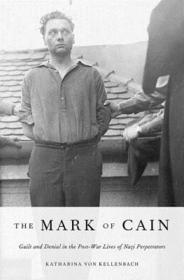
The Mark of Cain
Guilt and Denial in the Post-War Lives of Nazi Perpetrators
- Publisher's listprice GBP 51.00
-
23 026 Ft (21 930 Ft + 5% VAT)
The price is estimated because at the time of ordering we do not know what conversion rates will apply to HUF / product currency when the book arrives. In case HUF is weaker, the price increases slightly, in case HUF is stronger, the price goes lower slightly.
- Discount 10% (cc. 2 303 Ft off)
- Discounted price 20 724 Ft (19 737 Ft + 5% VAT)
Subcribe now and take benefit of a favourable price.
Subscribe
23 026 Ft

Availability
printed on demand
Why don't you give exact delivery time?
Delivery time is estimated on our previous experiences. We give estimations only, because we order from outside Hungary, and the delivery time mainly depends on how quickly the publisher supplies the book. Faster or slower deliveries both happen, but we do our best to supply as quickly as possible.
Product details:
- Publisher OUP USA
- Date of Publication 25 July 2013
- ISBN 9780199937455
- Binding Hardback
- No. of pages304 pages
- Size 236x165x30 mm
- Weight 517 g
- Language English 0
Categories
Short description:
In The Mark of Cain, Katharina von Kellenbach draws on letters exchanged between clergy and Nazi perpetrators, written notes of prison chaplains, memoirs, sermons, and prison publications to illuminate the moral and spiritual struggles of perpetrators after the war.
MoreLong description:
The Mark of Cain fleshes out a history of conversations that contributed to Germany's coming to terms with a guilty past. Katharina von Kellenbach draws on letters exchanged between clergy and Nazi perpetrators, written notes of prison chaplains, memoirs, sermons, and prison publications to illuminate the moral and spiritual struggles of perpetrators after the war. These documents provide intimate insights into the self-reflection and self-perception of perpetrators. As Germany looks back on more than sixty years of passionate debate about political, personal and legal guilt, its ongoing engagement with the legacy of perpetration has transformed its culture and politics.
In many post-genocidal societies, it falls to clergy and religious officials (in addition to the courts) to negotiate and create a path for individuals beyond the atrocities of the past. German clergy brought the Christian message of guilt and forgiveness into the internment camps where Nazi functionaries awaited prosecution at the hands of Allied military tribunals and various national criminal courts, or served out their sentences. The loving willingness to forgive and forget displayed towards his errant child by the father in the parable of the Prodigal Son became the paradigm central to Germany's rehabilitation and reintegration of Nazi perpetrators. The problem with Luke's parable in this context, however, is that perpetrators did not ask for forgiveness. Most agents of state crimes felt innocent. Von Kellenbach proposes the story of the mark of Cain as a counter narrative. In contrast to the Prodigal Son, who is quickly forgiven and welcomed back into the house of the father, the fratricide Cain is charged to rebuild his life on the basis of open communication about the past. The story of the Prodigal Son equates forgiveness with forgetting; Cain's story links redemption with remembrance and suggests a strategy of critical engagement with perpetrators.
Katharina von Kellenbach's analysis is strong medicine. In this extensive case study she exposes the inability of rank and file Nazi perpetrators to confront their own responsibilities for the crimes they committed serving the Nazi cause. Their own words and denials become a modern day mark of Cain, warning future generations of the compounding power of personal, cultural, religious, and ideological identities to justify unspeakable violence to others.
Table of Contents:
Foreword
Chapter 1: The Mark of Cain
Chapter 2: Guilt Confessions and Amnesty Campaigns
Chapter 3: Faith under the Gallows: Spectacles of Innocence in WCP Landsberg
Chapter 4: Cleansed by Suffering? The SS General and the Human Beast
Chapter 5: From Honorable Sacrifices to Lonely Scapegoats
Chapter 6: ''Understand my Boy this Truth about the Mistake'': Inheriting Guilt
Chapter 7: ''Naturally I will stand by my husband'': Marital Love and Loyalty
Chapter 8: ''Absolved from the Guilt of the Past'': Memory as Burden and as Grace
Biographical Appendix
Abbreviations of Archives
Notes
Bibliography
Index

