

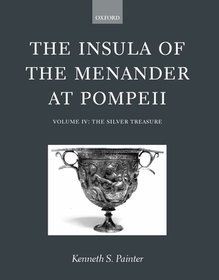
The Insula of the Menander at Pompeii: Volume IV: The Silver Treasure
Series: Insula of the Menander at Pompeii;
- Publisher's listprice GBP 175.00
-
79 012 Ft (75 250 Ft + 5% VAT)
The price is estimated because at the time of ordering we do not know what conversion rates will apply to HUF / product currency when the book arrives. In case HUF is weaker, the price increases slightly, in case HUF is stronger, the price goes lower slightly.
- Discount 10% (cc. 7 901 Ft off)
- Discounted price 71 111 Ft (67 725 Ft + 5% VAT)
Subcribe now and take benefit of a favourable price.
Subscribe
79 012 Ft

Availability
printed on demand
Why don't you give exact delivery time?
Delivery time is estimated on our previous experiences. We give estimations only, because we order from outside Hungary, and the delivery time mainly depends on how quickly the publisher supplies the book. Faster or slower deliveries both happen, but we do our best to supply as quickly as possible.
Product details:
- Edition number and title :Volume IV: The Silver Treasure
- Publisher OUP Oxford
- Date of Publication 8 November 2001
- ISBN 9780199242368
- Binding Hardback
- No. of pages120 pages
- Size 284x224x14 mm
- Weight 500 g
- Language English
- Illustrations 31 plates, 8 figures, 13 tables 0
Categories
Short description:
This is the first study in nearly seventy years of one of the largest known hoards of Roman silver plate, found in the House of the Menander, one of the finest houses in the centre of Pompeii, buried in AD 79. It is the only surviving complete Roman dinner service for eight people, belonging to a rich citizen of Pompeii who was probably a local magistrate.
MoreLong description:
The Casa del Menando hoard was found by Professor Amedeo Maiuri in 1930, in the course of the excavation of the Insula of the Menander. There has been no study of it as a whole since Maiuri's publication of 1933. The silver, one of the three largest groups of Roman plate of the first century AD, is the only one which has been found and recorded under modern conditions, and demonstrates what plate was in use in Pompeii in the period of the disasters of AD 62 and 72.
The treasure includes two hoards, hidden in the same chest, one consisting of 118 pieces of silver plate, the other of coins and jewellery. Maiuri thought that the hoards, and therefore the house, belonged to the top level of Roman society; but this study suggests that they belonged to a rich citizen of Pompeii, who may have been a local magistrate.
... will delight even the most jaded Pompeianist ... should be in every classical library and will be referenced for years to come.

