

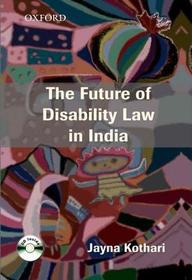
The Future of Disability Law in India
A Critical Analysis of the Persons with Disabilities (Equal Opportunities, Protection of Rights and Full Participation) Act 1995
- Publisher's listprice GBP 25.00
-
11 287 Ft (10 750 Ft + 5% VAT)
The price is estimated because at the time of ordering we do not know what conversion rates will apply to HUF / product currency when the book arrives. In case HUF is weaker, the price increases slightly, in case HUF is stronger, the price goes lower slightly.
- Discount 10% (cc. 1 128 Ft off)
- Discounted price 10 159 Ft (9 675 Ft + 5% VAT)
Subcribe now and take benefit of a favourable price.
Subscribe
11 287 Ft

Availability
Only to order.
Why don't you give exact delivery time?
Delivery time is estimated on our previous experiences. We give estimations only, because we order from outside Hungary, and the delivery time mainly depends on how quickly the publisher supplies the book. Faster or slower deliveries both happen, but we do our best to supply as quickly as possible.
Product details:
- Publisher OUP India
- Date of Publication 15 March 2012
- ISBN 9780198077626
- Binding Hardback
- No. of pages240 pages
- Size 224x148x19 mm
- Weight 449 g
- Language English 0
Categories
Short description:
This book examines the status of disability law in India from equality and human rights perspective. It critically discusses the Persons with Disability (PWD) Act, brought into force to provide the disabled with equal opportunities in education and employment.
MoreLong description:
According to the 2001 census, India has more than twenty million people suffering from various disabilities. However, disability law in India does not adequately address this issue. This book analyses the rights of the disabled people from the perspectives of equality and human rights. It argues that due to various disabilities these people are discriminated against and that, like any other citizen of the country, they have an equal share in its resources. Although the government over the years has made efforts to improve the lives of disabled people, much of it remained only symbolic in nature. The major step forward, however, came with the passing of the Persons with Disability (PWD) Act in 1995. The volume critically reviews this Act, which is aimed to provide equal opportunities to the people with disabilities. It contends that though the Act has been in force since 1996, due to lack of clarity, often the civil society groups, judges, and even lawyers have found its provisions difficult to interpret. The author also discusses the role of private sector in providing social security to the disabled. The book addresses the critical issue of amending the disability law to bring it in compliance with the prevailing international legislation-the UN Convention on the Rights of Persons with Disabilities (CPRD).
This book will interest lawyers, medical practitioners, human rights activists, and policymakers. It will also be useful for teachers and researchers in the area of law, disability, and sociology.
Table of Contents:
Foreword
Acknowledgements
List of Abbreviations
Introduction
Equality in the Context of Disability: The Right to be Different but Equal;
The Legal Definition of Disability under the PWD Act;
The Right to Education;
Equal Opportunities in Employment;
The Right to Access and Public Services;
Disability and the Private Sector;
The UN Convention on Rights of Persons with Disabilities and its Impact on Disability Law in India;
Conclusion
Bibliography
Subject Index

