

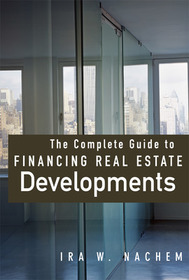
The Complete Guide to Financing Real Estate Developments
Series: PROFESSIONAL FINANCE & INVESTM;
- Publisher's listprice GBP 76.00
-
34 314 Ft (32 680 Ft + 5% VAT)
The price is estimated because at the time of ordering we do not know what conversion rates will apply to HUF / product currency when the book arrives. In case HUF is weaker, the price increases slightly, in case HUF is stronger, the price goes lower slightly.
- Discount 10% (cc. 3 431 Ft off)
- Discounted price 30 883 Ft (29 412 Ft + 5% VAT)
Subcribe now and take benefit of a favourable price.
Subscribe
34 314 Ft

Availability
cancelled
Why don't you give exact delivery time?
Delivery time is estimated on our previous experiences. We give estimations only, because we order from outside Hungary, and the delivery time mainly depends on how quickly the publisher supplies the book. Faster or slower deliveries both happen, but we do our best to supply as quickly as possible.
Product details:
- Publisher McGraw Hill
- Date of Publication 16 August 2007
- ISBN 9780071479356
- Binding Hardback
- No. of pages450 pages
- Size 236x154x40 mm
- Weight 921 g
- Language English 0
Categories
Long description:
Get Answers to All Your Questions About Financing Real Estate Development -- and Tailor a Finance Package that Meets Specific Your Needs
The Completee Guide to Financing Real Estate Developments offers a detailed roadmap to navigate the complex process of financing small to large-scale real estate projects, such as office buildings, apartment complexes, and hotels.
Real estate expert Ira Nachem explores the pros and cons of large versus small institutions; how to structure and present a loan proposal, the approval and closing processes; the truth about appraisals, guarantees, insurance and lien law; financial and physical bonuses and constraints, environmental issues and many other topics.
Nachem presents in-depth information and explanations that answers questions on:
- Who the Commercial Real Estate Lender Really Is
- What Information Should the Borrower Produce
- How a Workable Budget is Created
- How the Lender Evaluates a Borrower
- What the True Value of an Appraisal Is
- What goes into a Lender's Loan Presentation
- What to Expect at a Closing
- What Key Legal Documents are Most Important
- What the True Value of a Guarantee Is
- How the Borrower and Lender Prepare for the Funding Process
- What Is involved in Loan Administration After the Closing
- What Is the View from the Borrower's Perspective
- What Are some of the Constraints and Incentives to Development
- What Are the Values and Risks of Insurance and Bonding
- What Is the Reason for Title Insurance and how does it work
- What Are the Complexities of Lien Law and how does it work
- How Is the Loan Eventually Repaid
- What Real Estate Math Is Essential for the Professional
- How Important Are Environmental Issues
- How Can the Lender Find New Loan Prospects
- What Are the Risks and Rewards of Loan Participations
Featuring a wide range of helpful examples and illustrations, The Complete Guide to Financing Real Estate Developments covers many of the day-to-day realities faced in the real estate industry including the differing perspectives of lenders and borrowers, their personal pressures, personalities and politics, and much more.
Get Answers to All Your Questions About Financing Real Estate Development -- and Tailor a Finance Package that Meets Specific Your Needs
The Completee Guide to Financing Real Estate Developments offers a detailed roadmap to navigate the complex process of financing small to large-scale real estate projects, such as office buildings, apartment complexes, and hotels.
Real estate expert Ira Nachem explores the pros and cons of large versus small institutions; how to structure and present a loan proposal, the approval and closing processes; the truth about appraisals, guarantees, insurance and lien law; financial and physical bonuses and constraints, environmental issues and many other topics.
Nachem presents in-depth information and explanations that answers questions on:
- Who the Commercial Real Estate Lender Really Is
- What Information Should the Borrower Produce
- How a Workable Budget is Created
- How the Lender Evaluates a Borrower
- What the True Value of an Appraisal Is
- What goes into a Lender's Loan Presentation
- What to Expect at a Closing
- What Key Legal Documents are Most Important
- What the True Value of a Guarantee Is
- How the Borrower and Lender Prepare for the Funding Process
- What Is involved in Loan Administration After the Closing
- What Is the View from the Borrower's Perspective
- What Are some of the Constraints and Incentives to Development
- What Are the Values and Risks of Insurance and Bonding
- What Is the Reason for Title Insurance and how does it work
- What Are the Complexities of Lien Law and how does it work
- How Is the Loan Eventually Repaid
- What Real Estate Math Is Essential for the Professional
- How Important Are Environmental Issues
- How Can the Lender Find New Loan Prospects
- What Are the Risks and Rewards of Loan Participations
Featuring a wide range of helpful examples and illustrations, The Complete Guide to Financing Real Estate Developments covers many of the day-to-day realities faced in the real estate industry including the differing perspectives of lenders and borrowers, their personal pressures, personalities and politics, and much more.
MoreTable of Contents:
Preface
Chapter I: The Commercial Real Estate Lender
Chapter II: The Borrower’s Information
Chapter III : Budgeting
Chapter IV: Evaluating the Borrower
Chapter V: Appraisals
Chapter VI:The Loan Presentation
Chapter VII: The Lender’s Closings, Legal Documents and Guarantees
Chapter VIII: Preparing for the Funding Process
Chapter IX: Loan Mechanics After Closing
Chapter X: Project Completion
Chapter XI: View From Borrower’s Perspective
Chapter XII: Constraints and Incentives to Development
Chapter XIII: Insurance and Bonding
Chapter XIV: Title Insurance and Lien Law
Chapter XV: Loan Repayment
Chapter XVI: Real Estate Math
Chapter XVII: Pricing
Chapter XVIII: Environmental Concerns
Chapter XIX: Marketing/Searching For Loan Prospects
Chapter XX: Loan Participations
Chapter XXI: Problems and Issues
About the Author
More
