

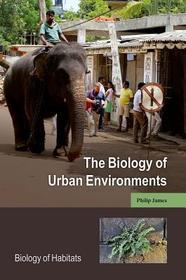
The Biology of Urban Environments
Series: Biology of Habitats Series;
- Publisher's listprice GBP 105.00
-
50 163 Ft (47 775 Ft + 5% VAT)
The price is estimated because at the time of ordering we do not know what conversion rates will apply to HUF / product currency when the book arrives. In case HUF is weaker, the price increases slightly, in case HUF is stronger, the price goes lower slightly.
- Discount 10% (cc. 5 016 Ft off)
- Discounted price 45 147 Ft (42 998 Ft + 5% VAT)
Subcribe now and take benefit of a favourable price.
Subscribe
50 163 Ft

Availability
Uncertain availability. Please turn to our customer service.
Why don't you give exact delivery time?
Delivery time is estimated on our previous experiences. We give estimations only, because we order from outside Hungary, and the delivery time mainly depends on how quickly the publisher supplies the book. Faster or slower deliveries both happen, but we do our best to supply as quickly as possible.
Product details:
- Publisher OUP Oxford
- Date of Publication 26 July 2018
- ISBN 9780198827238
- Binding Hardback
- No. of pages308 pages
- Size 242x162x20 mm
- Weight 670 g
- Language English 0
Categories
Short description:
Provides a novel perspective on urban ecosystems, summarising our current understanding of the basic and applied aspects of these important and complex habitats, whilst focusing on environmental concerns in the context of global change.
MoreLong description:
How do plants, animals, and humans manage to survive and adapt to the urban environment? This book provides a comprehensive coverage of biological matters related to urban environments presenting both the conceptual and theoretical underpinnings, and practical examples required to understand and address the challenges presented by this novel environment.
The Biology of Urban Environments focusses on urban denizens: species (both domesticated and non-domesticated) that live for all or part of their life cycle in towns and cities. The biology of household plants and companion animals is discussed alongside that of species that have become feral or have not been domesticated. Temporal and spatial distribution patterns are set out and generalizations are made while exceptions are also discussed. The various strategies used and the genotypic, phenotypic, and behavioural adaptions of plants and animals in the face of the challenges presented by urban environments are explained. The final two chapters contain a discussion of the impacts of urban environments on human biology and suggestions on how this understanding might be used to address the increasing human health burden associated with illnesses that are characteristic of urbanites in the early twenty-first century.
Table of Contents:
What is the urban environment and what is biology?
Part I
The urban environment
The built environment
The physical environment
The natural environment - habitats and communities
Part II
Diversity and distribution
Diversity of species
Relationships
Temporal patterns
Spatial patterns
Part III
Adapting to urban living
Strategies
Physiological and behavioural changes - how do they live
Part IV
People and nature
Human urban biology
A new relationship

