

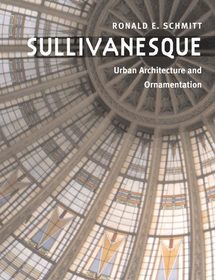
Sullivanesque
Urban Architecture and Ornamentation
- Publisher's listprice GBP 50.00
-
23 887 Ft (22 750 Ft + 5% VAT)
The price is estimated because at the time of ordering we do not know what conversion rates will apply to HUF / product currency when the book arrives. In case HUF is weaker, the price increases slightly, in case HUF is stronger, the price goes lower slightly.
- Discount 10% (cc. 2 389 Ft off)
- Discounted price 21 499 Ft (20 475 Ft + 5% VAT)
Subcribe now and take benefit of a favourable price.
Subscribe
23 887 Ft

Availability
Out of print
Why don't you give exact delivery time?
Delivery time is estimated on our previous experiences. We give estimations only, because we order from outside Hungary, and the delivery time mainly depends on how quickly the publisher supplies the book. Faster or slower deliveries both happen, but we do our best to supply as quickly as possible.
Product details:
- Publisher University of Illinois Press
- Date of Publication 11 September 2002
- ISBN 9780252027260
- Binding Hardback
- No. of pages360 pages
- Size 279x216 mm
- Language English 0
Categories
Short description:
Sullivanesque offers a visual and historical tour of a unique but often overlooked facet of modern American architecture derived from Louis Sullivan.Highly regarded in architecture for inspiring the Chicago School and the Prairie School, Sullivan was an unwilling instigator of the method of facade composition--later influenced by Frank Lloyd Wright, William Gray Purcell, and George G. Elmslie--that came to be known as Sullivanesque. Decorative enhancements with botanical and animal themes, Sullivan's distinctive ornamentation mitigated the hard geometries of the large buildings he designed, coinciding with his "form follows function" aesthetic.
Sullivan's designs offered solutions to problems presented by new types and scales of buildings. Widely popular, they were also widely copied, and the style proliferated due to a number of Chicago-based interests, including the Radford Architectural Company and several decorative plaster and terra-cotta companies. Stock replicas of Sullivan's designs manufactured by the Midland Terra Cotta Company and others gave distinction and focus to utilitarian buildings in Chicago's commercial strips and other confined areas, such as the downtown districts of smaller towns. Mass-produced Sullivanesque terra cotta endured as a result of its combined economic and aesthetic appeal, blending the sophistication of high architectural art with the pragmatic functionality of building design.
Masterfully framed by the author's photographs of Sullivanesque buildings in Chicago and throughout the Midwest, Ronald E. Schmitt's in-depth exploration of the Sullivanesque tells the story of its evolution from Sullivan's intellectual and aesthetic foundations to its place as a form of commercial vernacular. The book also includes an inventory of Sullivanesque buildings.
Honorable Mention recipient of the 2002 PSP Awards for Excellence in Professional/Scholarly Publishing
Long description:
Sullivanesque offers a visual and historical tour of a unique but often overlooked facet of modern American architecture derived from Louis Sullivan.Highly regarded in architecture for inspiring the Chicago School and the Prairie School, Sullivan was an unwilling instigator of the method of facade composition--later influenced by Frank Lloyd Wright, William Gray Purcell, and George G. Elmslie--that came to be known as Sullivanesque. Decorative enhancements with botanical and animal themes, Sullivan's distinctive ornamentation mitigated the hard geometries of the large buildings he designed, coinciding with his "form follows function" aesthetic.
Sullivan's designs offered solutions to problems presented by new types and scales of buildings. Widely popular, they were also widely copied, and the style proliferated due to a number of Chicago-based interests, including the Radford Architectural Company and several decorative plaster and terra-cotta companies. Stock replicas of Sullivan's designs manufactured by the Midland Terra Cotta Company and others gave distinction and focus to utilitarian buildings in Chicago's commercial strips and other confined areas, such as the downtown districts of smaller towns. Mass-produced Sullivanesque terra cotta endured as a result of its combined economic and aesthetic appeal, blending the sophistication of high architectural art with the pragmatic functionality of building design.
Masterfully framed by the author's photographs of Sullivanesque buildings in Chicago and throughout the Midwest, Ronald E. Schmitt's in-depth exploration of the Sullivanesque tells the story of its evolution from Sullivan's intellectual and aesthetic foundations to its place as a form of commercial vernacular. The book also includes an inventory of Sullivanesque buildings.
Honorable Mention recipient of the 2002 PSP Awards for Excellence in Professional/Scholarly Publishing
"Louis Sullivan, strangely enough, is still being discovered. As important as he was, most of the earlier books concentrated on the high points, the popular dramatic photos, and were less rigorously scholarly. Ronald E. Schmitt's documentation in breadth and depth is highly effective. The diaspora of Sullivan's work is finally being addressed."
— Ben Weese, Weese Langley Weese Architects, Chicago

