

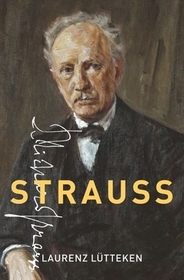
Strauss
Series: Composers Across Cultures;
- Publisher's listprice GBP 37.99
-
17 152 Ft (16 335 Ft + 5% VAT)
The price is estimated because at the time of ordering we do not know what conversion rates will apply to HUF / product currency when the book arrives. In case HUF is weaker, the price increases slightly, in case HUF is stronger, the price goes lower slightly.
- Discount 10% (cc. 1 715 Ft off)
- Discounted price 15 437 Ft (14 702 Ft + 5% VAT)
Subcribe now and take benefit of a favourable price.
Subscribe
17 152 Ft

Availability
printed on demand
Why don't you give exact delivery time?
Delivery time is estimated on our previous experiences. We give estimations only, because we order from outside Hungary, and the delivery time mainly depends on how quickly the publisher supplies the book. Faster or slower deliveries both happen, but we do our best to supply as quickly as possible.
Product details:
- Publisher OUP USA
- Date of Publication 30 May 2019
- ISBN 9780190605698
- Binding Hardback
- No. of pages304 pages
- Size 157x239x27 mm
- Weight 590 g
- Language English
- Illustrations 21 halftone, 4 line 0
Categories
Short description:
Laurenz Lütteken's Strauss presents a new approach to the life and works of Richard Strauss, cutting through the mystery and gossip surrounding the elusive German composer to reveal his complicated role as representative of modernity.
MoreLong description:
Richard Strauss is an outlier in the context of twentieth century music. Some consider him a composer of the late romantic period, while others declare him a traitor of modernity for his role in National Socialism. Despite the controversy surrounding him, Strauss's works--even beyond his most well-known operas Elektra and Rosenkavalier--are present in the repertories of concert halls worldwide and continue to enjoy large audiences. The details of the composer's life, however, remain shrouded in mystery and gossip. Laurenz Lütteken's Strauss presents a fresh approach to understanding this elusive composer's life and works. Dispensing with stereotypes and sensationalism, it reveals Strauss to be a sensitive intellectual and representative of modernity, with all light and shade of the turn of the twentieth century.
MoreTable of Contents:
Foreword
Introduction: Problems
1. Images of Strauss
2. The Other Modernism
I. Between Patriciate and Aristocracy
1. Munich as a Form of Mental Life
2. Family and Milieu
3. Education and Readings`
II. The End of the Nineteenth Century: Leaving Traditional Genres Behind
1. Strauss and Tradition
2. Inspiration and Compositional Craft
3. Against Sonata Form: The End of Symphonic and Chamber Music
III. The Poetry of Imagination: Lieder
1. The Lied as a Form of Musical Thought
2. Strauss as Reader and the Poetic Canon
3. Border-crossings: Lyric and Chorus
4. First and Last Lieder
IV. Music and Life: The Kapellmeister and His Duties
1. Beginnings: Meiningen, Weimar, Munich
2. Berlin and Modernism
3. Vienna and the Republican Task
4. Strauss as Conductor
V. Poetry of the Real: The Tone Poems
1. Distance from Wagner 2. Leaving Behind the Metaphysics of Music 3. "Autobiography" and New Musical Semantics
VI. Music Without Metaphysics: The Path to Opera
1. Künstleropern
2. The New Theater: Max Reinhardt in Berlin
3. Oriental Antiquity and "Nervous Counterpoint"
4. The End of Instrumental Music
VII. "The Social Achieved": Strauss und Hofmannsthal
1. Language-crises and "Way to the Social"
2. Silence and Dance
3. Plastic Antiquity
4. A New Reality: Fairytale and Operetta
VIII. New Mythology and the Plasticity of Music
1. Mozart's Melody and Wagner's Orchestra: Tonality and the New Musical Communicability 2. The Present and Presence of the Theater
3. Music as Festival: Salzburg
IX. Music and Reality
1. Life-Worlds: Social Praxis and the Villas in Garmisch and Vienna 2. Copyright and Musical Materiality
3. The Reichsmusikkammer
X. After Hofmannsthal's Death
1. Intermezzo with Stefan Zweig
2. Joseph Gregor and Final Plans
XI. Metamorphosen and the End of History
1. Final Works
2. Self-Interpretations: Metamorphosen
3. The New Presence of History?
Appendices
A. Biographical Timeline
B. Catalog of Works
C. Personalia
Select Bibliography

