

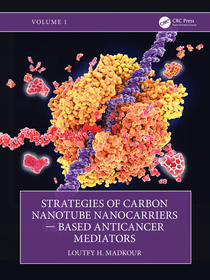
Strategies of Carbon Nanotube Nanocarriers — Based Anticancer Mediators
-
GET 10% OFF
- Publisher's listprice GBP 200.00
-
95 550 Ft (91 000 Ft + 5% VAT)
The price is estimated because at the time of ordering we do not know what conversion rates will apply to HUF / product currency when the book arrives. In case HUF is weaker, the price increases slightly, in case HUF is stronger, the price goes lower slightly.
- Discount 10% (cc. 9 555 Ft off)
- Discounted price 85 995 Ft (81 900 Ft + 5% VAT)
85 995 Ft

Availability
Not yet published.
Why don't you give exact delivery time?
Delivery time is estimated on our previous experiences. We give estimations only, because we order from outside Hungary, and the delivery time mainly depends on how quickly the publisher supplies the book. Faster or slower deliveries both happen, but we do our best to supply as quickly as possible.
Product details:
- Edition number 1
- Publisher CRC Press
- Date of Publication 27 March 2026
- ISBN 9781041083474
- Binding Hardback
- No. of pages488 pages
- Size 280x210 mm
- Language English
- Illustrations 319 Illustrations, black & white; 198 Halftones, black & white; 121 Line drawings, black & white; 42 Tables, black & white 699
Categories
Short description:
This book focuses the applications of Nanostructured carbon materials (NCMs) in all fields of pharmacy and medicine from therapeutics to analysis and diagnosis.
MoreLong description:
Nowadays carbon nanomaterials (CNMs) are widely employed for electrochemical sensors due to their superiorities of low cost, large surface area, high electrochemical activity, good chemical durability, enhanced molecules adsorption and favorable biocompatibility. Currently, the successful detected analytes include neurochemicals/biomarkers (dopamine, ascorbic acid, hydrogen peroxide, proteins and DNA).
Smart-drug delivery aims to localize treatment to tumors to reduce cytotoxicity and enhance the therapeutic index by using multifunctional targeting strategies. This book focuses the applications of Nanostructured carbon materials (NCMs) in all fields of pharmacy and medicine from therapeutics to analysis and diagnosis. It also examines the pharmacokinetics, metabolism and toxicity of different forms of CNTs and discusses the perspectives, the advantages and the obstacles of this promising bio-nanotechnology in the future. Cancer is ranked as the second leading cause of death globally. Traditional cancer therapies including chemotherapy are flawed, with off-target and on-target toxicities on the normal cells, requiring newer strategies to improve cell selective targeting. The application of nanomaterial has been extensively studied and explored as chemical biology tools in cancer theranostics. It shows greater applications toward stability, biocompatibility, and increased cell permeability, resulting in precise targeting, and mitigating the shortcomings of traditional cancer therapies. The large surface area of nanoparticles is enough to encapsulate many molecules and the ability to functionalized with various bio-substrates such as DNA, RNA, aptamers, and antibodies, which helps in theranostic action. The challenge associated with nanomaterials is their toxic properties, which should be addressed before their administration in clinical applications.
Currently, carbon nanotubes (CNTs) are being successfully used in the medicinal, pharmaceutical, and biomedical fields because of their large surface area, which makes them capable of adsorbing or conjugating with a wide range of therapeutic and diagnostic substances (drugs, genes, vaccines, antibodies, biosensors, etc.). They were the first to demonstrate that they are a great vehicle for drug delivery straight into cells without the need for metabolic processing by the body.
MoreTable of Contents:
Foreword. Preface. Acknowledgment. About the author. Introduction. Summary. Chapter 1 Biomedical Applications for Direct Drug Delivery Carriers and Cancer Therapy— Based Carbon Nanotubes Porins (CNTPs). Chapter 2 Novel Strategies—Based Versatile Carbon Nanoplatforms for Cancer Therapeutics. Chapter 3. Carbon Nanotubes (CNTs) Carriers—Based Biomimetic Inherent Medication Therapeutic Drug Delivery Systems (DDS). Chapter 4Carbon Nanotubes—Based Diagnosis and Novel Emerging Target Drug Delivery Systems for Anticancer Therapies. Chapter 5 Strategies of Targeted Smart Drug Gene Therapy and Immunosensing for Carbon—Based Nanomaterials as Anticancer Mediators Nanoparticles. Chapter 6 Bioimaging Strategies Utilizing Carbon Nanomaterials (CNMs) for Biomolecules, Microorganisms and Virus Detection. Chapter7.Carbon—Based Nanomaterials for Targeted Cancer Nanotherapy: Controlled Drug Delivery Systems Design and Development Strategies. Chapter 8 Emerging Strategies and Cutting—Edge Progress (CNMs) in Drug Delivery to Improve Cancer Treatment: Surface Modification and Biological Interaction. Chapter 9 Strategies-Based CNTs and Fullerenes as Smart Drug Co-Delivery Nanocarriers for Cancer Nanotherapy: Future of Translational Nanomedicine.List of Abbreviations. Index.
More
