

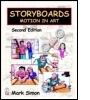
Storyboards
Motion In Art
-
GET 10% OFF
- Publisher's listprice GBP 32.99
-
14 894 Ft (14 185 Ft + 5% VAT)
The price is estimated because at the time of ordering we do not know what conversion rates will apply to HUF / product currency when the book arrives. In case HUF is weaker, the price increases slightly, in case HUF is stronger, the price goes lower slightly.
- Discount 10% (cc. 1 489 Ft off)
- Discounted price 13 405 Ft (12 767 Ft + 5% VAT)
13 405 Ft

Availability
Out of print
Why don't you give exact delivery time?
Delivery time is estimated on our previous experiences. We give estimations only, because we order from outside Hungary, and the delivery time mainly depends on how quickly the publisher supplies the book. Faster or slower deliveries both happen, but we do our best to supply as quickly as possible.
Product details:
- Edition number 2, New edition
- Publisher Focal Press
- Date of Publication 3 January 2000
- ISBN 9780240803746
- Binding Paperback
- No. of pages284 pages
- Size 279x215 mm
- Weight 676 g
- Language English
- Illustrations 225 screens 0
Categories
Long description:
Storyboards: Motion in Art, Second Edition, is a comprehensive look at both the art and the business of storyboarding. This practical handbook details the preparation and presentation of storyboards for live action, commercials, animation, and special effects. The author clearly delineates the requirements of live action and animation boards as well as presentation and production boards. He explains how to use computers in enhancing, creating and animating boards, and stresses the importance of visual storytelling and effectively showing movement over the artistry in the board itself.
Unique features include: exercises to help the reader translate scripts and concepts into boards; samples from top storyboard artists and a section where five artists interpret the same scene for comparison purposes; an entire section is devoted to the business aspects and how to get started as a storyboard artist; resources, forms, resumes, portfolios, the tools and tricks of the trade, and interviews with directors, producers and other storyboard artists.
"From the business side to the artistic side and everything in-between, Simon shows what it takes to be a storyboard artist. If you've ever wanted to create storyboards for your projects but don't know where to start, Storyboards: Motion in Art could be the resource for you" - Videomaker, October 2000
Storyboards: Motion in Art, Second Edition, is a comprehensive look at both the art and the business of storyboarding. This practical handbook details the preparation and presentation of storyboards for live action, commercials, animation, and special effects. The author clearly delineates the requirements of live action and animation boards as well as presentation and production boards. He explains how to use computers in enhancing, creating and animating boards, and stresses the importance of visual storytelling and effectively showing movement over the artistry in the board itself.
Unique features include: exercises to help the reader translate scripts and concepts into boards; samples from top storyboard artists and a section where five artists interpret the same scene for comparison purposes; an entire section is devoted to the business aspects and how to get started as a storyboard artist; resources, forms, resumes, portfolios, the tools and tricks of the trade, and interviews with directors, producers and other storyboard artists.
Table of Contents:
Introduction: What Are Storyboards?; Part One:The Business of Storyboarding: Getting Started; Resumes; Portfolios; Education and Skills; Materials; How I Got Started; Benefits to Production; Who Hires Storyboard artists; How Productions Work; What Producers Look For; Pricing; Licensing; Trade Practices; Format; Agents & Artist Reps; Business Aspects; Part Two: The Art of Storyboarding: Presentation; Animation Boards; Laser Show Boards; Comps; Animatics; Styles; Directing; Working With Directors; Visual Design; References & Research; Illustrated Camera Techniques; Numbering' Contrast and Mood; Special Effects; Conceptual Illustration; Frame Design; Computers and Software; Tricks O' the trade; Presentation and Delivery; Part Three: Interviews; Part Four: Exercises; Part Five: Storyboard Experiment; Part Six: Appendices; Resources; Forms; Schools Offering Storyboarding; Part Seven: Storyboard Samples; Glossary

